Saturday, April 03, 2010

Video (song) of the day: Sultans of Swing

From the Live Aid events--a couple of years before I came to the US ... and we still talk about Africa's problems after 25 years of this performance? hmmm ... ."Dire Straits" and "Africa" go together, eh .... yes, bad joke ...
BTW, it continues to bug me, even after all these years, that "sultan" is not pronounced as "sooltahn" .... :)

Friday, April 02, 2010

I suppose this is why I quit engineering!

I don't think of my job as a "job" at all (ed: maybe that is a problem?) It is almost like something I do for fun.

Suppose I were in some other "job".  What would I want to do in my spare time then? Precisely what I do now as my "job" ... Of course, I lucked out; if not, I would have been .... oh well!!!

And, therefore, I can absolutely relate to this post that I landed at after clicking on a few links.  And, here is the excerpt that I like:

A job will never satisfy you all by itself, but it will afford you security and the chance to pursue an exciting and fulfilling life outside of your work. A calling is an activity you find so compelling that you wind up organizing your entire self around it -- often to the detriment of your life outside of it.     There’s no shame in either. Each has costs and benefits. There is no reason to make a fetish of your career. There are activities other than work in which to find meaning and pleasure and even a sense of self-importance -- you just need to learn how to look.     ...
So which is it: job or calling? You can answer the question directly, or allow time to answer it for you. Either way, I think you’d be happier if you stopped thinking of what the world had to offer you, and started thinking a bit more about what you had to offer the world. Real excitement isn’t just in whatever you happen to be doing, but in what you bring to it.

Hmmm .... today's excitement? I cooked Cheppankizhangu :)

I started with this, ...

and ended with this

Not anywhere near the fantastic taste I had/have in my memory, but good enough to satisfy the urge.
Perhaps I need to check with mom on how she makes it tasty .... Maybe better luck next time, eh!

Cartoons on "Drill, Obama, drill" :)

Cartoonists are having a field day on Obama's plans :) (ht)

The costs of healthcare reform

I like the idea of a basic level of healthcare for all.  That to me is not the issue.  It is the costs that worry me.  I am all the more worried because we are being made to understand that this won't add to our tax bills.  I would have way preferred avoiding a scenario such as:
"Our debt crisis began when the previous administration tried to finance two wars with tax cuts. We are overburdened. What we face is a debt crisis, due to military over-commitments, which has devastated our ability to improve our quality of life through government programs," Frank continued.
"We would have had $1 trillion now to help fix the economy and do the things for our people that they deserve." 
But, no point following counterfactuals. It is what it is.  As Rumsfeld once arrogantly and stated (where is he now, BTW?) "you go to war with the army you have--not the army you might want or wish to have at a later time."  Yeah, right, we know how that worked out .... aaah, can't afford digressions here ...

Anyway, at an instinct-level, a major effort like this healthcare reform not quite adding to the costs just does not resonate with me.  If it is too good to be true, then ...  I bet we will begin to hear more and more on this issue.

For starters, here is John Cassidy at the New Yorker--one of the two regular economics-related writers there (the other is James Surowieki.) Both are fantastic in their analysis and writing--well, everybody at the New Yorker writes well, of course :)
Cassidy writes:

If all of these predictions turn out to be accurate, ObamaCare will go down as one of the most successful and least costly government initiatives in history. At no net cost to the taxpayer, it will have filled a gaping hole in the social safety net and solved a problem that has frustrated policymakers for decades.
Does Santa Claus live after all? According to the C.B.O., between now and 2019 the net cost of insuring new enrollees in Medicaid and private insurance plans will be $788 billion, but other provisions in the legislation will generate revenues and cost savings of $933 billion. Subtract the first figure from the second and—voila!—you get $143 billion in deficit reduction.
Yes, it is that voila that worries me.
Cassidy has more:

My two big worries about the reform are that it won’t capture nearly as many uninsured people as the official projections suggest, and that many businesses, once they realize the size of the handouts being offered for individual coverage, will wind down their group plans, shifting workers (and costs) onto the new government-subsidized plans. The legislation includes features designed to prevent both these things from happening, but I don’t think they will be effective.
Consider the so-called “individual mandate.” As a strict matter of law, all non-elderly Americans who earn more than the poverty line will be obliged to obtain some form of health coverage. If they don’t, in 2016 and beyond, they could face a fine of about $700 or 2.5 per cent of their income—whichever is the most. Two issues immediately arise.
Even if the fines are vigorously enforced, many people may choose to pay them and stay uninsured. Consider a healthy single man of thirty-five who earns $35,000 a year. Under the new system, he would have a choice of enrolling in a subsidized plan at an annual cost of $2,700 or paying a fine of $875. It may well make sense for him to pay the fine, take his chances, and report to the local emergency room if he gets really sick. (E.R.s will still be legally obliged to treat all comers.) If this sort of thing happens often, as well it could, the new insurance exchanges will be deprived of exactly the sort of healthy young people they need in order to bring down prices. (Healthy people improve the risk pool.) ...
So, the individual mandate is a bit of a sham.

Hmmm .... more for us worrywarts :(

How writers and artists worked from home

Thursday, April 01, 2010

Why going south seems easier than going north

Quite a few months ago, I wrote that "south" has taken on a lot more meanings that the simple directional one. I got one response that I was playing with words.  I was convinced about what I had written, and that conviction is reinforced after reading this piece; here is an excerpt:
subjects were supplanting map-based metaphors for the actual experience of travel. "A lifetime of exposure to the metaphoric link between cardinal direction and vertical position," they write, "may cause people to associate northbound travel with uphill travel." 
Yes, that was exactly my point as well--that "south" and "north" have become metaphors for a number of different aspects of life.

Census .... in India, too

Today is Census Day here in the US
India is gearing up for census as well, which will include biometric information this time around--for everybody who is 15 years or older--according to the BBC:

"India has been conducting a national census since 1872," the man leading the exercise C Chandramouli told the AFP news agency. "Nothing - floods, droughts, even wars - has been able to stop it.
"The trick is to get things right the first time. There is no question of a re-census."
Over the next year, some 2.5 million census officials will visit households in more than 7,000 towns and 600,000 villages.
The officials, many of them teachers and local officials, will first begin the process of house listing - which records information on homes.
This count will, for the first time, also attempt to gather information on the use of the internet and the availability of drinking water and toilets in households.

Google is now "Topeka"

Google does it better than Obama :)

NCAA Basketball, geography, and ESPN

When the Green Bay Packers started winning a few years ago, I recall chatting with a few people who were all pumped up about the team and their quarterback, but had no idea about the location of Green Bay itself.  It simply did not matter to them.  This indifference to location, even while fanatical about the economic and recreational activity related to that location, fascinated me.  Since then, every once in a while I have quizzed students on the locational aspects of winning sports teams--football, baseball, and basketball.  The results were always the same: even the most interested and serious sports fan was geographically-challenged about the very team he (almost always a "he") was rooting for.

A couple of years ago, I wrote in an essay that:
It appears that only real estate agents and geographers understand the importance of location, location, and location. Otherwise, I suppose both within and outside academia, there are not many who develop a spatial understanding even of the issues that interest them or the cities where they live.

I wonder if we geographers might be partly at fault because we tend to equate maps with the “old school geography” that impressed upon people an (incorrect) idea of geography that it is only about memorizing facts about places. But in getting away from that atrocious caricature of geography, we might have gone to the other extreme where we, too, might be reinforcing the notion that it is not important to understand the actual location of a place, and its relationship with its surroundings.

Students in my introductory class were not completely off the hook though. Given the notoriety of the New England Patriots, I asked them at the final meeting of the term, as a way of wrapping up the course, where New England is and the name of the city where the Patriots play. I had hoped that at least five out of the forty students would know the correct answer.  Only one knew that the team’s home is in Foxborough, though four others had a good enough answer of Boston.  I suppose I did get that five out of forty I was shooting for.

Thus, you can then understand why I am excited about the online geography quiz that ESPN has about the NCAA men's basketball tournament teams.
So, hey you sports nuts out there, who filled out the brackets (including the President!) take that quiz and see how well you know the locations of those universities...

BTW, speaking of the President and his bracket, here is the Daily Show commenting on it towards the end of this hilarious segment :)
The Daily Show With Jon StewartMon - Thurs 11p / 10c
Tenacious O
www.thedailyshow.com
Daily Show Full EpisodesPolitical HumorHealth Care Reform

Wednesday, March 31, 2010

On intellectuals ....

I detect today a certain public scepticism when intellectuals stand up to preach to us, a growing tendency among ordinary people to dispute the right of academics, writers and philosophers, eminent though they may be, to tell us how to behave and conduct our affairs.  The belief seems to be spreading that intellectuals are no wiser as mentors, or worthier as exemplars, than the witch dotctors or priests of old.  I share that scepticism. A dozen people picked at random on the street are at least as likely to offer sensible views on moral and political matters as a cross-section of the intelligentsia. But I would go further. One of the principal lessons of our tragic century, which has seen so man millions of innocent lives sacrificed in schemes to improve the lot of humanity, is--beware intellectuals.  Not merely should they be kept well away from the levers of power, they should also be objects of particular suspicion when they seek to offer collective advice.  ... For intellectuals, far from being highly individualistic and non-conformist people, follow certain regular patterns of behaviour.  Taken as a group, they are often ultra-conformist within the circles formed by those whose approval they seek and value.  That is what makes them, en masse, so dangerous, for it enables them to create climates of opinion and prevailing orthodoxies, which themselves often generate irrational and destructive courses of action. Above all, we must at all times remember what intellectuals habitually forget: that people matter more than concepts and must come first. The worst of all despotisms is the heartless tyranny of ideas
Paul Johnson in Intellectuals, published way back in 1988.

My favorite intellectual, (whom the conservative Johnson does not critique) ....?

George Orwell, of course :)

Why?  Because from the little bit of reading that I have done, Orwell came across as essentially a left-of-center guy who did not care for ideological labels.  And he was highly suspicious of conformity.

Christopher Hitchens says it best:
My worry has more to do with another thing Orwell warned about—the willingness of people to police themselves, and to believe anything that they're told. Especially the willingness of intellectuals and academics to become worshipers of whomever is in power, or passers-on of whatever the reigning idea is. Conformity, in other words. That will always carry on being a threat. People don't remember Orwell for his opposition to conformity as well as they should.
I don't know if I have always had that intense suspicion of conformity, which was then reinforced by reading Orwell, or if watching 1984 at the British Council in Madras was the real trigger.  In any case, Orwell is my go-to intellectual. 

Mehbooba Mehbooba ...

Yes, that old number from Sholay. ...My neighbor gave me a CD of music from India that he picked up at the local Starbucks, and Mehbooba was one of the tracks there ... (Thanks, Joe!)

It was wonderful to recall the childhood days when the movie came out.  I remember watching the movie in Madras, at the "Satyam" theatre.  (Is it there anymore, I wonder!)  It was in that theatre that for the first time in my life I saw an espresso machine.  (Is it still the case that in India the espresso is actually a cappuccino?  Yes, I remember lots of coffee-related events in my life; it is, after all, my favorite and only drug!!!)
My cousin was pumped up even more than us siblings; he had been to the movie and was eager for a second helping.

I clearly recall being blown away by the movie.  Of course, it also helped that Hema Malini was there and I was one of the gazillion pre-teenage boys, and others too, who thought she was the prettiest thing on the planet :)
(My non-Indian readers not familiar with Sholay or the actors: note that the dancer in this clip is not Hema Malini.  Click here for her solo number from the same movie.)

Tuesday, March 30, 2010

Music video of the day

What happens to female suicide bombers?

Reports indicate that the Russian blasts heard around the world were set off by female suicide bombers.  It is yet another in a long line of incidents where the bomber was female.  I wish I had access to my own op-ed on this topic; maybe I authored it before I returned to blogging.

First, Anne Applebaum, who almost became the first lady of Poland, asks "How Did Russian Police Know Who Bombed the Moscow Subway?," and writes:
I do hope the Moscow police will present the public with hard evidence that two Chechen women really were responsible for this truly grotesque attack before blaming the incident on North Caucasian terrorists.
I am guessing that Czar Prime Minister Putin knows fully well the Cheney approach to use such horrible incidents in order to pursue his own agenda.

If it was indeed the act of female suicide bombers, what is in it for them?  If Islamist male suicide bombers can look forward to being entertained by virgins after their martyrdom, for female suicide bombers?  Here is Michelle Tsai:
religious commentaries argue that paradise will make them beautiful, happy, and without jealousy. The fact that they fasted and worshipped Allah during their earthly lives will also make them superior to the virgins, who only exist in heaven. Some modern clerics argue that in heaven, husbands never grow bored of their wives, even with so many huris around. That may explain why some would-be female suicide bombers have spoken of becoming "chief of the 72 virgins, the fairest of the fair."
Ok.  But are there non-Islamist female suicide bombers?  Of course.  In Sri Lanka the LTTE made horribly effective use of them. India's prime minister, Rajiv Gandhi, was killed by one such bomber.

Going one step more, is terrorism a male-dominated activity?  Brian Palmer asks whether there is a glass ceiling of sorts for female terrorists; could Jihad Jane ever have risen up to bin Laden's CEO ranks?  Palmer writes:
Women do not hold leadership positions in any of the major Islamic terrorist organizations. When Ayman al-Zawahiri was asked about the highest rank held in al-Qaida by a woman, he replied that there are no women in the group, but the domestic service of a jihadist's wife is heroic. Women may even be second-class citizens in the suicide-bomber set....
Women in the al-Qaida family are frequently used as marriage fodder. Many top terrorists marry their daughters off to colleagues abroad as a way to strengthen ties between regional or international terrorists organizations, just as old-school European monarchs once did. Osama Bin Laden and Mullah Omar appear to be married to each other's daughters. Indonesian terrorist Haris Fadhilah gave his daughter to Omar al-Faruq, a major al-Qaida operative. These arranged marriages are thought to enhance collaboration and communication among terrorist groups, but there's little indication that the women wield any real power. (Many female Chechen fighters gained their status through marriage, as well. The "Black Widows" are a group of bombers who try to complete the missions begun by their martyred husbands, fathers, or brothers.)

The pension problem ...

First, here is what Nick Gillespie notes that the:
split between private and public-sector workers is one of the biggest issues in contemporary America. We are, as Matt Welch has noted again and again, broke. There's no money left anymore people. We need a fundamental re-do of public sector financing on every level, from entitlement spending to employee compensation. Most clearly, the public sector needs to shift to self-financing of its retirement, just like the private sector has done over the past generation. There are not enough private-sector workers to pay the taxes necessary to continue what's going on in Ohio and elsewhere.
Now, you might dismiss this because Gillespie is, after all, a staunch libertarian with Reason.
But, then here is a report from our capital city's newspaper, the Statesman Journal:
PERS has to increase the contributions to make up for investment losses that occurred during the stock market free-fall of 2008.
"The market downturn dug a huge hole in PERS that needs to be made up," said Brenda Wilson, the city of Eugene's intergovernmental relations manager and PERS consultant to the Oregon League of Cities. "Even though there were positive earnings last year, the hole is bigger than that. Not every single employer will see a rate increase, but the vast majority of them will."
The increase will cost Oregon governments participating in PERS a total of more than $1 billion in additional employer pension contributions, according to information provided by PERS after public-records requests from the Statesman Journal. To cover that expense, cuts to classrooms, parks, libraries and myriad other community services will have to be considered. Some local governments might lay off workers.
Oh well, .... this will be another one to add to the earlier posts related to pensions.  I bet this will not be the last one either.

Monday, March 29, 2010

Quote of the day

Faculty evaluations are:
Freud's notion of the narcissism of small differences—our need to exaggerate the minimal distinctions between ourselves and people very much like ourselves.
Fantastic phrasing.  Read the entire essay here.  Yes, the author cares not for them.  But, as I read it, I was more impressed with the dollar figures quoted there ... no mashed potatoes there :)

Marilyn Monroe + modern Islamic art = ?

Click here for a gallery of more artwork ....

Obama on torture: look back, or merely go forward?

A near-complete copy/paste of a Glenn Greenwald post--to excerpt would be gross injustice to his observations:
President Obama gave an interview earlier this week to an Indonesian television station in lieu of the scheduled trip to that country which was canceled due to the health care vote.  In 2008, Indonesia empowered a national commission to investigate human rights abuses committed by its own government under the U.S.-backed Suharto regime "in an attempt to finally bring the perpetrators to justice," and Obama was asked in this interview:  "Is your administration satisfied with the resolution of the past human rights abuses in Indonesia?"  He replied:
We have to acknowledge that those past human rights abuses existed.  We can't go forward without looking backwards . . . .
When asked last year about whether the United States should use similar tribunals to investigate its own human rights abuses, as well his view of other countries' efforts (such as Spain) to investigate those abuses, Obama said:
I'm a strong believer that it's important to look forward and not backwards, and to remind ourselves that we do have very real security threats out there.
That "Look-Forward/Not-Backward" formulation is one which Obama and his top aides have frequently repeated to argue against any investigations in the U.S.  Why, as Obama sermonized, must Indonesians first look backward before being able to move forward, whereas exactly the opposite is true of Americans?  If a leader is going to demand that other countries adhere to the very "principles" which he insists on violating himself, it's probably best not to use antithetical clichés when issuing decrees, for the sake of appearances if nothing else.
The New Yorker's Jane Mayer -- in the last paragraph of her new article documenting the multiple lies told by former Bush speechwriter and current Washington Post columnist Marc Thiessen in his pro-torture book -- offered the best summary yet as to why Obama's "Look Forward/Not Backward" mentality is so destructive:
The publication of "Courting Disaster" suggests that Obama’s avowed determination "to look forward, not back" has laid the recent past open to partisan reinterpretation.  By holding no one accountable for past abuse, and by convening no commission on what did and didn’t protect the country, President Obama has left the telling of this dark chapter in American history to those who most want to whitewash it.
Nothing enables the glorification of crimes, and nothing ensures their future re-occurrence, more than shielding the criminals from all accountability.  It's nice that Barack Obama is willing to dispense that lecture to other countries, but it's not so nice that he does exactly the opposite in his own.

Does the healthcare reform increase the cost burden on the young?

Years, many of them, ago, when I was a graduate student, the university required that we international students have health insurance.  There were a couple of insurance companies we could purchase it from and one semester I got by without purchasing any insurance.  I thought I had saved that much money because, well, I was after all too young to waste money on health insurance!

So, the next semester comes around, and this time the university had become wiser--I guess I was not the only one who had skipped buying insurance.  We were informed that if we did not provide proof of insurance, the university would automatically enroll us in an insurance program and bill us for it.  I decided that it was worth testing it and didn't buy any insurance.  Bad move! Turned out that the university was serious after all, and its program was almost twice the cheapo insurance I could have purchased.

My point here is that the young, for the most part, will roll the dice because they fully know that on an average their healthcare expenses will be far, far lower than that of oldies like me.  So, does it mean then that mandating healthcare will essentially make it less expensive for the oder adults and a lot more expensive for the younger ones?

Here is one answer:
Consider 24-year-old Nils Higdon. The self-employed percussionist and part-time teacher in Chicago pays $140 each month for health insurance. But he's healthy and so far hasn't needed it.

The law relies on Higdon and other young adults to shoulder more of the financial load in new health insurance risk pools. So under the new system, Higdon could expect to pay $300 to $500 a year more. Depending on his income, he might also qualify for tax credits.
At issue is the insurance industry's practice of charging more for older customers, who are the costliest to insure. The new law restricts how much insurers can raise premium costs based on age alone. 
Insurers typically charge six or seven times as much to older customers as to younger ones in states with no restrictions. The new law limits the ratio to 3-to-1, meaning a 50-year-old could be charged only three times as much as a 20-year-old.
The rest will be shouldered by young people in the form of higher premiums.
 Meanwhile, Megan McArdle has started doing research on the implementation of the insurance mandate, and writes:
Big Government has written a post suggesting that the individual health care mandate will not actually be enforced by the IRS.  It will be assessed, but if you refuse to pay it, the normal enforcement mechanisms under Subtitle F of the tax code--such as liens and garnishments--may not be employed.
Politically, this is obviously the safest route; you don't want articles about the nice middle aged lady who may lose her house because she didn't pay her mandate.  But practically, this is disastrous, if true.  It would mean that in practice the mandate would only apply to people who get tax refunds; otherwise, just write the IRS a check for everything except the mandate.  And since you don't have to get a tax refund--you can have your employer change your withholding--anyone who doesn't want to pay it, wouldn't have to.

But it's not clear that this is what's actually going to happen.  If the IRS can reorder the priority of the tax dollars they take from you, then they can simply put any funds towards the mandate first.  That way, if you attempt to go without insurance and then pay the IRS everything except the mandate penalty, you'll end up with a tax liability the exact size of the mandate penalty . . . for which they can now garnish your wages, put tax liens on your house, and otherwise do all the nasty stuff that they are authorized to do under Subtitle F.

But if they can't do this, then the mandate is toothless.  I'd expect people will pay it in the beginning, and then over time, as it becomes public knowledge that the mandate is unenforceable, more and more people will refuse.
The Economist has a great graphic :)

Krugman, economic geography, and the AAG

Earlier I blogged about Paul Krugman in the AAG Annual Meeting schedule.  Looking forward to his comments on economic geography

From Krugman's blog:

DESCRIPTION
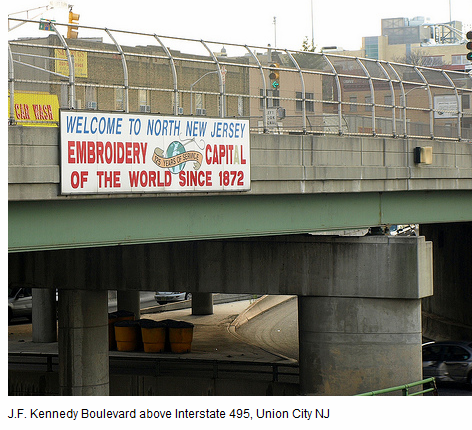
Aha. I have to give a talk in a couple of weeks at the American Association of Geographers, and found myself thinking of a sign one sees while driving into New York. I was researching the history of the North New Jersey embroidery industry, and discovered that someone has a Flickr picture.
It’s an interesting history of individual initiative and cumulative causation — the same kind of story now being played out all across the world, especially in China. I still love economic geography.

Sunday, March 28, 2010

Heading to a PhD program?

This graphic is just for you :)

iPad ... if you are planning to buy it, read this :)

The iPad goes on sale on April 3rd:

Apple plans initially to sell three iPad models, starting at $499, with built-in support for Wi-Fi wireless networking. Three additional models that can communicate over high-speed 3G wireless networks will go on sale later in April.
....
Apple may sell 2 million to 2.5 million iPads this year, according to Shaw Wu, an analyst at Kaufman Bros. David Bailey, an analyst at Goldman Sachs (GS), says sales could reach 6 million units. Apple shares gained 4.35, or 1.9%, to close at 230.90 on Mar. 26. The stock has more than doubled in the past year.
 So, should you buy one, if you have not already pre-ordered it?  (I am not planning to.  The only "i" thing I ever owned was an iMac, way back when ... Here is a helpful (!) decision-making flowchart :)


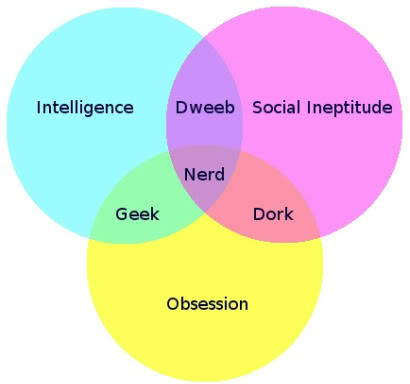
Understanding geek v. dork v. nerd v. dweeb

A creative use of Venn Diagrams :)
Of course, this is not the first time I have blogged about how the internet makes sharing such creative work so easy ...

No Test Left Behind :)