Showing posts with label NCAA. Show all posts

Friday, May 01, 2020

Gimme Football, or Gimme Death

There is so much to write about higher education in the context of COVID-19.  A post like this one from two days ago is simply not enough!

Consider this tweet:
How is it possible for a coach of a ball team at a public university to earn 93 million over a decade?  Do people not see the insanity here?

Of course, those are rhetorical questions.  People simple did not care, and do not care.  It is almost as if Americans took up arms in 1775 and yelled, Gimme Football, or Gimme Death!  Football and basketball became the core of the American religion!
For years, top-level programs have bathed in cash. They’ve erected lavish facilities, signed coaches to multimillion-dollar contracts and massively increased athletic staff sizes. ...But the gravy train has hit a snag.
As I wrote in this blog-post on this very date in 2016, "how do we get the American public to understand what education is about?"

Well, judgment day maybe just about round the corner:
In the end it [sic], it probably won’t matter what people believe or want. The cold, hard numbers will have final say. At some point, it might not be economically feasible for most Division I college athletic programs to continue to operate as they have.
That point might be now.
In response to COVID-19, if higher education is forced to stay focused on its mission and reduce its extravagant expenses on athletics, then it will be one of the few benefits to come out of this global catastrophe.

The following is an unedited post from May 1, 2016:
********************************************************


The Sunday edition of the local newspaper had plenty of pages dedicated not to the Syrian crisis, nor to climate change, and not even to the latest antics of the Donald.  The pages, with color photographs galore, were about football at the local university!  Thankfully, I did not throw up all over the paper ;)

It is simply bizarre that everybody, from the president--who was his usual masterful self at the comedy improv last night--down to the high school student complains about the cost of higher education and, yet, there are only a few of us who have been railing against the wasteful allocation of precious dollars towards college football (and basketball too.)  About five years ago, in this post, I quoted Katha Politt who phrased it well:
In no other country’s university system, after all, does sports play anything like the central role it does in American academic life. Men do not go to Oxford to play cricket; the Sorbonne does not field a nationally celebrated soccer team. Even in the most sports-mad countries, sports is sports and education is education. That’s a better system.
Which is why it was refreshing to read about a public university in a neighboring state deciding that it did not want to participate in the athletic arms race.  The president of the University of Idaho, which is the state’s land-grant university, writes that some of the alumni and supporters do not agree with his decision because of the impact on the "institution’s “prestige” and “relevance.”  The university president responds to them:
Success on the football field should complement the prestige and relevance of our academic institution. But football affiliation or performance should not define prestige and relevance. The impact of our institution should define us, as measured by the entire experience for our student body, including our athletes; by academic excellence across the university; by sustained research, scholarly activity and creative success; and by deep engagement with communities and partnerships with industry.
Oh my!  Finally, a university president develops a spine to stand up against the brainwashed who believe that colleges and universities exist in order to entertain them!
Why should my university's decision about what conference to play in matter to anybody outside our institution? Because I think our situation has potential implications for dozens of universities that play big-time college football and says a lot about the state of college athletics.
Exactly!  This is 'yuge', as the guy with short fingers and a huge ego says.
We can and will create an outstanding student-athlete and communitywide experience around our program, a vibrant football culture that is a great front porch for Idaho’s leading, national research university, a draw for future students and a continued source of pride for current students. And we can do it in a way that does not constrain the university and does not distract from our core mission.
"Core mission."  What a quaint idea for a university president to make a decision based on the mission's and higher education's mission!  How do we get other universities and their presidents to understand this simple concept?  More importantly, how do we get the American public to understand what education is about?
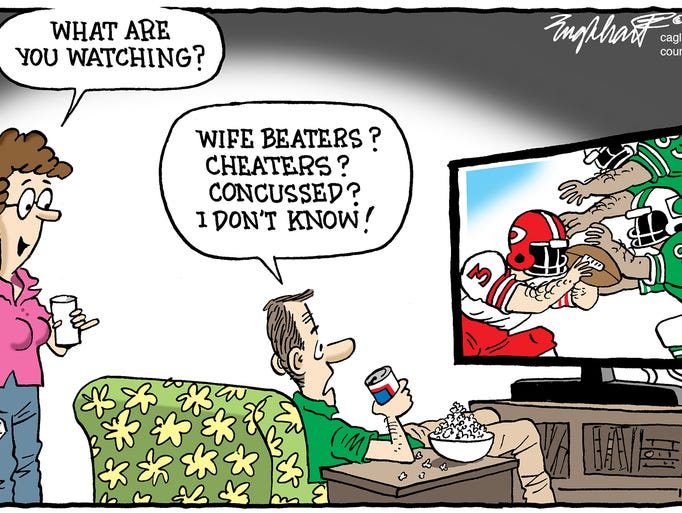
Source

Thursday, April 16, 2020

Abolish NCAA sports. It has no "business" at universities

Shahab earned his masters degree in Nebraska before he settled down in Southern California for good.  He once remarked that the entire state turns red when the University of Nebraska's football team played at home. (Red is their jersey color.)

In the Midwest and the South, and even here in Eugene, college football rules the lives of many.  I was a fan, once, before I was woke, as we say now. 

The coronavirus threatens the football season, and people are already losing it.  Like this coach at Oklahoma State, who went on a rant:
“In my opinion, we need to bring our players back,” said Gundy (via Sports Illustrated), who has posted a 129-64 record over 15 seasons with the Cowboys. “They are 18, 19, 20, 21 and 22 years old, and they are healthy and they have the ability to fight this virus off. If that is true, then we sequester them and continue, because we need to run money through the state of Oklahoma. ...
Everybody needs to see football. Even if you just watch it on TV, it’s going to make people feel better.”
This is at a time when colleges and universities--including his own--are all closed down.

There are plenty of nutcases like him, and addicted fans in millions, who are already panicking about no-football-Saturdays.  tRump knows well that his base are "yuge" football fans, and not having football in the months leading up to the election will doom him even in the red states.  The toddler-in-chief has, therefore, thrown a tantrum about that too!

With the COVID-19 crisis, we now have an opportunity for a major reset.  Will we make use of this opportunity?

I have been blogging forever about the atrocity of the business of sports at universities.  The following is a quote from Katha Pollit, which I blogged about in November 2011:
In no other country’s university system, after all, does sports play anything like the central role it does in American academic life. Men do not go to Oxford to play cricket; the Sorbonne does not field a nationally celebrated soccer team. Even in the most sports-mad countries, sports is sports and education is education. That’s a better system.
A much better system we too can have.

So, what should we do?  I need to only slightly alter Pollit's prescription:
Cancel the season. Fire everybody. Get real. Grow up.

Thursday, July 13, 2017

No college and all sports is the Republican dream

The other day, I told the friend that I doubt if there is even one Prius in the US with a confederate flag bumper sticker on it.  We might make fun of the liberals, yes, but at least they don't drive around with symbols of hate.

The stereotype of Prius owners exists because it reflects a great deal of the reality about them.  Similar is the stereotype of Republicans as military-loving and anti-intellectual types.  In those deep red states, the irony is their passion for college sports.  Yep, those very folks who aim their guns on colleges love, love, love football and basketball so much that they seem to tolerate the academic aspects of it because, well, without college there is no sport!

And with trump and his minions now in charge, hey, I am not at all surprised with this latest survey results:
A majority of Republicans and Republican-leaning independents (58%) now say that colleges and universities have a negative effect on the country, up from 45% last year. By contrast, most Democrats and Democratic leaners (72%) say colleges and universities have a positive effect, which is little changed from recent years.
Fifty-eight percent of the Republicans say that colleges have a negative effect on the country.  58!  These are the same idiots who gladly voted for trump!
Among Republicans and Republican leaners, younger adults have much more positive views of colleges and universities than older adults. About half (52%) of Republicans ages 18 to 29 say colleges and universities have a positive impact on the country, compared with just 27% of those 65 and older. By contrast, there are no significant differences in views among Democrats by age, with comparable majorities of all age groups saying colleges and universities have a positive impact.
"just 27% of those 65 and older" Republican leaners think that college does good.  I wonder who these people voted for in the November election!

These anti-college Republicans elected a guy with no plans for the future of the country.
Trump’s innovation maybe wasn’t to bash college so much as to ignore it. Previous candidates, in both parties, paid at least lip service to the idea of expanding educational opportunities and retraining workers whose jobs were eliminated by changes in the U.S. economy. The first indications that that was changing came in the 2012 GOP primary, when Rick Santorum (B.A., Penn State; M.B.A, Pitt; J.D., Dickinson Law) accused Barack Obama of being a “snob” for trying to expand access to education. Trump didn’t bother to make the case for retraining or education; he simply promised dispossessed blue-collar workers that their jobs in mills, factories, and especially coal mines were going to come back.
As simple as that.  Just ignore higher education.  After all, nothing good ever comes from that, right?  Further, colleges are nothing but full of those damn liberals and it is better to shut them all down!

I will borrow Paul Krugman's words to wrap up this post:
Republicans have changed in the age of Trump: what was already a strong strain of anti-intellectualism has become completely dominant. The notion that there was a golden age of conservative intellectuals is basically a myth. But there used to be at least some pretense of taking facts and hard thinking seriously. Now anyone pointing out awkward facts – immigrants haven’t brought a reign of terror, coal jobs can’t be brought back, Trump lost the popular vote – is the enemy. In fact, I’d argue that anti-intellectualism was, in its own way, as big a factor in the election as racism.
What this means for the future is grim. America basically invented the modern, educated society, leading the way on universal K-12 education, building the world’s finest and most comprehensive higher education system; this in turn was an important factor in how we became leader of the free world. Now a powerful political movement basically wants to make America ignorant again.
Sad!

Thursday, September 15, 2016

F*k College!

I have emailed the newspaper editor the following ...

In a presidential campaign season that has mostly been a farcical political theatre at best, and one that seems to be on track for a terribly tragic ending on November 8th, serious discussions of policies have been sorely lacking. Every once in a while, policy statements are uttered, but they are never engagingly discussed and debated by the wannabes nor their surrogates.

One of those statements was this: “College is crucial, but a four-year degree should not be the only path to a good job.”

If only we had at least talked about that!

Over the past few years, the country’s political leaders and educators alike have been manically promoting—practically mandating—four years of college, for free, for everybody. But why this college conscription?

For productive employment, a four-year college is certainly not the only pathway. As my neighbors often like to remind me, their successful small business is not a product of any four-year degree. Among the owners and the employees, only one has a four-year degree. And, most employees earn more than what many recent college diploma holders can only dream of.

Perhaps the spectacular entertainment provided by NCAA football and basketball is what draws most to college. If the taxpayer-subsidized NCAA sports did not exist, most teens would flee from college, and from courses like the ones I teach, and towards the trades.

Even the very notion of a four-year college is an anachronism. More than ever before, the young will have to be lifelong learners if they want to succeed in the world of employment. They might have to regularly reinvent themselves in new careers, some of which are yet to be created. They will have to keep up with new ideas and technology—if they cannot do it on their own, then they will need formal training. This is applicable to those going to the trades as well.

The unhealthy fixation on four years of college triggers even more unhealthy policy approaches. We actively encourage high school students to begin to earn college credits even as they are worrying about their first pimples. We convey to students a horribly distorted idea that they need to be done with education at the earliest so that they can move on to the “real world.” We develop measures on how successful colleges are in moving students along in the pipeline—we critically examine the rates at which students graduate within four, five, or six years and longer.

I would rather have colleges and universities emphasizing to students the importance of lifelong learning. Taking six or seven years should be lauded, as long as students are simultaneously gaining valuable real world experiences. Perhaps we ought to even encourage the less interested students to take a break after a year or two in college, in order to experience the world—whether it is as baristas or as legal-aides or as farm workers—and then return to learn more, which will be an example of the continuous lifelong education that will characterize their lives.

We need to talk about this, instead of merely keeping up with the latest dramatic act in the political theatre.

Wednesday, November 12, 2014

"like a cumin seed in a camel's mouth"

I had never, ever come across that idiom before today.  "like a cumin seed in a camel's mouth."  Interesting to imagine that!

Even more fascinating was this: I was not the only one to whom that expression was new.  Because, when I googled for it, the first in the search results was a question at quora.com.

Ready to be blown away?  The question at quora.com was:
I came across this in a BBC article (http://www.bbc.co.uk/news/magazi... ), and I don't understand what it could mean.
You see, I came across that idiom at that very BBC article as well!  Every day life is way too interesting sometimes ;)

Anyway, what was the answer there?
It is a literal translation of a saying in Hindi, the language spoken in Uttar Pradesh that features heavily in the link. 
It refers to something which is too little or insufficient to solve something massive (just as one cumin seed would do nothing to satiate a camel who may be hungry).
Aha!

To add to the interesting plot of asking questions and finding the answer, well, the BBC article was about students who feel they have a right to cheat at exams!  And, even more of a coincidence: the author, Craig Jeffrey is Professor of Development Geography at the School of Geography and the Environment, University of Oxford.  A geography professor!

So, what did this geography professor find in that article by a geography professor?
When I was working in western Uttar Pradesh, Singh ushered me into the bowels of a smoky canteen in the middle of his campus. Kicking a stray dog off a chair, he took out a packet of cigarettes.
"India's university system is in crisis," he began, lighting up and blowing the smoke towards the ceiling. "Cheating happens at every level. Students bribe to get admission and good results. Research students get professors to write their dissertations. And the professors cheat too, publishing articles in bogus journals."
I had heard about such things back in the day when I was a student in a part of India far, far away from Uttar Pradesh.  In the sheltered and prudish environment that I knew, as kids, we rhymed to ridicule a cheating act like copying:
copy-cat
kill the rat
monday morning
eat your rat.
I have no idea what that means! ;)

Back to the BBC article; what was shockingly new to me was this:
When pro-cheating rallies were held in Uttar Pradesh in the early 1990s, the state's chief minister gave in to demands and repealed an anti-copying act - he actually allowed students to cheat.
What the what?  In the first place, the government had enacted an anti-copying law? Like there is a law needed for that?  And then it was repealed?

In discussing the reforms is when the author had commented, "such reforms are like a cumin seed in a camel's mouth."

No wonder that American universities are very, very cautious when it comes to evaluating the merit of students from India and a few other countries.

Here in the US, we are a lot more professional when it comes to cheating.  We don't want students to go through the hassle of cheating.  Instead, we offer fake-classes for which we award students the highest grades.  Oh, on one condition though: the classes ought to primarily serve football and basketball players.  The rest of them need to real work to earn their letter-grades!

I suppose whatever reforms the NCAA comes up with will be "like a cumin seed in a camel's mouth" ;)


Tuesday, October 28, 2014

Are academic deans furious and waxing wroth over the latest athletic scandal?

The athletics-driven higher education is finally in some serious shit.
Way past time.
But at least now.

What happened, you ask?
For 18 years, thousands of students at the prestigious University of North Carolina took fake "paper classes," and advisers funneled athletes into the program to keep them eligible, according to a scathing independent report released Wednesday. ...
In all, the report estimates, at least 3,100 students took the paper classes, but the figure "very likely falls far short of the true number."
If ever one needed a metaphorical smoking gun in order to take the issue seriously, well, now there is no denying it.
"As an athlete, we weren't really there for an education," Rashad McCants, the second-leading scorer on the championship University of North Carolina basketball team 10 years ago, told CNN's Carol Costello. "You get a scholarship to the university to play basketball," he said. In other words, the point wasn't for him to actually learn. That's just sad.
"The university makes money off us athletes," McCants told Costello, "and they give us this fake education as a distraction." When McCants first made these remarks, university representatives tried to shoot the messenger, attacking him and his credibility.
Remember the lawsuits against the NCAA that colleges and the sports body were simply making money off the students who were hired under the guise of "student-athletes" but were, ahem, not students and only athletes?  The whole thing is a "subversion of the academy":
 The NCAA is a cartel of the major athletic universities in the United States that sets wages, playing conditions, and other aspects of intercollegiate athletics. Most prominently of these is a restriction on payments to football and basketball players. These two sports create billions of dollars in local and national revenues via gate receipts, TV contracts, and ancillary merchandise, not to mention millions of dollars annually at member schools in donations by alumni and other supporters of athletic programs.
It is a tangled web that was woven at UNC.  A web that involved even a, wait for it, ethics professor!  Yep, an ethics professor, who "directed the university’s Parr Center for Ethics," was totally in the middle of this scandal!

The president of Macalaster College is furious:
this is not fundamentally an issue about sports but about the basic academic integrity of an institution. Any accrediting agency that would overlook a violation of this magnitude would both delegitimize itself and appear hopelessly hypocritical if it attempted, now or in the future, to threaten or sanction institutions—generally those with much less wealth and influence—for violations much smaller in scale.
Most of us work very hard to conform to the standards imposed by our regional accrediting agencies and the federal government. If falsified grades and transcripts for more than 3,000 students over more than a decade are viewed as anything other than an egregious violation of those standards, my response to the whole accreditation process is simple: Why bother?
Exactly!  Why bother with real work?  I agree with him that the university should lose its accreditation until it is able to convince us that the grades mean something.
The crime involves fundamental academic integrity. The response, regardless of the visibility or reputation or wealth of the institution, should be to suspend accredited status until there is evidence that an appropriate level of integrity is both culturally and structurally in place.
Anything less would be dismissive of the many institutions whose transcripts actually have meaning.
Of course, that will not happen.  Because, dammit, that won't happen!  After all, this ain't anything new :(


Thursday, June 12, 2014

The "student athlete" and the American university

After "five years and thousands of pages of filings":
The class-action lawsuit filed by lead plaintiff Ed O'Bannon -- a former UCLA star basketball player -- calls into question the long-held NCAA notion of amateurism and seeks an injunction that would effectively allow top men's basketball and football players to profit from their names, images and likenesses that are used in live broadcasts, rebroadcasts, video games, DVDs and more.
Of course, I am cheering the plaintiffs.  I would love to see the complete annihilation of the NCAA as we know it.  The whole college sports industry is an abomination, and an uniquely American one at that!

First, this excerpt:
Another course that I didn't like, but somehow managed to pass, was economics. I went to that class straight from the botany class, which didn't help me any in understanding either subject. I used to get them mixed up. But not as mixed up as another student in my economics class who came there direct from a physics laboratory. He was a tackle on the football ball team, named Bolenciecwz. At that time Ohio State University had one of the best football teams in the country, and Bolenciecwz was one of its outstanding stars. In order to be eligible to play it was necessary for him to keep up in his studies, a very difficult matter, for while he was not dumber than an ox he was not any smarter. Most of his professors were lenient and helped him along.
You will be surprised that the excerpt was not from this NCAA antitrust lawsuit.  It is from James Thurber's hilarious tales from his university days, almost a hundred years ago!

Sounds absolutely contemporaneous, right?

We read this Thurber piece back in high school in India.
Yes, back in India!
The India where we students, perhaps with the exception of that one guy, had absolutely no idea that the football in America was not the same football that we played.

But, I bet many of us could relate to Thurber's experience in the botany lab!  I was (and continue to be) awful with hand-drawing and, well, I "outsourced" to my good friend the drawings we were required to do for the biology lab work.  Somehow I didn't think it was unethical at that time, and now as a faculty I worry about my students outsourcing their work :)

The fact that I loved that humor even without the faintest idea of the nuances of American higher education system and the role that football has in it means that, well, it is no surprise that I am now a huge fan of the New Yorker magazine--the Thurber's kind of intelligent humor and cartoons continue on, even decades after Thurber exited the magazine and this world. 

I wonder how Thurber would have made fun of the NCAA! Well, there is always that other finest source to tickle my funny bone;)
Saying the student-athletes would have definitely become an enormous thorn in their side, officials from the NFL front office expressed their profound relief Tuesday that Northwestern University’s pro-labor activist football players will never make it to the pros. 

Wednesday, January 16, 2013

Universities spend more on athletics than academics? Shocked, shocked :)

May I first have a chart, please?

We certainly know how to spend the precious dollars in order to educate the youth.  USA! USA! USA!

"I'm shocked, shocked" as Inspector Renault said :)

I hope even the smaller universities like mine will read such news items and correspondingly amp up their sports expenditures, and drastically scale down the emphasis on education.  What a tremendous waste it is to educate the young, especially at taxpayer expense, right, when coaches at these universities are vastly underpaid?

Friday, November 18, 2011

Abolish NCAA sports. It has no "business" at universities ...ctd

How about the following point as a follow-up to this previous post?
In no other country’s university system, after all, does sports play anything like the central role it does in American academic life. Men do not go to Oxford to play cricket; the Sorbonne does not field a nationally celebrated soccer team. Even in the most sports-mad countries, sports is sports and education is education. That’s a better system.
Makes perfect sense to me.  Katha Pollitt has a simple bottom-line in that essay:
Cancel the season. Fire everybody. Get real about rape. Grow up.
Yep. 

Abolish NCAA sports. It has no "business" at universities.

[It's] time for Division I sports programs to be severed from higher education. Our mission as employees of universities is to teach students and to do research. Supporting felons and keeping long-term pedophiles on the college payroll is not part of my job description.
 Yep.

Thursday, October 06, 2011

I care about salaries of college coaches, not of presidents

I am quite happy about the NBA lockout.  Ten guys dripping with sweat and chasing a ball, all to figure out who can slide one through a hoop, for which they get paid a gazillion dollars!  A colossal waste of time and money.

Will the NBA lockout affect local economies?

"There is no way the NBA lockout will have any significant economic consequences," says the University of Alberta’s Brad Humphreys, an economist who has studied the effects of sports work stoppages.

Even worse is all the commercial aspect of college sports.

I am glad that salary raises for administrators at the University of Oregon made the news.  Thanks to all the brouhaha, we were reminded, early on in the football season, that there is a real university campus with buildings and students, associated with a local team called the Ducks.

While college sports grew out of a laudable and valid conviction that a sound mind needs a sound body too, we need to keep in perspective that football and most other college sports have veered far away from that original notion, and have morphed into yet another branch of a sprawling entertainment industry.

The question, especially during these trying times of high unemployment and stalled economic growth, is whether such entertainment delivers long term economic benefits.

This is where I begin to worry about our misplaced loud protests over a few thousand additional dollars spent on academic salaries versus the millions that we so enthusiastically invest in the college sports industry.

To begin with, all entertainment activities are not created equal.  When Hollywood produces movies and television shows, those are products consumed all over the world and not merely in California or the US.  In 2010, for example, films alone earned slightly more than $10.5 billion in the US, but earned almost 32 billion dollars at the global box offices.

These billions are significant exports, and help us tap into the niche in the global marketplace.  The niche that is often bombastically referred to in the academic jargon of “comparative advantage.” 

The corresponding employment generation that results from such a multi-billion dollar export industry is also why it feels like every other waiter in Los Angeles is a Hollywood wannabe. 

However, sports and sporting events are not in this category.  Most economic analysis routinely conclude that the stadiums, arenas and sporting events do not have consistent and long-term economic benefits and multipliers, and could even have unfavorable benefit-cost ratios. Even their local economic significance is in suspect.

College sports, in particular, serve a highly geographically restricted market even within the United States.  Professional sports are slightly better in their global appeal.  For instance, even my mostly sedentary brother is one of those many who follow this sport, even though he lives far away in Australia and has barely visited the US for a week.

Thus, as much as various college sports provide entertainment throughout the academic year, they do not generate employment and incomes with the kind of economic multipliers that, for instance, an Intel has had, and will continue to have, in the Portland metropolitan area and throughout Oregon as well.

The economic success of businesses like Intel, and entertainment activities like movie-making, are highly dependent on the other reason why college sports teams exist in the first place--the academic aspect of the universities.

Research universities push the edges of scientific and technological understanding, and it is no surprise then that a cluster of such institutions in the San Francisco area gave birth to, and continues to nurture, the huge information industry there.  It is, similarly, a symbiotic relationship between Hollywood and the universities in Southern California.  Further, we need to keep in mind that movies are not merely about lights, camera, and action anymore.  One only needs to recall the high tech wizardry of "Avatar" or any of the Pixar releases to be reminded of how technologically advanced and sophisticated this entertainment industry is.

Against such a background, I care not about the half a million dollar compensation for a university president, nor about the million dollar salary of an Intel executive, nor about the ten million dollar payday for a Hollywood actor—though, I would prefer a shuffling of that listing.  However, I am highly concerned about the phenomenal investment in college sports, including the multi-year and multiple-million dollar contracts that have become all too common for coaches in major college sports.

Successful sports teams could certainly help us forget, at least for a few hours, our individual and collective economic insecurities, but they are not going to help us build a secure and prosperous future in a rapidly changing world.

Thursday, September 22, 2011

Quote(s) of the day: on the shameful business of college sports

“I’m not hiding,” Sonny Vaccaro told a closed hearing at the Willard Hotel in Washington, D.C., in 2001. “We want to put our materials on the bodies of your athletes, and the best way to do that is buy your school. Or buy your coach.” ...
“Why,” asked Bryce Jordan, the president emeritus of Penn State, “should a university be an advertising medium for your industry?”
Vaccaro did not blink. “They shouldn’t, sir,” he replied. “You sold your souls, and you’re going to continue selling them. You can be very moral and righteous in asking me that question, sir,” Vaccaro added with irrepressible good cheer, “but there’s not one of you in this room that’s going to turn down any of our money. You’re going to take it. I can only offer it.” 

Simply awful.  Faustian bargains!

This is merely the beginning of a lengthy essay by Taylor Branch on "The Shame of College Sports" (ht.) Read it, pass it around, and talk about the essay even when you are watching the ball game on TV.

Branch writes:

Today, much of the NCAA’s moral authority—indeed much of the justification for its existence—is vested in its claim to protect what it calls the “student-athlete.” The term is meant to conjure the nobility of amateurism, and the precedence of scholarship over athletic endeavor. But the origins of the “student-athlete” lie not in a disinterested ideal but in a sophistic formulation designed, as the sports economist Andrew Zimbalist has written, to help the NCAA in its “fight against workmen’s compensation insurance claims for injured football players.”...
Dale Brown, the retired longtime basketball coach at LSU. “Look at the money we make off predominantly poor black kids,” Brown once reflected. “We’re the whoremasters.”  

A long time ago, at least it feels that way, I used to follow college football, primarily because of the school I attended.  Through the years, I have slowly drifted out of it.  To the level that when a few days ago, on game day, when I ran into two neighbors and one of them asked me whether I was stepping out because it was half-time, the other answered for me, "he doesn't follow football."  I added "That is true. I couldn't care."  A long-running joke about the business of college sports that another neighbor has is this: "Hey, until recently I didn't know that there is a university and a whole lot of buildings associated with the Oregon Ducks."

But, I do care--about the horrible business it has become, and which has led higher education far, far, away from its educational mission. Away from the pursuit of knowledge to the pursuit of dollars on the backs of unpaid labor. So much so that even a small school like the one where I teach wants to emphasize athletics more than it wants to do anything about education and the long-term success of its students.

Branch concludes the essay with these comments:

“Scholarship athletes are already paid,” declared the Knight Commission members, “in the most meaningful way possible: with a free education.” This evasion by prominent educators severed my last reluctant, emotional tie with imposed amateurism. I found it worse than self-serving. It echoes masters who once claimed that heavenly salvation would outweigh earthly injustice to slaves. In the era when our college sports first arose, colonial powers were turning the whole world upside down to define their own interests as all-inclusive and benevolent. Just so, the NCAA calls it heinous exploitation to pay college athletes a fair portion of what they earn.

All the more the reasons for me to stay away from college football.  Oh, and when I made a comment about how even my faculty colleagues, who normally spew socialist language, are college-sports crazy and even organize betting pools during March Madness, well, they went ballistic.  These "leftist" rabid fans of college sports who defend the big business of college sports are the most hypocritical of them all.  They are so ready to criticize, for instance, Wal-Mart, yet are so religiously faithful to college sports.  Compared to the mercenary tyrannies in NCAA sports, Wal-Mart is a gazillion times better as an employer and as a provider of goods and services.

Friday, November 12, 2010

The football-academic complex called "universities"

A few years ago, there were all kinds of speculations that USC's star player, Reggie Bush, was being paid in violation of NCAA rules.  It was a collective shrug of sorts as a response to such news.
Now, yet another star player and payments--this time at Auburn
The fact that an amateur athlete allegedly soliciting a six-figure payment to secure his services barely raises the eyebrows of college football lifers only serves to highlight how insulated the college athletics echo chamber has become. 
A lot lies beneath these high profile news items.  A lot more mundane stuff that goes unreported. Like courses with diluted standards to keep players within the passing grades ...

Oh well. A few decades ago, the president of the University of California system summarized what it means to keep a university going: parking for faculty, sex for students, and football wins for alumni.  So, no point challenging the football-academic complex, which will find ways around any number of Congressional investigations.

Wednesday, March 24, 2010

What do book geeks do during March Madness?

Over to Salon:

Bracket-mad readers are currently participating in the DABWAHA (Dear Author Bitchery Writing Award for Hellagood Authors) tournament for romance novels, the BSCreview (BookSpot Central) competition for science fiction and fantasy books, and a match dedicated to selecting the world's favorite fictional detective.
The grandaddy of them all, however, is the Tournament of Books,mounted by the Morning News Web site and now in its sixth year. Unlike DABWAHA, ToB doesn't offer prizes to readers who make the most accurate predictions, and unlike all the other contests, it doesn't rely on polling readers to determine the winning books. Instead, a single guest judge selects the victor in each bracket, while the tournament's overseers, Kevin Guilfoile and John Warner, serve up commentary garnished with the occasional dab of sportscaster lingo ("quintuple toe loop"?). There's even an official statistician who crunches such questionably significant numbers as (I think I have this right) the ratio of an entry's length to its likeliness to ascend to the next round.

:>)

Saturday, August 30, 2008

Amateurism in college football? HA!

The co-chairs of the Knight Commission on Intercollegiate Athletics want us to believe that college football is amateur sport. To which I say: HA!

In their op-ed in the LA Times, Chancellor William E. Kirwan of the University of Maryland system, and President R. Gerald Turner of Southern Methodist University, write: This week also marks the start of a new era in college football, one in which fantasy leagues run by commercial entities exploit college players as their virtual game pieces. These online fantasy leagues, which use the real names and statistics of collegiate athletes, raise a crucial question for higher education leaders: Is it amateurism in college sports that has become a fantasy?

In case they did not know, amateurism became a fantasy a long, long time ago. Remember Robert Maynard Hutchins as the University of Chicago president? Here is a reminder: "In 1935, senior Jay Berwanger was awarded the first Heisman Trophy (which is proudly displayed today in the Ratner Athletic Center on campus). Just four years later, however, Hutchins abolished the football team, citing the need for Chicago to focus on academics rather than athletics." To paraphrase Don McLean, that was the day that universities recognized that amateurism in college football was long dead.

The cynic in me thinks that Kirwan and Turner, and the NCAA, are merely upset that others are making money from college football--perhaps they think that only universities can make money from it. HA!

Monday, July 14, 2008

Touchdown Jesus in the classroom

The primacy of athletics over education bothers me. A lot. Despite (or because of?) the Trojans winning national championships.

I still remember how the Fighting Irish ran circles around awful USC teams until Pete Carroll arrived at USC. But, Notre Dame and Stanford always offered a special attraction because of their much higher calibre--academic--students. This LA Times oped brings up all these issues. An excerpt:
Although Notre Dame cuts football players a break in regard to admissions, its relatively high 79% federal graduation rate (FGR) -- the best measure of whether recruited athletes fit a school's academic profile -- indicates that the university recruits athletes who actually are likely to graduate from Notre Dame. The average FGR for last year's top 25 Football Bowl Subdivision teams was about 50%. Louisiana State University, the 2007 national champion, graduated 38% of its players; runner-up Ohio State University graduated 48%. (California's football powerhouses produce mediocre results at best, with USC at 54%, UCLA at 51% and UC Berkeley at 44%.)

.... Perennial powers such as LSU and the universities of Georgia, Florida and Oklahoma, on the other hand, have teams with graduation rates in the 35% range. Notre Dame endured a crushing loss to LSU in the 2007 Sugar Bowl. These data suggest that schools that hold their ground on academic standards for athletes may be at a disadvantage in college sport's recruiting wars. Is it merely coincidence that Stanford and Duke, two of the teams the Irish were able to beat in 2007, have football graduation rates over 90%?

The National Collegiate Athletic Assn. no longer discloses the average standardized test scores of various football teams. But would anyone be surprised to find that test scores, like federal graduation rates, correlate negatively with gridiron success?