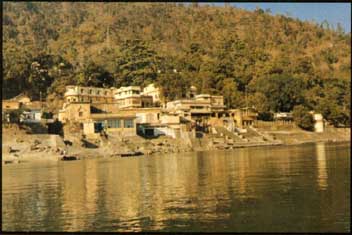
Showing posts with label pattamadai. Show all posts

Monday, December 21, 2015

Our own felicity we make or find

"Have you ever read my school's Golden Jubilee book?" asked my father.

I know that the school that he attended in the village is an old one, founded many decades ago.  Yet, I had forgotten that the school dates back to the late 19th century and the book that he was referring to is from 1941-42.

The down-the-memory-lane essays by two distinguished alumni were a treat for this pretentious intellectual and writer.  One of them was certainly a classy essay that was about the school days, which were from 1900.  It vividly brought to life the personalities--the headmasters and the teachers--and the few students who were mentioned.  A piece of writing of the highest caliber, in which wonderfully woven was the quote from Oliver Goldsmith, "Honour sinks where commerce long prevails."

I had never come across that quote.  Yet again, I am humbled by how little I know.

Google gave me the source of that quote,  It is from Goldsmiith's poem, The Traveller.  It turns out that the poem is about one of my favorite topics--the pursuit of happiness.  Wikipedia offers this:
The dedication to The Traveller sets out Goldsmith's purpose:
I have attempted to show, that there may be equal happiness in states, that are differently governed from our own; that every state has a particular principle of happiness, and that this principle in each may be carried to a mischievous excess.
He begins the poem by extolling the happiness of his brother Henry's simple family life. Then, from a vantage-point in the Alps, he surveys the condition of the world. Every nation, he says, considers itself the happiest, but this is only because each nation judges by its own standards. In fact, happiness is probably equally spread, though in different forms which tend to be mutually exclusive.
The poem is from 1764, when "nations" meant different from how we think of nations now.  We could, therefore, even think of cultures, and the sentence reads very well: "Every culture, he says, considers itself the happiest, but this is only because each culture judges by its own standards."  We could also bring that down to the individual level, and it still  makes sense that we would judge happiness by our own respective standards.

I located a site that had the entire poem.  As tempting it was to note "tl; dr" I gave it a quick read.  The poem, certainly philosophical, is loaded with thoughts, place names, and events, all of which require careful reading.  I can easily imagine the essayist remembering the impressive headmaster reciting the poem and interpreting it for the class.  I wish I had that kind of a teacher even now who would  provide me with the kind of a thrilling and memorable learning experience that the essayist had as a school-boy in the classroom more than a century ago.

Wikipedia further notes that Goldsmith concluded the poem with the philosophical notion that wherever we might be--England or America or France or Italy--happiness comes from within:
How small, of all that human hearts endure,
That part which laws or kings can cause or cure.
Still to ourselves in every place consign'd,
Our own felicity we make or find
May you also find or make your own felicity.

Thursday, August 20, 2015

Keeping time as people leave

If she were alive, she would be 102.

She died 35 years ago.  

"I cannot believe it has been 35 years already" mother said.  "Time goes by really fast" mother added.

"As has been the practice for many years now, I gave money to the temple" father chipped in.  "I spend a few minutes in the morning remembering her, and say a few prayers."

In our own ways, the three of us recalled her; she was:  
My grandmother;
My father's mother;
My mother's mother-in-law.  

The cosmos handed her an extremely raw deal.  Misfortunes upon misfortunes.  The eldest child in the typically large family of those days, she was the beloved sister to her siblings and practically the mother for the two youngest sisters.  A pretty girl she was when she was married.  A girl--not a young woman--as was the custom for centuries until recently.  She was only fifteen when she had her first child, and barely seventeen when the second--my father--was born.

So, there she was all of seventeen, a mother of two boys of whom one was only forty days old, when her husband died.  He died far away from her village, in the big city of Madras where he had gone to participate in political meetings and make his contribution to India's independence movement that was gaining strength.  She never even got to see her husband's dead body.

She was now a seventeen-year old widow, with a two-year old son and a forty-day old infant.

The unexpected death of the son was traumatic to the husband's parents.  Within a year, the mother died.  And then the father also died.  

She was now about twenty, with two young boys, without the father-in-law and the mother-in-law.  A couple of years later, her mother also died and her father became senile.

Meanwhile, society compelled her to shave her hair, and wear the plain beige saris that marked women as widows.  That is the how even my father remembers her.  Father has no idea how his mother looked as a woman with hair and wearing regular saris and clad in jewels as young women would typically look.

And there were more mishaps, big and small.  As I recall grandmother and her life, I am all the more impressed that she was, by and large, an optimistic and fun-loving woman--despite all these setbacks.  Maybe that's what we literally saw in her--an enlarged heart.  Yes, a heart that was enlarged.  It started slowing down.  Nearly forty years ago, India didn't have any treatment for her enlarged heart.

One day, she seemed to be more than a tad short of breath and even the oxygen at home was not helping her.  Mother and I rushed her to the hospital.  I was in the front with the driver and mother was in the back with grandmother.  We were not even halfway to the hospital when my mother said that grandmother had died.

That was in 1980.  Thirty-five years ago.

The street in Pattamadai, where our ancestral home (sold a few years ago) is located

Wednesday, December 31, 2014

The times they are a-changin'

Once, during the annual summer vacations, from Sengottai we went to Trivandrum, where the highlight for this young kid of then, was the visit to the aerodrome, as it was called.  I am sure I had no idea then that I would one day step into a jumbo jet for the first time, and that from then on flying would become a part of life.

In place of the annual summer vacations of a life past to visit the grandparents, I seem to have developed an annual winter vacation routine visiting the folks in the old country.  I am now older than my parents' age when I went to the aerodrome, and my parents are older than my grandmothers were.

Years and decades have gone by, as if in a nanosecond.

The old country is less and less like the country that I once knew.  Understandable.  If I could have changed from a kid who was impressed by the aerodrome to a grey and balding old man, so can the peoples and the natural and built environment in India.

I saw five women walking along the crowded Usman Road.  All of them wearing niqabs.  Only their eyes were visible.  I had never seen women in niqabs when I was a kid.

A woman was ironing clothes on a cart by the roadside.  In the past, it was a man's job.  Now, it is a woman.  Even more interesting was that she was not clad in a sari, but was wearing the churidar combo.  As a kid, I would not have imagined a Tamil woman wearing a churidar ironing clothes on a cart by the roadside.

I am always impressed with the rows of Hindi-speaking guys waiting for customers--always women--to offer the henna services.  As a kid, all I knew was the simple applying the home-ground henna on fingers and the palms, without any intricate patterns--and that too by Hindi-speaking guys from somewhere.

Seemingly everybody is eating and drinking on the sidewalks, in the tea-stalls, in the cafes, in the "hotels" (as restaurants are referred to here.)  As a kid, it was always a special deal to get even a candy from the store--for which we had to beg and annoy the parents.

The three places--Neyveli, Sengottai, Pattamadai--that provided the backdrop for my childhood were all small enough that it seemed like I could not go anywhere without people knowing me.  The places were all quiet and peaceful.  The kid from those days would never have imagined the noisy, noisy, noisy, life in anonymity in this city that has been home to the folks now for more than the years that I have been away in my adopted land.

The niqab-wearing women, the ironing woman, the henna-workers, all of them would have reasons to be happy and would have their own reasons to be unhappy.  I wish them all happiness as this annual vacation comes to an end and as I prepare to leave on a jet plane from an airport.

Happy new year, dear reader!

Sunday, March 02, 2014

Blogging about reading Wendy Doniger's "The Hindus": #2

Where does one begin the narrative on the Hindus, right?  Will be quite a challenge.  No wonder the book is as long as it is, and I am yet to move past the introductory chapter!

Meanwhile, a friend informs me that the saga continues:
Another book on Hinduism by American indologist Wendy Doniger has come under attack from the same Delhi-based group which had compelled the publishers of an earlier work by her to withdraw the title. 
Shiksha Bachao Andolan Samiti (SBAS) demanded on Saturday that the Aleph Book Company stop sales and pulp all remaining copies of Doniger's book "On Hinduism", published in 2013. 
Which is why negotiating with terrorists is a bad idea--they get emboldened the moment you yield. 

Anyway, continuing on with "The Hindus" by Wendy #Doniger (the immediately previous post here):
The textbook of legal code (dharma) attributed to Manu (first century CE) does not use the word "Hindu" but does offer a geographical definition of the people to whom his dharma applies (a definition that, it is worth noting, uses animals to define humans):
From the eastern sea to the western sea [the Indian Ocean and the Bay of Bengal], the area in between the two mountains [the Himalayas and the Vindhyas] is what wise men call the Land of the Aryas. Where the black antelope ranges by nature, that should be known as the country fir for sacrifices; and beyond it is the country of the barbarians. The twice-born [the upper classes and particularly the Brahmins] should make every effort to settle in these countries.
At first blush,, it might seem like Manu was the biggest ignoramus that ever lived. But, in jumping into that conclusion, we forget to contextualize his observations.  It was 2,000 years ago, when humans had very little idea of the planet, and its physical and human geography.  It is, therefore, quite an impressive achievement that Manu was familiar with the geography that he describes.  If we laugh at his idiocy now, imagine how generations two centuries from now will find our own idiocy to be a tragic farce!

However, those few sentences also underscore the rising importance of the upper classes, and the Brahmins in particular. A social dynamic that has immensely messed up India forever.

The narratives about India and Hinduism often completely ignore the non-Sanskrit stories. I grew up in a Tamil language environment--the oldest living language with a rich literature past.  A language that is not derived from Sanskrit, and which uses a script that is not god's own, Devanagiri, that Sanskrit uses.  Thus, the world outside rarely has any clue about the Tamil and Dravidian stories--of Hinduism and otherwise.  How did that happen?
Sanskrit is the model for most North Indian languages (and the source of much of their grammar and some of their vocabulary), , as Tamil is for the Dravidian languages of the south (such as Telugu, Kannada, and Malayalam.) ... Not only did southern ideas go north, and vice versa, and not only did Tamil flow into Sanskrit and Sanskrit into Tamil, but Tamil went north and Sanskrit south.
...
The British used texts as a way of disregarding actual Hindu practices and justifying their own imperial project with textual citations. And the Orientalist orientation to texts is the orientation toward Brahmins (and Sanskrit, and writing.) More recently, scholars have begun to pay more attention to ritual, archaeology, art history, epigraphy, the records of foreign visitors, and, in the modern period, ethnography, revealing new aspects of a lived religion that is very differently represented in texts.
There was a great deal of non-Sanskrit, non-Vedic, Hinduism that I was familiar with right from when I was a kid.  At grandmothers' villages, there were village deities that had nothing to do with the Vedic gods.  There was the "maadan"--spirits. The "god" who protected the population from the dreaded smallpox was non-Vedic. The favorite god of many Tamils, "Murugan," is almost exclusively worshipped in the Dravidian south.

The "kodai" festival at Pattamadai was a village celebration in non-Vedic ways. My father's cousin sister has a favorite story about this.  Girls could go to those celebrations up until they hit puberty.  But, rarely were kids--boys and girls--taken to those because of the "strange" practices there.  This aunt of mine nagged her father enough--she was the youngest of four--that he took her to the festival. One strange thing after another. And finally they sit down for the feast. A guy proceeds to cut himself on his elbow and blood gushes out.  He then moves from one plantain-leaf-plate to another and places a drop of his blood on each.  The aunt said she almost fainted.  This was less than fifty years ago!

I have always considered it a tragedy that the old country did not spend time and energy understanding such old faiths, which were also part of Hinduism.  Instead, it all became a Brahminical, Sanskrit, version of a very complex and diverse religion.  I am sure Doniger will get to such discussions as well.

At the temple out in the wilderness where our "family temple" is located

Wednesday, December 04, 2013

Were my grandmothers racists?

A friend emailed me this video clip, in which Aziz Ansari--the Indian-American comedian/actor--observes that racism is very much on the decline here in the US and that the old racists are, well, dead or are dying from old age.  As with any public policy or comedy line, Ansari then works on the old grandmother angle and even asks the audience to make noise if their racist grandmothers died recently.

I agree with him.  Race is not that much an issue anymore, nowhere near what it was even during the time of the Rodney King and OJ Simpson dramas two decades ago.  But, it is there.

Anyway, Ansari's comment got me thinking.  Were my grandmothers racists?

There was no doubt that the grandmothers were steeped in the traditions.  They observed a great number of orthodox practices.  The interesting aspect is that the orthodoxy discriminated against all kinds of humans, depending on the contexts.  In the mornings, we kids were not allowed to touch grandmothers if we had not had our showers by then.  Menstruating females were condemned to a corner of the ancestral home, and even the sight of those females meant that grandmother had to cleanse herself all over again!  And, yes, the treatment of the lower castes. ... the list is endless.  It seemed like equal-opportunity discrimination ;)

But, would I think of my grandmothers as having been racist?

When they were presented with a world that was different from the traditional one that was the only world they had ever known, well, their practices changed, and changed dramatically.

I can relate many examples in this context.  For instance, one grandma lived with us for the last seven years of her life.  Her life was no longer back in the village.  In the new setting, too, she could have continued on with many of the old practices.  Yet, she ditched some, and moderated quite a lot.

As I think back about those years, I can see how she appreciated and supported the very different ways in which we kids were behaving in an environment where traditions died.  At school, we mingled with students of all castes and religions.  It did not bother her at all.  In fact, we even used to joke about this!  She was always happy to meet and chat with my sister's classmates when they came over.  (I was not a social being even then!)

Grandmother had an enlarged heart condition that required hospitalization at one point.  The attending physician, an MD those days when it was rare, was from a low tier of the atrocious caste system.  He treated her well, and she was happy about him as the physician.  (While I struggle to recall his name, I do remember that a year or so after the hospital interactions, the physician was elected as our representative to the Parliament and we felt great that for once we actually knew our MP!)

So, were my grandmothers racists?  They gave up the bad old traditions when presented with better ways to think about the world.  They modified their behavior not out of compulsion.  Not out of fear that otherwise life will be miserable for them.

Racism is merely one of the many prejudices around.  We walk around with baggage of prejudices that we might have picked up from our childhood days, from religious leaders, from peers, ... whatever.  If people point out that what we carry in the bag is not healthy and even after that if we do not get rid of that baggage, then we are bigots.

My grandmothers offloaded plenty of baggage, and in a hurry.

Sunday, November 17, 2013

Give a man free fish ... soon he will be bored and will choose to pay for them!

With the exception of people like my super-wealthy gazillionaire friend (haha!) or people like me who, according to my neighbor, never works for a living, most dread the weekdays and look forward to weekends and holidays.

We are a strange species.  We bring all the trouble of work on ourselves and then dream about not having to work.  We chain ourselves, put a lock on it and throw the key away, and then dream of being free at least every two days of the week.

Some of the most free people that I have met in my life were in the villages like Pattamadai and Sengottai.  Seemingly in sync with the hot temperature conditions, where even a brisk walk can tire a person, there was a whole lot of doing nothing.  We folks from urban and industrial areas, having been used to working in order to earn the privilege of sitting around twice a week, found that kind of a rustic life to be dull and boring and even labeled them as lazy for not doing anything.

The older I get, the less clear I am on who is really free.

We dream of a future, made possible by science and technology, when we won't have to work at all.  Robots that clean the homes. Ready-to-consume nutritious food in full and plenty (even if it will be in unrecognizable forms to us in the present.)  A future in which even firefighters won't have any work because nothing synthetic will ever crash or burn thanks to advancements in science and technology.   In that future, we will have all the free time in the world.  Or, at least, more weekends than weekdays.

When students complain about income inequality and unemployment--about which I have been worried for a long time, evidenced by the number of blog posts on those issues--sometimes I have thrown at them a different scenario to think about.  What if those profiting from automation and outsourcing agreed to guarantee every American an income that will be at higher-than-poverty level, and they can work and earn more if they chose to?  The possibility of a permanent vacation. Every day will be a weekend. A Sengottai/Pattamadai life of minimal work.

Almost always, students do not like that idea.  Sitting around, or even standing around in a museum, doing nothing can become a bore.  Fishing is fun when you do it once in a while, but not day in day out.  Or, given the Puritanical streak, some see the virtue in working as a means of not merely earning a livelihood but about feeling good about oneself and the path to god and heaven.

Of course, that guaranteed minimum income is only a thought experiment.  But, I am not the only one who has been thinking like that--I am merely an insignificant person to think about it ;)
A simple idea for eliminating poverty is garnering greater attention in recent weeks: automatically have the government give every adult a basic income.
The Atlantic's Matt Bruenig and Elizabeth Stoker brought up the idea a few weeks ago when they contemplated cutting poverty in half, and Annie Lowrey revisited it in today's issue of the New York Times Magazine.
See, there are quite a few of us loons out there!

Why are we even constructing such thought experiments?  Because it makes things simpler at one level:
a minimum income would also allow us to eliminate every government benefit as well. Get rid of SNAP, TANF, housing vouchers, the Earned Income tax credit and many others. Get rid of them all. A 2012 Congressional Research Service report found that the federal government spends approximately $750 billion each year on benefits for low-income Americans and that rises to a clean trillion when you factor in state programs. Eliminate all of those and the net figure comes out to $1.2 trillion needed to pay for a universal basic income, still a hefty sum.
Interesting, right?  I tell ya, this thinking business is a whole lot of entertainment that no amount of sports and movies can equal ;)

Of course, with a Congress that can't even figure out what color toilet paper to use, such radical approaches will forever remain only as thought experiments.  It does not mean that there are no attempts--they are not here in the US though!
Switzerland’s citizens will soon vote on a referendum to give each working-age adult in Switzerland a basic income of $2,800 (2,500 francs) per month.
We are living in some interesting times.

A couple of miles outside Sengottai

Tuesday, September 17, 2013

What women want ...

Our annual summer holidays were almost always spent at grandmas' villages.  (My mother would argue that Sengottai, unlike Pattamadai, was no village but a modern town with piped water and electricity even back when she was a kid.)

During one such vacation, I watched with a mix of fascination and sadness my father's cousin sister pleading with her father that she be allowed to continue with her college education.  She had completed the undergraduate program in economics, which itself was a notable achievement for those days, and wanted to work on the master's degree.

A more recent Pattamadai--in 2005

She was one strong-willed woman, but her life was severely circumscribed by the role that men had in society.  Thus, when her father flatly negated her plan for higher studies, well, that was the end.  I remember getting teary-eyed myself when she was crying--hey, I was a kid!

As a male, I will never truly understand what women went through, and what women go through even now.  I merely have a feel for some of the issues they have to grapple with.  Issues that typically might not even blip in my male life.

Conditions have changed a lot for women over the decades since that summer when my aunt was devastated that she had to terminate her college plans.  Many of my own classmates, for instance, went on to become doctors and scientists and managers.  The generations that followed have had more and more choices to choose from.

The array of choices does not mean that life for women has gotten any better.  Given the biological aspect that only the female can reproduce, well, it is all the more a struggle to figure out what it is to be a female. It seems very easy for them to get damned if they did and to be damned if they didn't.  It is one tough life, I would imagine, to be a woman in this contemporary settings.  Perhaps in a strange way even tougher now than it was a few generations ago?

Take the case of Facebook's chief operating officer Sheryl Sandberg.  Ever since she went on her book tour promoting Lean In and her version of feminism, it has been one heck of a controversy.  Of course, that itself is happening while we were still trying to understand whether women can really have it all, or should they simply admit that there are some serious tradeoff decisions to make.  Even a question of whether or not a young woman should decide in favor of an MBA is far more complicated than how that same question would be for a typical male.

All these facets--India's villages, women, MBA, corporate executives--interestingly came together in a story in the Wall Street Journal about "Chhavi Rajawat, the current sarpanch of Soda village in Rajasthan, who left a corporate job to help her ancestral village develop."


"Lean in" of a completely different kind.
WSJ: If you’d had a family and children to look after, would you still have been able to take up this job?Ms. Rajawat: I have been able to do it because I have my family’s support. I am single, but there have been so many women who have been able to do things despite having families to look after. If there is family support, it is easy to do a lot of things.
WSJ: As a woman leader, what message would you give to young girls and other working women?Ms. Rajawat: I think each one of us is a leader in our own capacity. We just need to realize that. As women, we have tremendous inner strength which enables us to take on multiple roles and do well even as we stretch beyond our comfort zones.
A long, long way have we come since that summer when my aunt sat crying.  Here is to hoping that it is a much shorter distance ahead.

Wednesday, August 28, 2013

Rare is a government school alum among the Indians in America?

The school that my father and his brother attended in the small village of Pattamadai was established by a family and was a private school.  Even back in those days, they had to pay fees, which was not affordable for many.  Not that grandmother was rich.  To make things worse, she was barely 18 when she was widowed with a two year old and a two-month old, and had to be ultra-careful with how she spent the assets.  (Thus, my father did not even have footwear until he was in high school!)

Literacy was expensive, and was a privilege that only the middle and upper classes could afford.

An independent India understood the importance of education and literacy and established government schools.

In the town where I grew up, we siblings went to a private school. Whenever we kids teased grandmother about her not knowing anything in English, her humorous comeback was (in Tamil, of course) "I didn't pay fees and study in an English-medium school."  Her schooling until the fourth grade was in Tamil.

Thanks to the British, English had become the language of commerce and government in the Subcontinent and, therefore, there was a recognition early on that schooling with English as the medium of instruction might payoff.  At the school that I attended, English was the instructional language.  Some teachers were maniacal enough about English that they faulted us kids if they overheard us chatting in a language other than English.

Horsing around by the playground during the high school reunion, 2011

However, government schools often tended to instruct students in the local vernacular, of which there are plenty in India. Thus, in Tamil Nadu, Tamil was often the medium of instruction in government schools, with a few rare ones offering an English-medium option.

Over the decades, English has gained even more ground as the global language of commerce and science, and the poor in India, too, are acutely aware of it.  They then face roughly two options: send their kids to government schools or to private schools.  The former almost always in the local language and also at atrocious quality, whereas the private schools promise better quality and, more importantly, with English as the instructional language.

Is it any surprise that even the poor choose to send their kids to privately run English-medium schools?
In rural India, 24 to 40 percent of children are enrolled in private schools. In poor urban areas, the figure is at least 65 percent. These low-cost private schools provide even the poorest parents value for their investment. (To give just one example, they are much likelier than government schools to provide instruction in English, a skill that can raise hourly wages by 34 percent.)
This news is not new, really; studies have often reported similar decisions that even the poor in India make:
Researchers tracked 3,000 children who were randomly selected from different social and economic backgrounds in Andhra Pradesh.
They found that in 2002 about one quarter (24 per cent) of seven and eight year olds attended private schools, but by 2009 the rate had almost doubled to 44 per cent.
The study suggests that the trend is fuelled by the availability of low fee-paying private schools, and the perception among parents that children will make better educational progress in private schools.
Parents said they valued English-medium teaching offered by private schools, whereas government schools mostly teach in the regional language, Telugu, the statement added.
The poor--even when illiterate--know the value of a good education for their kids, as I noted in this post from more than three years ago:
many of the schools Tooley visited were tucked away in poorly lit, dilapidated, smelly buildings without toilets, and teachers there did lack government training certificates, and were paid less than in the public system. But Tooley found that in low-cost private schools, across the board, classroom sizes were smaller, and teachers were much more likely to be found teaching during an unannounced visit. They are also achieving better results: the students in private schools outperformed their public school peers in nearly every subject they were tested in.
When there are such consistently strong trends, then one might wonder why the market hasn't jumped on this opportunity.  Schumpeter's column, a couple of months ago, in the Economist was about this very issue:
That poor parents will pay for something the state provides free speaks volumes. India’s state schools pay their teachers far more than private ones, yet they are often worse. Surveys suggest that a quarter or more of government teachers are absent at any given time. Unions prevent the authorities from disciplining slackers or rewarding good teachers.
The willingness of poor parents to pay is also a sign of something more positive: ordinary Indians’ passion for education. Slums like Brahmpuri are full of garish advertisements for makeshift computer-training colleges and English schools. (Workers who are fluent in English earn 34% more than those who are not.) 
Politics and teachers unions make for a nasty combination anywhere on the planet, I suppose.  As Schumpeter notes there, the healthcare industry in India, on the other hand, innovates to serve the domestic and foreign demand.

India's polity recognized this and, as with everything else, they came up with a quota system!
Many of the world's top private schools offer scholarships to smart poor kids. But India's plan is more sweeping: It reserves a quarter of admissions for underprivileged kids. Rules prohibit admission-testing of students, rich or poor, although private schools can set some parameters, such as nearness to the school or gender.
But, a mere quota system does nothing to level the playing field:
One recent morning, teachers Sujata Gupta and Shilki Sawhney asked their class of 4-year-olds to name examples of purple things. The rich kids shouted out "blackberries," "blackcurrant ice cream" and "potassium permanganate," a chemical used to clean fruits and vegetables.
None of the seven low-income kids raised their hands. Unlike the wealthier children, they hadn't learned their colors at home, spoke no English, and were further confused by examples of things they had never heard of.
The teachers, repeating everything in Hindi for the poor kids, then asked anyone wearing a purple T-shirt to stand. Nitin Raj, saucer-eyed and wearing green, rose.
"He's not understanding at all," Ms. Gupta said.
Not to forget that India being the India, class and caste matter a lot even after all these years!:
 Resistance has also come from some private school parents. School officials in New Delhi who asked not to be named told of parents requesting that their children not be seated next to poorer classmates or telling their children not to befriend poorer students.
Sunil and Elizabeth Mehta, who run Muktangan, a nonprofit group that provides English-language education to 1,800 poor children in public schools in Mumbai, said that if parents were made aware of the importance of expanding access to quality education, prejudices would eventually melt away.
“People are socially sensitive if something is explained to them,” Mr. Mehta said. “But you can’t expect them to change right away.”
Nope. Change does not happen overnight. It is a slow incremental process.  But, the good thing is that change is happening.         

It is such complications in India that Americans fail to notice.  But, I don't blame my fellow citizens and our leaders.  After all, they only get to see the successful Indians--here in the US or back in India--and very, very rarely is any of the success stories a product of a government run school in India.  If only politicians here in the US would understand that people like me do not represent the average person in India.

Saturday, July 27, 2013

How do you say hello in Tamil? à®®ேக்க மழ உண்டா வேய்

Way back, when joking about the old village ways of the old country, we would ask ourselves at home in the typical Tirunelveli dialect, à®®ேக்க மழ உண்டா வேய்  (any rains in the west?)  That question seemed like it was pretty much the standard greeting among the menfolk in Pattamadai.  For all the reasons: the place was in a rain-shadow region east of the mountains, and the monsoons over the Western Ghats were critical for the river flow.

All kidding aside, the visits to Pattamadai also were valuable lessons on how precious water is--something we would never have known otherwise.  In Neyveli, where we grew up, water--and tasty water at that--was in plenty.  And piped too!

Thus, even now, talking with my father about the rains in Pattamadai is not rare, especially now that it is the monsoon season.

"It has been abundant rainfall all over India" father said a few conversations ago.  He added that because of the substantial inflow into the rivers and dams in the west, those states have had no choice but to release water downstream into Tamil Nadu, particularly to Mettur Dam.

A few days ago, he reported that the water level at Mettur Dam, which had been at 15 feet a few months ago, had rapidly gone up to fifty. Then sixty. Then seventy.

"The intial rise will always be rapid" father said.  "As you know, as the water level increases, the area over which the water spreads also increases, which means it will require a lot more water inflow to get it up to seventy-five and eighty."

The retired civil engineer hasn't lost anything at 83.  Good for him!  I hoped that he would not test me with a math problem of "if so many cubic-feet/second is the inflow, and the dam's height is ..."  I was just short of  yanking my hair out of the scalp--whatever is left in my balding head--in trying to recall the formula for the area and volume of a cone.  Thankfully, father moved on to how Chennai's water will depend on the rains later in the year.

Two days ago, father was excited.  "Mettur level has gone up really well, which means that they will release the water for ஆடி பெà®°ுக்கு" (a pre-planting festival time in early August.)  The Hindu notes that the water level at the dam is just shy of 90 feet.  Later today, when I call up my parents, I bet he will be thrilled and will have more to say on this.

While water level there is something to celebrate, here in Oregon it has been a remarkably below-normal precipitation over the year thanks to which the Willamette River looks like a feeble trickle.  As I was eating blackberries off the vines by the riverbank, a neighbor asked me "have you ever seen those rocks in the middle of the river there?" as she simultaneously pointed them with her finger.

"Nope" I said.  "Throughout the walk it is that way.  I see boulders and stretches of pebbles that I didn't know existed in all these eleven years that I have lived here."

"And it has been so hot" she complained.  "Looks like the California I ditched is catching up with me" she added with a laugh.

Even though we joked about the Pattamadai men talking about rains all the time, it is only thanks to them that I was made aware of the importance of rain and water.  The water that makes life possible in Pattamadai and anywhere on this Pale Blue Dot.  Maybe my life here by the Willamette is nothing but the continuation of the life my people had by the Tamrabarani.

May the farmers in Pattamadai, and everywhere else on the planet too, and the rest of us also, always have plenty of water, and may we never, ever, forget its importance.

Tuesday, June 04, 2013

Rain, rain, don't go away

It is interesting that the monsoon sets in India just as the long wet months of rain end in this part of the world. In my imaginations, the clouds consider their work done here in Oregon and move on to the other side of the planet where the billion-plus in the Subcontinent eagerly await the downpours after having survived yet another summer of heat and dust.

As kids, when we visited grandmas' villages every summer, I found it fascinating that people always talked about the rain.  Conversations between men typically involved openers like à®®ேக்க மழை உண்டோ? (any rain in the west?)  It seemed like that was how they even said hello to each other.  And then the next few minutes were spent talking only about the rains.

There was a good reason why the rain talk featured so much--it is the source of the vital water for life and farming.  No snow banks in those near-equatorial conditions.

The rain-fed Tamarabarani at sundown, Srivaikuntam 2012
Many, many movies that I watched during those childhood years explored rural stories that also portrayed life when the monsoon failed.  Stories of hardship, deprivation, and heroism.  "Thanneer thanneer" (water, water) was one of the movies that made quite an impression on the young adult that I was; as I blogged earlier, using the context of water scarcity,:
Adapted from a play, the movie was one sarcastic tragic-comedy on the plight of the poor, the bureaucracy, and the self-promoting and self-aggrandizing politicians.  It was brilliant.
Perhaps conditioned by all the experiences of growing up in the rural settings, and interacting with folks from there throughout the adult life, even now my father, who lives anything but a rural life, worries about the rains.  Even before I had read the news about the meteorologists statement on the monsoon, father talked about it when I called him up a couple of days ago.

Listening to father's comments, I, too, then visualized in my mind the breeze in Sengottai that typically was the monsoon's calling card.  The rains that then made the waterfalls at Courtallam a wonderful sight for the eyes, and a pleasure for the body when getting massaged by those waters.

Here is to hoping that the rain clouds from Oregon have reached their destinations in India.  A "meghaduta" of a different kind.

I know I will see them here again in October.  I shall wait for you, my friend.  And welcome you with open arms.

Tuesday, February 12, 2013

Darwin, Lincoln, and my grandmothers

From the industrial complex-based modern town where we lived, my siblings and I used to head every summer to spend time with our grandmothers, who lived in kind of "advanced villages" that were about 50 miles apart--Pattamadai and Sengottai.

Sengottai had a regular structure for a cinema, and Pattamadai had nothing but a tent, a bunch of benches, and a crude projector.  It was in one of these movie places--I think it was in Sengottai--that I was introduced to the idea of evolution, way back when I was a kid, and way before the academic idea popped up in the biology class.  Yes, thanks to a film, in a run down cinema hall, in a very small town.

It was some old black and white movie that had Sivaji Ganesan, I think.  Am guessing it was from the 1950s.  As practically all Indian movies do, this one too had songs, one of which starts with "kurangil irundhu pirandhavan manithan"--translates to "from monkeys humans were born".

It was news to me that humans descended from monkeys.  I mean, I was then a kid less than ten years old.  I was more than shocked to know that humans were born from monkeys.  The world has never been the same to me since then.

It was much later in high school when we learned about natural selection, evolution, and Charles Darwin.  Today is Darwin's 200th birthday.  (and, Honest Abe's too).

In Darwin's honor, and relating to my first ever intro to evolution, here is a link to the famous "The Monkey Trial"--State v. John Scopes.  

Am proud to have descended from apes.  And, yes, mighty glad to be in the country that Lincoln helped build.  My beard, however, is nothing compared to Darwin's and Lincoln's :)
source

Friday, January 04, 2013

What I learnt about Pattamadai thanks to talking shit!

Who would have thought that talking shit can yield some valuable details, like how the legendary Mukesh ended up staying at my grandmother's home when he visited the village!

It was one of those conversations when we were recalling the awful toilet conditions in grandmas' villages back when we were kids.  As I have often noted in this blog, most recently here, sewage and sanitation gets marginalized in India and perhaps even subconsciously I end up bringing this topic up for discussions when I am in India. 

We were chuckling away, with a little bit of discomfort recalling those unpleasant experiences, when my father hit a home run (or a sixer, in the Indian contexts!) when he said, "did you know that Mukesh stayed at our home because of those very issues?"

Yes, that very Mukesh. And, yes, in grandma's village of Pattamadai.

Sit up for "the rest of the story," as Paul Harvey often said!

Source
The remote village of Pattamadai was where Sivananda was born--well, his name was Kuppuswamy before he took up monastic life.

With his ashram far, far away from Pattamadai, in the very north of India, it is not any surprise that Sivananda had very few followers even in the town where he was born.

While my father and grandmother were not Sivananda's followers, for as long as I can remember, we have always had at home a small figurine--about nine inches high--of Sivananda in a meditative posture.    That pose itself is miniaturization of a life-size statue that is at Pattamadai.  It is this life-size marble statue that ties the story together.

Soon after Sivananda's demise, his followers decided that they needed to do something to honor and commemorate Sivananda in his birthplace, Pattamadai.  The first of these was to build a small prayer hall with a Sivananda statue.  According to my father (the researcher in me always worries that I do not have evidence to crosscheck!) a great number of Sivananda's followers came to the village, led by the then head of the Ashram at Rishikesh--Chithananda.  Mukesh, too, came with them. 

The monks might not have worried about indoor plumbing and toilets.  But, the majority of the visitors were city folks who had gotten used to taking care of the biological daily business within closed doors.  The village had very few homes that had indoor toilets--most at that time had the open-latrines at best.  My grandmother's home was one of those very few equipped with indoor toilets (which, by the way, my brother and I did not like much because we had experienced better ones in Neyveli.) 

Now it is not that difficult to imagine Mukesh being at my grandmother's home, is it?

Monday, November 05, 2012

The British Raj and I: a love-hate relationship, part II

The duties of the rulers of the land are simpler and less arduous.  These duties are to protect the forests which regulate the supply, to keep the ancient irrigation works in thorough repair, and to utilize the surplus water escaping to the sea, by constructing supplementary works.  All these measures have been, or are being taken; and Tinnevelli, with its busy port of Tuticorin, is among the most flourishing districts of British India.
That is from an article, "Irrigation in Southern India," which is on the Tamraparani (Tamrabarani) river system.  It was published in The Geographical Magazine--December 1, 1874.

Yes, 1874!

First, a back-story on what led me to reading this old piece from a time long, long ago.  In a recent telephone chat, my father said he was writing a few things down about the village--Pattamadai--and some of the neighboring villages and towns.  To keep himself busy, while, perhaps, passing along something useful to later generations.

This village is hot and dry, thanks to its location on the leeward side of the mountain ranges.  Thus, the river, Tamrabarani, and an irrigation channel--the Kannadian Channel--play important roles.  Sociocultural stories are tightly interwoven with the river and the channel.

A couple of years ago, I had shared with my father a newspaper article that I had read about these water bodies.  He wanted me to send that to him.

But, now, I was no longer keen on that news item.  The curious guy that I am, well, I wanted to know more than a simple news item. 

Which is how I ended up reading that 1874 article on the Tamrabarani river system.

As I noted in this post on the anicut at Srivaikuntam, there is quite a bit of constructive British activities that I have to grudgingly acknowledge.  That anicut is also to help irrigate the farmlands with waters from the Tamrabarani.  Those foreign rulers did get a few things right.

Free India, on the other hand, seems to have squandered the opportunity to build on what the British left behind.

Independent India and the democratically elected governments at the federal and state levels did not carry out the closing remarks of the 1874 article.  Contrary to its call "to protect the forests which regulate the supply, to keep the ancient irrigation works in thorough repair, and to utilize the surplus water escaping to the sea, by constructing supplementary works" the post-1947 governments did nothing to augment the water systems and have practically done everything possible not to protects the forests.

As the article noted, "there can be no more short-sighted policy than to allow the villagers to waste and destroy forests on the preservation of which not only the prosperity but the very existence of the population of a whole district may be involved."

Alas, wasted and destroyed they have been.


The result: the dry and hot geography has become drier and hotter.  Last January, when I was there, it was insanely hot.  It was January, with the hottest periods a couple of months into the future!

I understand from my father that the Kannadian Channel is now nearly dry, when it ought to be full and plenty, and that a farm labor migration to nearby towns is well underway.

Stories like this make me wonder, sometimes, whether the dysfunctional democracy that "rules" India now was worth the struggle for independence.  Would the British have taken better care of the anicuts and forests and, thereby, the peoples?

Wednesday, October 17, 2012

A Death in the Family

"We are ok" dad said when I answered the phone.

But, I knew everything was not ok.  It was a call that originated from India during the early hours of the day there.

We had learnt from the Tamil version of Ramayana--Kambar's--about how masterfully Hanuman conveyed to Rama regarding what he saw in Lanka, and about Sita--Rama's wife.  He reports, கண்டேன் சீதையை (Saw Sita.)  Getting to that important bottom-line right away.  And then moves on to providing the details.

Thus, dad, knowing that I knew it was not any normal, regular, call, gave me the bottom-line first that mom was ok. 

Then came the reason for the phone call.

A death.

Of his brother.

The only sibling he has ever had.

It was a long life into his mid-80s.  A long life compared to his father--my grandfather--who died in his early 20s.  A long life compared to his mother--my grandmother--who lived to 67.

However long one lives, a death is a death.  And however much we might not have been close, death is that final termination of a relationship. The finality of it all.

Every moment we live is a battle that we win against death.  But, ultimately, we lose the war.  One of the challenges when we are alive is to be ready for deaths. Of our dogs. Of parents. Of children. Of neighbors. Most of all, to be ready for our own deaths.

As Martin Luther King noted in his marvelous and moving speech the day before his assassination, "Like anybody, I would like to live a long life. Longevity has its place. But I'm not concerned about that now."  It is that profound sense of being at peace inside and mentally ready for death to strike at any second. 

A death makes us notice the sharp contrast that life is.  The bright, vivid, luscious colors of life against the dark shades of death. 

Any time I am reminded of my own mortality, I feel compelled to ask myself whether there is anything left hanging loose that I would want to tie up before it is my turn to exit this wonderful planet, of which I have seen very little and of which I have understood practically nothing. 

Wednesday, February 29, 2012

At crossroads? On the mat? But, no "going to the mattresses"

Notice the board about "fine mat weavers" ...?

The mats woven from a local reed/grass is a local specialty.  A traditional handicraft that has been recognized in many ways by many people.

Apparently (I am told,) for Elizabeth's coronation as the queen, in 1953, one of the official gifts from India was a Pattamadai mat.

I am not sure for how much longer this unique local tradition will survive.  Get your mats before the artisans are all gone.  Yes, you can customize it, too, which makes a mat all the more unique.

There is also a religion aspect to this art: The mat weavers are Muslims.  I understand that all of them are Muslims.  Or, at least, most of the leading ones are.  Maybe some day in the future, I will spend some time understanding how this mat-Muslim connection happened.  Perhaps a community of mat weavers converted to Islam quite a few decades ago is my hypothesis.

Graffiti even on plants, because of the old palm-leaf-writing gene in us? WTF!

It was a remote temple, far away from even a small town.  This temple was at a "settlement" of a few shacks and a couple of sturdier structures. 

The settlement itself is located at the base of a range of hills, which was mostly boulders, with a few trees, and a whole lot of desert-vegetation kind of greenery.  (Yes, I am botanically challenged, too!)

While walking around the temple under a blazing sun, I saw graffiti of names of people--kids and youth, I would think. 

The most bizarre aspect of this graffiti was that the scribbles were on the leaves of a real, live, plant.  Yes, you read that correctly--on the plant leaves.  Like the one to the right here.

Whatever prompts such an act!

Here is another "etching" on this live plant:


Even more odd: there was no etching, as far as I noticed, that was in the language local to the area--Tamizh.  Almost every one of those was in English, and I kind of sort of recall a scrawl that was perhaps in Urdu.  So, is it the local kids displaying their knowledge of English, or the visitors leaving their mark behind?  or ...?

Wednesday, June 22, 2011

From the Neyveli "hill" to Cotopaxi. The mountain man, I am

With the exception of the ten weeks that I lived in Calcutta, and the few months in Madras, for the rest of my life I have always lived close to mountains.  And, in Ecuador, I enjoyed the Buena vistas of the peaks and hills even more than I have anywhere else.

In Neyveli, where I spent the first 17 years of my life, it was not mountains that resulted from millennia of geological activity though.  Instead, the sandy hills were the overburden cleared in order to get to the lignite buried under the surface.   

But, to a kid that I was, it didn’t make any difference how old those “hills” were.  All I had to do was to walk up a little and spot the light brown hills.   And be transfixed at the sight of huge machines spreading the overburden and the hills gaining height.  It almost felt as if those hills down the road and I grew up together.  Of course, as an older person, and a tide wiser, I worry about the tremendous impacts on the environment such a strip mining caused, and continues to have.

Almost every summer during those school days in Neyveli, we went to visit with the grandmas, whose respective villages were about forty miles apart.  While Pattamadai had unimpressive hills far away in the horizon, Sengottai had the lovely hills of the Western Ghats.  From the rooftop of grandma’s home, the hills were always inviting.   

As a kid, I always hoped that our train journey would extend beyond Sengottai because of the tunnels through which the train passed on its way to Trivandrum.  

The undergraduate years were at Coimbatore, where too hills were always visible from the campus and the dorm.  It was only a couple of hours of a bus ride to go up those Nilgiris with tea estates and verdant trees and shrubs, and end up in Ooty and Coonoor.  

In Los Angeles, whenever the rains cleared up the smog, it was an amazing treat to look at the San Gabriel Mountains and immediately understand the powerful dynamics that draw hundreds of thousands to Southern California every year, many of them settling down for good in the region.  After a few years there, and past the Grapevine, I lived and worked in Bakersfield which was at the southern end of a valley with mountains ringing around on all sides but the north.  What a pleasure it was to see the snow dusted Tehachapi Hills from the bedroom window!

It has been almost nine years in Oregon and hills and mountain ranges are a daily aspect of my life.  A few days ago, I had driven to the massive Fern Ridge Reservoir lake just a few miles from home, and it was one of those fantastically clear skies where it seemed like one could see forever into the distance.  And, all of a sudden, I spotted the Sisters—as much as I am ignorant about details on the physical geography and the flora and fauna here, I am confident it was those peaks that I saw.  I parked the car, and stood there for a long time, and gained a new insight into why people all over the world worshiped mountain peaks.

Against, such a background of mountains in my life, I thought I had died and gone to heaven in Ecuador.  The city of Quito itself is all ups and downs, and buildings dominate the hillsides by the valley.  Mountains all around.  And many of them volcanic peaks.

When I went to the monument that marks the equator, La Mitad del Mundo (the middle of the world) it only seemed that the mountains made the monument that much more beautiful.   

And from there, I went with a five other tourists for a short hike around the crater rim of Pululahua.   During the short, and sometimes steep climb, I paused to take a look around.  The valley of Quito was off at a distance, and various hills were strung around like a necklace to celebrate the equator.

It was a sheer 300-meter drop into the lush green crater down below and a part of me worried that I would slip and fall.  But the better part of me prevailed and enjoyed the scenery, and was humbled by the powerful forces of nature that carved out the landscape, and continues to reshape this beautiful pale blue dot.

The guide book pointed out the need to schedule this trip early in the day, because otherwise the clouds roll in.  And what a sight it was to watch the clouds literally roll in through the gap, as if somebody was pumping in dry ice from the other side.

I stood mesmerized looking at “Taita”  (daddy) Imbabura and “Mama” Cotacahi.  Imbabura from across the waters of San Pablo.  And later the snow capped summit of Cotopaxi.


As the vacation drew to an end, and as the plane started its descent into Portland, I saw Mount Hood through the window.  It was so reassuring to look at this familiar peak, and I wondered whether it was Taita or Mama!


Sunday, August 22, 2010

Fewer babies in India. What will grandma think?

My paternal grandmother got married when she was nine.

Of course, this was a long time ago--back in 1922.  Grandmother had funny anecdotes on how children, who didn't quite understand what was going on, would sometimes throw temper tantrums like how kids typically do. Or, even funnier--fall asleep even as the wedding ceremony rituals were being carried out.

It is simply bizarre that such child marriages were the norm at one time, though it makes sense on one level--when we project this against the time frame of life expectancy then, which was about 35 years.  If we were to use that same ratio, then it might be comparable to a 20-year old getting married in contemporary times.

Grandmother did live past that 35 years of life expectancy at birth, but the husband she was married to did not.  She was 18 when she became a widow.

A lot happened even in those nine years between the marriage at nine and widowhood at 18.

After the wedding, she continued to live with her parents until she became a woman--the much talked about 'aunt flo' in our times.  During those years, her husband would come over for important occasions.  Craziness!  Parents now rush around organizing parties and playdates for kids that age, and kids might even play house--whereas back then it was kids being husband and wife for real!

Soon after that biological metamorphosis, grandmother went to live with her in-laws and was a little older than 15 when she had her first child.  15 and a half, and she was a mother. And she was nearing her 18 when her second son was born, and slightly over a month later grandfather died, and she lived almost 50 years after that as a widow.  

Life has changed a lot since then. Thankfully!

Child marriages are now illegal, though they do happen sometimes, particularly in states far away from the progressive-thinking southern part of India where my grandparents lived and died.  Now, women have considerably more rights, though there is a lot more to go to achieve equality between the genders.  One of the biggest impacts has been in the rapidly decreasing fertility rates in India, without the draconian Chinese approach to population control.  Continuing the tremendous decline in birth rates, India has been trying quite a few approaches, including "Cash Bonuses to Slow Birthrates":
“I want to tell you about our honeymoon package,” began Ms. Jadhav, an auxiliary nurse, during a recent house call on a new bride in this farming region in the state of Maharashtra. Ms. Jadhav explained that the district government would pay 5,000 rupees, or about $106, if the couple waited to have children. ...
The program here in Satara is a pilot program — one of several initiatives across the country that have used a softer approach — trying to slow down population growth by challenging deeply ingrained rural customs. Experts say far too many rural women wed as teenagers, usually in arranged marriages, and then have babies in quick succession — a pattern that exacerbates poverty and spurs what demographers call “population momentum” by bunching children together. In Satara, local health officials have led campaigns to curb teenage weddings, as well as promoting the “honeymoon package” of cash bonuses and encouraging the use of contraceptives so that couples wait to start a family.
I am confident that grandmother would be very happy with these approaches.  She was delighted to see my sister breeze through school, and was visibly proud of the granddaughter getting a college degree--not just the undergraduate, but a master's degree as well.