Showing posts with label highered. Show all posts

Monday, April 19, 2021

No more sinecure unto death

Prosaic I am, yes.
But, I love the idea of poems.

Having a book of poems around is like having flowers on the table.
Like playing an old LP on a sunny afternoon.
Like having coffee with cheesecake.
Or better yet, having coffee with cheesecake while listening to an opera LP on a sunny afternoon in a room with a bunch of flowers in a vase.

But, prosaic I am.
Some of us are born that way.

Yet, from time to time, I seek out poems.
With my "indefinite tenure" having been revoked, 
I needed something to channel my emotions.
That's what poems are for.

Now you know why I seek out poems.
But, don't forget that prosaic I am.


With Tenure
by David Lehman

If Ezra Pound were alive today
(and he is)
he'd be teaching
at a small college in the Pacific Northwest
and attending the annual convention
of writing instructors in St. Louis
and railing against tenure,
saying tenure
is a ladder whose rungs slip out
from under the scholar as he climbs
upwards to empty heaven
by the angels abandoned
for tenure killeth the spirit
(with tenure no man becomes master)
Texts are unwritten with tenure,
under the microscope, sous rature
it turneth the scholar into a drone
decayed the pipe in his jacket's breast pocket.
Hamlet was not written with tenure,
nor were written Schubert's lieder
nor Manet's Olympia painted with tenure.
No man of genius rises by tenure
Nor woman (I see you smile).
Picasso came not by tenure
nor Charlie Parker;
Came not by tenure Wallace Stevens
Not by tenure Marcel Proust
Nor Turner by tenure
With tenure hath only the mediocre
a sinecure unto death. Unto death, I say!
WITH TENURE
Nature is constipated the sap doesn't flow
With tenure the classroom is empty
et in academia ego
the ketchup is stuck inside the bottle
the letter goes unanswered the bell doesn't ring.

Thursday, May 07, 2020

Nobody should be left behind

After a few years of blogging, I deleted all the posts in one stroke.  All gone. 

A few months later, I re-started the blog in 2008. 

In one of the earliest posts in this re-invented blog space, on September 19, 2008, I wrote about one of my commentaries that was published in The Register Guard on August 27, 2007.

In that commentary in 2007, I wrote:
Of course, university education is not merely about economic productivity. It is also to develop a culture of learning and an appreciation of various aspects of life. Personally, I am immensely thankful for the opportunity that I have to pursue learning as my vocation. But at a huge cost to the youth, are we incorrectly advocating that college education is the only avenue for individuals to be economically productive?
I recall that my opinion did not go well with some in higher education.  Of course it won't when, as Upton Sinclair phased it, "It is difficult to get a man to understand something when his salary depends upon his not understanding it."

For years, even in my California days, I have been arguing for higher education and career/technical education (CTE.)  I have been appalled at how much we have been systematically marginalizing CTE, even taking a condescending attitude towards it, and pushing college for all. 

And, oh, meanwhile Reagan's politics have taken a firm hold on the public and college has been severely under-funded by taxpayers, which makes those from lower-income backgrounds take on huge debts to go to college.

The result has been a shitstorm.

Angus Deaton, a recent recipient of the economics prize in Nobel's memory, and his colleague and wife, Anne Case, looked into the opioid crisis deaths and their study resulted in the much talked about Deaths of Despair.  They find that the undergraduate degree is one hell of a marker of tragedies.
[The] extraordinary thing for us was just how much power that bachelor’s cutoff had—in morbidity and mortality, marriage, out of wedlock childbearing, and churchgoing—everything you could think of.  We have a real problem in this country. We valorize this bachelor’s degree in a ridiculous way that’s not pinned to anything that people can actually do. It’s this one goal which leaves behind the two thirds of the people in this country who are not going to get it.
One would think that democratic politics, which depend on votes, would seize the opportunity to address the two-thirds, right?

Wrong!  Here is Deaton:
But the politics of not having a bachelor’s are really bad too. The Democrats largely decided to abandon the working class and build a coalition of educated elites and minorities (including working-class minorities), and the Republicans basically followed business and religious organizations.
tRump spoke to the whites in this two-thirds and won a couple of key states by thin margins.  It appears that they are yet to wake up to the reality that he merely wanted their votes and that he has been screwing them even more than what real Republicans used to do.

Deaton has more to say about college and occupations:
I do think it would be better if everybody who’s capable of and wants to get a college degree could get a college degree, and the high cost of state universities is working against that.... Nothing I want to say would want to detract from that, but our education system, which is geared from kindergarten to send people to college, only graduates a third of its students from college. It is a disgrace, because the other two thirds are in this vulnerable group. ... I think we’ve got to change our educational system so that it offers multiple things. You’ve got to find other things for people to do, and a much greater multiplicity of valorization of occupations.
Warren Buffett, whom I have quoted a lot in this blog, also had a lot to say about how we--as a society--are not taking care of everybody.  In responding to a question at the virtual shareholder meeting, Buffett emphasized that “Nobody should be left behind."
Buffett, who’s been a cheerleader for America, added that the wealthiest country in the world should “try to create a society that under normal conditions with more than $60,000 of GDP per capita, that anybody that worked 40 hours a week can have a decent life without a second job and with a couple of kids.”
Unfortunately, nothing has changed much in higher education in all these years since my column was published in 2007.

Maybe we have reached a point where we will be compelled to initiate reforms that should have begun more than two decades ago!  But, radical transformations will have tragic consequences for many.  Only time will tell!

Friday, May 01, 2020

Gimme Football, or Gimme Death

There is so much to write about higher education in the context of COVID-19.  A post like this one from two days ago is simply not enough!

Consider this tweet:
How is it possible for a coach of a ball team at a public university to earn 93 million over a decade?  Do people not see the insanity here?

Of course, those are rhetorical questions.  People simple did not care, and do not care.  It is almost as if Americans took up arms in 1775 and yelled, Gimme Football, or Gimme Death!  Football and basketball became the core of the American religion!
For years, top-level programs have bathed in cash. They’ve erected lavish facilities, signed coaches to multimillion-dollar contracts and massively increased athletic staff sizes. ...But the gravy train has hit a snag.
As I wrote in this blog-post on this very date in 2016, "how do we get the American public to understand what education is about?"

Well, judgment day maybe just about round the corner:
In the end it [sic], it probably won’t matter what people believe or want. The cold, hard numbers will have final say. At some point, it might not be economically feasible for most Division I college athletic programs to continue to operate as they have.
That point might be now.
In response to COVID-19, if higher education is forced to stay focused on its mission and reduce its extravagant expenses on athletics, then it will be one of the few benefits to come out of this global catastrophe.

The following is an unedited post from May 1, 2016:
********************************************************


The Sunday edition of the local newspaper had plenty of pages dedicated not to the Syrian crisis, nor to climate change, and not even to the latest antics of the Donald.  The pages, with color photographs galore, were about football at the local university!  Thankfully, I did not throw up all over the paper ;)

It is simply bizarre that everybody, from the president--who was his usual masterful self at the comedy improv last night--down to the high school student complains about the cost of higher education and, yet, there are only a few of us who have been railing against the wasteful allocation of precious dollars towards college football (and basketball too.)  About five years ago, in this post, I quoted Katha Politt who phrased it well:
In no other country’s university system, after all, does sports play anything like the central role it does in American academic life. Men do not go to Oxford to play cricket; the Sorbonne does not field a nationally celebrated soccer team. Even in the most sports-mad countries, sports is sports and education is education. That’s a better system.
Which is why it was refreshing to read about a public university in a neighboring state deciding that it did not want to participate in the athletic arms race.  The president of the University of Idaho, which is the state’s land-grant university, writes that some of the alumni and supporters do not agree with his decision because of the impact on the "institution’s “prestige” and “relevance.”  The university president responds to them:
Success on the football field should complement the prestige and relevance of our academic institution. But football affiliation or performance should not define prestige and relevance. The impact of our institution should define us, as measured by the entire experience for our student body, including our athletes; by academic excellence across the university; by sustained research, scholarly activity and creative success; and by deep engagement with communities and partnerships with industry.
Oh my!  Finally, a university president develops a spine to stand up against the brainwashed who believe that colleges and universities exist in order to entertain them!
Why should my university's decision about what conference to play in matter to anybody outside our institution? Because I think our situation has potential implications for dozens of universities that play big-time college football and says a lot about the state of college athletics.
Exactly!  This is 'yuge', as the guy with short fingers and a huge ego says.
We can and will create an outstanding student-athlete and communitywide experience around our program, a vibrant football culture that is a great front porch for Idaho’s leading, national research university, a draw for future students and a continued source of pride for current students. And we can do it in a way that does not constrain the university and does not distract from our core mission.
"Core mission."  What a quaint idea for a university president to make a decision based on the mission's and higher education's mission!  How do we get other universities and their presidents to understand this simple concept?  More importantly, how do we get the American public to understand what education is about?

Source

Tuesday, April 28, 2020

Such a higher education system cannot go on forever

Like every economic activity, higher education is also in flux in the time of the coronavirus.

So much of what we do in higher education has always been about people in the real world.  If we looked at it from the students' perspective, college is about people way more than it is about learning.

It has always been that way.

Where there are people, there are problems.  When colleges have thousands of people, well, COVID-19 presents a nightmare to decision-makers on when and how to reopen college.

In the BC (Before Coronavirus) era, I have complained a lot about higher education here in the US.  I mean, a lot.  COVID-19 has merely amplified many of those problems.
Of the many complaints that I have, most of them come back to a fundamental issue of mission drift.  The mission drift that places athletics above academics, for instance.  The mission drift that promotes building fancy dorms and recreation facilities.  It is an endless list of malpractice that results from mission drift.  The mission drift is also a big reason why higher education has become terribly expensive.

In this post in 2011, I wrote:
Such a higher educational system cannot go on forever.  As Herbert Stein famously remarked, "if something cannot go on forever, it will stop."  I suspect that it will come to a crashing halt when students, and their families, and taxpayers begin to see the numbers flashing by really fast on their meters.
That post became a newspaper commentary a few days after that.  I didn't earn any new friends for writing that commentary ;)

I can only hope against hope that the coronavirus will compel us to rethink about our mission and to focus on it.
The following is a lightly edited post from April 27, 2011.
********************************************************
If only we were all aware of the cost of higher education and engaged in those discussions, as much as we are painfully in sync with gas prices!

Every once in a while, I point out to students that in the academic quarter system, it costs about $110 every week, per term, for each of the four-credit classes that I teach.  A majority is paid for by students through tuition and fees.  Taxpayers chip in which a significant amount as well. 

Such an expensive investment is guided by a belief that college education is about employment and economic productivity.  But, this is not entirely true.  In fact, this linkage of higher education to economic performance is relatively new in human history. 

Education, for the longest time, was not about credentialing for the trades.  As one looks back to the days of “gurukula” in India, or Plato’s “academy” it becomes clear that education was simply about knowing.  Preparations for the trades and professions happened elsewhere.

Thus, higher education wasn’t an “industry” either.  Galileo pursued research on the cosmos because of his undying, and heretical, curiosity, and not because he treated that as a convenient opportunity to charge students fees that they could not afford. 

But, especially since the post-World War years, there has been a transformation that has resulted in a twisted understanding that higher education is some sort of a credentialing service for young adults interested in joining the 21st century equivalents of trade guilds. 

The irony is that it does not require an undergraduate degree to complete the tasks in every service sector job either.  Yet, we have managed to convince ourselves that a college diploma is a must-have for mere survival, let alone prosperity.  Most students I talk to feel that they have no choice but to get a college diploma, if they want to get any job anymore.  And this is a horrible Hobson's choice they face.

After spending $110 week after week for classes like mine, students graduate, typically, with about $20,000 in debt only to realize the realities of employment.  Despite all my full disclosures in the classroom, they are shocked to find out that there isn’t really any job waiting for them, and that the diploma is not necessarily the guaranteed route across the (un)employment gates.  Further, trade guilds, often, add, and require, their own training and certification. 

At the end of the day, the only beneficiaries are colleges and universities that are, naturally, recording enrollment increases.  Even in my classes in the summer!  This enrollment growth then triggers the need for additional facilities, which necessitates a demand for more money from students and taxpayers.

Such a higher educational system cannot go on forever.  As Herbert Stein famously remarked, "if something cannot go on forever, it will stop."  I suspect that it will come to a crashing halt when students, and their families, and taxpayers begin to see the numbers flashing by really fast on their meters.  Maybe students and taxpayers will then demand a refund of the money they spent on my classes, eh!

Sunday, April 26, 2020

What does it mean to be college educated anyway?

COVID-19 has upended our lives in so many different ways that most of us would never have ever imagined.  How many among us imagined a situation, for instance, when students of all ages would be forced to be in their homes because of closure of all schools and colleges?  And on top of that, they would learn remotely?

In higher education, remote learning has compelled teachers to think about what exactly do they want students to learn from their classes and, therefore, how they should go about teaching it.

Now, pause for a minute and forget the coronavirus.  Shouldn't teachers have always been thinking about what exactly do they want students to learn from their classes and, therefore, how they should go about teaching it?  Isn't that fundamental to teaching?

I think so. I believe so.

But, not all teachers did.

I even tried to engage in discussions on what exactly it means to be college educated in the 21st century and, therefore, what does it mean to be a faculty in the 21st century.  It was a disaster, with most colleagues pooh-poohing it all.  Of course, it could be that the messenger was the problem, but I think it was more than that.

When I became a full-time academic, within a couple of years it became clear to me that the traditional approach to college was not working.  In fact, it was often counter-productive.  I have even blogged in plenty about it here in this blog.

I wrote in this post, for instance, "One would think that all these mean that now is a real good time to seriously think about what it is to be educated."  And that was in April 2013.  Seven years ago, to the date, almost. The missed opportunities; what a shame!

The following is from April 27, 2013, unedited:
***********************************************

Even if I am a total dud in helping students in my classes understand and appreciate the materials, I bet there are very few who doubt my commitment to liberal education.  If they paid attention to me, then they also know that even as they go through a rigorous liberal education, they have to keep thinking about their career plans as well.

In this structure, problems are in plenty.  Universities offer such a diluted and distorted version of liberal education that we insiders are the ones giving liberal education that awful stink.  Here is an example: at my university, a student can major in the social sciences and minor in geography, and successfully graduate with not even a tenth of the requirements coming from the sciences.  This is merely one of the gazillion possibilities of students legitimately avoiding being liberally educated even as they earn their diplomas at the colleges and universities all over the country.  Not the well-rounded liberal education at all.

My point has always been that such an education is a waste of time and money.  We might as well merely offer professional training.  We should stop referring to what we do as liberal education.  Why call it liberal education and offer something else?

At the same time, we have been completely marginalizing professional education too.  Instead of providing career and technical education to those students who might prefer that, we put that down as some kind of an inferior option and we force all students to go through the hoops of whatever that is we do at four-year schools anymore.

No wonder then we are finding ourselves all twisted trying to figure out the "real payoff of a college degree." To a large extent, Ronnie L. Booth, president of Tri-County Technical College, near Greenville, S.C., articulates the points that I try to get across to people:
A vocational degree is not for everyone, he readily admits, but many of his students are arriving with four-year degrees in hand, looking for something practical. In coming months, he will direct Tri-County's academic counselors to more aggressively steer students away from fields and majors that might prove a bad fit. Don't like the sight of blood or the smell of bodily fluids? Nursing might not be for you. Interested in engineering? Let's have a serious talk about your grades in algebra.
"Better to find out on the front end," he says. "I believe in truth in advertising."
More parents and students, he says, need to "understand that someone has to pay the bills." In his region, he frequently meets waiters and waitresses who have four-year degrees, and he has a friend whose daughter went to college to study dance. She is working in retail.
"That is not what Daddy had anticipated," Mr. Booth says in a Southern drawl. "I believe in a broad educational program, things that make you a good citizen, but I am not sure that it is necessary to rack up $50,000 or $100,000 in debt to get that—and then not to be able to get employment. I have told my children that one of Daddy's goals is to get you off my payroll."
In healthcare, which has been one of the fastest growing sectors, ""It looks like B.A. is now entry-level, or it's becoming that way."  The jobs that didn't require a four-year degree are rapidly evaporating:
The erosion of midlevel jobs goes beyond nursing. Experts say several forces are at work. Automation has eliminated many transcription and clerical jobs. Cost pressures have led hospitals and other health-care providers to push many routine tasks onto medical assistants and other lower-paid workers.
Pharmacies, for example, increasingly employ a mix of licensed pharmacists—who now often need a doctorate—and technicians who fill prescriptions with only limited training.
The shift to electronic medical records, meanwhile, has eliminated many traditional jobs maintaining patient records but has created a wealth of new opportunities for those with coding skills.
At the same time, the increasing complexity of medicine, along with an increased focus on measuring and improving patient care, has raised the bar on educational requirements for some jobs. An Institute of Medicine committee in 2010, for example, recommended that 80% of registered nurses have bachelor's degrees by 2020, meaning nurses with associate's degrees may soon find themselves in the position LPNs face today.
The system is so rigged that the youth seem to have no choice but to get a college degree, even if it means that they will be underemployed:
In the short term, we're still obviously digging out of the jobs hole left by the recession. Unemployment for college graduates is higher than normal. Underemployment is more prevalent, though it's less severe than college critics portray, and perhaps no worse than during the Reagan days. It's the long view that's cloudier. Maybe, as the recession's impact fades, the economy will naturally go back to quickly churning out more jobs for high skill workers, and academics like Beaudry and his colleagues will be proven wrong. Or, perhaps they're right, and we'll need to wait for another great tech revolution before the market for educated workers goes back to growing the way it did 15 years ago.We can't say for sure. But we do know that young people are safer with a degree than without one.
One would think that all these mean that now is a real good time to seriously think about what it is to be educated.  Here is an example: how much math should we require that students do?  Or, even if we think that the math will do them good for critical thinking skills, which I believe it does, should we reconsider how we teach math?  We need to look into such questions because "less than a quarter of U.S. workers report using math any more complicated than basic fractions and percentages during the course of their jobs.":

And, here is the interesting aspect of it all.  Remember how we systematically treat technical training as some kind of a second-class option that the young should be discouraged from?  Ahem, they need math!

  • Upper level blue collar, e.g. craft and repair workers like skilled construction trades and mechanics
  • Lower level blue collar, e.g. factory workers and truck drivers

  • So, quo vadis?

    Sunday, January 19, 2020

    Selling graduate degrees

    History/news repeating itself means that I can easily copy/paste from my old posts. It is as simple as that.

    Consider this Washington Monthly piece, for instance, which argues that "Teachers across the country earn grad degrees to get raises. Turns out those degrees don’t improve student learning—they just fatten universities’ bottom lines."

    Ah, yes, an old issue here at this blog!

    Back in September 2011, I warned readers: "Two words to keep in mind: graduate degrees."  I wrote there:
    Look at yourself at the mirror and ask this question: "Does one really need a master's degree to teach at the elementary school level?
    And then, follow it up with this: "Do instructors at community colleges need doctorates to teach the classes?"
    There is a good possibility that your instinct says that a master's degree is not needed for elementary school teachers, and that community college faculty don't need to have the "PhD" tag either.
    It is also highly probable that you think it might be a good idea if teachers have those respective advanced degrees.
    Now, ask yourself, this: will student learning be increased just because it is an elementary school teacher with a master's degree, or a community college instructor with a PhD?
    That was in 2011.

    Here is the Washington Monthly in its January/February 2020 issue:
    “Most of the research is that there’s either no statistically significant difference, or small significant differences, in teachers with master’s degrees,” said Thomas Kane, an economist and professor of education at Harvard. Matthew Chingos, an education-policy expert at the Urban Institute, has described it as “one of the most consistent findings in education research.” Kate Walsh, president of the National Council on Teacher Quality, put it more bluntly: “It’s as conclusive as research that finds smoking causes lung cancer. It’s as conclusive as the research on climate change.”
    Compare with what I wrote here in 2011:
    There is nothing in the literature that shows that student learning is enhanced merely because the teachers have those higher credentials.  In fact, the higher credentials by themselves do not make good teachers.  The advanced degrees are neither necessary, nor sufficient, conditions for improved student learning.  These are simply distractions!
    So, why then the push for graduate degrees?  I will quote from my own post first:
    The problem comes up because teachers, their unions, and the schools have set up a system in which teachers get a salary bump if they have advanced degrees. ...
    Now, think about higher education as an industry.  If you are a higher education professional, you realize that there is an economic incentive for second grade teachers also to get master's degrees.  You then expand into offering those programs
    And what does the Washington Monthly say?
    Nixing the automatic master’s pay bump, which many experts advocate, would likely face intense resistance from teachers’ unions. It would also draw quiet resistance from a less obvious source: the universities awarding degrees. Data from the Department of Education shows that education master’s degrees are the second most commonly awarded master’s degrees in the country, after MBAs. That makes them an important and reliable source of tuition revenue—as long as teachers feel the need to get them.
    Seriously, what the hell is wrong with us?!

    My bottom-line was:
    Taxpayers subsidize the public universities that offer those graduate degree programs.  That is right: we pay for the generation of most of those advanced degrees.  These graduates then earn more because of the very degrees, when those degrees are not even required!
    That is no different from this argument that teachers ought to be paid more:
     This money should still go to teachers—it just shouldn’t be tied to an expensive, time-consuming degree with no tangible benefit. Simply giving all teachers higher salaries, says Roza, would be better than having teachers go into debt to get degrees.
    Make teaching great again, dammit, instead of wasting money on unnecessary diplomas!

    Wednesday, May 22, 2019

    Le Deuxième Sexe en Amérique

    I grew up in an India that had a woman as a Prime Minister.  I grew up with an elder sister. In my classes, girls were smart, and attractive.

    Even though I was fully aware of the restrictions on women of all ages, while men of all ages had a lot more freedom, I never thought twice about the ability of women to be engineers, doctors, or political leaders.

    Here in the adopted land, I am shocked day in and day out on how much women are not taken seriously, especially in politics. 

    Heck, even in college administration.  In the history of my university, which has gone through many transformations from its founding in 1856, guess how many female presidents we have had?  Let me make the math simple: How many female presidents of my university over the past 163 years?

    One.

    Yep. Only one. From 1995 to 2002.

    But, hey, the consolation is that our story is more the rule than an exception. At least we had one female president.  The flagship university in the state hasn't had even that many. I don't think they have even had a female provost!

    I have threaded together a few tweets about how the Democratic Party has a number of qualified female candidates in the contest and yet it is the (white) men who are being considered as electable. Even in 2019, women are considered not electable. 

    In a potential toss up between the pussy-grabber and a qualified woman, the pussy-grabber winning because his opponent is a woman says a lot of awful things about my adopted home!

    Seriously, the pussy-grabber?

    Meanwhile, in the old country, a man who ditched his wife in order to freely go about his divine mandate of Hindu-fying India and restoring traditions is all set to win another election.

    Something is rotten.

    Friday, April 12, 2019

    "True joy is a serious thing"

    I came across "true joy is a serious thing" in this wonderful essay on higher education.  On redeeming the liberal arts.

    I became a huge fan of the author, Leon Botstein, after reading an essay in The New Yorker that was about him and Bard College that he presides over.  Quite a force he is!

    In this recent essay, Botstein writes:
    Students entering college ask basic questions about life. They are in search of ways to define their place in the world. They are concerned about their own lives and are curious about large problems in the world—matters of justice, the nature and possibilities of work and employment, the future of the planet, the construction of meaning, the nature of knowledge and belief, and the understanding of nature. These grand, wide-ranging concerns are not mirrored by the professional or disciplinary divisions of a university. The proper response is not old-fashioned survey courses; rather, courses on issues and problems that probe deeply and draw from more than one discipline are needed. So too are curricular structures that develop, from the first year, a common ground for all students that can enable serious conversation and debate among them. Finally, the sense of excitement and satisfaction derived from the active life of the mind must be nurtured. As Seneca put it, “True joy is a serious thing.” Cultivating that recognition ought to be a basic goal of the liberal arts.
    And this exactly what we do not do.  In fact, we do everything possible to kill any innate student interest into inquiring about their place in this world and how to make meaning of their lives.

    Higher education has been reduced to a glorified trade school. 

    Now, there is nothing wrong with trade schools.  There is a place for trade schools that teach skills, and there is a place for universities that go beyond trade skills.  Trade schools, to their credit, do not suffer from any mission drift and stay focused on the trade.  Universities, on the other hand, have completely lost sight of their mission.  Increasingly, universities even go one step more and systematically transform themselves into becoming glorified trade schools.

    Earlier this week, as we engaged in discussions in the classroom, I told students that I want them to  consider learning as personal.  It is not about something in the abstract; instead, it is about them, their lives, their communities, and their country.  I was telling them, without telling them, that education helps them with what Botstein refers to: Find their own answers to in their "search of ways to define their place in the world. They are concerned about their own lives and are curious about large problems in the world—matters of justice, the nature and possibilities of work and employment, the future of the planet, the construction of meaning, the nature of knowledge and belief, and the understanding of nature."

    But then ... yes, you have heard me say this before, nobody listens to me!  When even Botstein has very little influence over all these issues, what chance do I have of being heard!

    Thursday, March 28, 2019

    The madness of rock-climbing walls

    It is March Madness here in the US, and this means nothing to the rest of the world--as it should be.  In fact, I would rather that there were no March Madness even here in the US!

    March Madness is when people can engage in betting in their work places.  It is when even the uber-left professors* will forget how the system screws the folk.  It is college basketball championship rounds.  Supposedly an amateur event, there are billions to made by corporations, the NCAA, the coaches, and the universities.

    Apparently having good sports teams and athletics facilities are all that really matter in the part of higher education to which people really do not have to engage in fraud in order to get admission!  Because, once you have those, then students come in even from afar, from outside the state. And, getting those out-of-state students is a big moneymaker for publicly-supported universities, which otherwise won't be able to fund the multi-million dollar compensation for coaches!

    So, these universities fall over each other in order to recruit students from other states.  Often, these out-of-state students are also less-capable ones who "had been rejected by their home flagships."; the more capable are able to find seats in their own states, which makes tuition more affordable.

    And, what exactly are these less-capable students looking for?  Ahem, ""What these less-than-top-notch scholars may be most interested in ... are amenities like rock-climbing gyms and lazy rivers."

    Such is the state of "higher" education in the country!

    Even our small school spent a nauseating amount of money in order to build a flashy new gym with a rock-climbing wall and an indoor pool.  I blogged about this back in 2011--eight years ago.

    A few months ago, I wrote to the university's budget committee that the university should rethink its allocation for athletics.  Guess what happened?  They did not consider it worth discussing.

    * Years ago, in a newspaper op-ed I included a comment on how even leftist faculty are all in support of college sports.  Ooooh, I touched a raw nerve ;)  A loud leftist faculty wrote in a campus distribution list (which included me) linking me and Faux News' glenn beck ... hahahahaha

    Tuesday, August 28, 2018

    United States of the Traumatized!

    In November of 2006--yes, twelve years ago--a faculty "colleague" emailed me, in which he wrote:
    I did lack a bit of courtesy; however, if you are going to exist in an administrative/director position at any level at any university I suggest you quickly develop a thicker skin...faculty are frequently, mostly without intention, discourteous and disrespectful.
    In another context more than a decade ago, a philosophy professor had some choice words for me in his lengthy email: "please shut up."

    It is an endless list of faculty freely dishing out.  The irony is that many of these are the same ones who "fight" to protect students from words and ideas!

    Of course, way back in graduate school, I had been educated enough on how unprofessional faculty can be.  I was mentally prepared for what academia will be.  But, every unprofessional response was a shock that continued to shatter into a million pieces the noble ideal, if ever it existed, of a Socratic exchange of ideas.

    It is not only in academia.  Everywhere, all the way from the current Oval Office, people seem to simultaneously exhibit two attitudes: One in which they seem to want to always hit below the belt, and another in which they constantly whine that their feelings are being upset.  Bizarre!

    So, what can be done?
    [If] we are going to beat back the regressive populism, mendacity and hyperpolarization in which we are currently mired, we are going to need an educated citizenry fluent in a wise and universal liberalism. This liberalism will neither play down nor fetishize identity grievances, but look instead for a common and generous language to build on who we are more broadly, and to conceive more boldly what we might be able to accomplish in concert. Yet as the tenuousness of even our most noble and seemingly durable civil rights gains grows more apparent by the news cycle, we must also reckon with the possibility that a full healing may forever lie on the horizon. And so we will need citizens who are able to find ways to move on despite this, without letting their discomfort traumatize or consume them. If the American university is not the space to cultivate this strong and supple liberalism, then we are in deep and lasting trouble.  
    Nope, the university has long ceased to be place for the professional and courteous battle of ideas.

    Source

    Monday, May 14, 2018

    Let's talk about unicorns and rainbows

    The local newspaper, which had been ailing for a while and now seems to be in a critical condition, reported that a middle-aged man of some local standing now faces charges of allegedly molesting a teenage girl who was known to him.

    Meanwhile, there are people--especially undergraduate students--who think that it is inappropriate to teach Lolita.  As if there is nothing that we can possibly learn and understand about humans by reading and discussing Lolita.

    It is not an easy text to read.  I know. I have attempted that twice.  The last time was three summers ago.  As I noted then, "my spirit is too weak to continue on with Lolita."  That book, and the real world too, is not for wusses like me.

    A literature professor writes about teaching Lolita even though her students complained about it, even though she has been teaching it since 2008.
    I was not surprised by the vehemence of your response to the book, but by the suggestion that we should perhaps not read it at all. That by assigning Lolita I am perpetuating trauma and may even be perpetuating rape culture. This last suggestion runs so counter to my own beliefs about what literature does that I found it hard to parry your challenges.
    It is almost as if students want literature professors to only teach Aesop's Fables!
    Professors need to assign, and students need to read, difficult books. The challenges we face are not new. Our students are not “coddled” (a discourse which I abhor). But we need to read and discuss and come to our own conclusions. Even if that conclusion is that Nabokov contributed to a “Lolita myth” that has at times had horrific resonance in our culture.
    Indeed!

    Nabokov wrote about the difficulty in getting his book published.
    Their refusal to buy the book was based not on my treatment of the theme but on the theme itself, for there are at least three themes which are utterly taboo as far as most American publishers are concerned.  The two others are: a Negro-White marriage which is a complete and glorious success resulting in lots of children and grandchildren; and the total atheist who lives a happy and useful life, and dies in his sleep at the age of 106.
    As I noted then:
    It was only in 1967 that the US Supreme Court invalidated laws that prohibited interracial marriage.   As far as atheists, Nabokov was not exaggerating by any means; this country might even be ready to elect as president a bisexual Black woman who is a Muslim before the electorate ever warms up to an atheist!
    I don't understand the demand that higher education not include such challenging and difficult topics.  If we don't, then all that remains is preparing automatons for the work place, with a curriculum that is based on graphic novels.  Oh wait, we already do that!

    Thursday, April 12, 2018

    Me too!

    Despite the best efforts of many, the gap between the numbers of rich and poor college graduates continues to grow.
    To which all I want to say is this: Duh!

    In guarded and polite ways, I have on many occasions asked students over the years: My university awards BA degrees, and so do the flagship university, the university where I earned my PhD, and Harvard.  Are all these BAs the same?  If some BAs mean something more than other BAs do, well, what is the point of awarding those "lesser" BAs?

    Of course, not all BAs are created equal; some are more equal than others.  The gap between the more-equal BA graduates and the less-equal BA graduates means that people will seek the more-equal BA, right?  Who are the children who end up at these more-equal colleges?
    The wealthy spend tens of thousands each year on private school tuition or property taxes to ensure that their children attend schools that provide a rich, deep college preparatory curriculum. On top of that, many of them spend thousands more on application coaches, test-prep tutors and essay editors. They take their children on elaborate college tours so that their children can “find the right fit” at schools with good names and high graduation rates. Enrollment strategists at these same schools seek applicants from areas where the data they buy confirms that income levels and homeownership are high.
    At the end of the day, "the odds against children who come from families earning the median income or less actually graduating from college seem to grow more formidable."
    Creating a true meritocracy in higher education would require serious, politically daring changes to our housing policies and the tax code, neither of which seems likely in the current climate. Yet people of means (and I include myself here) are complicit in a system that seems unable to stop itself from extending privileges to the privileged.
    Yep, the privileged group includes me too. 

    Over the years, I have blogged a lot about these issues, and have even authored op-eds--like this one in 2009.  Yes, 2009.  In that op-ed, I wrote:
    [While] it is a wonderful ideal that the sticker price of higher education should not prevent any Oregonian from pursuing knowledge, we ought to recognize that knowledge, like most things in life, has costs associated with it. ...
    Thus, it is a no-brainer that when state governments decrease allocations for higher education, universities are then forced to suddenly increase tuition and fees — even if that were not in prior plans and even if it means disastrous public relations.  The lack of state funding has, therefore, resulted in the shifting of the cost burden onto students and families. ...
    [If] dramatic reductions in state funding are now making it more expensive for students to attend public universities, what happens then to the original notion to ensure that Oregonians do not walk away from higher education because of lack of money?
    In all the op-eds, however, I intentionally never raised the uncomfortable question that I have sometimes asked students: If some BAs mean something more than other BAs do, well, what is the point of awarding those "lesser" BAs?

    Friday, February 23, 2018

    Let them eat cakes ... the college edition

    Conan O'Brien commented that when he was contacted by fundraisers from his alma mater, Harvard, he asked them why Harvard needed more when it already had plenty in the bank. (I am lazy to track down a link; do that yourself, dear lazy reader!)

    Harvard's endowment was $37.1 billion back in July.  I assume it has increased in value even more since then.

    The university where I teach also has an endowment.  The amount is--sit down before you read this--about $15 million.

    Go ahead, and do the math to figure out the ratio of Harvard's endowment to my university's.  You don't have to have a Harvard degree for that simple arithmetic!

    Public universities like the one where I teach are rapidly being gutted because of a lack of taxpayer support.  Meanwhile, the uber-rich continue to donate to institutions like Harvard, which is where typically the rich and the powerful pursued their education.
    the disproportionate fundraising dominance of the top 20 institutions shows no signs of abating. According to the CAE, these schools—the top three fundraisers were Harvard, Stanford and Cornell—raised 28.1 percent of all 2017 gifts.
    Pause for a while to think about it.  Three already phenomenally affluent institutions were the recipients of more than a quarter of all the money that was donated in 2017.
    Their success stands in contrast to ongoing divestment in state universities and community colleges, raising recurring concerns about the issue of funding inequality across the higher ed space. And while the discrepancy is rather stark, it should be viewed within a larger context.
    The poor students at the lowly public universities and community colleges can go eat cakes!

    Meanwhile, the paper that always celebrates competition and the free market applauds the decimation of the small public universities as survival of the fittest in which "U.S. Colleges Are Separating Into Winners and Losers."

    Rich people's kids go to good elementary and high schools. They then go to "winning" colleges and universities.  These college graduates go on to make a lot a money, on which they want to pay as little tax as possible.  You know, the taxes that make it possible for poorer students to go to college.  Instead of paying taxes, those wealthy folks would rather donate to their rich colleges and universities.

    Like I have always said, choose your parents well! I did--I chose my affluent educated Brahmin parents, thanks to which I lead a comfortable life!  So long, suckers, if you chose to be born to poor and marginalized parents!


    Sunday, February 11, 2018

    Barbarians at the gates of the ivory tower

    You've come across the following quote, right?
    It is difficult to get a man to understand something, when his salary depends on his not understanding it.
    Upton Sinclair phrased it so well for all of us.

    It does not have to be literally the salary, but can also be other aspects of life. 

    I often think about that statement when trying to sort out the troubling aspects of higher education.  For instance, the massive spending on athletics in higher education.  There are a number of people whose literal salaries depend on not understanding how much this is ruining higher education.  Or, the stale curriculum and pedagogy that faculty continue to practice--our salaries depend on the status quo and, therefore, it is difficult for us to understand why we need to change our ways!
    Universities and colleges are pivotal to the future of our societies. But, given impressive and ongoing advances in technology and artificial intelligence, it is hard to see how they can continue playing this role without reinventing themselves over the next two decades. Education innovation will disrupt academic employment, but the benefits to jobs everywhere else could be enormous. If there were more disruption within the ivory tower, economies just might become more resilient to disruption outside it.
    Ahem, try explaining that to university faculty!

    You can also, therefore, understand why I love the GBS quote so much that I made it the title of my blog: Every profession is a conspiracy against the laity.  Honest professionals are rare, and honest professional organizations do not even exist.

    In fact, the current zeitgeist is all about dishonesty.  trump and his minions make it a point every single day to remind us that lying pays off.  The more outrageous the lies, the higher the payoffs.  In this, they attack honest professionals wherever they might be--in Congress, or in the FBI, or in colleges, or ...

    Tragically, these outright dishonest psychopaths are effective in their attacks on higher education.  It is bizarre that two-thirds of Republicans think college is a waste!
    A June Pew Research Center survey found that a majority of Republicans believe colleges and universities have a “negative effect on the way things are going in the country.” Democrats overwhelmingly said the opposite.
    In an August Gallup survey, two-thirds of Republicans likewise said they have just some or very little confidence in colleges. The chief complaints: Schools are too liberal, they don’t allow students to think for themselves and students are learning the wrong things.
    Or as Donald Trump Jr. put it in a campus speech last fall: “We’ll take $200,000 of your money; in exchange we’ll train your children to hate our country.”  

    The implications are far-reaching, and makes for a deadly destructive combination: The insiders have steadfastly refused to change, and the barbarians are the gate tearing everything down.

    Friday, February 09, 2018

    Toga! Toga! Toga!

    I have sent this across to the editor ...
    ***********************

    A perfect storm is brewing in the Oregon public policy environment. When that storm makes landfall, Oregon’s higher education system will be devastated beyond recognition. 

    For years, it has been a struggle to fully fund the state’s public universities. But, it wasn’t always like this. Back in the early 1960s pictured in the movie “Animal House,” for instance, the government typically picked up two-thirds of the in-state tuition expenses, and non-tuition fees were minimal. There was no undue financial burden on students, who could easily manage to pay their share through part-time jobs during the school year and by working full-time in the summers. 

    That model has been flipped. Now, taxpayer dollars pay for less than 10 percent of the research universities’ operations, and the regional universities—like Western Oregon University, where I teach—manage with a quarter of the operating expenses paid for by the state. Most of the rest comes from student tuition and fees, for which many students I know work full-time even when attending classes. 

    This financing model will worsen when the next recession hits. 

    While any recession is difficult to predict, it will arrive sooner than later. Economies go through a period of growth, followed by stagnation. Currently, the entire world is experiencing economic growth, after the disastrous Great Recession of 2008 that hit us particularly hard. Since the end of that recession in June 2009, we have had steady growth in the economy over the past nearly nine years. The average unemployment rate in the US is now at a low 4.1 percent, with 16 states having rates even lower than the average. 

    However, growth rates cannot be sustained forever. The nature of business cycles makes investors jittery as we near the peak. This is what we are beginning to see expressed through the volatility in the stock market, when the Dow Jones Index dropped by more than thousand points, not once but twice in the same week. 

    The coming recession will make state dollars scarce. When that happens, public higher educational institutions cannot even dream of balancing their books on the shoulders of students. Even now, it is not uncommon for students to graduate from Oregon’s public universities with more than $27,000 in debt—a financial burden that the partying students in “Animal House” did not have to worry about. To subject our students to even higher debt levels will be outright robbery. 

    Further, because Oregonians, like all Americans, are having fewer kids, the current K-12 student population in Oregon will not translate to increasing numbers of native students at higher educational institutions. The potential decrease in student population will mean lower revenue from tuition and fees. All these will further complicate the coming budgetary battles at Salem, when the next recession comes. 

    One way to bring in additional revenue is by admitting students from other countries. Foreign students pay much higher fees than our residents do, and they are eager to come to the United States for their undergraduate and graduate education. Recent estimates are that there are more than a million foreign students studying in the US, and they brought in more than $39 billion in revenue to colleges and universities.

    Even locally, it was a healthy decade of increasing numbers of international students enrolled at the University of Oregon. But, as this paper reported on January 13th, “international student enrollment at the University of Oregon dropped for the second year in a row — representing a more than $6 million decrease in annual revenue.” 

    But, the Trump administration is increasingly making it difficult for international students to come to the US. His xenophobic rhetoric, and the government’s denial of student visas, mean that we can expect numbers to further decline in the coming year. To put up blocks against international students does not make any economic sense when they help balance the higher education budget, leave alone the benefits of greater understanding across cultures. 

    The final piece that makes for the perfect storm is this—over the past couple of years, the political rhetoric in the country has turned intensely anti-intellectual. “We need more welders and less philosophers” has become a mantra. Politicians have been virulently attacking various fields of inquiry that they deem wasteful. 

    Tragically, we seem to be in denial even as the storm is gathering force. This means that when the recession hits, it will result in a destruction of public universities, for which there will be no disaster relief. I hope educators and political leaders will begin to prepare for the coming storm, keeping in mind the best interests of the state’s children and youth who are our collective future.


    Tuesday, January 30, 2018

    The old man and the C

    For years--all the way from my California days--I have been arguing in favor of vocational education in high school and against pushing young people into college.  I have written many op-eds about these issues.

    I have also written quite a few op-eds, and blogged over and over, that "higher education" is not vocational education.  While college does involve preparing for the world of employment, it is a lot more than mere job-training.

    I have failed, and failed miserably at that, to get anywhere with such ideas.

    But, I continue along this path anyway because, well, stupid is as stupid does! ;)

    Now that we are well into the term, students have started feeling the pain of college and classes like mine.  "It's all downhill from here till the end of the term," remarked a student in class yesterday, when I asked them about the lack of energy in the room.

    It is not me.  Even the best of the teachers face the same issue.  In this interview, the libertarian-economist, Bryan Caplan, quotes  "Steven Pinker, the psychologist at Harvard, who regularly wins awards for his teaching" and says:
    Yet he looks at his classroom a couple of weeks into the semester and sees that half the students aren’t there. How can it be that these are the best students in the world, with the best teacher, at arguably the best school in the world, and half the students don’t think it’s worth their while? And they’re getting a grade, so they actually have an extra reason to be there, and yet they’re not. The only thing you can say is that even the best teacher in the world is boring to these kids, compared to what else they could be doing. It’s sad and hard to face, but that’s the truth.
    Even at Harvard, many of the brightest students find one of the brightest thinkers/teachers to be boring!  What are my prospects then, right?

    Caplan has a new book out, in which he tears into higher education.  He says in the interview:
    People who don’t like school rarely write essays about how terrible it was. Instead they just suffer in silence or complain to their friends, and then they go and get a practical job and we never hear their voices again. The whole conversation about education is really driven by people who did enjoy school and who work with students. Part of what I wanted to do is give a voice to the voiceless and say, "They may not talk about it, but they are suffering." It’s not a real mystery if you actually go to a classroom and look at the faces. Students are generally not happy. They’re bored.
    Yep, which is also why I have blogged in plenty about how the current system of higher education is nothing but a ponzi scheme run by educators.

    I firmly believe that we are rapidly approaching the point of a paradigm shift in the way we do college.  There are forces converging from many directions.  When that shift happens, I will lose my job.  And students will not be subject to my boring classes either. 

    Monday, December 25, 2017

    The Moais of Oregon

    The plan is to submit this for consideration as an op-ed piece.
    **************************************

    A perfect storm is brewing in the Oregon public policy environment. When that storm makes landfall, Oregon’s higher education system will be devastated beyond recognition.

    For years, it has been a struggle to fully fund the state’s public universities. Taxpayer dollars pay for less than ten percent of the research universities’ operations, and the regional universities--like Western Oregon University, where I teach--manage with a quarter of the operating expenses paid for by state allocation.

    This is bound to worsen when the next recession hits.

    Economies go through a period of growth, followed by stagnation. The Great Recession of 2008 was particularly hard. Since the end of that recession in June 2009, we have had steady growth in the economy over the past nearly nine years. However, growth cannot happen for ever; while any recession is difficult to predict, it will arrive sooner or later.

    The coming recession will make state dollars scarce, and public higher educational institutions cannot even dream of balancing their books on the shoulders of students. Students already graduate with debt that many of the old-timers did not have to bear back when the public vigorously supported investing in higher education. To subject students to even higher debts will be outright robbery.

    Students from other countries are willing to pay for an American education--they pay much higher fees than our residents do. However, the Trump administration is increasingly making it difficult for them to come here, which does not make any economic sense leave alone the benefits of greater understanding across cultures. And, because Oregonians are having fewer kids than before, the current K-12 student population in Oregon will not translate to increasing numbers of native students at higher educational institutions. All these will further complicate the coming budgetary battles.

    Further, over the past couple of years, the political rhetoric in the country has turned intensely anti-intellectual. “We need more welders and less philosophers” has become a mantra. Politicians have virulently attacked various fields of inquiry that they deem wasteful. This means that when the recession hits, voters have already been primed for chopping down public universities.

    Tragically, even as public higher education heads to a collapse, we are behaving similar to how the people at Easter Island did. Easter Island is located in the Pacific Ocean, and about 2,000 miles from the Chilean coast. There, as the population faced ecological crises, they--the Rapa Nui--spent more and more resources erecting stone statues--moais--hoping for divine intervention. The gods did not help, and the civilization ultimately collapsed about 400 years ago.

    On college campuses, we have been constructing moais in plenty over the years. Athletic stadiums and facilities are our modern day moais, which we continue to build despite the financial urgency. Unfortunately, the massive spending on athletics, including the astronomical salaries for coaches, finds support across the political spectrum, even from the ultra-left faculty on campuses.

    Like at Easter Island, these modern day moais too will merely bear witness to the collapse of public higher education in Oregon, unless educators and political leaders begin to prepare for the coming storm keeping in mind the best interests of the state’s future.


    Wednesday, August 23, 2017

    Master teacher

    A few years ago, when reading up about Boris Pasternak, I was delighted with the way he had phrased the statement declining the Nobel Prize (under pressure from the bastard Soviet overlords.)  Pasternak's statement, in a telegram to Swedish Academy, was this:
    Considering the meaning this award has been given in the society to which I belong, I must reject this undeserved prize which has been presented to me. Please do not receive my voluntary rejection with displeasure.
    I found that statement to be so awesomely phrased.  It was even better than Groucho Marx's line on why he did not like being a member of clubs: “I wouldn't want to belong to a club that would have me as a member.”

    I liked Pasternak's statement so much that I decided that if ever I was even remotely considered for a teaching award at my university, well, all I would do in my reply was to quote the Russian ;)

    The "best teacher" awards at most places are variations of a popularity contest.  Increasingly so in the students-are-our-customers atmosphere that now envelops higher education.  There's no "business" like higher education.  I, on the other hand, do not care for popularity, whether it is with students or colleagues, or with blog commenters or neighbors, or whoever.  Which is why, sadly enough, I will never get an opportunity to use Pasternak's lines! ;)

    Identifying the teacher of the year, or other such awards, is "bunk" (paywalled):
    How does any professor, let alone a panel of judges, really know what goes on in another professor’s class? Longstanding academic convention dictates that we rarely cross the threshold of a colleague’s classroom. We are seldom invited to one another’s lectures and seminars. It goes without saying that an unannounced "pop in" is strictly out of the question.
    The door to a lecture hall could just as well be a police sawhorse — if that sawhorse stood behind a moat and was outfitted with a gun turret. Herein lies an unrecognized truth about American higher education: The inner workings of college teaching spaces are more or less unknown.
    I have no idea what goes on in any other professor's class.  Literally, not metaphorically.  Neither in California nor here have I engaged in serious discussions on how we teach what we teach, and more.  It is like there is an unwritten rule that we can talk about everything else, but not about our classroom teaching!

    On my campus, I am almost always shocked at most of the people receiving such honors.  From my interactions, I would never have picked most of them as even halfway decent teachers, and yet they represent the university as model teachers.
    I once had a colleague who taught a 200-level class. She loathed the fellow who taught the 100-level that was a prerequisite for her own. The latter was a campus legend. He was a flamboyant character who gyrated and twerked as he lectured. By the time his students cycled into her class, they knew exceedingly little about the subject matter. Her 200 regressed into a 100, because the guy in the 100 was teaching — well, she had no idea what he was teaching. He did win many Faculty of the Year awards, though.
    I know plenty of faculty like that!  "flamboyant character who gyrated and twerked," indeed :(
    Good college teachers, then, don’t necessarily do what is in their own professional interest. They do what’s in the interest of their students.
    Exactly.

    I know I am not a good teacher.  But, my approach to teaching is not about me nor about my professional advancement.  It is about students.  In developing the syllabi for the upcoming year, I am actually tightening up the structure for my classes because I worry that I am not being rigorous enough--even though, tightening up the structure is not the route to popularity.  I don't care.  I am used to being ignored, neglected, and dissed.  After all, in my life, I have never been popular even when I am all by myself ;)


    Thursday, July 13, 2017

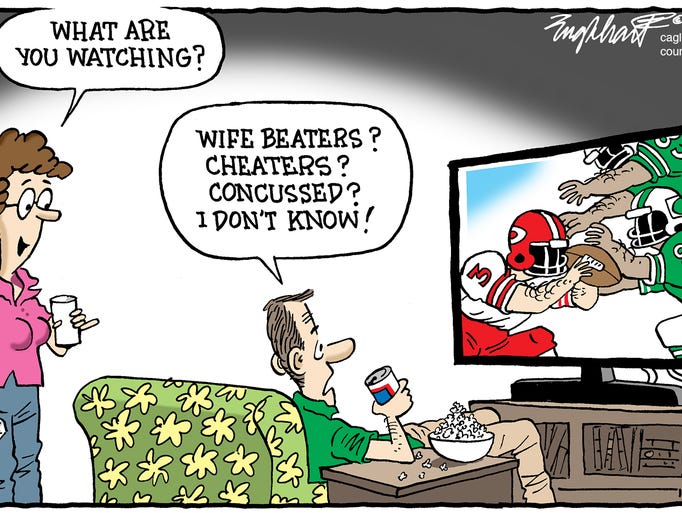
    No college and all sports is the Republican dream

    The other day, I told the friend that I doubt if there is even one Prius in the US with a confederate flag bumper sticker on it.  We might make fun of the liberals, yes, but at least they don't drive around with symbols of hate.

    The stereotype of Prius owners exists because it reflects a great deal of the reality about them.  Similar is the stereotype of Republicans as military-loving and anti-intellectual types.  In those deep red states, the irony is their passion for college sports.  Yep, those very folks who aim their guns on colleges love, love, love football and basketball so much that they seem to tolerate the academic aspects of it because, well, without college there is no sport!

    And with trump and his minions now in charge, hey, I am not at all surprised with this latest survey results:
    A majority of Republicans and Republican-leaning independents (58%) now say that colleges and universities have a negative effect on the country, up from 45% last year. By contrast, most Democrats and Democratic leaners (72%) say colleges and universities have a positive effect, which is little changed from recent years.
    Fifty-eight percent of the Republicans say that colleges have a negative effect on the country.  58!  These are the same idiots who gladly voted for trump!
    Among Republicans and Republican leaners, younger adults have much more positive views of colleges and universities than older adults. About half (52%) of Republicans ages 18 to 29 say colleges and universities have a positive impact on the country, compared with just 27% of those 65 and older. By contrast, there are no significant differences in views among Democrats by age, with comparable majorities of all age groups saying colleges and universities have a positive impact.
    "just 27% of those 65 and older" Republican leaners think that college does good.  I wonder who these people voted for in the November election!

    These anti-college Republicans elected a guy with no plans for the future of the country.
    Trump’s innovation maybe wasn’t to bash college so much as to ignore it. Previous candidates, in both parties, paid at least lip service to the idea of expanding educational opportunities and retraining workers whose jobs were eliminated by changes in the U.S. economy. The first indications that that was changing came in the 2012 GOP primary, when Rick Santorum (B.A., Penn State; M.B.A, Pitt; J.D., Dickinson Law) accused Barack Obama of being a “snob” for trying to expand access to education. Trump didn’t bother to make the case for retraining or education; he simply promised dispossessed blue-collar workers that their jobs in mills, factories, and especially coal mines were going to come back.
    As simple as that.  Just ignore higher education.  After all, nothing good ever comes from that, right?  Further, colleges are nothing but full of those damn liberals and it is better to shut them all down!

    I will borrow Paul Krugman's words to wrap up this post:
    Republicans have changed in the age of Trump: what was already a strong strain of anti-intellectualism has become completely dominant. The notion that there was a golden age of conservative intellectuals is basically a myth. But there used to be at least some pretense of taking facts and hard thinking seriously. Now anyone pointing out awkward facts – immigrants haven’t brought a reign of terror, coal jobs can’t be brought back, Trump lost the popular vote – is the enemy. In fact, I’d argue that anti-intellectualism was, in its own way, as big a factor in the election as racism.
    What this means for the future is grim. America basically invented the modern, educated society, leading the way on universal K-12 education, building the world’s finest and most comprehensive higher education system; this in turn was an important factor in how we became leader of the free world. Now a powerful political movement basically wants to make America ignorant again.
    Sad!

    Friday, April 28, 2017

    Fuck the welders and philosophers. We need entertainment, dammit!

    (Am debating within myself whether I should send this to the editor, and make more enemies when published!)

    Recall the sound bite "we need more welders and less philosophers" from back when it was the season of the Republican primaries? I wish we had engaged in a whole lot of discussion regarding that statement from Senator Marco Rubio. Instead, we collectively shrugged and moved on.

    We could, and should, have used that opportunity to engage in discussions on what education ought to accomplish. If we had, then we would have agreed that we need both welders and philosophers, and that higher education is failing to deliver them.

    Public higher educational institutions have suffered from extensive mission creep over the years. It is best (worst?) seen in how sports-oriented the taxpayer subsidized colleges and universities have become. Welders and philosophers are apparently way less important than athletics in the mission of higher education!

    Countries where people are far more sports-crazy than we are do not waste their taxpayer monies like we do here in the US. Europeans, for instance, are maniacal about soccer, but they know well that sports is sports, and education is education. Or, consider my old country, India, where cricket is practically a religion. Colleges do not waste enormous resources on cricket and its gods.

    If only we had continued to engage with the welders/philosophers soundbite, then we would have ended up talking about the wasteful practices in higher education, with athletics as perhaps the foremost waste of taxpayer money. But, of course, public institutions do not want us to talk about this, and the sports-addicted taxpayers are even less interested it seems.

    A year ago, journalists in Michigan attempted to understand how much taxpayer money is spent on athletics by public institutions in their state. It was not an easy project. They “obtained through the Freedom of Information Act the financial disclosure statements provided to the NCAA from Michigan's 13 public universities that offer NCAA-level athletics.” Yes, through the Freedom of Information Act!

    What they found did not surprise any of us who have been critical of this unholy mix of sports and academics in public higher education. Not only did the public institutions spend gazillions on athletics, “students are often "kept in the dark" when it comes to how universities fund college athletics and the degree to which colleges are subsidizing sports.”

    Yet, whenever they cry funding shortage, universities are ready to ax philosophy before they even think of reducing the sports subsidies. I wish that legislatures, including here in Oregon with our huge budget deficit, would question the wisdom of public colleges as entertainment arenas.

    The university where I have been teaching for fifteen years is no exception. A decade ago, a 25-million dollar facility was built primarily to meet the NCAA Division II requirements. Such an outrageous expense would not have been incurred if sports were played at the lower tier National Association of Intercollegiate Athletics (NAIA,) in which the university participated until the year 2000.

    America is exceptional indeed—when it comes to diverting taxpayer money on entertainment, when that could be spent instead on welders and philosophers. This taxpayer-supported entertainment is what the Declaration of Independence meant by "the pursuit of happiness.”