Showing posts with label gandhi. Show all posts

Saturday, November 28, 2020

Is the Pope Catholic ... or one of the Vaishnavas?

In his NYT oped, which I referred to in this post yesterday, the Pope writes:

If we are to come out of this crisis less selfish than when we went in, we have to let ourselves be touched by others’ pain. ...

The pandemic has exposed the paradox that while we are more connected, we are also more divided. Feverish consumerism breaks the bonds of belonging. It causes us to focus on our self-preservation and makes us anxious. Our fears are exacerbated and exploited by a certain kind of populist politics that seeks power over society. It is hard to build a culture of encounter, in which we meet as people with a shared dignity, within a throwaway culture that regards the well-being of the elderly, the unemployed, the disabled and the unborn as peripheral to our own well-being.

To come out of this crisis better, we have to recover the knowledge that as a people we have a shared destination. The pandemic has reminded us that no one is saved alone. What ties us to one another is what we commonly call solidarity. Solidarity is more than acts of generosity, important as they are; it is the call to embrace the reality that we are bound by bonds of reciprocity. On this solid foundation we can build a better, different, human future. 

"we have to let ourselves be touched by others’ pain."

Yes.

Empathy, as I have often written about here and even in my newspaper columns, is fundamental to understanding what it means to be human. I wrote in this oped in October 2016 that one of Gandhi’s favorite prayers says it all about being human: It is to “feel the pain of others, help those who are in misery.”

The Pope writing that we have to let ourselves be touched by others' pain echoes the message that I received through the faith in which I was raised.  The fact that I do not practice religion, and challenge the very notion of a supreme being, does not mean that I do not value empathy that non-politicized religious leaders talk about with the faithful.  Why the faithful choose not to let themselves be touched by others' pain is beyond me.  The utter selfishness and disregard for human suffering that the faithful display and practice is one of the most hypocritical behaviors of the religious folk.

Empathy is framed in non-secular philosophy too.  Adam Smith, often hailed as the brains behind capitalism, was a philosopher who wrote in A Theory of Moral Sentiments " ... by changing places in fancy with the sufferer, that we come either to conceive or to be affected by what he feels."

Many among the faithful and the irreligious alike seem to conveniently shut themselves off from the sufferer.  As the Pope writes, "some of us that we can act as if they don’t exist."

Think, for example, of the wars scattered across different parts of the world; of the production and trade in weapons; of the hundreds of thousands of refugees fleeing poverty, hunger and lack of opportunity; of climate change. These tragedies may seem distant from us, as part of the daily news that, sadly, fails to move us to change our agendas and priorities. But like the Covid-19 crisis, they affect the whole of humanity.

Shutting ourselves off from the sufferer is nothing but a statement of our priorities.  We would rather spend money to buy the latest gadget than donate that money to help alleviate human suffering.

I am glad that the Pope continues to hammer the message that the church needs to go to the margins to see life as it really is. 

“I’ve always thought that the world looks clearer from the periphery,” he said in the book. “When God wanted to regenerate creation, He chose to go to the margins — to places of sin and misery, of exclusion and suffering, of illness and solitude.”

If only the faithful would think about that!

Saturday, August 01, 2020

The mahatma and the maharajah

It was news to me when I read nine years ago that Mohandas (Mahatma) Gandhi might have been bisexual, and had a German-Jewish bodybuilder lover during the years in South Africa.  Shocking it was to even consider the possibility.

Later, Frédéric Martel, a researcher at Sciences-Po Paris and ZHdK Zurich, looked into the original correspondence between Gandhi and the German.
The writings between the two men, as they appeared in Gandhi’s many letters, are surprising: love is present, explicitly; a dominating/dominated relationship emerges, even in the nicknames the two men call each other; there’s talk of Vaseline; and Gandhi tells Kallenbach how Kallenbach “took complete possession of [his/Gandhi’s] body.” The two men took an oath of love, a love whose nature “the world has never known.” And when they were finally separated because Kallenbach did not obtain permits to join him in India, Gandhi wrote to him saying that he dreamed of him. “These letters are very emotional. There is clearly an attraction between these two men,” Eric Itzkin, the biographer of Gandhi’s South African years, tells me when I interview him in Johannesburg.
Nein, nein. That can't be true, right?

India, where hetero-normative rules, is slowly opening up towards the non-hetero human condition.  "India also saw a 22-point increase since 2014, the first time the question was asked of a nationally representative sample there."  Now, about 37% say that homosexuality should be accepted by society.

But, acceptance is not easy.  Even when a maharajah comes out of the closet.
The fallout from his announcement was brutal, beginning with protests in his hometown, Rajpipla, where he was burned in effigy. His mother took out a newspaper advertisement to announce she was disowning him.
Where is Rajpipla?  In Gujarat.  Gandhi's home state as well.  But, worlds apart in so many ways.

Who is the royalty?
Prince Manvendra was born in 1965 to Raghubir Singh Gohil, the current honorary maharajah of Rajpipla, and Rukmani Devi Gohil, the daughter of the former maharajah of Jaisalmer.
Of course, the maharajah title does not mean anything in a democracy.  But, people still remember the old stories.

The prince has a tough time gaining acceptance.
His father, the maharajah, acknowledged in an interview that it was difficult for the family to come to terms with his son’s sexuality and the constant media attention on the family.
“But it’s his decision,” the maharajah said.
His relationship with his mother remains frosty, but other members of the family have been supportive, he says. His grandmother, on her deathbed, expressed her happiness that he had found a partner to share his life with.
I would think that talking more about Gandhi and his German-Jewish bodybuilder friend would go a long way to further LGBTQ rights and acceptance.  I wonder what Prince Manvendra thinks about that.

Sunday, December 22, 2019

Warts and all

During the years before the faculty union blacklisted me, I used to engage in conversations with colleagues.  In one of those in-the-hallway chats, an adjunct faculty and I got to talking about imperfections in humans, especially the political leaders who transformed societies for the better.

We talked, in particular, about Gandhi and MLK.  And we both agreed that it does not help anybody by making them saint-like.  Instead, we ought to understand and appreciate them, warts-and-all.  Such an unvarnished image then will help us understand that ordinary mortals like you and me were able to do so much, which will be way more encouraging to the youth than if they thought that one had to be super-human of sorts.

The adjunct's contract was not renewed, and I lost touch with him.

It is not that Gandhi and MLK had moral clarity from day one of their adult lives, and it is not as if they did not err in their daily lives.  Mistakes were in plenty.  Yet, they were able to accomplish what millions of us together will never ever be able to do.

Take Gandhi, for instance.  Most of us are familiar with his years in South Africa, which is when he began to understand white supremacy and, therefore, his own brown-skin standing in the bastard empire.  However, Gandhi in South Africa was not very much different from the white supremacists there, when it came to their views on the "native" Africans.  Gandhi thought less of black Africans, and his struggle was only to elevate the status of Indians like him who were there in the bastard empire, which he was not really fighting against.  As his biographer, grandson, wrote:
After all, Gandhi too was an imperfect human being. ... The imperfect Gandhi was more radical and progressive than most contemporary compatriots.
And by the time he became the Gandhi that we usually think about, he had become way less imperfect.
There is no need to create a false Gandhi here that ignores the real Gandhi since the real Gandhi is himself such a historical exception. And, of course, the fact that the real Gandhi was only remarkable – but not perfect, as per today’s moral standards – is also nothing to be ashamed of.
Over the years, the more I understand the imperfect Gandhi, the more I have walked away from referring to him as a "mahatma."  But, while recognizing imperfections, we ought to know better than to wrongfully equate Gandhi with Churchill, for instance.  Not all imperfect leaders are created alike!

I have always preferred unsanitized biographies of transformative leaders like Gandhi and MLK.  I don't want kids to go through the same kind of shocks that I went through when I learnt much later in life that MLK was no saint.  Had I known earlier that MLK himself said, "You don't need to go out saying Martin Luther King, Jr. is a saint," I would have appreciated him even more.  I would rather that kids understood how much MLK was able to fight white supremacy and taught all of us what it means to be human--through and despite his own personal flaws.

Tuesday, January 29, 2019

If only there were more real Vaishnav people!

It is the anniversary of the assassination of Mohandas Gandhi.  He was shot dead on January 30th in 1948. I am re-posting here a modified version of one my op-ed columns
****************************************

Gandhi, who was born in 1869, led the independence movement that, in 1947, resulted in the creation of two new countries of India and Pakistan and, with that, the end of the British Raj. The struggle for freedom, in which Gandhi passionately urged his followers to observe non-violence even against the colonizer’s brutal force, inspired many others, including Martin Luther King Jr.
Life is full of tragic ironies — Gandhi and King, the champions of peace and nonviolence, fell to bullets aimed at them. Unlike Gandhi, who was assassinated in 1948, King had not lived long enough to live in the promised land of freedom.

Albert Einstein summed it up best for all of us when he wrote about Gandhi that “generations to come, it may well be, will scarce believe that such a man as this one ever in flesh and blood walked upon this Earth.” 

In the contemporary United States, any talk in the public space about peace and nonviolence is rare. Politicians of all stripes want to prove how much tougher they are than the other, out of a fear of being labeled a wimp.  The worst ones are those who successfully dodged the Vietnam War draft but now want to establish their manliness! This has been especially the case since the fateful events on Sept. 11, 2001. At the national level, the “tough” ones smell blood when an opponent does not talk of war. At this rate, even those running for the office of dogcatcher will have to prove their toughness.

Of course, violence is more than merely engaging in war. The political rhetoric, especially over the past four years since trump as a candidate and then as the president (gasp!) seems to have been anything but peaceful and nonviolent. A new day begins with attacks on yet another person or group of people, based on whatever cultural trait is deemed to be the “wrong” one for the moment. Even I, as insignificant as one can be in the political landscape, have been a target for those who are seemingly at ease with offensive words and rhetoric.

While words, unlike sticks and stones, do not break bones, the violence conveyed through words causes plenty of harm. In the noise and confusion of the violent rhetoric that surrounds us in the real and cyber worlds, we seem to have lost a fundamental understanding of what it means to be human.

One of Gandhi’s favorite prayers says it all about being human: It is to “feel the pain of others, help those who are in misery.” Unfortunately, the rhetoric and practice--even among those who claim to be followers of Vishnu--is far from that interpretation of humanity.

When it comes to the terrible humanitarian crises, like the situation in Aleppo, Syria, it is depressing and shocking to see how quickly we closed ourselves off from the “pain of others” and how easily we refuse to “help those who are in misery.” We have refused to budge even when the screens all around us flashed the images of dead toddlers. Or, the images of mothers and children running after being tear-gassed at the border for seeking asylum.

The president's adviser on immigration, whose life is possible only because the US offered asylum to Jews fleeing pogroms in Europe, boasts that “I would be happy if not a single refugee foot ever again touched America’s soil.”

The moral arc of the universe might bend towards justice, but the radius of the arc seems to be getting longer.  Perhaps we shall overcome all our problems, but only over a much longer time than I would like. 


Tuesday, October 30, 2018

To "Sir" with crap!

When I was a rebellious teenager, which did not always outwardly manifest itself because I was a quiet fellow, there were many aspects of life that I routinely criticized.  One of those was about those who served with distinction in the Bastard Empire.  I could not understand how eminently qualified people could have licked the bastards' boots and claimed that  the act was something superior.

Thus, when people in the extended family boasted about "he was an ICS," I snickered within.  Had I known the phrase that I later came to know, I would have yelled--only within me, of course--a huge "fuck you." ;)

I couldn't care about the Indian government's honors as well.  The "Padma" awards.  Who cares!

Even funnier and incongruous is the UK continuing to hand out its various titles that refer to the British Empire.  Talk about people in denial, who can't even accept that the sun set on the empire a long time ago!

Anyway, back to the Bastard Empire.  The rulers figured out that it might to be their advantage to bestow honors on some of the colonized as well.
The British Crown used honours in the empire as a way of ranking and appealing to the local elites. The Crown particularly bestowed them in South Asia to the puppet rulers of the Indian princely states. The expansion of honours began to include more members of middle-class elites from the mid-19th century.
And, hence, people like "Sir" Rabindranath Tagore.

Of course, as the independence movement gained strength, the browns started tossing back the honors.  Including Tagore.  But, the bastards refused to recognize this.
Tagore paired ‘badges of honour’ with shame, and elevated humility above special distinction. British-Indian honours and titles, Tagore implied, were worse than worthless because they highlighted the shame of India by patronising and coopting individual heroes. The fact that he remained ‘Sir Rabindranath’ in the eyes of the imperial state was an embarrassment. Indian nationalists later used the knighthood against Tagore, for they too agreed that British honour could not be separated from Indian shame.
MK Gandhi, who perfected the non-cooperation movement as a powerful political weapon, launched his own battle against these fake honors.
Gandhi was one of the 20th-century’s great masters of political symbolism. He understood that the dismantling of the British system of social distinction amounted to a step toward disengagement with imperial rule. The symbolism of British imperial honours mattered. It reinforced a deferential, hierarchical relationship that bought consent from Indians to the ‘will’ of the empire with a shallow currency that lacked true value.
Shallow currency, indeed!

The practice of handing out shallow currency continues in the old country.  The government bestowed the highest civilian honor of "Bharat Ratna" (Jewel of India) on unqualified people like MGR and Rajiv Gandhi!

I continue to snicker.  But no longer within--I blog about it ;)


Tuesday, October 02, 2018

To “feel the pain of others, help those who are in misery”

On the occasion of Gandhi's birthday, I am re-posting here a column
****************************************

The United Nations marks Oct. 2 as the “International Day of Nonviolence” for a very good reason — it is the birthday of Mohandas Karamchand Gandhi, popularly known as Mahatma Gandhi.

Gandhi, who was born in 1869, led the independence movement that, in 1947, resulted in the creation of two new countries of India and Pakistan and, with that, the end of the British Raj. The struggle for freedom, in which Gandhi passionately urged his followers to observe non-violence even against the colonizer’s brutal force, inspired many others, including Martin Luther King Jr.
Life is full of tragic ironies — Gandhi and King, the champions of peace and nonviolence, fell to bullets aimed at them. Unlike Gandhi, who was assassinated in 1948, King had not lived long enough to live in the promised land of freedom.

Albert Einstein summed it up best for all of us when he wrote about Gandhi that “generations to come, it may well be, will scarce believe that such a man as this one ever in flesh and blood walked upon this Earth.” On Gandhi’s birthday, it certainly will help us all to be reminded, as the U.N. puts it, of the human desire for “a culture of peace, tolerance, understanding and non-violence.”

In the contemporary United States, any talk in the public space about peace and nonviolence is rare. Politicians of all stripes want to prove how much tougher they are than the other, out of a fear of being labeled a wimp. This has been especially the case since the fateful events on Sept. 11, 2001. At the national level, the “tough” ones smell blood when an opponent does not talk of war. At this rate, even those running for the office of dogcatcher will have to prove their toughness.

Of course, violence is more than merely engaging in war. The political rhetoric during the past year seems to have been anything but peaceful and nonviolent. A new day begins with attacks on yet another person or group of people, based on whatever cultural trait is deemed to be the “wrong” one for the moment. Even I, as insignificant as one can be in the political landscape, have been a target for those who are seemingly at ease with offensive words and rhetoric.

While words, unlike sticks and stones, do not break bones, the violence conveyed through words causes plenty of harm. In the noise and confusion of the violent rhetoric that surrounds us in the real and cyber worlds, we seem to have lost a fundamental understanding of what it means to be human.

One of Gandhi’s favorite prayers says it all about being human: It is to “feel the pain of others, help those who are in misery.” Unfortunately, the rhetoric and practice these days is far from that interpretation of humanity.

When it comes to the terrible humanitarian crises, like the situation in Aleppo, Syria, it is depressing and shocking to see how quickly we closed ourselves off from the “pain of others” and how easily we refuse to “help those who are in misery.” We have refused to budge even when the screens all around us flashed the images of Aylan Kurdi — the toddler who was found dead, face down, on a beach — or the five-year-old Omran Daqneesh, whose dust- and blood-covered face looked dazed and confused.

Meanwhile, all around the world, the number of people displaced from their homes continues to increase. The United Nations estimates that by the end of 2015, the number of people who have been forcibly displaced from their homes reached 65.3 million. The U.N. High Commissioner for Refugees, Filippo Grandi, noted that “at sea, a frightening number of refugees and migrants are dying each year; on land, people fleeing war are finding their way blocked by closed borders. Closing borders does not solve the problem.”

As I write, peace and nonviolence seem to be evaporating even in Gandhi’s old lands of India and Pakistan. Tension between the two countries is at such high levels that commentators wonder, and worry, whether the neighbors are getting ready for yet another war. As often is the case with these sibling countries, this time, too, the fight is over Kashmir, but with plenty of nuclear bombs on both sides of the border.

We shall certainly overcome, in the long run. In the meanwhile, on the International Day of Nonviolence, like the stereotypical beauty pageant contestant, I, too, wish for world peace.


Monday, October 02, 2017

Peace seems a lot more distant in the rear-view mirror :(

When talking with my mother, with my usual sense of awful humor, I asked her if she made sweets to celebrate Gandhi's birthday.  And then on a serious note, I told her that Einstein said after Gandhi's passing that future generations might not even believe that there really was a man called Gandhi who did all those awesome things.

I was later reminded that a year ago, the local newspaper published my column that I had timed with Gandhi's birthday, in which I talked about the awful trump and his demagoguery without naming him.

All my worries--way more than this--have come true with the election of the fascist thug, thanks to the 63 million, including a couple of past commentators here.  Violence.  Every day, the fascist attacks somebody or the other, and his minions rejoice.  He even openly threatens nuclear war with North Korea!  And then the events like the one at Charlottesville.  The fascist and his followers are clear evidence that neither Gandhi nor Jesus matter to the maniacs.

I am re-posting here that column from a year ago.
****************************************

The United Nations marks Oct. 2 as the “International Day of Nonviolence” for a very good reason — it is the birthday of Mohandas Karamchand Gandhi, popularly known as Mahatma Gandhi.

Gandhi, who was born in 1869, led the independence movement that, in 1947, resulted in the creation of two new countries of India and Pakistan and, with that, the end of the British Raj. The struggle for freedom, in which Gandhi passionately urged his followers to observe non-violence even against the colonizer’s brutal force, inspired many others, including Martin Luther King Jr.
Life is full of tragic ironies — Gandhi and King, the champions of peace and nonviolence, fell to bullets aimed at them. Unlike Gandhi, who was assassinated in 1948, King had not lived long enough to live in the promised land of freedom.

Albert Einstein summed it up best for all of us when he wrote about Gandhi that “generations to come, it may well be, will scarce believe that such a man as this one ever in flesh and blood walked upon this Earth.” On Gandhi’s birthday, it certainly will help us all to be reminded, as the U.N. puts it, of the human desire for “a culture of peace, tolerance, understanding and non-violence.”

In the contemporary United States, any talk in the public space about peace and nonviolence is rare. Politicians of all stripes want to prove how much tougher they are than the other, out of a fear of being labeled a wimp. This has been especially the case since the fateful events on Sept. 11, 2001. At the national level, the “tough” ones smell blood when an opponent does not talk of war. At this rate, even those running for the office of dogcatcher will have to prove their toughness.

Of course, violence is more than merely engaging in war. The political rhetoric during the past year seems to have been anything but peaceful and nonviolent. A new day begins with attacks on yet another person or group of people, based on whatever cultural trait is deemed to be the “wrong” one for the moment. Even I, as insignificant as one can be in the political landscape, have been a target for those who are seemingly at ease with offensive words and rhetoric.

While words, unlike sticks and stones, do not break bones, the violence conveyed through words causes plenty of harm. In the noise and confusion of the violent rhetoric that surrounds us in the real and cyber worlds, we seem to have lost a fundamental understanding of what it means to be human.

One of Gandhi’s favorite prayers says it all about being human: It is to “feel the pain of others, help those who are in misery.” Unfortunately, the rhetoric and practice these days is far from that interpretation of humanity.

When it comes to the terrible humanitarian crises, like the situation in Aleppo, Syria, it is depressing and shocking to see how quickly we closed ourselves off from the “pain of others” and how easily we refuse to “help those who are in misery.” We have refused to budge even when the screens all around us flashed the images of Aylan Kurdi — the toddler who was found dead, face down, on a beach — or the five-year-old Omran Daqneesh, whose dust- and blood-covered face looked dazed and confused.

Meanwhile, all around the world, the number of people displaced from their homes continues to increase. The United Nations estimates that by the end of 2015, the number of people who have been forcibly displaced from their homes reached 65.3 million. The U.N. High Commissioner for Refugees, Filippo Grandi, noted that “at sea, a frightening number of refugees and migrants are dying each year; on land, people fleeing war are finding their way blocked by closed borders. Closing borders does not solve the problem.”

As I write, peace and nonviolence seem to be evaporating even in Gandhi’s old lands of India and Pakistan. Tension between the two countries is at such high levels that commentators wonder, and worry, whether the neighbors are getting ready for yet another war. As often is the case with these sibling countries, this time, too, the fight is over Kashmir, but with plenty of nuclear bombs on both sides of the border.


We shall certainly overcome, in the long run. In the meanwhile, on the International Day of Nonviolence, like the stereotypical beauty pageant contestant, I, too, wish for world peace.


Saturday, September 02, 2017

Many shades of grey

During the couple of years before the faculty union blacklisted me, I used to engage in conversations with colleagues.  In one of those in-the-hallway chats, an adjunct faculty and I got to talking about imperfections in humans, especially the political leaders who transformed societies for the better.

We talked, in particular, about Gandhi and MLK.  And we both agreed that it does not help anybody by making them saint-like.  Instead, we ought to understand and appreciate them warts-and-all.  Such an unvarnished image then will help us understand that ordinary mortals like you and me were able to do so much, which will be way more encouraging to the youth than if they thought that one had to be super-human of sorts.

The adjunct's contract was not renewed, and I lost touch with him.  I tell ya, anybody who thinks like me doesn't last long.

During the road trip a few weeks ago, we were far, far away from anything and anybody familiar, when I heard a voice.

"Sriram?"

I turned around.  It was a former colleague, who was my lunch-mate during the couple of years he worked at my university.  I warned him in one of our early meetings that if he and I agreed so much, well, he might not last long on his job.  At our final lunch, I reminded him about my warning.  We both laughed.  And now after a decade a random encounter!

Anyway, back to Gandhi and MLK.  It is not that they had moral clarity from day one of their adult lives, and it is not as if they did not err in their daily lives.  Mistakes were in plenty.

Take Gandhi, for instance.  Most of us are familiar with his years in South Africa, which is when we began to understand white supremacy and, therefore, his own brown-skin standing in the bastard empire.  However, Gandhi in South Africa was not very much different from the white supremacists there, when it came to their views on the "native" Africans.  Gandhi thought less of black Africans, and his struggle was only to elevate the status of Indians like him who were there in the bastard empire, which he was not really fighting against.  As his biographer, grandson, wrote:
After all, Gandhi too was an imperfect human being. ... The imperfect Gandhi was more radical and progressive than most contemporary compatriots.
And by the time he became the Gandhi that we usually think about, he had become way less imperfect.
There is no need to create a false Gandhi here that ignores the real Gandhi since the real Gandhi is himself such a historical exception. And, of course, the fact that the real Gandhi was only remarkable – but not perfect, as per today’s moral standards – is also nothing to be ashamed of.
Gandhi was imperfect like the "deeply racist" Thomas Jefferson, about whom I have blogged here. Over the years, the more I understand the imperfect Gandhi, the more I have walked away from referring to him as a "mahatma."  But, while recognizing their imperfections, we ought to know better than to equate Gandhi with Churchill, or Jefferson with Hitler.  I am thankful that, Gandhi and Jefferson, despite their imperfections, worked towards constructing a positive, healthy vision for humanity.  

Sunday, July 09, 2017

The caveman speaketh!

One of the many charming, charismatic, aspects of M.K. (Mahatma) Gandhi was that in both still and moving images he always had a smiling and welcoming appearance.  Something rare for the culture in which I grew up where, at least in the old days, people did not smile when photographed.  I suspect that Gandhi's pleasant demeanor was no accident--that was his real persona.

Gandhi was one heck of a force that the militant white supremacists had to reckon with, and yet he comes across in the images as a soft dude.  A dude with a wonderful sense of humor.  One of my favorites about him is this: Gandhi was asked by a reporter what he thought of the western civilization.  Always quick on the draw, Gandhi replied, "I think it would be a very good idea."

Here we are seven decades after Gandhi was shot dead, and living under a different kind of a dark threat, with white supremacists boldly out in the open, and right in the White House.  The Oval Office occupant re-enacted his awful "American carnage" theme but this time in Poland, where he presented the world as a clash of civilizations in which he worried that the West did not have the will to survive.

In that international carnage speech, he said:
We write symphonies.  We pursue innovation.  We celebrate our ancient heroes, embrace our timeless traditions and customs, and always seek to explore and discover brand-new frontiers.
I suppose the "others" do not celebrate ancient heroes.  The people who are not from the West do not embrace their timeless traditions and customs.  What do people from Iraq, Iran, China, know about timelessness, right?  After all, it was only a few years ago that they barely crawled out of their caves, dragging women by their hair, and beating each other with clubs!  What does the Subcontinent know about music when all they do is clang stones together to create noise!

It is one thing for the fuhrer to engage in such awfulness.  It is another when a NY Times columnist pretty much offers similar arguments but cloaked in sophisticated language.  He seems to equate the white supremacists nationalism of this president and his voters, with the nationalism of the once colonized brown-skinned!

What a mess that 63 million voters have created!  If only the fuhrer understood his own words: "Words are easy, but actions are what matters."


Saturday, September 24, 2016

May Peace Be With You

I have sent this across to the editor

The United Nations marks October 2nd as the “International Day of Non-Violence” for a very good reason--it is the birthday of Mohandas Karamchand Gandhi, popularly known as Mahatma Gandhi.

Gandhi, who was born in 1869, led the independence movement that, in 1947, resulted in the creation of two new countries of India and Pakistan and, with that the end of the British Raj as well. The struggle for freedom, in which Gandhi passionately urged his followers to observe non-violence even against the colonizer’s brutal force, inspired many others, including Martin Luther King, Jr.

Life is full of tragic ironies--Gandhi and King, the champions of peace and nonviolence, fell to bullets that were aimed at them. Unlike Gandhi, who was assassinated in 1948, King had not lived long enough to live in the promised land of freedom.

Albert Einstein summed it up best for all of us when he wrote about Gandhi that “generations to come, it may well be, will scarce believe that such a man as this one ever in flesh and blood walked upon this Earth.” On Gandhi’s birthday, it certainly will help us all to be reminded of, as the UN puts it, the human desire for "a culture of peace, tolerance, understanding and non-violence."

In the contemporary United States, any talk in the public space about peace and nonviolence is rare anymore. Politicians of all stripes want to prove how much they are tougher than the other, out of a fear of being labeled a wimp otherwise. This has been especially the case since the fateful events on September 11, 2001. At the national level, the “tough” ones smell blood when an opponent does not talk war. At this rate, even those running for the office of a local dog catcher will have to prove their toughness.

Of course, violence is more than merely about engaging in war. The political rhetoric over the past year seems to have been anything but peaceful and nonviolent. A new day begins with attacks on yet another person or group of people, based on whatever cultural trait is deemed to be the “wrong” one for the moment. So much so that even I, as insignificant as one can be in the political landscape, have been a target for those who are seemingly at ease with offensive words and rhetoric!

While words, unlike sticks and stones, do not break bones, the violence conveyed through words causes plenty of harm. In the noise and confusion of the violent rhetoric that surrounds us in the real and cyber worlds, we seem to have lost a fundamental understanding of what it means to be human,. One of Gandhi’s favorite prayers says it all about being human--it is to “feel the pain of others, help those who are in misery.” However, and unfortunately, the overall rhetoric and practice these days is far from that interpretation of humanity.

When it comes to the terrible humanitarian crises, like the situation in Aleppo, in Syria, it is depressingly shocking how quickly we closed ourselves from the “pain of others” and how easily we refuse to “help those who are in misery.” We have refused to budge even when the screens all around us flashed the images of Aylan Kurdi--the toddler who was dead, face down, on a beach--or the five-year old Omran Daqneesh, whose dust and blood covered face looked dazed and confused.

Meanwhile, all around the world, the number of people displaced from their homes continues to increase. The United Nations estimates that by the end of 2015, the number of people who have been forcibly displaced from their homes numbered 65.3 million. The UN High Commissioner for Refugees, Filippo Grandi, noted that “at sea, a frightening number of refugees and migrants are dying each year; on land, people fleeing war are finding their way blocked by closed borders. Closing borders does not solve the problem.”

As I write this column, peace and nonviolence seem to be evaporating even in Gandhi’s old lands of India and Pakistan. Tension between the two countries is at such high levels that international media and commentators wonder, and worry, whether the neighbors are getting ready for yet another war. As often is the case with these sibling countries, this time too the fight is over Kashmir, but with plenty of nuclear bombs on both sides of the border.

We shall certainly overcome, in the long run. In the meanwhile, on the “International Day of Non-Violence,” like the stereotypical beauty pageant contestant, I too will wish for world peace.

Saturday, December 27, 2014

The globalizing Indians

A few years ago, I authored an oped in which I noted that Indians integrate well into the American way of life, thanks to India's long and rich history of global interactions.  Later, in another op-ed, I pointed to Sri Srinivasan's nomination to the DC Court of Appeals and the unanimous Senate confirmation as further evidence of this integration.

Despite all that, I was shocked--pleasantly, of course--to read that:
Indians, especially in the UK and US, are prevalent in business, academe, the media, medicine and the arts. In 2008, Indians accounted for 38% of doctors in the US, 36% of scientists at NASA, and 34% of employees at Microsoft, 28% at IBM and 17% at Intel.
More than a third of the doctors in the US?
More than a third of NASA's scientists?
More than a third of Microsoft employees?
WTF is the only way to respond to it ;)

Indians integrating well into the economic and social fabric of alien lands is not really new.  In the modern world, India is India, and therefore we refer to Indians, thanks to those who led the struggle for independence from the British Raj, of whom Gandhi was most influential.

Gandhi was a global migrant himself during his years in South Africa, before he returned to India for good a hundred years ago.  If Gandhi hadn't had that experience, history would certainly have been different from how it unfolded.
After one year of a none too successful law practice, Gandhi decided to accept an offer from an Indian businessman in South Africa, Dada Abdulla, to join him as a legal adviser. Unbeknown to him, this was to become an exceedingly lengthy stay, and altogether Gandhi was to stay in South Africa for over twenty years. The Indians who had been living in South Africa were without political rights, and were generally known by the derogatory name of 'coolies'. Gandhi himself came to an awareness of the frightening force and fury of European racism, and how far Indians were from being considered full human beings, when he when thrown out of a first-class railway compartment car, though he held a first-class ticket, at Pietermaritzburg. From this political awakening Gandhi was to emerge as the leader of the Indian community
To stay back in one's own community is the easy thing to do.  But, to venture out requires guts.  To have accomplished what he did, especially in an entirely different country thousands of miles away from where he grew up, Gandhi had guts that we lesser mortals cannot even dream of.  We need to dismiss Gandhi as off-the-charts so that we don't get discouraged comparing our pedestrian existence to his life ;)

Despite the long history of the wandering Indians, it appears that there are a few countries without people of Indian origin.  Perhaps before this century ends, there will be no such country in the listing, eh!

For all we know, the day is not far away when an Indian-American might even be elected as the president of the US of A!  Looking forward to it all.

Wednesday, October 01, 2014

"The Conscience of All Mankind" ... thoughts on Gandhi's birthday

The older I get, the more I realize the truth in Albert Einstein's observation about Gandhi:
Generations to come, it may well be, will scarce believe that such a man as this one ever in flesh and blood walked upon this Earth.
What a wonderful, and powerful, homage that is!

To think that Gandhi was only a mortal like you and me, and yet he achieved what he did.  Gandhi had his own flaws and readily admitted that he was not perfect; heck, he even titled his autobiography as experiments with truth.

Gandhi is one of the few reasons why I continue to have special, warm, feelings for the old country. Critiquing contemporary India comes from that special, warm place, because of the tragic disconnect that I see between what is and what could have been.

Gandhi's vision for India was different from how a Muslim describes the conditions of Muslims in India:
Although the Muslims are near the bottom of the socio-economic ladder and at par with the Dalits in almost every human development index, the public discourse today is not about the economic and educational backwardness of this beleaguered community but about the huge affliction they are in the nation’s social fabric.
The plight of the ordinary Muslim is getting progressively worse. Living on the margins of society, he has always been up against it in the field of education, in the job market, even when looking for accommodation. He is also burdened with the stigma of being in tacit collusion with terrorists. But hitherto, the discrimination and the distrust of the Muslim were covert. Now the gloves are off and the hatred is in-your-face.
How awful!  What a tragedy that this is how quite a few of India's 150 million Muslims feel.  Terrible!

The author, a former civil servant who is now into politics, continues:
Like never before, the Muslim is viewed not just as “the other” but as the root cause of the nation’s problems. The most pernicious myths are being given the widest publicity — about forced conversion of Hindu girls as a “love jihad” conspiracy to distort the population ratio, about every conversion to Islam creating one more enemy for Hindus, about 90 per cent of all rapes being committed by Muslims, about Muslims provoking riots, about there being no place for non-Muslims in areas where there are more than 35 per cent Muslims. The miasma of distrust, of hate, of prejudice hangs like a black cloud over the community. -
I cannot begin to understand how India could have descended from Gandhi as their leader to celebrating Modi, who is, "a dangerous cliche," as Pankaj Mishra aptly described him.  The Modi who even "referred to Mohandas Gandhi as Mohanlal Gandhi" at the rah-rah rally in New York City.    What a steep fall for my old country!

I suppose they don't make Gandhis anymore.  The world, not only India, can use a few.

Tuesday, May 27, 2014

In praise of the "Indian Model" in development

Source

Take a good look at that photograph of India's newly elected prime minister, Narendra Modi, shaking hands and having a conversation with his Pakistani counterpart, Nawaz Sharif.

The one in the photo below is Modi's Twitter BFF--Japan's prime minister, Shinzo Abe

Source

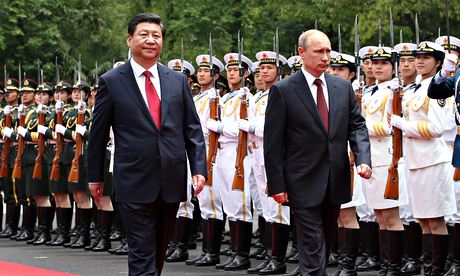
And, finally, the president of China (PRC, not that other China!) Xi Jinping playing host to Russia's Vladimir Putin:

Source

Notice that the leaders of Pakistan, Japan, and China are all wearing business suits, despite their own respective country's rich history of male attires?

As much as I hate do not care for Modi's views, I am delighted that his passion to execute a Chinese model of economic development in India did not lead him to switch to wearing business suits too.  Or that his bromance with Abe did not result in contacting the Japanese leader's tailor.

Of course, India has a long history of charting its own path, even when it comes to its leaders' outfits.

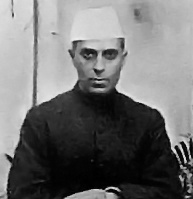
When that wonderful son of Gujarat, who is rarely ever remembered anymore, inspired India through his words and action, he systematically mentored his juniors, particularly Jawaharlal Nehru, to ditch the Western style of clothing in favor of a desi presentation--though he was the only half-naked fakir.  What a powerful statement that was to align his words and actions even in the clothing that he wore. I would have loved to meet with him, and worked with him.

Later as the prime minister, Nehru ended up making  his eponymous jacket famous in the Western countries that he visited.

Source

What's the big deal whether they wear a business suit or the local cultural outfit, you ask?  It is a matter of personal preference, yes, in what I expect from a leader.  And, hey, be happy that at least in this context I am praising Modi!

But, of course, I am not fooled by what people wear; I am old enough, even if not wise, to know that clothes do not always make a man.

Friday, May 16, 2014

Only Modi can go to Pakistan. Will he?

At the carefully chosen auspicious midnight hour in 1947, Jawaharlal Nehru famously spoke on India's "Tryst with Destiny."  Sixty-seven years later, it does have the feel of yet another tryst with destiny, with the election of Narendra Modi to the office of the prime minister as a mere formal act that is pending, after the thumping victory in the recently concluded long-drawn election.  (Modi will become the first prime minister who was born in independent India.)  

Such is the margin of victory, and such is the magnitude of loss for the scions of the Nehru family, that the Congress Party might not rise again. Finito as they say in the Congress Party's president's old country. Coincidence it will be if Modi gets sworn into office on the anniversary of the death of the last of the Nehru-clan's prime minister--Rajiv Gandhi.

No doubt about the gravity of the political development. It is a marker in history.  What might be in store?  Que sera sera is not what we bloggers and commentators say. We attempt to read the tea leaves. We express our excitement and concerns. In this case, given my long track record, like here, of anything but a Modi sympathizer, concerns are in plenty.

A friend, in/from India, reminded me about Khalil Gibran's poem, Pity the Nation
Pity the nation that is full of beliefs and empty of religion.
Pity the nation that wears a cloth it does not weave
and eats a bread it does not harvest.

Pity the nation that acclaims the bully as hero,
and that deems the glittering conqueror bountiful.

Pity a nation that despises a passion in its dream,
yet submits in its awakening.

Pity the nation that raises not its voice
save when it walks in a funeral,
boasts not except among its ruins,
and will rebel not save when its neck is laid
between the sword and the block.

Pity the nation whose statesman is a fox,
whose philosopher is a juggler,
and whose art is the art of patching and mimicking

Pity the nation that welcomes its new ruler with trumpeting,
and farewells him with hooting,
only to welcome another with trumpeting again.

Pity the nation whose sages are dumb with years
and whose strongmen are yet in the cradle.

Pity the nation divided into fragments,
each fragment deeming itself a nation.
Khalil Gibran (The Garden of the Prophet - 1934)
The concerns about Modi are about the very traits of the leader and the country that Gibran notes: " the bully as hero," whose statesman is a fox," the nation divided into fragments" ... And the poem itself, therefore, serving as a contrast to the wonderful dream that Rabindranath Tagore dreamt for an independent India, Where the mind is without fear:
Where the mind is without fear and the head is held high
Where knowledge is free
Where the world has not been broken up into fragments
By narrow domestic walls
Where words come out from the depth of truth
Where tireless striving stretches its arms towards perfection
Where the clear stream of reason has not lost its way
Into the dreary desert sand of dead habit
Where the mind is led forward by thee
Into ever-widening thought and action
Into that heaven of freedom, my Father, let my country awake.
Of course, Gibran's poem was the later one and could easily be his response to Tagore.  Both the mystical thinkers were expressing similar sentiments about countries and their leaders.  The biggest worry of mine is about the fragments and that Modi, even if not a uniter, might end up being even more divisive.  A future where the walls narrow, the minorities live in fear, and the neighbors get even more ready to push that red button.

Yet, I hope against hope. After all, human existence over the thousands of years has been propelled by hope, if nothing else.

The hope is this: Modi will become India's equivalent of Nixon going to China.  With his long documented association with the RSS, Modi bleeds more saffron than anybody else can. Thus, if he were to engage in opening up relations with Muslims--internally and with Pakistan--his supporters will not have the slightest doubts about the strongman, the Hindu, that Modi is.  Modi will not be accused of treason by his fanatical followers. The huge parliamentary majority that Modi has, which is such that there might not even be a formal Leader of the Opposition, means that Modi does not have to try to appease any coalition partner and can go about mending fences with Muslims within India and with the ummah.  

For now, good luck, Mr. Prime Minister!  And good luck to my old country!

Wednesday, March 12, 2014

Even Gandhi has been forgotten. Yet, you think you are important?

As the story (sub. reqd.) in the New Yorker came to an end, I could not wait to see how the author, Yiyun Li, tied everything up. I remembered one of her stories in the same magazine a couple of years ago--it was awesome. I was confident, therefore, that she would do justice here too.

Boy has she crafted some sentences together to end the narration:
She could become a fugitive from this world that had kept her for too long, but this urge, coming as it often did in waves, no longer frightened her, as it had years ago.  She was getting older, more forgetful, yet she was also closer to comprehending the danger of being herself.  She had, unlike her mother and her grandmother, talked herself into being a woman with an ordinary fate.  When she moved to the next place, she would leave no mystery or damage behind; no one in this world would be disturbed by having known her.
A chilling sentence that is: "no one in this world would be disturbed by having known her"

As I lay wide awake, after reading that, the  "no one in this world would be disturbed by having known her" reminded me of John Updike's Requiem:
It came to me the other day:
Were I to die, no one would say,
"Oh, what a shame! So young, so full
Of promise — depths unplumbable!"

Instead, a shrug and tearless eyes
Will greet my overdue demise;
The wide response will be, I know,
"I thought he died a while ago."

For life's a shabby subterfuge,
And death is real, and dark, and huge.
The shock of it will register
Nowhere but where it will occur.
Most of us ordinary mortals are forgotten even when we are alive. We matter not.  As BB King so emotionally put it, "Nobody loves me, but my mother / And she could me jivin' too."

Today was another day.

The sun was out in all its glory, and after temperature over the past few weeks in the 40s, the 60-plus today under the sun felt like an Indian summer.

I was walking towards my car when a female student waved at me. I am too old to fall for this--I know well by now that when a young woman waves at me, there is somebody else behind me and it is not me that she waves at.

But, she kept waving and walking towards me and stared at me. I politely smiled. I had no freaking clue who she was.

"You don't remember me?"

I wonder if there is a polite way to state the truth. "You are ... "

She then (re)introduced herself as one of the students who met with me a few months ago when preparing for their trip to India.  Now it clicked.  "Oh yeah, I remember now."

Meanwhile another young woman joined us. She too was in that group.

During the conversation about their experiences, the second one said, "I am so much a fan of Gandhi and his non-violence.  When I was in India, I tried to talk to people about Gandhi and his ideas. But nobody really cared to talk with me about Gandhi."

I know what she means. It is a land of a billion-plus, but there are fewer and fewer, it seems like, who genuinely appreciate, respect, and discuss Gandhi and his ideas.  I didn't have the heart to add to that youngster's disappointment. As we parted, I told them that I wanted to hear more of their stories of India. "We want to hear your stories too" they said.

If a Gandhi, the father of the nation, could not leave behind a living memory of his life among his own people, no wonder then that Auntie Mei in Li's short story feels that ""no one in this world would be disturbed by having known her."  Or, at best, as Updike writes, a couple of them might shrug their shoulders and comment "I thought he died a while ago."

Such is our fleeting existence on this planet.

It is no wonder then that we turn to BB King for comfort!

)

Wednesday, January 29, 2014

To feel the pain of others, and to help those in misery

Mohandas "Mahatma" Gandhi, was shot dead on January 30, 1948--only a few months after his successful struggle to boot out the British.

One of Gandhi's favorites among the prayer music is this  While the reference to the Hindu god, Vishnu, might distract a militant atheist, I ignore the Vishnu part and appreciate, and love, the ideas expressed there. For instance, this:
Vaishnav people are those who:
Feel the pain of others,
Help those who are in misery
Wouldn't you want to be friends with such people?  Wouldn't you want to be such a person?  A wonderful ideal to work towards, though a tall order for most of us mortals.

So, yes, it was Gandhi's favorite.

The video below is an instrumental version of that bhajan. The lead musician is Ustad Amjad Ali Khan.  Way back, when I was still an undergraduate student, I spent a few precious rupees from my meager allowance to attend his concert in Madras' Music Academy.  I went alone, because I could not convince anybody from my generation of friends and family to go with me. As exhilarating it was, I felt the lack of companionship that evening. I should have known then it would be a recurring theme in my life :(

But, I digress!  Yes, a Muslim musician and a Hindu bhajan.  How cool is that, and how awesome the music he produces is!


The music below is Ustad Bismillah Khan's powerfully emotional rendering of Gandhi's another favorite "bhajan"--Raghupati Raghava Raja Ram. Yes, another Muslim musician masterfully treating a Hindu bhajan. A few years ago, when talking family stories, I came to know that the shehnai was a favorite of my grandfather's, perhaps a result of his undergraduate studies at Benares, which was also home to Bismillah Khan and many other musicians.


I worry that such coexistence and celebrations in daily life, among the regular folks, have all become a distant and faded memory, as much as Gandhi and his messages have become.

Sunday, September 15, 2013

The meaning of life ...

A friend is heading to Amritsar, to the Golden Temple.

"Will you go to Jallianwalla Bagh?" I asked.

"Of course, yes."

"Thanks. Include me when you observe a moment of silence there for the tremendous sacrifice they made so that we can now enjoy this life" I said.

"I am getting goosebumps thinking about it."

"I hope to make it there someday" I said.  I meant it.

The afternoon at Jallianwalla Bagh almost a hundred years ago was one of the darkest of the darkest moments of the British Raj, when civilians who had gathered at the park were mercilessly gunned down.  And to escape from the bullets, some--men, women, and children--even jumped into the open well there and died.


When watching Gandhi, the movie, thirty years ago, it was not his assassination that made me emotional, but the awful events of Jallianwalla Bagh and the protest at the salt works, where they line up to get beaten by the police, and the injured then rejoin the line after getting first-aid treatment.

If you want to see a grown man cry, just play these two scenes for me, when I feel even slightly vulnerable.


Those events were not fiction. They were powerful events, propelled by non-violence and non-cooperation. Even now it seems unbelievable that the Raj was defeated not with guns but by Indians getting beaten up and killed and jailed.

I know I owe all those people big time. In my atheist framework, it is not the gods that I thank but real people like the ones at Jallianwalla Bagh.  To think that they made that kind of an ultimate sacrifice makes me feel guilty sometimes wondering if the life I lead now does even a little bit of justice.

After that interaction regarding Amritsar, I have been flipping through the e-pages of Gandhi's autobiography and, yet again, I am reminded of Einstein's homage:
Generations to come will scarce believe that such a one as this ever in flesh and blood walked upon this earth
During the sabbatical weeks in India, I did go to visit the Gandhi Memorial in New Delhi. As I neared it, after a rather tiring walking around, a police officer stopped me and said that the memorial was closed to the public.

It seemed rather odd that a memorial to Gandhi would not be open to the public.  So, of course, I had to ask him for the reason.  In retrospect, I would have been better off not knowing why.  I, and a few others, could not go near that memorial because a foreign dignitary was scheduled to visit and pay respects.

I viewed from a distance and wondered at the tragic irony.  That is life!

Sunday, September 30, 2012

Happy birthday, Mr. Gandhi

October 2nd is the anniversary of M.K. "Mahatma" Gandhi's birth.

The older I get, the more I appreciate and understand his contributions, and am simply blown away thinking that such a man was for real. He was not a figment of an author's imagination. It is so bloody incredible!

Every once in a while, I watch clips from the classic movie of his life that Richard Attenborough made, and Ben Kingsley brought to life ... and the scene that gets to my emotions is not Gandhi's assassination, which is how the movie begins too, but this one:


What a powerful conviction Gandhi had that he would be able to lead the people to freedom by standing up to the violent rule without throwing even a single stone.  And even more, he was able to convince millions that it was possible. 

I am not sure how many people in the contemporary world have at least a vague idea of who Gandhi was, leave alone an understanding of his message.  Even in India!  Sometimes it is hard to imagine that he was a mere mortal with his own failings ... Albert Einstein summed it up well that "Generations to come will scarce believe that such a one as this ever in flesh and blood walked upon this earth."

Could his message of non-violence work against the overwhelming background noise created by the likes of al Qaeda and the War on Terror?

Robert Wright presented a convincing argument on how such a strategy of non-violence could be successful even in the Palestinian issue:
If Palestinians want to strike fear into the hearts of Israelis they should (a) give up on violence as a tool of persuasion; (b) give up on the current round of negotiations; and (c) start holding demonstrations in which they ask for only one thing: the right to vote. Their argument would be simple: They live under Israeli rule, and Israel is a democracy, so why aren’t they part of it?
A truly peaceful movement with such elemental aspirations — think of Martin Luther King or Gandhi — would gain immediate international support.
It could. But, nobody will ever lay their guns down, it seems like.

It is awful that religion and other differences continue to be used by the opportunists in order to win political gains for themselves.  It becomes even more awful when, for instance, the violent actions of a few radical fundamentalists becomes the "Muslim Rage" in the media.  The best way to demonstrate that a few terrorists being Muslims does not mean that all Muslims are terrorists is by playing two bhajans that were among Gandhi's favorites.  What is so special about the videos here?  These are being played, and sung, by Muslim musicians. Yes, musicians, and legends at that.  Muslims. Peace and music loving like anybody else.


Thanks for everything, Mr. Gandhi. And, yes, happy birthday

Wednesday, September 26, 2012

The best responses to Obama's UN speech

This excerpt:
Mr Obama quoted Mahatma Gandhi: "Intolerance is itself a form of violence and an obstacle to the growth of a true democratic spirit." The correct move here was to couch the American defence of the right to blasphemy in the words of a hero of the non-aligned movement whom even the Egyptians might have to applaud, lest they piss off the Indians. Nobody can be against Gandhi! So it's a safe applause line, for anybody except a funky postmodern anti-anti-colonialist like Dinesh D'Souza
Re-read that.  Does anybody come across as the good and principled guy?  Well, other than Gandhi; because, "nobody can be against Gandhi."

The Economist, which is where that excerpt is from, used to serve beauties like this, but it is becoming rare these days.


Wednesday, October 19, 2011

India v. China: Yet another take

I have blogged often about the Chinese approach to development, Gandhi, and Narendra Modi (question, like, and hate in that order.) Which is all the more the reason for me to quote this from Martha Nussbaum's essay:
India has bypassed Narendra Modi by energetically reasserting its commitment to free speech and a free press, in the refusal to ban Great Soul at the national level and in a general commitment to freedom of expression. Gandhi, Nehru and Ambedkar disagreed on some things, but on one point they were of the same mind: uplift for the poorest would be worthy of the dignity of the human spirit only if pursued within the context of constitutional rights for all and the zealous protection of civil and political liberties. The political vision of the Hindu right mars the insight that has made India, sixty-four years after its founding, a thriving democracy that honors human dignity in a way that its rival China has not.
When Nussbaum and Hitchens, to name a few, write, it is such a pleasure to read even if there are observations that I don't agree with.  I have watched them both on different occasions on C-Span's  three-hour in-depth conversations series.  These writers are gifted talkers and debaters too.  I would, therefore, think that Nussbaum's classes and seminars would be wonderfully rich experiences. 

Back to Nussbaum's observation on democracy and human dignity in India.  Yes, of course, I cannot imagine a life other than in a free society.  But, to the poorest of the poor, who number in the millions in India, and who have been poor for generations, will they be willing to give up a little bit of that freedom and dignity if they can get access to water supply and sanitation and living space and ... Where is the dignity in living life on a sidewalk, or defecating by the railroad tracks?