Showing posts with label Xi. Show all posts

Wednesday, March 07, 2018

The last emperor

I was still getting used to being in a new country when I watched The Last Emperor.  The couple of Chinese graduate students that I talked to did not want to discuss the movie with me.  I had lots of questions, because a good chunk of the finer details of the movie was all new to me.  But, they didn't want to entertain me and my questions.

Now, China is on the verge of a new emperor. Xi Jinping.

Source

Francis Fukuyama is concerned about the return of China's "bad emperor" problems:
The last bad emperor that China had was Mao Zedong. Mao liberated the country from foreign occupation but then went on to trigger two enormous catastrophes: the Great Leap Forward starting in the late 1950s and the Cultural Revolution starting in the late 1960s. The latter set China back a generation and scarred the elites who endured it. Collective leadership emerged as a direct reaction to that experience: Deng Xiaoping and other senior leaders of the party vowed that they would never let a single individual accumulate as much charismatic power as Mao.
Xi is well on his way to becoming the next Mao.

Did the West see this coming? 

As usual, the pundits in the “West” misplaced their bets on China, writes Pankaj Mishra:
Let there be no doubt: The world was a dangerous place long before Xi became China’s supreme leader and Donald Trump started to boast of winning trade wars. Its perils weren’t recognized because of the ideological intoxication and historical amnesia induced by the collapse of Soviet and East European regimes -- the blind faith that history had no choice but to move inexorably towards a terminus of Western-style capitalism and democracy. Xi’s power grab is simply another reminder that it’s time to put away such childish fancies and to reckon with the world as it is.
Thankfully, we in the US have the 22nd amendment to the Constitution that will protect us from emperor trump!


Monday, October 16, 2017

Making China Great Again

First, there was Forrest Gump with his seemingly profound observations like "life's like a box of chocolates."  Which perhaps drove you crazy enough, when you also (mis)heard him say "shit happens."

Now, we have another one:
life is like a shirt with buttons where you have to get the first few right or all the rest will be wrong
Who knew, eh!

If I had said that about life being like a shirt, you would have laughed at me, and decided that I have finally snapped after the months and months of yelling at the fascist.

Relax.  I did not say that.

It was the world's most powerful leader who said that.  No, not the fascist. But, a real authoritarian--China's Xi Jinping.

Keep in mind that despite all the sucking up that Mark Zuckerberg has done, Facebook has no presence in China.  The great security firewall prevents Facebook from tapping into the 1.4 billion, whom Zuckerberg wants to desperately sell Russian fake news!  You don't mess around with Xi.

Where was I?  Oh yea, with China's politburo meeting coming up, finally even the American press is waking up to what this guy already has written up.

This piece in the NY Times caught my attention.  And then I looked at the byline: Reuters.  The NY Times does not have its own people to cover the big political event?

The Economist reviews Xi's domestic and international presence.  And then concludes:
Mr Xi may think that concentrating more or less unchecked power over 1.4bn Chinese in the hands of one man is, to borrow one of his favourite terms, the “new normal” of Chinese politics. But it is not normal; it is dangerous. No one should have that much power. One-man rule is ultimately a recipe for instability in China, as it has been in the past—think of Mao and his Cultural Revolution. It is also a recipe for arbitrary behaviour abroad, which is especially worrying at a time when Mr Trump’s America is pulling back and creating a power vacuum. The world does not want an isolationist United States or a dictatorship in China. Alas, it may get both.
All the power with Xi.
Here, the madman has the nuclear codes.
The warhead in North Korea is ready to go ballistic.
Vlad the impaler quietly goes around killing people.
Can somebody make the world great again, please?


Sunday, May 14, 2017

To get rich is glorious

Thus spake Deng Xiaoping almost forty years ago, as he opened up the struggling Communist China to the world.

Source

China has transformed in a hurry since then.  And with a clueless pussygrabber as the American president who is increasingly bogged down with various political issues, the Chinese president, Xi Jinping, is playing an awesome global game making his, and China's, presence known all over the world.
To celebrate China’s new global influence, Mr. Xi is gathering dozens of state leaders, including President Vladimir V. Putin of Russia, in Beijing on Sunday.
It is global commerce on China’s terms.
Mr. Xi is aiming to use China’s wealth and industrial know-how to create a new kind of globalization that will dispense with the rules of the aging Western-dominated institutions. The goal is to refashion the global economic order, drawing countries and companies more tightly into China’s orbit.
Today is that Sunday, as I blog.  While all that is happening, most of my fellow citizens don't even know the name of China's president, but I digress!  Two other strongman-leaders were in attendance:
Presidents Vladimir Putin of Russia and Recep Tayyip Erdogan of Turkey also spoke at the opening ceremony.
The pussygrabber adores those three because he realizes that the American president cannot ever get the kinds of power those strongmen have, but I digress.

Unlike the pussygrabber, Xi knows well the old stories, like this one:

Source

Xi wants to continue to remind the world about China.  His ambitious project is about those old glories, which will take on a 21st century twist.  But, the Economist noted that Xi's modern day Silk Road plan is "running into three linked problems."
First, it is unclear what its priorities are, or who is running it. ...
A second problem is finding enough profitable projects to match the vaulting ambition of the scheme, which aims to create a Eurasian trading bloc rivalling the American-dominated transatlantic area. ...
Third, locals in some countries are angry about what they view as China’s heavy-handedness.
All these are wonderful fodder for me.  In one course that I am teaching this term, this upcoming week is all about the China model for economic development.  In another, I will have students think about some of the issues related to China--from the treatment of Uighurs to the territorial disputes in South China Sea.

If only people would listen to me and recognize the urgency to understand and respect China, instead of voting to power the pussygrabber who talks about "gina"!


Tuesday, February 07, 2017

Chinese food, Mexican food, Indian food. Boycott them all!

In contemporary America, it seems like every Republican, following their standard-bearer's lead, beats up on China, Mexico, and India--that these three countries are responsible for the stagnation/collapse of middle-class jobs and wages.

Forget the economic (il)logic for now.  Here's something to consider: How many of the rabid supporters of this POTUS will be able to name the heads of the governments of China, Mexico, and India?

Think about it.  What does it mean when people don't have a freaking idea about those leaders even as they beat up on those countries day after day?  Shouldn't they be familiar with their names as much as they know the name Putin?

Especially the Chinese president.  It might come as a surprise to most Americans that China is the world's largest economy.  Add to that its military might.  The names of Chinese leaders ought to be familiar even to high school students, right?  Like how everybody knew about the Cold War leaders on the Soviet side?

So, if you are a Chinese, what would you think?  My guess is that they will be pissed off at the Rodney Dangerfield treatment that they get from America and its people.  Do we really want to ignore and intentionally isolate them?
Mao was clearly petrified of closer ties with America, telling the Soviet ambassador in January 1955 that a lack of relations with the United States “gives us the chance to more freely educate our people in the anti-American spirit.”
Starting a trade war with China or gearing up for a military conflict in the South China Sea will do very much the same.
Mexico is our neighbor.  Why don't people know the name of Mexico's president, but they know the name of Canada's prime minister?

What the hell must a non-white do in order to get some level of a recognition?

Forget the maniacal supporters this president--these things do not matter to the fake news they read and watch.  I would love to ask students graduating from colleges and universities across the country in the spring whether they can name these three people.

My guess is that it will be a tiny minority who can score the trifecta.  Of those who name one or two, they perhaps will have a personal connection to those countries, or might have majored in disciplines where they studied something about those countries and the governments.

I try my best to tell students that if they really want to understand the world through a study abroad, then they should spend at least three to six months living and studying in China.  Preferably in a place like Xian--a huge city, with a phenomenal history, and far away from the typical haunts of Beijing and Shanghai.  (Well, I have had this plan to travel to Xian for a long time, ever since reading about it in high school in the context of the Silk Road.  And, especially after meeting a few years ago, thanks to the friend, a Chinese environmental lawyer from Xian.  Some day!)

But then I, too, suffer from the Rodney Dangerfield problem of no respect.  Nobody cares about what I have to say.


Wednesday, January 18, 2017

The Reagan-Thatcher revolution comes to an end. Long live the revolution!

One of the Seinfeld episodes was about the Bizarro World in which Elaine finds herself.  Up is down, and left is right.  It is chaos, until "normalcy" returns.

While Seinfeld was inventing scenarios, we are living in a Bizarro World.  Consider the following from a recent speech:
“We must remain committed to developing free trade and investment.”
No one will emerge as a winner in a trade war,”
And, to put it more poetically:
“Pursuing protectionism is like locking oneself in a dark room,” he said. “Wind and rain may be kept outside, but so is light and air.”
That person, the champion of free trade and openness?  China's president, Xi Jinping.

Yes, China's president "positioned himself as a defender of globalization and free trade."  Xi also said:
Countries, he said, “should view their own interests in their broader context and refrain from pursuing their own interests at the expense of others.”
Up is down, left is right.

But, that alone does not make this a Bizarro World, unless the previously staunch defenders of free trade have also flipped, right?  They have.

The GOP's standard-bearer, the president-elect, campaigned on the very ideas of protectionism and putting America first.  Remember?  The Republican Party has been merrily going along with this bizarro approach.  Imagine that!  The Republicans have lost faith in the market!  The same Republicans who complain that Democrats are socialists.  The same Republicans who cheered on the criticisms that Obama is a communist.  Welcome to the bizarro world, in which now the president of a "communist" country is the defender of free trade and openness, while the leader of the "free world" wants to tax imports and close the borders!
Chinese trade experts with government ties have already hinted that if the Trump administration imposes barriers to Chinese goods, they are ready to retaliate through steps like switching aircraft contracts from Boeing to Airbus, diverting food import contracts to rival countries like Brazil and possibly making it more difficult for Apple to sell iPhones in China.
Head-spinning?  Get used to it; after all, the demagogue has not even been sworn in yet!
As Global Times, a nationalistic Chinese newspaper controlled by the Communist Party, put it in an editorial this month: “There are flowers in front of the China Commerce Ministry gate, but sticks as well, hidden behind the door. Both are waiting for the Americans.”
The demagogue does not care for flowers, as his tweets and his entire campaign showed us.  Unlike the wimpy Obama and the Democrats, the Chinese will bring their guns to the fight.

Sunday, May 15, 2016

The murderous insanity that began fifty years ago

I lucked out with having the radio on when this program was aired.  It was a re-broadcast of a two-decades old interview with the Chinese activist Harry Wu. He died recently at age 79.  I listened to it.  I started tearing up.  Do not read the transcript there--listen to the interview and you, too, will get emotional.

The interview ends with Wu saying this:
My parents, my brother, they are still over there and many, many of my inmates, my friends they are over there. I cannot stop thinking about them. The nightmares always come back to me. I am lucky. I survive. I want to enjoy my life in a peaceful land. I'm a very normal person. I want to be loved. I want to love. But I cannot turn back on these people, these nameless, voiceless, faceless people. Forget means betraying. I cannot do that.
Chairman Mao was one of the worst humans ever in recent memory.  He killed his own people by the millions.  He starved to death tens of millions.  And crushed the spirits of many who lived. 
Fifty years ago, on May 16, Mao Zedong unleashed an attack aimed at smashing his own Communist Party apparatus from top to bottom, having concluded that it was going capitalist. “Bombard the headquarters!” he urged the masses in a famous People’s Daily article. Millions of young zealots responded, becoming Mao’s Red Guards, his fanatical foot-soldiers. Thus began China’s Great Proletarian Cultural Revolution, a period of murderous insanity that ended only with Mao’s death a decade later, in 1976. 
One of Mao's crazy plans was to "rusticate" the Chinese youth.  The "cultural revolution" features in this essay, whose author, Sheng Yun, is the only child of parents who were sent to the countryside:
Once at a family dinner, my parents were reminiscing about their time among the farmers: six or seven years in my mother’s case, around two in my father’s. I had just read The Lost Generation: The Rustication of China’s Educated Youth (1968-80) by Michel Bonnin. I interrupted: ‘You were sent to the countryside because there were too many of you in the city, and there weren’t enough jobs for you.’ I still remember the expression of shock, disappointment and hurt on their faces.
How do people not get angry at such things?  Am I the only person walking around with a great deal of corked-up anger?  Why don't people yell and scream "fuck you" at Mao's giant portrait at Tianamen Square?  Oh, yeah, that's right--they can't!

The author narrates a part of the family history:
My maternal grandfather was a literary critic and actor. In the 1930s and 1940s he went underground as a member of the Communist Party, writing in support of the cause. He had seen the corruption of the Kuomintang regime, and believed that Mao was the saviour of the Chinese people. In 1954, the famous poet Hu Feng wrote a 300,000-word letter to the Bureau of the Central Committee, describing the difficulties writers faced. Mao saw this as defiance on the part of the intellectuals, and a literary argument rapidly turned into a political purge. More than two thousand people were punished, 78 of whom were described as members of the Hu Feng Counter-Revolution Group, including my grandfather. He was sent to Jia Bian Gou (the labour camp in Wang Bing’s 2010 film, The Ditch), located in the remote province of Gansu. Jia Bian Gou, sometimes called the Chinese Gulag, was probably the worst of the labour camps for dissidents. While he was not close to Hu Feng, and had only met him a few times, he had remained an admirer. 
After 25 years in the Chinese Gulag, the grandfather returned home.  
His mother opened the door to a hump-backed, pigeon-chested old man whom she failed for a moment to recognise as the handsome young man she’d last seen in the 1950s.
Seriously, how come people aren't angrily shouting "fuck you" and defacing Mao's portrait?  Oh, yeah, that's right--they can't!  Especially when the current leader embraces Mao's radical legacy:
China’s current leader, Mr. Xi, will not stand to see Mao denigrated, even though his own father, Xi Zhongxun, one of Mao’s top lieutenants, was purged in the Cultural Revolution and a half-sister killed herself. Mr. Xi himself was one of 18 million urban youths banished to the countryside to learn from the peasants.
He has declared that it is just as unacceptable to negate Mao’s 30 years in power as it is to speak critically of the 30 years that followed under Deng. He has set side-by-side, on equal footing, a period marked by spasms of mass killing and destruction and an overwhelmingly peaceful era that saw the greatest economic progress in human history.
Xi is on a mission:
Mr. Xi’s “China Dream” depends to a large degree on silence, secrecy and propaganda about the Cultural Revolution, which traumatized some 100 million Chinese. Authorities won’t allow open discussion of that era for fear that it would discredit Mao and undermine the party’s legitimacy.
That Wall Street Journal report ends on this note:
The Cultural Revolution lives on.

How awful!


Sunday, April 05, 2015

Lee Kuan Yew passed on a bigger mute button to Xi Jinping

The other day, I was asked how and why I decided to come to the US given my commie-sympathizing formative years.

I didn't have to think much to respond to that because I have given it a great deal of thought.  It is simple: when I realized that I value and respect the rights of individuals, and that I can't sacrifice that for whatever the greater good is that somebody else decides, well, it was time to turn to the only place where expression seems to be least curtailed--the US.  It was an easy decision to make to pack my bags and head to the US.

That unwillingness to sacrifice the freedom of expression is also why I have often worried about the alarming developments in the old country.  (Like here, for instance.)

The concerns over the loss of individual's rights and the restrictions on expression are also a large part of why I am not a fan of the Singapore model of economic development, which got morphed into a Chinese model, which has won over fans all across the developing world.

With all the nauseatingly syrupy eulogies to Lee Kuan Yew, I had to make sure I would not puke on my keyboard.  The mainstream tributes never mentioned something like this:
Lee was the pioneer of capitalism with an iron fist. His People’s Action Party, though far less brutal than the Chinese Communist Party, has ruled over a de facto one-party state.
Who cares about the individual and the freedom of expression, eh, as long as there is "humming economy, material comfort."  Until his very end, Lee was not in favor of democracy as we understand it.  Even though the other humming economies of Japan, Taiwan, and South Korea transitioned to democracies a long, long time ago.

China, which has put into place a Lee's model on steroids, appears to be get tougher on expression with every passing day.  Especially with its president Xi Jinping, writes Evan Osnos, my favorite China watcher:
a quarter of the way through his ten-year term, he has emerged as the most authoritarian leader since Chairman Mao.
The grip tightens, not only in Tibet or Xinjiang, but even along the eastern edges:
A decade ago, the Chinese Internet was alive with debate, confession, humor, and discovery. Month by month, it is becoming more sterilized and self-contained. To the degree that China’s connection to the outside world matters, the digital links are deteriorating. Voice-over-Internet calls, viral videos, podcasts—the minor accessories of contemporary digital life—are less reachable abroad than they were a year ago. It’s an astonishing thing to observe in a rising superpower. How many countries in 2015 have an Internet connection to the world that is worse than it was a year ago?
Who cares about the individual and the freedom of expression, eh, as long as there is "humming economy, material comfort."  And, of course, the need to make sure that the Party can preempt anything that could bring a collapse that happened in the Soviet Union.

As Osnos parenthetically notes, "Instagram, like Facebook, Twitter, Bloomberg, Reuters, and the Times, is blocked."  I shudder to think that in China I won't be able to blog and tweet my ideas!  Who cares if my tweets and posts are profound or inane. Or whether my Facebook posts are a waste of time or political statements.  But, to imagine living in a system where all these are blocked?  

Free expression is increasingly under attack all over the world.  George Packer also has a parenthetical note about China in his essay on free speech; China "became the world’s top jailer of journalists in 2014."   Packer writes:
But, in some ways, an even greater danger than violence or jail is the internal mute button known as self-censorship. Once it’s activated, governments and armed groups don’t have to bother with threats. Here self-censorship is on the rise out of people’s fear of being pilloried on social media. In Russia, Vladimir Putin has been masterful at creating an atmosphere in which there are no clear rules, so that intellectuals and artists stifle themselves in order not to run afoul of vague laws and even vaguer social pressure. A Russian filmmaker, having agreed to remove cursing from her latest movie, assured the Times, “We dubbed it again, and I actually think it became even better.”
In Putin’s Russia, as in Narendra Modi’s India and Recep Tayyip ErdoÄŸan’s Turkey, majorities are on the side of silent conformity, and respect for dissent is disappearing under waves of nationalism.
You see why it was so easy for me, a commie-sympathizing teenager, to come to the US decades ago?   

More Packer:
The problem with free speech is that it’s hard, and self-censorship is the path of least resistance. But, once you learn to keep yourself from voicing unwelcome thoughts, you forget how to think them—how to think freely at all—and ideas perish at conception. Washiqur Rahman and Avijit Roy had more to fear than most of us, but they lived and died as free men.
I will end this with one of my favorite poems (after all, this is poetry month!) on this issue:
Speak, by Faiz Ahmed Faiz
Speak, your lips are free.
Speak, it is your own tongue.
Speak, it is your own body.
Speak, your life is still yours.

See how in the blacksmith's shop
The flame burns wild, the iron glows red;
The locks open their jaws,
And every chain begins to break.

Speak, this brief hour is long enough
Before the death of body and tongue:
Speak, 'cause the truth is not dead yet,
Speak, speak, whatever you must speak.

Tuesday, May 27, 2014

In praise of the "Indian Model" in development

Source

Take a good look at that photograph of India's newly elected prime minister, Narendra Modi, shaking hands and having a conversation with his Pakistani counterpart, Nawaz Sharif.

The one in the photo below is Modi's Twitter BFF--Japan's prime minister, Shinzo Abe

Source

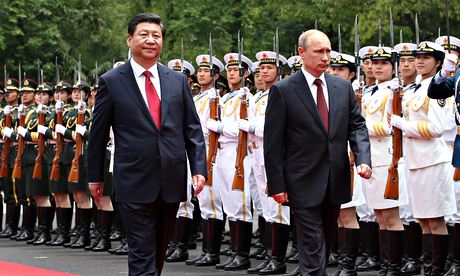
And, finally, the president of China (PRC, not that other China!) Xi Jinping playing host to Russia's Vladimir Putin:

Source

Notice that the leaders of Pakistan, Japan, and China are all wearing business suits, despite their own respective country's rich history of male attires?

As much as I hate do not care for Modi's views, I am delighted that his passion to execute a Chinese model of economic development in India did not lead him to switch to wearing business suits too.  Or that his bromance with Abe did not result in contacting the Japanese leader's tailor.

Of course, India has a long history of charting its own path, even when it comes to its leaders' outfits.

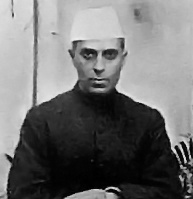
When that wonderful son of Gujarat, who is rarely ever remembered anymore, inspired India through his words and action, he systematically mentored his juniors, particularly Jawaharlal Nehru, to ditch the Western style of clothing in favor of a desi presentation--though he was the only half-naked fakir.  What a powerful statement that was to align his words and actions even in the clothing that he wore. I would have loved to meet with him, and worked with him.

Later as the prime minister, Nehru ended up making  his eponymous jacket famous in the Western countries that he visited.

Source

What's the big deal whether they wear a business suit or the local cultural outfit, you ask?  It is a matter of personal preference, yes, in what I expect from a leader.  And, hey, be happy that at least in this context I am praising Modi!

But, of course, I am not fooled by what people wear; I am old enough, even if not wise, to know that clothes do not always make a man.