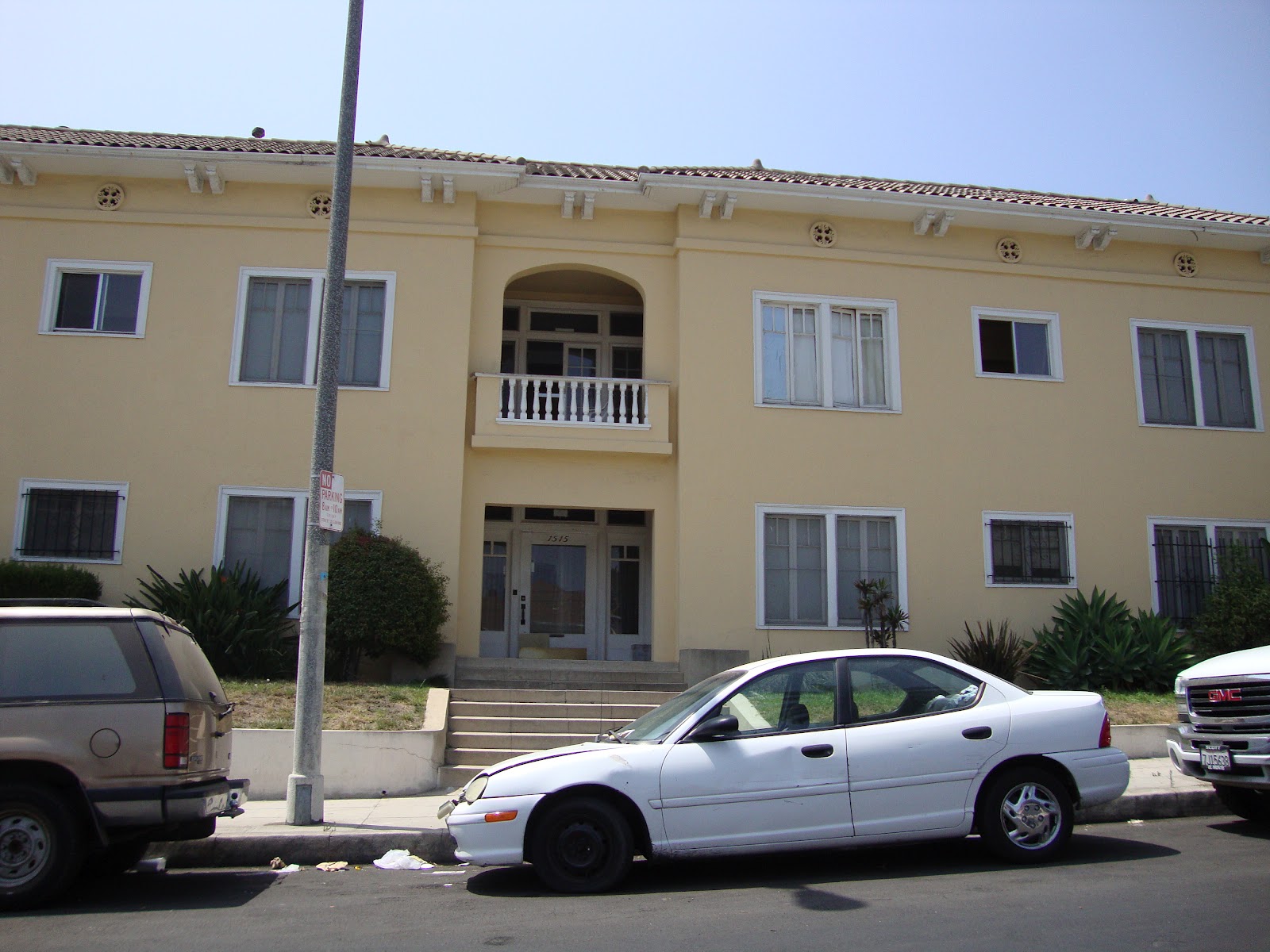
Showing posts with label USC. Show all posts

Friday, June 26, 2020

A mad science

In blogging about the "primacy" of science, I wrote about my lifelong worry over STEM (science, technology, engineering, and math) without the humanities and the social sciences.

There are those who defend the "pure research" of science.  It is all about the curiosity and to make order out of the chaos, they say.  If you are nodding in agreement, then Adam Gopnik wants you to think about Josef Mengele.

Remember Mengele?  Wiki will refresh your memory:
He is mainly remembered for his actions at the Auschwitz concentration camp, where he performed deadly experiments on prisoners, and was a member of the team of doctors who selected victims to be killed in the gas chambers[a] and was one of the doctors who administered the gas.
Yes, that Mengele.

Gopnik writes that Mengele’s work in Auschwitz was what we would call “pure research.”  Gopnik quotes from David G. Marwell's book, Mengele:
He pursued his science not as some renegade propelled solely by evil and bizarre impulses but rather in a manner that his mentor and his peers could judge as meeting the highest standards. . . . The notion of Mengele as unhinged, driven by demons, and indulging grotesque and sadistic impulses should be replaced by something even more unsettling. Mengele was, in fact, in the scientific vanguard, enjoying the confidence and mentorship of the leaders in his field. The science he pursued in Auschwitz, to the extent that we can reconstruct it, was not anomalous but rather consistent with research carried out by others in what was considered to be the scientific establishment.
The scientific establishment!

Mengele is gone, but the echoes of that scientific establishment are heard even today.  Like at the university where I earned my graduate degrees.

The building where my school was housed was called VKC, which was short for Von Kleinsmid Center. As I wrote in this 3-year old post, "That building was home to me through all the years that I was there."

It was named after the university's fifth president.  Well, he was a first-rate eugenicist too!

Eugenics was absolutely part of the "pure research" during his days.

All these years, the university let that slide.  And then George Floyd died.  Black Lives Matter started reverberating across the world.  The university acted quickly:
[The] executive committee of the USC Board of Trustees unanimously voted to remove the name and bust of Rufus Von KleinSmid from a prominent historic building on the University Park Campus. Both were removed last night. Students, faculty, staff, and the Nomenclature Policy Committee have pushed for this for years. He was the University’s fifth President, for 25 years. He expanded research, academic programs, and curriculum in international relations. But, he was also an active supporter of eugenics and his writings on the subject are at direct odds with USC’s multicultural community and our mission of diversity and inclusion
USC was founded in 1880.  Five years after that, in 1885, Stanford University was founded.  It's first president was David Starr Jordan.  "He was also one of the most influential eugenicists of the early 20th century."  And a white supremacist. A racist.

Unlike USC's swift action, Stanford is moving in the slow lane: "President Marc Tessier-Lavigne will appoint a committee to review requests that question views and practices of the university’s founding president and his mentor."

Mengele was, therefore, not that much of an outlier among the scientists of his day.  How terrible!  Gopnik writes, "Mengele was not, it turns out, a mad scientist. It was worse than that. He was participating in a mad science."

Wednesday, March 08, 2017

Universities as the United Nations

Three decades ago, about this time of the year was when graduate school in America was becoming a realistic probability.  In those dark ages before the internet, I had some anxiety-filled days waiting for the envelope in the mail.

I distinctly recall one evening in a hotel in Trivandrum, where my supervisor and I had gone to in order to meet with a few hospital staff--biomedical equipment were just about entering the Indian market and we were selling and servicing a few pricey ones.  The supervisor wanted me to split the room with him, so that he could use his per diem to buy alcohol.  I agreed--what else can an underling do!  That night, I could not sleep.  I kept walking up the window, looking out and worrying what might happen if the graduate school in America didn't work out.

Everything worked out fine.  When I gave the quit notice, my supervisor said that he knew I would not stick around for long.  He said that he observed me by the hotel window in Trivandrum!

I reached the building at USC that was all too familiar to me from all the correspondence: VKC--Von KleinSmid Center.  There were flags of various countries flying in the inner yard--flags of the countries from where students had come to USC.  It might have as well been the United Nations.  That building was home to me through all the years that I was there.

The one on the left, with the globe on top, is VKC

For the first time ever, I met students from countries that are now in the list of countries that have been banned by this president.  From Iran. From Somalia. From Syria.  Countries that are now in the banned list; what a fucking disaster this president has created!  It immensely aches my heart.  This is not the America that I had in mind three decades ago.  As the author of this essay notes:
For more than 75 years, the United States has been the destination for ambitious, talented, and leading young scholars who have wanted to live and work with the best colleagues and students. They have assimilated into an incredibly creative and adaptive set of universities. American-based scholars also collaborate with foreigners, bringing nations closer together.
 The author asks an important question: "Is this history about to end?"  That question aches my heart even more.
scholars and students may soon begin to self-select out of a chance to come to the United States. More than 70 years ago, Robert Hutchins, then the president of the University of Chicago, observed that the problem with witch-hunts was “not how many professors have been fired for their beliefs, but how many think they might be.” If the United States becomes less appealing to scholars from abroad, they may well stay home, depriving America of their talent. Fear and uncertainty have become the order of the day. Executive orders or legislation that represses immigrant groups often, historically, morph into laws against American citizens. None of this bodes well for those interested in studying, teaching, or conducting research at American universities.
What a loss it would have been if I had not met Shahab, who was from Iran!  Other names I no longer even remember--like that woman who was the first (and, to this date, the only) person I have talked at length who was from Somalia.  What a fucking disaster this president has created, and it barely six weeks in!

Thursday, October 22, 2015

This day ... two years ago (2)

(Re-posting from 2013)
In what seems like centuries ago, though it has been less than three decades, I came to USC for graduate studies.  Those days, work rules for us "aliens" were a lot less restrictive than they are now.  Thus, in order to supplement my meager graduate assistantship, I applied for a student worker position with the university's computing services.

My "home" at USC--the VKC and WPH buildings

The first day on the job, my supervisor--I think his name was Mike, who a year later had a horrible motorcycle accident that affected his motor and mental skills--took me around the facilities.  He led me to the inner sanctum and said something like, "here is our DARPA center."  And then explained that DARPA stood for Defense Advanced Research Projects Agency, and how USC was one of the very few universities and agencies connected to its network.

That connection, network, was, of course, the internet.

Those were the primitive days of the internet.  It was well before the days of the graphic user interface of Windows, when knowing the DOS commands was enough to impress a few.  A couple of Unix commands made quite a few swoon with admiration.  Within this primitive internet were user groups, through which was how I came to know about Zia's death in Pakistan--almost a few minutes after the plane went down.  I loved reading the endless number of jokes on groups. I easily adopted the internet.  I downloaded files from FTP sites.  I graduated.  It was still the pre-www world.

And then came the web and Mosaic and Netscape and AOL and Internet Explorer.  The world changed in a hurry.  I was now at the mercy of AOL and the slow dialup modem.  Then the faster dialup. And then DSL broadband.  It is one heck of a different world now.

Even the best minds had a difficult time figuring out what all those meant.  As this essay in the New York Review of Books notes, even the mighty Paul Krugman was dead wrong when he wrote:
“The growth of the Internet will slow drastically [as it] becomes apparent [that] most people have nothing to say to each other,” the economist Paul Krugman wrote in 1998. “By 2005 or so, it will become clear that the Internet’s impact on the economy has been no greater than the fax machine’s…. Ten years from now the phrase information economy will sound silly.”
It is not Krugman's fault that he got it dead wrong.  It is a measure of how rapidly things have changed.  The future has never been this difficult to predict when even next year could be dramatically different.

The internet has created quite a few monsters along the way.  The ease with which data can be collected about you and me and the seven billion others is that Faustian Bargain that we didn't quite imagine thirty years ago. Even twenty years ago.
[Not] obvious was how the Web would evolve, though its open architecture virtually assured that it would. The original Web, the Web of static homepages, documents laden with “hot links,” and electronic storefronts, segued into Web 2.0, which, by providing the means for people without technical knowledge to easily share information, recast the Internet as a global social forum with sites like Facebook, Twitter, FourSquare, and Instagram.
Once that happened, people began to make aspects of their private lives public, letting others know, for example, when they were shopping at H+M and dining at Olive Garden, letting others know what they thought of the selection at that particular branch ofH+M and the waitstaff at that Olive Garden, then modeling their new jeans for all to see and sharing pictures of their antipasti and lobster ravioli—to say nothing of sharing pictures of their girlfriends, babies, and drunken classmates, or chronicling life as a high-paid escort, or worrying about skin lesions or seeking a cure for insomnia or rating professors, and on and on.
I certainly did not imagine this when I got to the internet 26 years ago.  The life we now live would have been science fiction to me then. 
you are not only what you eat, you are what you are thinking about eating, and where you’ve eaten, and what you think about what you ate, and who you ate it with, and what you did after dinner and before dinner and if you’ll go back to that restaurant or use that recipe again and if you are dieting and considering buying a Wi-Fi bathroom scale or getting bariatric surgery—and you are all these things not only to yourself but to any number of other people, including neighbors, colleagues, friends, marketers, and National Security Agency contractors, to name just a few.
 When phrased thus, yes, it certainly would have been nothing but science fiction back then.  Back then as in a mere 26 years ago.  How crazy is that!  How scary is that!
How all this sharing adds up, in dollars, is incalculable because the social Web is very much alive, and we keep supplying more and more personal information and each bit compounds the others.
 Not only are supplying the data, others are also providing the data.  It is important to keep in mind that:
Data—especially personal data of the kind shared on Facebook and the kind sold by the state of Florida, harvested from its Department of Motor Vehicles records, and the kind generated by online retailers and credit card companies—is sometimes referred to as “the new oil,” not because its value derives from extraction, which it does, but because it promises to be both lucrative and economically transformative.
In a report issued in 2011, the World Economic Forum called for personal data to be considered “a new asset class,” declaring that it is “a new type of raw material that’s on par with capital and labour.” 
So, how much is this new raw material worth?  You see that reflected, for instance, in the market valuation of Facebook at more than 80 billion dollars--from the more than 800 million users there.  As the quantity and quality of this raw material increases, the value of Facebook will also increase--ironically, we the people make the company worth that much by providing the data voluntarily!  Facebook is merely one example.  Google, Amazon, the NSA, ...
while we were having fun, we happily and willingly helped to create the greatest surveillance system ever imagined, a web whose strings give governments and businesses countless threads to pull, which makes us…puppets. The free flow of information over the Internet (except in places where that flow is blocked), which serves us well, may serve others better. Whether this distinction turns out to matter may be the one piece of information the Internet cannot deliver.
Not really what I imagined the world would be towards the end of 2013 back in 1987 when I was taken around the computing facilities at USC.  A mere 26 years ago that was!

Wednesday, August 05, 2015

"Bomb bomb bomb, bomb bomb Iran"

The politics of the Iran deal discussions interest me so much that I even follow the administration's Twitter feed on that, which has a Twitter ID that says exactly what it is about, unlike my Twitter ID.

It bothers me a great deal when the Obama administration and the opponents alike convey to the American people--and to the rest of the world--that Iran is like a cancerous blob out there and that the entire region and the world is in jeopardy if we don't act now.  It bothers me because to the average person listening to all that, or reading about it, Iran all the more becomes a distant and abstract entity, instead of the nearly 80 million people living there. A population that is almost twenty times Oregon's but we have plenty who laugh with--and not at--the crazies like "bomb bomb bomb, bomb bomb Iran."

Does it not matter anymore that a country's government is different from its people?  Shouldn't we be respectful of the nearly 80 million people in that country, and those of Iranian descent who live in the US and in other countries?  Imagine me bashing the billion Indians just because I disagree with Modi's politics.  Or, lumping together the billion Chinese into one blob because I hate the Communist Party and its politics.  It depresses me that we are completely dehumanizing the nearly 80 million people of Iran and making demons out of them.

That kind of an atrocious representation of Iran always makes me think of a friend. An old friend, who died a few years ago. Cancer got him :(

Shahab was from Iran, and was one of the many who were forced to exit the country after the theocratic revolution in 1979.  His exit was a story of struggling his way through sympathetic Eastern European countries, then to Western Europe, and finally to the US.

We had quite a few lunches together, and occasional dinners too.  I learnt a lot about Iran and some of the cultural aspects there.  Through Shahab, I even came to know about a religion called "Mithraism," which apparently was a serious competitor to Christianity back in Rome. It was fascinating to find out how much Mithraism, Hinduism, and the Zorastrian faith have/had in common, and how Christianity itself has a lot of common ground with Mithraism.

Shahab's parents--his mother, in particular--were big fans of Indian movies, even from their years in Tehran. He said something along the lines of: "my mother could not understand a word uttered in the movies.  But, she laughed when the heroine laughed and cried when the heroine cried, and enjoyed the songs."  Of course, the older Hindi songs were unlike the contemporary ones--the older songs in Hindi often reflected the Persian cultural heritage that the Mughals brought with them.  His parents were also rice eaters and Shahab joked that if there was no rice served at parties that his parents went to, well, after they returned home they would eat a little bit of rice :)   


Shahab was more a creative arts person than the architect/planner that he was in his day job.  I suspect that he enjoyed the arts infinitely more.  I remember going to the exhibition that he had of his photographs, in the library at Beverly Hills.  The guy was in his elements, and significantly different from his persona at work, and more like the person he was at the lunches and coffees we had.  One of the sites still has links to some of his works, along with an email address to contact him. (That is from where I grabbed the photo.)  I suppose you never cease to exist in the internet.

The next time you hear somebody bashing Iran, ask yourself whether "all options are on the table" appeals to you anymore and, if it does, then find out whether the 80 million there do not matter to you.  Think about Shahab.  Picture him in your mind.

Wednesday, February 26, 2014

The world is not your oyster. It is your life.

"Whatever happened to him?" I wrote yesterday in an email to two graduate school friends of mine.  The "him" was a graduate school professor of ours, and my dissertation adviser--Harry Richardson.

That was yesterday, and here I am reminded about him yet again because of the story in the NY Times about Merle Haggard and the old boxcar that was home to the young Haggard.

Towards the end of my graduate school existence, my life was transitioning from Los Angeles to Bakersfield.  Harry, who rarely ever talked anything personal with me--I am not sure if that was his nature or whether he kept me at length--talked about how much he loved the Bakersfield Sound.

If it felt odd, there was a logical reason--Harry was from the UK. I am from India, and was moving to a town called Bakersfield. And the Brit tells me he about his fondness for the country music of Bakersfield.

Merle Haggard was a big name, of course, along with Buck Owens, in this genre of Bakersfield Sound.  I could never get really into it; different strokes for different folks!  But, the intellectual part in the stories of the Dust Bowl migration, the migrants, the condescension towards the "Okies," the very different lifestyle in Oildale--with the zipcode of 93308--fascinated me. From the bluffs where our street ended, across at a distance, beyond the oil pumping jacks, was Oildale.

Merle Haggard grew up there.
Like much of the music associated with the Bakersfield sound, an unvarnished form of country that thrived in honky-tonks here in the 1950s and ‘60s, Mr. Haggard’s is rooted in the making-do values of the Dust Bowl. His parents migrated from Oklahoma in 1935 and, like thousands of Okies, they sought refuge in Oildale, a ragtag collection of camps and settlements on the outskirts of Bakersfield.
One of the advantages in migrating and travelling is this: we develop attachments to places that otherwise are mere factoids. Had I not lived in Bakersfield, I might have even skipped the NY Times story, unless I was into country music and the Bakersfield Sound.  Having been to Tanzania means that any news story about the country makes me pause and read that. No wonder then that Mark Twain noted this about travel:
Travel is fatal to prejudice, bigotry, and narrow-mindedness, and many of our people need it sorely on these accounts. Broad, wholesome, charitable views of men and things cannot be acquired by vegetating in one little corner of the earth all one's lifetime.
Thus, reading about Merle Haggard's old home stirs a feeling of familiarity.  I get it.  I can also understand why there is the feeling of urgency to preserve his old boxcar home:
Though occupied, the house today is nearly ruined, sagging under a tangle of vines. The campaign to “Save Hag’s Boxcar” is a recognition of the role of the house and the railroad in Mr. Haggard’s career, as well as a nod to the collective ingenuity of Depression-era craftsmen like his father.
Yes, it is about Haggard.  But it is also about the migrants. Of the conditions they faced. Of their fierce determination.
Boxcar houses were not uncommon during the Depression, as chronicled by Works Project Administration photographers like Arthur Rothstein. The story of how the Haggards acquired the car offers a glimpse of the era’s widespread prejudice toward Okies, though the singer’s own pride in his origins would later inspire his 1969 hit, “Okie from Muskogee.”
The family learned of the boxcar from a fellow church member, who asked James Haggard if he thought he could turn a surplus refrigerated train car she owned into a home, Mrs. Rea recalled. “She asked my daddy where he was from, and when he said ‘Oklahoma,’ she said, ‘I hear Oklahomans don’t work.’ Well, his blue eyes met her blue eyes and he said, ‘I’ve never heard of one who didn’t.'”
I suppose life is about collecting such stories and relating them all. Like how an Indian and a Brit can be connected by a thread that also ties in with Bakersfield and Merle Haggard.  Life is simply fascinating!

Monday, January 20, 2014

A spoon is more than a spoon

We do not always toss away things once they become useless. We might hold on to them because that "useless" stuff means something significant. Something profound.

Like this spoon here.


Looking at it, you might think there is no reason for me to even consider it as useless. After all, it looks like a spoon that is functional.

But, appearances can be deceptive.

I don't use this spoon because it is all wobbly and with even the slightest of pressures, it breaks down to its parts:


I don't use the spoon. Yet, I have not tossed it away. All because of memories that are now a quarter-century old.

In 1989, before heading to India for the first time since coming over to the US for graduate studies, I thought I had an understanding with another student that we would share an apartment. Apparently he thought otherwise!

It was a crude shock that I had no place to stay when I returned. I had to search for a place to live and for another student who would share the costs with me.

It was thus that I met GB, who was a newbie from India, thanks to a postdoc I knew who was friends with GB's cousin.  GB came over with his cousin and cousin's wife, and brought with him his couple of suitcases, and the minimum kitchen stuff.  We became roommates.

If I thought I was introverted, GB made me look like I was a party animal at a fraternity. He rarely spoke. He walked alone to the university. After a couple of weeks, it was clear that he had not made any acquaintances.  The weekends, his cousin came to pick him up and GB was gone.

A couple more weeks in, GB was gone even on weekdays to his cousin's. He was gone for stretches for four and five days.

There was something that was not adding up.  But, I didn't know what it was.

The semester ended. GB went to his cousin's for the break.  And did not come back.

The spring semester began.

I got a call from his cousin to tell me that it might be a while before GB returned to the apartment and that I didn't have to worry about GB's share of the rent and utilities--they would send me the checks.

And then the reason for GB's absence.

GB was not well.  He had been undergoing psychiatric treatment, and was on medication as well. And, no, it was not a result of coming to the US--he was unwell even back in India.

I was shocked.

A few weeks into the second semester, GB came with his cousin-couple.  While he was packing up his stuff, the cousin and I traded stories about our respective beards. He told me that I didn't have to struggle with the trimming with a comb and scissors and that instead I could use a beard trimmer similar to how there were electric shavers. I remember feeling surprised there was a gadget to trim beards!

GB was all packed up. The cousin's wife told me that they were leaving behind GB's kitchen stuff, and that I could use them or do whatever I wanted.  They left.

I now had an apartment all to myself. But, I could not be happy about it.

The year ended.  As always, it seemed like only we students from other countries were around during the summer months. It also meant that we often met with other international students over coffee and dinners. I think it was towards the end of the summer that I ran into that postdoc friend. I asked her about GB.  She said that GB had returned to India.

It was clear that the postdoc had something else to add. And she did.

Not too long after going back home, GB had committed suicide by hanging himself.

I still have a couple of plates of GB's.  The spoon I retain because of an important lesson that I learnt in the process about the invisible mental health. A fracture, a cut that bleeds, a cough, or any such health issue are out in the open and we check with the people if they are ok. How would we ever know about the mental health of others when it is all hidden within their heads?  And, even worse, how do we know we are not making their conditions worse?  Even now, I wonder if there was something that I did or said that could have aggravated GB's conditions.  Or, perhaps I could have said or done something that could have helped him.

Now, with the last of GB's spoon's breaking apart, the image of the whole spoon serves as a metaphor as well that something that looks normal doesn't have to be normal, and that it could be all be broken up within.

Life is immensely complex. As I get older, it only seems to get even more complex.

Tuesday, October 22, 2013

Are you a puppet worth $100 to Facebook? Or more?

In what seems like centuries ago, though it has been less than three decades, I came to USC for graduate studies.  Those days, work rules for us "aliens" were a lot less restrictive than they are now.  Thus, in order to supplement my meager graduate assistantship, I applied for a student worker position with the university's computing services.

My "home" at USC--the VKC and WPH buildings

The first day on the job, my supervisor--I think his name was Mike, who a year later had a horrible motorcycle accident that affected his motor and mental skills--took me around the facilities.  He led me to the inner sanctum and said something like, "here is our DARPA center."  And then explained that DARPA stood for Defense Advanced Research Projects Agency, and how USC was one of the very few universities and agencies connected to its network.

That connection, network, was, of course, the internet.

Those were the primitive days of the internet.  It was well before the days of the graphic user interface of Windows, when knowing the DOS commands was enough to impress a few.  A couple of Unix commands made quite a few swoon with admiration.  Within this primitive internet were user groups, through which was how I came to know about Zia's death in Pakistan--almost a few minutes after the plane went down.  I loved reading the endless number of jokes on groups. I easily adopted the internet.  I downloaded files from FTP sites.  I graduated.  It was still the pre-www world.

And then came the web and Mosaic and Netscape and AOL and Internet Explorer.  The world changed in a hurry.  I was now at the mercy of AOL and the slow dialup modem.  Then the faster dialup. And then DSL broadband.  It is one heck of a different world now.

Even the best minds had a difficult time figuring out what all those meant.  As this essay in the New York Review of Books notes, even the mighty Paul Krugman was dead wrong when he wrote:
“The growth of the Internet will slow drastically [as it] becomes apparent [that] most people have nothing to say to each other,” the economist Paul Krugman wrote in 1998. “By 2005 or so, it will become clear that the Internet’s impact on the economy has been no greater than the fax machine’s…. Ten years from now the phrase information economy will sound silly.”
It is not Krugman's fault that he got it dead wrong.  It is a measure of how rapidly things have changed.  The future has never been this difficult to predict when even next year could be dramatically different.

The internet has created quite a few monsters along the way.  The ease with which data can be collected about you and me and the seven billion others is that Faustian Bargain that we didn't quite imagine thirty years ago. Even twenty years ago.
[Not] obvious was how the Web would evolve, though its open architecture virtually assured that it would. The original Web, the Web of static homepages, documents laden with “hot links,” and electronic storefronts, segued into Web 2.0, which, by providing the means for people without technical knowledge to easily share information, recast the Internet as a global social forum with sites like Facebook, Twitter, FourSquare, and Instagram.
Once that happened, people began to make aspects of their private lives public, letting others know, for example, when they were shopping at H+M and dining at Olive Garden, letting others know what they thought of the selection at that particular branch of H+M and the waitstaff at that Olive Garden, then modeling their new jeans for all to see and sharing pictures of their antipasti and lobster ravioli—to say nothing of sharing pictures of their girlfriends, babies, and drunken classmates, or chronicling life as a high-paid escort, or worrying about skin lesions or seeking a cure for insomnia or rating professors, and on and on.
I certainly did not imagine this when I got to the internet 26 years ago.  The life we now live would have science fiction to me then.
you are not only what you eat, you are what you are thinking about eating, and where you’ve eaten, and what you think about what you ate, and who you ate it with, and what you did after dinner and before dinner and if you’ll go back to that restaurant or use that recipe again and if you are dieting and considering buying a Wi-Fi bathroom scale or getting bariatric surgery—and you are all these things not only to yourself but to any number of other people, including neighbors, colleagues, friends, marketers, and National Security Agency contractors, to name just a few.
 When phrased thus, yes, it certainly would have been nothing but science fiction back then.  Back then as in a mere 26 years ago.  How crazy is that!  How scary is that!
How all this sharing adds up, in dollars, is incalculable because the social Web is very much alive, and we keep supplying more and more personal information and each bit compounds the others.
 Not only are supplying the data, others are also providing the data.  It is important to keep in mind that:
Data—especially personal data of the kind shared on Facebook and the kind sold by the state of Florida, harvested from its Department of Motor Vehicles records, and the kind generated by online retailers and credit card companies—is sometimes referred to as “the new oil,” not because its value derives from extraction, which it does, but because it promises to be both lucrative and economically transformative.
In a report issued in 2011, the World Economic Forum called for personal data to be considered “a new asset class,” declaring that it is “a new type of raw material that’s on par with capital and labour.” 
So, how much is this new raw material worth?  You see that reflected, for instance, in the market valuation of Facebook at more than 80 billion dollars--from the more than 800 million users there.  As the quantity and quality of this raw material increases, the value of Facebook will also increase--ironically, we the people make the company worth that much by providing the data voluntarily!  Facebook is merely one example.  Google, Amazon, the NSA, ...
while we were having fun, we happily and willingly helped to create the greatest surveillance system ever imagined, a web whose strings give governments and businesses countless threads to pull, which makes us…puppets. The free flow of information over the Internet (except in places where that flow is blocked), which serves us well, may serve others better. Whether this distinction turns out to matter may be the one piece of information the Internet cannot deliver.
Not really what I imagined the world would be towards the end of 2013 back in 1987 when I was taken around the computing facilities at USC.  A mere 26 years ago that was!

Sunday, April 07, 2013

"Do you have a life?"

"I read your latest post at the blog" a student said as he was heading out.  "Looks like you blog a lot."

I nodded my head as he continued with a smile, "even about your haircut."  Ah, yes, about that $9.99 haircut.

"I was thinking that the professor has lots of time."

 I gave him my usual spiel of how my work is also my hobby and how, therefore, I don't find blogging to be any time consuming work at all as much as I don't find my work to be time consuming either.

"But, you have a life, like family and a life, right?"

That is a difficult question for me to answer.  Because, "life" includes blogging and doing everything else that I do now.

Except during my undergraduate days, when I did very little reading because of the crappy library that my college had, I have always spent (wasted?) time reading and thinking.  Before college, during my school days, I was keen on reading anything other than the regular textbooks, which always made my mother wonder when I ever prepared for exams.  She is right; I rarely did anything that would qualify as serious exam prep work.

In graduate school, I thought I had died and gone to heaven with the awesome libraries on campus.  Yes, in the plural.  Multiple libraries.  I had a tough time choosing my favorites.  There was my favorite spot in the reading room at Doheny:

USC Doheny Library, summer 2009
Or a table by the large glass windows at VKC.  Or the quaint furniture at the philosophy library.  I can imagine that my life would have been super-awesome if only the web and blogging had been invented back then!

Life is what we make of it.  How I enjoy life might not appeal to the next person.  When my cousin was visiting with me a few weeks ago, she felt that my life was too regimented with what I eat and don't eat, and with the walking that I do, and the relatively mess-free home that I maintain.  "Get a life" she said.  "It is ok to be messy, you know."

Reading and thinking and writing naturally led me to write opinion pieces.  Back in Bakersfield, as the newspaper started publishing my pieces, I felt encouraged and perhaps even started flooding the editor's mailbox with my writings.  Blogging would have helped, a lot!  There were a few in the community who even asked me if I worked for the newspaper!

After moving to Oregon, it took me a while to get oriented to the new environs.  Though neighbors, California and Oregon are very different.  Bakersfield's San Joaquin Valley is a world away from the Willamette Valley where I now live.  Once I got a sense of the rhythm of this place, I was off to the races, as they say.

Even in my first year in Oregon, I invited a couple of my faculty colleagues to contribute to my blog.  I was convinced that the more contributors I had, the more we could influence discussions.  But, in retrospect, their decision not to blog--neither with me nor anywhere else--is a telling example of how differently my thoughts are compared with theirs as has been in pretty much everything else at work.

So, when the student asked whether I have a life, all I could do was smile and nod.  There is no way I could have provided such a lengthy explanation, and there is no way in hell that he would have patiently listened to all these either; let us see if he read this ;)

Monday, June 18, 2012

After the Rodney King verdict, when I witnessed rioting in Los Angeles

The news reports and commentaries on the death of Rodney King stir a whole lot of memories.

As a starving graduate student at USC, I lived quite close to campus, which is not any hot piece of real estate.  After living in an apartment complex that was only a few blocks of a walk to the campus, I moved to significantly cheaper housing more than a mile away.  I didn't understand, until much later, that it was also a drug-crime infested area; oh well, that is a story for another day!

There were many moments when I used to wonder how the neighborhood I lived in could possibly be there at all in the phenomenally rich country that the US is.  Of course, a trip to New Orleans and walking through some of the neighborhoods there quickly straightened me out: my LA neighborhood was much better than some of the places I saw in LA's New Orleans.

To cut a long story short, the rioting took on crazy dimensions.  People in buildings up and down the street were rushing here and there in their pickups and cars and coming back with shoes, tires, television sets, and anything they could lay their hands on.  One guy told me to go to the Pep Boys store that was round the corner and grab whatever I wanted.

The building manager, who was a Japanese-American (his stories will be for yet another day!) advised me, in his halting English, that I should not even peep out of the window.  I thought it was good advice, and turned the TV on.  Every local channel was covering the riots big time, and then in one I saw my neighborhood.  A view from a helicopter above.  I could see my own building.  That was when the seriousness really hit me. 

Two days or so later, when things had calmed down enough, I biked down the usual path, on Hoover, to the campus.  Odd shoes were scattered all along the road--people were rushing that they couldn't be bothered to stop and gather the spills, I suppose.  I passed the Pep Boys store, which had some awful black coating from the fires. 

I reached the campus, where the perimeter was heavily patrolled by university and city police.  I remember trying to talk to one officer, who simply brushed me off. 

The entire riot was surreal.  But, even more surreal was the original event--the beating of Rodney King, which was captured on camera.  It felt to unreal that real cops would really beat the crap out of a guy like that.

As the riots continued, I do remember watching on TV Rodney King uttering those now famous words: "can we all get along?"

It was so profound.  Such simple words with such heavy weight in those dramatic moments.

A few months after that, I think, when I was an intern at a public agency in downtown LA, I was one of the few people who rode the Long Beach Blue Line in its trial runs, and when they were filming publicity campaigns.  From the train, I could see the Watts Tower and I was reminded of the narratives I had read and heard about the riots in the 1960s.  Another reminder that even as things change, they remain the same?

A few years ago, I drove by those old haunts. Every building, including the apartment complex where I lived, looks so much more spruced up and bright than ever.  Perhaps no more riots?  Wouldn't that be an achievement?

Saturday, June 02, 2012

Remembrance of things past

Back in graduate school, when I was lot more of a bumbling idiot than what I am now, a couple of graduate students from India pitched an idea: why not perform a film song at the university's international students day (or whatever that was called.)

I had nothing to hold me back, and I said I will gladly sing along, while making sure they knew that my knowledge of Hindi was pretty basic at best.

It was a long time ago, and I have forgotten the names of people.  The leader was nearing the end of her PhD days--in the sciences, was it?  The name of one guy suddenly came back to me, and easily did I track him down on the web.   Another girl, whatever her name--we even worked together at the university's computing services--was the sister of this guy, as I recall.

Anyway, it was a group of about eight or ten of us.  And the song that our leader had us practicing quite a bit was this one:


A lovely tune, yes.  I had no idea what the lyrics meant.

Later on, this friend joked that I was pronouncing a few words like how somebody with a Bengali accent might.  (Interesting side note: through the years that I was there, he was working on his PhD in economics, and then I find out years later that he switched to film studies.  Only in America, eh!)

Those were the days, my friend :)

Oh, the performance itself? You had to ask? We sucked. Big time!

Wednesday, January 11, 2012

News about Hostess bankruptcy kindles memories of grad school and more

The WSJ reports:
Hostess Brands Inc., the maker of Twinkies and Wonder Bread, is seeking bankruptcy protection, blaming its pension and medical benefits obligations, increased competition and tough economic conditions.
The filing on Wednesday comes just two years after a predecessor company emerged from bankruptcy proceedings.
I first came to know about this company and its (awful) foods from a graduate course that Michael Dear offered.

I forget now what the course was about.  It was probably in my second year in the US.  Dear's class had very few students--perhaps about eight we were.

Every meeting, Michael Dear brought some kind of snacks to class.

Once, he brought something that I didn't recognize.  It was pink and fuzzy looking.

"What is that?" I asked.

Dear, who had a good sense of wit, looked at me pretending to be upset that I didn't know.

"You don't know Zingers?"

Chuckles from the rest.

"If by now you don't know Zingers, then you don't belong in this country."

We all laughed.

I bit into one.  That was also the last time I ever had Zingers in my life.  It was enough to earn my right to stay in the US :)

Years later, after I became a college instructor, I took up Michael Dear's practice of taking snacks to class, if the class size was small enough.

Sometimes, I even baked brownies and cookies at home and took them to class.

Almost always, I also described to students how I was continuing with a graduate school professor's practice to bring snacks to class and, of course, told them about this Zingers episode.

I did that until one cantankerous and obnoxious student loudly opined in class that I was bringing goodies in order to get favorable ratings from students.  Though, the probability is very high that she was mindlessly echoing her remarkably stupid faculty adviser, whose arrogant ways made me depart from the university's Honors Program.  It brought to an end my practice of taking snacks to class.  A zinger, of a different sort!

Tuesday, January 10, 2012

Restrooms in India ... at least two good experiences

As a fresh-off-the-boat graduate student at USC, I was mighty impressed with, among other things, the quality of the restrooms on campus. 

Well, "restroom" was a word I quickly learnt after a funny experience.  I wanted to check out Waite Phillips Hall on campus.  As I entered the building, I asked a young guy who was on his way out for the direction to the lift.  He looked at me with a quizzical expression, shrugged his shoulders and kept going.

Turned out that the "lift" was obviously there.  But, it might have been that I had used the word "lift" in place of the word "elevator."  And, my accent, of course.

In any case, "lift" and "toilet" were words that I quickly deleted from my very, very, limited vocabulary.  The restrooms were mighty clean.

But, oddly enough, it took me only a few days to up my expectations for how clean restrooms ought to be on campus.  So, I started making a mental list of the better restrooms to go to, and the not so good that I wanted to avoid. 

When it came to restrooms, all libraries were certainly not created equal.  My favorites were the ones in the philosophy library and the ones in the basement of Doheny Library.  I even preferred to walk a couple of minutes to these locations than to use the less than clean ones. 

Ironical was this practice, given that it was only a few weeks since I had left India where public restrooms were rare, and I tried to avoid using them as much as I could!

Now, after my limited travel experiences, I have even started using the conditions of public restrooms as some kind of a crude measure of conditions in a place.  Even at the high school reunion, I ended up checking out the restrooms for students and taking photos there.

In the restroom barometer, conditions in India definitely seem to be improving.

In the "family reunion" phase of this trip, we went to Mahabalipuram.  As we started driving, I asked the driver, Balaji, about restrooms there and along the way.  He hesitantly replied that good restrooms are rare, but that they would be clean at the place where he was going to take us for lunch.

"But ..." I started.  "It is a place where lots of tourists go.  Especially foreigners.  Then how come?" 

Balaji paused. Then he said, "that is what we also cannot understand, sir.  I think we Indians don't maintain things well."

He then went on to describe the "petrol bunks" that Reliance had started along highways.  These were stations with restrooms, and mini-food marts, like how most US gas stations are.  But, apparently they soon became horrible restrooms.  In any case, he said Reliance has closed them all.

Just outside the administrative boundaries of Mahabalipuram was the restaurant that Balaji said had clean restrooms.  After we parked there, we men headed to the gents toilet. 

It was clean.  Really clean.

When the women were done and as we got back into the van, I asked them about the women's toilets. They were also clean.

Score that for India's progress.

It was a similar experience when we all went to Express Avenue--a new mall in Chennai.  It is certainly upscale.  And, yes, the restrooms were clean. 

Now, one might yet criticize that these two locations are not geared to serve the average Indian.  True.  But, even for the above-average Indians, such options of clean restrooms did not exist a few years ago. 

There are two challenges for India then: first is to make sure that the maintenance of facilities like these continues.  Second, for similar facilities to become available to "aam aadmi" too.

Monday, January 02, 2012

Notes from the reunion: "College changed me"

Padma was one non-stop laughing machine.  At one point, Sreenivas walked over to the table where I was seated with Padma and a few others, and tried to see if he could get her to be serious at least for a minute.

But, as he walked over, Sreenivas himself started laughing.  Such was/is the nature of Padma's infectious laughter.

Sreenivas composed himself and told Padma to look straight into his eyes.  But, again, he cracked up almost in an instant.

As Sreenivas walked away, I told Padma that I did not recall her being such a laughing person when we were in school.

"College changed me" she said.

The transformative powers of college!

In the US, we routinely advise students about the importance of college years, for content acquisition as well as to develop a sense of who we are.  The best experiences, then, bring out the best in us.

While it might be true that whatever didn't kill us only makes us stronger, my undergraduate experiences were far from pleasant.  It was graduate schooling later on that provided that transformative experience.

I recall one experience in my first semester as a fresh-off-the-boat graduate student.  It was in the planning theory class, with Martin Krieger as the instructor.

Having shifted from engineering to a completely new field, in a new country, where the educational system was completely different, I never ever felt out of place like I did in that classroom.

A couple of weeks in, we were discussing the readings.  I had something to say.  But, as I started speaking, I started sweating out of sheer nervousness.  I bet the class looked at me with sympathy.

A couple more weeks later, we turned in the first of the papers in Krieger's class.  Again, never having written essays all through the four years of college, I had no idea how to write papers.

When Krieger returned the evaluated papers back, I had earned a gentleman "C."

"C."

I felt crushed.  Not that I was chasing the magical 4.0 GPA; I was, after all, the same old high school student who couldn't care about grades.  But, a "C" was a shock.

I worried that I had erred in ditching electrical engineering and getting into intellectual areas that were far beyond my abilities.

There was nobody to talk to about this.  But, the wonderful aspect of being an adult, as opposed me in my teenage years, was this: I was able to work it out within me.

Now, when I write opinion pieces in newspapers, for instance, I get appreciative remarks about my writing.  In my classes, when it comes to students making presentations in class, I often share with them my own experiences at having been awful as a student.  I go one step more, and tell them, "if you think I am a bad teacher now, well, you should be glad that you were not in my classes a decade ago."

For me, the transformation that began in graduate school continues even now.  I wonder how I will be a couple more decades from now.

Maybe I will get to share such stories at the next reunion with my high school classmates.  As I say these, perhaps Padma will keep laughing throughout.  Sudha will laugh along.  Yasmeen will also laugh throughout, but a lot quieter is her laugh.  And, we will all laugh with them.

Saturday, June 25, 2011

Simon Bolivar and I, in Venezuela and Ecuador

It was in the summer of 1988 that I went to Venezuela.  In a technological time frame, the big thing then was a laptop computer, which was terribly expensive, had very low battery life, and was way beyond the reach of all of us who were starving graduate students.  It was also the days of roll-film cameras.  I could not afford anything more than a simple and inexpensive automatic camera, and had also decided on a budget of the number of rolls that I would use.

One of the fellow-graduate students in that trip was another student from India, Shivsharan Someshwar.  Shiv, who was a couple of years older than me, and a lot more experienced about the world, described the need to get out into the open in the early hours of the day for the best photographs.  In Maracaibo, which is where we spent most of the three weeks, many mornings did I walk about and rationed my camera shots--from mango trees, young boys playing soccer, the weekend trip a few f us took to the beach, cityscapes.  

These photos were my prized possession, along with a poster of Carlos Andres Perez, who was a candidate for the presidency and later won the elections.  Even though I had very few possessions as a graduate student, and even though the few photos from the Venezuela trip were immensely valuable to me, they are now lost--thanks to the number of moves from one apartment to another, and then from one city to another. 

After returning from Ecuador, a couple of days ago I remembered to ask my father whether he has any of the copies I had sent my parents.  "I don't remember seeing any of those photos" he said.

But then in 1988, my parents too were in transition.  Dad was in the last few months of his contract as a consulting engineer at a project in Orissa.  They returned to Madras after that project ended.  I suppose my Venezuela photos were meant to be lost, forever!

Oh well! 

In Venezuela, wherever I went there was some reference to Simon Bolivar--the cinematic Venezuelan hero who fought for independent rule, and had dreams of unifying many of the newly independent countries into a political unit that would be without any Spanish influence. 

After 23 years, Simon Bolivar once again featured in my Ecuador experiences.  For starters, the hotel where I stayed in Quito is on a street named, yes, Bolivar!


I walked a lot in the old town, Centro Historico, where my hotel was located, and more--even beyond the park where the new town begins.  At this transition is is a huge statue honoring Simon Bolivar--riding a horse and leading the charge.

I have memories of taking photos of Bolivar portraits and statues when I was in Venezuela. If only I can track them down.  But, it is not as if I have lost nothing else in life!  I suppose in life we gain some, and lose some.


Bolivar himself can never be lost in the shuffling around in history though.  After all, one of the countries that he led to its liberation is named after him--Bolivia.  I hope this does not mean that my next trip to South America will be to Bolivia.  I have nothing against that country; I would rather get to Argentina first.

Friday, November 12, 2010

The football-academic complex called "universities"

A few years ago, there were all kinds of speculations that USC's star player, Reggie Bush, was being paid in violation of NCAA rules.  It was a collective shrug of sorts as a response to such news.
Now, yet another star player and payments--this time at Auburn
The fact that an amateur athlete allegedly soliciting a six-figure payment to secure his services barely raises the eyebrows of college football lifers only serves to highlight how insulated the college athletics echo chamber has become. 
A lot lies beneath these high profile news items.  A lot more mundane stuff that goes unreported. Like courses with diluted standards to keep players within the passing grades ...

Oh well. A few decades ago, the president of the University of California system summarized what it means to keep a university going: parking for faculty, sex for students, and football wins for alumni.  So, no point challenging the football-academic complex, which will find ways around any number of Congressional investigations.

Monday, October 04, 2010

Good and bad news for USC Trojans :)

Good news:
A 13-year trademark battle ends as the high court lets stand a ruling that the 'SC' logo belongs to the University of Southern California, not the University of South Carolina.
Bad news:
32-31 defeat that knocked the Trojans out of the AP top 25, the first time since 2001 that they've been unranked during the regular season.
Best news:
USC football sucks.  
Why is this good news?  As I noted earlier, the last time Trojan football tanked, the academic reputation went up, and kept going up.  I am all for USC to keep climbing up the academic ladder :)

Saturday, September 18, 2010

Joke of the day: Bush :)

Read somewhere the other day:
Q: What do Democrats and USC Trojans have in common?
A: They both blame Bush for all their problems
Muahahaha :)

With USC, it is Reggie Bush, of course. who has also returned his Heisman Trophy.  I suppose Bush doesn't need it anymore now that he has a Super Bowl ring!

The entire Bush chronicles are a nasty reminder about the level of money in college sports.  It is, after all, not the first time, nor will be the last time, for such stories.  What I don't get is how the world of higher education and the public go on pretending that college athletics aren't about money ... Perhaps such a behavior is consistent with everything else: we don't seem to be concerned about the debt, or the war, or the power of corporations, or ....

Maybe it is time to rename the country, the United Apathy of America ... oh well ...

Anyway, back to USC, I hope their sports suck for the next few years. Why? The last time USC football was in the dumps, in the Larry Smith years (which is when I was a grad student there) and after, USC started focusing on academics. Now, USC's academic ranking has picked up like crazy.  USC's academic reputation is now on par with UCLA, and its freshman acceptance is selective--though not anywhere as selective as Harvard or Stanford.
The entering undergraduate student body at USC is the most academically talented in the university’s 130-year history.
Average standardized test scores for the incoming class are in the 96th percentile. More than 85 percent of incoming freshmen were in the top 10 percent of their high school class and around 10 percent of them were valedictorians. The average GPA of the group was 3.7.
USC received 35,794 applications for 2,972 places in the fall 2010 freshman class. With this year’s applicant pool, USC’s admission rate was 24 percent.
I hope this is no plateau, and that the university will continue to enhance its academic standing under the leadership of the new president.

Fight on, Trojans--in the classrooms and in the labs, that is.

Sunday, August 15, 2010

Photo of the day: India's Independence Day

From my favorite Indian newspaper, of course. 

The moment of birth, 63 years ago, was characterized as the "tryst with destiny" by Jawaharlal Nehru.

In that historic speech, Nehru remembered, and reminded everybody, the siblings who now became citizens of another country, Pakistan:
We think also of our brothers and sisters who have been cut off from us by political boundaries and who unhappily cannot share at present in the freedom that has come. They are of us and will remain of us whatever may happen, and we shall be sharers in their good and ill fortune alike.
For India and Pakistan, it has been two very different tales right from their births.  I often wonder what the story might have been had there been no partition.  Or, what if Kashmir had become a separate country, like Nepal. And, later on, what if the states had not been created based on the prevailing majority languages spoken.

Such counterfactual questions aside, it is quite an achievement, indeed, that the country has been largely successful with its experiment in democracy--except for that brief period of darkness that was the "Emergency" imposed by the then prime minister, Indira Gandhi.

I have my own version of Salman Rushdie's marking of the I-Day in his life; it was on a August 15th that I left India for the United States decades ago in order to pursue graduate studies at USC.  It is also, in a way, my own independence day :)

Saturday, June 12, 2010

Academics gone, .. .but sports saved!

It is amazing how tolerant we are of a system that continues to make atrocious decisions.  No, I do not mean any particular university system--it is all pervasive ...

I read this about CalState at Bakersfield, which is from where I moved to Oregon.
CSUB students, faculty sad to hear of temporary cuts to some graduate programs
That news was in the local newspaper, and to get more details I checked with the university's website.
And in the home page, the news is this item "Sports Saved!"--thanks to fundraising.

Meanwhile, there is major realignment in the Pac-10, Big-10 and other NCAA leagues, and it is all because of money--this exchange between NPR host Bob Siegel, and Dan Wetzel explains it succinctly:
SIEGEL: Why? What's driving these universities to go into these conferences?
Mr. WETZEL: Well, with college athletics, you know one thing: It's not academics, it's all money. And increasingly, athletic budgets have soared and schools are desperate to try to balance their books.
Currently, one of the really two ways to make money is television contracts. So what you're seeing are schools herding together in bigger and bigger groups to try to attract the most money possible.
SIEGEL: So who stands to win in all this and who might be the losers?
Mr. WETZEL: The people who win are the athletic directors, the college football coaches who get million-dollar salaries. It's about money. It's where is the money going. They're not paying the players. It's going to someone, and it's really going to a small group of people.
Even though this money aspect is all well known, we are supposed to pretend that it is all about amateurism.  I mean, that is exactly what the NCAA said in explaining why it was punishing USC's athletics.

Finally, here in my hometown, while, as previously noted, universities are hiking up their tuition, the gazillion dollar Nike's chief, Phil Knight, donates even more to athletics .... how much did he give recently, you ask?
It is not only how much for athletics, but the manner in which it will be done:
Knight is making yet another extraordinary gift to the UO: a 100,000-square-foot addition to the Casanova and Moshofsky centers and a new field, stands and scoreboard for soccer and lacrosse. The new building would include space for a UO Football Hall of Fame and Museum, covered parking for 300 cars, surface parking for 75 cars, a 20,000-square-foot weight room and space for ticket offices and the Duck Shop. If past is prologue, no corners will be cut when it comes to design, materials and furnishings.
The gift comes with extraordinary terms. As with the stunning new John E. Jaqua Center for Student Athletes, the university will grant a license to Phit LLC, a private group financed by Knight. The license will allow Phit to lease the property and build the projects to its specifications, and give them to the UO upon completion.
The arrangement makes it a private construction job, not subject to the usual bidding requirements for state projects, though prevailing wage rules will apply. The dollar value of the gift will not be disclosed, and the UO will be obliged to maintain the facilities and staff them with a half-dozen full-time positions. It’s an arrangement that is unique to facilities donated by Knight — unique not only at the UO, but nationwide.
The higher education board approved the project with no dissenting votes, through four of 12 members abstained. “This is an act of astonishing generosity,” Lariviere said. “And instead of celebrating that generosity, we’re analyzing it to a level of scrutiny one doesn’t expect for something such as this.”
Oh, wait, UO's president also had the following to say:
In an earlier meeting with Register-Guard editors, Lariviere said he’s “bumfuzzled” by skeptical questions about Knight’s gifts. “Do I wish he’d show the same level of support for Sanskrit? Sure,” the president said of his own academic specialty. “Am I surprised that a man who made his fortune by building the biggest sports equipment company in the world is interested in athletics? Not really.”
Lariviere would be serving the UO poorly by showing anything other than unqualified gratitude for Knight’s gifts.
Blame the system.  We can't do any damn thing.
BTW, I liked one comment I recall reading somewhere: If ever University of Oregon were to play Oklahoma State University, we ought to bill that game after their respective benefactors, Phil Knight and Boone Pickens :)