Showing posts with label india. Show all posts

Friday, June 18, 2021

Will Americans adopt namaste?

As the meeting ended, I asked the doctor what the health protocols are now about handshakes.  "No more handshakes, and only elbow bumps?"

He didn't even pause to consider the question.  "I don't think I will ever shake hands again.  For 15 months, I haven't even had a cold.  It is because I am not in contact with people."

People have their own preferences.  While I honor his, I am not in agreement.

Social distancing in order to avoid a deathly virus is not the same as social distancing in order to avoid a common cold.  If we take this approach to its logical conclusion, then we can continue with social distancing, work from home, and tele-medicine forever, and such a bubble existence will help us avoid any contagious disease however minor or deadly it is, right?

As much a gregarious hermit I am, the bubble doesn't appeal to me.  It completely redefines what it means to be human.

I hope that in this case, too, public memory will be short.  After a few months, or a couple of years, we will return to handshakes and hugs like we used to before the pandemic upended our ways of life.

Now, it is not that I am a huge fan of hugs.  I have learnt to accept them as a part of life, as much as my balding head is something I need to live with ;)

I grew up in a culture in which there seemed to be lots of emphasis on not touching the other person.  A culture in which there were no handshakes or hugs, particularly across the genders. In the culture in which I grew up, relationships were non-contact sports.  As kids, we might have clung on to grandmothers or uncles, but as grown ups we maintained our distances.  A handshake between men was the most we ever got to in terms of bodily contact to express anything.

I often joked, after a few years of living in the US, that it was because we lived in hot and humid conditions and that the last thing we wanted was the other person's stinky sweat!  Even as a kid, I always sweated more than the rest.  My grandmother often commented that I was like a உப்பு சட்டி (salt container) that was always a tad moist.  (The finely powdered "table salt" was not around during my formative years.  Chunks of sea salt were stored in ceramic containers on which condensation was not unusual.) 

After the pandemic ends, or at least eases, I will pay a visit to the old country, and meet face to face with my relatives and friends.  The older folk won't hug.  We will sit apart, and inquire about each others lives.  It will be a touching visit.

Friday, June 11, 2021

The future has arrived. But, which future?

In this blog, and with my students (I have only one more term to engage with them!) I have often discussed my concerns about the China model for development and its superficial attractiveness not only to developing countries but even to "thinkers" right here in the US.  In 2013, for instance, I wrote in this post against the backdrop of a federal government shutdown:

It is tempting, in such situations, to look across at Russia and China and note that their governments are more “efficient.”  A few months ago, well before this partial shut down, even the New York Times columnists, Thomas Friedman and Nicholas Kristof, had written about how the Chinese get things done while we squabble here.  When Valdimir Putin effortlessly pushes ahead with his agenda, there are appreciative comments as well.

The Chinese model looks "efficient."  The American model of democracy, on the other hand, has always seemed messy, and the past five years of tRumpian politics has only worsened the standing of American politics and governance.

No wonder then that I was attracted to this essay in The Atlantic, in which the author argues that when Joe Biden worries about China it is not merely about the economic competition.  Nope.  His worry is something much bigger.  "In Biden’s view, the United States and other democracies are in a competition with China and other autocracies."

The old rules-based international order has come apart, and two broad constellations of countries are emerging in its place—one consisting of democracies, the other autocracies. Each side is motivated more by insecurity than by an ambition to transform the world in its image. Xi and his fellow autocrats worry that the free flow of information, the attractiveness of democracy, and economic interdependence would destabilize their regimes. Biden and America’s allies are concerned that Xi’s attempt to make the world safe for the Chinese Communist Party will undermine freedom and democracy, pushing international rules in an illiberal direction and empowering autocrats worldwide.

Sure, there are other interpretations of China in the global stage.  Biden gets my vote on this with his concern that the China model is a serious threat to liberal democracy.

And, yet again consistent with my world view, another essay argues that the fate of democracy in the world depends on the fate of democracy in one country--India, where liberal democracy has been rapidly losing ground to authoritarianism that is favored by mOdi and his toadies.

And the rest of the world doesn't even need a microscope to examine what the tRumpian Republicans have been doing in the states that are governed by them: Democracy is already dying in those states!

As Biden says, we are at an inflection point.  What we do and say have immense implications for the global future of liberal democracy.

Wednesday, May 19, 2021

The good son

The moment the WHO declared the novel coronavirus a pandemic, I started worrying about India.  About my people in India.  About my parents.

What if something happened and I cannot go for months?

A year has passed.  The question remains.

As I noted in this post a few days ago, I am not the only one in the diaspora who is worried about these issues.  It is a surreal situation.

One person writes about this moral dilemma in her (his?) question to to the the NY Times ethics columnist, Kwame Appiah.  She writes about her husband who "is adamant that if his parents or sister become ill (with Covid or anything else), he will return to India to be with them."

She is, naturally, worried about her husband's stance.

In addition, if my husband got sick in India, I doubt he would be able to count on any medical care, and may be unable to return to the United States for many weeks, or even months, if the travel ban goes through and continues. I feel this risk is real, even though my husband is a U.S. citizen. The only things we have going for us are that we are both vaccinated and that we have a place in our home where he would be able to quarantine once he returns.

I have told him that if he goes, I will ready myself for the very real possibility that he may never return. Sadly, I do not think I am being irrational in thinking this.

She requests Appiah to "suggest a few things that both of us should consider so that we can make this decision together, carefully weighing and preparing for all the risks in the calmest state possible."

Before reading Appiah's response, or my excerpts below, think about what you would advise that woman.  Exercise your brain and mind on this ethical issue, which is real and not a hypothetical scenario.

Appiah being Appiah (there are other posts like this one in which I quote his wise words) he carefully weighs the issues and provides a reassuring response.  I am not going to excerpt anything from there; I encourage you to read it in full.

Appiah concludes with this:

[Relationships] have an ethics of their own, which isn’t reducible to a set of rational assessments. Love must be responsive to unreason. Your husband should take account of your own fears and needs, then, just as you should take account of his. In the end, however, the wisdom of preparing for the worst has its limits when — all things considered — it keeps us from doing what’s best.

Friday, May 14, 2021

A terrible curse on humanity

A second Covid-related death in the family.  He was my cousin's husband.

Covid is a curse on humanity, I often tell people.  Not only do loved ones die, but friends and family cannot gather to grieve either.  To die alone, and for the bereaved to grieve alone, is a terrible curse that none of us ever imagined.  But, that is the reality that my cousin and millions of others have to deal with in India, which is reeling from a Covid surge that does not seem like it will abate soon.

Meanwhile, the US CDC declared that those who are fully vaccinated can resume normal activities, for all practical purposes. 

This sets up a huge moral dilemma for people like me who live in the bubble that vaccinations have made possible, but watch in horror the conditions in India worrying all the time about the health and welfare of family and friends.

It is an unbearable pandemic guilt.  I am not the only one, of course, to feel that way.

“I have extreme feelings of guilt as someone who has most of my extended family in India,” said Neha Shastry, 30, who lives in Brooklyn. She has been shaken by the deepening Covid crisis there, as infections and deaths rapidly advance from big cities into rural areas. “It’s surreal to wake up a year later in New York City and see the streets full and businesses flourishing again, while my family is fearing for their lives.”

It is surreal.

My logical mind tells me that there is no reason to feel guilty.  And that's what psychologists remind us: "If you’re feeling guilty about things over which you have no control, the guilt you’re feeling is not warranted, the experts said."

In the old faith in which I grew up, we were advised to accept with detachment both the good and bad things that happen in our lives.  Humans that we are, detachment is not easy to practice.

I suppose modern life has conditioned us into thinking that we are in control of events that happen in our lives.  We forget that as much as life itself is an accident, whatever happens in life is also nothing but a series of fortunate and unfortunate accidents.  When that unfortunate event is a death that does not allow us to come together, it is a challenge to remain detached and philosophical.  But, such is life!

Thursday, May 13, 2021

Slow down

Whatever Malcolm Gladwell might have intended, his book has been reduced to a simplistic notion that any bloke can become an expert by practicing, practicing, and practicing for 10,000 hours.  The character Sharad in the movie The Disciple appears to have arrived at that Gladwellian framework on his own and devotes his time, energy, and money to practicing classical music with the hopes and dreams of becoming a maestro.

It does not take long for a viewer to figure out that Sharad will not succeed.  The movie then is about when and how he would realize this on his own, and what he would do as a result.

What a pleasure it was to watch the movie!

In a cinematic world of fast action, cuts and edits, loud noise, and closeups, this movie stands out in contrast.  Long and wide takes in which the camera slowly movies in allow us to absorb the moment and feel the events and the emotions that the director presents to us.  

They rarely make movies like this anymore.  Not that they made such movies in plenty in the past, and definitely not in India.  I wonder if even among the audience, there are fewer numbers now eager to watch storytelling that is at a slow pace.  The shorter and shorter attention spans that people of all ages seem to have means that movies like The Disciple will appeal only to a few of us who long for the longform in text, music, and movies.

As a kid, I gravitated towards classical musicians who rendered music at a slow and deliberate pace that presented a raaga in all its richness.  One of my favorites was M.D. Ramanathan.  He performed at the auditorium in Neyveli, and I was immediately drawn to his style.  I was so much a fan of his that I could not understand why a music critic like Subbudu was merciless in his comments about Ramanathan to the extreme of outright insults like calling Ramanathan a water buffalo!

One of my greatest disappointments with Carnatic musicians was their abandonment of the longform presentation of a raaga.  Instead, they chose what appealed to the audience and which, thereby, brought them money and fame.  The Disciple presents the tension between purity of music and the market dynamics, and does it well without taking sides. Sharad is committed to the purity of classical music and, towards the end of the movie, watches with a mix of horror and awe a female musician gaining money and fame in popular music.

A couple of months ago, after listening to a NPR segment, I immediately placed an order for a twin-CD set of recordings of a live performance in 1970 by Ali Akbar Khan, accompanied by Zakir Hussain.  In one of the CDs, Khan Sahib performs Sindhu Bhairavi for 75 minutes.  One raaga in all its glories for more than an hour.  Do musicians even attempt something like this in contemporary India, I wonder.

Bageshri is one raaga that features prominently in The Disciple.  I will end this long post with a favorite of mine--but from the world of movies.


Saturday, May 01, 2021

This too shall pass ... eventually

As we go about our daily lives, and as I witness India's descent into Covid hell that the government made possible, it is difficult to view the events over a longer time horizon.  Even though I teach students to understand the human condition by looking at trend lines, the Covid catastrophe, which Arundhati Roy correctly describes as the modi government's crime against humanity, preempts looking at tomorrow leave alone history.

But, history does offer a little bit of comfort if we look back at the world in 1918, when the Spanish flu killed many.

Imagine you were there at Camp Devens in late 1918, surveying the bodies stacked in a makeshift morgue. Or you were roaming the streets of Bombay, where more than 5 percent of the population died of influenza in a matter of months. Imagine touring the military hospitals of Europe, seeing the bodies of so many young men simultaneously mutilated by the new technologies of warfare — machine guns and tanks and aerial bombers — and the respiratory violence of H1N1. Imagine knowing the toll this carnage would take on global life expectancy, with the entire planet lurching backward to numbers more suited to the 17th century, not the 20th. What forecast would you have made for the next hundred years?

I would have forecast that it was the end times.  That we were all going to die.  And that it would be a miracle if humanity recovered from such a catastrophe. 

I would have been proven wrong! 

A hundred years ago, an impoverished resident of Bombay or Delhi would beat the odds simply by surviving into his or her late 20s. Today average life expectancy in India is roughly 70 years.

Sriram in 1918 would never have predicted such a positive transformation.

How did this happen?

Of course scientific breakthroughs helped.  But it was not science alone that did it.

Those breakthroughs might have been initiated by scientists, but it took the work of activists and public intellectuals and legal reformers to bring their benefits to everyday people. From this perspective, the doubling of human life span is an achievement that is closer to something like universal suffrage or the abolition of slavery: progress that required new social movements, new forms of persuasion and new kinds of public institutions to take root.

(I hope the ardent advocates for STEM will read the long read in the NY Times Magazine, which is what I am referring to here.)

Perhaps you don't have the time to read that long essay, and want an example of how science alone didn't deliver progress.  In that case, here is an example: Pasteurization.  The scientific method led Pasteur to understand the role that bacteria played in spoiling the milk, which then caused sickness in people who drank it.  He then figured out that heating milk and then quickly cooling it down did the trick. But, this didn't take effect right away.

In the United States, it would not become standard practice in the milk industry until a half century after Pasteur conceived it. That’s because progress is never a result of scientific discovery alone. It also requires other forces: crusading journalism, activism, politics.

My favorite examples, as I have blogged in plenty, will always be the elimination of small pox, and piped drinking water supply. In both, science alone wasn't enough; it required an army of non-scientists, and sometimes the literal army too.

So, yes, over the long run, the trend lines tell a story that is vastly different from what most would have predicted in 1918.

But, then there is the reality of daily life.

I cannot wait for this pandemic to end.

Friday, March 19, 2021

There's something rotten in India

I rarely blog anything about India because, well, I have practically given up on the old country.  There was so much hope and promise ... but, the saffronization of every aspect of life in India has ended all the hope and promise.

The last time I commented on India's democracy was in September 2018.  I wrote in that post that India was practically in the kind of "emergency rule" that Indira Gandhi imposed on the country.  I quoted Arundhati Roy: "The vulnerable are being cordoned off and silenced. The vociferous are being incarcerated. God help us to get our country back."  

If god favors only the Hindus, then Roy will not be getting her country back. 

The world's largest democracy has been transformed into a combination of cult-worship and "electoral autocracy."  The BBC's Soutik Biswas reports:

Earlier this month, in its annual report on global political rights and liberties, US-based non-profit Freedom House downgraded India from a free democracy to a "partially free democracy".

Last week, Sweden-based V-Dem Institute was harsher in its latest report on democracy. It said India had become an "electoral autocracy". And last month, India, described as a "flawed democracy", slipped two places to 53rd position in the latest Democracy Index published by The Economist Intelligence Unit.

Sure, one could raise all kinds of questions about the methods used in these reports.  But, when report after report concludes that democracy in India is increasingly flawed, and that the country is only partially free, then there is something awful going on in the old country, right?

Writing on "the decay of Indian democracy," Milan Vaishnav adds to the power of the cult figure:

[Voters] didn’t necessarily judge Modi on his record in office. Instead, the force of Modi’s character inspired them to look forward and imagine what transformations he might engender.

Would the BJP’s dominance be as comprehensive if Modi were not in the picture? The answer is likely no. 

Decay!

US Senator Bob Menendez, who chairs the Senate's Foreign Relations Committee, is not happy:

The Indian government’s ongoing crackdown on farmers peacefully protesting new farming laws and corresponding intimidation of journalists and government critics only underscores the deteriorating situation of democracy in India.  Moveover, in recent years, rising anti-Muslim sentiment and related government actions like the Citizenship Amendment Act, the suppression of political dialogue and arrest of political opponents following the abrogation of Article 370 in Kashmir, and the use of sedition laws to persecute political opponents have resulted in the U.S. human rights group Freedom House stripping India of its ‘Free’ status in its yearly global survey.

Where will all this end?

Predicting the future is the easiest way to make a fool of oneself.  All I know is if India continues to move in the same direction as it has been over the past decade, then the ending will not be pretty.

Friday, March 12, 2021

It was once a Third World Country posterchild

A few years ago, I met with an activist environmental lawyer from Bangladesh.  Syeda Rizwana Hasan was the first one from Bangladesh that I met since my graduate school days.

Always excited to meet with accomplished people from my old part of the world, I talked with her about her work.  And then I asked her a lot about Sheikh Mujibur Rahman.

In 1970, when Bangladesh was still East Pakistan, "Sheikh Mujibur Rahman, won a landslide victory in national elections. The Pakistani leadership was reluctant to accept the results because it did not want an East Pakistani political party heading the federal government."

West Pakistan, now Pakistan, was the center of all the economic, commercial, and military power. The West Pakistan government and its people couldn't care about the Bengali-speaking fellow-citizens who were thousands of miles away, separated by India.  The last thing they wanted to grant was autonomy to the Bengali-speaking Pakistanis.

As the demand for Bengali autonomy grew, the Pakistani government launched Operation Searchlight,“ a military operation to crush the emerging movement. According to journalist Robert Payne, it killed at least 7,000 Bengali civilians – both Hindus and Muslims – in a single night.

On March 26, Bangladesh was declared independent and the liberation war began.

The US, mad with its supremacy and in a Cold War against the USSR, sided with West Pakistan's leaders and military.  As we review history, I wonder how many times we ever sided with the good guys!

When refugees started spilling over to India in the millions, India's prime minister, Indira Gandhi, decided to employ the military against the West Pakistani forces in East Pakistan.  In less than two weeks, the West Pakistani forces surrendered.  India's military chief, S.H.F.J. Manekshaw, became a household name.  We kids thought he was the greatest ever!

In no time at all, the Nixonian realpolitik Secretary of State, Henry Kissinger, labeled Bangladesh as a "basket case."

Nick Kristof writes about how much Bangladesh has developed over the 50 years, and how we in the US can learn from it.

Life expectancy in Bangladesh is 72 years. That’s longer than in quite a few places in the United States, including in 10 counties in Mississippi. Bangladesh may have once epitomized hopelessness, but it now has much to teach the world about how to engineer progress.

Kristof continues:

Bangladesh invested in its most underutilized assets — its poor, with a focus on the most marginalized and least productive, because that’s where the highest returns would be. And the same could be true in America. We’re not going to squeeze much more productivity out of our billionaires, but we as a country will benefit hugely if we can help the one in seven American children who don’t even graduate from high school.

That’s what Biden’s attack on child poverty may be able to do, and why its central element, a refundable child tax credit, should be made permanent. Bangladesh reminds us that investing in marginalized children isn’t just about compassion, but about helping a nation soar.

I wonder what Kissinger has to say about Bangladesh now.  But then, who cares for Kissinger, right?

With women like Syeda Rizwana Hasan, Bangladesh is now well on its way to even surge past India.

Well, it has.

A few months ago, the IMF reported that Bangladesh had moved ahead of India in terms of per capita income.  Boy did that cause quite some issues for the Modi-toadies who believe in the superiority of Hindus!

We all can learn a lot from the 50-year old Bangladesh success story.

Saturday, March 06, 2021

Say his name

When we were young, mother took us to grandma's village for the annual summer holidays--we were too young to travel on our own.

Those were the days before cellphones and emails. There was no landline at most homes, and one went to the nearest post office in order to place "trunk calls"--long distance calls.

So, the day that we arrived at grandma's, mother would promptly write a letter to my father informing him that we had arrived safely.

When we were of a certain age, we realized that our mother, who never addressed father by his name, would have trouble writing a letter to him.  In the old tradition, the wife was so subservient to the husband that she dare not treat him as an equal and call him by his name.

So, how did my mother address my father in those letters?

We would badger her; but mother always shooed us away.  I don't think she even showed us the letters.  To this date, I have no idea how that letter-writing was done!

Even when talking to father, mother could not use the disrespectful "you" (நீ) but had to use (நீங்க.)

It was all par for the course.

But then things changed in a hurry.

My siblings' marriages were arranged along the traditional, orthodox lines.  My sister addressed her husband by his name, and my brother's wife called him by his name.  And the  நீங்க was tossed away for good.

Changes have happened.  But, these have been mostly in the southern part of India where families and governments have invested in female literacy and empowerment.  In the Hindi heartland, in particular, the lives of women continue to be highly dependent on the whims and fancies of men.  Even the Chief Justice of India's Supreme Court!

Justice Sharad Arvind Bobde, the head of India’s Supreme Court, asked a 23-year-old man accused of raping a minor whether he would marry his victim, who is now an adult. 
The victim, who under Indian law can’t be identified, has accused the man, a distant relative and a civil servant with the Maharashtra State government, of repeatedly stalking and raping her starting when she was 16. 
The judge’s comments provoked new demands that people in power, and particularly men, do more to improve how women and girls are treated in India.

There is more from the same judge:

In a separate case, according to the letter and media reports, Justice Bobde appeared to condone rape in the context of a consensual relationship. 
“When two people are living as husband and wife, however brutal the husband is, can the act of sexual intercourse between them be called rape?” Justice Bobde asked while hearing a petition filed by a man accused of rape by a woman who had been his live-in partner.

In the old country, the more things change, the more they seem to say the same, which is a tragedy and disservice to women :(

Saturday, February 27, 2021

When developed countries are worse

When Covid went global, we worried in our own ways about nightmarish scenarios in India, Bangladesh, Pakistan, Nigeria, and other countries.  These are countries with huge populations, and with very little medical infrastructure.

I was practically getting panic attacks from thinking about the old country.  My sleep was getting disturbed, and no amount of playing bridge was of help.

A year into the pandemic, conditions in India and elsewhere have become a medical mystery, which Siddhartha Mukherjee writes about in The New Yorker: "While the virus has ravaged rich nations, reported death rates in poorer ones remain relatively low." 

[If] you look at the pattern of covid-19 deaths reported per capita—deaths, not infections—Belgium, Italy, Spain, the United States, and the United Kingdom are among the worst off. The reported death rate in India, which has 1.3 billion people and a rickety, ad-hoc public-health infrastructure, is roughly a tenth of what it is in the United States. In Nigeria, with a population of some two hundred million, the reported death rate is less than a hundredth of the U.S. rate. Rich countries, with sophisticated health-care systems, seem to have suffered the worst ravages of the infection. Death rates in poorer countries—particularly in South Asia and large swaths of sub-Saharan Africa—appear curiously low.

How do we explain this?

Mukherjee goes through the typical hypothesis you and I might propose--from younger population to prevalence of infectious diseases leading to immunity, to undercounting , to ... you name the possibility and Mukherjee addresses them all. It is a wonderful read, and an awesomely informative one.

Towards the end, Mukherjee writes:

The covid-19 pandemic will teach us many lessons—about virological surveillance, immunology, vaccine development, and social policy, among other topics. One of the lessons concerns not just epidemiology but also epistemology: the theory of how we know what we know. Epidemiology isn’t physics. Human bodies are not Newtonian bodies. When it comes to a crisis that combines social and biological forces, we’ll do well to acknowledge the causal patchwork.

Meanwhile, another Indian-American medical writer, Atul Gawande reports on the worst-hit county in the worst-hit state in the worst-hit country.  The county is the US.  North Dakota is the state.

Gawande writes:

When an entire community must decide how to tackle a serious problem—must choose what it is and is not willing to sacrifice—matters get more complicated. In business, the decision-maker is generally clear, and, if you don’t like the decision, too bad. The boss can insist on obedience. But that’s not how democracy works. We designate decision-makers, but the community has to live with dissent. This is why businesspeople so often make terrible government leaders. They’ve never had to manage civic conflict and endure unending battles over priorities and limits.

Keep in mind who presided over the federal government when the pandemic broke.

As of writing this post, 510,458 have died because of Covid here in the US.

I hope we will learn the lessons from this pandemic and be absolutely ready for the next one.


Friday, February 26, 2021

Immigrant stories

Consider this:

As a student in America, where I was considering a Ph.D. in mathematics and a job in finance, I would read 200-word stories buried in the back pages of newspapers. With so few words, speaking of events so large, there was a powerful sense of dissonance. I traveled to Congo, at age 22, on a one-way ticket, without a job or any promise of publication, with only a little money in my pocket and a conviction that what I would witness should be news.

Impressive, right?

The person who bought himself a one-way ticket to Congo, at age 22, was Anjan Sundaram.  That excerpt is from this blog-post in 2014.

For those who are from my part of the old country, the name Sundaram immediately suggests that his people hail from the same part of the country.  My excitement is always multiplied a gazillion times over when my people take the roads less traveled and accomplish a lot.  Sundaram wrote in 2014:

News organizations tell us that immersive reporting is prohibitively expensive. But the money is there; it’s just often misallocated on expensive trips for correspondents. Even as I was struggling to justify costs for a new round of reporting in Congo, I watched teams of correspondents stay in $300-per-night hotels, spending in one night what I would in two months. And they missed the story.

Parachuting in with little context, and with a dozen other countries to cover, they stayed for the vote but left before the results were announced. A battle broke out in Kinshasa after they left, and I found myself hiding in an old margarine factory, relaying news to the world, including reports to this newspaper.

Sundaram has accomplished a lot over the seven years.  He has authored a poignant and honest memoir essay in The New York Review of Books.  It is a wonderful essay about immigration, and his relationship with his father.  Read it in full; will be worth your time.

One piece of information in his essay grabbed my attention, even though it is mentioned only in passing:

Two winters ago, I paid a visit back to my ancestral village, at the southern tip of India. My great-grandfather’s home there was left to me, on a small plot of land.

An ancestral village at the southern tip of India.  I wonder how far away that is from Pattamadai or Sengottai.

Rare is an immigrant who completely forgets the old country and the old ancestral village.  Most of us remember.  It almost haunts us.  It is also a constant reminder of how far we have traveled, and what we have given up in order to live elsewhere.  Choices we make in plenty to be where we are, but there is always that umbilical cord that ties us to the village far, far, far away.

Sundaram writes:

“Who am I becoming?”

An immigrant inevitably asks this question.

It is one of the toughest questions ever.

Sunday, February 07, 2021

Will the real Joe Biden please stand up!

I usually stay away from commenting about the goings on in the old country.  Because, more often than not, it is simply heartbreaking even to read about the news about India!

This morning, I woke up to the news about a dam break in the northern part of India, after "part of a Himalayan glacier broke off, triggering an avalanche of rock, mud, water and debris that swept away a hydroelectric dam."

It was a disaster that was bound to happen: "Environmentalists have long cautioned against building dams and power plants there, because it's so prone to landslides and flooding."

A terrible tragedy.

I hope that people will India will think more about how much we – and our economies – are ‘embedded’ within Nature, not external to it.  If only the religious in India too can be motivated to do something about the natural environment.

But, I want to first catch up on an older issue.  It is about how the authoritarian government is tightening its chokehold on the country.

In response to the growing farmers protests, the artist Rihanna tweeted:

Rihanna has a following.  Nearly 102 million!

So, of course, the fanatics in India burned her effigy.

The teen activist icon Greta Thunberg tweeted about the protest. So, of course, the fanatics in India burned her effigy.

Meena Harris tweeted:

In case any academic decided to write or talk about these issues, the Indian government was ready for them:

In a new restriction on academic freedom at the country’s publicly-funded universities, professors and administrators will now have to get prior approval from the ministry of external affairs (MEA) if they want to hold online international conferences or seminars that are centred around issues relating to the security of the Indian state or which are “clearly related to India’s internal matters”.

The latter phrase is so broad as to include virtually every topic of interest to academics. The farmers’ protest relates to ‘India’s internal matters” as does the government’s handling of the COVID-19 pandemic, or caste issues or even the pros and cons of demonetisation.

In addition, the names of all participants in such seminars will have to be approved in advance by the government.

Am I shocked?  Not one bit.  

This is what anti-democratic forces do. This is why I have been blogging against the current prime minister and his toadies forever.  

I am not at all shocked.  I am terribly sad though that my old country has been reduced to such a pathetic state of affairs.

What can one do besides issuing statements that won't have any influence on "the strong man"?

Why aren't we talking about all these?


Tuesday, January 05, 2021

“Is it possible to be happy without making others unhappy?”

This past summer, as the pandemic encouraged binge-watching, even quite a few non-Indians were feasting on a show that was all about arranged marriages in India.  The eight episodes of Indian Matchmaking provided entertainment for many who otherwise couldn't be bothered to learn anything about India.  That's entertainment!

I didn't watch even one episode, but I read plenty of commentaries about the show.  And, yes, I blogged about it!  In that post, I noted:

The average non-Indian viewer might not imagine an India beyond the Hindu upper-caste that the show is about: 

Though the show is called Indian Matchmaking, it portrays no couples who identify as Muslim, Christian, or Dalit—communities that represent close to 40 percent of India’s 1 billion–plus population.

I ended that post with this:

Netflix has the last laugh in this, similar to how the current President owes it all to the entertainment of the lowest kind.

What a depressing and sad state of the world!

We did recently watch a six-episode show that was also about matchmaking and weddings in India.  It was not merely entertainment, however.  A viewer who knew nothing about the Subcontinent but delightfully watched Indian Matchmaking would not have watched this show because it requires paying attention to the characters, their names, their religions, the words they use, the differences among them, the political backdrop, ... It would have been too much of a learning experience. 

As an educator who has tried his best to get a few people interested in the Subcontinent--and failed miserably at that--I don't expect a lot of crossover audience from Indian Matchmaking to ... A Suitable Boy.

The title for this post comes from a New Yorker interview with the director of A Suitable Boy--Mira Nair:

I’ve talked to a bunch of friends who’ve read “A Suitable Boy,” and some of them have said a version of “When I read that book when I was eighteen or twenty or twenty-three, I was so angry about who Lata ended up with. And now I’ve read it as someone who’s thirty-five or forty or fifty, and I understand the decision she made.” You don’t have to tell us how your series ends, but did you have a similar feeling with the book, and do you understand that emotion?

I understand Lata, and I never wanted to feel in the film that Lata settles. She sees people for who they are, to some extent, in her youthful way, but the question, which I love, that Vikram asks in the book is “Is it possible to be happy without making others unhappy?” That’s Lata’s question, really, all the time, and I think she makes a decision that she knows will work to make herself grow. So that’s the way I saw it.

“Is it possible to be happy without making others unhappy?” 

That's not an Indian question.  It is universal.  

The characters, their language and religions, the locale, and plenty more could be different across the world, but the universality of “Is it possible to be happy without making others unhappy?” is beyond doubt.  (If only people would read fiction set in other parts of the world, and watch foreign movies.  Here again, I am trying my best as an educator, like a freshman seminar in which students can learn about the world by reading and discussing a short story every week.)

The actor who plays the character Lata, Tanya Maniktala, relates to her own personal life:

Maniktala teared up over the phone as she reflected on her own grandfather’s trauma as a Hindu refugee forced by the 1947 partition to flee to India from what is today Pakistan. “I realize how important pain is, and the lessons” to be found in that, she said.

“The kind of empathy people had — I feel the humanity aspect has been on the decline,” she continued. “We have to remember where we came from. We can never forget.”

The trauma of the 1947 partition continues to haunt India and Pakistan.

Mira Nair's movies are never mono-cultural, nor are they set in any comfortable geographic spaces.  NPR's Scott Simon asked Nair about this:

SIMON: Miss Nair, I have to ask you - back to the first film of yours I saw, "Mississippi Masala." Your films have been a wonderful celebration of the masala, if you please, of multiculturalism, of people from all various parts of the world spontaneously being thrown together and making a society out of themselves and each other's lives and joining together to create something distinctive and unique and amazing. Are you worried about the prospects for multiculturalism in today's India and, for that matter, today's America?

NAIR: In America, I feel that we are waking up to multiculturalism. We are waking up to the power of culture, of color, you know? I mean, with the whole movements, finally, of Black Lives Matter and even the #MeToo movement, there's been an enormous sort of galvanizing. So I feel actually here, energized. Part of what inspired us, Sooni Taraporevala, the writer and myself, to make "Mississippi Masala" was first the racism within us in our own Indian community. And that led into this interracial love story, really, with the African American community in Mississippi.

I sort of see it as an anthem to Kamala Harris. Like, Kamala Harris is, in a way, the child of Mina and Demetrius in "Mississippi Masala." And finally, 30 years later, today's young can see that she didn't come out of nowhere, that this is a culture that is there and not seen. So I must say, there is a feeling of being heartened here.

In India, I refuse to despair, but I am deeply disturbed about the systematic obliteration, really, of precisely that that makes us powerful and strong, which is, I think, our plurality and our layered - our interconnectedness, not just really from - you know, from the entire silk route, from Iran, from, you know, all through Pakistan, Balochistan to India. This is a region that has influenced so many aspects of who we are as Indians, you know, today in religion and music and poetry. This is so much what also is in "Suitable Boy." So I feel that that is our power. And it would be very reductive to make it a one religion, one nation. That is not the absolute extraordinary glory of where we come from.

If only more people watched such shows and reflected on the human condition!  


Sunday, November 01, 2020

Forget apples. A teaspoon of dirt everyday will keep the doctors away?

Like most kids, I played in the dirt a lot.  Sure, I am a neat-freak now, but that's not how I always was.

In the old country five and six decades ago, I cannot imagine any kid not having played a lot in the dirt.  Villages like grandmas' offered plenty of dirt all around.  Young ones crawled, on floors licking anything and everything that they came across.  Toddlers rushed outside and grabbed whatever they found and, as toddlers do, gave them a good licking too.  And more, as you can imagine.

Urban India was not that different.  

Perhaps I was a tad more in the dirt than the average kid.  I recall a phase when I had boils in my arms and legs--my unclean self had made them possible.

Oh, there was more "unclean" stuff. Like tiny worms in vegetables.  In the rice too. Bugs in the lentils.  Ants seemingly in everything.

There was no point complaining to the grandmothers.  "That's ok, if you swallowed ants, your eyesight will get better" was one of the responses.  And here I am wearing glasses.  Clearly the ants that I swallowed didn't help ;)

Could all these early experiences have also helped me become healthy?

That is the hygiene hypothesis in health.

The argument has been that our immune systems do not gear up to fight infections, or even go rogue sometimes, if they have not been trained early on in our lives when we were kids.  The more kids (and adults) live in sterile conditions most of the time, the less that their bodies know how to develop a fertile internal environment that can be the army to fight invaders when they come knocking.

I am not sure if we can establish this with certainty.  But, it has always appealed to me, and I am thankful that I grew up dirty, and am clean during my middle age as my body begins to weaken.

In the age of the coronavirus, the hygiene hypothesis has reared up in an interesting way.  Could tropical countries that are also poor, like India or Nigeria, be handling Covid-19 better because the people there got a lot of hygiene and immune building exposure during their childhood?

Now, new research by Indian scientists suggests that low hygiene, lack of clean drinking water, and unsanitary conditions may have actually saved many lives from severe Covid-19.

In other words, they propose that people living in low and low middle-income countries may have been able to stave off severe forms of the infection because of exposure to various pathogens from childhood, which give them sturdier immunity to Covid-19. Both papers, yet to be peer reviewed, looked at deaths per million of population to compare fatality rates.

Before you jump to conclusions, keep in mind that a lack of potable water and sanitation infrastructure literally kills people.  Bad air quality also is a killer.  By having clean water, sewage processing systems, and clean air, we save lives and extend longevity.  So, we don't want to cut back on these, right?

 Smita Iyer, an immunologist at the University of California, Davis, believes the "hygiene hypothesis" in Covid-19 "does fly in the face of our understanding of anti-viral immune responses".

An immunologist in the US, with a last name of Iyer.  Hmmm ... 

Low hygiene conditions correlated with low Covid fatality rate is merely a correlation at this time.  We have very little understanding of the virus almost a year into the pandemic.

Clearly, a range and variety of reasons could be possibly behind the low fatality rate. "We still have a lot more to learn about the virus as we are still only 10 months into the pandemic," says Prof Kuppalli. The fact is there is much we don't know.

There is much that we don't know.  But, I am always inclined to believe that all the dirt that didn't kill me in my childhood made me stronger.  As I wrote seven years ago, "I am willing to buy into the idea that all those tiny doses of dirt in the air and the food helped me develop my immune system, and I now worry that I will live way too long for my own good!  And that the absence of that from my regular life now is why I have to be ultra-careful when I visit India."

I wonder when I will be able to visit India again!

Thursday, October 22, 2020

The food of the gods

When we were kids, once in a while, usually on a Sunday, amma made vengaaya sambar (onion sambar) and a potato-curry.  Would I love to have that combo for dinner tonight!

I didn't know then that potatoes, red chilies, and coriander (cilantro) were not really Indian. There was no reason to suspect they were not.

How wonderful to later find out that none of those is native to the old country.  Two came from the world of the Aztecs and the Incas--from the other side of the planet!  I was more shocked to learn that the coriander plant is native to the eastern Mediterranean.

The Subcontinent made them all its own.

But, there is one kitchen ingredient that I would never have imagined not being Indian.  Never would I have even remotely wondered if it was really Indian.

Asafoetida.

Who would have thunk that!  No sambar can ever taste great without a pinch of asafoetida, but this ingredient is not Indian!

It was only late in life did I figure that out.

The BBC adds more to my understanding.

Asafoetida, or hing as it's commonly known in India, is a perennial, flowering plant that largely grows in the wild. It thrives in dry soil in temperatures under 35C. So India's tropical plateaus and plains, humid coast and heavy monsoons rule out much of the country for hing farming.

So, where does India get its fix?

Instead, Indians rely on imports mostly from Afghanistan, Kazakhstan and Uzbekistan - worth more than $100m in 2019 - to get their fix.

They should rename that region as Asafoetidastan ;)

asafoetida in Latin means "fetid gum". The smell is so strong that raw hing, a greyish-white sticky resin collected from the roots, is dried and mixed with flour - wheat in India's north, rice in the south - to turn it into an edible spice. ... Although the Persians once called it "the food of the gods", hing is now barely found in cuisines outside of India. In other parts of the world it's either used for medicinal reasons or as an insecticide!

However, unlike the potato or the red chili, which came to India after the "Columbian exchange," asafoetida has a long history: "It also makes an appearance in the grand Hindu epic, Mahabharata, whose composition historians believe began around 300 BC."

Now, Indian scientists have "planted about 800 saplings of the plant in Lahaul and Spiti, a cold desert nestled in the Himalayan mountains."  If those plants survive, and the resin is collected, then asafoetida will be made for the first time ever in the old country.

Step back and survey this landscape of food.  Global is a simple and routine combination of vengaaya sambar and potato-curry.  There is so much good that comes from being open to the world.

If only we would think globally!


Tuesday, September 22, 2020

I listened to a lovely poem. You too should.

I have often written (like here) about the problems that I encountered, and continue to face, because English is a second language to me.  With the rare exceptional people who have a flair for languages, most of us reconcile ourselves to some aspects of the second language that we simply cannot master.

But, hey, the wonderful thing is that we are fluent in a second language.  What an accomplishment!

Back in the old country, the English language is an integral part of urban life.  Urbane is measured by how much the English language is used!

In such a setting, there are people who want to be in, even if their English proficiency is not up to par.  And there are people who look down on those who lack proficiency--I used to be one of them, sadly!

Once you, dear reader, understand this context, you will be able to appreciate and enjoy the poem “Goodbye Party for Miss Pushpa T. S.” by Nissim Ezekiel.

A note on Nissim Ezekiel. 

As with almost every aspect of life, here too I was ignorant.  I had no idea about a Nissim Ezekiel. 

A Google search led me to this obituary tribute from 2004:

Nissim Ezekiel, who has died aged 79, was the father of post-independence Indian verse in English. A prolific dramatist, critic, broadcaster and social commentator, he was professor of English and reader in American literature at Mumbai (formerly Bombay) University during the 1990s, and secretary of the Indian branch of the international writers' organisation PEN.

Ezekiel belonged to Mumbai's tiny, Marathi-speaking Bene Israel Jewish community, which never experienced anti-semitism. They were descended from oil-pressers who sailed from Galilee around 150BC, and, shipwrecked off the Indian subcontinent, settled, intermarried and forgot their Hebrew, yet maintained the Sabbath. There were 20,000 Bene Israel in India 60 years ago; now, only 5,000 remain. Most of Ezekiel's relatives left for Israel; he served as a volunteer at an American-Jewish charity in Bombay.

This part sets it up well for “Goodbye Party for Miss Pushpa T. S.”

After 1965, he also began embracing India's English vernacular, and teased its idiosyncrasies in Poster Poems and in The Professor. In the latter he wrote: "Visit please my humble residence also./ I am living just on opposite house's backside."

I would rather that you listened to the poem.   

Wednesday, September 16, 2020

The first Asian-American Vice President?

There is a reason that Kamala Harris is referred to as an Indian-American and a Black, but not as an Asian-American.

It will confuse the life out of most of my fellow Americans when they look at Kamala Harris and search for the "Asian" in her.  Because ... in this country, Asian-American has come to mean people with roots in countries in the far east and southeast Asia.

Perhaps you are thinking that I am being picky.  No, I am not.

This has been an issue that I have been fighting ever since my graduate school days when I reminded many white Americans that I too am an Asian.

One of my favorite encounters on this topic was after graduate school, when I was working as a transportation planner.

An Anglophile colleague walked over to my work space during a coffee break to ask me a question.  She was reading a novel set in London, and was confused that the Indian, Pakistani, and Bangladeshi characters were being referred to as Asians.

I calmly explained to her that Asia is a continent, and it includes India, Pakistan, and Bangladesh too.  I added that people from Asia are Asians, as much as the French and the Czech are Europeans!

Her mind was blown!

A couple of years ago, I wrote a letter to The New Yorker, on this very topic.
In the essay on how television made Trump's presidency possible, Emily Nussbaum writes that “The Apprentice” attracted diverse contestants and audience.  Nussbaum notes: "It also featured contestants from Asian, Indian, and Middle Eastern backgrounds, and, in Season 5, recent immigrants."  In that sentence, Nussbaum makes the same mistake that is often made here in the US--she identifies "Asian" as being separate from "Indian, and Middle Eastern," even though India and the Middle East are very much part of Asia.
In America, "Asians" has come to mean only those from from the far eastern edges of Asia--like China, Japan, Korea, Vietnam.  Perhaps this resulted from our military entanglements with those countries.  But then given our military expeditions elsewhere, like in Afghanistan and Iraq, and one would think that by now we would have figured out that the people of those countries too are Asians!
I didn't care whether that would be published (it was not) but I had to get that off my chest!

I wonder what might have been the story if Kamala Harris' mother was not from Chennai, but from, say, Sikkim and, as a result, if her facial features were a tad different.  That would have been one heck of a lesson in world geography ;)

Wednesday, August 05, 2020

What's love got to do with it

Remember this line?
It is a truth universally acknowledged, that a single man in possession of a good fortune, must be in want of a wife.
No, don't worry; this post is not about Jane Austen.

It is about marriage though.

The "arranged marriage."

A Netflix show has kicked up a great deal of controversy about arranged marriages in India.

From a young age, I have had nothing but complaints about the arranged marriage.  The criteria to select the bride were just godawful,  She cannot be too short or too tall.  God forbid if she were "dark."  No blemish anywhere.  And, oh, while her paycheck is desirable, she should also function as a traditional housewife.  The man will donate the sperm and soon after grow a huge pot belly from all the eating and doing nothing.  (Slowly women are gaining some say in the process, but men and their families control most of the arrangement process.)

There was nothing in this that appealed to the teenage me.  The older I got, the more I have awful things to say about this system.  Which is also why I have not watched the Netflix show, nor do I have any plan to watch it.

What are the problems with the arranged marriage that the show makes people talk and write about? Let's start with the godawful caste system:
Contrary to what some viewers might think, the caste system is an active form of discrimination that persists in India and within the Indian American diaspora. One of the primary functions of arranged marriage is maintaining this status quo. This can be confirmed by a cursory glance at matrimonial columns in Indian newspapers, which are full of “Caste Wanted” headlines, or at the ubiquitous matchmaking websites that promise to help users find an upper-caste “Brahmin bride” or “Rajput boy,” while filtering profiles from people in lower castes. Marrying into the same caste of one’s birth is not, as Indian Matchmaking might suggest, a benign choice akin to finding someone who “matches your background” or has “similar values.” It’s a practice that helps dominant-caste folks preserve their power. That's just the start. 
The caste is pretty much the point of departure in this process.

The average non-Indian viewer might not imagine an India beyond the Hindu upper-caste that the show is about:
Though the show is called Indian Matchmaking, it portrays no couples who identify as Muslim, Christian, or Dalit—communities that represent close to 40 percent of India’s 1 billion–plus population.
A while ago, I reviewed a book about the Indian diaspora in the Caribbean.  The author wrote about how the new professional Indians on work visas look down on the "native" Indian community, who are the descendants of people who left India to work as laborers in faraway unknown lands.  This also apparently features in the Netflix show:
[The] story of event planner Nadia Jagessar, who tells the camera she’s struggled to find a match in the past because she’s Guyanese Indian. This is code for a number of conditions: Nadia’s family, originally Indian, immigrated to Guyana in the 1800s, along with a vast influx of indentured Indian labor shipped around the world after the British outlawed slavery. Many consider them low-caste, or not “really” Indian; there is a suspicion of their heritage being mixed, carrying with it the stigma of being tainted. Yet the show merely explains that for many Indian men, bright, bubbly, beautiful Nadia is not a suitable match.
After all, high caste affluent Indians did not jump on those ships!

What is the view from India about the show?  "it has shown how casteism and sexism merge with money, high-status, and modernity in the urban milieus of Mumbai, Delhi, New York, and Chicago."
Given that my doctoral research was on the matchmaking practices of urban Indians, I can say that this show is not far from reality. We are perhaps uncomfortable and angry because this show has said it as it is, and has done so on a global platform, leaving little scope for pretence.
The messier the system, the better the entertainment and the money that it brings to the producers.  Netflix has the last laugh in this, similar to how the current President owes it all to the entertainment of the lowest kind.

What a depressing and sad state of the world!

Saturday, August 01, 2020

The mahatma and the maharajah

It was news to me when I read nine years ago that Mohandas (Mahatma) Gandhi might have been bisexual, and had a German-Jewish bodybuilder lover during the years in South Africa.  Shocking it was to even consider the possibility.

Later, Frédéric Martel, a researcher at Sciences-Po Paris and ZHdK Zurich, looked into the original correspondence between Gandhi and the German.
The writings between the two men, as they appeared in Gandhi’s many letters, are surprising: love is present, explicitly; a dominating/dominated relationship emerges, even in the nicknames the two men call each other; there’s talk of Vaseline; and Gandhi tells Kallenbach how Kallenbach “took complete possession of [his/Gandhi’s] body.” The two men took an oath of love, a love whose nature “the world has never known.” And when they were finally separated because Kallenbach did not obtain permits to join him in India, Gandhi wrote to him saying that he dreamed of him. “These letters are very emotional. There is clearly an attraction between these two men,” Eric Itzkin, the biographer of Gandhi’s South African years, tells me when I interview him in Johannesburg.
Nein, nein. That can't be true, right?

India, where hetero-normative rules, is slowly opening up towards the non-hetero human condition.  "India also saw a 22-point increase since 2014, the first time the question was asked of a nationally representative sample there."  Now, about 37% say that homosexuality should be accepted by society.

But, acceptance is not easy.  Even when a maharajah comes out of the closet.
The fallout from his announcement was brutal, beginning with protests in his hometown, Rajpipla, where he was burned in effigy. His mother took out a newspaper advertisement to announce she was disowning him.
Where is Rajpipla?  In Gujarat.  Gandhi's home state as well.  But, worlds apart in so many ways.

Who is the royalty?
Prince Manvendra was born in 1965 to Raghubir Singh Gohil, the current honorary maharajah of Rajpipla, and Rukmani Devi Gohil, the daughter of the former maharajah of Jaisalmer.
Of course, the maharajah title does not mean anything in a democracy.  But, people still remember the old stories.

The prince has a tough time gaining acceptance.
His father, the maharajah, acknowledged in an interview that it was difficult for the family to come to terms with his son’s sexuality and the constant media attention on the family.
“But it’s his decision,” the maharajah said.
His relationship with his mother remains frosty, but other members of the family have been supportive, he says. His grandmother, on her deathbed, expressed her happiness that he had found a partner to share his life with.
I would think that talking more about Gandhi and his German-Jewish bodybuilder friend would go a long way to further LGBTQ rights and acceptance.  I wonder what Prince Manvendra thinks about that.

Monday, July 27, 2020

Do corporations give birth and breastfeed?

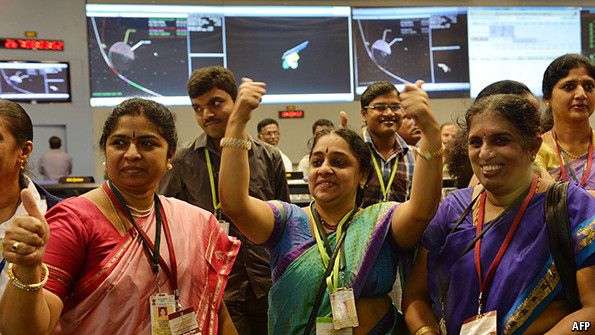
Six years ago, in this post, I wrote about the number of women scientists who were involved in India's success with the Mars orbiter, and included the following image too:


Women rocket scientists.  How awesome, right?

I don't know their back stories.  But, chances are good that if those scientists are also mothers, then child care was never a big worry for them--because, grandparents, almost always grandmothers, took care of the young ones while the parents were off at work.  Nuclear families in which the parents, especially mothers, exclusively take care of their kids is more the exception than the rule in the old country.

Of course, that is not the case here in the United States.

And now the coronavirus has completely upended every aspect of our lives, including schooling and day care centers, which then requires parents to take care of their children 24x7.  In most cases, this huge task falls on mothers, which is a huge challenge when they are also working from home.  It is even more of a challenge if they suddenly became unemployed.
According to research from Syracuse University released last month, more than 80% of adults in the country not working in order to care for children who would be in school or daycare if not for COVID-19 are women. A recent paper published in the academic journal Gender, Work & Organization found that mothers of young children reduced their working hours four to five times more than fathers.
It.Is.A.Nightmare.

Though the following metaphor that Betsey Stevenson uses is not the best one for the context, it conveys the point:
Although young men today are much more likely to profess their belief in gender equality than those of previous generations, they are not significantly more likely to divide most household tasks equitably, from child care to grocery shopping. And COVID-19 does not seem to be changing this dynamic, Stevenson says.
“If the guy is driving toward the cliff of not feeding the children, and the woman is driving toward the cliff of not feeding the children, she pulls off first and she feeds the children,” Stevenson said. “And the problem is that if he knows that she’s going to pull off first, then he wins the game of chicken.”
If that is the situation now, what might be the long-term effects?
Child care is one of those issues where we still really think it’s a personal problem: ‘You made the choice to have those little rugrats. You deal with them.’ Compare that with elder care. We recognized it was a social issue. We built a series of nursing homes and institutional care, and we have societal grants to cover some of that through Medicaid. But with child care, we’ve said this isn’t a social issue. And I think the pandemic has revealed that it is a social issue.
Child care is not a personal issue, it’s not a women’s issue; it’s actually an economic issue. It’s an economic issue because we need to invest in children.
Again, compare with India, where not only child care is a part of an extended family issue, elder care too is part of an extended family issue.

Meanwhile, here in the US, we are leaving parents and their children behind even as we spend gazillions on supporting persons corporations like the airlines.
Come September, I don’t think that the pandemic is enough behind us that every job would be back anyhow. Can we get every job back without child care? Absolutely not. The question is, how much is a lack of child care holding us back, versus how much are people still staying at home because they don’t want to get Covid?
Even if child care is not holding us back in September or October, we are letting the whole child care system erode in such a way that it’s not going to be there for us when we are fully ready to go back.
How so?
Where I really see the child care crisis holding us back is once we are ready to have all the jobs come back and we’re really ready to recover, even though we’ll have opened the schools, opened the child care centers, the workers aren’t going to be there, the slots aren’t going to be there. At the state level, we saw this in the 2008 recession
Very depressing!

Does Professor Betsey Stevenson have a solution?
 The solution has got to be government spending on child care. It’s going to have to be government encouraging and rewarding businesses that provide employees with the flexibility they need in order to balance work and child care. The policymakers debating legislation right now need to realize that caregiving is an essential part of our economy. And it’s an investment that when they make that, they are going to see benefits in terms of economic growth.
The same folks who are happy to cut corporate taxes because they think that’s going to unleash a wave of growth, I want them to realize that if they want to unleash a wave of growth, they need to invest in the next generation so that the current generation can do their work and the next generation is prepared to do it even better.
I am on board with this.

I was/am never a fan of government-subsidies for adults to have children.  But, I have also always believed that subsidies for human issues are far more important than subsidies for corporations to screw our lives.  However, as long as we have a party that is committed to protecting the life of abstract "persons" that corporations are, and with their party faithful committed to defending the "life" of a fetus in a petri dish while not caring about investing in life that is already here alive and suffering, we are doomed.

So ...

Vote accordingly.