Showing posts with label roma. Show all posts

Friday, September 02, 2016

Strangers in Our Midst

Any time I come across a news item about the Roma, I am immediately reminded of my old high school friend, Srikumar.  I am always impressed with how he has dedicated himself to the cause of bringing together the Roma and the Czechs.  Yes, the Czechs, because that is where Kumar lives.  His life journey is a fascinating turn of events, as I noted here.  (A few months after I blogged that, Kumar's father--who died a few months ago--wrote to me appreciating that post.)

Unfortunately, when the Roma are in the news, it is often because they are being driven out of somewhere.  This time, it is in Ukraine:
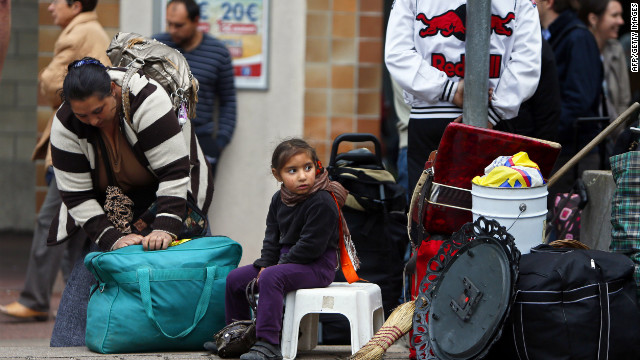
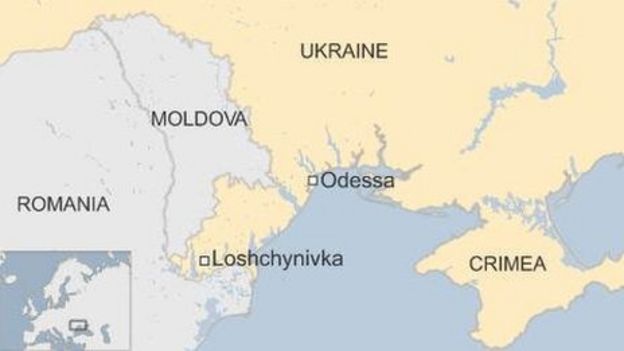
Several dozen people in a Roma community in southern Ukraine were forced to flee their homes after a mob tore through their neighborhood over the weekend, breaking windows, tearing down fences and even setting a house on fire while the heavily outnumbered police stood by and watched.
What happened?  What was the cause?  A false claim that a 9-year old girl (not Roma) was raped and killed by a Roma male.  That this claim was untrue did not matter to the mob.  But, even if the rapist/killer was Roma, why the wholesale attack on the rest of them, right?
After the girl’s death, hundreds of residents demanded that the Roma be expelled, and on Sunday they gained the backing of the district council. Even Mikheil Saakashvili, the governor of the region of Odessa, which includes Loshchynivka, and a former president of Georgia, offered tacit support in a video message posted on Facebook, denouncing the village’s “antisocial elements.”
Even Saakashvili.  How awful. The guy should know better than this!
Source

The US Holocaust Memorial Museum condemns the unfortunate development:
The United States Holocaust Memorial Museum strongly condemns these outrageous acts. It urges the government of Ukraine and local authorities to provide protections for the Roma and other threatened minorities, and to develop educational and community programs that will help build respect for cultural diversity.
“Between 1933 and 1945, Roma and Sinti suffered greatly as victims of the Nazis and their allies.  Ultimately, between 220,000 and 500,000 died in the genocide of the Roma and Sinti peoples,” said Museum Director Sara J. Bloomfield.  “Sadly, the recent pogrom in Loshchynivka, Ukraine, is but one of many acts of violence and forced evictions visited upon the Roma in Europe since 1945.” 
Maybe my old friend will soon have something about this on his Facebook page.

All over the world, there seems to be a sudden uptick in xenophobia.  This major party presidential candidate is not helping here, but is making things worse. I suppose simply getting along is not that easy for us humans!


Saturday, January 11, 2014

The Roma get harassed in France. Again.

Something new every day.

Today's installment?  I had no idea that Inspector Javert--you remember him from Les Misérables, right??--"seems to have been born Roma."  Did you know that before?
The son of a fortune-teller, he spent his life "with an inexpressible hatred for that bohemian race, of which he was one."
No, I am not reading Les Misérables. That note on Javert's background was how this essay in the New Yorker ends. (Sub. reqd.)

No, the essay is not about the Victor Hugo classic.  It is about the Roma in contemporary France--a topic that I have blogged about before (here, and here.)

Of course, it is always a reflex response to think of my old high school friend, Srikumar, whenever I come across anything about the Roma.  For two decades now his work has been about improving the conditions for the Roma and for developing an understanding between the Roma and the rest, primarily in the Czech Republic where he lives.  Perhaps it should not surprise any that we people from India are drawn to the Roma; the New Yorker also notes the geographic origins:
The Roma do seem to have emigrated, as they have always claimed, in a distinct wave, perhaps a thousand years ago, from Northern India. 
Yep, the wandering Indians we are.

I wondered whether the essay would make any reference to Srikumar.  But, the story is tightly focused on France and, hence, no place for him, I suppose.

The essay is about the same old issues that have dogged the Roma forever.  They are viewed as thieves and pickpockets and abusers of the social welfare system.  From the manner in which one views the Roma "problem" one might think that they are immigrating in huge numbers from Romania.  Nope!  Leave it to an ailing French philosopher to put matters in perspective that it is a "racist and xenophobic obsession":
it is absurd for twenty thousand misérables to exasperate sixty-five million French.
If this obsession "is not about fear of the other," what might be the reason for this obsession with the 20,000?
It is the fear of the self--of what we might become.
And what are the French worried that they might become?  Misérables!
For the first time in thirty years, the standard of living in France is declining.
Victor Hugo's Misérables  meet Bill Clinton's "it's the economy, stupid!" equals beating up on the Roma, it seems.

The Economist also has a lengthy piece on the effect the economic conditions are having in countries like France, and notes the gains that the populist, nationalist, right parties are experiencing.
For the time being, however, a battered Europe is fertile terrain. There is little sign yet of a sustained drop in joblessness, nor decisive economic recovery.
It will be a while before the Roma's plights go away.

Friday, September 07, 2012

The French have some 'gaul' to expel the Roma!

A little more than an hour into the drive after landing in France, I spotted a marker along the road that said something about one of the important battles with the Romans having been fought there.

Romans fighting in a corner of France and not being able to win it over?  Could this be Asterix's and Obelix's territory, I wondered.  But, wasn't I in a different part of the country and not in in the Gaulish Village?  I didn't want to request "S" to backtrack so that I could take a photo of that road-sign. 

We reached home, and settled down to catch our breath.  In the morning, I wandered into the kitchen, while the rest of the household was asleep, and made myself an espresso to go with the delicious chocolate croissants that were calling me.

Which is when I spotted two figurines: Asterix and Obelix.  So, I hadn't misunderstood the sign by the road. Yay!  

 In the old, old days before India liberalized its economy, anything "foreign" was very rare among us kids, and Asterix comic books was a special rarity.  If ever any classmate managed to get a copy that seemed to materialize out of nowhere, every once in a while, then it quickly passed from one hand to another.  We read it even in class, during the breaks, and after school.  Sometimes we read the same comic book a second or third time.  


High school ended, and thirty years later I was in that fabled comic book geography?  Yay!

The familiarity with the comic book characters meant that the first thought I had when I spotted this editorial cartoon was, hey, they have drawn Obelix while calling it Asterix!


My second, and a more substantive, reaction was about the gypsies--the Roma.  One of the classmates with whom I have read and discussed the Asterix comics was Srikumar, who now works with/for the Roma people in the Czech Republic.  

I have noted earlier, too, France's casual treatment of the Roma.  Was there something in the news for this editorial cartoon to have popped up?  Yep:
French Interior Minister Manuel Valls ordered police early Monday to dismantle a Roma camp set up along suburban railway tracks in Evry, south of Paris, and expel 72 inhabitants, including 19 children.
It is a controversial decision for President Francois Hollande's Socialist Party, which attacked former President Nicolas Sarkozy when his party dismantled Roma camps around France in 2010. Since the beginning of August, five camps have been dismantled under Valls' directive.
 An interesting coincidence it is that the CNN story carries a byline of Dheepthi Namasivayam, which reflects a Tamil heritage.

The Wall Street Journal adds:
Mr. Hollande's government has gone to great lengths to distinguish itself on social policy from Mr. Sarkozy, who served as interior minister before becoming president in 2007 and made law-and-order crackdowns a signature of his governing style. But breaking up Roma camps and offering financial incentives for repatriation appears to be a continuation of the initiatives of Mr. Sarkozy, whose mass expulsion of foreign Gypsies sparked an outcry in France and a row with the European Commission, the European Union's executive arm.
At the time, European Commissioner for Justice Viviane Reding called Mr. Sarkozy's policies and a government circular singling out Roma a disgrace and initiated legal proceedings against the country. Ms. Reding has weighed in on the latest evictions, though she has welcomed France's cooperation and the government's pledge not to target any particular group.
"The Commission will follow the developments in France very closely," she wrote in an op-ed published in Thursday's Libération. "There are 12 million Roma in Europe, who, like us, are at home in Europe. It is our responsibility to help them integrate."
To rework Obelix's favorite phrase "Ils sont fous ces romains," I suppose the French are simply insane!  Oh well, if only we could all get along ...

Tuesday, September 14, 2010

The wandering Indians ...

Ever since a few ancestors wandered out of Africa, we humans have always been peripatetic.  However, new people coming into an established settlement has not always been welcomed with open arms.  We here in America have had our own complicated relations with newcomers, and the contemporary anti-Muslim rhetoric is yet another variation of this theme.

The Romas in Europe know these, and more, all too well.  After all, they are viewed with suspicion and hate even now, though they have been on the continent for centuries.

Having grown up in a country with a very long and rich history means that I am connected to the Roma, who, too, originated from India.  About a thousand years ago, the Roma started moving west, perhaps in response to the Muslim invasions from Central Asia.  Soon, they were past Turkey and into Eastern Europe.

By then, Europe was already beginning to feel the effects of the rapidly expanding Ottoman Empire, and the darker-skinned Roma were not  welcomed.  The Roma maintained their ways of life, as minorities typically do, and their intra-group interactions vastly exceeded those with other groups, which then further compounded the relationship. 

The Nazis and the Communists were not good for the Roma either. It is estimated that the Nazis killed a fifth of the Roma population at that time.  The Nazis are long gone, and so is the Communist Bloc, but the status of the Roma has not improved to an equal standing with the rest.   Evidence include the recent developments in France, which is expelling Romas back to Romania, even though the European Union allows unrestricted movement for citizens of member countries.

Against such a backdrop is another Indian connection to the European Roma. The Czech Republic has a significant Roma population, and the Czech-Roma relations have always been strained.  One of the leading personalities working to bridge this divide is Srikumar Vishwanathan—my close friend from my school days in the small town of Neyveli in India.

Kumar—as he is known now—and I were crazy about physics as high-schoolers, and I moved on to study electrical engineering while he went to the Soviet Union to study theoretical physics. 

Even before he completed his studies, the Soviet system started crumbling and his girl friend, Ladka, decided to head back to her home country—Czechoslovakia.

Kumar followed her and was an active and enthusiastic participant in the Velvet Revolution that ousted the Communists from power.  He gained citizenship in the new Czech Republic and, thanks to his training in physics, became a high school teacher in a town called Olomouc. 

One evening, when he was returning home, a group of young Czechs beat the pulp out of Kumar because they thought he was one of the Roma.  The massive floods that intensely highlighted the plight of the Roma further transformed Kumar.  He soon ditched his teaching job and started his own initiative to not only help the Roma, but to also find ways to normalize the Czech-Roma relations.

A decade ago, when we spent a couple of days with Kumar, Ladka and their infant son,  Kumar had just been honored by the Czech government as one of the leading lights in the country. 

Since then, Kumar has received a lot more recognition for his work—including from our own government.  In 2005, the US Embassy in Prague awarded Kumar the Alice Garrigue Masaryk Award, which was established “to recognize persons in the Czech Republic who have made an exceptional contribution to the advancement of human rights in the country through courageous promotion of social justice and defense of democratic liberties and an open civil society.”  A year later, Kumar was here in America, to experience the country and its peoples as a guest of the State Department. 

A month ago, while highlighting the Roma’s plight, a CNN report featured Kumar and his work.  It is surreal that an Indian immigrant is a well-recognized social activist in the Czech Republic. But then, it is equally a story of the wandering Indians—this time a newcomer helping out the descendants of the old ones who left India a millennium ago.  I am delighted that we still have in us the wandering trait of our African ancestors, even if means running into the metaphorical, and sometimes literal, gunfire.

Friday, August 20, 2010

In trouble in France ... after all the way from India

France, which loves to advice the rest of the world on anything and everything is deporting quite a few Roma:

"That's France for you," said one middle-aged woman, sitting dejectedly in pink flip-flops at the rue de Lyon squat. She, like all other Roma to whom the Guardian spoke, was unwilling to be identified. Intense media interest since the start of Nicolas Sarkozy's crackdown on crime and illegal immigration last month has made them uneasy in front of the cameras.
So, what happened?
In July, dozens of French Roma armed with hatchets and iron bars attacked a police station, hacked down trees and burned cars in the small Loire Valley town of Saint Aignan.
The riot erupted after a gendarme shot and killed a French Roma, 22-year-old Luigi Duquenet, who officials said had driven through a police checkpoint, knocking over a policeman. Media reports suggested he had been involved in a burglary earlier that day.
Duquenet's family dispute the police version of events, saying he was scared of being stopped because he did not have a valid driver's licence.
French President Nicolas Sarkozy called an emergency ministerial meeting, at which it was decided that some 300 illegal camps and squats would be dismantled within the coming three months.

Sakozy, who showed how brutally dogmatic he can be when it comes to dealing with minorities--remember how he dealt with the Algerian youth?--jumps into this harsh decision of deportation.  Romania, not that it has treated the Roma well within its own borders, cries xenophobia:
"We understand the position of the French government. At the same time, we support unconditionally the right of every Romanian citizen to travel without restrictions within the E.U.," Romanian President Traian Basescu said.
The rest of Europe is watching this closely:
The Council of Europe has expressed grave concerns at France's controversial deportation of Roma migrants.
“Recent developments in several European countries, most recently evictions of Roma camps in France and expulsions of Roma from France and Germany, are certainly not the right measures to improve the situation of this vulnerable minority. On the contrary, they are likely to lead to an increase in racist and xenophobic feelings in Europe,” Mevlüt Çavuşoğlu, President of the Parliamentary Assembly of the Council of Europe (PACE), declared on Friday.
Finally, why do the Roma wander anyway, right?
The Roma originated in India but left the subcontinent in the 11th century, perhaps following Muslim invasions. From there, they crossed into the Byzantine Empire, and then up to southeastern Europe by about 1300. Generally speaking, xenophobia made it difficult for them to stop in any one place for very long, let alone establish permanent settlements. (Since it's thought that the Roma adhered to strict purity codes, they may also have been reluctant to mix with outsiders, making assimilation unwanted on both sides.) When the Roma arrived in Western Europe in the 15th century, local populations worried they were part of an Ottoman invasion (because of their dark skin color) and the German Reichstag of Freiberg declared them outlaws. Barred from purchasing land or joining guilds, the Roma had no choice but to move about.
Another take on the Indian connection here.

But, the Roma have experienced worse things than Sarkozy.  Which is why I cheer when I read this:
many of the Romany families deported by France for outstaying their welcome were planning to head straight back.
“Of course we are thinking about going back,” 26-year-old Ionut Balasz told journalists as he arrived at the airport. “Life is better there than in Romania, even when you are illegal.”
Good luck to the Roma!

Tuesday, July 13, 2010

The travelling Indians .. in Switzerland, too :)

The Roma set the trend in trotting around the world, starting from India.  For a while, I think people from India lost their wanderlust--perhaps that coincided with the European colonialism and then, to quote from my graduate school days, the systematic development of underdevelopment

Now, once again, we are wandering around, sometimes as tourists and other times as immigrants.  Sometimes, it is both--as immigrant tourists--which is what happened over the Fourth of July weekend when my cousin, her husband, and I went to Crater Lake.  The three were in three different political categories: he is an American by birth to parents who immigrated from India.  She is an immigrant who is a permanent resident.  And I am a naturalized American.

At Crater Lake, it seemed as if every third tourist had Indian blood.  I helped a couple (both Indians) take photos with the lake as the background, and the wife seemed like she was relatively new in the country.  Vans and cars of traveling Indian families ... A chai wallah could have made quite a few dollars there :)

Apparently, Indians are crisscrossing all over, and up in the Swiss mountains too, as this NY Times story reports (ht).  However, the Indo-Swiss tourist connection is thanks to Bollywood:
For years, Bollywood’s producers and directors have favored the pristine backdrop of Switzerland for their films. The greatest of the Bollywood filmmakers, Yash Chopra, is a self-professed romantic who has made a point of including in virtually all his films scenes shot on location in this country’s high Alpine meadows, around its serene lakes, and in its charming towns and cities to convey an ideal of sunshine, happiness and tranquillity.
In the process, they have created an enormous curiosity about things Swiss in generations of middle-class Indians, who are now earning enough to travel here in search of their dreams.
“The moment you cross the border it is something else,” Mr. Purohit said, “where the scenario changes.”
“No noise, no pollution, no crowds,” said Kamalakar Tarkasband, 72, a retired army officer.
Swiss tourism officials and their Indian counterparts are capitalizing on this obsession. The number of nights spent by Indian tourists, who come mostly in summer (few ski), has doubled in the last decade to 325,000, and the numbers continue to grow.
It is a similar story with people from China too.  As the Chinese gain disposable incomes, they too are exploring the planet.  Good for all of them, I say.  It is a sign of growing affluence in countries that were once depressingly poor (though, as I noted even earlier in the day, poverty persists!)

Anyway, as the Roma know well, "different" could also mean trouble, as even that NY Times piece reports:
In June, the Zurich newspaper Tages-Anzeiger featured an article with the headline “Into the Luxury Hotel with a Gas Cooker,” noting that “in some hotels an entire caste of guests is no longer desired: the Indians.”
The article catalogued the complaints of hotel managers: guests who cook curry dishes on camping stoves in their rooms; guests who use bath oils that blacken tubs; guests who book for a husband and wife, only to show up with the entire family.
In Engelberg, where a visitor is more likely to encounter a woman in a sari than hear the clang of a cowbell, some European tourists are unsettled.
Well, here is a song/dance clip from one of the movies mentioned in the NY Times piece--Sangam:

Yes, the songs from this movie are all classics.  An uncle had a record player, and when I was a kid I recall him playing another song from this movie for me because he said it was dad's favorite ... and that one is:

Wednesday, July 07, 2010

The 12 million Roma, and the "Indian" connection

This CNN news story is more than a mere news item to a junkie like me ... the guy so actively working to improve the life of the Roma in the Czech Republic is my high school buddy--we were very close friends.  His sister, who lives across the continent from me, sent me the link to this news item

More about Kumar here