Showing posts with label cricket. Show all posts

Sunday, January 10, 2021

When life hands you sugarcane, don't make juice out of it?

Father said it had been raining on and off.

"But, it doesn't usually rain as we get close to Pongal, right?" I asked him.

"You are correct.  But this is not the big time rain."

"So, when is Pongal?"

"On the 14th."

As a kid growing up in an industrial town, I had no idea what the Pongal celebrations were really about.  But, I didn't care because I loved to eat sakkarapongal.  Served warm, and with mother adding more ghee to my portion. 

Father handed the phone to mother.  I shared with her an incident from our childhood.  

My brother and I got tired of chewing on the sugarcane, which is also integral to the Pongal celebration.  So, we decided that we would make juice out of it. 

The idiots that we were, we thought we could cut up the cane into pieces and throw them into the blender--the "mixie."  Which is what we did.

Mother stood there watching us, smiling all the way.  It wasn't after the event that we understood why she was smiling.

We threw the chopped up cane pieces into the blender.  With great excitement we turned the machine on.

Not the kind of juice that we thought it would yield.

That's when we understood why she had been smiling throughout--she preferred to teach us a lesson by not teaching us the lesson.  We learnt the difference between a mixie and the juicer that the roadside sugarcane juice guy used.

Mother laughed after she listened to me recall the old days.

Meanwhile, her nurse had arrived.  It was time for her bath.  We said bye.

I continued to think about the Pongal of my childhood days.  

Like every kid, I too looked forward to the cricket test match in Madras during Pongal time.  It was Ananda Vikatan, or maybe Kalki, that had an extensive feature on the visiting England team.  I remember finding it hysterically funny that a player's name was "Old."  "How could somebody have a name "old"" was all I could think of then. 

Thanks to the web, I could immediately verify the year of that test match: Pongal of 1973!

India and England fielded names that I would remember forever.

India won that test match.  I loved it.  It was a special Pongal.


Monday, November 04, 2019

The boos and the chants

Though I have not been a sports fan for years now, despite a childhood in which cricket and hockey played big roles, I have often lamented about the loss of sportsmanship.  I even wrote a column more than ten years ago on this, using the "fouls to give" calculation in basketball as the context.  I wrote there:
I wonder, then, if involvement in athletics might end up doing more harm than good. What will children learn if their coach teaches them to grab the player in order to prevent an opponent from scoring? Is the lesson to focus on winning at any cost, fully understanding that they have “fouls to give”?
...
It is no stretch to argue that this notion of “fouls to give” is becoming common in society.
To win at all costs, stretching the rules as much as possible, and fouling to the extent possible, has become the prevailing attitude, especially since 2015 when tRump as the candidate showed up on our radars.

I often tell anybody who wants to listen to me that tRump has created a huge problem: If we want to play by the rules, when he on the other hand couldn't care about the rules, then chances are that we should expect to lose a lot before even his fans too start worrying about the rules.

I do want us to play by the rules.  I really, really do.

But then I think about Michelle Obama telling us that when they go low, we should aim high ... and tRump and his toadies ended up kicking us in our groins.  They went low. Way low. Because they don't care about the rules.  The rules that say, for instance, that you don't try to recruit foreign governments in order to attack political opponents.

The constant disregard for the rules is why, well, I don't want us to play by the rules until he and his toadies are defeated at the polls.  Which is why I loved every video that came across my news feeds of sports fans booing him.  First it was at the baseball championship game.
On what he might have expected to be his best day as commander-in-chief (he revealed the killing of Abu Bakr al-Baghdadi hours earlier), he was hidden away in an executive suite. The Lerner family that owns the Nats did not want him sitting with them. And the one time he flashed up on the big screen the jeering of the crowd was thunderous. A chant of “Lock him up!” rippled round the stadium long after Mr Trump’s image was replaced by footage of smiling servicemen. “Veterans for impeachment” read a banner behind home plate.
I loved the booing.  Bring them on, louder and louder!

And then it was at what should have been his friendliest crowds. Instead of adoration, he was booed there too.

And then came the reality check.


That does not sound right.

It sounds bad. It is awful. A nightmare.

I suppose when it comes down to it, I am a wimp. A wuss.  I want to only play by the rules.  I don't want boos or "lock him up" chants.

I want that old-fashioned cricket back.

Monday, October 26, 2015

Are you, too, waiting for good news from Afghanistan?

After all the traveling to and in California, it was great to be back home and sleep in my own bed.  I care not if the mattress and the pillows at the hotel were of higher quality than what I have, but the older I get the better the sleep is in my own home and on my bed.  East or west, home is best, indeed.

I went to sleep all pumped up about the classes--have I ever told you how much I love doing what I do!  As if my regular classes aren't exciting enough for me to head to campus, I had an additional incentive.  A wonderful student had emailed me.  Students emailing is not any man-bites-dog story, of course.  But, this email had something special: "My mother would like to sit in on Monday's class; is that all right?"  What an awesome idea!  And what a coincidence that I had re-posted, from three years ago, the piece yesterday in which I had written:
I would love it if taxpayers routinely observed our classrooms and judged for themselves whether their hard-earned monies are being put to good use. 
This Monday morning, I woke up, as I always do, with NPR's news and commentaries.  It was about an earthquake in Afghanistan.  Can that country ever catch a break, right?  The later reports suggest that it is no minor shake:
A massive earthquake rocked northeastern Afghanistan on Monday with devastating tremors rippling across the region, leaving more than 215 dead amid collapsed buildings, panicked stampedes and fears of landslides. Officials braced for even more casualties.
The full extent of damage and human toll was not immediately clear as rescue teams tried to assess areas hardest hit by the quake, which had a preliminary magnitude of 7.5 and was centered in a remote area of the Hindu Kush mountains.
Even for a person like me, who has been obsessed with the world's problems ever since I was a kid, I simply needed some kind of a good news about this country that has been cursed by the cosmos, it seems.  I scanned for news about Afghanistan.  There is some good news.  You ready?  You sitting down?  Nothing breakable in your hand that could fall and shatter to pieces?  Get this:
Afghanistan have clinched a historic one-day international series over Zimbabwe after a 73-run victory
In case you don't understand that sentence, that is about the game of cricket.  Afghanistan beat Zimbabwe in a cricket match series.  That is a huge piece of good news from that country.  Why?  Let me explain with what I wrote in one of my newspaper columns six years ago about Pakistan:
The unrest and violence in Afghanistan is intricately linked to Pakistan’s. So, is there any simple metric that we could employ in order to understand whether things are getting better or worse in Pakistan, such that it can then feed into the decision-making process regarding Afghanistan?  Yes, there is: All we need to do is keep track of the game of cricket in Pakistan. As simple as that!
What is good for the goose is good for Afghanistan, too.  Well, ok, the games were not played in Afghanistan but in Zimbabwe.  But, here is the best part: to use the American sport language, Afghanistan's cricket team is a minor league team and they beat the crap out of a powerful major league team.
The national team was only formed in 2001 and while they are yet to shock one of the eight leading international sides, a series win over an International Cricket Council full member represents a major landmark.
Unable to play at home in war-torn Afghanistan, they were granted ODI status in 2011. 
Isn't that a small little ray of sunshine for you to feel good about Afghanistan?

Of course, this won't be of comfort to the hundreds who died from the quake, and the thousands who have to deal with the destruction of property.  We can help--by contributing to relief efforts, and by also wishing the country and its people well.

Friday, July 03, 2015

Sports has meaning. We render it meaningless!

As a kid, I loved playing indoor and outdoor games alike.  I sucked at cricket, football (soccer,) table tennis, badminton, and (field) hockey; yet, I loved playing them all at school and with the neighborhood kids.

Even the fights that resulted whenever my brother and I played never prevented us from playing again the next day.  I think--or, at least, I like to think that passionate competition, even fist fight, was something I came to expect.  But, right from my young days, I didn't like rough and unsportsman-like attitudes that were driven by a goal to win at any cost.  Winning mattered, yes, but the road to the win was way more important.  One of my favorite memories in cricket is of GR Viswanath recalling the opposing side's batsman after the umpire had ruled him out.  No wonder then that I even wrote an op-ed, seven years ago, dealing with that issue of sportsmanship.

Fair play has always been important to me and that carries over to every aspect of my life--whether it is at work or with family and friends.  To such an extent that I walk away from people--colleagues and family alike--when they sharply deviate from fair play.

These days, I spend even less time than I ever had on watching sports or playing games.  (Well, bridge aside, that is!)  As a news junkie, I scan the latest in the sporting world too, which is how I came to know about England getting booted out of the World Cup:
It was a soccer player’s worst nightmare. With seconds left in a World Cup semifinal on Wednesday, Laura Bassett of England lunged for the ball and accidentally kicked it into her own net.
Seconds later, the whistle blew. Japan had won, 2-1, and Bassett and many other England players were left in tears.
Even during the days that I followed sports with emotions, I could never enjoy winning because I always felt awful for the ones who lost and for their fans.  As I get older, I seem to love the losers even more.  Thus, when I read about this soccer disaster, I was reminded of the Colombian player's fate--he was shot dead for the goal that he ended up kicking for the opponent while defending the ball.  Thankfully, Bassett is being treated well, though one might wonder if some old gender stereotypes are being reinforced in the process:
“Crying is a human emotional response,” Cooky said. “Because sports is so highly masculinized, it’s O.K. for men to cry. When a female athlete cries, it gets read much differently.”
And longstanding differences like those are hard to shake.
“We see male athletes as athletes first,” Cooky said. “We see female athletes as women first.”
Anyway, why do we value sports so much?

An academic philosopher has blogged about this very issue, and he quotes from "the scurrilous Sri Lankan cricket novel Chinaman by Shena Karunatilaka":
"I have been told by members of my own family that there is no use or value in sports. I only agree with the first part. I may be drunk but I am not stupid. Of course there is little point to sports. But, at the risk of depressing you, let me add two more cents. THERE IS LITTLE POINT TO ANYTHING. In a thousand years, grass will have grown over all our cities."
Makes for an interesting point: if there is little point to anything, then why not value sports, right?
Maybe physical skills are less important than purity of character or artistic creativity. The more basic point is that they are valuable in just the same way as other things. Someone who devotes their life to high-jumping or baseball is no less serious a person than someone who devotes it to the ballet, say, or to making money. There is nothing intrinsically dilettante about sports compared with other walks of life.
Certainly.  But, even with those examples, I am left wondering why ballet is vastly undervalued compared to baseball.  
Pride in physical performance is a deep-seated feature of human nature. Humans hone their physical abilities and take delight in exercising them. Perhaps this originally had its roots in the practical needs of hunting, fishing and fighting, but we have come to value physical performance as an end in itself.
Aha, I think that is where my problems with sports lie: "we have come to value physical performance as an end in itself."  We have vaulted sports to such high a pedestal--as if our entire existence is about such things!


Tuesday, January 06, 2015

So, ... what's up?

"Cricket is an Indian game accidentally discovered by the English” quipped Ashis Nandy.  It is, indeed, quite amazing how much cricket is a part of life in India.  Cricket is very much in the villages too, making one wonder about the truth in Gandhi's claim that "the soul of India lives in its villages."

And then came another Western invention that was adopted even faster by hundreds of millions in India: Facebook.  Tunku Varadarajan wrote, rather tongue-in-cheek, after he fled from Rupert Murdoch:
Social media was invented for Indians, says Sree Sreenivasan, a digital media professor at Columbia and co-founder of SAJA, the South Asian Journalists Association. "They take to it naturally and with great passion. It allows them to do two things they love: Tell everyone what they are doing; and stick their noses into other people's business."
Five years have gone by since the Facebook comment.  In this age of newer and newer fads, is there anything else that was accidentally invented elsewhere for Indians?

I think there is a claimant for that throne: WhatsApp.  More than a tenth of the global 700 million users are in India!

Here is a ground-level observation of the widespread use of WhatsApp in India.  One evening, I went to the supermarket, which is a part of the Reliance business empire, to buy a couple of items.  Well, ok, I needed an excuse to walk about and observe people.

I was soon at the checkout counter.  Three cash registers and three female employees.  All the three were Tamils and only one was clad in a sari--the other two were in churidars.  While the sari/churidar issue might not be anything to write about for the natives, er, locals, to this outsider the change in women's attire in traditional Tamilnadu is simply astounding.  I can not ever get over the changes, and will always feel sad that young girls do not wear half-saris anymore and adult women are ditching saris in favor of churidars and jeans.  Oh well, I can't complain much about this--the women will ask me why I don't wear the traditional veshtis! ;)


So, there I was at the checkout counter.  The women were engaged in rapidfire chat even as they scanned the items, weighed the produce, totaled up the amounts, and handed back the change to customers.  How do women multitask like this so effortlessly?

In that conversation, one of the women at the counter told another, "எனக்கொரு வ்ஹட்சப்ப் மெசேஜ் கொடுத்துடு" (send me a WhatsApp message about it.)  And she continued on ... apparently I was the only one there who was stunned by this!

I am sure India awaits the next new thing that was accidentally invented elsewhere.

On the other hand, if Indians get rid of their obsession with cricket, it will free up their minds to invent everything by themselves--like how George in Seinfeld becomes a genius when he is forced to give up sex for a few days.  Not a chance, eh?  Indians will rather give up sex before they forget cricket, and they will even trade messages about that on WhatsApp ;)


Wednesday, November 13, 2013

An act of the great tamasha comes to an end. Thankfully!

"How come they are playing only two tests this time?" my mother asked me about the two match series between India and the West Indies.  "It is a Sachin special" I told her.  "To make his retirement happen."

Sachin Tendulka finally getting off the stage is consistent with the tamasha in all aspects of life in India--the principal actors just never quit!

Tamasha is a wonderfully unique word.  At one level it means entertainment. But, it is also more than entertainment.  It is a grand show. It is a spectacle. It is commotion.  It is noise.  It is tamasha.

During my growing up years in India, the awesome tamasha in politics was wonderful entertainment for me.  Of course, it was nothing but heartache when I started identifying with any single actor.  But, I learnt to set aside any affinity for any individual and enjoy the spectacle, the entertainment, the commotion, the noise, the grand show.  It was the best possible theatre from across the street--literally--to what I could get from the radio and newspaper and the magazines and from the grownups' arguments.

Cricket was a lot more sober and sedate those days.  It became a tamasha only after I lost interest in the game, and certainly only in the last few years.  I was, thankfully, spared all that.

My mother, on the other hand, is thankful that cricket became a tamasha.  When I was a kid and passionately followed cricket, she had no choice but to listen to the commentary and report the scores to me when I returned from school.  And even send updates along with the lunch that the maid brought to school during our much younger days.

But, she found the five days of test playing to be a bore.  The tamasha that cricket is now she is very excited about.  "In the tests, they play a lot of 'dokku'" she complained once.  This tamasha engages her way more than movies or television shows do.

My guess is that my mother is not alone in this.  Ashis Nandy famously commented that cricket is an Indian game that was accidentally invented in England, and combine this with the Indian tamasha and you have hundreds of millions addicted to this cricket tamasha which is beyond the fascination for any other tamashas.  Compared to this, even the fabulous epics of Mahabharata and Ramayana are as slow and boring as War and Peace can be!

Of course, I am borrowing the tamasha description for cricket--from James Astill's The Great Tamasha.  In an interview with NPR, he commented:
When the IPL, the Indian Premier League, India's most popular domestic cricket tournament — it's worth several billion dollars, it's estimated — when that tournament runs for seven weeks in April and May each year, Bollywood stops releasing movies, because Indians just don't go to the cinema. They stay at home and they watch cricket on television.
When Bollywood stops being a tamasha, well, does one need a better metric!

In successful Indian tamashas the best actors hang on for a long time.  At Bollywood, everywhere you look, there is Amitabh Bhachchan, wearing his 1970s-style toupee.  You change the settings, and it is Rajinikanth.

In politics too.  One of the best in the tamasha business is Karunanidhi, whose gifted way of speaking was wonderful entertainment for the young me.  The fact that he is pushing 90 does not seem to affect the tamasha even one bit--in fact, it seems to make it all the more exciting!

It is against such a backdrop of tamasha and the actors hanging on for a very long time comes the retirement of Sachin.


 My mother, along with hundreds of millions of Indians, will watch this test match, however boring they might think the format is, only because one small aspect of the tamasha is coming to an end.  But, they know that the tamasha itself will continue on for a very, very long time to come.

Sunday, June 09, 2013

Why am I not a "success"? I grew up liking all-rounders!

I grew up watching cricket and obsessing about it, as most young boys did then (and most probably do even now.)  As much as I liked the artistry of the top-order batsmen, especially Vishvanath, and the spin bowlers, my first hero was Abid Ali.

Yes, Abid Ali.

I was perhaps not even into a double-digit age when I decided I liked Abid Ali the most.  Here was a player who could bowl pretty decently, bat pretty decently, and field excellently.  He could do it all.  And, from the radio commentaries and newspaper reports (no TV then!) I understood that he did all these without any flair. 

Ali was an "all-rounder," as such players are referred to in cricket.  After him, there were a couple more like Ghavri and Madanlal, but it was not the same. Not even Ravi Shastri.

And then the "all-rounder" world simply became fantastic, and was way more than I could have imagined, thanks to Kapil Dev and Ian Botham.  These two took the idea of an all rounder to an entirely new level.  And, they seemed to approach every opportunity with the same level of intensity and excitement, without ever feeling jaded.

I left India just about when these two had passed their peaks, and soon I was following college football and baseball. 

In college ball too, it was the "all-rounder" players that I liked.  I was a grad student at USC when Rodney Peete was the Trojan QB.  Peete could pass and also run--a contrast to Troy Aikman across town at UCLA, who was a much better QB but not a runner.  While they were both excellent baseball players too, only Peete continued playing college baseball.

However, most all rounders don't achieve "stardom," so to say because it is a very, very rare few who can perform exceptionally at more than one.  It was Aikman who went on to win the Super Bowls.  Rare is a Botham or a Dev.  Abid Ali is probably a forgotten name among most casual Indian cricket fans, who will certainly remember Bedi and Pataudi, and even Venkataraghavan.

I wonder how my life would have been if I had been a fan not of all-rounders but of super-specialists instead.

Academe--even at regional teaching universities like mine--encourages specialists and not generalists.  People whose focus is to know a lot about one or two small things, and not the other way around.  "The fox knows many things, but the hedgehog knows one big thing".

But, if I were a specialist, then my life would have been about some strange variation of dukrijnkarane!  Odds are that I wouldn't have been exploring and understanding life by blogging, writing op-eds, cooking, traveling, ... my, it would have been a horribly boring life.

Thank heavens I chose Abid Ali as my favorite!

Thursday, February 21, 2013

Hyderabad blasts: Measure the region’s stability by what’s cricket

As a result of the bomb blasts in Hyderabad, apparently the visiting Australian cricket team had second thoughts about playing a test match in that city.  And, after discussions, they have decided that the match will go on:
Australia plan to play the second Test against India in Hyderabad as scheduled next week despite deadly bomb attacks in the city on the eve of the Test series opener, reports said on Friday.
I am glad with the Aussie decision, not because of any affinity for cricket--that is now long gone.  But, because cricket is an indicator of normalcy in this part of the world.

I wrote about cricket as a measure of normalcy more than three years ago.  It was then in the context of Pakistan.  The argument is equally applicable here too.

The following is a re-post of that column from October 2009
************

With bombs bursting in air and suicide bombers exploding at ground level, Afghanistan continues to be a dangerous place. After eight years of military engagement, we are more than a little behind schedule on finalizing our plans to exit Afghanistan.

The unrest and violence in Afghanistan is intricately linked to Pakistan’s. So, is there any simple metric that we could employ in order to understand whether things are getting better or worse in Pakistan, such that it can then feed into the decision-making process regarding Afghanistan?

Yes, there is: All we need to do is keep track of the game of cricket in Pakistan. As simple as that!

Cricket is played worldwide, mostly in countries that once were Britain’s colonies. In terms of a global following for a sport, cricket is second only to soccer. In the South Asian countries of India, Pakistan and Sri Lanka, cricket can, and does, trigger passion among its peoples that can make even the most boorish college football fan here seem very tame.

Pakistan has a rich history of outstanding players who were admired for their skilled art by fans and opponents alike. One phenomenal player — Imran Khan — successfully cashed in his popularity to become a significantly successful politician.

For a number of years, Pakistan and India — both with millions of cricket fanatics — did not play each other because of political tensions. I barely had stepped into my teenage years in 1978 when India and Pakistan resumed playing cricket after a gap of 18 years. Watching those games on television was a transformative moment when it dawned on me that the “enemy” team comprised players who looked and talked just like those playing for India.

It became difficult to understand why the people and cricketers from Pakistan were demonized. Thereafter, it was nothing but sheer pleasure for me to watch the talented ballplayers from the neighboring country.

Those were the relatively calmer days before terrorism became a household word. Yet even as conditions in Pakistan started spiraling down, India and other cricket-playing countries continued to send their teams there, but with increasing levels of security.

No more. Now, no country is willing to visit Pakistan to test its cricket mettle because of the immense security risks.

Pakistan was to have hosted a prestigious international tournament — the Champions Trophy — in September 2008. But one country after another withdrew because of worries about safety for players and fans. It was then rescheduled for 2009, but in a different venue altogether — in South Africa.

Sri Lanka was the only brave country that ventured out to Pakistan to play a series of matches there, perhaps having been conditioned by the 25 years of civil war in the island. This visit in March 2009 broke a dry spell since October 2007, which was the last time Pakistan hosted a cricket team from another country.

In a way, that decision by Sri Lanka immediately provided enough tangible evidence regarding the terrorists’ stronghold on the country. The Sri Lankan team’s bus was ambushed in the city of Lahore, resulting in the deaths of six policemen and injuries to players.

Naturally, the Sri Lankan team returned home right away.

As a result, there is now no team that will dare to visit Pakistan, which is a huge loss for the game itself, and for the cricket-crazy fans there. Imagine how Brazilians would feel if they could not host soccer tournaments and if their carnival were canceled. Double that sense of utter disappointment and frustration, and I think we might get close to understanding the loss of international cricket play in Pakistan.

This yardstick of cricket suggests that normalcy might not return to Pakistan for a while. In that case, it might not be realistic to expect that the chaotic situation in the Afghanistan-Pakistan border areas will settle down any time soon.

Therefore, I am all the more worried that we might be stuck in Afghanistan for many more years to come. And that is not cricket!

For The Register-Guard
Appeared in print: TuesdayOct 13, 2009

Saturday, August 18, 2012

Can Imran Khan undo Zia -ul-Haq's monsters?

It was the primitive days of the internet back in 1988 and, for all practical purposes, it was still the DARPNnet that was what research universities had made accessible to students like me also.  In those internet-prehistoric times, we relied on groups like soc.culture.indian to get informed about the latest news on India. 

It was through that group that I knew, within hours of the incident, of Zia-ul-Haq's demise twenty-four years ago.

I celebrated.

I never liked Zia.  Primarily because I didn't care for anybody who got into power through a coup and did everything to weaken the democratic institutions and processes, which were weak to begin with in Pakistan.  Further, as a kid, I had a soft spot for Zulfikar Ali Bhutto, and the atrocious manner in which Zia had him tried and executed didn't appeal to the teenager that I was then.

Zia's worst act was his systematic Islamization of Pakistan's society and politics, which has completely messed up the country.  The country's founder, Jinnah, was a westernized counterpart to India's Nehru, and the newly independent country even chose to be under the British crown for a decade, when it became "Islamic" even in its official name.  It took Zia's coup and his evil machinations for religion to enter into the public space in a big way, which then resulted in everything from assassinations to television censorship, all in the name of blasphemy.

The US conveniently made use of Zia and his Islamic allies, and actively supported and financed those fighting the Soviet Union, and the fighters included Osama bin Laden.  The tangled webs we weave!  Jeffrey Goldberg and Marc Ambinder summarized the US relationship with Pakistan really well: "The ally from hell."  There is a good chance that within Pakistan, it is a similar feeling towards the US too!

Now, Pakistan is far from any "land of the pure" and comes across as one unruly place, with political and military leaders who seem to be remarkably messed up. 

The New Yorker asks "Can a sex symbol and cricket legend run Pakistan?"  In profiling the cricket legend Imran Khan, the article (subscription required) notes that whatever the outcome in the elections in 2013 (if there is no military coup before then!) "Khan is accomplishing at least one of his goals, by keeping alive a narrative of change in Pakistan."

I cannot imagine Imran Khan being able to sweep clean Pakistan's politics the way he pulverized India's cricket team time and again.  The few times I have watched him being interviewed, it is understandable why the West finds him appealing.  He is charismatic, talks wonderfully, and seems compatibly westernized.

But, when it comes to the ballot, I suspect that the typical Pakistani, how much ever they idolize Imran Khan for his cricket talent and success, might not vote in huge numbers for his political party and candidates.  As in his personal life, politically too Imran Khan will turn out to be the proverbial guy with whom you have an affair but not marry and settle down for good.

Saturday, March 31, 2012

Photo(s) of the day: Maasai warriors playing cricket

Caption at the source:  
Maasai warriors from the Laikipia region in Kenya train before a cricket match at the 'Last Man Stands' championships in Cape Town, South Africa. Cricket is being used to 'empower the youth in Maasai communities', while campaigning against ills like child marriages and female circumcision. Photo: AP
The Atlantic has a wonderful collection of photos as well, of which my favorite is the one below:


But then, there is nothing without any controversy:
Trainer Steve Tikolo says he wants the novice players to wear cricket whites.
But they want like to wear sandals made from recycled tires, beads and bracelets and a traditional "shuka" wrap, which they wrap around the body.
The team, called the Maasai Warriors, is preparing for the Last Man Stands Twenty20 Championship in South Africa.
"It's not just a bunch boys going to play cricket, they will also be promoting Kenya's image by playing in their traditional attire, adding some African flavour to the tournament,'' Aliya Bauer, who established the Maasai Warriors in the Rift Valley Province five years ago, told the BBC .
In case you are wondering, yes, there is cricket in the US also, where the game was once "one of the more popular sports in America in the mid-19th century" until, in a typically American way, baseball marketed itself as less British and more American!  Anyway, in the latest tournament, which was a qualifier for a world championship, the US did win two of its matches!

Saturday, January 14, 2012

I watched Nouriel Roubini on TV. Bad idea!

Flicking the channels in this part of the world where I have no idea about the lineup seems to be a version of Forrest Gump's "life's like a box of chocolates. you never gonna know what you're gonna get." :)

Earlier this afternoon, I got Nouriel Roubini.

In his unique voice and tone, Roubini delivered yet another variation of the same message that he has been delivering for, well, forever it seems like--it will get worse before it gets better.

While Roubini was being his usual Dr. Doom self, the ticker at the bottom quoted Joseph Stiglitz that the US economy might be shaky all the way through 2013.

Whatever happened to the two-handed economists that President Harry Truman complained about?

With the downgrading of quite a few Euro Zone countries' bond ratings, there is not much optimism on the economic front. So, ...

I decided that I needed to inflict more painful news on myself.

Off I went to another predictably bad news giver: Glenn Greenwald, who is really, really ticked off with the systematic killings of Iranian nuclear personnel.

I agree with Greenwald that it is terrorism; but, then, when have I not been able to agree with his analysis!

On the Iranian front, Google News brings this to my attention--a news item that quotes the Wall Street Journal:

"The US military is preparing for a number of possible responses to an Israeli strike, including assaults by pro-Iranian Shiite militias in Iraq against the US Embassy in Baghdad," the paper quoted a US official as saying.

According to the report, Washington has moved a second aircraft carrier to the Persian Gulf area and has stationed 15,000 troops in Kuwait as means to create deterrence in the region.
All right then, maybe the Mayan prophecy about 2012 will become true, after all, eh!

Meanwhile, my parents wanted an update on the cricket scores; more bad news, but, thankfully, not for me because I don't follow the game anymore and couldn't care about any outcomes there.  I suppose that is my good news for the day!

Imagine Nouriel Roubini forecasting the road ahead for India's cricket team :)

Friday, September 23, 2011

On the death of Pataudi, and of cricket itself

As one who grew up in India, I have tons of memories rushing through my head after reading that Mansur Ali Khan Pataudi is no more.

Pataudi was the the charming player and captain, with a famous film actress wife to boot, when I started following the game in what feels like several lifetimes ago.

Those were the years in Neyveli before television.  Test matches were of the old style--five days with a rest-day in between, after the second or the third day of the match.  Listening to the radio commentaries, with expert comments by what always sounded as a senile Lala Amarnath, then reading about the day's proceedings in The Hiindu the next morning, and finally talking about it with classmates at school provided way more excitement than I could have ever wanted.

All these despite the fact that I was no good at sports!  I was one of those kids who was reluctantly picked last to be on a team in schoolyard or neighborhood games.  But, that didn't matter one bit--cricket was exciting.

The much talked about West Indian team came to India to play.  I was ten-plus years old and this was my first serious test match series as a cricket-crazy kid.  I had read about them: Llyod, Richards, Holding, Roberts, Greenidge, Julien ... as a kid rooting for India, I was convinced that "we" would lose, and lose horribly. 

Those were also the years that mom sent us lunch through the maid, "Thayee."  Along with the lunch that was packed in "tiffin carriers" mother always included a note on the latest score in the test after play began at about ten in the morning.  Perhaps, like most mothers, my mom too followed the game only because of the kids.

As tasty as the food was, it was the cricket score that I waited for whenever the tests were played.  If the score indicated that India was not doing well, or if the West Indies were doing great, then it was quite a sad afternoon.  I would race back home after school ended in order to catch the final few minutes of the radio commentary.

Thus began my cricket-mania.

Caption at the source:
(From left) Bishen Singh Bedi, Pataudi, B. Chandrasekar, Anshuman Gaekwad and G. Viswanath run towards the pavilion with joy after India defeated the West Indies in the 1974-75 series

But, soon, the game started changing.  It became increasingly competitive. Players engaged in acts that were no longer cricket.  As exciting it was when television made cricket matches wonderfully visual spectacles, perhaps it also quickly transformed the game for the worse.

Meanwhile, I, too, was changing, and found intellectual ideas to be way more fascinating than being a passive spectator for the five days of every test match.

Slowly I drifted away from cricket.

Slightly over a decade after that memorable first cricket series, I headed to the US, where I quickly fell in love with the local baseball team, the Los Angeles Dodgers.  I had barely figured out the basics of this game, which was so similar to cricket, and yet so different from it, when Kirk Gibson hit that memorable home run, Orel Hershiser was simply unhittable, and the Dodgers won it all

Hello baseball, and goodbye cricket.

Two more decades have passed by, and now I couldn't care for baseball either.  Every morning, while reading the newspaper over breakfast, I do look up the box scores and the standings out of sheer habit, and it makes my day if the damn Yankees are not on top :)

Cricket?  Up until a month ago, I didn't even know that the rest-day concept had been abandoned a long time back!

But, Pataudi I remember. And I thank.

Friday, June 03, 2011

Image of the day: Cricket in Rome. Yes, Italy!


Yes, cricket with all the pads and helmets. But, in Rome!  The NY Times has a neat story on this:
In these edgier patches of the city, whose schemers and dreamers were immortalized in the early 1960s by the film director Pier Paolo Pasolini, a new Rome is taking shape. It is filled with Bangladeshis, Sri Lankans, Pakistanis, Indians and other immigrants who are quietly transforming the texture of one of Europe’s most homogeneous cities, blending their own traditions with a Roman accent.
Must be quite surreal to watch this live ...
As the sun began to set, one Green Bangla player called out from the bench to anyone who would listen. “Hey, look at me! I scored 50 points!” His accent, in flawless Italian, was as Roman as any Roman’s.
 It is one crazy world in which we live.  South Asians in Italy playing cricket.  And I, from India, drooling for pasta here in America.  I love this craziness :)

I suppose now the stereotypical "spicy meataballes" can mean a completely different kind of spice, eh!

Monday, April 04, 2011

The Indian cricket scene, and "A village cricket match"

The more I kept looking at the wonderful photos at this collection, the more I had a tough time selecting my favorite of all.

At the end, I went with the following one:


It is sheer joy expressed all around--even the older women who might not have even held a cricket bat in their lives, and might not know a gully from a square leg.  And the Communist juxtaposition is essentially how India is--rarely a consistent story, and eternally filled with contradictory narratives.  Or, as Pankaj Mishra described it,
 India not only lives, as the cliché goes, in several centuries at once; it is also a land of multiple narratives, which continuously and often painfully overlap.
As one might hypothesize from the huge hammer-and-sickle murals in the photo, this is in Kolkata.  The caption at the source is:
Indian cricket fans celebrate a boundary as they sit outside and watch the second semi-final of the ICC Cricket world Cup between India and Pakistan in Kolkata on March 30, 2011. 
While the television set itself is obscured in this photo, I can imagine that it sits delicately on a very shaky furniture, supported by everything from newspapers to bricks.

Another photo depicts a comparable scene across the border, in Pakistan:


The source notes:
Members of Pakistani gypsy families watch the Pakistan-India cricket match in their makeshift tent in the slums of Hyderabad, near Karachi, Pakistan on Wednesday, March 30, 2011
The challenge for all these countries, where cricket is practically a religion, is to ensure (and to follow-up on the Communist visuals) that this religion does not become the new opium of the masses. I am afraid though that it is indeed becoming the case, unfortunately.

All these are a long way from "A Village Cricket Match" that we read, perhaps in the ninth grade.

That was one hilarious piece of writing.  The village characters were fantastically crazy and comical.  The description of the game is a must-read

This village cricket match itself ends in a tie, and the piece ends thus:
The match was a tie. And hardly anyone on the field knew it except Mr. Hodge, the youth in the blue jumper, and Mr. Pollock himself. For the two batsmen and the runner, undaunted to the last, had picked themselves up and were bent on completing the single that was to give Fordenden the crown of victory. Unfortunately, dazed with their falls, with excitement, and with the noise, they all three ran for the same wicket, simultaneously realised their error, and all three turned and ran for the other the blacksmith, ankle and all, in the centre and leading by a yard, so that they looked like pictures of the Russian troika. But their effort was in vain, for Mr. Pollock had grabbed the ball and the match was a tie.

And both teams spent the evening at the Three Horseshoes, and Mr. Harcourt made a speech in Italian about the glories of England and afterwards fell asleep in a corner, and Donald got home to Royal Avenue at one o'clock in the morning, feeling that he had not learnt very much about the English from his experience of their national game.

Sunday, April 03, 2011

Is it news when 1,200 million people beat 20 million?

Apparently it is big-time news--in cricket, where India beat Sri Lanka in the World Cup final.

Cricket overwhelms India, and yet despite all the passion for the game and the sheer number of people there, well, the country has not been been a cricket-winning machine by any means.

I suppose the recent track record is better than when I was a kid.  But, still, when one compares Sri Lanka and India, the latter is a country that has a population that is 60 times the population of the former.  Arithmetically, even India's 50th best team ought to be better than Sri Lanka's first team!
Country Population
(in millions)
Sri Lanka 20
Pakistan 176
Australia 23
New Zealand 4
Zimbabwe 13
Canada 34
Kenya 38
India 1,200
South Africa 50
England 51
West Indies 4
Bangladesh 150
Ireland 4
Netherlands 17
So, it really does mean that demography is not destiny.  How about that negation, Monsieur Comte?
I explored some of these issues in the context of another world cup--when the soccer tournament was held in South Africa last summer.  As I wrote then, "a sport is, thus, more than merely about the game itself.  It presents yet another opportunity to begin to understand the peoples of the world, and their cultures and politics."

Maybe India ought to take the UK route in sports.  The UK doesn't field, say, a soccer teaming representing the UK, but has teams from its component political entities--teams from England, Wales, ... Maybe India, too, ought to field teams from its states!

There is a good chance, however, that this Indian victory might just about establish India's permanence in the sport.  As this NY Times story notes
Cricket may be, as the sociologist Ashis Nandy wrote in 1983, “an Indian game accidentally discovered by the English,” but India took a long time to take control of it. It played its first international matches in 1932, but its all-time record in five-day test matches remains well below .500, and its all-time one-day record is not far above that.
In spite of its massive population, for many years it suffered from a lack of effective pace bowling and a failure to develop talent outside the big cities. Tendulkar — the teenage prodigy who not only exceeds expectation but plays on into middle age and handles ridiculous celebrity with ego-free equanimity — has been the face of India’s transformation
Interestingly enough, Tendulkar's arrival on the international cricket scene almost exactly coincides with India's decision to get rid of its import-substituting industrialization, and to open itself to the global economy.  Tendulkar arrived in international cricket in 1989, and really established himself from 1990 on.  India, which was on the verge of going belly-up, opened up its economy in 1991, with Manmohan Singh as its finance minister--he is now the prime minister of the country, and has been at the helm since 2004.  

Thus, what is really interesting about this World Cup victory is that it comes at a time when India is asserting itself in global economics and politics. 

BTW, America, too, could have been a part of this cricketing world.
Cricket was among the more popular sports in America in the mid-19th century, but baseball's rapid postbellum expansion came at the expense of cricket. Some have argued that the shorter duration of a baseball game, its simpler rules (at least initially), and the fact that it didn't require dedicated fields helped kill cricket, but these claims are hard to evaluate. What's more clear is that marketing played a major role. When a sense of American national identity began to emerge in the decades following the Civil War, along with new communication and transportation technologies, baseball promoters recognized an opportunity. They stitched together some of the existing traveling clubs into the National Association of Professional Base Ball Players in 1871, and young athletes and fans flocked to the unified league. Cricket clubs, by contrast, stayed regional and let the historical moment slip. Many of the top players switched to baseball, and the fans went with them. 
Meanwhile, this sports/business news update:
ESPN is finally on board with the real biggest sport in the world — or the fastest growing at least — cricket.
ESPN announced last month they have bought the US broadcast rights to future ICC events, including the 2015 World Cup.

Monday, January 24, 2011

Football: offside versus ineligible receiver :)

It seems like every game has its own quirky rules.  American football has plenty of those.  Cricket is nothing but one quirky rule after another.  Which is why Calvin developing his own rules for playing baseball with Hobbes was all the more hilarious.

Here is John Cleese explaining football's soccer's offside rule:

Ineligible receiver downfield? click here

Wednesday, September 01, 2010

Nothing seems to go well in Pakistan!

There are a few countries in the world that are in need of an extreme makeover.  Zimbabwe, North Korea are in the top rung. Not far behind them is Pakistan.  And, lately, everything seems to be going in the wrong direction for this country.

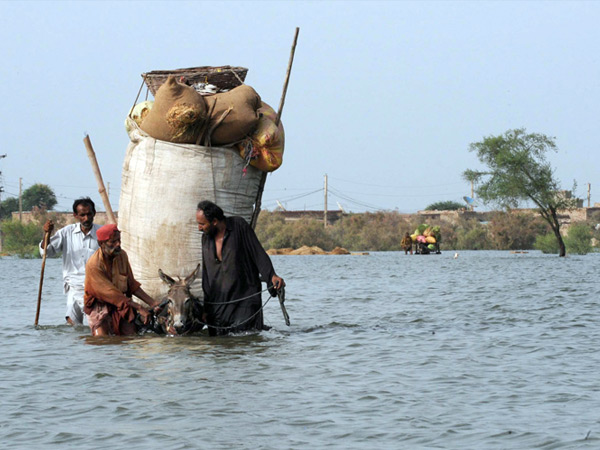
I mean, look at the recent issues alone, even without going too much back in time.  The catastrophic floods even failed to generate significant global interest in this human tragedy.  Even as the government was ineffectively managing that crisis (their version of "heckuva job, Brownie," right?) the cricket team decided that they needed to shine the Commonwealth's attention on the Pakistan--not because they played well, but with a few players engaging in match-fixing schemes. One can imagine the magnitude of this scandal when even the Los Angeles Times reports on this. In America.  On the game of cricket!

The Times notes:
At the core of the scandal are allegations that two cricketers colluded with a middleman to manipulate the course of a match against England last week in London.

Since then, Pakistani television channels daily have been airing video of the middleman, identified as London-based businessman Mazhar Majeed, flipping through wads of cash as he meets with British tabloid reporters posing as members of an Asian gambling cartel.

The tabloid, News of the World, said Majeed accepted $232,000 from the undercover reporters to ensure that Pakistani cricketers bowled "no balls," the equivalent of an illegal pitch in baseball, at specified times during the match. The manipulation, known as spot-fixing, occurs because gamblers sometimes bet not only on the outcome of a match but on individual occurrences or actions during the contest.
Say it ain't so, Joe Asif!

Meanwhile, the terrorists--of which many flavors operate in Pakistan--decide that this is no time to pause. So what if 20 million are messed up thanks to the floods is their thinking, I suppose.  Further, with the weak government's attention being forced on the crisis, and with people unhappy with the government's performance, perhaps the terrorist elements are all the more pumped up. Thus, Pakistan continues to rock with explosions; the latest was in Lahore, whose soil has been bloodied quite a bit with such tragedies in recent months.  The latest one:
At least 25 people have been killed and 170 injured after three bombs exploded during a procession by Shia Muslims in the Pakistani city of Lahore. ...

Officials say the first explosion came shortly before nightfall on Wednesday, at the end of a procession by some 35,000 Shia to mark the death in the Seventh Century of the first Shia imam, Ali bin Abi Talib.
Footage of the moment shown on Geo television showed a small explosion amid a crowd of people near the Karbala Gamay Shah imambargah, followed by a large plume of smoke.
Minutes later, as hundreds of people fled, a suicide bomber blew himself up near an area where food was being prepared for the marchers to break the Ramadan fast, a senior police officer, Zulfiqar Hameed, told the Associated Press news agency.
A second suicide bomber then detonated his explosive belt at an intersection near the end of the procession, Mr Hameed added.
That's right--in the middle of the month-long Ramadan fasting ... how awful!

Friday, November 06, 2009

Cricket: not a critter but a religion in India :-)


This poster says it all!

If only this were a simple little one nutty poster .... a year ago, the following was in the news:
"Cricket is religion in our country and Dhoni is god of cricket," his fan club president Jitendra Singh said.
"We'll construct a huge temple of Dhoni in Ranchi and have a priest who will pray to him every day."
But, the good thing is that as much as real religions are losing their base, and the number of irreligious or casual believers is on the rise, even the religion of cricket (!) is losing its audience--even in India!  Why?  well, as all religions tend to do, well, the cricket priests also decided to extract way too much from the gods and the believers now can't afford to tithe like they used to, I guess.   Here is from one report titled "How cricket became boring" (ht):
It was unthinkable. That a day would come when the urban Indian male would admit he is bored of cricket. But the truth is that the sport is fast losing its charm among its most commercially influential devouts
 Notice here the usage of "devouts."  The author writes:
The board knows that the wealth of Indian cricket is a consequence of this nation’s complex love for the sport and that anything which affects this love would have financial repercussions.
So, yes, the high priests are concerned.  Now, if it is a religious crowd, then what happens?  Well, a new religion creeps in and tries to sweep up a few dejected believers.  That is what is happening in India, where football (ahem, soccer here in the US) is gaining a fan base so much so that the son of one of India's older and living cricket gods, Sunil Gavaskar, himself is attending services at the other religious sport:
From the equally pow­erful world of cricket, Rohan Gavaskar has en­tered the fray. He has bought a stake in the Pune FC football club.
Hmmm ..... the gods must be crazy :-)

Tuesday, October 13, 2009

Measure the region’s stability by what’s cricket in Pakistan

With bombs bursting in air and suicide bombers exploding at ground level, Afghanistan continues to be a dangerous place. After eight years of military engagement, we are more than a little behind schedule on finalizing our plans to exit Afghanistan.

The unrest and violence in Afghanistan is intricately linked to Pakistan’s. So, is there any simple metric that we could employ in order to understand whether things are getting better or worse in Pakistan, such that it can then feed into the decision-making process regarding Afghanistan?

Yes, there is: All we need to do is keep track of the game of cricket in Pakistan. As simple as that!

Cricket is played worldwide, mostly in countries that once were Britain’s colonies. In terms of a global following for a sport, cricket is second only to soccer. In the South Asian countries of India, Pakistan and Sri Lanka, cricket can, and does, trigger passion among its peoples that can make even the most boorish college football fan here seem very tame.

Pakistan has a rich history of outstanding players who were admired for their skilled art by fans and opponents alike. One phenomenal player — Imran Khan — successfully cashed in his popularity to become a significantly successful politician.

For a number of years, Pakistan and India — both with millions of cricket fanatics — did not play each other because of political tensions. I barely had stepped into my teenage years in 1978 when India and Pakistan resumed playing cricket after a gap of 18 years. Watching those games on television was a transformative moment when it dawned on me that the “enemy” team comprised players who looked and talked just like those playing for India.

It became difficult to understand why the people and cricketers from Pakistan were demonized. Thereafter, it was nothing but sheer pleasure for me to watch the talented ballplayers from the neighboring country.

Those were the relatively calmer days before terrorism became a household word. Yet even as conditions in Pakistan started spiraling down, India and other cricket-playing countries continued to send their teams there, but with increasing levels of security.

No more. Now, no country is willing to visit Pakistan to test its cricket mettle because of the immense security risks.

Pakistan was to have hosted a prestigious international tournament — the Champions Trophy — in September 2008. But one country after another withdrew because of worries about safety for players and fans. It was then rescheduled for 2009, but in a different venue altogether — in South Africa.

Sri Lanka was the only brave country that ventured out to Pakistan to play a series of matches there, perhaps having been conditioned by the 25 years of civil war in the island. This visit in March 2009 broke a dry spell since October 2007, which was the last time Pakistan hosted a cricket team from another country.

In a way, that decision by Sri Lanka immediately provided enough tangible evidence regarding the terrorists’ stronghold on the country. The Sri Lankan team’s bus was ambushed in the city of Lahore, resulting in the deaths of six policemen and injuries to players.

Naturally, the Sri Lankan team returned home right away.

As a result, there is now no team that will dare to visit Pakistan, which is a huge loss for the game itself, and for the cricket-crazy fans there. Imagine how Brazilians would feel if they could not host soccer tournaments and if their carnival were canceled. Double that sense of utter disappointment and frustration, and I think we might get close to understanding the loss of international cricket play in Pakistan.

This yardstick of cricket suggests that normalcy might not return to Pakistan for a while. In that case, it might not be realistic to expect that the chaotic situation in the Afghanistan-Pakistan border areas will settle down any time soon.

Therefore, I am all the more worried that we might be stuck in Afghanistan for many more years to come. And that is not cricket!

For The Register-Guard
Appeared in print: TuesdayOct 13, 2009