Showing posts sorted by date for query hedgehog. Sort by relevance Show all posts

Thursday, January 14, 2021

Kill the liberal arts already!

As the doomsday clock ticks down to the appointed hour, as one can imagine, I have been thinking a lot more about education and the miserable state of affairs that contemporary higher education has become.  One thing is for certain, however: I am certainly not thinking if only ...!

In my case, misery does not mean drowning in alcohol, though I wonder if that might help!  Instead all I know is to drink coffee and then read essays that really smart people have authored.

As comforting as this exercise is, well, it is equally depressing that the issues that I worry about now were the same set of issues that were talked and written about even a few years ago, and the situation has only worsened.

For instance, in this essay from 20 years ago (!) Jackson Lears writes:
The contemporary academic crisis is not about job security any more than it is about how many classes are online or which departments get the most resources. It is about the attitudes we take to our most important audience, a non-academic audience. Professors are constantly berating themselves and being berated for withdrawing into the insular  world of scholarship, for not connecting with the real world. The real world is right in front of us, in the classroom; it is composed of students, 99 percent of whom have no intention of entering the academy themselves. They are a non-academic audience; they require us, however implicitly and imperfectly, to become public intellectuals.
The attitude towards students and their learning is appalling, to put it mildly.  Increasingly, colleges see students as nothing more than warm bodies who bring in monies, which they can use to build Taj Mahals and create more "student-services" administrative positions.  Faculty, too, are only happy to be active participants in fashioning revenue-maximizing strategies.  Thus, the higher education industry keeps charging ahead at full speed, consuming the monies students, taxpayers, and philanthropists keep throwing its way.  Are we surprised then at all with the following sentences from Jackson Lears?
Prussian productivism melded with American vocationalism and anti-intellectualism–the love of the practical, the demand for cash value now. The result was the accentuation of a fundamental conflict in the university’s mission, between furthering the pursuit of truth and serving the needs of established power. 
In that same issue of the Hedgehog Review, Russell Jacoby writes:
Driven by academic discontent and boredom, professors might want to reinvent themselves as public writers. ... 
But, simultaneously recognizes the challenge when we have:
institutional imperatives that reward technical rather than public contributions. Will they be successful? It is not clear.
It is a lot clearer now; only technical contributions matter, even if they are less than third-rate.  Public contributions, well, who cares!

Jacoby worried then about specialization, well before the introduction of gerontology as a major in a small time public university where I teach!  Jacoby wrote:
it should be possible to raise the issue of insular specialization without pledging fealty to progress and industrial society. The incarceration of specialists and a return to bloodletting or phrenology is hardly the goal; nor is the point to foster anti-intellectual populism or half-educated generalists. Specialization inheres in industrial society. We need specialists. No one wants to hear a cheery announcement that today your airline pilot will be a family therapist. Nevertheless this truth does not justify every micro-field or subdiscipline or new jargon. Specialization can also be obscurantism, turf building, careerism, and regression, as well as a simple waste of talent and resources.
All that was from 20 years ago. 

At the rate at which universities were changing for the worse, I figured that the worst might happen only after my retirement.  Covid-19 and the resulting economic crisis have accelerated the decline by more than a decade.  I suppose I will soon have to literally utter that cliched line about what students supposedly say after studying the liberal arts: Would you like fries with that?

Tuesday, February 23, 2016

Can we please eliminate the damn liberal arts? Right now?

As one can imagine, I have been thinking a lot more about education and the miserable state of affairs that contemporary higher education has become.  And then I read this in the New York Times that a growing number of elected officials want to nudge students toward more job-friendly subjects like electrical engineering.  Ah, yes, if only I had known that the world needed electrical engineers and not ditch-diggers!

In my case, misery does not mean drowning in alcohol, though I wonder if that might help!  Instead of carrying my water bottle to class, maybe I should take with me something clear and water-like gin or vodka ;)  Oh well, all I know is to drink coffee and to then read essays that really smart people have authored.

As comforting as this exercise is, well, it is equally depressing that the issues that I worry about now were the same set of issues that were talked and written about even a few years ago, and the situation has only worsened.  For instance, in this essay from almost sixteen years ago!  Jackson Lears writes:
The contemporary academic crisis is not about job security any more than it is about how many classes are online or which departments get the most resources. It is about the attitudes we take to our most important audience, a non-academic audience. Professors are constantly berating themselves and being berated for withdrawing into the insular  world of scholarship, for not connecting with the real world. The real world is right in front of us, in the classroom; it is composed of students, 99 percent of whom have no intention of entering the academy themselves. They are a non-academic audience; they require us, however implicitly and imperfectly, to become public intellectuals.
The attitude towards students and their learning is appalling, to put it mildly.  Increasingly, colleges see students as nothing more than warm bodies who bring in monies, which they can use to build Taj Mahals and create more "student-services" administrative positions.  Faculty, too, are only happy to be active participants in fashioning revenue-maximizing strategies.  Thus, the higher education industry keeps charging ahead at full speed, consuming the monies students, taxpayers, and philanthropists keep throwing its way.  Are we surprised then at all with the following sentences from Jackson Lears?
Prussian productivism melded with American vocationalism and anti-intellectualism–the love of the practical, the demand for cash value now. The result was the accentuation of a fundamental conflict in the university’s mission, between furthering the pursuit of truth and serving the needs of established power. The modern American university was to continue to preserve a place for the free play of ideas, but also to provide technical expertise for government and business elites. 
In that same issue of the Hedgehog Review, Russell Jacoby writes:
Driven by academic discontent and boredom, professors might want to reinvent themselves as public writers. ... 
But, simultaneously recognizes the challenge when we have:
institutional imperatives that reward technical rather than public contributions.Will they be successful? It is not clear.
It is a lot clearer now, sixteen years later, that only technical contributions matter, even if they are less than third-rate.  Public contributions, well, who cares!

Jacoby worried then about specialization, well before the introduction of gerontology as a major in a small time public university where I teach!  Jacoby wrote:
it should be possible to raise the issue of insular specialization without pledging fealty to progress and industrial society. The incarceration of specialists and a return to bloodletting or phrenology is hardly the goal; nor is the point to foster anti-intellectual populism or half-educated generalists. Specialization inheres in industrial society. We need specialists. No one wants to hear a cheery announcement that today your airline pilot will be a family therapist. Nevertheless this truth does not justify every micro-field or subdiscipline or new jargon. Specialization can also be obscurantism, turf building, careerism, and regression, as well as a simple waste of talent and resources.
So much has been said in the years past by intellectuals that there is very little for this pseudo-intellectual to contribute, it seems like!  May I have a martini, please?  On second thoughts, make that a double-shot cappuccino ;)


Sunday, June 09, 2013

Why am I not a "success"? I grew up liking all-rounders!

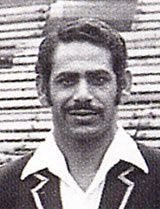
I grew up watching cricket and obsessing about it, as most young boys did then (and most probably do even now.)  As much as I liked the artistry of the top-order batsmen, especially Vishvanath, and the spin bowlers, my first hero was Abid Ali.

Yes, Abid Ali.

I was perhaps not even into a double-digit age when I decided I liked Abid Ali the most.  Here was a player who could bowl pretty decently, bat pretty decently, and field excellently.  He could do it all.  And, from the radio commentaries and newspaper reports (no TV then!) I understood that he did all these without any flair. 

Ali was an "all-rounder," as such players are referred to in cricket.  After him, there were a couple more like Ghavri and Madanlal, but it was not the same. Not even Ravi Shastri.

And then the "all-rounder" world simply became fantastic, and was way more than I could have imagined, thanks to Kapil Dev and Ian Botham.  These two took the idea of an all rounder to an entirely new level.  And, they seemed to approach every opportunity with the same level of intensity and excitement, without ever feeling jaded.

I left India just about when these two had passed their peaks, and soon I was following college football and baseball. 

In college ball too, it was the "all-rounder" players that I liked.  I was a grad student at USC when Rodney Peete was the Trojan QB.  Peete could pass and also run--a contrast to Troy Aikman across town at UCLA, who was a much better QB but not a runner.  While they were both excellent baseball players too, only Peete continued playing college baseball.

However, most all rounders don't achieve "stardom," so to say because it is a very, very rare few who can perform exceptionally at more than one.  It was Aikman who went on to win the Super Bowls.  Rare is a Botham or a Dev.  Abid Ali is probably a forgotten name among most casual Indian cricket fans, who will certainly remember Bedi and Pataudi, and even Venkataraghavan.

I wonder how my life would have been if I had been a fan not of all-rounders but of super-specialists instead.

Academe--even at regional teaching universities like mine--encourages specialists and not generalists.  People whose focus is to know a lot about one or two small things, and not the other way around.  "The fox knows many things, but the hedgehog knows one big thing".

But, if I were a specialist, then my life would have been about some strange variation of dukrijnkarane!  Odds are that I wouldn't have been exploring and understanding life by blogging, writing op-eds, cooking, traveling, ... my, it would have been a horribly boring life.

Thank heavens I chose Abid Ali as my favorite!

Sunday, September 23, 2012

I prefer to be a fox. My goal is to be a fox!

Tomorrow will the first day of classes in a new academic year, which is all the more the reason why I have been thinking about the kind of a teacher and a scholar I am

One such chain of thought led me to recalling reading, while in graduate school, Isiah Berlin's wonderful essay on The Hedgehog and the Fox and how much I deeply resonated with his "The fox knows many things, but the hedgehog knows one big thing".

This article takes up that same idea, and notes:
In an age of specialists, does it matter that generalists no longer thrive? The world is hardly short of knowledge. Countless books are written, canvases painted and songs recorded. A torrent of research is pouring out. A new orthodoxy, popularised by Malcolm Gladwell, sees obsessive focus as the key that unlocks genius.

Just knowing about a lot of things has never been easier. Never before have dabblers been so free to paddle along the shore and dip into the first rock pool that catches the eye. If you have an urge to take off your shoes and test the water, countless specialists are ready to hold your hand.

And yet you will never get very deep. Depth is for monomaths—which is why experts so often seem to miss what really matters. Specialisation has made the study of English so sterile that students lose much of the joy in reading great literature for its own sake. A generation of mathematically inclined economists neglected many of  Keynes’s insights about the Depression because he put them into words. For decades economists sweated over fiendish mathematical equations, only to be brought down to earth by the credit crunch: Keynes’s well-turned phrases had come back to life. Part of my regret at the scarcity of polymaths is sentimental. Polymaths were the product of a particular time, when great learning was a mark of distinction and few people had money and leisure. Their moment has passed, like great houses or the horse-drawn carriage. The world may well be a better place for the specialisation that has come along instead. The pity is that progress has to come at a price. Civilisation has put up fences that people can no longer leap across; a certain type of mind is worth less. The choices modern life imposes are duller, more cramped.
A monomath I am not, and was never keen on becoming one for the very reason articulated in that essay--I felt cramped, imprisoned, and cutoff from everything else whenever I was on that track.  I didn't want that.  It simply wasn't me.  I knew well that I have naturally been inclined to know a little bit of as much as I can.  I am excited I am not a hedgehog and, more importantly, I do not pretend to be one.
 
I know all too well that I am no polymath either--am way, way short of those intellectual abilities.  Am glad though that I am where I am, knowing I yam what I yam ;)

Sunday, April 15, 2012

Hey, corporate professors and universities, what about education and intellectual activities?

After writing this essay, which I plan to send to the editor of our local paper, I have been thinking a lot more about education and the miserable state of affairs that contemporary higher education has become.  In my case, misery does not mean drowning in alcohol, though I wonder if that might help, but is to lose myself in essays that really smart people have authored.

As comforting as this exercise is, well, it is equally depressing that the issues that I worry about now were the same set of issues that were talked and written about even a few years ago. It has been only a rapid worsening of the situation.  For instance, in this essay from twelve years ago--yes, twelve--Jackson Lears writes:
The contemporary academic crisis is not about job security any more than it is about how many classes are online or which departments get the most resources. It is about the attitudes we take to our most important audience, a non-academic audience. Professors are constantly berating themselves and being berated for withdrawing into the insular  world of scholarship, for not connecting with the real world. The real world is right in front of us, in the classroom; it is composed of students, 99 percent of whom have no intention of entering the academy themselves. They are a non-academic audience; they require us, however implicitly and imperfectly, to become public intellectuals.
The attitude towards students and their learning is appalling, to put it mildly.  Increasingly, colleges see students as nothing more than warm bodies who bring in monies, which they can use to build Taj Mahals and create more "student-services" administrative positions.  Faculty, too, are only happy to be active participants in fashioning revenue-maximizing strategies.  For instance, a couple of days ago, I received an all-campus email that described the introduction of yet another undergraduate degree called the "AB," because the existing BA and BS options do not serve a certain market niche!

Even back in 2000, Lears noted that the chief threat to education came from attempts to commodify knowledge and sell it in crazy ways:
Contrary to received opinion, the chief threat to intellectual freedom in the academy is not political correctness–though the tyranny of various ideological fashions (right and left) is real, and can be oppressive. The main menace is market-driven managerial influence: the impulse to subject universities to quantitative standards of efficiency and productivity, to turn knowledge into a commodity, to transform open sites of inquiry into corporate research laboratories and job training centers.
Thus, the higher education industry keeps charging ahead at full speed, consuming the monies students, taxpayers, and philanthropists keep throwing its way.  Are we surprised then at all with the following sentences from Jackson Lears?
Prussian productivism melded with American vocationalism and anti-intellectualism–the love of the practical, the demand for cash value now. The result was the accentuation of a fundamental conflict in the university’s mission, between furthering the pursuit of truth and serving the needs of established power. The modern American university was to continue to preserve a place for the free play of ideas, but also to provide technical expertise for government and business elites. The marriage of Prussian productivism and American vocationalism produced a monstrous spawn. James called it “the Ph.D. Octopus.” 
What a lovely metaphor "the Ph.D. Octopus" is!

In that same issue of the Hedgehog Review, Russell Jacoby writes:
Driven by academic discontent and boredom, professors might want to reinvent themselves as public writers. ... 
But, simultaneously recognizes the challenge when we have:
institutional imperatives that reward technical rather than public contributions.Will they be successful? It is not clear.
It is a lot clearer now, twelve years later, that only technical contributions matter, even if they are less than third-rate.

Jacoby worried then about specialization, well before the introduction of gerontology as a major in a small time public university where I teach!  Jacoby wrote:
it should be possible to raise the issue of insular specialization without pledging fealty to progress and industrial society. The incarceration of specialists and a return to bloodletting or phrenology is hardly the goal; nor is the point to foster anti-intellectual populism or half-educated generalists. Specialization inheres in industrial society. We need specialists. No one wants to hear a cheery announcement that today your airline pilot will be a family therapist. Nevertheless this truth does not justify every micro-field or subdiscipline or new jargon. Specialization can also be obscurantism, turf building, careerism, and regression, as well as a simple waste of talent and resources.
 So much has been said in the years past by intellectuals that there is very little for this pseudo-intellectual to contribute, it seems like!