Showing posts with label genocide. Show all posts

Sunday, April 25, 2021

Finally, a man with cojones!

"President Biden on Saturday recognized the mass killings of Armenians more than a century ago as genocide," the NYT reports.

Finally, a President calls it a genocide.

To use Biden's own words, it is a big fucking deal!

The declaration by Mr. Biden reflected his administration’s commitment to human rights, a pillar of its foreign policy. It is also a break from Mr. Biden’s predecessors, who were reluctant to anger a country of strategic importance and were wary of driving its leadership toward American adversaries like Russia or Iran.

So, isn't Biden worried that this would push Turkey to work with Russia?  Nope. Because Turkey and its autocratic leader, erdogan, are at their weakest in many ways, writes Soner Cagaptay, who is a senior fellow at the Washington Institute for Near East Policy:

Biden, of course, is not being mean. He is simply aware that for the first time in many years, Erdogan needs the U.S. more than Washington needs him. Biden is, accordingly, using this window as a lever, hoping to correct some of Erdogan’s behavior, including his anti-democratic actions and close ties to Russian President Vladimir Putin. ...

The crux of the issue now isn’t that Biden is mad at Erdogan, but rather that almost the entire U.S. government is. Many inside and outside the administration see Erdogan as an autocrat who poses a threat to U.S. interests regionally.

I have always wanted the US to recognize the tragedy as a genocide.  The following is a re-post from March 2010

*******************************************************************
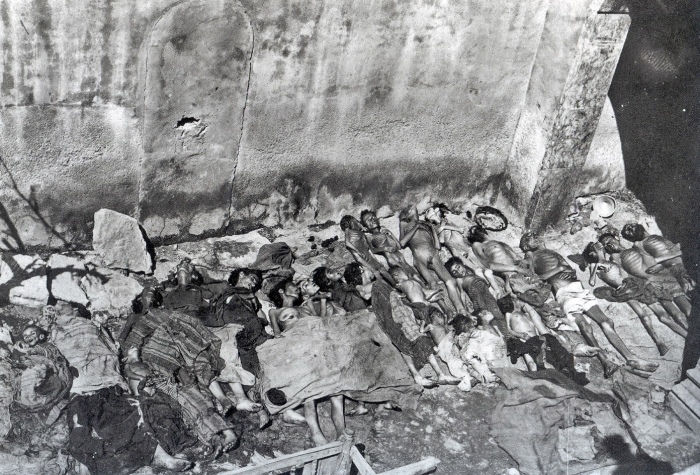
The House Foreign Affairs Committee voted, by a narrow one-vote margin, on a non-binding resolution "condemning as genocide the mass killing of Armenians early in the last century by the Ottoman army."
 
Of course, as a reader of this blog you are fully aware that this is not the genocide that happened in 1994 in Rwanda.  Or the genocide carried out by the Nazis.  Or .... well, you get the point, which Samantha Power articulated in her book A problem from hell.

The Armenian genocide happened (yes, Turkey, it happened!) almost a hundred years ago and we still lack the testicular fortitude to take a stand on it.  The presidential candidate who was praised for her testicular fortitude, Hilalry Clinton, is now the Secretary of State.  So, what was her response?  Ahem, not much different from the previous secretaries who all lobbied against such a resolution!
“We do not believe that the full Congress will or should vote on that resolution and we have made that clear to all the parties involved,” Clinton said. 
So, you are thinking, but the candidate who beat Clinton in the primaries, Barack Obama, promised change.  In fact, the following is what he said two years ago: (ht)
I also share with Armenian Americans – so many of whom are descended from genocide survivors - a principled commitment to commemorating and ending genocide. That starts with acknowledging the tragic instances of genocide in world history. As a U.S. Senator, I have stood with the Armenian American community in calling for Turkey's acknowledgement of the Armenian Genocide. Two years ago, I criticized the Secretary of State for the firing of U.S. Ambassador to Armenia, John Evans, after he properly used the term "genocide" to describe Turkey's slaughter of thousands of Armenians starting in 1915. I shared with Secretary Rice my firmly held conviction that the Armenian Genocide is not an allegation, a personal opinion, or a point of view, but rather a widely documented fact supported by an overwhelming body of historical evidence. The facts are undeniable. An official policy that calls on diplomats to distort the historical facts is an untenable policy. As a senator, I strongly support passage of the Armenian Genocide Resolution (H.Res.106 and S.Res.106), and as President I will recognize the Armenian Genocide.
Genocide, sadly, persists to this day, and threatens our common security and common humanity. Tragically, we are witnessing in Sudan many of the same brutal tactics - displacement, starvation, and mass slaughter - that were used by the Ottoman authorities against defenseless Armenians back in 1915. I have visited Darfurian refugee camps, pushed for the deployment of a robust multinational force for Darfur, and urged divestment from companies doing business in Sudan. America deserves a leader who speaks truthfully about the Armenian Genocide and responds forcefully to all genocides. I intend to be that President.
I guess elections are nothing but castrations...

Meanwhile, Turkey is already ticked off, and has begun a lobbying campaign.  The Turkish government has recalled its ambassador to the US for consultations, and
A Turkish government statement condemned the vote, saying, "“This decision, which could adversely affect our co-operation on a wide common agenda with the US, also regrettably attests to a lack of strategic vision.”

Thursday, January 19, 2017

Bearing witness to a genocide?

In July 2011, I blogged about the birth of South Sudan.  I wrote then:
On July 9th, South Sudan will officially become the latest country on this planet.
It does not mean that life will be peaceful from the 9th on, after decades of atrocious violence. I worry that things will get even worse. The Sudanese split will not be a Czechoslovakian story. Perhaps I am projecting here an understanding of the history of the sibling rivalry ever since the partition of India, where I was born, and Pakistan.
Even normally, in daily life, nobody listens to me, and my prognostications suffer from a Cassandra's curse.  You think anybody really cared what I thought about the conflict in Sudan and the birth of South Sudan?  Oh well, I do what I do.

Total chaos.
Hopes for South Sudan’s future soared when it became a nation, but now diplomats are scrambling to make sense of what went wrong. Some blame greed. As the new nation’s oil wells generated billions in revenue, a chaotic scramble for cash ensued. The rudimentary banking system couldn’t even handle credit cards, and government transactions were conducted using cardboard boxes filled with currency notes. Grandmothers and even four-year-old children were placed on the Army’s payroll. Some four billion dollars went astray.
It didn't take long for the new country to erupt into a civil war.  Into this civil war, Uganda stepped in as well:
Ugandan troops propped up Kiir and fought Machar. Uganda’s President Yoweri Museveni had long seen Kiir as a protégé and Machar as a rival. The stalemate greatly prolonged the war, killing tens of thousands of people and causing over a million to flee their homes. Many South Sudanese saw Uganda’s presence as a foreign occupation, and many Ugandans, who have suffered mightily under thirty years of Museveni’s despotic and corrupt rule, wondered what their army, dispatched without parliamentary approval, was doing there.
Museveni has done enough and more damage at home that he now decides to cause more havoc outside too?  What a tragedy!

After peace treaties that were quickly torn, the usual catastrophe of "many innocent men, women, and children are again being massacred."

Where was the US?
the Obama administration’s South Sudan strategy is in tatters. Tens of thousands of people have been killed, the United Nations says, and rape has been rampant.
But, Ambassador Samantha Power?
But poor timing, bad judgment and a lack of a unified strategy have hampered the administration’s own efforts to avert a catastrophe, many advocates, aid workers and former United States officials say. In turn, it has drawn attention to the limits of American influence — that, too, in a country whose independence from Sudan the United States supported enthusiastically.
It is also a reminder of how challenging it has been for Ms. Power in particular to put into effect the idea that she is best known for: using diplomacy to prevent mass atrocities.
The "g" word comes up, again!
In her 2002 book, “A Problem from Hell,” Ambassador Power called for a global responsibility to protect people everywhere from crimes against humanity. Now that she’s about to retire, perhaps she’ll explain why this is easier said than done, but here’s some advice for the Trump Administration: genocide doesn’t happen overnight. It begins with small injustices, power grabs, and callous dismissals of the rule of law. Even more important than the responsibility to protect is the responsibility to prevent, using negotiation, diplomacy, and sanctions long before the killing starts. By then, it is far, far too late.
What did you say?  "Never again!"?  Bullshit!
“We have all been bystanders to genocide,” [Power] wrote. “The crucial question is why.”

Sunday, April 24, 2016

Who cares about human rights! Business as usual in DC.

“You campaign in poetry; you govern in prose” the late Mario Cuomo often said.  And what wonderful poetry we had from Barack Obama when he was the candidate. There is poetry and then there is prose.  The dull and boring prose of the reality of  governance and international realpolitik.

Case in point: the Armenian genocide.
“As president I will recognize the Armenian genocide,” Barack Obama vowed in January 2008. He even had his top campaign foreign policy adviser, self-styled “genocide chick” Samantha Power, issue a plaintive YouTube vow to the Armenian American community that this time they wouldn't be double-crossed.
But, that was the candidate sweet-talking with poetry during the courtship of campaigning.  After the election, the title Senator was replaced with President, which then meant that old campaign promises are meant to be broken:
In his annual statement on the mass death of Armenians at the hands of the Ottoman Empire in 1915, President Barack Obama once again declined to use the term “genocide” — breaking a campaign promise he made eight years ago.
In his commemoration on the mass killings, which may have claimed as many as 1.5 million lives, Mr. Obama paid homage to the victims and vowed to “to learn from this tragedy so it may never be repeated.”
His lengthy statement released Friday, however, did not use the term “genocide” — the source of a major geopolitical dispute between Turkey and Armenian about the historical context of the massing killings.
As I noted in this post from six years ago, the victorious candidates apparently lose their testicular fortitude and elections are nothing but castrations!

Why care about something that happened in 1915?  Well, the actor who has all the good looks and presence that I don't have says the very thing that I would like to say:
Take the case of George Clooney. The irrepressible actorvist feels so strongly about the recognition issue that on April 24 — officially known in the U.S. as the National Day of Remembrance of Man's Inhumanity to Man — he will be in Yerevan to award the inaugural $1 million Aurora Prize for Awakening Humanity, presented “on behalf of the survivors of the Armenian Genocide and in gratitude to their saviors.” You can't prevent tomorrow's genocide, Clooney plausibly argues, if you can't even use the G-word to describe something that happened 100 years ago.
If the leader of the mightiest government on the planet does not have the balls to label the incidents from a hundred years ago as "genocide"--the term that he boldly stated during his campaign days--then how confident can we be that the leader of the free world will lead the fight against ongoing crimes against humanity?

Meanwhile, the developing situation in Burundi has people worried.  "Today in Burundi, many people hear echoes of 1994" notes the Economist.  We can expect poetry from the Democratic candidates.  Only from the Democratic candidates because the wannabes from the other side author nothing but toxic prose even while campaigning!

Ah, democracy!


Sunday, January 10, 2016

Peace is War. Slavery is Freedom. Strength is Ignorance.

The Nobel Peace Prize has never been without controversies.  Take the case of Mohandas "Mahatma" Gandhi, for instance:
Gandhi was nominated in 1937, 1938, 1939, 1947 and, finally, a few days before he was murdered in January 1948.
Gandhi was not recognized for the phenomenally peaceful methods he preached and practiced.
Up to 1960, the Nobel Peace Prize was awarded almost exclusively to Europeans and Americans. In retrospect, the horizon of the Norwegian Nobel Committee may seem too narrow.
"In retrospect" the Committee ought to feel awful about handing the prize to Barack Obama too, as I have often blogged about!


A few months ago, I blogged about another Nobel Peace Prize recipient behaving in ways that were anything but about peace.  "What a shame!" I commented about Aung San Suu Kyi's silence over the systematic campaign against the country's Rohingya.  She intentionally even shut off the strong advice from two other Peace Prize honorees: the Dalai Lama and Desmond Tutu.

In his column, Nicholas Kristof writes about the wily politician that Aung San Suu Kyi is:
She is now a politician, and oppressing a minority like the Rohingya is popular with mostly Buddhist voters.
Oh, wow, what a surprise!  How awful a politician is she?
Aung San Suu Kyi avoids even saying “Rohingya.”
Kristof writes:
Aung San Suu Kyi is also inheriting the worst ethnic cleansing you’ve never heard of, Myanmar’s destruction of a Muslim minority called the Rohingya.
A recent Yale study suggested that the abuse of the more than one million Rohingya may amount to genocide; at the least, a confidential United Nations report to the Security Council says it may constitute “crimes against humanity under international criminal law.”
Yet Aung San Suu Kyi seems to plan to continue this Myanmar version of apartheid.
Of course, I agree with Kristof when he concludes:
Defenders of Myanmar and of Aung San Suu Kyi note that the country has many problems; they see the Rohingya as one misfortune in a nation with a vast swath of misfortunes. The priorities, as they see them, are economic development, democracy and an end to the country’s many local conflicts, and they protest that it’s myopic to focus on the problems of one ethnic group in a nation so full of challenges.
Yet to me, there is something particularly horrifying about a government deliberately targeting an ethnic group for destruction, locking its members in concentration camps and denying them livelihood, education and health care. When kids are dying in concentration camps, after being confined there because of their ethnicity, that’s not just one more problem of global poverty. It’s a crime against humanity, and addressing it is the responsibility of all humanity.
Strip her of the Nobel, I say.

Tuesday, April 21, 2015

A hundred years since the Armenian Genocide ... yet ...

I am sure it was in the high school English class that was taught by the maniac with whom I have some unfinished business, we read a short story called the Pomegranate Trees.  Not that the maniac brought that story to our attention--it was in the text that we used.  I loved that story.  I have always loved those kinds of short stories that in very simple words and sentences do a wonderful job of portraying the place and people and, yes, the story itself.

Year later, towards the end of graduate school when life transitioned to California's Central Valley, my curiosity led me to understanding the place and its people.  And was reminded of that short story from the high school years.  This nerd was all excited that I was in the very geography that I had studied about in a story in a high school text.  Since then, I have used that short story in my introductory class for students to analyze the economic geography there, and have even discussed at a professional conference the pedagogical experience.

The author, William Saroyan, was of Armenian descent.  The valley, especially around Fresno, was home to many Armenian-Americans.  One of my favorite Los Angeles Times journalists back then was Mark Arax, who is also an Armenian-American from Fresno.  The treasurer of a local community group that I worked with was an Armenian-American.

Thus, it didn't take me long to understand the angst that the Armenian-Americans felt about the Armenian Genocide.

But, of course, that "g" word is yet to be used by any American president, including the current White House occupant.  The fact that it happened a hundred years ago should make it easy, one would think, for a global leader to call it for what it is.  Nope.  As Matt Welch sarcastically put it, it is not Armenian Genocide Remembrance Day but "Barack Obama/Samantha Power Sanctimony Reversal Day."

What's the reversal, you ask?  Remember Samantha Power's claim to fame via her book?  You forgot already?  She then became Candidate Senator Obama's advisor and is now the ambassador to the UN.  So, back when she was advising Candidate Obama, what did the eloquent senator say?  Again, Matt Welch provides that:
[T]he Armenian Genocide is not an allegation, a personal opinion, or a point of view, but rather a widely documented fact supported by an overwhelming body of historical evidence. The facts are undeniable. An official policy that calls on diplomats to distort the historical facts is an untenable policy. As a senator, I strongly support passage of the Armenian Genocide Resolution (H.Res.106 and S.Res.106), and as President I will recognize the Armenian Genocide.
Ahem, Senator Obama won the election, and then got re-elected.  How many years has Obama been the President now?

Turns out that whether it is the Armenian Genocide, or Guantanamo, or illegal wiretapping, or drone warfare, or ... it is a case of Jekyll and Hyde--there was a Senator Obama and there is a President Obama.  I am all the more happy that I voted for neither one.  Not that I voted for the Geriatrics Only Party either--it is all Tweedledum and Tweedledee! :(

Who cares for the million dead in some far away place, eh!

BTW, Matt Welch provides this link to Samantha Power talking about the Armenian genocide, but back in the campaign days of 2008 when they wanted the Armenian-American votes! :(


Saturday, September 21, 2013

Obama as Nixon, and Kerry as Kissinger? They just talk and look better!

So, there is the US seemingly flailing over the Syria issue. With Iran, there are problems. North Korea, Venezuela, and Cuba have been needling the US for quite a while. And then there are the likes of Russia and Brazil with whom it is a dysfunctional relationship.

Overlay all the recent revelations of the NSA spying operations. And the drone-based killings in far away lands.  Think about the long-running Guantanamo issue.

Add to this the interventions in Afghanistan, Iraq, Libya, and the very strange relationship with Pakistan and Egypt.

All set?

Now, try to put together a statement on what America stands for.

Confused?  You can't seem to figure out what exactly is the ideal for which America carrying is the torch?

There is a vast divide between the ideals that we think America represents and the reality of America, right?

This is not new at all. It has always been this way.

In my early years, back in the old country, I was dead set against the US because I could not understand how America could talk all glorious things and act like a jerk.  Which is why my parents were quite shocked when they came to know that I had decided in favor of graduate schooling in the US, with an even larger goal of making America my home.

It is just that I had made my peace with the fact that all the countries act like jerks and that there is no saintly country.

One of my earliest experiences with the disconnect between the American ideal versus the American realpolitik was during the 1971 India-Pakistan wars that led to the birth of an independent Bangladesh.  It was a simple question that my young mind had: if America is all for democracy, then wouldn't America support India instead of supporting Pakistan?

A simple question, a simplistic one, that only kids might have, right?  But, often we overlook those simple bottom-lines.  I suppose as adults we lead lives full of contradictions that we automatically begin to discount the conflict between the ideals and the reality.  How depressing that this is, also, a part of growing older and "wiser!"

All those memories of my growing up years in India seem to have been dusted off by this wonderful book-review essay by Pankaj Mishra, who writes about "Nixon, Kissinger, and the Bangladesh genocide." (sub. reqd.)

It jolts me, yet again, even after all these years, to read about the language that Nixon and Kissinger used, which reflects their attitudes towards the people of the Subcontinent, its leaders, and their priorities. Indira Gandhi was a "bitch," Indians are "such bastards" and "a slippery, treacherous people" and more.

How unfortunate that Kissinger is praised as a statesman, and even Nixon too!  As Shakespeare wrote, "For Brutus is an honourable man; So are they all, all honourable men."

It is not only that they made such comments, but made them when the US ambassadors stationed in India and Pakistan were sending them cables that Pakistan was destroying democracy and committing genocide. Mishra offers this Nixon quote from one of the books he reviews:
Biafra stirred up a few Catholics. But, you know, I think Biafra stirred people up more than Pakistan, because Pakistan they're just a bunch of brown goddamn Moslems."
"For Brutus is an honourable man; So are they all, all honourable men."

And what was the larger purpose that Nixon and Kissinger were aiming for?  Even as Nixon dismissed Pakistanis as "brown goddamn Moslems" he was using the Pakistani dictator-general Yahya Khan as "the principal intermediary between Beijing and Washington, personally conveying to Chinese leaders the Americans' desire for a closer dialogue."

Nixon and Kissinger are celebrated for opening up to China.  You know, the Asian country of Mao that was a champion for democracy and human rights!  "It is like Nixon going to China" is now a phrase to describe major policy shifts.

"For Brutus is an honourable man; So are they all, all honourable men."

In wrapping up the essay, Mishra writes:
[Many] postwar Administrations, Democratic as well as Republican, violated American ideals of democracy and human rights while pursuing what they saw--mostly wrongly--as national interests.
We have this profound image of America as a symbol for democracy and human rights. Time and again, we are reminded that reality has nothing to do with the symbol.

More from Mishra:
Obama was expected to restore an ethical sheen to post-9/11 foreign policy, but he has intensified drone warfare in Yemen and Pakistan, pursued whistle-blowers, and failed to close down Guantanamo.  It is difficult to imagine him risking Israel's security by taking a hard line against the Egyptian generals--especially not while he weighs the appropriate response to Syrian war crimes, copes with the human costs of Iraq occupation and of the intervention in Libya, seeks peace with honor in Afghanistan, re-starts peace talks between Israel and Palestine, and controls the fallout from Edward Snowden's revelations.
Who cares for the millions of real people who get killed, tortured, driven out of their homes, in the process, right?

Aren't you happy that you are also older and "wiser?"

Saturday, April 24, 2010

The geography of slavery

Henry Louis Gates has a neat op-ed in the NY Times on the complexities of identifying the parties responsible for the horrible trans-Atlantic slave trade.

Gates refers to this database, where you find a treasure of maps on this subject, including the following map:

The topic of slavery is always like the topic of the Holocaust: every time I read something about these topics, I simply cannot understand how humans allowed these to happen. History is full of such atrocities, I suppose ... and, yet, even the President is so cautious about using the "genocide" word when he referred to the manner in which the Ottoman Turks practically wiped out a good chunk of the Armenians ...

Friday, March 05, 2010

The Armenian genocide: Another test of US' testicular fortitude?

The House Foreign Affairs Committee voted, by a narrow one-vote margin, on a non-binding resolution "condemning as genocide the mass killing of Armenians early in the last century by the Ottoman army."
Of course, as a reader of this blog you are fully aware that this is not the genocide that happened in 1994 in Rwanda.  Or the genocide carried out by the Nazis.  Or .... well, you get the point, which Samantha Power articulated in her book A problem from hell.

The Armenian genocide happened (yes, Turkey, it happened!) almost a hundred years ago and we still lack the testicular fortitude to take a stand on it.  The presidential candidate who was praised for her testicular fortitude, Hilalry Clinton, is now the Secretary of State.  So, what was her response?  Ahem, not much different from the previous secretaries who all lobbied against such a resolution!
“We do not believe that the full Congress will or should vote on that resolution and we have made that clear to all the parties involved,” Clinton said. 

So, you are thinking, but the candidate who beat Clinton in the primaries, Barack Obama, promised change.  In fact, the following is what he said two years ago: (ht)
I also share with Armenian Americans – so many of whom are descended from genocide survivors - a principled commitment to commemorating and ending genocide. That starts with acknowledging the tragic instances of genocide in world history. As a U.S. Senator, I have stood with the Armenian American community in calling for Turkey's acknowledgement of the Armenian Genocide. Two years ago, I criticized the Secretary of State for the firing of U.S. Ambassador to Armenia, John Evans, after he properly used the term "genocide" to describe Turkey's slaughter of thousands of Armenians starting in 1915. I shared with Secretary Rice my firmly held conviction that the Armenian Genocide is not an allegation, a personal opinion, or a point of view, but rather a widely documented fact supported by an overwhelming body of historical evidence. The facts are undeniable. An official policy that calls on diplomats to distort the historical facts is an untenable policy. As a senator, I strongly support passage of the Armenian Genocide Resolution (H.Res.106 and S.Res.106), and as President I will recognize the Armenian Genocide.
Genocide, sadly, persists to this day, and threatens our common security and common humanity. Tragically, we are witnessing in Sudan many of the same brutal tactics - displacement, starvation, and mass slaughter - that were used by the Ottoman authorities against defenseless Armenians back in 1915. I have visited Darfurian refugee camps, pushed for the deployment of a robust multinational force for Darfur, and urged divestment from companies doing business in Sudan. America deserves a leader who speaks truthfully about the Armenian Genocide and responds forcefully to all genocides. I intend to be that President.
I guess elections are nothing but castrations...

Meanwhile, Turkey is already ticked off, and has begun a lobbying campaign.  The Turkish government has recalled its ambassador to the US for consultations, and
A Turkish government statement condemned the vote, saying, "“This decision, which could adversely affect our co-operation on a wide common agenda with the US, also regrettably attests to a lack of strategic vision.”

Tuesday, January 26, 2010

Chemical Ali hanged: Remembering the gas attack on the Kurds

"Chemical Ali" is dead, hanged for his atrocious crimes against the Kurds, among his many, many crimes.
The Economist has this piece from its archives; excerpt:
EIGHT years of carnage have not robbed the Gulf war of its capacity to shock. In the middle of March (the exact date is unclear) Iranian soldiers pushed the Iraqi army out of the Kurdish town of Halabja, in the Kurdish part of north-east Iraq. One or two days later (this date, too, is unclear), the Iraqi air force appears to have responded by bombing Halabja with some sort of poisonous gas.
The Iraqis say it was the Iranians who bombed the town, a claim that contradicts the testimony of most survivors. The Kurds say that more than 4,000 people died, a claim difficult to verify. But western reporters and television crews, helicoptered into Halabja by the Iranians, found hundreds of corpses strewn around the town. Most were eerily unwounded, suggesting that they had been the victims of a quick-acting poison agent, possibly one of the nerve gases. Hundreds more victims, in hospitals in Tehran, had ferocious skin burns of the kind caused by mustard gas.

The first of the video clips of this PBS Frontline piece recalls the horrors of the horrendous gas attack that Saddam and Chemical Ali launched on civilian Kurds.  A couple of years ago I showed this in one of my classes, and students could not believe this happened.  Which was when one student asked: "why don't all these suicide bombers go kill all these tyrants instead of killing innocent people?"
Compared to what the Kurds went through, Chemical Ali died pretty painlessly.  I wonder whether he expressed any regrets at all before he died.