Showing posts with label Energiewende. Show all posts

Thursday, January 15, 2015

It's tough to make predictions, especially about the future

Yes, that was one of the classics from the one and only Yogi Berra.  If only many important aspects of life can be so easily articulated (even if it fails a formal grammar test.)

For years, I have heard enough and more left-leaning people, especially within academia, beat up on oil companies and their profits.  (Meanwhile, I was beating up on the company that makes the computers that the left-leaning people love to use--for the sheer audacity with which it earns gazillions while portraying a saintly image!)  The evil oil corporations, the story went, did everything possible to increase their profits.  Even launched wars, with the government as their proxies.  The bad oil companies did their best to stifle innovation with the development of the electric car, they argued, because the electric cars will not need oil (gasoline.)

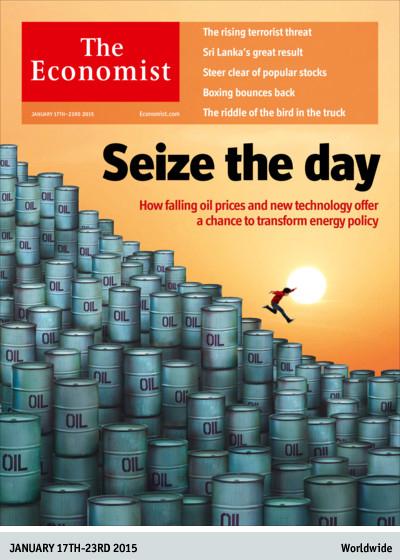
I wonder what they will complain about now, with oil prices tumbling to levels that nobody predicted.  "Peak oil" and the evil corporations together means soon we will be looking at $200 per barrel, they warned us.  The cold, hard, news of today is this:
Brace for $40-a-barrel oil.
So, whatever happened to that framework of the evil oil corporations that want to earn those huge profits?  Why are they now practically giving away gasoline at the pump?

Meanwhile, the company that I love to beat up on is as busy as ever storing its gazillions at tax havens, far away from the taxman and gets a free pass from the left-leaning folks who continue to target the oil companies.  Oh well, a strange world this is!

So, about that oil price.  How come from the experts to the conspiracy nutcases, everybody got it so wrong?  Well, re-read the Yogi Berra quote in the subject line!

Of, if you want an oil-specific quote:
When contemplating the future of oil prices, one should always keep in mind U.S. foreign service officer James Akins’ observation, “Oil experts, economists, and government officials who have attempted in recent years to predict the future demand and the prices of oil have had only marginally better success than those who foretell the advent of earthquakes or the second coming of the Messiah.” Akins wrote that in 1973.
Isn't that a lot more words than the simple Yogism? ;)

Ron Bailey, whose note in Reason is where that quote is from, includes another quote there from a Saudi billionaire who claims that oil will never go back up above $100 a barrel.  Say what?

In a commentary at Project Syndicate, is another interesting question:
should we expect $50 to be the floor or the ceiling of the new trading range for oil?
Say what?  This commentator expects oil prices to go well below $50?  Whatever happened to greedy oil companies and their profits?
economics and history suggest that today’s price should be viewed as a probable ceiling for a much lower trading range, which may stretch all the way down toward $20. 
Are you kidding me?
the marginal cost of US shale oil would become a ceiling for global oil prices, whereas the costs of relatively remote and marginal conventional oilfields in OPEC and Russia would set a floor. As it happens, estimates of shale-oil production costs are mostly around $50, while marginal conventional oilfields generally break even at around $20. Thus, the trading range in the brave new world of competitive oil should be roughly $20 to $50. 
Don't bet your farm on this, as they say.  Why?  I refer you to the Yogi Berra quote in the title.

A couple of years ago, I received a snarky email from a former student.  In the email, she referred to the stepped up production in the US thanks to fracking up the Bakken oil as evidence that I was bullshitting in the class.  (Ok, she didn't use the BS word.)  I wrote back to her that my worry has never been about exhausting the oil supplies or the price, but about the continued and expanded use of carbon as the source of energy and its impacts on global climate.  Even now, though it is awesome to fill up a tank at a remarkably low price, I do worry about the long-term consequences of a delay in energiewende.

Maybe I should not worry about tomorrow and, instead, seek consolation in the Yogism, "It's tough to make predictions, especially about the future."

Saturday, September 20, 2014

Question: Summarize in one word, "all talk and no shit"

Answer: Divestment.

As in fossil-fuels divestment.

This becomes yet another post on energy issues within the past few days, with the theme of Energiewende.

As much as I am in favor of consciously moving in the direction that is away from carbon, I get ticked off at the irresponsible and exaggerated claims from the uber-supporters and the uber-opponents of fossil fuels.  Bobby Jindal, whose state is a big time carbon-energy producer, wants to increase oil and gas extraction and, get this, accuses the President of--you may want to hold on to your chair before you read on:
On Monday, Louisiana Gov. Bobby Jindal (R) told attendees at a breakfast hosted by the Christian Science Monitor on Monday that the Obama administration was comprised of "science deniers" because of its energy policies -- even as he downplayed the role of energy production in the problem of global warming.
Yes, an accusation coming from the same Jindal who wants schools to teach students creationism and intelligent design in science classes where evolution is taught!  Seriously, this guy is a President wannabe?  Oh well, if Reagan and Dubya could have been presidents, for two terms at that, then why not this moron!

Crap, this post is about divestment and I am digressing. And about the dogmatic stupidity of the uber-opponents of fossil fuels.  Beating up on Jindal should not be interesting ;)

In the brainwashed college environment where critical thinking has long been dead, it is easy for faculty and students to get all high and mighty about doing good for the world without ever pausing to reflect on how many roads to hell have been paved with good intentions.  One fine institution after another, in response to pressure from students and faculty, then makes a grand announcement about getting rid of coal stocks from its investment portfolio.  Hey, whatever pleases the mob, right?

What the maniacal mob doesn't realize is this: universities divesting from coal won't make a damn difference to the goal of tackling climate change.  It is wonderful feel good rhetoric, no doubt, even better than when beauty pageant contestants wish for world peace.

The president of Pomona College, who is a chemist by training, writes:
Feel-good measures that have no effect on actual greenhouse-gas production are a diversion from the critical actions we must take before it is too late.
Exactly!
Symbolic actions have their place. But at colleges and universities, our first goal is to educate students to be skeptical about simple claims and to weigh competing values. Then we encourage them to build on their values to make a difference in the world. That will be done most effectively in the area of climate change not by headline-grabbing divestment decisions at individual institutions, but by helping to build a coalition and elect public officials for whom climate change is a compelling and urgent issue.
Exactly!
While there are many efforts in higher education that seek to solve climate change, from trying to foster carbon neutrality to divesting from fossil-fuel companies, we must rethink how colleges are dealing with this issue because, frankly, we simply have not had much success in changing corporate policies, bending the stubborn will of politicians, or capturing the hearts and minds of most Americans.
Now is the time to move well beyond symbolism and ideologies and create a movement driven by young people. Decades from now, they will be able to look back with a sense of achievement (and relief) and see their results. Let’s get on with that important work.
Exactly!  Somebody give this man a big prize already.

But then it is easier for students and faculty to unthinkingly call for divestment in this age of lazy Facebook activism!

Wednesday, September 17, 2014

Is my iPhone worth all the pollution in China?

The morning began with the sun rays gleaming in an odd yellowish hue.  A smoky day that would ruin my walk.

I hoped that the air would clear up, but it got worse.  Mid-afternoon, when I stepped out to get the mail, I yelled out to the neighbor across the street who was out on the porch: "stop smoking. It is killing me."

"Oh crap, I thought it was you" came the quick retort.

Another neighbor who was walking by chipped in with "it is Tim back there with his cigar.  His dog is even worse."

We laughed.

We could laugh about it because though the smoke--from the forest fires a few miles away--made our lives unpleasant, we knew it was temporary.  As the fires die down, and as the wind shifts, we will be back in paradise.

I attempted the walk, but gave up on that barely two minutes into it--inhaling the smoky air was putting a strain on my system.  If I cannot handle the little bit of smoke and particulate matter in the air for a day and have to even forego my favorite walk by the river, I cannot even begin to imagine the horror stories from China that I read about!
The environmental costs also are on display. The roads leading to Jizhong's mines, power plants and coal-preparation plants are covered in dust and soot, and large coal trucks drive in and out, kicking up debris.
Outside many of the company's compounds are plots of land where farmers grow apples, peanuts and corn to sell to local markets, and some landholders complain that the soot makes their crops unsalable.
"The ash from the power plant's chimneys is too much," said 67-year-old Yang Hexiao, who lives just outside a Jizhong power plant in Xingtai. "My clothes are covered in ash. The grain I dry on the roof is covered in ash."
I imagine myself traveling in Xingtai.  As I typically do when I travel, I will walk around the place observing people and things and taking photos and making mental notes.  Throughout all that, I will be breathing in the highly toxic air.  And might not ever come back alive!  (In that case, I bet quite a few of my colleagues will gladly pay for my trip to Xingtai ... hehehe!)

Are jobs worth all the destruction?  Do we love the latest iPhone and curved screen TVs and all other products from China so much that we don't care about the destruction, which is no exaggeration, to life and the natural environment there?

It is not Mandarin that we all need to learn, but one German word: Energiewende (pronounced in-ur-GEE-vend-uh)

Maybe one day I will be able to walk the streets of Xingtai without worrying about my lungs.

Tuesday, September 16, 2014

Energiewende is the zeitgeist word. No schadenfreude, please

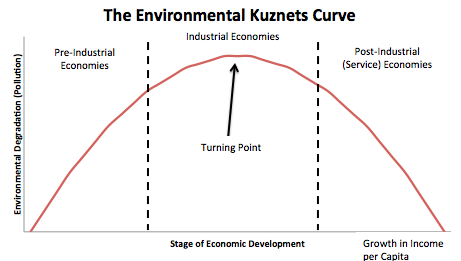
What if globally we are at, or at least close to, that worst point along the environmental Kuznets Curve, and things could only get better from now on?


Of course, I could be--and for all I know--completely wrong.  But then, keep this in mind: Nobody. Knows. Anything.

We try to make order of the chaos that the world is by connecting the dots.  It is, however, to some extent like how we connect the celestial dots--the stars--and give them "shapes."  But, we could connect the stars differently and come up with completely different shapes, right?  Of course, I am using the stars analogy only for illustrative purposes--here on earth, we can confirm with the passing of time whether or not the shape that I create is wrong and whether somebody else's is correct.

I suppose I am connecting a few dots out of my optimism.  A wish that we might be on to a path of screwing up the natural environment a tad less, and make it better.

It all begins with the world's factory--China--where "environmental anxiety is spreading."
This growing anxiety is reflected in the rising frequency of environmental protests. In the past year, people have taken to the streets in cities throughout the country to protest the building of coal-fired power plants, chemical plants, oil refineries, waste incinerators, and the like. According to Chen Jiping, a former leading member of the Communist Party’s political and legislative affairs committee, pollution is now the leading cause of social unrest in China.
Why this budding environmental consciousness now? The answer is simple: 2013 was, by any accounting, one horrific year for the environment. ...
China’s environment is a disaster. But by casting a bright light on the country’s severe pollution problems, the crises of the past year have stirred a greater environmental consciousness in the people. At the same time, they have spurred the country’s leaders to take more aggressive environmental action.
There is hope.

Meanwhile, the big European industrial power, Germany, continues to wage its seemingly lone war against climate change:
Germans will soon be getting 30 percent of their power from renewable energy sources. Many smaller countries are beating that, but Germany is by far the largest industrial power to reach that level in the modern era. It is more than twice the percentage in the United States.
Hence:
The word the Germans use for their plan is starting to make its way into conversations elsewhere: energiewende, the energy transition.
Germany's efforts involve China too:
Germany’s relentless push into renewable energy has implications far beyond its shores. By creating huge demand for wind turbines and especially for solar panels, it has helped lure big Chinese manufacturers into the market, and that combination is driving down costs faster than almost anyone thought possible just a few years ago.
But, it does not mean that all is well.  There is a catch:
Much concern is focused on Germany's reliance on brown coal, which harms the environment more than other types of coal, for a secure and affordable power supply. Last year lignite was the single biggest source of German power, generating 25.8 percent, and it has risen every year since 2010.
Greenpeace says no other country in the world extracts and converts as much brown coal into electricity as Germany.
"Germany is making itself a laughing stock because it hasn't set limits on brown coal," said Greenpeace's Karsten Smid, who wants the government to say when it will phase it out.
These lignite-based power plants (which is why Germans were technical advisers for the industry in the town where I grew up) are needed because, more than anything else, the renewables are intermittent.

I am confident a majority on this planet are in a situation where we can echo this:
“Indeed, the German people are paying significant money,” said Markus Steigenberger, an analyst at Agora, the think tank. “But in Germany, we can afford this — we are a rich country. It’s a gift to the world.”
Germany is not the only rich country, right?  We can all afford to begin to afford to experiment with Energiewende (pronounced in-ur-GEE-vend-uh) and make it a century of carbon in other ways than merely burning it up: