Showing posts with label indonesia. Show all posts

Monday, August 11, 2014

What is a country, and what is its basis?

There are book reviews and then there are book reviews.  There are reviewers and then there are reviewers.

I always loved Christopher Hitchens' review essays and his death was the end of the glorious days of the book review essay, I worried.  Not only does hope spring eternal but a bearded male intellectual from India continues on with that lively and lovely art of book review essays.

No, I am not that bearded male intellectual from India ;)  Unlike me, he has retained his youth and a mop of hair on his head!  Damn those people who have it all ;)  I am referring to Pankaj Mishra.
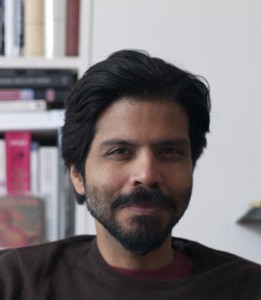
From Mishra's website
This post is not the first time I make a reference to Mishra--that was back in 2009.  Every time I read any of his essays, I am blown away by his command of the material and the masterful manner in which he employs the English language to get across this argument.  Though, there is always that air of pomposity, which again reminds me of Hitchens.  May this small tribe live long and prosper so that readers like me can continue to enjoy.

In the normal course of events, I would have blogged this a few days ago after reading his "A love letter to Indonesia" in the New Yorker.  But then I had far more important pieces to blog about--like சேவை ;)

That "love letter" is an essay in which Mishra writes about Indonesia, and more, while reviewing Elizabeth Pisani's "exuberant and wise travel book “Indonesia Etc.” (Norton)."  The first two paragraphs he writes before even introducing the book the reader are awesome.  Damn these writers! ;)

Mishra makes a number of wonderful observations, of which I liked the concluding paragraph quite a bit:
Indonesia is hardly immune to catastrophic breakdowns, as the anti-Communist pogrom showed. But, like India, it has been relatively fortunate in evolving a mode of politics that can include many discontinuities—of class, region, ethnicity, and religion. Indonesia can’t avoid or prevent severe conflict, but it can weather it without falling apart. The Indonesian archipelago is unlikely to descend into the violent secessionist anarchy currently on display in the Middle East and North Africa. However, what it still needs, as Geertz once argued, is a “structure of difference within which cultural tensions that are not about to go away, or even to moderate, can be placed and negotiated—contained in a country.” Such a reconfigured national consensus, or a way of doing without one, seems equally imperative in the case of Hispanic immigrants in America, Muslims in France, Palestinians in Israel, Tamils in Sri Lanka, Kurds in Turkey, and Tibetans in China. The old question—what is a country, and what is its basis?—has become menacingly relevant long after it appeared to have been settled. In that sense, it is not facile to wonder if we are all Indonesians now, facing the perplexities of a shattering old order.
What is a country, and what is its basis?  That summarizes pretty much every geopolitical issue of the day, right?
Israel.
Iraq.
Syria.
Ukraine.
DRC.
South Sudan.
Scotland.
... the list is endless, it seems.

As an exceptional book reviewer, Mishra always makes us think about more than merely about the book that is reviewed.  I suppose that is the role of the real intellectual, especially those with a whole lot of youth and hair!

Thursday, July 10, 2014

India, Indonesia ... Meh! All the same ...

A few hours after I landed in a sauna Chennai, father promptly handed me an envelope that I had asked him to hold for me, which he had faithfully done for more than a month.

Yes, merely an envelope.  Not because of any special postage stamp on it--it has been decades since the middle and high school years of stamp collecting.  Not because the envelope had any cherished letter inside.  Nor was I going to perform my version of Carnac the Magnificent either!

What was so special about it?

Because, it was a mail that I thought had been lost when it did not reach my parents even after two weeks,when typically letters got to Chennai from Eugene in anything from a week to ten days.  Three weeks and nothing. We wrote it off.

And then during one of our daily Skype sessions, father had an update.  The mail had reached them.

There was a reason for the delayed delivery.  One did not have to dig deep to solve that mystery because it was right there on the front side of the envelope itself:


Figured it out, Sherlock?


Yep, the envelope got sent to Indonesia!

Is it just me, or does interesting stuff happen to everybody too on such regular basis?  I find that the cosmos delivers to me more than I can possibly blog about ;)

Should be of interest especially to this old friend, who has been working and living in Jakarta for a while now, and will soon return to the sauna, er, Chennai ;)

(BTW, this is the only time ever, in all my twenty-seven years of mailing to the old country that there has been anything to write about the USPS that has been remarkably efficient, which often makes me wonder why there is all that fuss about the postal system.)

Speaking of Indonesia, did you catch the news about the election (non)result?

Sunday, November 06, 2011

Photo of the day: Eid al-Adha

Caption at the source:
Acehnese Muslims pray at Baiturrahman Grand Mosque during Eid al-Adha in Banda Aceh, Indonesia

Sunday, April 04, 2010

The dollar, Renminbi, Geithner, and India

Yes, those four belong in the same context because the US Treasury Secretary is in India, even as the world is getting more and more interested in the tensions over the US' concerns that China is holding its currency down at an artificially lower exchange rate.

First, these tidbits about Geithner and Obama:
During the early 1980s, Geithner's father Peter Geithner oversaw Ford Foundation's microfinance programs in Indonesia developed by Ann Dunham Soetoro, President Barack Obama's mother. Prior to that, Geithner Sr headed the Ford Foundation operations in India, which led to a toddler Tim spending his early years in New Delhi, where he had a crack at cricket but remained true to baseball.
So, tidbits aside, what is the Secretary thinking about these days with the China report due in less than a fortnight?
Geithner suggests, it is the level of comfort US has with India's transparency and fairness, compared with China, with whom Washington has been on the verge of an ugly spat over currency exchange rate manipulation. "The differences are mostly defined by the differences in our economies," Geithner said cautiously, reluctant to be drawn into a discussion on China. "We're not going to be talking in India about the exchange rate regime." India, he says, is "becoming more open, runs a flexible exchange rate regime. Its basic pattern in growth has been less export dependent, oriented over time. Different economy, different structure, different choices."
But, wait, the report on whether China is a currency manipulator is now delayed--it will not come out on the 15th after all ....
Meanwhile, according to the Financial Times:
In its latest estimate, the World Bank has predicted a growth rate of 9.5 per cent for 2010, but many analysts predict even faster expansion of the Chinese economy this year.
Growth in the first quarter alone is estimated at between 11 and 12 per cent.
...
But China’s trading partners, particularly the US, fear that its policy of holding down its exchange rate relative to the dollar is driving overseas demand for its exports which, in turn, is fuelling rapid economic expansion and inflation.
The Economist says that even if the April report does not cite China as a currency manipulator, then it will be only to give China one last chance:
The administration’s best hope is that China moves of its own accord before events in Congress or elsewhere force a confrontation. Tim Geithner, the treasury secretary, is surprisingly confident that China will act. Sander Levin, the usually interventionist-minded chairman of the House Ways and Means Committee which oversees trade matters, advocates multilateral rather than unilateral pressure. So perhaps the administration will give China one last chance and seek a multilateral remedy at the G20 in June. If China still fails to respond, the Treasury, by the time of its autumn report, will no longer be able to deny the obvious.
I tell you, we live in interesting times :)

Monday, March 29, 2010

Obama on torture: look back, or merely go forward?

A near-complete copy/paste of a Glenn Greenwald post--to excerpt would be gross injustice to his observations:
President Obama gave an interview earlier this week to an Indonesian television station in lieu of the scheduled trip to that country which was canceled due to the health care vote.  In 2008, Indonesia empowered a national commission to investigate human rights abuses committed by its own government under the U.S.-backed Suharto regime "in an attempt to finally bring the perpetrators to justice," and Obama was asked in this interview:  "Is your administration satisfied with the resolution of the past human rights abuses in Indonesia?"  He replied:
We have to acknowledge that those past human rights abuses existed.  We can't go forward without looking backwards . . . .
When asked last year about whether the United States should use similar tribunals to investigate its own human rights abuses, as well his view of other countries' efforts (such as Spain) to investigate those abuses, Obama said:
I'm a strong believer that it's important to look forward and not backwards, and to remind ourselves that we do have very real security threats out there.
That "Look-Forward/Not-Backward" formulation is one which Obama and his top aides have frequently repeated to argue against any investigations in the U.S.  Why, as Obama sermonized, must Indonesians first look backward before being able to move forward, whereas exactly the opposite is true of Americans?  If a leader is going to demand that other countries adhere to the very "principles" which he insists on violating himself, it's probably best not to use antithetical clichés when issuing decrees, for the sake of appearances if nothing else.
The New Yorker's Jane Mayer -- in the last paragraph of her new article documenting the multiple lies told by former Bush speechwriter and current Washington Post columnist Marc Thiessen in his pro-torture book -- offered the best summary yet as to why Obama's "Look Forward/Not Backward" mentality is so destructive:
The publication of "Courting Disaster" suggests that Obama’s avowed determination "to look forward, not back" has laid the recent past open to partisan reinterpretation.  By holding no one accountable for past abuse, and by convening no commission on what did and didn’t protect the country, President Obama has left the telling of this dark chapter in American history to those who most want to whitewash it.
Nothing enables the glorification of crimes, and nothing ensures their future re-occurrence, more than shielding the criminals from all accountability.  It's nice that Barack Obama is willing to dispense that lecture to other countries, but it's not so nice that he does exactly the opposite in his own.

Saturday, March 27, 2010

On Corruption

First, this graphic, from America's Finest News Source, about Chicago:

Of course, that was satirical. After all, it is from The Onion.

Foreign Policy--no satire publication--has a different take on corruption.  It questions whether there is "good" corruption versus "bad" corruption:
By the end of President Suharto's 30-year rule in 1998, Indonesia ranked as one of the half-dozen most corrupt economies on the planet, according to Transparency International (TI). Yet in those three decades, the country also experienced growth in per capita income of 6 percent per year, a rate almost unparalleled in recorded human history. The past 30 years have seen comparable economic progress in China: since the 1976 death of Mao Zedong, the Chinese economy has eclipsed even Suharto-level growth rates despite also holding position 79 in TI's latest ranking, tied with Burkina Faso.
This is not to say that corruption has been good for Indonesian and Chinese incomes (though many would argue it has been) -- perhaps they'd be even richer otherwise. But it certainly suggests that not all corruption is created equal.

Sunday, April 26, 2009

Nature re-models the landscape

Remember the nasty tsunami as a result of the Indonesian earthquake back in December 2004?
The Hindu has this photo-report

A beach, post-tsunami
— Photo: Vipin Chandran

POSITIVE FALLOUT: A beach that has formed at Puthype in Vypeen near Kochi after the December 2004 tsunami. Prior to the tsunami this area was under water.


Of course, a similar thing happened at Mahabalipuram too