Showing posts sorted by date for query death. Sort by relevance Show all posts

Thursday, November 17, 2022

Art and the future

During the orientation week, we new international students were given a choice of outings that we could sign up for.  The university provided transportation, and also paid for tickets if the place/event was not open for free to the public.

I signed up for an evening at The Hollywood Bowl.  I knew nothing about the setting nor the performer.  But, "Hollywood" I was familiar with.  I figured that I could not go wrong with an event that had Hollywood in its name.

It. Was. Goddamn. Awesome!  That was the best decision that I could have made.

I had never before been in an open-air facility with a large crowd for an evening of music.  The fact that it was music that was new to me mattered the least.  My only problem that evening was that I had no idea that Los Angeles cooled down a lot after the sun set on a summer day.  Totally under-prepared for the cool evening, I sat shivering towards the end of the show.

Choosing the Hollywood Bowl meant that I could not go to the other outing that was scheduled for that day--The Getty Museum.

In 1987, there was only one Getty, which is the one at Malibu, overlooking the Pacific.  It was years later that I finally went there, which was, ironically, after having visited the newer, bigger, and a lot more fantastic Getty Center tucked in the rolling hills from where one can get a good view of Los Angeles and the Pacific on the few days when the air is not smoggy brown.

The Getty museums were made possible by J. Paul Getty, who made his millions through oil extraction.  Oil, one of the fossil fuels that has been clearly identified as a cause of climate change, was how The Getty Center came to be.  I suppose this art collection is yet another piece of evidence that Pecunia non olet--money does not stink!

Getty's millions of dollars ought to remind us of Proudhon's bold and political assertion that "property is theft."  Oil, a fossil fuel, is a cause of climate change that is robbing from future generations in order for us to live a life of decadence.  Yes, I wrote "us" because you and I, too, are benefiting from this daylight robbery, even if we self-righteously proclaim that we are doing all the right things unlike "those" people.

As a commie-wannabe teenager that I once was, I completely sympathize with the young people who are so upset with the elders not doing anything about climate change that they have resorted to protesting at famous art galleries by even throwing paint and ketchup on paintings.


Caption at the source:
Gustav Klimt's painting "Tod und Leben" is seen after activists of Last Generation Austria (Letzte Generation Oesterreich) spilled oil on it in Leopold museum in Vienna, Austria, November 15, 2022.

Members of the group Last Generation Austria tweeted they had targeted the 1915 painting “Death and Life” at the Leopold Museum in Vienna to protest their government’s use of fossil energies.
After throwing the liquid on the painting, which wasn’t damaged, one activist was pushed away by a museum guard while another glued his hand to the glass over the painting’s frame.
The group defended the protest, saying in a tweet that they were protesting “oil and gas drilling,” which they called “a death sentence to society.”

I agree with the protesting youth's argument that we value art more than worrying about the destruction of the natural environment all around us.  We would rather spend gazillions on museums that treasure the past even as the future world that young people will inherit will be a dystopia that will be hotter than hell?

Meanwhile, estimates are that human population is now at 8 billion, and at least 2 more billion--perhaps even three--will be added before this century ends.  If 8 billion and more want to live like how we Americans live--and why shouldn't they?--and if we do not deviate from the path that we are on, well, the museums of the world, whose endowments come from stealing from future generations, will face a lot angrier youth who will not stop at mere vandalism.

Here in America, the political class, which is dominated by octogenarians and septuagenarians, has been extremely slow in reacting to climate change and is tone-deaf to the loud screams from the young.  There is only one clear solution: Send all those Medicare-eligible wannabe presidents, Senators and Congressmembers home and elect a new, younger, generation to power.


Monday, November 14, 2022

Books and authors make me think

There are schools, and then there are schools.  A lot can happen in one's life depending on the school.

Some of my cousins who lived in smaller towns deep south in peninsular India were highly impressed by the school that my siblings and I went to.  The buildings, the science labs, and English as the medium of instruction were a complete contrast to the schools that they attended.

I didn't know any better, until  I came to know about schools that were a lot more impressive.

Sometime during my middle school years, when students from a couple of other schools came to participate in what I would now refer to as an academic decathlon, I sensed that there were schools that were even better than mine.  Some of those students were from a "public school" and carried themselves with confidence that I did not think was achievable until one reached adulthood.
(A note to my fellow Americans: The "public schools" in India are private boarding schools modeled after the British ones.)

So now there was a new tier that I hadn't known about. Until then, I had only known about government schools, and tuition-funded private schools like the one that I attended.  A public school?

When I started following politics as a pre-teen, and when Indira Gandhi's younger son, Sanjay Gandhi, was all over the news for all the controversies that he generated before his aeronautical and acrobatic fall to death, I understood that there were schools that even among public schools there were highly exclusive ones like the Doon School that Sanjay Gandhi attended.

The commie wannabe in me began to understand that the typical government school student faced a lower chance of "succeeding" in life compared to the typical student in my school, and a typical student at my school would not stand a chance against the typical Doon School student.

I suppose it was one of many eye-opening revelations on the unfairness in life, which has been one of my favorite topics here in this blog.

A few months ago, we hosted my companion's acquaintance.  I was meeting him for the first time.  During the chat over cake and tea, he said in his fading British accent that his sons were finishing their high school education in India, at a public school.  He preempted my question; it was the high school that he attended and that was the reason for his sons to go there.

No foreign student came anywhere near our school!  And I have never been anywhere near the part of India where those exclusive public schools are located.  The India of public schools is not the India of private schools, which are certainly not the India of government schools.

I am now reading a work of fiction by an author who is a Doon School product.  The Calcutta Chromosome is by Amitav Ghosh, who was born and raised in India.  Wikipedia notes:

Ghosh was born in Calcutta on 11 July 1956 and was educated at the all-boys boarding school The Doon School in Dehradun. He grew up in India, Bangladesh and Sri Lanka. His contemporaries at Doon included author Vikram Seth and historian Ram Guha.  While at school, he regularly contributed fiction and poetry to The Doon School Weekly (then edited by Seth) and founded the magazine History Times along with Guha.

I doubt that there is any government school in India where students run a weekly publication.

Back in 2013, I wrote in a blog-post that Americans only get to see the successful Indians--here in the US or back in India--who are often people like Amitav Ghosh and me and many more, who come from privileged backgrounds.  Well, Ghosh was raised with a lot more privilege than I was.  A government run school in India rarely produces students who are able to make their way to America at a young age in pursuit of their educational or business dreams.  If only politicians and the public here in the US would understand that people like me do not represent the average person in India.


From the reunion in 2011.
The one wearing a dark shirt and holding a plastic bag is Vijay.

Sunday, November 13, 2022

Putting lipstick on a pig

Though I was new to the country, I immediately latched on to following American politics for all the drama that it provided.  When the campaign for the 1992 elections got underway, I was a seasoned pro compared to most Americans.

One of my favorites during that campaign was not a candidate but one who was gifted with awesome rhetoric and the sarcastic lines that she delivered with a deadpan and a sharp twinkle in her eyes--Ann Richards.

Sharply critical of President Bush's (the father, not the son) decision to send US naval ships to protect oil  tankers in the Middle East, Richards said "you can put lipstick on a hog and call it Monique, but it's still a pig."

While a few Americans may have been familiar with a version or two of that idiom, Richards saying that was the first time ever I had come across that expression and I loved it.  Of course, Richards saying that with her Texas twang and with an impeccable timing for the punch to land made it all the more exciting.

So, by the time Barack Obama used that expression of putting lipstick on a pig--it was during his first presidential campaign--I was familiar with it being a rhetorical ploy that never fails to excite the audience.

Electric vehicles (EVs) are nothing but vehicles with lipstick on the problems that vehicles are.

Four months ago, I blogged about the death of the small car market here in the US. The four-door hatchback, Honda Fit, that we rely on is no longer sold because Americans want bigger and bigger and bigger vehicles.  I wrote there that it is nothing but evidence of how the market system works.  The manufacturers are not to be blamed when American consumers are making it clear that they want bigger and even bigger!

This is why even in the EV market, the electric pickup truck was always talked about as the game changer for the EV industry.  Because, if those massive pickup trucks, and the SUVs that are nothing but "car-like" bodies on truck frames (talk about lipstick on a pig!) can become electric, then Americans will become gung-ho about EVs. 

But, what if the problem is not gasoline-powered vehicles vs. EVs, but the very fact that we have too many vehicles and that they are also huge?

This op-ed in MIT Technology Review reminds me about something that I had forgotten.  A year ago, President Biden went to Detroit to talk up the infrastructure spending that has been passed.

When Biden arrived at General Motors, he jumped behind the wheel not of a Bolt, the company’s electric subcompact car, but the new Hummer EV, a vehicle that’s the embodiment of everything wrong with the trajectory of vehicle design in the past couple of decades. After taking it for a spin, he declared, “That Hummer’s one hell of a vehicle.” Days later, GM announced that Biden’s publicity stunt had boosted reservations for the massive vehicles, so we’re likely to see more of them on the road.

A hummer that is powered by a battery pack is still a Hummer.  It is a bright red lipstick on a big fat pig!

The opinion essay continues:

EVs are often termed “zero-emission” vehicles because they produce no tailpipe emissions. But that doesn’t mean they are clean. Their large batteries require a lot of resource extraction from mines around the world, with significant environmental and human consequences that include poisoning water supplies, increasing rates of cancer and lung disease, and even making use of child labor. If we’re to embrace the transition being sold to us—one that relies heavily on electrifying personal vehicles—demand for key minerals will soar by 2040, according to the IEA, with an estimated 4,200% increase for lithium alone. The batteries in increasingly massive electric trucks and SUVs must be much larger than those needed to propel small cars or even e-bikes, which are not the focus of American policymakers or industry players. (They’d be far less profitable.)

The American fascination, fixation, on trucks and SUVs is why the Honda Fit is no longer sold here in the US.  A Honda Fit with a battery pack will not sell either, when consumers prefer a Honda Pilot with a battery pack instead.

The trend toward larger vehicles has had bad consequences for both road safety and the environment. Continuing  it through the transition to electric vehicles means that EVs will require bigger batteries, and thus more minerals will have to be mined to power them. But there are other options that can address some of those problems. 
As the shift to EVs accelerates and commodity prices increase, there’s good reason to promote smaller cars that cost less, require smaller batteries, are better suited for the trips most people take, and pose less of a threat to pedestrians.

To use the line that Dana Carvey often employed in his fantastic comedic impressions of President Bush, "not gonna do it."  Neither the industry nor the government (at any level) will work towards policies that promote small cars, public transit, denser cities, and a whole lot more that we need to do in order to address climate change.  Instead, we will spend a lot of money putting lipsticks on big fat pigs!

(I couldn't track down a short clip of Ann Richards delivering the lipstick line.  So, instead, I offer you the awesome one that made me absolutely thrilled with American politics when she addressed the Democratic convention in 1988)


Thursday, November 10, 2022

Karma, karma, karma, karma, karma Khamenei

As I get older, I notice that I am not as quick as I used to be in recalling details.  Sometimes, incidents and people have faded out.  It is no surprise then that my father recently commented that every so often he wonders if the events that he recalls really happened or whether he dreamt about them.

A good chunk of life fades in the rear-view mirror.  I suppose I should be glad that I am able to recall whatever it is that I am able to.

The principal of the wonderful school, where I was a lifer,  had plenty of laudable goals that were almost always badly executed.  We students had many mean jokes about him, and continue to do that even now whenever we get together. 

One of his goals was that students ought to be interested in local and global current affairs, which is why during the weekly assembly under the morning hot sun, we students stood there as one of his hand-picked favorites read out a few news stories for a couple of minutes. 

(No, I have never been any teacher's favorite.  Not anybody's.  Not even my parents' favorite. The story of my life!!!)

Once, the guy who read the important global news at the assembly was the younger brother of a classmate of mine.  When reading a few sentences about the Iran-Iraq war, he referred to the then-new leader of Iran, Ayatollah Khomeini, as "Mr. Ayatollah." The news junkie that I was even back then, I thought it was bizarre that he said "Mr. Ayatollah."  I can't help but smile even now, though decades have gone by. 

It was during the early stages of the Iran-Iraq war and The Hindu provided reports on the war every single day.  That war was a big reason why "Mr. Ayatollah" was often mentioned at the news reports during the weekly assembly.

"Mr. Ayatollah" Khomeini has been gone for a while.  There is another "Mr. Ayatollah" in place--Khamenei, who succeeded Khomeini, as if the theocracy was hell bent on making us as confused as one can be when watching the old Abbott and Costello routine on "Who's on first."

In yesterday's post, I referred to the Subcontinent as has always been in the middle of it all, with people coming in from the west or the north, and occasionally over the waters, despite being bordered by mountains in the north, desert in the west, and open waters around the peninsula.  Iran doesn't enjoy such naturally protective boundaries all around, and has truly been in the middle of it all, and this was also key to its magnificence:

It is not an accident that Iran was the ancient world’s first superpower. There was a certain geographic logic to it. Iran is the greater Middle East’s universal joint, tightly fused to all of the outer cores. Its border roughly traces and conforms to the natural contours of the landscape—plateaus to the west, mountains and seas to the north and south, and desert expanse in the east toward Afghanistan. For this reason, Iran has a far more venerable record as a nation-state and urbane civilization than most places in the Arab world and all the places in the Fertile Crescent. Unlike the geographically illogical countries of that adjacent region, there is nothing artificial about Iran.

India is a made-up country, an artificial construct.  Iran, however, has a long and rich history with a clear identity.

How do women fit into that identity?

A good number of women in Iran decided that they have had it with Khamenei and Khomeini defining womanhood.  Now, men too have joined their protests against the theocracy.

It is more than eight weeks of protests, which have not let up, and the world has not figured out how to respond to it.  Even doctors have taken to the streets chanting "death to the dictator."  The response from the dictator, Khamenei, has been brutal:

Security forces, mostly plainclothes agents, had set up positions around the building and vans were parked nearby to transport detainees. Then, without warning, riot police on motorcycles began shooting metal pellets at the crowd, two witnesses told The Washington Post. 

“They were shooting with guns, nonstop, everyone started running,” said a doctor who provided a written account of the attack. 

“They used shotguns [with pellets], batons and tear gas without any limitation,” another doctor recalled. “They beat a young woman dentist and an old physician about 70 [years old] on their heads and they fell on the ground.”

Back when I was in high school, I would never have imagined that forty years later Iranians would be fighting for their rights and risking their lives while protesting against "Mr. Ayatollah"!  Forty years.  Four decades under two Mr. Ayatollahs.  How godawful that such oppression is carried out under the name of god!


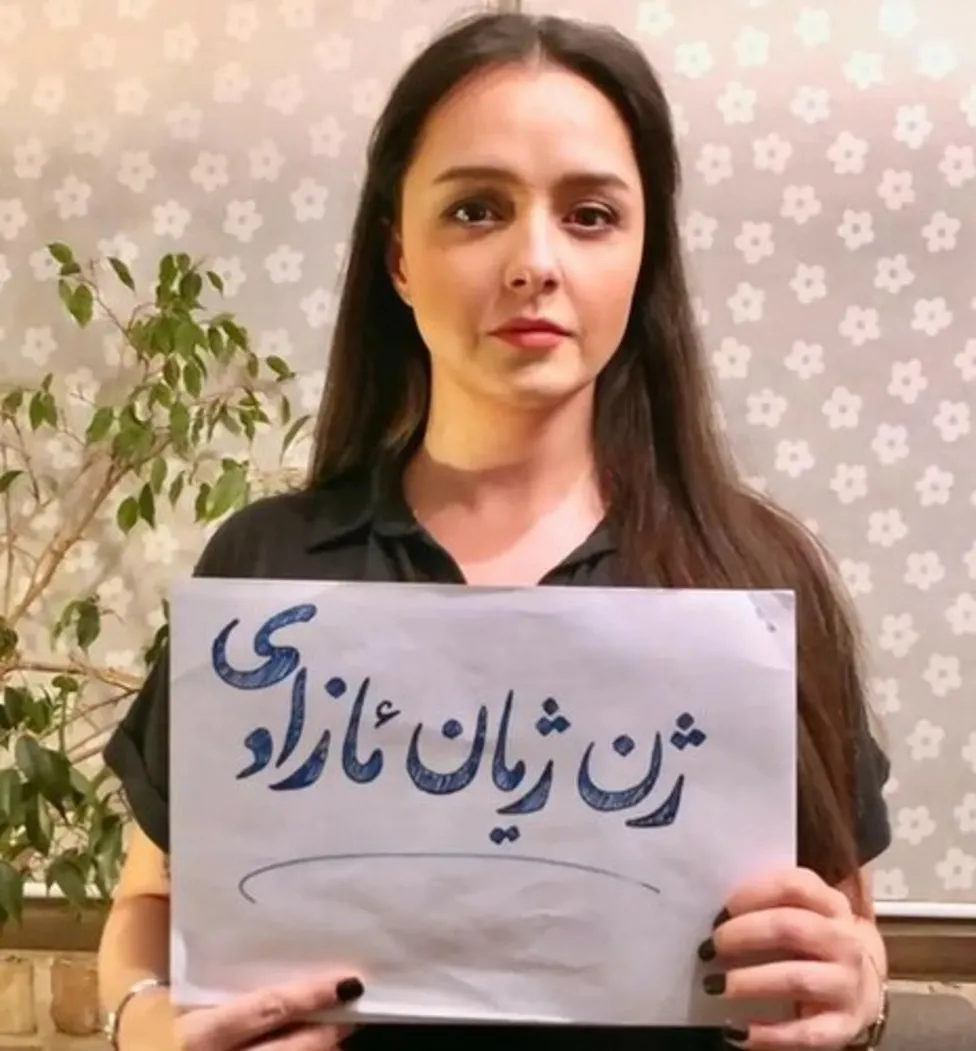
From the source:
A top Iranian actress has posted an image of herself on Instagram without a headscarf to signal solidarity with anti-government demonstrations.
Taraneh Alidoosti - best known for her role in the Oscar-winning film The Salesman - also held a sign reading "Woman, Life, Freedom" in Kurdish.

Friday, November 04, 2022

An ‘upgrade’ in extremism

About this time in November in 1938, the Nazi Party was getting ready to launch a major anti-Jewish terror campaign throughout Germany and Austria.  We recall with horror the two days of violence on November 9th and 10th as Kristallnacht.  The shattered glass at synagogues and Jewish stores marked the beginnings of the horror of the manic hysteria of the Nazis to address "the Jewish question" to which the Holocaust became their "final solution."

Jai Chakrabarti's novel brings together the final days at an orphanage in the Warsaw ghetto, Jewish immigrants in New York, and a fictional village in India's Bengal.  Before you conclude that this post is a book report or a review, well, it is not.

This post is about the political developments in Israel, and about the rapid emergence of the far right in Israel and in other democracies.

Given the sheer horror of the holocaust, I would imagine that the children and grandchildren of the survivors would certainly want to protect themselves.  Israel as a high security state is completely understandable. 

But, I also imagine that those who remember the horrors would also be welcoming towards the other.  Or, at least tolerate the other.

The results of the recent elections in Israel suggest that Israeli politics has swung to the far, far right of the political spectrum.

The third largest party in the Israeli parliament is a party that derives its ideological inspiration from the most extreme strand. Now, the leader of one element of this party is Ben Gvir, who everyone in Israel considers to be the big winner of the election. He’s a lawyer who tends to represent Jewish murderers of Palestinians, who commit terror acts, not in uniform, as civilians. Just before [Israeli Prime Minister Yitzhak] Rabin’s assassination [at the hands of a Jewish extremist in 1995], he appeared in a famous TV clip with the emblem of Rabin’s car, and he said, “We got to his car, and we’ll get to him, too.”

More on Gvir and his party:

He has, for instance, proposed that Palestinian citizens of Israel and Jewish leftists be stripped of their citizenship. 

He is a serial inciter. He’s the one who would lead the marches where there are chants of “Death to the Arabs.” Last night, at the gathering was “Death to the Terrorists” with a smirk. They’d replaced the Arabs with terrorists, but that’s how they define terrorists, so it’s pretty much the same there. 

However, it’s important to not fall into the trap of just seeing this as an aberration. It might be an “upgrade” in extremism, but I think it’s correct to place this on a continuum of the absorption into Israeli politics of the most extreme.

It is beyond my understanding how the descendants of the Holocaust can engage in ultra hateful rhetoric towards people who do not look and think like them.

There are a number of worrying areas where the newly powerful Israeli far right still stands out. Among them: Calls to expel Arabs who do not support Israel; intolerance of Israel’s large LGBT community and other nonobservant Jews; and a seeming acceptance of the necessity of violence.

There is no rational way that I can begin to understand this.  Israeli politics has swung so right that the Labor Party "is on the threshold of extinction."  The party that had leaders like its Golda Meir, Yitzhak Rabin, and Shimon Peres.  Now, the Labor Party has become irrelevant in Israel!

In India too the far right has become so powerful and mainstreamed that the traditional Congress Party barely wins any electoral victory and has an insignificant presence in the federal Parliament.  In Israel, the far right rhetoric resembles Jewish supremacy; the far right rhetoric here in America is White Christian supremacy; Hindu supremacy defines the far right rhetoric in India.  In France, Hungary, and even in Warsaw's Poland, far right politics have become powerful.

The far right here in the US launched a violent assault on the Capitol, and yet voters apparently are ready to give more power to the party that is home to these supremacists.  Many of these supremacists are anti-Semitic too.  

It is almost as if we did not learn any lessons from the Nazis and the Holocaust.  It does seem like we are actors on a stage in, as Jai Chakrabarti has titled his book, A Play for the End of the World.

Thursday, October 27, 2022

25 Years of Dignity

I suppose I inherited from my father the gene that makes me a compulsive planner.  Of course, the "gene" that makes me a compulsive planner doesn't exist.  It is a behavior, which means that it can be easily changed as well.  Planners can become impulsive, and non-planners can learn to plan ahead.

It is a fine line that separates planning for one's life from the person becoming a worrywart.  While worries about the future are incentives to plan ahead, those worries can also preclude constructive action.  I like to think that I am a planner who thinks ahead as much as possible, fully aware that shit happens.  Like an unplanned career-ending layoff.  Planning ahead prepares us for the shit that can happen anytime, anywhere.  One of life's greatest lessons is that rarely does anything go according to plans. We can at least mitigate the effects that can otherwise be disastrous.

Planning is different from overthinking, especially because "excessive planning can have other negative effects including exacerbating worries."

For instance, when planning carefully, it’s tempting to try to predict all the things that could possibly interfere with a plan and how to potentially handle such events should they occur, thereby initiating a process of worry. Others plan meticulously because they believe that they won’t be able to cope otherwise, which can lead to excessive worries when planning isn’t possible or unexpected events arise.

Unexpected events always arise.  Life is a series of events over which we rarely have any control, though we like to claim agency when the outcomes are good.

While a career-ender is one thing, end of life is completely another.  There is no escaping death that awaits us all.  How does one plan for death?  Should one plan for that final event?  We plan for retirement.  We develop plans to travel, even if all it means is developing a bucket list.  Shouldn't one plan for kicking the bucket too?

Like many, I hope that I will quickly and painlessly go at a sweet spot in life.  As one who compulsively plans, I have been an ardent supporter of dying with dignity.  Should my physical and/or health conditions fail, I want to be able to exit this world with dignity. 

It is not a coincidence that my first newspaper commentary after moving to Oregon was in support of the state's Death with Dignity Act, which the "pro-life" Republicans were all too keen on dismantling.

If you think that only recently have Republicans gone off the deep end, I need to remind you about the Terry Schiavo tragedy in the public sphere.  It was godawful. 

Schiavo was a young woman whose medical conditions resulted in an irreversible vegetative state.  Her husband was ready to release her from this suspended state, but her parents opposed and sued.  When the courts agreed that Terry Schiavo would have wanted the doctors to unplug her from the machines, Republicans took it up as cause célèbre. 

From DC--yes, the same Republicans who yell and scream that Washington should not dictate--Republican senators adamantly stood against pulling her plug, in order to defend the sanctity of human life.  Their leader in the Senate at that time, Bill Frist, who is a Harvard medical school product, even made his own diagnosis--without having ever met the patient!  Not to be left out, President W. tried to influence the case through his executive authority.

I tell ya, the GOP has been home to nothing but nutcases and maniacs.  That is how we ended up with tRump and trumpism!

Finally, after almost two decades in a vegetative state, Schiavo died in 2005 when the court-ordered removal of feeding tubes was carried out. 

By then I was already an Oregonian.  And had already authored an op-ed on the state's Death With Dignity Act.  I wrote that in late 2002, soon after I moved to Oregon in response to the Bush administration's effort to overturn the Oregon law.  That effort was led by a religious fanatic John Ashcroft, who was the then Attorney General.

How many terminally ill patients in Oregon chose to exit this planet on their own terms?

It is easy to answer that question: "The Act requires the Oregon Health Authority (OHA) to collect information about the patients and physicians who participate in the Act and to publish an annual statistical report."  Last year:

As of January 21, 2022, 238 people had died in 2021 from ingesting the prescribed medications, including 20 who had received prescriptions in previous years. Demographic characteristics of DWDA patients were similar to those of previous years: most patients were aged 65 years or older (81%) and white (95%). The most common diagnosis was cancer (61%), followed by neurological disease (15%) and heart disease (12%)

And over the years?


In the "local" newspaper (not really local for a couple of years now) a local politician writes: "This month marks the 25th anniversary of Oregon's Death With Dignity Act; in approving the law, Oregon was the first state to authorize medical aid in dying."

The commentary is in line with my preference--it makes it personal.

My mother was a member of the Hemlock Society and taught me from an early age how critical it is for all of us to have agency over our bodies, our lives and our deaths. ...

Inspired by my mother’s example, I have begun end-of-life conversations with my children and family in the hopes that I can provide them with the gift of peace that my mother gave me. In honor of this important anniversary, I encourage my fellow Oregonians to do the same.

Not only Oregonians; I hope people think about these issues wherever they live.  After all, death does not care for geography.

At the very least, we could all benefit from having the most difficult conversations and making clear one's end of life choices, of which Death with Dignity or going to Zurich are at the far end of the continuum.  After all, we talk shit all the time.  We have time for sports. We talk endlessly about the only President who was impeached twice.  We talk forever about the weather, for heaven's sake.  We definitely have time for this important conversation.

If you want some ideas on how to go about having such a talk with your people, check out the resources here. 

In the meanwhile, enjoy the precious gift of life!

Thursday, October 20, 2022

The luck of the draw

They wheeled me into the Procedure Room.  I think that is what I read as the nurse made a tight, right turn through the doorway.

I suppose that's what a colonoscopy is.  A procedure.  Before that process began, the doctor introduced himself.  He would have known about my India roots from my name and looks.  His name, too, was distinctly Indian, and most likely Tamil.  But, this was not the place to talk about our Indian connections.  It was the Procedure Room.

Is there any colorectal cancer history in my family, he asked.

Thankfully, there is none.

The blood-related extended family has a pretty solid health record, which is why there are many who have outlived the average life expectancy for their cohorts.  Even during my recent extended visit to India, I talked about this with my parents.  When chatting about these health issues, my parents are always thankful--and so am I--that there is no history of dementia through the generations that they can recall.

Whether or not there is a genetic component in dementia is immaterial to me.  It immensely comforts me that for quite a few generations men and women have lived long enough without losing their sense of self.  We have lucked out. 

But I don't want to be the first either.

I have always been terrified of Alzheimer's.  One does not have to look beyond this blog for posts on this issue. 

Way back, when I was barely thirty years old, which was the first time that I worked out a legal document on end-of-life preferences, I told the attorney friend that my greatest worry was that I would end up with dementia. With Alzheimer's. Dennis laughed.  "Alzheimer's won't be your problem at all, but somebody else's."

Of course I do not want to end up being a burden to somebody. That is secondary, however.  I worry about the scenario where I am no longer aware of who I am.  The body being here without the mind not knowing the self is a nightmare that I would rather not have.  To be unable to recognize friends and family, or being unable to recall whether I had breakfast leave alone what I had for breakfast ... it is not a simple Halloween scare.

I got a sample of that disease after I was wheeled out of the Procedure Room: I have no memory of wearing my clothes, putting my shoes on, walking out, being driven home, having lunch, and talking throughout to the point of repeating things.  Not even one of those activities I remember having done, yet I apparently did.  To live like that day after day, for years, is a scare that I hope I will successfully dodge like how my bloodline has done in the past.

As one who loves living the life of the mind, and with thinking as my profession and hobby, I shudder to think that I could lose it and then be around without actually being around.  I have been waiting for some kind of a development that would nuke Alzheimer's before it actually begins.

When I moved to Oregon, my first commentary in a newspaper was about the state's Death with Dignity law.  That wonderful legal structure does not apply to Alzheimer's because of the requirement of a diagnosis of a terminal disease with a statistical probability of death within six months.  While Alzheimer's is terminal in many ways, there's no definitive six-month time frame.  Oregon's Death with Dignity does not offer anything for a person like me who doesn't want to exist with the dreaded disease.

One can, therefore, see why I would want to read Amy Bloom's memoir, In Love.  Bloom writes about "her husband's [Alzheimer's] diagnosis and her quest to help him end his life in the manner he chose."  Bloom's husband, Brian Ameche, chose to exit on his own terms by going to Zurich, Switzerland, where he could legally get medical assistance to end his life.

Ameche wanted Bloom to write about this, and she did.  It will be a tough read, I am sure.  I hope that I would never need a one-way ticket to Zurich.

As I was wrapping up this post came the news that a 10-month old baby of a friend died.  The baby was born with Down Syndrome.  Life is godawful sometimes!

The tragic death of that 10-month old is relevant also because of the connection between Down Syndrome and Alzheimer's, which I blogged about in 2014:

Down syndrome is a genetic disorder that's best known for causing intellectual disability. But it also causes Alzheimer's. "By the age of 40, 100 percent of all individuals with Down syndrome have the pathology of Alzheimer's in their brain," [Michael Rafii director of the Memory Disorders Clinic at UCSD] says.

I will end by re-posting the video of Seth Rogen canvassing the US Senate for funding for Alzheimer's research.  I wish that scientists will crack the case soon.


Tuesday, October 18, 2022

Do not try to talk to me after I am dead

Many years ago, back when I was a professor before my former employer laid me off in a Zoom session, a student asked me a simple question.  Why are science fiction movies always dystopian, she asked.

I was not teaching any course that dealt with science fiction.  As it happens in any class discussion, we had taken a detour.  This time, it was about The Matrix.  She then came to my office to continue to talk about that movie and the larger issue of the dark futures in science fiction movies.

As I did when any student asked me a question, I led her to explore it on her own by posing additional questions.  She was one of the few students who liked reading and thinking, and she wrote well too, which was unusual.  (Later, a couple of terms into graduate school, in an email she appreciated how much another faculty and I had prepared her, and how many of her classmates found it difficult to write quality papers in the grad program.)

Perhaps I led her on a path that I preferred, and she concluded that science fiction is typically dystopian because that's what makes them interesting.  Happy forever does not ring true.

The dystopian science fiction suggests that a future with abundance, and free of diseases and other causes of displeasure, is not one that we might enjoy.  It is a strange notion that troubles, pain, suffering, help provide us with meaning to our lives and ease our existential angst.  And that is what we read and see in science fiction too.

It used to be that science fiction writers, movie-makers, were men.  Well, most of the storytelling, especially in movies, was by men.

(In the case of The Matrix, the two brothers who came up with the movie and directed it later went through gender transition: Andy Wachowski transitioned to Lilly Wachowski, Larry became Lana.  They now go as the Wachowski sisters.)

Vauhini Vara's The Immortal King Rao is dystopian.  A dystopian work of fiction that is authored by a woman.  But this is not really new, even in this blog.  A few months ago, I wrote about Tahmima Anam's The Startup Wife.  While not truly dystopian, this female-authored novel wants readers to think about the direction in which software is leading us. 

In the not too far future that Vara fictionalizes, technology seems to have developed enough to upload one's consciousness. In Anam's story, technology allows people to communicate with the dead.

Do we want such a future?

MIT Technology Review--clearly not from the world of fiction--asks: "Technology that lets us “speak” to our dead relatives has arrived. Are we ready? Digital clones of the people we love could forever change how we grieve."

No longer in the future.  It "has arrived."

The author of that essay is Charlotte Jee, and Charlotte is conventionally a female name.  Everywhere I turn, I see female authors!

Jee writes about testing out an app called HereAfterAI.  "The company’s goal is to let the living communicate with the dead."

For some, this tech may even be alarming, or downright creepy. I spoke to one man who’d created a virtual version of his mother, which he booted up and talked to at her own funeral. Some people argue that conversing with digital versions of lost loved ones could prolong your grief or loosen your grip on reality. And when I talked to friends about this article, some of them physically recoiled. There’s a common, deeply held belief that we mess with death at our peril. 

I understand these concerns. I found speaking to a virtual version of my parents uncomfortable, especially at first. Even now, it still feels slightly transgressive to speak to an artificial version of someone—especially when that someone is in your own family.

But I’m only human, and those worries end up being washed away by the even scarier prospect of losing the people I love—dead and gone without a trace. If technology might help me hang onto them, is it so wrong to try?

Yes.  It is wrong.

AI has progressed in its ability to mimic specific physical voices, a practice called voice cloning. It has also been getting better at injecting digital personas—whether cloned from a real person or completely artificial—with more of the qualities that make a voice sound “human.” In a poignant demonstration of how rapidly the field is progressing, Amazon shared a clip in June of a little boy listening to a passage from The Wizard of Oz read by his recently deceased grandmother. Her voice was artificially re-created using a clip of her speaking that lasted for less than a minute. 

As Rohit Prasad, Alexa’s senior vice president and head scientist, promised: “While AI can’t eliminate that pain of loss, it can definitely make the memories last.”

Don't these scientists have real and urgent problems to address?  Like fighting climate change?  Or finding a cure for cancer?

“The biggest issue with the [existing] technology is the idea you can generate a single universal person,” says Justin Harrison, founder of a soon-to-launch service called You, Only Virtual. “But the way we experience people is unique to us.” ...

The first incarnation of the service, which is set to launch in early 2023, will allow people to build a bot by uploading someone’s text messages, emails, and voice conversations.

Storytellers have always warned us about a dystopian scientific future.  I suppose the future always arrives faster than we expect.

Wednesday, October 05, 2022

If the spirit moves you ...

In the highly commercialized America--well, the entire world--retailers always want to promote some holiday or other, even if those special days are far, far away.  

In my early years in America, there was nothing said about Halloween until the last week or so of October.  Those were the old days.

Now, right after Labor Day, people start talking about pumpkin spice latte.  Stores begin to promote Halloween.  A few homes already have Halloween decorations all over the houses and front yards!

(No, there weren't any Rosh Hashanah sales.  I don't expect to see Diwali deals either.)

It is not like I look forward to Halloween.  Or Diwali, for that matter.  I stay in character as General Malaise!

In the old country, there was no Halloween.  Maybe things have changed now, like how many aspects of life have changed: "Some forever, not for better | Some have gone and some remain."

I suppose the "fancy dress" parties in the old country were the closest to wearing strange costumes at Halloween.  From the colonizers, the elites picked up the idea of high tea and fancy dress (costume party.)  The wannabe elites in the township too had to have these.  Of course, I did not participate in any fancy dress competition.

Until I came to the US, I had no idea about Halloween when kids go trick or treating and load up on candies.  Strangely enough, I don't recall any of the fictional works that I read referring to Halloween.  But then Steinbeck and Saroyan had weightier issues to write about.

The Hindu life in which I was born and raised offered plenty of "fancy dress" and ghosts throughout the year.  No special day was ever needed. 

As a kid, I was terrified of the image of Bhadrakali.  I had yet to learn that those were not photos of the god but were artistic renderings of vivid imaginations.  I was sure that Bhadrakali would make my young life miserable if I did anything wrong.  Yes, I have always been a wuss; thanks for asking.

According to people, ghosts were everywhere, especially in tamarind trees.  For whatever reasons, some believed--yes, believed--that tamarind trees were the favorite "haunts" for ghosts. 

One of the many charming aspects to our home in the township was the number of trees in the compound.  I forget the precise count, but, as I recall now, there were six tamarind trees, eight mango trees, one cashew nut tree, and a couple of trees that did not yield any edible fruits.  It was a jungle out there, come to think of it.  By the gate was a giant tamarind tree.  It was the biggest of them all. 

Even in the best of the lighting, the compound was in semi-darkness after the sun set, and some of the trees were in utter darkness.  Most of this huge tamarind tree by the gate was in the dark.  It is, therefore, easy to imagine that some of the school friends coming over wanted to get past the tree as fast as they could.

But, my siblings and I were never afraid of that tamarind tree.  The tree was always there from the time we remembered the world.  We didn't think about any spirits there.

Every single night was Halloween spooky only to those who saw the tamarind tree differently!

And then there were those times when ghosts presented themselves through people.  Like how my dead  grandmother "appeared" through my cousin.  I watched the spectacle, which is what it was to me.  I was convinced then, as I am now, that dead people don't re-appear.  The cousin was putting on one hell of a Halloween show, and had his fifteen minutes of fame in the family lore.

A couple of decades ago, a middle-aged friend died after an unsuccessful battle with cancer.  He and his wife talked about and sorted out the practical issues, especially dealing with their two young girls.  The wife also told him that if there was a way that he could communicate with her after his death, well, he should.  He agreed.  But, she never heard from him.

The older I get, there are times when I wonder, like my father recently did, if what I recall are events that happened or whether they are merely figments of my wild imagination. 

Aging is one hell of a strange experience and is the ultimate trick-or-treat event in life, with different costumes and make-up at every stage!

All the world's a stage,
And all the men and women merely players;
They have their exits and their entrances,
And one man in his time plays many parts,
His acts being seven ages. At first, the infant,
Mewling and puking in the nurse's arms.
Then the whining schoolboy, with his satchel
And shining morning face, creeping like snail
Unwillingly to school. And then the lover,
Sighing like furnace, with a woeful ballad
Made to his mistress' eyebrow. Then a soldier,
Full of strange oaths and bearded like the pard,
Jealous in honour, sudden and quick in quarrel,
Seeking the bubble reputation
Even in the cannon's mouth. And then the justice,
In fair round belly with good capon lined,
With eyes severe and beard of formal cut,
Full of wise saws and modern instances;
And so he plays his part. The sixth age shifts
Into the lean and slippered pantaloon,
With spectacles on nose and pouch on side;
His youthful hose, well saved, a world too wide
For his shrunk shank, and his big manly voice,
Turning again toward childish treble, pipes
And whistles in his sound. Last scene of all,
That ends this strange eventful history,
Is second childishness and mere oblivion,
Sans teeth, sans eyes, sans taste, sans everything

Sunday, October 02, 2022

No peace for all?

I read in the news that TFG made a racist and misogynistic comment about Elaine Chao, who is married to the GOP's leader in the Senate, Mitch McConnell.  And, TFG essentially issued a death threat against McConnell.

Meanwhile, an uber-trumpy Congresswoman from Georgia takes violent rhetoric to a new low:
We have diverged a long, long way from the nonviolence championed by MLK here and Gandhi in the old country.  I wrote in a column that was published on this day six years ago: "The political rhetoric during the past year seems to have been anything but peaceful and nonviolent."  To refresh your memory, it was a year of TFG as a candidate, and my commentary appeared a month before the fateful election in which millions of my fellow Americans chose violence, racism, and plain indecency in their mad pursuit of power.

Of course, when I wrote that sentence, I--like the rest of the country and the world--could never have imagined that TFG would orchestrate violence against Congress that had assembled to certify the 2020 election results.  I suppose when one goes down the path of violence, there will only be escalation; the violent people are not going to have any Damascene conversion to nonviolence and peace.

I timed that column with Mohandas Karamchand Gandhi's birth anniversary.   He was born on October 2nd, 1869.  On this October 2nd, I am re-posting here my column from 2016.

****************************************

The United Nations marks Oct. 2 as the “International Day of Nonviolence” for a very good reason — it is the birthday of Mohandas Karamchand Gandhi, popularly known as Mahatma Gandhi.

Gandhi, who was born in 1869, led the independence movement that, in 1947, resulted in the creation of two new countries of India and Pakistan and, with that, the end of the British Raj. The struggle for freedom, in which Gandhi passionately urged his followers to observe non-violence even against the colonizer’s brutal force, inspired many others, including Martin Luther King Jr.
Life is full of tragic ironies — Gandhi and King, the champions of peace and nonviolence, fell to bullets aimed at them. Unlike Gandhi, who was assassinated in 1948, King had not lived long enough to live in the promised land of freedom.

Albert Einstein summed it up best for all of us when he wrote about Gandhi that “generations to come, it may well be, will scarce believe that such a man as this one ever in flesh and blood walked upon this Earth.” On Gandhi’s birthday, it certainly will help us all to be reminded, as the U.N. puts it, of the human desire for “a culture of peace, tolerance, understanding and non-violence.”

In the contemporary United States, any talk in the public space about peace and nonviolence is rare. Politicians of all stripes want to prove how much tougher they are than the other, out of a fear of being labeled a wimp. This has been especially the case since the fateful events on Sept. 11, 2001. At the national level, the “tough” ones smell blood when an opponent does not talk of war. At this rate, even those running for the office of dogcatcher will have to prove their toughness.

Of course, violence is more than merely engaging in war. The political rhetoric during the past year seems to have been anything but peaceful and nonviolent. A new day begins with attacks on yet another person or group of people, based on whatever cultural trait is deemed to be the “wrong” one for the moment. Even I, as insignificant as one can be in the political landscape, have been a target for those who are seemingly at ease with offensive words and rhetoric.

While words, unlike sticks and stones, do not break bones, the violence conveyed through words causes plenty of harm. In the noise and confusion of the violent rhetoric that surrounds us in the real and cyber worlds, we seem to have lost a fundamental understanding of what it means to be human.

One of Gandhi’s favorite prayers says it all about being human: It is to “feel the pain of others, help those who are in misery.” Unfortunately, the rhetoric and practice these days is far from that interpretation of humanity.

When it comes to the terrible humanitarian crises, like the situation in Aleppo, Syria, it is depressing and shocking to see how quickly we closed ourselves off from the “pain of others” and how easily we refuse to “help those who are in misery.” We have refused to budge even when the screens all around us flashed the images of Aylan Kurdi — the toddler who was found dead, face down, on a beach — or the five-year-old Omran Daqneesh, whose dust- and blood-covered face looked dazed and confused.

Meanwhile, all around the world, the number of people displaced from their homes continues to increase. The United Nations estimates that by the end of 2015, the number of people who have been forcibly displaced from their homes reached 65.3 million. The U.N. High Commissioner for Refugees, Filippo Grandi, noted that “at sea, a frightening number of refugees and migrants are dying each year; on land, people fleeing war are finding their way blocked by closed borders. Closing borders does not solve the problem.”

As I write, peace and nonviolence seem to be evaporating even in Gandhi’s old lands of India and Pakistan. Tension between the two countries is at such high levels that commentators wonder, and worry, whether the neighbors are getting ready for yet another war. As often is the case with these sibling countries, this time, too, the fight is over Kashmir, but with plenty of nuclear bombs on both sides of the border.

We shall certainly overcome, in the long run. In the meanwhile, on the International Day of Nonviolence, like the stereotypical beauty pageant contestant, I, too, wish for world peace.


Thursday, September 22, 2022

When women rise in anger ...

Way, way back in January 2008--yes, that long ago--in my Register Guard column, I wrote about the global importance of the year 1979:

If ever there was a competition for which year since World War II will qualify for the title of Annus Horribilis, 1979 could be a leading candidate. First, a list of some of the events from that year: 

    • Jan. 16: The shah of Iran flees the country, and goes into exile. 
    • Feb. 1: Ayatollah Ruhollah Khomeini returns to Iran, and is warmly welcomed by millions of Iranians. 
    • April 4: Former Prime Minister Zulfiqar Ali Bhutto is hanged in Pakistan. 
    • July 3: President Jimmy Carter signs a directive to support the opponents of the pro-Soviet government of Afghanistan. 
    • July 16: Saddam Hussein becomes the president of Iraq. 
    • Nov. 4: Americans in the U.S. embassy in Tehran are taken hostage. 
    • Nov. 20: Armed dissidents stunned the ruling Saudi family by seizing the Grand Mosque in Mecca
    • Dec. 25: The Soviet Union begins to deploy troops in Afghanistan.

Look at that list again.  Think about the global ramifications of those events.

Iran is in the news again because the women are out on the streets protesting against the regime.  

The demonstrations, led mostly by women, broke out in more than a dozen cities and on university campuses in Tehran. They were prompted by the death on Friday of Mahsa Amini, 22, who had been arrested three days earlier in Tehran for allegedly violating Iran’s hijab law, which requires women to cover their hair and wear loosefitting robes.

Women protesting on Monday took their head scarves off and waved them in defiance.

The theocratic regime has been utterly misogynistic ever since it gained power in 1979. 

It is godawful how women are held under force by bearded mullahs!

The mullahs have already started clamping down on the internet in Iran:

This is not the first time that women and young men of Iran have taken to the streets.  All the previous protests were violently and forcefully crushed.  It is not easy to predict what these protests will lead to:

One thing is for certain: Women in Iran are "mad as hell and not going to take it anymore."  I, for one, hope  that they will successfully topple the mullah regime!

Tuesday, September 20, 2022

The best time to travel

Pattamadai was one grandmother's village, and Sengottai was the other's.  They were not even forty miles apart, but boy was it a pain to travel from one place to another!


It took almost five hours from the time we left one doorstep and walked into the other grandma's home.  Five tiring hours for forty miles of travel via public transport buses!

The main road in Sengottai

The bus stop at Sengottai was practically in my grandmother's backyard.  We would be at the stop by the post office a few minutes before the time that the bus was scheduled to arrive there.  And then the long bus ride, with stops that seemed to occur every two minutes.

The bus stop at Pattamadai was a long, long walk from home.  It always which seemed infinitely longer on those sunny and hot summer days.
The road home from the Pattamadai bus stand
Walk we did if we didn't have anything heavy to carry.  If not, via letters--the ancient days before even landlines became common--we would have pre-arranged for a bullock-cart.  Yep, bullock-cart.  We kids then competed for the car equivalent of "riding shotgun."  To sit up front was very exciting, even with the oxen farting and shitting as they walked.

We couldn't complain much about such travel conditions because the elders had even worse stories from their childhood days.  The complicated logistics and travel that took up an entire day were big reasons why they rarely traveled at all.  If it was out of the range of a bullock-cart ride, well, forget about it then.

A few of the extended family getting set for a short trip, about 60 years ago
(From parents' collections)

Travel was so arduous that elders always consulted the almanac to chalk out auspicious days, which seemed to assure them that they would safely return after completing a productive trip.  

It was just us three siblings traveling one summer.  We got bored at Pattamadai and got tired of the heat and the mosquitoes.  We preferred to return to Sengottai, which was always a tad cooler thanks to its location by the hills.  But, we weren't allowed to leave for two days because they were considered inauspicious.  செவ்வாய் புதன் வடக்க சூலம்  Yes, inauspicious for travel over those forty miles.

During another summer holidays, we weren't allowed to leave Pattamadai for a couple of days because there was a death in a house up the street.  The person who died was not related to us, but that didn't matter to the elders who were guided by the tradition that a death in the street meant that we couldn't leave!

Life was not easy, in the old days, and a belief in such auspicious days for travel was one way they thought they could deal with the probabilities of things going wrong.  After all, that we are mortals is not any new wisdom, and those astrological superstitions helped them deal with the uncertainties of life.

Franz Kafka writes about the uncertain life in the story, The Next Village:
My grandfather used to say: "Life is astoundingly short. To me, looking back over it, life seems so foreshortened that I scarcely understand, for instance, how a young man can decide to ride over to the next village without being afraid that -- not to mention accidents -- even the span of a normal happy life may fall far short of the time needed for such a journey."
Yet, we take those chances.  We humans have been taking those chances ever since walked upright and wandered out of Africa.

In mid-July, I left for a two month stay in Chennai.  I did not consult any almanac.  I bought the ticket based on my preferences and the availability of seats on the flight segments.  A distance from one side of the planet to another that is obviously way more than the forty miles that separated Pattamadai and Sengottai, and travel that involved flying for hours over oceans, the crossing of which was forbidden in the old traditions. 

In my almanac, every day that I am alive and well and able to do things is always an auspicious day!

Monday, September 19, 2022

A new academic year begins

I am pleasantly surprised, and relieved, at how much I have embraced by prematurely retired status, instead of constantly thinking about how things were and how life could  have been. 

"I am very disappointed that you are not working as a professor anymore," my father recently said.  "Because you don't have retirement age in American universities, I thought you would be a professor for a long time like GG" he added.  GG is his cousin, who has been a university professor for decades in Texas.

"If you are disappointed, then think about the magnitude of my disappointment," I told my father.  "Retiring this early was never in any of my plans."

But, life is what it is.  The Buddha advised us more than 2,000 years ago that our desire for something other than how things are is the root cause of suffering.  Thankfully, I do not ponder about work and life other than what they currently are, though there was the initial shock of it all that upset my mental equilibrium for a short time.

I was given my layoff notice in a Zoom call on March 30, 2021. 


Well before this layoff, almost six months prior, in manner that is typical of how I engage with the world, I authored a commentary in The Oregonian, which was published on November 4, 2020. In that commentary, I wrote:

Like many regional public universities in the United States, my university too is dealing with financial crisis that had been slowly developing and which the coronavirus accelerated.  “Our goal is to retain as many employees as possible,” noted the president in a three-page, single-spaced memo to the campus about the process of rightsizing the university.

In a couple of weeks, we will find out about the president’s plan to “align faculty resources with enrollment trends to reduce faculty expenses in academic programs.”

The regional public universities have been the ones that mostly served, and continue to serve, the vast numbers of under-privileged students.  You can easily recognize them.  Many of them have geographic identifiers like "western."  One of my first applications for a teaching job was to Southeast Missouri State University,  In California, the "CalState" campuses were designed as regional universities.

As one who has thought a lot about higher education, and has authored quite a few commentaries on it, I clearly understood that there was nothing unique about my layoff and how my former employer was going about the business of it all.  The large universities and private liberal arts colleges with money are in a league of their own.  But, not the regionals.

Today I read in the news of another regional going the same route: Declaring a financial emergency that then allows for tenured faculty to be laid off, so that the university can align its resources with what will sell in these contemporary times.  It is deja vu all over again, this time at Emporia State University in Kansas:

Ken Hush, the university’s president, told the board that for years, the university had enacted traditional budget-cutting measures like hiring freezes, spending restrictions, and voluntary retirements. It’s been “death by a thousand cuts,” Hush said. But “that doesn’t work for us anymore, either programmatically or financially.”

The university has terminated 33 positions, "the bulk coming out of the College of Liberal Arts and Sciences."  Sounds familiar to me.

Even in the years before the financial problems worsened, I repeatedly suggested to the president and anybody who raised the issue that there was a simple solution to untie the Gordian Knot: Cut the spending on athletics.  The millions spent on athletic entertainment can easily be downsized and academic programs can be sustained with that money.  But, of course, American higher education is cursed with spending gazillions on athletics.

In no other country’s university system, after all, does sports play anything like the central role it does in American academic life. Men do not go to Oxford to play cricket; the Sorbonne does not field a nationally celebrated soccer team. Even in the most sports-mad countries, sports is sports and education is education. That’s a better system.

American universities are big time landlords, who earn a lot of income from their developed real estate. Country clubs Dorms, conference rooms, auditoriums, climbing walls, etc.  Some also own huge basketball and football venues for educational purposes entertainment.

These public policy decisions I don't care about anymore.  The people have spoken, and very clearly at that.  Philosophy or Geography or History are not what universities are about.  Universities exist to offer football and basketball and more, and whatever money is left will be used for the liberal arts and sciences.

Thursday, September 08, 2022

She never apologized!

She died. Aged 96. 


The following is a re-post from March 2022:

*****************

In the post-WWII Anglo-American world, two events happened in 1952.  On the eastern side of the Atlantic, Princess Elizabeth ascended to the throne after the death of her father.  Later in the year, General Eisenhower won the presidency in a landslide victory over his Democratic opponent, Adlai Stevenson.

The former had a "divine right" to the throne.  In what was once a colony of the British monarch, Eisenhower campaigned and convinced the electorate that he was the best man for the job.

After serving the maximum eight years, Eisenhower returned to life as a regular citizen of the United States.  Elizabeth has been holding on to the throne at a ripe old age of 95.

The Queen continues to be the titular head of many of her former colonies.  So, she sent her grandson and his wife on a goodwill tour to a couple of them in the Caribbean.

The royal grandson made some waves even before reaching the blue Caribbean waters.  When commenting on the situation in Ukraine, he forgot that we do not live in a world in which the king is always correct.  We are only too happy to remind the royalty if they are walking around in the nude.

He said that it was “alien” to see war in Europe.

Those of us who did not sleep through the history classes in high school know well that if anything Europe has been a battlefield for ever.  And the bloodletting was so massive across Europe that even though there are conflicts in Africa that involve a few countries, the phrase "World War" refers only to the horrible wars in Europe.

Alien to see war in Europe?

This gifted royal grandson and his wife headed to the warm Caribbean, where the reception was not always pleasantly warm.

In Belize, for example, the royal couple had to cancel their first engagement after Indigenous Q’eqchi Maya villagers protested plans for the royal helicopter to land on a local football field. ...

Protesters in Kingston carried or wore signs telling the British to SehYuhSorry, and, in honor of 60 years of Jamaican independence, groups posted 60 reasons the British should formally apologize for slavery and more than 400 years of exploitation.

The Queen's representative 'expressed “profound sorrow" and said that “slavery was abhorrent, and it should never have happened.”

You see how he distanced himself from all that?  Like a Nixonian "mistakes were made."  It is not without reason that English teachers stress using the active voice.  Tell us who did it!

Of course, the royal grandson did not personally enslave humans.  He did not colonize alien lands.  But, his royal status is intimately tied to all that and more.

So,what should be done to move forward?

What we now need is for the west, especially the United Kingdom, to seriously engage with us on this matter. And, it’s not just lip service that we require. Flowery words and artful symbols not only do not placate us, but words without action will also offend us. We need leaders in civil society, in politics and in the monarchy to not only acknowledge historic exploitation and the consequences thereof but to begin to make concrete steps to rectify it. 

Work has already been done. The Caricom Reparations Commission has outlined a clear 10-point action plan with a tangible plan forward for creating justice.

Here in America, to seriously engage on such matter is what the inheritors of Eisenhower's political party do not want to do.  In fact, Republicans have actively passed laws, in the states where they are in power, that ban any sincere discussion of the past and how that past has brought about the present.  Further, they believe that this ban on history will be a critical part of their campaign to win back the Congress and the White House!

These two countries on either side of the Atlantic are supposedly the beacons of democracy!


Sunday, August 28, 2022

Midnight's Children ... and Daytime Fascists

While I didn't intend to write a follow-up to the previous post, this post too is about the elimination of secular public space in India, and the religious remaking of its politics and government, all of which combine to essentially drastically reduce individual freedom.

I read Salman Rushdie's Midnight's Children when I was an undergraduate student who was looking for a clear direction in life.  It was a time that I read plenty of classic works--from Dickens and Dostoevsky in the old ... to Rushdie in contemporary times.  I am not sure if I understood whatever messages the authors had intended--there was nobody with whom I could even engage in discussions about what I had read--but, in many ways all those masterful sentences with weighty ideas helped me develop a plan that then took me to America and to be a university professor.

After the recent stabbing incident from which Rushdie is still recovering, I figured that I would re-read Midnight's Children.  Assuming that I read that in 1982, I was way too young an undergraduate student at that time.  I figured I might find the book a lot more interesting and involving, with the experiences of the 40 years behind me.

When reflecting on the first part of the book, I became curious about Rushdie in my blog posts.  I liked two of them more than the rest.  They are both from a decade ago--one I had blogged in January 2012, and the other in September of that year.

Excerpting from those posts, I want to bring your attention to the cancer in India's civil society and politics!

Sometime in the spring of 1989, I swung by Tridib Banerjee's office to chalk out my plans for the summer.  I was going to India, and was hoping to get a little bit of research done under his guidance.

As is always the case with such visits, the conversations were less about the scheduled agenda and more about everything else.  That particular meeting was all about Salman Rushdie and his controversial novel, The Satanic Verses. 

Stroking his beard, as he often did, Tridib asked me whether I wanted to take with me a copy to India--he had one to spare because both he and his wife had purchased a copy.  "It is banned in India, you know."

I didn't take up Tridib's offer.  In fact, to this day, I haven't read The Satanic Verses.  Not because of any religious faith, and not because I am worried that a fanatic will kill me for having read it.  I just wasn't interested in it. Plain and simple.  After all, there are many, many things all around me in which I have no interest whatsoever, and this happens to be one.

A couple of years ago, Rushdie was on BookTV's "In Depth" program and I recall watching it practically from the beginning till the end.  The lengthy interview was when I truly understood that the guy is brilliant.

In the excerpts from his memoir that was published in the New Yorker, Rushdie writes about the confluence of various events that led to his writing this controversial fiction, including this event:
In 1982, the actor Amitabh Bachchan, the biggest star of the Bombay cinema, had suffered a near-fatal injury to his spleen while doing his own movie stunts in Bangalore. In the months that followed, his hospitalization was daily front-page news. As he lay close to death, the nation held its breath; when he rose again, the effect was almost Christlike. There were actors in southern India who had attained almost godlike status by portraying the gods in movies called mythologicals. Bachchan had become semi-divine even without such a career. But what if a god-actor, afflicted with a terrible injury, had called out to his god in his hour of need and heard no reply? What if, as a result of that appalling divine silence, such a man were to begin to question, or even to lose, the faith that had sustained him? Might he, in such a crisis of the soul, begin to lose his mind as well? And might he in his dementia flee halfway around the world, forgetting that when you run away you can’t leave yourself behind? What would such a falling star be called? The name came to him at once, as if it had been waiting for him to capture it. Gibreel. The Angel Gabriel, Gibreel Farishta. Gibreel and Chamcha: two lost souls in the roofless continuum of the unhoused. They would be his protagonists.
Most of us followed the news about Amitabh and went on with our lives. Rushdie found an inspiration for a novel!

Can one imagine something like The Satanic Verses being published in the contemporary world?  Even Rushdie thinks not:
The writer said the banning of his book in many countries and the subsequent threats on his life had created a "long-term chilling effect".
"A book which was critical of Islam would be difficult to be published now," he told the BBC's Will Gompertz.
He said the only way to solve the issue was for publishers to "be braver".
"The only way of living in a free society is to feel that you have the right to say and do stuff," he said.
In 2012, there was another controversy that involved Salman Rushdie.  It was over his visit to India, in order to attend the Jaipur Literary Festival. 

A few--by no means any majority--Muslim leaders, who continued to be upset with Rushdie for Satanic Verses, wanted the government to prevent him from entering India.  But, the federal law minister pointed out that  Rushdie had the paperwork that recognized him as a "person of Indian origin" and, therefore, he did not need a visa to visit India.  Rushdie can, legally, come and go as it pleases him.

The protesters won when Rushdie decided to stay away from the literary event.

A few writers, upset at the manner in which Rushdie was treated, decided to read a little bit from, yes, Satanic Verses.  A book, authored by a person who was born in India and recognized around the world as a talented writer, is banned in India, which proclaims itself as a democracy. 

An op-ed author wrote in this context:
Salman Rushdie's censoring-out from the ongoing literary festival in Jaipur will be remembered as a milestone that marked the slow motion disintegration of India's secular state. Islamist clerics first pressured the state to stop Mr. Rushdie from entering India; on realising he could not stop, he was scared off with a dubious assassination threat. Fear is an effective censor. ...
The betrayal of secular India in Jaipur, though, is just part of a far wider treason: one that doesn't have to do with Muslim clerics alone, but a state that has turned god into a public-sector undertaking.
I liked the argument that the op-ed author made, and the evidence he provided for how the state has made god a big time government activity, with large budgetary allocations too:
Few Indians understand the extent to which the state underwrites the practice of their faith. The case of the Maha Kumbh Mela, held every 12 years at Haridwar, Allahabad, Ujjain and Nashik, is a case in point. The 2001 Mela in Allahabad, activist John Dayal has noted in a stinging essay, involved state spending of over Rs.1.2 billion ...
There are no publicly available figures on precisely how much the government will spend on other infrastructure — but it is instructive to note that an encephalitis epidemic that has claimed over 500 children's lives this winter drew a Central aid of just Rs.0.28 billion.
The State's subsidies to the Kumbh Mela, sadly, aren't an exception. Muslims wishing to make the Haj pilgrimage receive state support; so, too, do Sikhs travelling to Gurdwaras of historic importance in Pakistan. Hindus receive identical kinds of largesse, in larger amounts. The state helps underwrite dozens of pilgrimages, from Amarnath to Kailash Mansarovar. Early in the last decade, higher education funds were committed to teaching pseudo-sciences like astrology; in 2001, the Gujarat government even began paying salaries to temple priests.
In 2006, the Delhi government provided a rare official acknowledgment that public funds are routinely spent on promoting god.
The op-ed's concluding sentences would not have found favor among India's politicians:
Dr. Nanda ably demonstrated the real costs of India's failure to secularise: among them, the perpetuation of caste and gender inequities, the stunting of reason and critical facilities needed for economic and social progress; the corrosive growth of religious nationalism.
India cannot undo this harm until god and god's will are ejected from our public life.
Will India ever be able to secularize its public sphere?

NEVER!  And that is one hell of a tragedy.