Showing posts with label homeless. Show all posts

Sunday, November 24, 2019

The streets of ... name-your-town

The series of tents on the sidewalks was no carnival but the crude shelters that the homeless have put up for themselves.

It saddens me to no end.

It angers me that this is the reality in one of the richest and most powerful country that humanity has ever known.

This is not merely an Eugene story, but all across the country.  Therefore, it pisses me off that the federal government could not be bothered about it.  As I wrote here a few years ago:
I pay taxes. I expect the government to use the revenue to take care of my fellow humans in this country. Instead of doing that, my government spends gazillions on the military in order to bomb the shit out of countries and send them back to the stone age. A gazillion for defense, but ask for a couple of millions for some homeless program and they cry poverty. And I am forced to then deal with this reality on a windy and rainy night at the grocery store parking lot. Pox on the war-mongering demagogues!
The President one-ups every one who was in the White House before him; the President directed aides to figure out “how the hell we can get these people off the streets" because he views that the homeless are living on the “best highways, our best streets, our best entrances to buildings . . . where people in those buildings pay tremendous taxes, where they went to those locations because of the prestige.”  The madman can only think about real estate and dollars, and 63 million people, including the "true" believers of Jesus, applaud his views!

My personal consolation is that my work does not require me to personally interact with the homeless.  Because, given my empathetic wimpiness, I would be paralyzed into inaction.

Consider, on the other hand, this lengthy note in the NY Times' Ethicist column:
I’m a doctor in an urban emergency room in California, and I’m struggling with two classes of patients who are becoming more common in our E.R: patients experiencing homelessness, and patients with chronic pain requiring opiate therapy. 
By law, E.R.s are required to medically screen and stabilize all patients. What this means is that any person can come to the emergency room with any medical complaint and be given a warm place to stay until said medical complaint is evaluated. While this law is being used appropriately by the vast majority of patients, a small subset of patients (often the most vulnerable) take advantage of it. They know that if they present to the E.R. with a medical complaint — real or imagined — they will be guaranteed a bed for a few hours and a meal (per California law). We will often see the same handful of people once or twice a day. We know that they often have no other access to food or shelter, and we want to be helpful. The problem is that the E.R. is not meant for shelter and food. First, it is a very costly use of resources. Second, these patients often divert scant resources such as ambulances and beds from others who have acute medical needs. We often have to weigh whether to provide the desired food, shelter or clothing or deny those resources in hopes that the patients are helped elsewhere.
Similarly, we have seen an uptick in chronic-pain patients abandoned by primary-care clinics that no longer administer opiates due to the unclear crackdown on opiate prescribing, even legitimate opiate prescribing. Patients often come in desperate because of their ongoing pain, or because of the withdrawal from medicines taken safely for years. Some will even threaten to start using heroin if we don’t prescribe opiates, which we know is a real possibility. And again, while we want to help, we cannot have the E.R. become the default place for people to get pain medicine when others won’t help.
I struggle with these questions daily. The reality is that it is costing the health care system $200-$300 to provide a patient with a cold turkey sandwich. How do I, as a physician, proceed? Name Withheld
The Ethicist, Kwame Appiah, who is one of my favorite contemporary public intellectuals, reminds us in his response that this is not the doctor's problem, but our collective problem.  Appiah wraps it up with this:
But at the moment, you have good reason to complain: That we still haven’t addressed these problems adequately makes it harder for people like you to do your job.

Wednesday, September 18, 2019

Jesus said, "get the fuck out of here!"

President tRump, whose strongest supporters are white evangelical Christians, knows how Jesus would treat the homeless.  tRump expressed that very, very clearly:
He expressed sympathy for real estate investors here and other Californians whose property values or quality of life are threatened.
“In many cases, they came from other countries and they moved to Los Angeles or they moved to San Francisco because of the prestige of the city, and all of a sudden they have tents,” Trump said. “Hundreds and hundreds of tents and people living at the entrance to their office building. And they want to leave.”
In Los Angeles and San Francisco, Trump said, people are living on the “best highways, our best streets, our best entrances to buildings . . . where people in those buildings pay tremendous taxes, where they went to those locations because of the prestige.” ...
Trump has characterized the homeless problem in California and other places as a “disgrace,” saying this July: “We may do something to get that whole thing cleaned up. It’s inappropriate.” He more recently directed aides to figure out “how the hell we can get these people off the streets,” one senior administration official said.
As always, tRump offers a clear response to What Would Jesus Do?

Of course, I am not the only one who is angry at this President's inhumane approach to homelessness, and to the hypocrisy of his bible-thumping supporters.  This columnist, for instance, offers to rewrite a King tRump version of the bible, and suggests many sarcastic interpretations of Jesus' thoughts, like this one:
“A righteous man rounds up the poor and puts them someplace where people don’t have to see how gross they are; a wicked man allows people who pay tremendous taxes to be inconvenienced.”
This is how you make god great again!

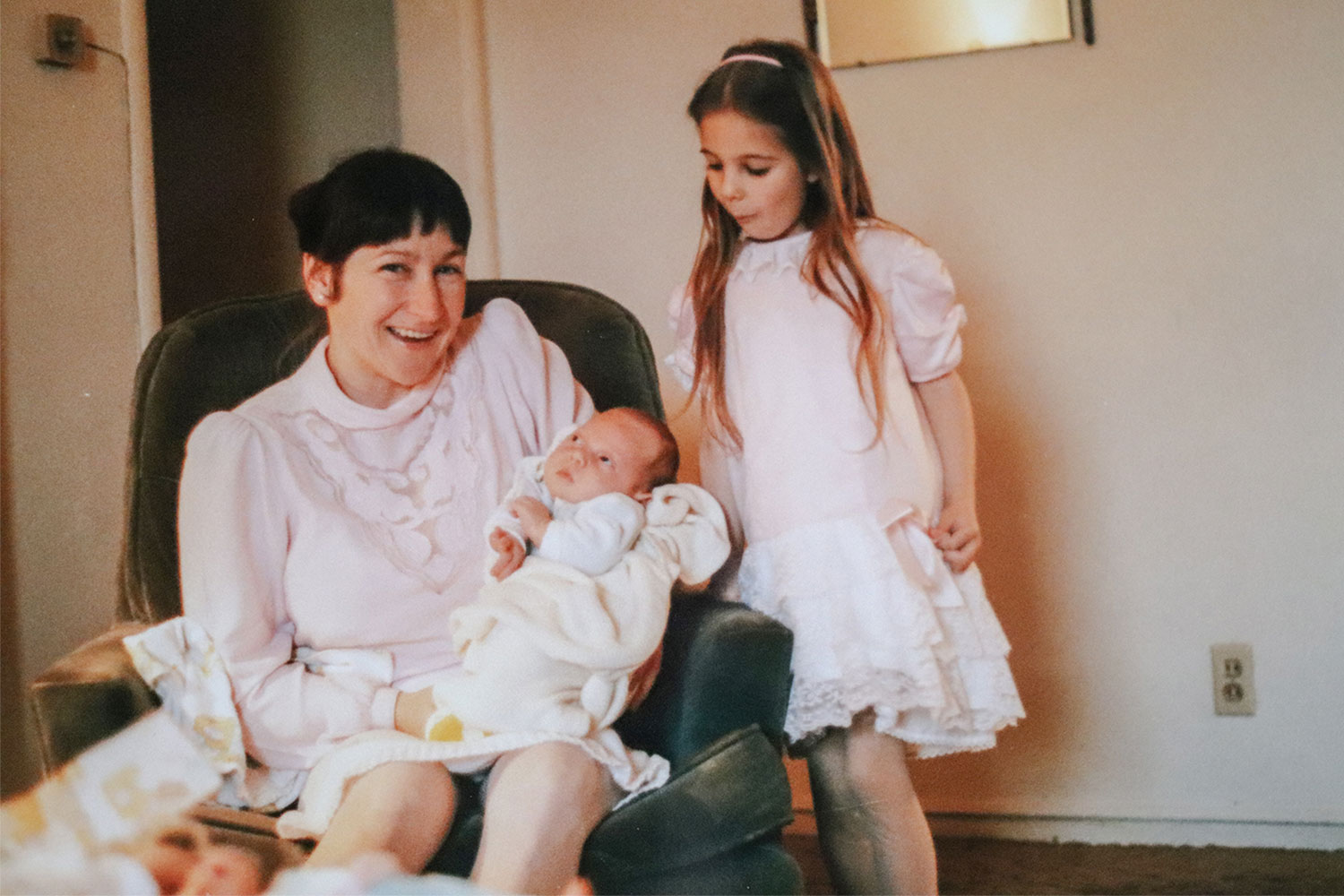
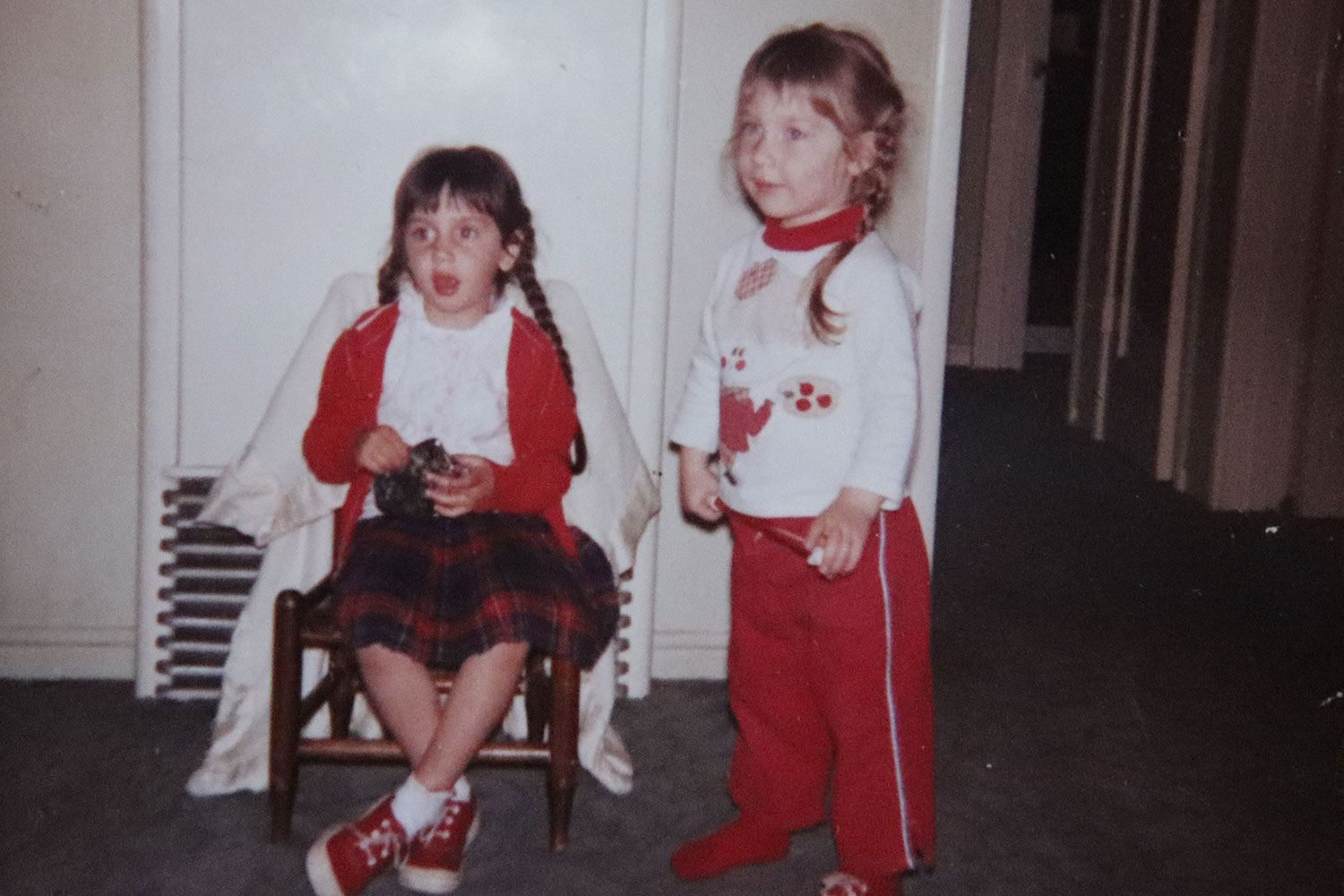
Here is one exhibit that tRump and his supporters wouldn't even care about.  A local story of a homeless woman who was run over by a garbage truck.  She was once the kid on the right in this photo:


Much later, she was the mother in this photo:


She was 57 years old and homeless when she died.
Annette Lorraine Montero, unhoused and apparently suffering from mental illness, was run over and killed by a garbage truck as she slept in a parking lot near downtown Eugene.
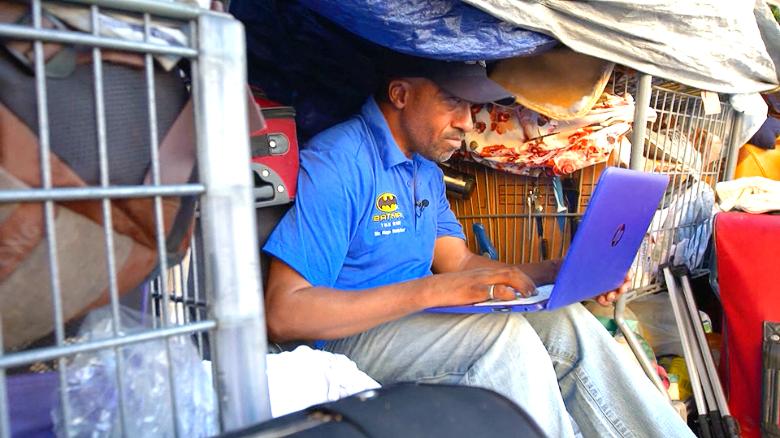
Here's another exhibit, from Los Angeles.  The homeless man in the photo below was not born homeless. "He was a Yale graduate, Wall Street banker and entrepreneur."


Homelessness is a complex human problem.  This horrible human being in the Oval Office doesn't have an iota of empathy in him to begin to understand is not a surprise.  What excuse do the followers of Jesus have?

And if we cannot empathize with a fellow human right in front of our eyes, how are we going to even begin to understand the plight of humans far away, like the refugees fleeing wars?

And these are the same people who believe that I am going to hell because I am an atheist who does not believe in Jesus?  If only they understood that it is we humans who create hell right here on earth.  Why don't they want us to work together in order to create a heaven right here on earth!

Wednesday, March 14, 2018

God is irrelevant

One does not have to believe in a god to appreciate life.  This is paradise on earth.

Well, almost a paradise.

I passed a homeless man who was lugging his belongings on an overfilled backpack, with his dog walking alongside.

What is my obligation to that homeless man?

An atheist I am, I worry a lot about such questions.

I could choose to help him.  Or, I could ignore his very existence.  I could try convincing myself that it is somebody else's problem.  Right?

One does not have to believe in a god in order to answer that question.  Bringing god into this is a distraction.  God is irrelevant to figuring out how to react to the sight of a homeless man in this paradise.

If the case of the homeless person is not convincing enough, consider the following:
•            It is wrong to drive people from their homes or to kill them because you want their land.
•            It is wrong to enslave people.
•            It is wrong to torture prisoners of war.
•            Anyone who witnesses genocide, or enslavement, or torture, is morally required
to try to stop it.
Aren't all those true.  Well, a dick cheney or donald trump will favor torturing prisoners of war.  An assad has no qualms killing his own people.  But, an overwhelming majority of us--irrespective of what we think about god or any religion--will agree with those statements, right?
To say that morality depends on the existence of God is to say that none of these specific moral judgments is true unless God exists.  That seems to me to be a remarkable claim.  If God turned out not to exist — then slavery would be O.K.?  There’d be nothing wrong with torture?  The pain of another human being would mean nothing?
So, then, what has god got to do with any of those situations?

Over the years, I have come to understand that it is a humongous waste of time to argue over whether or not god exists.  It does not matter one bit.  What matters is how we live our lives, which includes our relationships with fellow humans and with other life forms and non-living matter all around us.

Consider the flowing river.  Will it be ok for me to dump sewage or factory waste into that river?  Whether it is about slavery or about dumping sewage, the question of whether or not god exists, or whose god is the real god, is immaterial, right?

The awfulness is how, for instance, slavery and Christianity coexisted, with religious folks explicitly justifying slavery. Or, even now, how the religious right considers coal as a gift from god that should be shared with the world!

So, back to the homeless person.   He makes me feel uncomfortable.  Not because I worry about the safety of my life or my property, but because I do not know how to react.  Should I ignore him?  Shrug my shoulders and move on?  Should I engage with him and try to help?  Should I donate to the organizations that help the homeless?  If I do not donate, does it make me a bad person?  Do I want to be a good person?  What does it mean to be a good person?  Why have I not figured out the answer despite all these years?

God is irrelevant in trying to sort out these questions.

Wednesday, October 11, 2017

Does where you live matter?

There is the accident of birth, which determines a lot of the rest of our lives.  And then add the layers of the choices that we make and the decisions that others make for us.

"Self-made" success is, therefore, one screwed up idea that we celebrate for no reason other than to fool ourselves.

Self-made failures?  How about a homeless person?  Their lives on the streets are "self-made"?

Consider the story of Matthew Shaver, who "lives on the streets outside of Union Station" in Los Angeles.
Shaver is from the Seattle area. He says he grew up in foster care, that he is a veteran of the U.S. Marine Corps, that he was injured in Afghanistan about half a dozen years ago and that he has done stints in jail. In conversation, his thoughts frequently meander — and the details of his life are often described cagily and hazily, making many of them impossible to verify.
But a rap sheet that matches his name and his circumstances in Washington state shows a guilty plea for drug possession, among other things, and numerous appearances at a Veterans Treatment Court.
“Depression has always been a thing,” Shaver says over breakfast at a Denny’s across the street from Union Station.
“I like to get baked,” he adds. “I like to get high occasionally.” Though he says that in recent years he’s cut back on drinking, which has a tendency to bring out his aggression.
Which part of his backstory would you like to focus on?

Shaver was featured not merely because he is homeless.  But, because:
Matthew Shaver casually emerges from the packs of speed-walking commuters scuttling across Union Station and quietly takes a seat at the public piano at the heart of one of Los Angeles’ busiest transportation hubs.
For 20 straight minutes — the maximum play time, according to the posted rules — Shaver takes over the keys, filling the atrium with buoyant improvisations of jazz, pop and blues.
His playing often attracts a small crowd. Tourists film him. Regulars drop spare change and bills. He’s such a fixture that if the security guards are otherwise occupied (or feeling generous), he might get to play longer than the time limit.
Yes, he is a piano-playing, drug-using, homeless veteran.

A few months ago, the friend and I attended an event at the local university.  It was therapeutic in so many ways, after the fascist took over the White House and made it a "white" house.  The event was a talk by violinist Vijay Gupta, who:
deeply believes in music as a form of social medicine. He also believes that each of us has an obligation to share whatever our personal gifts are for the betterment of our communities and the world.
Gupta talked about his initiative to go to the shelters for the homeless and play music for the homeless and with the homeless.  He was not doing this as a social service.  Not as a resume-booster.  Not as a charity.
In 2011, Gupta co-founded and began serving as Artistic Director of Street Symphony, a non-profit organization dedicated to engaging distinguished musicians in performance and dialogue with marginalized communities experiencing homelessness and incarceration. A gifted spokesperson for the power of the arts to change lives, Gupta believes that musical engagement reconnects us to our shared humanity across vast divides, and ultimately impacts social justice.
The piano-playing homeless Matthew Shaver adds more evidence to Gupta's point about our shared humanity, and the obligation that each of us have to contribute to the betterment of our immediate communities and the world.


Thursday, April 07, 2016

Is that a chip on my shoulder?

So, yesterday's post made it to print in a remarkably short time.  Homelessness is such an urgent and contemporary issue.

A majority of responses--at the newspaper's site and as emails to me--are far from being civil and constructive.

Here are a few excerpts, along with my comments:

Hey, why not go after the writer's Indian background and engage with that distraction?
As someone ‘growing up in India’ what is the writer’s position on the fact that “Homelessness in India has been a problem for centuries; causing the average family to have an average of five generations being homeless.”
Or this from an email to me:
Dr. Khe, most of all, I am very sorry you have lived in our country so long without experiencing our kindness and generosity -- and I mean, as a whole people. 
Another wants to trade our homeless for India's homeless because that way "our social parasites will starve to death in India"
isn’t it amazing how people can travel thousands of miles risking death to come to America, manage to find jobs to not only support themselves but also send 1/3-1/2 of their paycheck back home to support their family, and yet right here in Eugene Oregon our citizens find it impossible to find work to support themselves. Surely laziness, apathy, and a dead end dead beat lifestyle has nothing to do with that. It’s obviously the 1% to blame. What Junior fails to grasp is simply put, let’s trade homeless for homeless. Bring in India’s homeless for ours. $10,000 says the Indian’s find jobs their first day and rise from poverty whereas our social parasites will starve to death in India.
Another claims they have homes where they "live rent-free"--the public parks!
Many of the so-called “homeless” are not truly homeless. Their homes are in our public parks, where they choose to live rent-free. Living in a place that charges rent would require some of them to take on the burden of a job, and it would require some to give up other expenses, such as alcohol, that they consider more important.
Comments and emails recycle the myths that have repeated so many times that people believe them to be facts!
I believe it is a fair assumption that most of them choose to be homeless rather than to make other choices more repugnant to them. Some people choose to live in the society whose values and personal responsibilities they reject. We have elevated our regard for individual liberty too far above our concern for civic comity.
And the piece de resistance:
Donald Trump and Ted Cruz want to secure our border and rigidly enforce our immigration laws. That would stop the flow of countless tons of illegal drugs coming into this country.
The homeless population is composed of three main groups in varying percentages: the drug and alcohol addicted, the mentally ill, and just plain bums who feed off the bleeding hearts.
Public policy No. 1 should state that no homeless person should be allowed to interfere with commerce in any way whatsoever, cause the expenditure of public money to clean up their mess, or cause the expenditure of public money to support a sane, able-bodied person in any way.
Every state should have a very isolated intake-detention center where street people are taken under a police civil hold for a physical and mental evaluation. Every city should prohibit social service agencies from serving those without a 5-year work and residential history in that city.
Any talk of involuntary commitment of the mentally ill sends liberals into a frenzy. Every person afflicted with a mental condition that causes a break with reality should have an implanted electronic chip that shows their doctor’s name and address, diagnosis, prescribed meds, and next of kin or some person designated by a court as their guardian or lookout, which every patient should have.
"should have an implanted electronic chip" ... my, my,  my!

There were a couple of people who emailed me wanting to work with me in order to address the problem.  And then there was this comment at the newspaper site:
It is crude and abusive to allow people to mock other humans without having to show a little courage and let the community know who they are. I spent years living at the Mission decades ago, and learned a lot. But I really, really doubt those who mock the poor are open to anything but their own need to dominate and humiliate. Hugh Massengill, Eugene
They mocked him for that comment.  How unfortunate!

Wednesday, April 06, 2016

La majestueuse égalité des lois, qui interdit au riche comme au pauvre de coucher sous les ponts

(I have sent this across to the editor ... maybe it will show up in print, eh)

I picked up plenty of new ideas at the recently concluded annual meeting of the American Association of Geographers, which was held in San Francisco. In addition to the scholarly sessions that served abundant intellectual fodder, the city streets also made me think, yet again, about one particular issue—the homeless.

The Hilton at Union Square was the main venue. Every time I walked a mere block from the hotel, away from the touristy trolley car station, it was depressing to see homeless men and women of all ages. It was a bizarre and simultaneous juxtaposition of affluence and material deprivation.

Estimates are that there are nearly 7,000 homeless people in San Francisco. No amount of intellectual inquiry about homelessness can help me emotionally understand how the mightiest country, which can wage wars on far corners of the earth, can also have seven thousand people homeless in one of the iconic cities of the modern world. Homelessness in San Francisco is so acute and has been so for a while that the Board of Supervisors has been mulling over declaring a state of emergency, which will help bypass some of the regulations and requirements that otherwise will delay implementing even temporary measures to address the situation.

Meanwhile, the City of Palo Alto, which is in the heart of the fabled Silicon Valley, is considering building new housing and offering them at subsidized rates to families that earn less than 250,000 dollars a year. Yes, even those earning a quarter of a million dollars are finding it difficult to get a place of their own in a part of the world where unimaginable riches are made overnight. If shelter is not affordable for the rich middle class in the Golden State, then that contrast alone will make one sympathize with San Francisco’s homeless.

Here in Oregon, especially in the Eugene-Springfield region, we can relate to the homelessness emergency in San Francisco. The homeless, whose number according to reports exceeds a thousand on any given day, have become a constant fixture in the city and by the river too. The part of the bike path alongside the Willamette that I always walk often has telltale signs of homeless people having used that for a few hours or even a few days.

My first exposure to homelessness in the US was even before I got here. Growing up in India, when comparing and contrasting the two political economic systems that the Soviet Union and America represented, my friends and I had a tough time imagining how a rich country could have poor people sleeping on city sidewalks, like how the urban poor in India spent their nights. During my first year in graduate school in Los Angeles, it was even more of an up-close-and-personal exposure—intellectually and on the streets—to homelessness as a public policy issue.

Whether it is San Francisco or here in the Eugene/Springfield area, the homeless are surrounded by extravagant symbols of affluence. For instance, even here, a couple of blocks away from downtown Eugene is the two hundred million dollar basketball arena that hosts entertainment events. Obviously, it is not that we do not have the money to spend on the humanitarian crisis. Apparently we do not consider spending on easing the human suffering to be a priority, in contrast to our eagerness to amuse ourselves.

The local governments, to their credit, have for a while clearly and loudly spoken about urban homelessness. A few cities consider homelessness to be a crisis enough to warrant a “state of emergency declaration.” But, when it is a public policy issue not merely in one or two cities, and not merely in one or two states, it is clear that local governments cannot solve this problem on their own. There are deeper structural issues that have to be addressed by state governments in association with the federal government too.

It is unfortunate that the election season underway has not addressed real and urgent issues like urban homelessness. In a democracy, it is through politics that we establishing priorities on issues deserving our collection action. But, the campaigns and debates have rarely been about such compelling issues. Instead, we have been verbally assaulted with inanities like the size of a man’s fingers as evidence of hyper-masculinity and virility.

Thus, after almost four decades since those teenage years halfway around the world, I continue to be puzzled that a rich country has so many homeless people and, more importantly, its citizens even seem to be ok with it. I suppose the more things change, the more they do stay the same!

Sunday, October 11, 2015

It's a Mad, Mad, Mad, Mad World

Back through all the formative years of my life in the old country, I recall being feeling troubled and helpless when coming across, to use the new country language, "special" people.  For instance, across from grandmother's home was a guy who had mental health issues.  As a young boy I was then, I was even terrified by the sounds that came from him across the street--he was perhaps only ten or fifteen years older than me.  Or, the classmate whose older brother had serious mental health issues and visiting with my classmate meant I had to figure out how to navigate my own issues with him.  Or, the family friend's son, who was my age--he was such a good looking fellow, but with mental health problems that could not get resolved despite all the efforts of his physician grandfather who consulted with all the experts of the day.

So much was I bothered by these, that when I heard about something called Down's Syndrome and that a large forehead is one of the physical symptoms for it, I worried that my big forehead doomed me into a life of a பைத்தியம் (literally, mad.)

The question always remained: whatever happens to kids and adults with mental illness?

My life is now in the United States and my professional life allows me to pursue such questions for my own understanding, though even here we don't talk about the mental health issues responsibly and honestly.

These are not easy issues to inquire into and sometimes I avoid reading up about them, for my own peace of mind.  Thus, I intentionally skip some news items, like this one in the NY Times.  But then the friend's email compelled me to read it.  So, I did. I watched the video too.  I tweeted about it.  No, it was not about how India handles its mentally-challenged population, but about a different part of this world--West Africa.
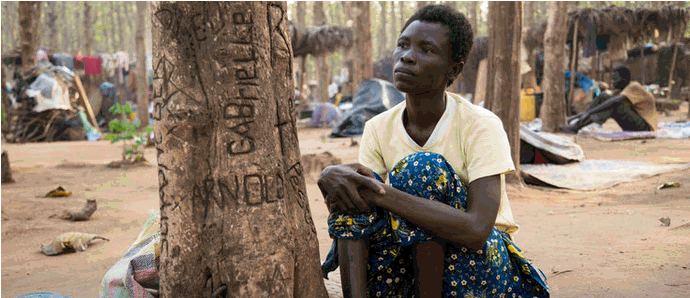
Every society struggles to care for people with mental illness. In parts of West Africa, where psychiatry is virtually unknown, the chain is often a last resort for desperate families who cannot control a loved one in the grip of psychosis. Religious retreats, known as prayer camps, set up makeshift psychiatric wards, usually with prayer as the only intervention.
You might think that "camps" are good.  Except that many remain "chained by the ankle to a tree or concrete block":

Good estimates of the number of West Africans with mental illnesses living in chains are not available, in part because people are shackled out of sight — by family members, traditional healers and at prayer camps.
For all the affluent country that the US is, we do not treat the mentally ill with care and respect all the time.  Many of the homeless on the streets have varying levels of mental health problems.  Like the one described in an op-ed in today's local paper:
During my most recent visits he demonstrated truly schizophrenic behavior, shouting at imaginary demons with a continual spiel of disjointed thoughts. As time goes by, his mental condition seems to worsen.
The op-ed writer argues:
We will conclude that some form of coercion, bordering on incarceration, in a mental health facility is really not politically incorrect, but is what a civilized society should do. 
I suppose it is easier to ignore them on the streets.  I suppose it is easier to chain them to trees and hope that the lord will treat them.  But, if that is how we will treat the mentally ill, then we certainly have some atrociously screwed up understanding of what it means to be human and what it means to belong to humankind!  We humans are idiots!


Wednesday, April 23, 2014

Homeless at home

Finally, after all the traveling, I am back in my own territory.  Sure, the bed at the Hilton was much better a quality mattress than is mine at home.  But, I slept much better here.  There is no place like home, indeed.

Not on the road meant eating at home.  I can have eggs with feta cheese then.  But, oh, I first have to get eggs and feta, and more.

It was time to visit the store.

The rain was back, with a blustery wind too.  But, the mind tolerates that because of the awareness that winter is now long gone.  The cold and dark days, and the long hours of the night, are already distant memories.  The days will get longer. And slowly warmer.  Life has returned.

As I walked into the store, I looked across at the checkout counters.  None of my friends were at work.  I suppose it was because I was at the store at an hour that I am usually never there.  The same store without my friendly checkout clerks seemed so much an alien place.  I hurriedly gathered the supplies and didn't bother to engage in any chit-chat with the clerk on duty with whom I have no relationship and nor did I feel like initiating one.

The drizzle and the breeze felt refreshing.  The familiar natural elements compensated for the oddly alien feeling when inside the store.  The rain has become so much a part of my life here that I miss it when it does not sprinkle for a few days.  I tire from the sun and the warmth, and look forward to the dark clouds.

A smallish figure on a small wheelchair approached me.  In the dimly lit parking lot, it was not clear whether it was a child or an adult.  As we got closer to each other, it was clear--a small built woman, whose arms and legs were either not fully formed or had gone through amputation maybe?

"I hate to bother you, sir.  I am homeless and new to Eugene.  Any way you can help?"

The richest country that the planet has ever known.  Yet such sights are far from uncommon.  How could this be possible?  How do we let this happen?  Why do we tolerate such injustice?  How am I supposed to respond?  At least if she were able bodied, I could pretend that I did not hear her and keep walking. Or, politely tell her a no.  But, she was no able-bodied adult.  Not only the wheelchair but a lot more.

I looked into my wallet. Will one dollar be enough, I asked myself.  How about two?  There was no way I was going to give her the only twenty dollar bill that I had.  I had established for myself that it was going to be number between one and twenty.  How does one decide in such a situation?

I cursed the government. I pay taxes. I expect the government to use the revenue to take care of my fellow humans in this country. Instead of doing that, my government spends gazillions on the military in order to bomb the shit out of countries and send them back to the stone age.  A gazillion for defense, but ask for a couple of millions for some homeless program and they cry poverty. And I am forced to then deal with this reality on a windy and rainy night at the grocery store parking lot.  Pox on the war-mongering demagogues!

I spotted a five-dollar note. So, that was the number between one and twenty. She said thanks, and rolled away.

At least I have my arms.
My legs.
A home.
A car.
A career.
Damn, I have everything.
I am one of the rich!