Showing posts with label nair. Show all posts

Friday, November 13, 2020

The tears of mothers, wives, and daughters

I was really, really young when I heard the word "posthumous."  My father used that word when referring to my aunt, who was a few-months old fetus when her father died.  In utero, a phrase that I learned much later.

I have never talked with this aunt about growing up fatherless.  Yes, there were father-figures in her life.  But, nobody that she called appa.  

I never talked to her mother either about losing her husband when she was a few months into her first and only pregnancy. 

In the old country, we never talked about such important things in life. 

But, we religious Hindus channeled them all into the grand epics.  Through those mythological characters--some of whom were/are divine to many--we shared the angst, pain, aches, sorrows, and everything unpleasant that life deals us.

In the Mahabharata, Parikshit is a posthumous child.  His father, Abhimanyu, was one of the many killed in the war at Kurukshetra. 

Kathika Nair gives voice to Abhimanyu's wife, Uttara, who was pregnant with Parikshit.


A young mother ready to give birth and her husband is killed.

There is plenty to be understood, and written, about the tears that mothers and daughters shed, and don't shed.  Yiyun Li writes about that in a moving personal essay.

"I have so little to keep, to hold, of you."  In the mythology and in real life.  Even today. 

Monday, November 09, 2020

Ill-behaved men and the abused women

Audrey Truschke, whose lecture on Aurangzeb I attended in Chennai in January 2019 during my sabbatical and was condemned by the Hindutva and its sympathizers as whitesplaining, writes this about the Mahabharata:

The epic itself foretells:

आचख्युः कवयः केचित्संप्रत्याचक्षते परे
आख्यास्यन्ति तथैवान्ये इतिहासमिमं भुवि
Some poets told this epic before.
Others are telling it now.
Different narrators will tell it in the future.

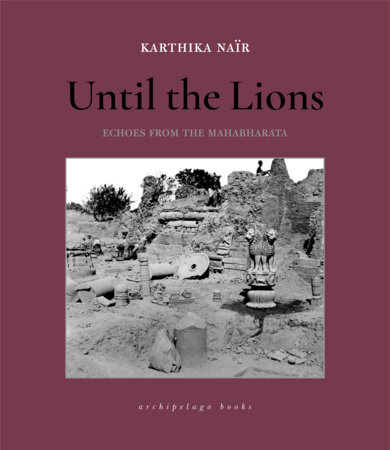
One of the latest narrators is Karthika Nair, whose interpretation of the Mahabharata is absolutely innovative.  It compels the reader to rethink the old epic, however familiar one might be with the tales and the characters.

Nair gives voice to the Queen of Panchala--Draupadi's mother--who is a "woman without a name" in the epic.  Through this queen, Nair condemns how men--kings in particular--defined life that was hell for mothers because of wars and bloodshed:


As Truschke also reminds us, the Mahabharata "condemns many of the appalling things it depicts, but one area where its response is more tepid concerns the treatment meted out to women."

The world of the Mahabharata is stacked against women. Our world today looks distinct in its details, but some basic principles are not much different. For example, more than one person has compared Draupadi’s plight with that of ‘Nirbhaya’, the name given to the young woman mortally gang-raped in Delhi in 2012. Nirbhaya (meaning ‘fearless’) resisted her attackers, and one of the rapists later said that this resistance prompted him and his fellow assaulters to be more brutal than they would have been otherwise. Two millennia later, the corrupt ‘moral’ remains: she should not have objected to unjust treatment.

The Mahabharata is not as straightforward a story about good and bad as one might expect from an epic that features practically all the Vedic gods.  

The Mahabharata claims to show dharma or righteous conduct – a guiding ideal of human life in Hindu thought – within the morass of the characters’ immoral behaviours. But the line between virtue and vice, dharma and adharma, is often muddled. The bad guys sometimes act more ethically than the good guys, who are themselves deeply flawed. In the epic’s polychromatic morality, the constraints of society and politics shackle all.

This is also why Nair prefers this epic over the Ramayana.  She writes that in the Mahabharata, "right and wrong and not so easy to spot anymore."  Tragic!

Friday, October 30, 2020

We often don't know about happenings in our own backyards

Reading never fails to underscore how much I don't know any damn thing.  I could spend all my hours reading, not wasting time playing bridge or doing any of my "wasteful" acts, and I will still not know any damn thing.

Yet, the alternative--to not read--is not appealing either.  Yes, people who don't know anything but claim to be the only one to know it all can get to positions of power and fame.  But, I don't want to be in that universe.

Karthika Nair's interpretation of the Mahabharata is a case in point.  One of the voices that she channels is that of Ulupi, whose connection to the Kuru family is through Arjuna.  A queen of the Nagas, Ulupi has a son, Aravan, through Arjuna during his exile years.  Nair refers to Aravan (Iravan) being celebrated by a few Tamils in the Koothandavar cult.

Koothandavar? Cult?

The first result in a Google search for Koothandavar is Koovagam.

It is famous for its annual festival of transgender and transvestite individuals, which takes fifteen days in the Tamil month of Chitrai (April/May) ... The festival takes place at the Koothandavar Temple dedicated to Iruvan (Koothandavar).

Aravan aka Koothandavar, who was born from the union of Arjuna and Ulupi, is celebrated thousands of miles away in the southern tip of the subcontinent?

It turns out that Koovagam is located not far away from Neyveli, which is where I grew up!


A mere 25 miles away from Neyveli is this place where annual celebrations for Aravan are held, and I am finding out about it when I am 10,000 miles away?

Maybe I didn't know because it brings transgenders and transvestites to the temple, and the mainstream--definitely back then--did not care much about them and tried to only marginalize them?

Too many questions!

Wikipedia adds:

The participants marry the Lord Koothandavar, thus reenacting an ancient history of Lord Vishnu/Krishna who married him after taking a form of a woman called Mohini. The next day, they mourn the god Koothandavar's death through ritualistic dances and by breaking their bangles. An annual beauty pageant and several other competitions like singing contests are held.

The more I read, it turns out that there is much more to know about.  So, read and learn I shall.

Wednesday, October 28, 2020

The Mahabharata echoes even after all the years

The doorbell chimed.

I saw a man in brown leave.

I knew what it was about, and rushed to open the door.

I hurriedly opened the parcel to reveal the book.


I scanned through.  I was convinced that the reviewer had not exaggerated one bit. "The poems of Until the Lions are graphically typeset on the page so that they seem to be dancing, a celebration of visible sound."

Later in the night, I got to reading the book.  Yes, it is unconventional and impressive.  Even the simple explanation that Nair gives in the introduction for choosing the Mahabharata over the other Hindu epic, Ramayana: Unlike in the Ramayana, where the enemy is far away and some Other, here "that mortal enemy is one's own kin; the blood the heroes spill is all their own."

Think about the family disputes, among the rich and the poor alike.  While there might not be any literal blood spilling, the emotions are not that different from those described in the epic.  The Mahabharata is the one that I have always favored over the Ramayana, as I noted back in 2013:

I loved those epics.  Phenomenal works of literature from centuries ago.  What I read were mere re-telling; I can easily imagine that the works in the original will be quite a treat for those well-versed in Sanskrit.  The Mahabharata, which I prefer a tad over the Ramayana, was Rajaji's version that I read and it was one gripping page turner when I read that as a kid.

Nair lists the key characters from the Mahabharata who are featured in her innovative interpretation.  Those descriptions alone are enough compensation for the price of the book.  Consider the following about Vyasa:


"in his spare time."  What an editorial comment!

Over the decades of living in my adopted country, I have forgotten some of the characters.  Nair reminds me about them.  But, there was one in her listing that was new: Sauvali.  Dhritarashra chose her as a "concubine during Gandhari's pregnancy."  Yuyutsu was the son.  He was the only son among the Kauravas who survives the war, and performs "the last rites for all his fallen kin."

Not having known anything about Sauvali, I chose to read the chapter about her first, ahead of everything else.  Nair does not mince words--she writes about the rape of Sauvali.


 There's so much to understand about the human condition, which is what great authors have been doing over the centuries of storytelling.