Showing posts with label math. Show all posts

Saturday, September 26, 2020

Imagine there is no math!

Was it in an episode of Star Trek, or was it The Twilight Zone, in which aliens were plants?  If only I were a science fiction junkie; I would then have retained this earth-shattering (get it?) detail!

Aliens don't have to be like us at all.  Their shapes and sizes could easily be beyond our wildest imaginations.  It is like that fourth-dimension that Carl Sagan sketched out a long time ago: As much as two-dimensional "people" would have no way of imagining the three-dimensions of ours, we might be incapable of understanding four dimensions, or sixteen for that matter!

Which is why there is nothing about the "natural" numbers that we are taught in math:

Counting “only exists where you have stones, trees, people—individual, countable things,” he says. “Why should that be any more fundamental than, say, the mathematics of fluids?” If intelligent creatures were found living within, say, the clouds of Jupiter’s atmosphere, they might have no intuition at all for counting, or for the natural numbers

That excerpt is from an essay that asks: What, exactly, is math? Is it invented, or discovered?

When they teach math, they don't make us think about these things, right?  They simply march us on through numbers, multiplication tables, fractions, angles, calculus, ... 

Instead, imagine if they asked kids in, say, the third grade whether aliens would do the same math that we do.  If aliens and their kids do not have fingers and toes, then will their counting and numbers be different?  Why don't they spark imagination and creativity in children, even as they teach numbers and multiplication tables?

The older I get, the more I value imagination and creativity.  We seem to systematically kill it.

Remember this from not too long ago?

We need to rethink the way we teach our children and the things we teach them. Creativity will be increasingly be the defining human talent. Our education system should emphasise the use of human imagination to spark original ideas and create new meaning. It’s the one thing machines won’t be able to do. We should aim to teach our kids about the power of creativity in every area.

I know I am ranting. I am getting old, I guess.  So, I will wrap up ;)

Tuesday, October 01, 2019

You cut, I choose?

As siblings separated by only two years, my brother and I never wasted any chance to express our, shall I say, differences in opinions ;)  A context that we were very particular about was when mother doled out snacks.  We would carefully monitor each other's share, and complain if we felt that it was not equal.  Of course, as we got older, we also teamed up to sniff out where exactly mother had hidden away some awesomely tasty snacks and we were partners in crime ;)

We now live in a world of plenty. And, at the same time, a number of kids do not have siblings either.  Which means there is nobody to fight with, nor is there a need to fight.

But then there are divorces.  Some are bitterly contested.  Recall Harry's advice to his friends on how they should plan for the divorce right from their early days of being married so that the bitterness on who gets what and how much can be easily settled?

How to divvy things up is not a new question.  It is as old as humanity itself.  We kids in Hindu households in the old country grew up with epics that were all about who gets what.  The Pandavas and the Kauravas fought intensely bloody--I mean bloody--battles as a result.  A war that Krishna said was Arjuna's duty to fight in the Bhagvad Gita!

While we can't bring about world peace, math does offer some interesting ways in which interpersonal property splits can be handled.  Well, not math by itself, as this essay points out. 
Perhaps the oldest fair division method on the books—one which has been used by children from time immemorial—is the “I cut, you choose” method for dividing up, say, a cake between two people. One person cuts the cake into two pieces, and the other person gets to choose which piece to take.
Such a system, or any system, assumes that the participants play by the rules.  Imagine tRump in something like this.  That mafia don will simply walk away with it all, and then turn around and accuse you of eating the cake that he stole from you!

Thankfully, other than 63 million, we are not all such horrible humans beings.  We might fight, like how my brother and I did, but we try to fight by the rules and try to be fair.  But, even when we try, methods like "I cut, you choose" don't always end up being fair and equitable.
“Mathematics sets limits on what is achievable ... Then the question is, if you can’t get everything, what properties do you want to give up on?”  

Tuesday, April 16, 2019

I will soon be teaching a math course. Kind of.

Looking back at events from nearly thirty years ago, I am pleasantly surprised at the decisions that I made.  One of those was to walk away from all things math, and I am all the happier.

Math came easily to me; not only did I not have anxieties, I enjoyed learning and doing math.  In school, I routinely did the classwork way ahead of the rest and then used up the remaining time to finish the assigned homework. (Which explains why my mother claims, and rightfully so, that she has never ever seen me do homework or study.)  I understood  the abstraction when in engineering too, though by then I knew for certain that my heart was not in math.

When I switched out of engineering to study the subjects that I wanted to know more about, it was clear that most faculty in the graduate program expected me to put my math and engineering background to use.  The social sciences were getting heavily into math and statistics and those who could play with numbers had an easier time publishing papers, which was all that mattered.

But, I couldn't care.  Because, I could not be convinced that mathematical and statistical modeling would explain the human and social dynamics that I was interested in and, I was even more confident that those models could never predict anything into the future.  Instead, I chose to transition into the methods that have been used for centuries--thinking and writing.  It was a difficult struggle because the years of schooling in India had screwed up my thinking abilities and had not given me any sense of how to write.

I even made fun of the articles in journals.  They were all gobbledygook.  Plenty of data but minutiae. Greek symbols expressing statistical modeling of social issues.  And sentences that rarely made sense.

As if a bunch of laws can explain quite a few things about the human condition.  The crazies who wanted to study the problems that humans and societies face decided to develop models to explain the problems.  And to develop laws and theories.  Madness, I say, madness!

The net result of all that?  I was a loser out of graduate school!  A loser I continue to be.  At least, I am a loser on my own terms, eh! ;)

Despite the losses, I am confident that all it will take is one look around the world in order to understand that developing mathematical and statistical models will do nothing to help us with the problems all around.  Oh well.  Losers don't get to write history! ;)

But, I will soon get to teach math to incoming college freshman students.  Details in another post; stay tuned!

Thursday, December 18, 2014

If 2+2 = 4 in math, what is the answer in maths?

When I was a school kid, one grandmother lived with us for a few years till her death.  She was mighty pleased with whatever we said we did in our classes.  As one who was not schooled beyond the third grade, she was unfamiliar with many words we used that were from the English language.   We kids, of course, would immediately correct her, to which one of her responses, in Tamil, was "I didn't go to a fee-paying school system."

For instance, she referred to "maths" as "maks."  If only she knew that in the US, it was not even maths but math; I wonder how she would have pronounced "math."

The self-appointed spokesman for the "Queen's English" often harasses me for my American spellings, way more than the trouble I gave my grandmother.  So, what is the deal with maths v. math, right?
Americans and Canadians tend to say math while Brits and Australians opt for maths.
The welfare queen, er, Her Majesty, might think that maths is the correct contraction for mathematics.  Not so fast:
In the 17th century, English speakers fell under the spell of a peculiar linguistic fad. With some exceptions, they started to use a seemingly plural form of a field of study to refer to it in the singular. Enter physics, acoustics, economics, acrostics. The rule wasn’t applied uniformly: Disciplines that had been around for a while, such as arithmetic, had already rooted deeply enough in people’s minds to avoid the trend. But mathematic, the classical and somewhat arcane science of all things numerical, acquired an S.
Are you thinking what I am thinking after reading that?  "What the hell is acrostics?"  If you are "puzzled" then go figure that out yourself; I Do It Only Tuesdays!

Where was I?  Yes, about mathematic.  
Math as an autonomous term for mathematics came first to the United States, in 1890.
So, what about in Britain?
The British maths cropped up in 1911, and both terms leapt in usage for their respective countries during the second half of the 20th century.
Wait, so all these mean that there is no damn logic in why and how usages like math and maths developed?
Really, though, fate and chance factor into linguistic trends as much as anything. It only takes a few solemn Oxford whizzes talking about maths before much of London catches on, and then Australia, and then … you do the maths.
Which means if there were enough people like my grandmother, then we might have as well ended up with "maks"?  Well, you do the math! ;)

PS: remember how 2+2 =5 in 1984?


Tuesday, June 03, 2014

No math please, we're American

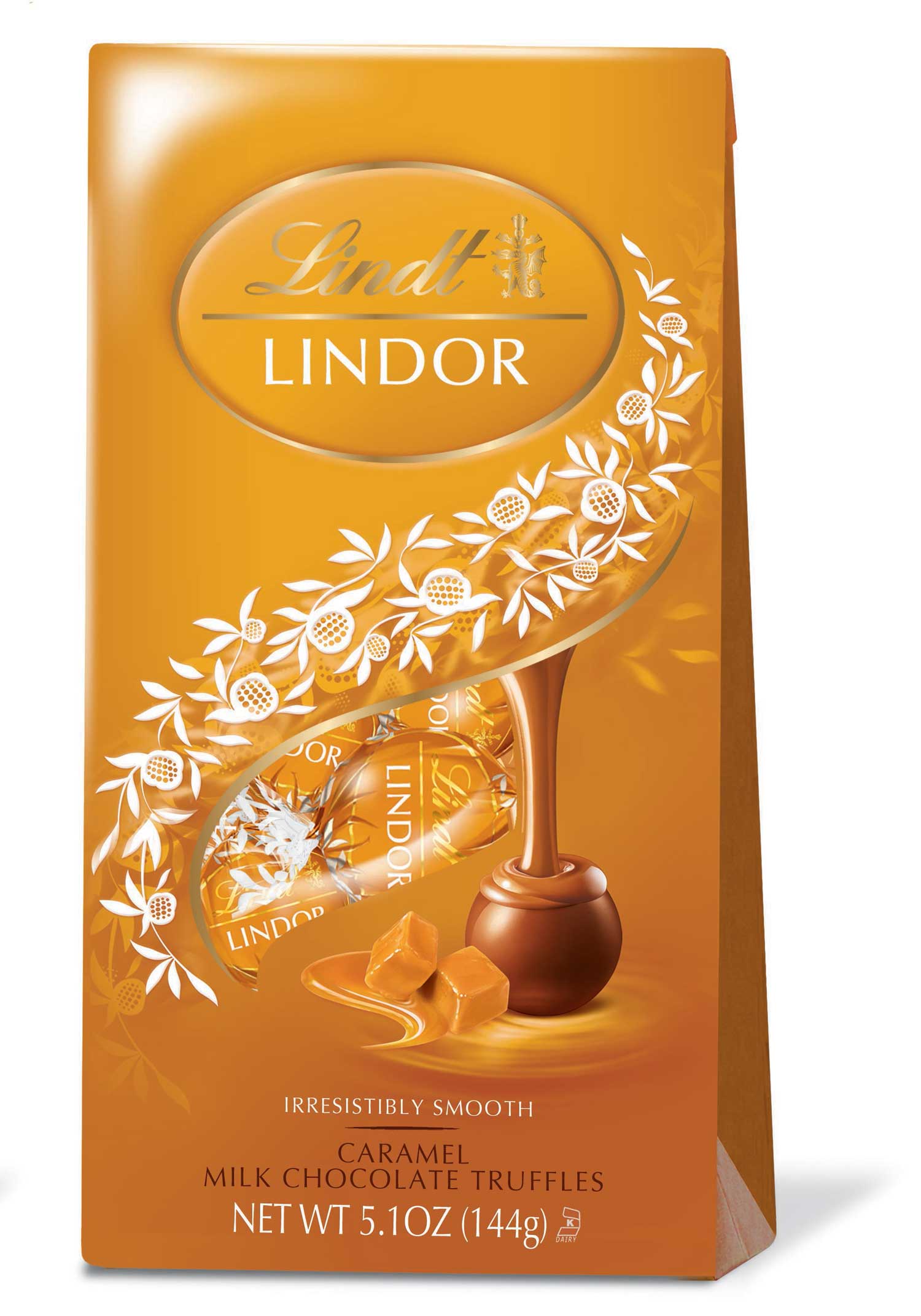
Sometimes a man has chocolate cravings. Ok, that man was me.

It was, therefore, a bad time to see this on the store shelf:


I am surprised that I didn't start eating it right there in that French store!

At the checkout counter, the early-twenties-looking cashier dude tried striking up a chat with me, and was failing miserably.  I wanted to advise him not to try so hard at small-talk.  If you ain't got it, then don't.  But, he tried.  If the world gives grades for effort, then he surely earned an A+.

After scanning the heavy and bulky items, he scanned the chocolates.

"I love these" he said.

"Me too."

"But, they are so expensive."

"I agree.  But the display said three dollars and I figured why not.  Especially when there are fifteen pieces, which then works out to only twenty cents a piece."

He stopped scanning.

He looked at the chocolates. He thought about something.

Clearly there was something going on, or going wrong.

"That is way too much math for me to do" he finally declared.

I wanted to teach him the simple math right there.  "How much is 2 over 1?" would have been my first step. He might have found it a torture.  I imagined Winston Smith volunteering the answer to 2+2 as 5.

I simply smiled instead.

No French store.  This is America alright!

After reaching home, I hunted down the news item from a few months ago:
When it comes to literacy, adults in the U.S. trailed those in 12 countries and only outperformed adults in five others. The top five countries in literacy were Japan, Finland, the Netherlands, Australia and Sweden.
U.S. adults did worse in mathematics, where they trailed 18 countries and beat just two — Italy and Spain. 
At least we are better than Italy and Spain.  Wait; they are the ones with budget problems and they have math issues. Now it figures, and why our budgeting is messed up too ;)

If only that dude knew that twenty cents for an awesome chocolate is one sweet deal that won't be around for long!

Sunday, June 10, 2012

American students avoid science and math because of ... postmodernism?

When I was a kid, adults encouraged us kids to eat vegetables that might not typically appeal to us by saying things like, "eat this so that you will do better in science."  Or sometimes, it was "eat this so that you will get better at maths."  I am sure quite a few kids held their noses and gobbled up vegetables they hated only to make sure that they did better in science and math.  (Not me: I loved them all--vegetables and science and math!)

I wonder if parents and grandmas say that anymore to India's children.  Perhaps not.  If so, that will be awful, because the kids don't know what they are missing--vegetables and education!

Here in the US, the veggie food route to science and math will never work, given the typical aversion that most children have for vegetables, science, math.  Well, I take it back; it appears that the young might even hold their noses and swallow the veggies if they can entirely avoid science and math.  Again, they don't know what they are missing--vegetables and education! (Except this veggie, of course!)

My initial experiences of Americana were as a graduate student.  Walking or biking across campus from the social sciences area towards math, science, and engineering, well, was often punctuated by an observation about the rapidly decreasing female population.  The few female students in those areas were almost always graduate students from India or China or Europe.  American-born undergraduate science or math majors, male or female, were a minority on campus. 

American students avoiding math and science seems to have only gotten worse.  American-born science and math students are practically an endangered species in higher education. And that is terribly unfortunate.

The higher education system, meanwhile, makes it all the more attractive for students to almost bypass science and math.  While by now I ought to be used to this, I continue to be shocked every single time when I realize how easy it is for students to complete "higher education" and even graduate with a perfect 4.0 GPA, but with barely a couple of classes in science.  And even those science classes tend to be "Mickey Mouse" classes, as one student put it.

The hyper-inflated sense of self that students gain throughout their K-12 system does not help either.  The school system appears to be hell-bent on telling students how special they all are, and that they can do anything they wanted to do in life. Of course, we need to convey the idea that the world is their oyster, but shouldn't we also make sure they understand that hard work is a prime ingredient in a successful formula?  But, it seems that educators systematically dismiss that often one needs to go after difficult tasks, and that life is not simply about plucking those non-existent metaphorical low hanging fruits.

Science and math are by no means any low hanging fruit.  Well, accomplishment in anything, in the arts or languages or whatever, is not as easy to pluck those fruits.

I am convinced that this awful state of education is a result of the postmodernist conditions in education--though I love the postmodernist environment within which I operate.  Modernism and reason have been replaced with arguments of multiple truths.  While philosophically I have no problems with this, and have come to enjoy it over the years, the translation of these ideas into how we educate students means that we are in the mess that we are in now.

The multiplicity of truths, as opposed to the truth, has led us to legitimize any crazy approach to education as equally valid.  Along the way, we have even empowered students to stand up and loudly proclaim their aversions towards science and math.  We have then provided plenty of routes for them to "succeed" without ever having to deal with science and math.  (They do geography, for instance!)

Students educated in this manner in colleges and universities across these United States then go on to become teachers in elementary, middle, and high schools, where they amplify the message that children can do whatever they want to do without ever paying homage to science and math.  Science and math be damned, eh!

I still shudder recalling how an English professor told the freshman Honors students, in a course that I had put together, that it was completely ok if they were not good in science and math.  Because, she was like that and she made it as an English professor.  What a message to give impressionable college freshman, right?

Thus, even a small university like mine has quite an extraordinary amount of fluffy courses (like geography?) where students can excel.  The number of students graduating with the various levels of "laude" honors seems to increase year after year.  A casual scan of the list here indicates the highly skewed ratio of non-science to science majors when it comes to summa and magna cum laude.  Seriously, how many of us will openly admit that for a typical student, earning a B in organic chemistry is way more difficult than earning an A in economic geography?  I will.

What have we gained then as a society after thousands of students thus graduate magna cum laude?