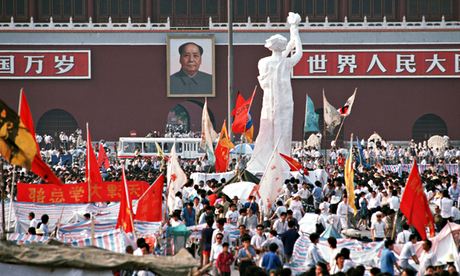
If only the massacre were a bad nightmare!
 |
| source |
The thoughts expressed by some of those who protested then are moving. Powerful. Like this protester:
Hu Jia is one of China’s best-known political activists. He participated in the 1989 Tiananmen protests as a fifteen-year-old, studied economics, and then worked for environmental and public health non-governmental organizations. A practicing Buddhist, Hu spent three and a half years in prison between 2008 and 2011 for “inciting subversion of state power” and currently is under house arrest for having launched a commemoration of the June Fourth massacre in January.What does Hu have to say about today's China?
After being in power for sixty-five years, the worst thing the CCP has done is create a sense of spiritual confusion. We have no belief or faith. Instead we have brutal competition and treating people brutally. If someone falls, no one goes to help them. People have to consider if they’ll be accused by the old person of having caused the accident. This happens all the time, so no one goes to help people.About the protests, Shen Tong, a student leader then, and now living in the US, says:
That’s what China is like now.
If Chinese Communist history is any guide, no matter how careful we were, no matter how 'well-behaved', the crackdown was inevitable. If we'd asked for a little bit more. if we'd asked for regime change – China would have been very different. We had generals warning the government not to open fire.As another young protester then, and a Harvard lecurer now, Rowena He says:
When another opportunity comes about, will protests be so organised and peaceful? It is when; there's no if; there's a moral direction in history. The night before they began, the protests were impossible; the morning after, they were inevitable.
China has to face its past in order to have a future.No bad dream it was. Young people died. Mothers continue to mourn them:
Xu Jue’s son was shot dead by a soldier. Within a few weeks, her husband’s hair had turned white. Five years later he died. Qisile, she explained: angered to death. On her husband’s tombstone is a poem explaining what killed both men:
Let us offer a bouquet of fresh flowers
Eight calla lilies
Nine yellow chrysanthemums
Six white tulips
Four red rosesEight-nine-six-four: June 4, 1989.
