Showing posts with label moghuls. Show all posts

Friday, July 17, 2020

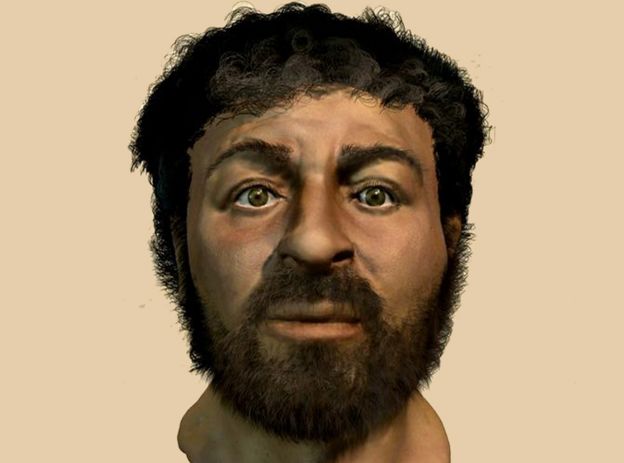
Brown skinned, brown eyed, with long and curly dark hair

Take a look at the art below:

Source
A mother who has the Hindu "dot" on her forehead, with wavy hair and holding a child.

But then there is something that is off, right?  She is not dressed in the traditional sari.  Hindu women in history were not portrayed with pearl necklaces, but with gold and silver and precious stones.

So, you want to guess again on what that image is about?

If I had been asked to guess, which I was not because I read about it instead, I would never have imagined that it is a representation of Mary holding baby Jesus!

Here's the image in full:


The Holy Family, is how it is titled.

The note there is even more head-spinning: "c.1620s Northern India, Mughal court, early 17th century"

An artist in the Mughal court created this "Indian"-looking image of Mary holding Jesus, and making sure that the baby--whose hands are around a beautiful vase--does not knock the vase over.

Is this watercolor art work in India then?

Nope.

It is in Cleveland.

Yes, the Cleveland that every comedian jokes about.

At the Cleveland Museum of Art.

How did it get there?
Gift in honor of Madeline Neves Clapp; Gift of Mrs. Henry White Cannon by exchange; Bequest of Louise T. Cooper; Leonard C. Hanna Jr. Fund; From the Catherine and Ralph Benkaim Collection
How did these people get their hands on a Mughal court art from 400 years ago?  Stolen merchandise that has passed through many hands, and now in a museum half way around the world from where it was created!

As Ricky Ricardo often told Lucy, "you have some 'splaining to do!"

How did I get to viewing that piece of art?

I jumped off a hyperlink in this piece on how in art depictions Jesus started resembling white Europeans, even though Jesus was born in the Middle East.
The historical Jesus likely had the brown eyes and skin of other first-century Jews from Galilee, a region in biblical Israel. But no one knows exactly what Jesus looked like. There are no known images of Jesus from his lifetime
Academics have talked about Jesus' "whiteness" a lot, and how it is highly likely that he was nothing like the northern European depictions.  Will the Black Lives Matter movement of today, and the challenge to the white narratives, dethrone the image of the white savior with blue eyes and blond hair?

I like this description:
Jesus was a man of color who was murdered by law enforcement and state-sanctioned violence for insurrection against the Roman Empire.
That is one powerful image!

So, ... brown skinned, brown eyed, with long and curly dark hair.  Jesus probably looked like me when I had lots of hair on my head!

Me at 27

Jesus looked like this? Source

Saturday, July 11, 2009

Kashgar, Uighurs, Kashmir, and Aryans

With Xinjiang in the news, the curious person in me started wondering whether there might be connections between Kashgar--a major Uighur city--and the name Kashmir. After all, these are all place names up there in the mountains and it is possible that they are all derived from the same clan, of sorts?

If Wikipedia can be believed, they are indeed related.
The Khasas are an ancient people, believed to be a section of the Indo-Iranians who originally belonged to Central Asia from where they had penetrated, in remote antiquity, the Himalayas through Kashgar and Kashmir and dominated the whole hilly region. They are believed to have given their names to Kashgar, Kashi (Central Asia), Kashkara, Kashmir, Khashali (south-east of Kashmir) Kashatwar, Khashdhar (Shimla Hills) and other recognizable colonies at the present day in the hills from Kashmir down to Nepal as also in various plains.
Indo-Iranians? Aryans? How interesting!

The same Wikipedia entry goes on to discuss the role of Khasas in the Mahabharata, and in the famous Kurukshetra War in that epic. (BTW, apparently a friend was talking to his brother-in-law about the Hindu mythologies, and that BIL stopped him right there with an admonition that to him those are not mythologies but real gods he believes in, and events he believes unfolded centuries ago!)

Thursday, July 09, 2009

Struggle of the Uighur people is quite real

In the context of violence in Xinjiang, I am "re-publishing" my opinion piece from the Register Guard (February 5, 2009):

A wonderful aspect of teaching is that it is a version of “life is like a box of chocolates; you never know what you’re gonna get.” The latest was when students introduced themselves in one of my classes, and one said that her off-beat name reflects her Uighur heritage.

When I, from a land of a billion people, am a rare ethnic representative on campus, a Uighur student at our university was beyond my wildest imagination. So, naturally, excited am I!

Until this term, the Uighurs (also spelled Uyghurs) had been only an abstract concept to me ever since reading about Muslims in China, in the far western province of Xinjiang. Not anymore I am now able to connect this academic concept with a real person.

As a student many years ago, one of the first things I did upon reading about the Uighurs was to play my favorite game in such contexts, which is to establish a connection to India. It turned out that it was not a difficult process between India and the Uighurs there are not many degrees of separation.

In the English language, we use a word “mogul” when we refer to highly powerful businessmen. This word derives from the powerful and influential Mughal empire that ruled a large part of the Indian subcontinent, until it was replaced by the British.

The Mughal dynasty began in 1526, when Babur defeated the reigning sultan in Delhi. The empire had some of its glorious years under Akbar and Shah Jahan, who built the Taj Mahal. Babur was descended from Timur (also known as Tamerlane), who was Turkic, with some Mongol heritage. The Uighurs also speak a Turkic language. Aha! I had linked up the Uighurs to India.

But I was not happy once I understood that the Uighurs were pretty much in the same situation that the Tibetans are, and fear the loss of language, culture and traditions under the heavy-handed rule of the Chinese government.

A reader might wonder why we should care about some 8 million Uighurs in a remote part of China. Well, we in the United States have even fewer degrees of separation, through a direct and controversial connection Guantanamo.

Soon after the U.S. and NATO forces liberated Afghanistan from the Taliban regime, the U.S. picked up a number of people while sweeping the area for Taliban and al-Qaeda militants. In the process, we apparently also picked up a few Uighurs who happened to be in that area. Their presence in Afghanistan is not that difficult to imagine, given that Xinjiang is so far out in the west of China that it borders Afghanistan.

Designated as enemy combatants, these Uighurs were confined to Guantanamo. However, as it became clear that the Uighurs were not involved with any militant activity directed against the U.S., five of them were released. But they did not want to be sent back to China out of a fear that they might be tortured there. No other country offered to take them, either except Albania, which is where they have been since their release in 2006. What a strange story of globalization!

Meanwhile, another 15 of the remaining 17 Uighurs in Guantanamo have been cleared for release, but more than a hundred countries contacted by the U.S. have refused to take them. While Uighur families in the U.S. have offered to house and help rehabilitate them, our government is not in favor of 15 Guantanamo alums living within our borders.

The status of the Uighurs in Guantanamo will soon have to be addressed by the Obama administration. The fundamental issue, though, is that the Chinese government continues with its policies of denying rights, particularly to minorities. The Tibetan story is all too familiar to us; the situation in which the Uighur are trapped in is very similar which is why it is also referred to as China’s other Tibet problem.

The slide from Timur’s expansive empire, which provided an environment for Turkic culture to flourish, to having a few of their people locked up in Guantanamo has been quite a tragic tale for the Uighur people. I suppose not everything in life’s box of chocolates is good.

Thursday, July 02, 2009

The last emperor .... of India ...

From the BBC:

Madhu is the illiterate great-great-granddaughter of emperor Bahadur Shah Zafar and has been employed to run errands in Coal India's offices.

A letter of employment will be formally handed over to her by the coal minister at a function in Calcutta next month.

She and her mother currently run a tea stall in the slums of Calcutta.

Rehabilitation

"It will great to have Madhu working for us. Actually, it will be a great tribute to the last Mughal emperor who played a key role during the first war of independence in 1857," Coal India Chairman Partha Bhattacharyya said.


Tuesday, June 23, 2009

Ayodhya, Ayutthaya, and Babri Masjid

My grandmothers would have been ecstatic if I had visited Ayodhya—but, visiting Ayutthaya may have been good enough for them.

Ayodhya is one of the holiest places in Hinduism. It is located in northern India, not far from the Nepal border, and is believed to be the birth place of the Hindu god Rama—to whom I owe my name!

Like most religious Hindus, my grandmothers immensely valued making a pilgrimage to Ayodhya. Though they were born in small towns—villages back then—my grandmothers made it, unlike their previous generations who could only dream of going there in their lifetimes, but never did because of resource and transport constraints. After all, it is almost a three-thousand mile round trip between their towns and Ayodhya, and travel before the advent of modern transportation would have been extremely challenging.

Ayutthaya is in Thailand and, yes, it was named after Ayodhya. Ayutthaya was founded in 1350, and served as the capital for more than 400 years before it fell to the invading Burmese forces. It is a cruel irony that many a devastating wars have featured in the history of these two neighbors, which are home to millions of followers of Buddha, who preached non-violence!

After the fall of Ayutthaya, Bangkok has been the capital since 1782. The king assumed the official title of “Rama I,” thereby further cementing the symbolic association with Ayodhya. The current king, a jazz aficionado, is Rama IX.

Ayutthaya is about 85 kilometers—about 50 miles for the metric-challenged—from Bangkok. The contrasts are profound. Bangkok is modern, bustling, congested, noisy, dusty, and crowded. Ayutthaya, on the other hand, is everything that Bangkok is not—calm, and with lots of ambulatory space, and feels a tad cooler too. After spending a few hours walking through the ruins, I found it quite easy to imagine the life that once flourished in Ayutthaya during its years of glory.

At least Ayutthaya’s days of battles are over. Ayodhya, however, continues to be a flashpoint because extremist Hindus claim that there ought not to be a mosque—the Babri Masjid—in the piece of land where, it is believed, a temple for Rama once stood.

The spread of Islam, and the arrival of Central Asian Muslim warriors, who founded the successful Moghul Dynasty, resulted in the destruction of more than a few Hindu temples in India, and some that did not face destruction were converted as mosques. The Babri Masjid is from that era, and its name is in honor of Babur, the first of the Moghuls.

The destruction and alteration of property was not anything unusual—historically, it is something that humans have done pretty much in every culture across the planet. Rare would have been the case when the invading forces did everything possible to preserve the “enemy’s” life and property.

However, and unfortunately centuries later, Hindu extremists launched a holy war to restore the temple of Rama. The Bharatiya Janata Party (BJP), through which the extremist Hindu concerns are politically represented, decided to make the converted mosque a big part of their politics. Thus, despite India’s Supreme Court warning against any vandalism and destruction of Babri Masjid, the fanatics from the BJP ended up destroying the mosque in 1992—a horrific act, that severely escalated religious tensions in the country.

I am confident that my grandmothers would have never have supported the destruction of a mosque, despite their devotion to Rama and, therefore, to Ayodhya. It is a tragedy that throughout history we humans have intentionally destroyed our fellow beings and their settlements and, along with that, traditions and cultures. While we might be vaguely familiar with the adage that “Rome was not built in a day”, we do not seem to truly understand that it takes only a short time to destroy that which took years, perhaps even centuries to build.

I am, therefore, delighted that the ruins of Ayutthaya are now one of the five sites in Thailand, among others around the globe, that are listed by UNESCO in the World Heritage List for having “outstanding universal value.” This list is a fantastic way in which we can ensure—to the best of our abilities—the continued existence of priceless and irreplaceable historical treasures that, by themselves, speak volumes of our collective past.