Friday, November 03, 2017

Geography at birth

For a while now, I have been blogging about the (mis)fortunes that come our way just because of our parents.  Who we are born to makes a huge difference in life.  Every time I blog along those lines, the frequent (and now the only) commenter, and others have disagreed with me.  (Check this out, or this, for instance.)

I have also blogged in plenty about luck. Dumb luck.

Thus, I have never really cared much for people bragging about how they made it all by themselves.  Not that he brags, but consider Bill Gates.  It is not as if he created his fortunes after growing up in the projects.  I was not born a Dalit and my father was not a manual scavenger.  The truly rags to riches, rising from the utterly disadvantaged, is a rare exception.  Most of us have only built upon the accident of birth.

To quite some extent, the cosmic dice rolled in our favor, which is why you and I are interacting here.
I started thinking as a social scientist on the role of circumstance and luck in how lives turn out. It's a sobering experience to realize just how many variables are out of our control
Yep.  That's what I have been saying for a long, long time.
What about intelligence and hard work? Surely they matter as much as luck. Yes, but decades of data from behavior genetics tell us that at least half of intelligence is heritable, as is having a personality high in openness to experience, conscientiousness and the need for achievement—all factors that help to shape success. The nongenetic components of aptitude, scrupulousness and ambition matter, too, of course, but most of those environmental and cultural variables were provided by others or circumstances not of your making.
Choosing your parents well has given you one hell of an advantage, dear reader!

Michael Shermer wraps up his column--his 200th for the Scientific American--with this:
There should be consolation in the fact that studies show that what is important in the long run is not success so much as living a meaningful life. And that is the result of having family and friends, setting long-range goals, meeting challenges with courage and conviction, and being true to yourself.
Ahem, I have been saying this, too, for the longest time.  Damn, I am good!

Thursday, November 02, 2017

There's no place like home!

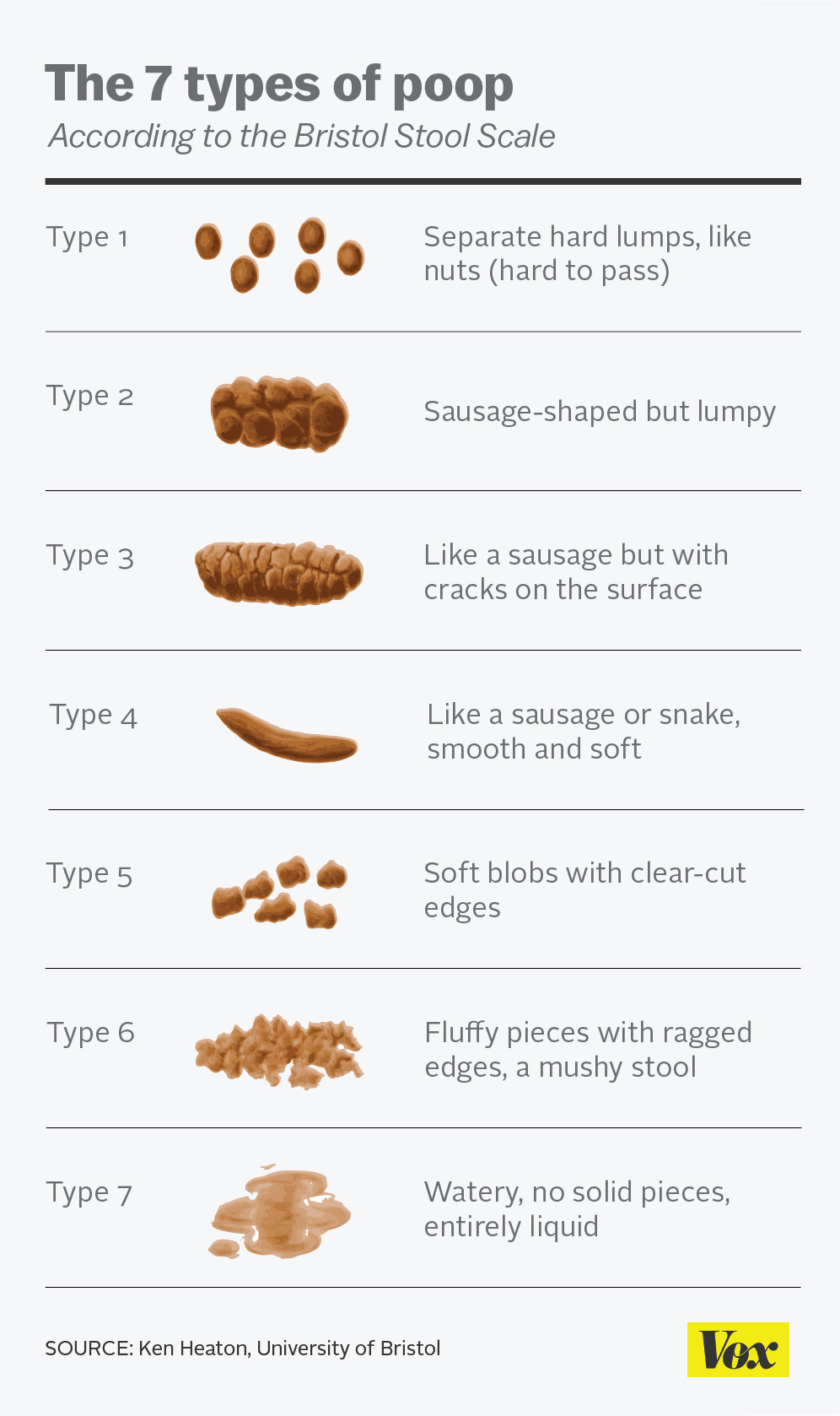
Years ago, when my daughter came home from college, she put her bag down and said, "give me a couple of minutes, I need to drop the kids off at the pool."

In case you don't understand what she was referring to, well, it is scatological, dear reader! ;)

Coming home apparently makes us poop.  For some, it is right away.  There are plenty, like me, who believe that there is no place like home when it comes to shitting:
“This is indeed a very familiar story,” says Nick Haslam, a professor of psychology at the University of Melbourne and author of Psychology in the Bathroom. “Most people feel more comfortable going to the bathroom in familiar—and private—surroundings.”
Imagine that--a professor has written about the psychology in the bathroom!

The author then spoke with "Jack Gilbert, a professor of surgery at the University of Chicago, and the director of the university’s Microbiome Center":
to understand whether there is a physical call-and-response between my home and my body that might trigger the need to make a deposit in the porcelain bank. Or is it simply that I feel more comfortable at home?
Good question, right?

BTW, how did you like her phrasing this as "make a deposit in the porcelain bank"?  A good one, right?

So, what does Gilbert have to say?
“When you get back into your home, your glucose tolerance will change,” he continues. “Your adrenaline pumping will change, and the energy sensors of your muscles will change, altering your actual respiration, how much energy your burn, and how much fat you deposit. When you get back into your home your sleep patterns will change, because the hormones that control sleep will be altered. All of these factors influence how quickly food moves through your gut.”
Anything else?
“We are essentially automata responding to environmental cues,” Gilbert says. “I’m pretty sure I can train you as a human being to pee when you smell peppermint. That’s an example of how much of an automaton you are. It would be technically possible to do that.”
We have been programmed that way; we are automata!  Like how even adults feel like they want to pee when you make a slow hissing sound--as kids, they were toilet-trained that way.

The craziest thing in that essay? The sentence that the author, Julie Beck, writes to wrap up her essay on pooping at home:
Think about that the next time you drop the kids off at the pool.
"drop the kids off at the pool" is perhaps the lingo of that generation of, ahem, kids ;)

(If you want, you can also check out these related posts: One; two; three)

Source

Wednesday, November 01, 2017

Virtual sin

A wonderful book-review essay in The New Yorker is about Martin Luther, on the occasion of 500 years since he hammered "his Ninety-five Theses to the doors of the Castle Church of Wittenberg, in Saxony."

Thanks to that essay, I now know that Luther did not really hammer those on the doors.  Makes for a nice story though.

There is plenty there to be impressed about.  One of those is this:
Luther was born only a few decades after the invention of printing, and though it took him a while to start writing, it was hard to stop him once he got going. ...
In the first half of the sixteenth century, a third of all books published in German were written by him.
Imagine if Luther had lived and died before Gutenberg had invented the printing press!  The Reformation was aided by the technological advancement of the day.

The printing press has been put to uses of many kinds since its invention.  Including for pornography.  Porn has always been at the cutting edge, ready to embrace the advancements in technology.  When it was print, porn in the papers.  Then porn in the films.  In the initial months and years of the worldwide web, porn led the way with web pages.  In an op-ed during those days, I wrote about how porn sites cleverly worked their addresses after popular websites.  A small little mistake took users, for instance, not to the White House page, but to a graphic porn site.  Porn also blazed the trail for payment and e-commerce.

And now, porn is all set for virtual-reality:
While virtual-reality pornography may feel like something out of a science fiction movie, it already has a formidable, if underground, presence. According to website Pornhub, views of VR porn are up 275 percent since it debuted in the summer of 2016. Now the site is averaging about 500,000 views (on Christmas Day in 2016, this number shot up to 900,000.)
By 2025 pornography will be the third-largest VR sector, according to estimates prepared by Piper Jaffray, an investment and management firm.
The primal, animal, urges that Luther's Christianity and other religions try to moralize about cannot be tamed that easily.

Porn, VR and regular, work for a simple reason:
Sex sells, and where there is money to be made, there will be entrepreneurs who want to adopt it and make money from it
The power of the market!

Many complications lie ahead, of course.  Not only in terms of technology, but also regarding ethics.  But, there is one issue that is increasingly the problem in these modern times that then fuels the need for VR porn too: Loneliness.
“There are people who are already lonely, and people who live their lives being alone. They work all day and come home to an empty house,” he said. “This is just offering an alternative to those types of people. They don’t have anyone else.”
Martin Luther did not have to worry about loneliness.  He was gregarious.  "He was frank and warm; he loved jokes; he wanted to have people and noise around him."  And he lived a happily married life, after theologically questioning "the requirement of priestly celibacy."

But, life now is not the life of five centuries ago.  Even a Luther cannot help us understand how to be happy and content in this modern kingdom.