Showing posts with label mosquitoes. Show all posts

Wednesday, April 28, 2021

Preventing the bad air

There are a few recurring topics in this blog.  I am obsessed with them.  Some day, when those issues end, I will stop blogging about them.

Like malaria and mosquitoes.  I hate those damn insects.  I have been blogging about them forever.  Soon after I brought the blog back up again, I wrote about the Asian tiger mosquito.  This was in 2009.  The Asian sucker went global and became “the most invasive mosquito in the world.”  Since then, there have been quite a few posts on the damn blood suckers that spread diseases and cause terrible human suffering.  

As a kid, I had only known about malaria.  Later, I learnt in school that there was something called a "yellow fever" that mosquitoes merrily spread.  Then dengue. Chikungunya.  Enough already!

I have been dreaming of a world without mosquitoes.  I won't miss them at all.  Instead of waging trillion dollar wars in which the US bombs the shit out of brown people, I have argued that the US should instead fund the development of anti-malarial vaccines that can vastly improve the quality of life of brown people.  All we did was elect a white supremacist, who said brown people should stay back in their shitholes!

Yet, there is a ray of hope.  There is promise of a malaria vaccine.

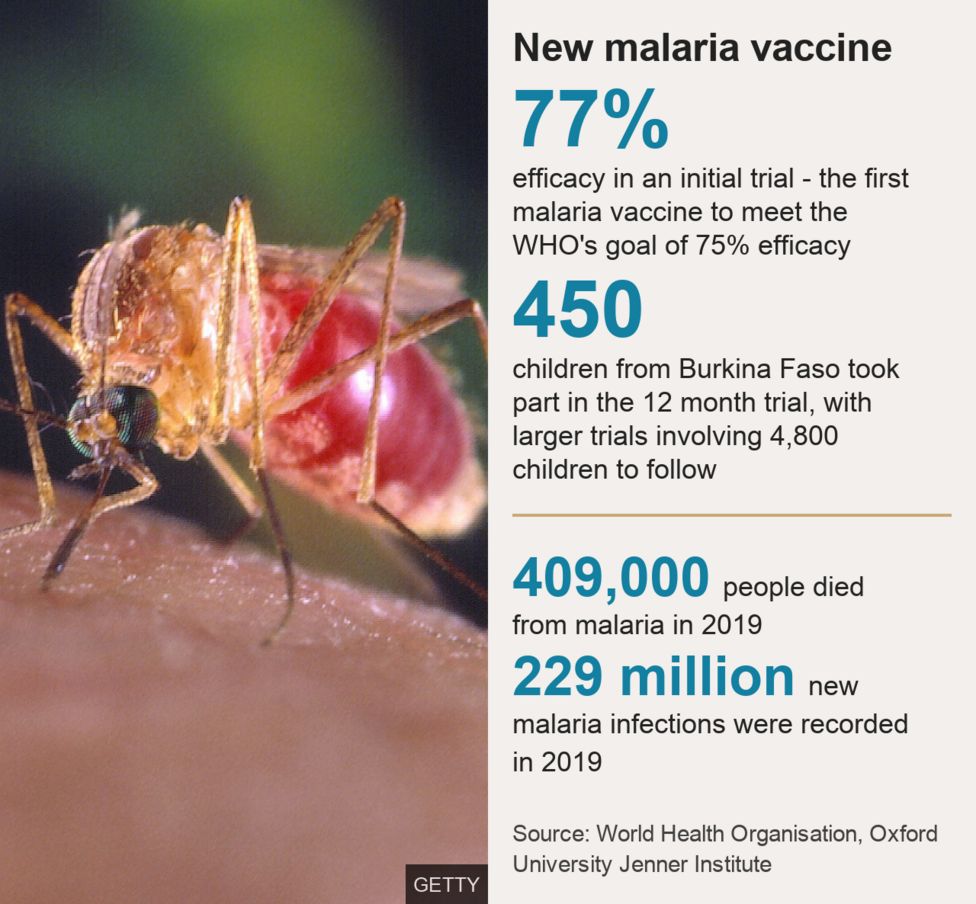
For the first time, a vaccine has shown high efficacy in trials – preventing the disease 77% of the time among those receiving it. This is a landmark achievement. The WHO’s target efficacy for malaria vaccines is over 75%. Until now, this level has never been reached.

In a pre-Covid world, this would have made the front pages of newspapers.  Now, when people are dropping dead from Covid, as my doctor described the happenings in his old country, 77% efficacy for a malaria vaccine in development doesn't seem to matter one bit.

If researchers could have figured out the vaccine formula a couple months into the Covid-19 pandemic, how come we haven't achieved anything against malaria?

It took researchers less than a year to develop a roster of effective vaccines against COVID-19, but half a century of toil has still not yielded a vaccine against malaria that meets the World Health Organization’s efficacy goal. Part of the problem is low investment in preventing a disease that predominately affects low- and middle-income countries. Another issue is the malaria parasite (Plasmodium spp.) itself, which has a complex life cycle and the ability to mutate key proteins, generating fresh strains.

How do the Covid-19 virus and the malaria parasite compare?

The malaria parasite is complex, with more than 5,000 genes, meaning it has many different characteristics for vaccine designers to choose to target. SARS-CoV-2, the virus that causes COVID-19, has just 12 genes, and its spike protein was the obvious target for vaccine scientists.

Malaria parasites have evolved with humans and their ancestors over the last 30 million years, not only generating a multitude of strains but also impacting our own evolution, with gene variants that lessened the effects of malaria being passed on over time. Worse still, these parasites generate chronic infections in millions, suppressing the human immune response that a vaccine tries to generate.

It has been a long-running battle against these blood-sucking drones.  Even if we can't eliminate them, maybe we can at least eliminate one of the diseases that they spread.

Sunday, January 31, 2016

Kill those damn suckers!

No, I am not referring to the ISIS. Nor to this evil creature.

No, it is not the union; think again ;)

I want us to kill the most dangerous animal of all, about which I have blogged before.  For years now, I have been dreaming of a world without them.

It is the damn mosquitoes that I want us to wipe out. Forever.  Not all the 3,500 species, but only the "6% of species that draw blood from humans."  Those are the suckers that I want gone.  They have caused nothing but misery for us humans throughout our existence.  The rapidly spreading Zika is the latest misery they have inflicted on us.

I am a man of peace, yes.  But, I have no patience for the blood-thirsty, disease-spreading, mosquitoes.  BTW, did you notice that even among that 6%, it is only the female kind that troubles us?  Now, that is a group of females that I can live without ;)

Daniel Engber is even more enraged than I am:
It’s time to kill all the mosquitoes. It’s time for mass mosquito-cide.
Sign me up for this war!

Engber writes:
Enough of the politeness: The ugly situation on the ground does not call for Integrated Mosquito Management; it demands a program of Total Mosquito Destruction. And here’s the thing: For the first time in human history, that dream could be realized. We have a better way to kill mosquitoes—a nuclear option—but up until this point we’ve been too afraid to use it.
And that option: to release millions of sterile males that would mate with the females.  (Do porn sites offer videos of mosquito sex?  hehehe)
 A PG-rated description of mosquitoes mating would go something like this: The female enters the swarm. A male seeks her out, his wing-beat slowing until it matches hers. Using his large front legs he grabs her back legs and swings under her abdomen. In less than a second the lovers are joined. And then, connected, they fly slowly out of the swarm while making out in mid-air. The entire coupling can take less than 16 seconds.
Understanding this 16 second frenzy, and making sure it doesn't lead to breeding, is the challenge
Now, if it is a sterile male that does the wild thing ... slowly we can wipe out those damn bloodsuckers.

I am sure there will be some pesky people who will complain about the unintended consequences from two issues here: a) that it is wrong to eliminate a species like this, and b) the sterile male comes via genetic modification.  To them, I have only two words as a response: who cares! This is war.  Either you are with us, or against us ;)
Whatever its unintended consequences (and there are always unintended consequences), the elimination of mosquitoes would save billions of human lives and trillions of dollars, in the decades to come. It would end untold suffering among the world’s poorest people.
Exactly.
When we eradicated the Variola virus, which caused smallpox, we rightly celebrated.
Precisely.  What is good for the smallpox and polio viruses is good for the six percent of the mosquitoes that kill and torture us humans.
"We are playing an evolutionary game with mosquitoes," says Hawkes. "Hopefully it's one we can get on top of over the next 10 to 15 years."
The good thing is that the Republican Party will not oppose this; after all, they don't even believe in evolution!  It is the bleeding-heart liberals who will oppose it without realizing that the blood is coming from mosquito bites ;)

Join us in this global war on terror.

Friday, April 25, 2014

The world's most dangerous animal

In my groggy state yesterday morning, I thought I heard a familiar voice through the radio.  "I know this voice" I kept telling myself.

And then it clicked.

No, that voice did not belong to the most dangerous animal that I am referring to.

The voice was of the nerdy, wonky, super-rich Bill Gates.

I perked up.

In response to the question of how rich countries were able to get rid of malaria, Gates replied:
They're mostly near the equator and so they're getting malaria on a year-round basis. The thing we have in the U.S. where we had malaria was that during the winter we had very few people who were carrying the malaria parasite. In subsequent winters you had less and less people carrying it over until eventually had zero.
But we don't have winters around the equator, so it requires far better tools than it required for the United States.
Yes, a paradise for the parasite and for mosquitoes.  The mosquito, dear reader, is one heck of a dangerous animal. (ht)

There is an old joke about how big is not powerful; the comeback to that is, "you spend a night in a tent with a mosquito and let me know."

A few years ago, I listened to a science journalist talk about her book with Terry Gross--I recall the journalist was an Indian-American, who had written a book on mosquitoes.  She said something to the effect that if we eliminated mosquitoes from this planet, there would be no difference at all.  Or, actually, the difference will be that we humans will be healthier.  I don't know if she was being serious or if that was a tongue-in-cheek comment, but in any case I would rather pay taxes to kill all the damn mosquitoes on earth.

It turned out that it was all because April 25th is World Malaria Day.  We need to build on the good work that has been done:
Since 2000, there has been a 42 per cent reduction in malaria mortality rates globally, and a 49 per cent decline in the WHO African Region. This progress has led some malaria-endemic countries, even those with historically high burdens of malaria, to start exploring the possibility of elimination.
The world knows how to get this done.  Lack of resources is the number one reason.  Not having enough money to go after the pesky malaria is understandable; after all, don't we first need money to build better and better bombs and missiles, and to eradicate forever erectile dysfunction? As George Carlin noted it is "dick fear"--bombs and missiles are so much dick-shaped and it is no wonder we want to spend all the money we can on making sure that the missile and the penis are upright and ready!

For those of you who are not teetotalers like me, if you are wondering what drink you could have to celebrate the day, make yourself a gin and tonic. Why?  The story goes back to the era of the British Empire:
Quinine powder quickly became critical to the health of the empire. By the 1840s British citizens and soldiers in India were using 700 tons of cinchona bark annually for their protective doses of quinine. Quinine powder kept the troops alive, allowed officials to survive in low-lying and wet regions of India, and ultimately permitted a stable (though surprisingly small) British population to prosper in Britain’s tropical colonies. Quinine was so bitter, though, that British officials stationed in India and other tropical posts took to mixing the powder with soda and sugar. “Tonic water,” of a sort, was born. ...
It was only natural that at some point during this time an enterprising colonial official combined his (or her) daily dose of protective quinine tonic with a shot (or two) of gin. Rather than knock back a bitter glass of tonic in the morning, why not enjoy it in the afternoon with a healthy gin ration?
The gin and tonic was born—and the cool, crisp concoction could, as Churchill observed, start saving all those English lives.
Let us save a lot more lives--English or not.  Not the damn mosquitoes' lives though!

Sunday, August 01, 2010

Oh for a world without mosquitoes!

Summers in this part of Oregon where I live is fantastic.  The best weather conditions that I could ask for.  And, no mosquitoes!  A total contrast to the life I experienced in India.  I recall one stretch of a few weeks in Madras (as it was known then) when I almost gassed myself to unconsciousness by spraying huge amounts of flit (i think that was the name of the product)

What I didn't know, until I heard Sonia Shah on "Fresh Air" a few days ago, was that mosquitoes have been around for a very long time, and have been biting the blood out of us for millennia. Shah was talking with Terry Gross about her book, The Fever: How Malaria Has Ruled Humankind for 500,000 Years

It was neat to hear Shah talk about her experiences whenever she visited India, and how the mosquitoes would attack her--she would be left with huge bruises and bumps, while her cousins would have nothing.

I can totally related to this: While the mosquito menace has decreased a lot in Chennai (as the city is now known) I find it more than annoying that those insects seem to target me way more than anybody else. 

My joke (!) has always been that they know I am from America, and prefer that foreignness in the blood.  So, it was not just my experience, after all, with mosquitoes and American blood!

I don't recall though Gross making any comments on a counterfactual scenario--what if all the mosquitoes were eliminated from the planet?

That is the question that this piece in Nature tackles.  
Malaria infects some 247 million people worldwide each year, and kills nearly one million. Mosquitoes cause a huge further medical and financial burden by spreading yellow fever, dengue fever, Japanese encephalitis, Rift Valley fever, Chikungunya virus and West Nile virus. Then there's the pest factor: they form swarms thick enough to asphyxiate caribou in Alaska and now, as their numbers reach a seasonal peak, their proboscises are plunged into human flesh across the Northern Hemisphere.
So what would happen if there were none? Would anyone or anything miss them? Nature put this question to scientists who explore aspects of mosquito biology and ecology, and unearthed some surprising answers.
About mosquitoes, I have often joked that the worst and biggest ones I ever encountered and in large numbers was in Alaska.  Apparently, I was not imagining:
Elimination of mosquitoes might make the biggest ecological difference in the Arctic tundra, home to mosquito species including Aedes impiger and Aedes nigripes. Eggs laid by the insects hatch the next year after the snow melts, and development to adults takes only 3–4 weeks. From northern Canada to Russia, there is a brief period in which they are extraordinarily abundant, in some areas forming thick clouds....
Mosquitoes consume up to 300 millilitres of blood a day from each animal in a caribou herd, which are thought to select paths facing into the wind to escape the swarm.
So, back to the question--how about wiping these insects off the planet?  First, note this:
Ultimately, there seem to be few things that mosquitoes do that other organisms can't do just as well — except perhaps for one. They are lethally efficient at sucking blood from one individual and mainlining it into another, providing an ideal route for the spread of pathogenic microbes.
Ready to kill 'em all?  Will the world's ecosystems suffer as a result?
The romantic notion of every creature having a vital place in nature may not be enough to plead the mosquito's case. It is the limitations of mosquito-killing methods, not the limitations of intent, that make a world without mosquitoes unlikely. And so, while humans inadvertently drive beneficial species, from tuna to corals, to the edge of extinction, their best efforts can't seriously threaten an insect with few redeeming features. "They don't occupy an unassailable niche in the environment," says entomologist Joe Conlon, of the American Mosquito Control Association in Jacksonville, Florida. "If we eradicated them tomorrow, the ecosystems where they are active will hiccup and then get on with life. Something better or worse would take over."

Saturday, October 03, 2009

From Calcutta to New Jersey .... the mosquito diaries :-)

If people can move, so can other animals.  And, thus, even can mosquitoes!

A couple of years ago, I ran into trouble (ed: when have you not run into trouble?!) for writing an opinion column that as long as humans move around the world, there will always be invasive species.  And, because there is no way we would ever force people to stay put, well, we can only expect more and more of species appearing in habitats far, far away from their original homes.

The latest in the example here is mosquitoes. (HT)
The modern city of Kolkata sits toward the western end of what could, until recently, have been called the natural range of the Asian tiger mosquito: a swath of land stretching from Pakistan to North Korea. Its ancestral habitat is in the forests of Southeast Asia, where it laid eggs in water-filled tree holes or the hollow insides of bamboo stalks, rarely travelling more than a few hundred metres from the cavity where it was born.

Over the course of the past two or three decades, however, the Asian tiger mosquito has become considerably, prodigiously more mobile. It has circled the planet, emerging in Trinidad in 1983; Mexico in 1988; France in 1999; Cameroon in 2000; Nicaragua, Greece, Israel and Switzerland in 2003. It has colonised North and South America, Africa, and Europe, until it has become a great nuisance in Brazil, Albania, Nigeria, Mexico and Italy – “the most invasive mosquito in the world”, a team of researchers wrote in 2007, in the journal Vector-Borne Zoonotic Disease. The mosquito from the Southeast Asian jungle is also now a great nuisance in Trenton, New Jersey – the greatest present-day mosquito nuisance in a wetland state whose history is written in waves of mosquito infestation.
What is the problem, you ask?
The Asian tiger mosquito is capable, in laboratory testing, of carrying and transmitting a variety of viruses, but so far, in the wild, it has been a less effective vector of disease than the yellow fever mosquito, with one notable and alarming exception. An outbreak of chikungunya – a virus that causes high fever and lingering joint pain – on the island of La Reunion in 2005, which infected 266,000 people and killed 248, was traced to a mutation in the virus that enabled it to be transmitted by the Asian tiger mosquitoes. Two years later, a tourist who had been in the Indian Ocean region passed through Ravenna, Italy. There, he encountered a local population of Asian tiger mosquitoes, which had arrived from the United States in a shipment of tyres. The convergence led to Europe’s first outbreak of the disease – and raised the possibility not only of chikungunya continuing to follow the mosquitoes around the world, but of diseases such as dengue or yellow fever making the same mutational leap. 
Of course, we then launch a war on mosquitoes:
New Jersey is merely the northern fringe of the Asian tiger mosquito’s US territory, which now includes the entire southeast, from the Gulf of Mexico across the south and more than halfway up the Atlantic coast. Mercer County and neighbouring Monmouth County, which together form a belt across the middle of the state, are in the second year of a five-year, $3.8 million project, backed by the United States Department of Agriculture, to try to bring the invading swarms under control.
Maybe yet another war we are going to lose!

Sunday, January 04, 2009

Hard to live green when just surviving

Chennai has been unseasonably warm during this visit, compared to my trips the last few Decembers. The overnight low, which is normally around 65 degrees, has been consistently and significantly above that — typically about 73 degrees. Is this a mere blip in the weather pattern, or a part of the overall climate change story?

Thanks to the cooler early morning temperatures, stepping out for a walk at 5 a.m. is an activity that I always look forward to. For one, it will be months before Eugene warms up to that temperature, and therefore I feel an urgency to enjoy the warmth.

Also, after having become accustomed to the milder Oregon climate, while I rush around the park in Chennai wearing shorts and a T-shirt, it is quite a sight to see the young and the old walk and jog wearing woolen beanies, scarves and sweaters. I suppose after getting used to temperatures in the high 90s and in the triple digits for most of the year, 65 can seem relatively cold to them.

This time, though, my sister mentioned the other day that she has yet to take the woolen blankets and sweaters out of the boxes. It is no wonder, then, that I have spotted very few people wearing sweaters in the park.

The much warmer overnight temperatures also have made the city a fertile breeding ground for mosquitoes. While not as huge as the mosquitoes that sucked the blood out of me in Alaska, the smaller ones here in Chennai are equally thirsty for nourishment and seem to enjoy my “American” blood, much to my discomfort!

Yet there is very little talk about the weather and climate change. Those topics have been pushed way back by the worsening economic conditions and the possibility of a war with Pakistan.

Furthermore, all it takes is one trip outside the comfortable enclaves in cities to the smaller towns and villages, where the majority of India lives, to understand why climate change fails to register as the biggest worry for the struggling millions. Thousands of villages and towns in India lack even the basic necessities of sanitation facilities and a protected and clean water supply.

As one commentator put it recently in an Indian newspaper, “Out of the 1.2 billion people who defecate in the open worldwide because they have no access to toilets, more than half are Indian.” Ouch!

When daily life for millions is thus severely constrained by economic and public health limitations, it is not difficult to understand why these issues might take precedence over climate change.

I am not dismissing the reality that as more and more Indians, Chinese and the rest of the world’s population become affluent, the more they also are going to contribute to global climate change — particularly given the reliance on inefficient carbon- based energy sources. And, of course, we could make a convincing point that even the poor in villages and cities need to worry about climate change because we are all doomed to experience its effects, irrespective of how poor or affluent we are. But the importance of climate change pales in relation to the immediate struggles of daily life.

Thus, with every trip, I am convinced even more that the burden is on us in the advanced countries, and the United States in particular, to take the lead on tackling this global environmental challenge. (It is ironic, indeed, that I should write about climate change after having traveled to the other side of the world in highly polluting jet planes!)

The economic recession gives us an opportunity to consider our enormous consumption — which is, after all, a significant part of the climate change story. We need environmental equivalents of Slim Fast to get us on to a consumption regimen that can help slow down this urgent global problem. The highly influential Oprah Winfrey can launch a “climate change diet” program — perhaps even a separate television channel, “O!-lite,” that will be exclusively devoted to this topic.

Maybe we can employ one strategy that we have used to educate and alert consumers about dietary consumption — the nutritional labels on food packages.

I can imagine easily the packing on the 56-inch high-definition TV or an iPhone having a “climate change” information chart similar to the nutritional labels — information on carbon dioxide emissions, for instance, comparable to the calorie data on a chocolate bar. We can then make decisions as informed consumers, just as some of us avoid junk food packed with fats.

Otherwise, it is equally possible that the bloodthirsty mosquitoes of Chennai will enjoy the warmer world, and write the final chapters of the planet’s story.

Published in the Register Guard, Jan 4, 2009