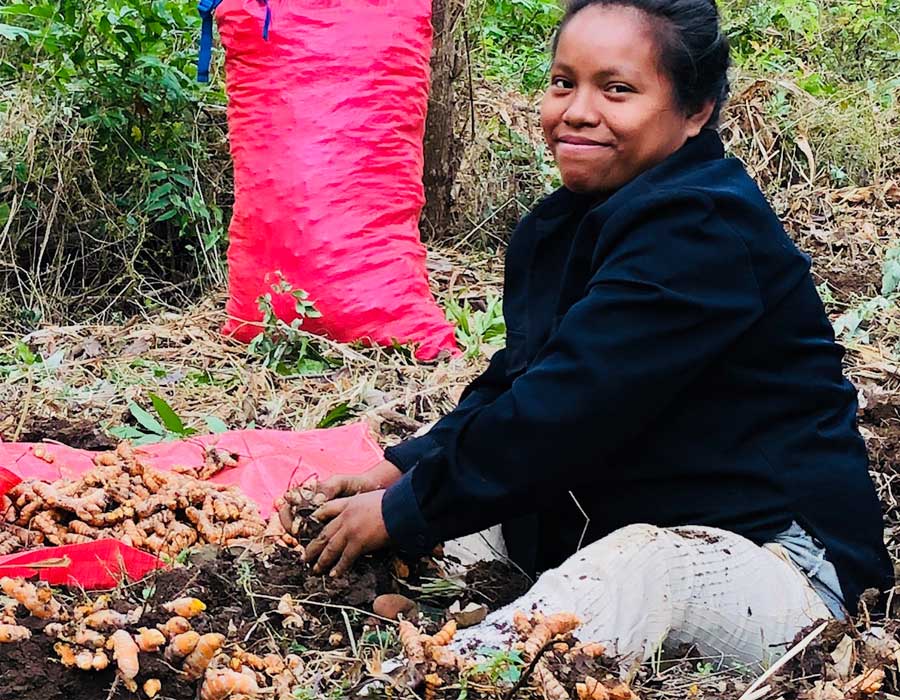
One word, dear reader. One single word explains them.
Superfood.
We live in crazy times. We have never had it so good. Ever. There is abundance of staples and pulses and milk and sugar and everything that one could ask for. We live longer and healthier lives than ever before. Yet, we are always in the search for the magical elixir that will give us long and healthy lives, as if life now is shitty. "We consume them like magic pills, as penance for our burger and fries we
eat a handful of mystical berries or drink a green juice and keep our
fingers crossed."
That search for the elixir means we have superfood de jour.
No, this post is not about any health value of any damn superfood.
But, this is about a superfood that is found in any kitchen in India: Turmeric.
When we were kids, there were plenty of reasons for us to need some kind of medical attention, as kids always are anywhere in the world. Turmeric was there as a trusted medicine dispensed by the apothecary, who was either mother or the grandmother. A bruise? Apply turmeric. Fever and cough? Drink warm milk with turmeric and pepper. (Click here, if you are interested) It is a surprise that the subcontinent is not full of yellow-skinned people from all that turmeric!
Turmeric. What I didn't know until now is this: Turmeric is now grown in Nicaragua too in order to meet the rapidly increasing demand in the US for this superfood. In Nicaragua!
All because of the curcumin in the superfood--turmeric. "Nicaraguan turmeric has registered at 7.9 percent" compared to "a high of 6.5 percent curcumin in turmeric from Kerala, India, compared
to an average of 3 to 3.5 percent in the crop from nearby Tamil Nadu." In Nicaragua!
Sooner or later, the turmeric fad in the US will fade away and be replaced with some other superfood. But, not in the kitchens across India.
I would never have imagined reading about "Murungaikkai" in the New Yorker. Another example of why I am such a fan of this magazine that I have been a subscriber for years now!
Before I get on the autoethnography train, a quick note first on Murungaikkai. In the old country, drumstick is the English word for that. You can, therefore, imagine my confusion when I was fresh off the boat and when I came across chicken drumstick ;)
The vegetable drumstick is from Moringa tree. The New Yorker essay, which is about the moringa as superfood, notes:
In India, where Moringa was first domesticated, two thousand years ago, the pods are commonly used in a popular dish called sambhar, which subdues their flavor in a rich gravy.
I never cared for murungaikkai in the sambhar. My favorite though was the dish my mother made with the tender leaves from the moringa tree: முருங்கை இலை பொரிச்ச குழம்பு I drool now thinking about that dish. Food is not merely about calories and nutrition; they are important pieces of the human stories that help me understand my existence.
In the old culture, centuries of experimentation with various plants resulted in the kinds of tasty foods that my mother and other women in the extended family cooked. Many of those are now being replaced by "modern" foods at such speeds that I wonder whether I will ever get to eat that dish after my mother dies; perhaps, I will wander about like the food critic, Anton Ego, whose memories of his mother's cooking are kindled by the ratatouille ;)
The New Yorker comments about the moringa leaf:
Its leaves, like cilantro, taste best when removed from their chewy
stems, a tedious process when cooking large quantities. Both the leaves
and the pods contain an oil that gives them a bold, peppery flavor—like
arugula, but stronger—which can be off-putting to some palates.
Ah, but when cooked like how my mother does, those leaves are magical elixirs.
The mothers who cooked and served the moringa leaves for their families were treating us to superfood, which is now eagerly sought after by the affluent:
For now, Moringa is gaining more popularity among wealthy,
Western superfood enthusiasts than among the underserved populations of
the dry tropics. Powdered Moringa leaves have become a trendy ingredient in power bars and smoothies in recent years. “We’re hoping Moringa becomes
the new kale,” Lisa Curtis, the twenty-eight-year-old founder of Kuli
Kuli, a San Francisco-based company that specializes in Moringa snack bars, powders, and energy shots, told me. The Kuli Kuli Web site, which refers to Moringa alternately
as a “miracle tree” and a “supergreen,” states that the plant roundly
outperforms kale, with “2 x protein, 4 x calcium, 6 x iron, 1.5 x fiber,
97 x vitamin B12.” (Olson said that he hasn’t seen data to support
these nutritional claims, but that the nutrient profile of Moringa oleifera“does
at least rival or exceed that of milk, yogurt, and eggs, serving for
serving.”) Superfood fans are already biting: this past year, Whole
Foods began carrying Kuli Kuli’s products nationwide. According to
Curtis, the company sold a million dollars in Moringa products in the first six months of 2016.
What is unfortunate is this: It is not clear whether people, especially in the poorer countries, understood the value of the moringa:
Olson is skeptical of the Moringa fad within wealthy health-food enclaves. “Trumpeting dried Moringa as the cure du jour for people in the rich West misses the real potential of this plant,” he said. He sees Moringa as
a kind of anti-superfood—not something to be frittered away as a luxury
supplement, like açaí berries sprinkled on oatmeal, but to be used as a
staple, an essential form of sustenance. Fahey agreed. “When you look
at maps of the areas in the world where Moringa grows, and then
at maps where populations are undernourished, it’s amazing—they almost
exactly overlap,” he told me. And, given the pressures of climate
change, this correlation may strengthen in the coming decades.
If only my grandmothers were alive to chuckle at how an age old practice is now being labeled as superfood, and that too in a world that will rapidly become hot and dry!
It can also be used for water purification and hand washing, and is sometimes used in herbal medicine
Both Wiki and the New Yorker essay missed out on another important feature of the moringa--its status as an aphrodisiac. Wait till the scientists figure that out; your inboxes will soon be flooded with moringa spam emails ;)