Showing posts with label bananas. Show all posts

Tuesday, November 06, 2018

Life without sex can have its downsides

Do not let the title of this post allow your imagination to run wild.  You are on a slippery path, dear reader!

The sex that this post is about is not about humans or porn.  Ditch that thought.  But, wait, don't go away.  You can always watch porn later.  Read this post, which will do you good ;)
Sex is nearly ubiquitous, but it hasn’t been easy to explain its ubiquity. ...
While sex may be a bit of a mystery to us all, it has been the grand enigma of evolutionary biology for decades.

No, it is not about humans.  It is about bananas and corn.  No, I am not using them as metaphors but literally.
Of the important global crops, the banana is the most genetically uniform. A single cluster of nearly identical genotypes, the Cavendish subgroup, nearly monopolizes the world’s banana groves and banana trade. In contrast to the riotous rainbow of genetic diversity that lends sustainability to natural plant and animal populations, the world’s banana industry has the stability of an upside-down Egyptian pyramid balanced on its tip.
That fact leads to another superlative: The commercial banana is the world’s most endangered major crop. The future of the intercontinentally traded banana was once, and is again, precarious.
Talking about the precarious state of bananas is not new here.  But, in that post, I didn't go into the importance of sex.

What about sex and bananas?

Domesticated banana plants are self-copying machines.
With the emergence of the 20th century, the confluence of the Industrial Revolution with plantation agriculture led to the propagation of a single globally favored banana genet (descended from a single instance of sperm-egg fusion) for export from the tropics to waiting markets in the industrial north.
So, why would I want you to think about sex when eating a banana?
Because most important crops reproduce only by sexual seed, they cannot be clonally propagated. Not surprisingly, the genetic variation generated by sexual reproduction is an obstacle for many folks looking to deliver a better crop product. For the past quarter century, some plant biotechnologists have argued that future crops should follow the banana, dispensing with sex entirely. Specifically, they are titillated by the idea of varieties that replicate the maternal plant via reliably uniform, asexual, apomictic seed.3 One proposal is that the plant breeders would maintain sexually fertile lineages that, when crossed, would create apomictic offspring. A second approach would be to genetically engineer plants to be apomictic. The seeds produced by either method could be delivered to farmers, who benefit from the crop’s uniformity.
So, is it a good thing, or a bad thing, to dispense with sex entirely?

It depends.
The explanation for sex isn’t straightforward. Sex is a hassle. To reproduce without sex, an organism can dedicate a cell toward creating a new individual, pump it up with some resources, and eventually set its baby free. The organism that uses sex to reproduce has a greater challenge; it has to create gametes that have to find other gametes. The process of seeking or attracting those other gametes typically involves allocation of resources to special structures and, in the case of animals, allocation of resources and time to special behaviors.
Why not let technologists work it out in the lab?
The original Cavendish-resistant Panama disease culprit has now been named Race 1. Panama disease fungi have evolved; the Race 1 genotypes are being replaced by one known as Race 4, which first appeared in 1965. Cavendish has no resistance to Race 4. The evolutionarily new and improved Panama disease organism has wiped out thousands of Cavendish acres in Southeast Asia. Since then it has been identified in the Pacific, Australia, Africa, and the Middle East. Worse yet, in 2011 Cavendish bananas in India started succumbing to what appears to be a new genetic variant of Race 1. The bad news is that Cavendish is fully sexually sterile.
Sex might be a hassle, messy, and needing resources.  But, it is key to survival. 
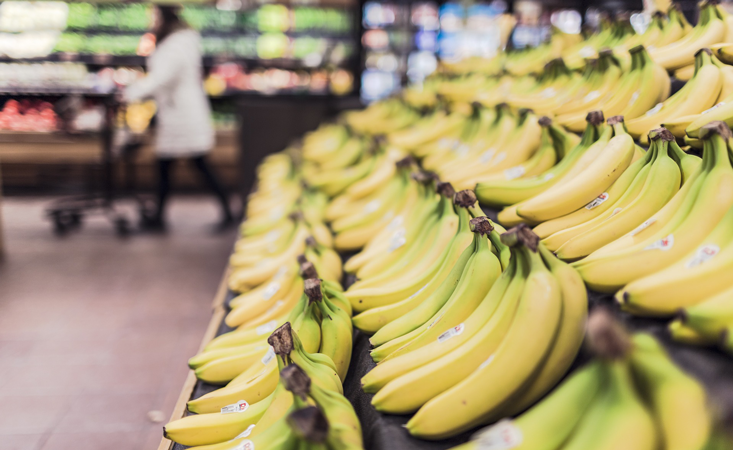
Source

Wednesday, January 20, 2016

Oh boy, the world is going bananas!

Decades ago, my rather cantankerous great-uncle decided that he had a great plan to earn quite some money from the fertile lands that had been passed down the generations--he would plant bananas in place of rice.

The family lore is that it looked like like he would really strike it rich.  The plantation was coming along great.  But, disaster struck in the form of sustained high winds and rains.  The field of dreams was wiped out only days before harvest time.  Those were the bad old times before crop insurance, and the man who bet his farm on bananas lost it all.

Trouble lies ahead for banana farmers.  It is of a different kind.  Literally a different kind--a fungus.
Crop pathologists call Fusarium oxysporum, a tiny, asexual soil fungus, the “silent assassin.” It enters plants through their roots and travels through their vascular tissue; by the time it is ready to sporulate, the plant is doomed. The fungus has adapted to human agriculture by differentiating: F. oxysporum f. sp. lycopersici causes tomato wilt; F. oxysporum f. sp. asparagi causes asparagus wilt; and F. oxysporum f. sp. cubense is slowly but surely wiping out the world’s banana supply.
No, "wiping out the world's banana supply" is not an exaggeration.
Specifically, the researchers warn that the strain, which first began wreaking havoc in Southeast Asia some 50 years ago and has more recently spread to other parts of Asia, Africa, the Middle East, and Australia, will eventually make its way to Latin America, where the vast majority of the world's banana exports are still grown. At this point, they say, it's not a question of whether Tropical Race 4 will infiltrate the mothership of global banana production; it's a matter of when.
Apparently this pathogen is an awful killing machine:
Tropical Race 4 is capable of killing at least 80%—though possibly as much as 85%—of the 145 million tonnes (160 million tons) of bananas and plantains produced each year
As with everything else, with this TR4 too the impacts on the poor will be worse:
The developed world prizes bananas as a food of convenience—it’s cheap, portable and reasonably healthy. In poor countries, however, bananas are often a basic source of nourishment for at least 400 million people. The average person in Uganda, Gabon, Ghana and Rwanda relies on bananas and plantains for more than 300 calories each day—around 16% of the UN’s nourishment threshold (and bear in mind that around 20% of the 74 million people living in those four countries are undernourished). Roughly 70% of all bananas consumed locally are vulnerable to Tropical Race 4.
The damn thing has even spread down under, by which I mean Australia:
The discovery of TR4 on the Cassowary Coast – that bountiful stretch of lush green valleys and rainforested ranges south of Cairns – cast a pall over a place that produces eight in every 10 bananas eaten in Australia.
 So, what can possibly be the way to save the Cavendish banana?  Scientists are working on two ideas:
(1) inserting a TR4-resistant gene from a different wild banana species from Malaysia and Indonesia, musa acuminata malaccensis, into the Cavendish to create a fungus-resistant version of the popular variety and (2) turning off a gene in the Cavendish that follows directions from the fungus to kill its own cells. 
Ahem, GMO banana?  That'll go well, won't it? ;)
Dale's introduction of a different GM experiment in 2014, a vitamin-A-fortified banana meant to help deliver nutrients to impoverished Africans, was met with harsh criticism from the likes of Indian environmental activist Vandana Shiva, Friends of the Earth Africa, and Food and Water Watch. "There is no consensus that GM crops are safe for human consumption," they wrote in a letter to the Bill and Melinda Gates Foundation.
Or, we could switch to the gazillion other varieties of bananas, instead of this one:
We could stop relying on Cavendish bananas. If you've ever tasted one of the dozens of small, sweet bananas that grow in regions like Central America and Southeast Asia, you probably aren't terribly impressed with the United States' doughy supermarket varieties. Belgium's Bioversity International estimates that there are at least 500, but possibly twice as many, banana cultivars in the world, and about 75 wild species.
Yes, like one of my favorites--the "malai vazha pazham", which translates to "hill bananas" because that variety is grown in the hilly terrains near Pazhani and Kodaikanal in the old country.  Ah, for some tasty old country bananas!


Monday, November 22, 2010

Woody Allen predicted the TSA scan porn ... kinda :)

In providing this hilarious Woody Allen video clip (from Bananas), Reason notes that all along we had the "solution to the problems posed by the underwear bomber" :)