Years ago, I was absolutely delighted with a statue that my grandma's town had installed in the town's center. A statue of Vanchi. The freedom fighter from the village who shot dead the British administrator for that region. As I noted in this post a while ago, "The old teenage emotions on colonialism and anti-Britain have never gone away inside me."
Of course, the bastard Raj ended more than seven decades ago. But, the scars are always there.
The George Floyd protests are echoing in European countries and reminding them about their horrific colonial pasts. Statues are being defaced and even thrown into the waters!
It is a time for all of us to think about our relationships with our own individual and collective pasts. Our lives today are not independent of the historical events. In fact, in many instances, our lives today are very much a result of historical events. The contemporary lives of Native Americans and African-Americans today, or the lives of the Dalit, are continuations of an unbearable past, how much ever some might want to pretend, or even believe, that looking back does not do any good.
We have no choice but to engage in difficult conversations. When my father asked me about the protests, I told him, "it is a white problem; not a black problem." If there weren't a white problem, we would not be witnessing protests and riots.
It is easy to claim that we are not responsible for atrocities committed in the past. But, that is a pathetically weak argument for so many reasons; the biggest of all is when our current fortunes are largely possible because of those atrocious practices.
I have often examined this in the blog. I have voluntarily looked at how the Brahmin supremacy of the past has made my awesome life possible. I even dragged into this discussion my sweet dead grandmothers.
I have blogged about universities that profited from colonialism and slavery. I have written about the white supremacist winston churchill--they make yet another movie that glorifies the bastard and the movie wins awards too! I didn't leave out Thomas Jefferson either.
Unfortunately, there are plenty of people in powerful positions who deny these. They shrug their shoulders. They actively engage in denying the past, and refuse to acknowledge how such practices continue in the present as well.
But, some of us continue with such examination anyway.
When privileged, it is easier not to talk about the troubling issues. It is easy to not even think about problems. What problems? Where? Why don't they all eat cakes?
We
will have to come to see and accept that this system of oppression has
been actively, energetically designed and deployed over centuries, and
it takes centuries of equally active and energetic efforts to dismantle
it.
We
must make ourselves comfortable with the notion that for the
privileged, equality will feel like oppression, and that things — legacy
power, wealth accumulation, cultural influence — will not be advantaged
by whiteness. ...
How will our white allies respond when
this summer has passed? How will they respond when civil rights gets
personal and it’s about them and not just punishing the white man who
pressed his knee into George Floyd’s neck? How will they respond when
true equality threatens their privilege, when it actually starts to cost
them something?
How quickly has this unfolded!!! Very little violence from from us civilians when compared against the magnitude of the protests ... I have a reference point--during the Rodney King riots, I was a grad student in LA, and was surrounded by smoke and fire, and sounds of gunshots and police sirens and helicopters ...
I hope that the protests this time around will bring about the long-delayed justice and equality, and that hose privileged by their skin tone will not view this justice and equality as loss of their privilege.
The following is a slightly edited version of my post from June 18, 2012, which I wrote after reading the news that Rodney King died.
***************************************
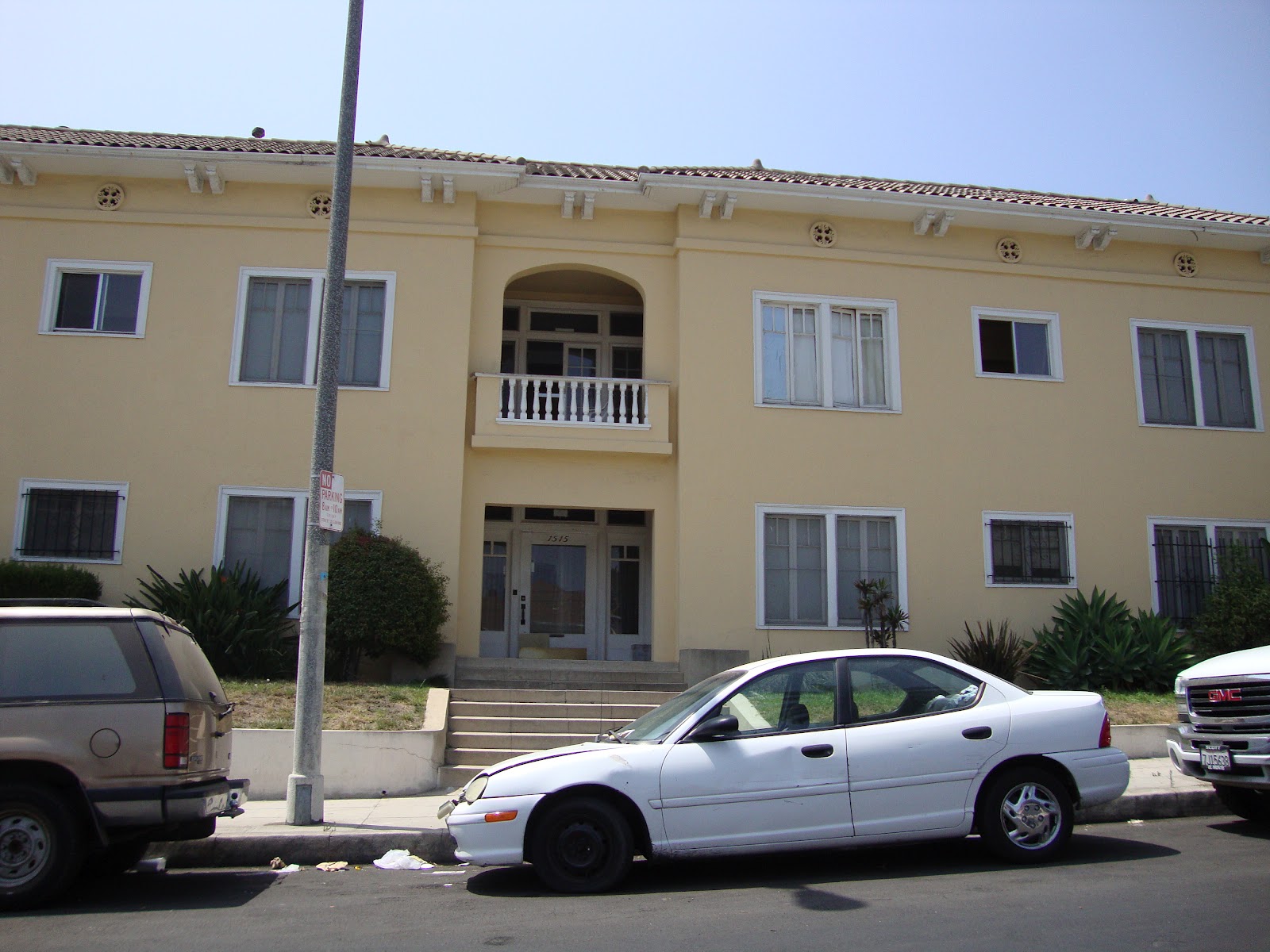
As a starving graduate student at USC, I lived quite close to campus, which was not any hot piece of real estate. After living in an apartment complex that was only a few blocks of a walk to the campus, I moved to significantly cheaper housing more than a mile away. I didn't understand, until much later, that it was also a drug-crime area!
There were many moments when I used to wonder how the neighborhood I lived in could possibly be there at all in the phenomenally rich country that the US is. A trip to New Orleans and walking through some of the neighborhoods there quickly straightened me out: my LA neighborhood was much better than some of the places I saw in LA's New Orleans.
To cut a long story short, the rioting took on crazy dimensions. People in buildings up and down the street were rushing here and there in their pickups and cars and coming back with shoes, tires, television sets, and anything they could lay their hands on. One guy told me to go to the Pep Boys store that was round the corner and grab whatever I wanted.
The building manager, who was a Japanese-American (his stories will be for yet another day!) advised me, in his halting English, that I should not even peep out of the window. I thought it was good advice, and turned the TV on.
Every local channel was covering the riots big time, and then in one I saw my neighborhood. A view from a helicopter above. I could see my own building. That was when the seriousness really hit me.
Two days or so later, when things had calmed down enough, I biked down the usual path, on Hoover, to the campus. Odd shoes were scattered all along the road--people were rushing that they couldn't be bothered to stop and gather the spills, I suppose. I passed the Pep Boys store, which had some awful black coating from the fires.
I reached the campus, where the perimeter was heavily patrolled by university and city police. I remember trying to talk to one officer, who simply brushed me off.
The entire riot was surreal. But, even more surreal was the original event--the beating of Rodney King, which was captured on camera. It felt unreal that real cops would really beat the crap out of a human like that.
I remember watching on TV Rodney King uttering those now famous words: "can we all get along?"
It was so profound. Such simple words with such heavy weight in those dramatic moments.
A few months after that, I think, when I was working at a public agency in downtown LA, I was one of the few people who rode the Long Beach Blue Line in its trial runs, and when they were filming publicity campaigns. From the train, I could see the Watts Tower and I was reminded of the narratives I had read and heard about the riots in the 1960s. Another reminder that even as things change, they remain the same?
A few years ago, I drove by those old haunts. Every building, including the apartment complex where I lived, looks so much more spruced up and bright than ever. Perhaps no more riots? Wouldn't that be an achievement?
Think about the US as 1799 was coming to an end. The end of the 18th century. The dawning of the 19th century. A new country with a brand new constitution. A couple of democratic elections and peaceful transfers of power. A land that was ready to launch its own industrial revolution.
What an awesome time, right?
Of course I am setting you up to remind you that having a constitution, holding elections, and ensuring peaceful transfer of power--important aspects of what we refer to as rule of law--is by no means any indicator of an awesome time. It was an awesome time if you were a white protestant male with property. It was hellish for the enslaved and the nearly-wiped out Native Americans.
What good was the constitution and the rule of law then? A constitution that did not even treat the enslaved humans as human beings, but lawfully protected slavery for three generations from the time it was adopted!
Historians and constitution scholars certainly engage in hair-splitting discussions on whether or not the document was pro-slavery.
Americans and their leading historians still find it hard to account for how their Revolution, considered as a quarter-century of resistance, war, and state-making, both strengthened slavery and provided enough countercurrents to keep the struggle against it going. Tougher still is understanding how the work of 1787 constitutionalized slavery—hardwired it into the branches, the very workings, of the federal government. Given the subsequent history of disfranchisement and policing in this country, it’s not a stretch to say that it is hard-wired there still.
But, let's cut to the chase. Apply Occam's razor principle. What the hell does rule of law mean when the very body--the constitution--allowed for humans to be enslaved and treated as property?
It is a straight line that links the constitution and the three-fifths compromise with Black Lives Matter and the electoral college.
Bryan Stevenson points out that even the modern day policing has its roots in the era when the runaway enslaved had to be returned to the white property owners! And how the police were instrumental in enforcing the law that treated blacks as less than equal:
Even before the Civil War, law enforcement was complicit in sustaining enslavement. It was the police who were tasked with tracking down fugitive slaves from 1850 onwards in the north. After emancipation, it was law enforcement that stepped back and allowed black communities to be terrorized and victimized. We had an overthrow of government during Reconstruction, and law enforcement facilitated that. Then, throughout the first half of the twentieth century, it was law enforcement and police and our justice system that allowed people to be lynched by white mobs, sometimes literally on the courthouse lawn, and allowed the perpetrators of that terror and violence to engage in these acts of murder with impunity. They were even complicit in it. And, as courageous black people began to advocate for civil rights in the nineteen-fifties and nineteen-sixties, when these older, nonviolent black Americans would literally be on their knees, praying, they were battered and bloodied by uniformed police officers.
I will bring the following again to your attention:
I do not believe that the meaning of the Constitution was forever “fixed” at the Philadelphia Convention. Nor do I find the wisdom, foresight, and sense of justice exhibited by the Framers particularly profound. To the contrary, the government they devised was defective from the start, requiring several amendments, a civil war, and momentous social transformation to attain the system of constitutional government, and its respect for the individual freedoms and human rights, we hold as fundamental today.
Those words are from ... wait for it, Thurgood Marshall!
So, tell me again why the rule of law matters?
I yield the rest of the space here to Marshall:
What is striking is the role legal principles have played throughout America’s history in determining the condition of Negroes. They were enslaved by law, emancipated by law, disenfranchised and segregated by law; and, finally, they have begun to win equality by law. Along the way, new constitutional principles have emerged to meet the challenges of a changing society. The progress has been dramatic, and it will continue.
The men who gathered in Philadelphia in 1787 could not have envisioned these changes. They could not have imagined, nor would they have accepted, that the document they were drafting would one day be construed by a Supreme Court to which had been appointed a woman and the descendant of an African slave. "We the People” no longer enslave, but the credit does not belong to the Framers.