Friday, March 06, 2020

On Berber and Pariah

The carpet in the condo unit looked different from other carpets that I had seen.  The agent said it was a Berber carpet.

Berber?

That was more than two decades ago, when Wikipedia hadn't been invented.  Those were the dark ancient history years.  In the absence of Google and Wiki, we men freely bullshitted and mansplained even when we didn't know a damn thing.  But, Berber carpet?

Fast forward a few years.  It is now a different geography, and life is in an era in which Google is not merely a brand name but when "go google yourself" is even the name of a racehorse!

We came to know a woman from Morocco.  An Amazigh, she said.

Amazigh?

We know her and her people by the other name--Berbers.  She explained that "Berbers" is an awful name that means "barbarians."

Wiki offers more on this:
The term Berber is a variation of the Greek original word barbaros ("barbarian"), earlier in history applied by Romans specifically to their northern hostile neighbors from Germania (modern Germany) and Celts, Iberians, Gauls, Goths and Thracians. The variation is a French one when spelled Berbère and English when spelled Berber. The term appeared first in the 4th century in the religious conflicts between Saint Augustine, a Numidian Berber-Roman bishop of the Catholic faith, and the Berber Donatists who were allies of the Barbarian Vandals. The Vandals migrated from Iberia (modern Spain and Portugal) where they were assailed by the Gauls allied to the Romans, and settled west of the Roman city of Carthage (in modern Tunisia) in the highlands (in modern Algeria).
Hence, the self-designation of Amazigh.

We thanked the visiting Moroccan for the explanation and the education.

A few months ago, I emailed her after reading this essay.  I wrote:
Until I met you, I hadn't known the word Amazigh.  And today I understand that "the name usually comes with the fanciful but evocative explanation that it is a translation of ‘free men’."  What a profound idea of "free men."  (Though, I suppose the traditional "men" literally meant only men?)
The essay introduces me to so many new names and ideas that it is tough for me to keep track of everything there.  But, one thing is clear: It is yet another piece of evidence on how European colonization messed up so many aspects of life all over the world!  Oh well ...
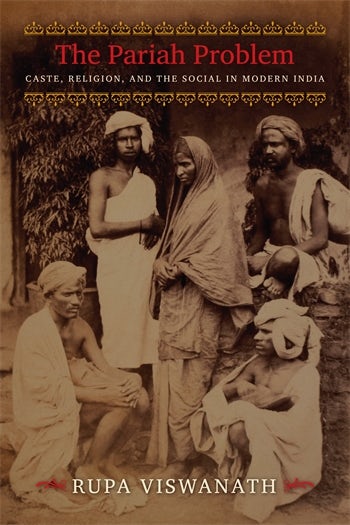
The white man went to India, too, and the world now uses the word pariah.  As a Tamil, it bothers me every single time I hear or read that word.  I have referred to this in a few posts in the past.  I wrote in this post:
The word "pariah" of course coming from the Subcontinent.  A word that in its usage in the old country that is as awful as the "n"-word in this culture.
But, the widespread usage means that one cannot expect that word to be withdrawn from circulation.  Which is why I thought that maybe we simply ought to own that word and celebrate how a word that was uttered in the old caste system has been internationally mainstreamed with users not even knowing anything about the origin of the word.

Such is life in this modern world that the white man has remade in his own image!
Source

Monday, March 02, 2020

In sickness and in health

A few Decembers ago, when I was visiting with my folks in India, the maid came a tad later than usual and set about her tasks.  She started coughing.  My father told her that it was ok not to show up for work as long as she called and gave them a heads up.

But, there is a reason that maids and other workers report to work even when they are not well, or well enough: In most cases, they will suffer a cut in their earnings if they don't show up for work.  It is only a fraction of the labor force in India that has the benefits of sick leave and paid vacations.

Now, superimpose on such a framework the possibility of a viral disease. An epidemic, like COVID-19.  The scenario easily unfolds in your minds too, eh.

The US is only marginally better.
Service industry workers, like those in restaurants, retail, child care and the gig economy, are much less likely to have paid sick days, the ability to work remotely or employer-provided health insurance.
The disparity could make the new coronavirus, which causes a respiratory illness known as Covid-19, harder to contain in the United States than in other rich countries that have universal benefits like health care and sick leave, experts say. A large segment of workers are not able to stay home, and many of them work in jobs that include high contact with other people. It could also mean that low-income workers are hit harder by the virus.
It is a large labor force without sick leave:
For many workers, being sick means choosing between staying home and getting paid. One-quarter of workers have no access to paid sick days, according to Labor Department data: two-thirds of the lowest earners but just 6 percent of the highest earners. Just a handful of states and local governments have passed sick leave laws.
Only 60 percent of workers in service occupations can take paid time off when they are ill — and they are also more likely than white-collar workers to come in contact with other people’s bodies or food.
And, yes, they are the ones who interact a lot with other humans, unlike the app-developing software engineer who tries his best to not deal with fellow human beings!  The low-wage and part-time workers in the US are, thus, in a situation similar to that of the maid at my parents' home:
for the average worker without paid sick-leave access, the lost wages associated with staying home for about three days would amount to their household’s entire monthly grocery budget or monthly utilities budget.
The outlook can be similarly bleak for gig workers for, say, a rideshare company or food-delivery service — many of whom aren’t eligible for benefits that would allow them to stay home and receive health care when they’re sick,
It is not difficult to understand how the virus has already spread far and wide, right?

Can anything be done?
Expanding the law to include pandemics as major disasters – as some lawmakers have urged – would make it possible for the president to make sure individuals affected by an outbreak have the support they need.
It would only take small changes like these to make the unemployment insurance program more useful to those sick, quarantined or temporarily idled during a pandemic.
While this will not solve all the economic problems caused by COVID-19, or the next pandemic disease, it would give American workers and the broader economy a lot more breathing room.
Giving workers a lot more breathing room is what I have often argued as the urgent need to rework the social contract and implement a stronger safety net.  If only 63 million Americans cared!

Source

Sunday, March 01, 2020

Coronavirus and civic duty

During the H1N1 scare, when I was visiting India, one of the relatives simply pooh-poohed the global worries by declaring that the virus is not new and that it has always been there.  Having learnt my lessons well, I decided that I would not argue with fools like him.  I smiled.  He then launched into a rant about how the controversy was manufactured by the pharmaceuticals industry.

More than a decade later, as I recall those interactions, I am now amazed at how much conspiracy theories have always been there even in medical contexts.  With every real threat, there are always nutcases that spout crazy theories.  Now it is COVID19.  The most recent Presidential Medal of Freedom honoree said this: “The coronavirus is the common cold, folks”.  He continued on: “It looks like the coronavirus is being weaponized as yet another element to bring down Donald Trump”.
As public health experts warn that the spread of the coronavirus is inevitable and urge Americans to take precautions, the pro-Trump media world has presented the subject as more fodder for partisan debate.
And then there are the rest of us who don't care about crazy conspiracies, but instead focus on the science and the evidence.  We understand the importance of this: "Getting ready for the possibility of major disruptions is not only smart; it’s also our civic duty."

It is a civic duty.  Indeed.
We should prepare, not because we may feel personally at risk, but so that we can help lessen the risk for everyone. We should prepare not because we are facing a doomsday scenario out of our control, but because we can alter every aspect of this risk we face as a society.
That’s right, you should prepare because your neighbors need you to prepare—especially your elderly neighbors, your neighbors who work at hospitals, your neighbors with chronic illnesses, and your neighbors who may not have the means or the time to prepare because of lack of resources or time.
I might be healthy enough that the virus might just about make me sneeze a few times.  But, I could also be spreading the virus through the sneeze. Or by carrying it in my fingers.  We need to play our part to flatten the curve of how it spreads:
Epidemiologists often talk about two important numbers: R0 or how infectious a disease might be, expressed as the number of people that are infected by each person who’s been infected; and the case fatality ratio (CFR): the number of people who die as a result of being infected. For example, an R0 of two means each infected person infects two people on average, while a number less than one means the disease is likely dying out in the population.
The CFR is out of my individual control--that is the task of the government machinery and hospitals and various organizations.  But, I can personally address the R0.
The infectiousness of a virus, for example, depends on how much we encounter one another; how well we quarantine individuals who are ill; how often we wash our hands; whether those treating the ill have proper protective equipment; how healthy we are to begin with—and such factors are all under our control. After active measures were implemented, the R0 for the 2003 SARS epidemic, for example, went from around three, meaning each person infected three others, to 0.04. It was our response to SARS in 2003 that made sure the disease died out from earth, with less than a thousand victims globally.
So, what are the estimates of R0 in the case of COVID19?  It is a wide range at this point, as epidemiologists try to make sense of the data.

Meanwhile, an epidemiologist cautions: “things are going to get shut down. And this virus is probably going to be with us for some time to come. It might become endemic, like measles.”

Who you gonna believe?  This President and the likes of his Presidential Medal of Freedom honoree on Faux News, or public health experts?  Oh, of course, if you are reading this, it means you are not one of the 63 million here in the US.  Good for you for being a responsible citizen!