It was the primitive days of the internet back in 1988 and, for all practical purposes, it was still the DARPNnet that was what research universities had made accessible to students like me also. In those internet-prehistoric times, we relied on groups like soc.culture.indian to get informed about the latest news on India.
It was through that group that I knew, within hours of the incident, of Zia-ul-Haq's demise twenty-four years ago.
I celebrated.
I never liked Zia. Primarily because I didn't care for anybody who got into power through a coup and did everything to weaken the democratic institutions and processes, which were weak to begin with in Pakistan. Further, as a kid, I had a soft spot for Zulfikar Ali Bhutto, and the atrocious manner in which Zia had him tried and executed didn't appeal to the teenager that I was then.
Zia's worst act was his systematic Islamization of Pakistan's society and politics, which has completely messed up the country. The country's founder, Jinnah, was a westernized counterpart to India's Nehru, and the newly independent country even chose to be under the British crown for a decade, when it became "Islamic" even in its official name. It took Zia's coup and his evil machinations for religion to enter into the public space in a big way, which then resulted in everything from assassinations to television censorship, all in the name of blasphemy.
The US conveniently made use of Zia and his Islamic allies, and actively supported and financed those fighting the Soviet Union, and the fighters included Osama bin Laden. The tangled webs we weave! Jeffrey Goldberg and Marc Ambinder summarized the US relationship with Pakistan really well: "The ally from hell." There is a good chance that within Pakistan, it is a similar feeling towards the US too!
Now, Pakistan is far from any "land of the pure" and comes across as one unruly place, with political and military leaders who seem to be remarkably messed up.
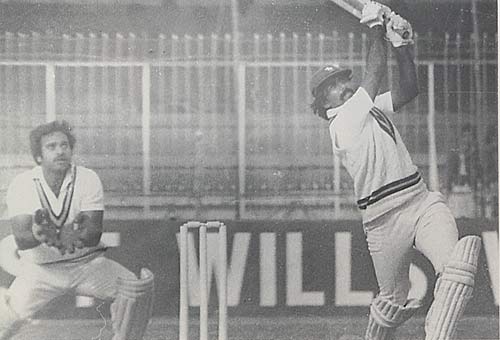
The New Yorker asks "Can a sex symbol and cricket legend run Pakistan?" In profiling the cricket legend Imran Khan, the article (subscription required) notes that whatever the outcome in the elections in 2013 (if there is no military coup before then!) "Khan is accomplishing at least one of his goals, by keeping alive a narrative of change in Pakistan."
I cannot imagine Imran Khan being able to sweep clean Pakistan's politics the way he pulverized India's cricket team time and again. The few times I have watched him being interviewed, it is understandable why the West finds him appealing. He is charismatic, talks wonderfully, and seems compatibly westernized.
But, when it comes to the ballot, I suspect that the typical Pakistani, how much ever they idolize Imran Khan for his cricket talent and success, might not vote in huge numbers for his political party and candidates. As in his personal life, politically too Imran Khan will turn out to be the proverbial guy with whom you have an affair but not marry and settle down for good.
Sriram Khé, blogging since 2001 ........... ............ And back again since June 2008
Saturday, August 18, 2012
Friday, August 17, 2012
The rich are different from you and me
The title of this post is, of course, from The Great Gatsby. That is a phenomenally succinct way to sum it up. Life is not the same as scaling with respect to incomes. The rich lead lives that are simply way different from yours and mine.
I have no hassles at all that there are rich people. We need more of them. But, it does make for interesting conversations and humor and, sometimes, schadenfreude too, like in this Zuckerberg wealth-o-meter from the Wall Street Journal :)
Forbes has always had a running list of big losers and winners--"real time billionaires" I have often wondered when a typical billionaire loses sleep: is it when they lose 300 million versus losing only 10 million? Do they simply ignore the daily fluctuations in their wealth? Or, win or lose, like Scrooge McDuck, do they go into the vault and roll around in their gold coins? :)
But, of course, all rich are not created equal. Some are more rich than others, and the difference is as significant (or even more, perhaps?) than the difference between the rich and me.
With two wonderfully informative charts, this Atlantic post notes
I have no hassles at all that there are rich people. We need more of them. But, it does make for interesting conversations and humor and, sometimes, schadenfreude too, like in this Zuckerberg wealth-o-meter from the Wall Street Journal :)
Forbes has always had a running list of big losers and winners--"real time billionaires" I have often wondered when a typical billionaire loses sleep: is it when they lose 300 million versus losing only 10 million? Do they simply ignore the daily fluctuations in their wealth? Or, win or lose, like Scrooge McDuck, do they go into the vault and roll around in their gold coins? :)
But, of course, all rich are not created equal. Some are more rich than others, and the difference is as significant (or even more, perhaps?) than the difference between the rich and me.
With two wonderfully informative charts, this Atlantic post notes
Forget gold. If Scrooge McDuck were around today, he'd be diving into a big pile of capital gains. Okay, and maybe some dividends too.They don't seem to work for salaries, as much as how money works for them!
Remember the Kerala professor whose arm was chopped off?
It was two years ago that extremists, in the name of defending their religion, chopped off the arm of a college professor in Kerala. In front of his family.
As if this wasn't enough, his employer soon fired him from his teaching job.
Whatever happened to him since then?
I am certain that I do not have even the tiniest percentage of the perseverance and determination that Joseph has.
No and No :(
As if this wasn't enough, his employer soon fired him from his teaching job.
Whatever happened to him since then?
Two years after his right palm was chopped off by alleged activists of the Popular Front of India (PFI), T.J. Joseph, former professor of Newman College, Thodupuzha, is still battling physical disability.All these mean that he has been forced to learn to live a new life:
The palm that was stitched back, his left hand and left leg still give him a great deal of pain and discomfort.
“I learned to write with the left hand and I still struggle with the fingers in the right hand as I can’t fold them. I also can’t fold the little finger in my left hand. I can’t walk properly as I had multiple fractures on the left leg as well,” he said.How terrible!
I am certain that I do not have even the tiniest percentage of the perseverance and determination that Joseph has.
Writhing in pain, T J Joseph is writing a book with his left hand, two years after that fateful Sunday.So, were the brutal attackers tried and sentenced to time in prison? Did the college realize its idiocy in firing him?
In between, life taught some bitter lessons to Joseph who taught Malayalam language and literature for hundreds of students over the years.
But he is on a positive note.
“There is a cause for every action. I am writing the book to tell the world that don’t ever give up,” he reveals his intention behind the endeavour.
Writing is not an easy affair for Joseph as his right hand is yet to regain its strength after the attack while his family considers July 4 as his day of resurrection.
The book would narrate his life in exile after a case against him, the attack, the painful hospital days and his vision about life.
He expects to complete the book in a year’s time.
No and No :(
The National Investigation Agency (NIA) which conducted the probe is yet to file the final chargesheet.A tragic irony that all these happened in Kerala, which is often hailed as a progressive state! To put it differently, if such things can happen in a "progressive" Kerala, then one has to wonder how much worse things might be in Bihar or Orissa--more than whatever is reported, that is!
The case Joseph filed against the college management is before the University Appellate Tribunal in Thiruvananthapuram. “I have two more years of service and I hope I will be reinstated as I have done nothing wrong,” he said.
Thursday, August 16, 2012
On Food, Friendships, and Facebook
Before my (un)professional colleagues shut me up at work, I used to take, every once in a while, cookies, brownies, and cakes to work, and share with a few--students and faculty. One faculty colleague remarked that sharing food--especially food made at home--rarely happens anymore in America. This contemporary state was unlike his own experiences when he was younger, and he argued that the reason was the price of food: it is now way less expensive than before and, therefore, we don't care about food itself that much anymore.
It is true that food is in plenty and accounts for a much smaller share of the household budget compared to even a generation ago. But, that could also be the basis for arguing that one would then expect more people to share food with others, right?
This issue came up when I met with my friends, "D" and "J" over lunch (thanks for the lunch, "D.") We caught up with our lives, which included a great deal of unfortunate developments, including deaths in the families. "D" remarked that the response across the generations was sharply different--the younger generations texted, or posted on Facebook, or emailed sympathetic messages, whereas the older generations who lived close by went beyond that and asked if they could help out by bring over food. The younger generations who lived close by didn't think about the food aspect.
I told her that sharing food with friends and neighbors is rapidly becoming a dying tradition. "Literally" said "J" whose mother recently passed away.
My best memory of a neighbor sharing food left me with a deep appreciation of the neighbor and the idea of sharing food. I was in high school when my grandmother died. In the traditional brahminical context in which I grew up, no celebrations for a year, which meant that we kids wouldn't get to eat all those wonderful goodies that mother would have otherwise made.
Well, fully aware of this, our neighbor then sent across home-made sweets for every major religious event that entire year. Not just a couple of pieces, but a tray full of tasty eats every single time.
It was not the sweets per se. The neighbor's actions were immensely louder than powerful than the most commonly expressed phrase of "I am sorry to hear about your loss."
Of course, the situation doesn't have to be mournful in order to share food. We can do it on good days too. One of my best experiences when I reconnected with old school mates was when they invited me over to have food at their homes. Equally wonderful was when I got some of them to come over to my parents' home to spend some time together and break that proverbial bread.
These experiences of interacting with, and understanding, friends is not the same as interactions with friends on Facebook. There is simply no comparison at all, which is what the NY Times' David Carr found out a few months ago when he was invited to a dinner with a bunch of people with whom he had had extensive online interactions. The host had baked the bread that Carr found to be very tasty, and he writes:
Carr notes:
A few months ago, my neighbor Carol was diagnosed with terminal lung cancer. A couple of times, I took food over to them. At the last one, before my road trip, I took her husband and son a chicken salad that I had made. Her husband, Jim, asked me whether I wanted to visit with Carol. I followed him to the bedroom, but she was asleep.
Carol died a couple of days ago.
It is true that food is in plenty and accounts for a much smaller share of the household budget compared to even a generation ago. But, that could also be the basis for arguing that one would then expect more people to share food with others, right?
This issue came up when I met with my friends, "D" and "J" over lunch (thanks for the lunch, "D.") We caught up with our lives, which included a great deal of unfortunate developments, including deaths in the families. "D" remarked that the response across the generations was sharply different--the younger generations texted, or posted on Facebook, or emailed sympathetic messages, whereas the older generations who lived close by went beyond that and asked if they could help out by bring over food. The younger generations who lived close by didn't think about the food aspect.
I told her that sharing food with friends and neighbors is rapidly becoming a dying tradition. "Literally" said "J" whose mother recently passed away.
My best memory of a neighbor sharing food left me with a deep appreciation of the neighbor and the idea of sharing food. I was in high school when my grandmother died. In the traditional brahminical context in which I grew up, no celebrations for a year, which meant that we kids wouldn't get to eat all those wonderful goodies that mother would have otherwise made.
Well, fully aware of this, our neighbor then sent across home-made sweets for every major religious event that entire year. Not just a couple of pieces, but a tray full of tasty eats every single time.
It was not the sweets per se. The neighbor's actions were immensely louder than powerful than the most commonly expressed phrase of "I am sorry to hear about your loss."
Of course, the situation doesn't have to be mournful in order to share food. We can do it on good days too. One of my best experiences when I reconnected with old school mates was when they invited me over to have food at their homes. Equally wonderful was when I got some of them to come over to my parents' home to spend some time together and break that proverbial bread.
These experiences of interacting with, and understanding, friends is not the same as interactions with friends on Facebook. There is simply no comparison at all, which is what the NY Times' David Carr found out a few months ago when he was invited to a dinner with a bunch of people with whom he had had extensive online interactions. The host had baked the bread that Carr found to be very tasty, and he writes:
Now, he could have told that story in a blog post or in an e-mail chain, but it became a very different story because we were tasting what he talked about. The connection in an online conversation may seem real and intimate, but you never get to taste the bread. To people who lead a less-than-wired existence, that may seem like a bit of a “duh,” but I spend so much interacting with people on the Web that I have become a little socially deficient.As I have often blogged (like here,) interactions on Facebook seem far from the real and substantive friendships that most of us prefer.
Carr notes:
you can follow someone on Twitter, friend them on Facebook, quote or be quoted by them in a newspaper article, but until you taste their bread, you don’t really know them.I suppose living in a neighborhood with a whole bunch of people much older than me means that I am lucky in having a lot more food-sharing people around me. "J" and "S" routinely invite me over to their place, and sometimes it is when "J" does that tastiest steaks I have ever had. "ML" brought me lemon bars that were simply fantastic. The cupcakes from "B" were awesome.
A few months ago, my neighbor Carol was diagnosed with terminal lung cancer. A couple of times, I took food over to them. At the last one, before my road trip, I took her husband and son a chicken salad that I had made. Her husband, Jim, asked me whether I wanted to visit with Carol. I followed him to the bedroom, but she was asleep.
Carol died a couple of days ago.
Wednesday, August 15, 2012
Stop and smell the ... forest fires?
The morning could not have started any better--a cool 59 degrees, and two cups of good coffee. I intentionally delayed having breakfast because I wanted to have it at Granzella's, which I hoped to reach after an hour and a half of driving.
The long and winding drive was absolutely scenic, initially through the wine country, and then on the leeward side of the mountains. All of a sudden, I smelled smoke. Momentarily I panicked that the engine had overheated. But, to my immense relief, the gauge reported normal conditions. No smoke behind me either.
That meant only one thing--there was some serious fire and I was driving towards it.
On the mountain stretch, it was not like I had any alternative routes to consider either. My only hassle was mundane--I hadn't had breakfast, and my stomach was making noises!
A couple of miles later, a digital message board said a delay of 30 minutes to two hours was possible because of fires. So, there was the confirmation.
Soon, I had visual proof of the fires, and it was not a pleasant landscape anymore. I pulled over to take in the scenery, and to take photographs as well.
It was like a gray winter landscape on a warm summer day. Surreal. And that smoky smell.
I got into the car, and heard a helicopter approaching. So, I was off the vehicle again, and watched the chopper fly over the area, and proceed towards where the fire was being fought, I guessed.
Quite a few fire engines suddenly came from around the bend, and raced on. I wondered how large the fire was, and how long the eventual road block would last for.
I drove, but barely for a few minutes and stopped, again, when I passed what seemed to a staging area for firefighters.
A couple more miles--the traffic had been stopped. It was obvious that one of the two lanes had been reserved for the emergency vehicles, and the regular vehicles in both directions will have to alternatively use the other lane. The line became longer and longer and longer.
More emergency vehicles rushed past us. As always, people were polite and even friendly and engaged in chit-chat while waiting out. After about half an hour, the long convoy of vehicles started showing up from the other direction, led by a highway patrol escort. Soon, that flow ebbed to nil, and it was our turn, with the highway patrol car as our leader.
As we slowly drove, I took photos of the smoke that got more intense on the side.
Flames were visible in some areas even through the thick smoke, though the flame is barely a speck in the photo below.
One of the first things I did after reaching home was to look for update on this fire. Apparently more than 300 firefighters are involved in this effort, which is significantly under control, and more than 7000 acres have been burnt.
This is merely one of the fires during the heat wave. I thank the firefighters, and wish them well.
The long and winding drive was absolutely scenic, initially through the wine country, and then on the leeward side of the mountains. All of a sudden, I smelled smoke. Momentarily I panicked that the engine had overheated. But, to my immense relief, the gauge reported normal conditions. No smoke behind me either.
That meant only one thing--there was some serious fire and I was driving towards it.
On the mountain stretch, it was not like I had any alternative routes to consider either. My only hassle was mundane--I hadn't had breakfast, and my stomach was making noises!
A couple of miles later, a digital message board said a delay of 30 minutes to two hours was possible because of fires. So, there was the confirmation.
Soon, I had visual proof of the fires, and it was not a pleasant landscape anymore. I pulled over to take in the scenery, and to take photographs as well.
It was like a gray winter landscape on a warm summer day. Surreal. And that smoky smell.
I got into the car, and heard a helicopter approaching. So, I was off the vehicle again, and watched the chopper fly over the area, and proceed towards where the fire was being fought, I guessed.
Quite a few fire engines suddenly came from around the bend, and raced on. I wondered how large the fire was, and how long the eventual road block would last for.
I drove, but barely for a few minutes and stopped, again, when I passed what seemed to a staging area for firefighters.
A couple more miles--the traffic had been stopped. It was obvious that one of the two lanes had been reserved for the emergency vehicles, and the regular vehicles in both directions will have to alternatively use the other lane. The line became longer and longer and longer.
More emergency vehicles rushed past us. As always, people were polite and even friendly and engaged in chit-chat while waiting out. After about half an hour, the long convoy of vehicles started showing up from the other direction, led by a highway patrol escort. Soon, that flow ebbed to nil, and it was our turn, with the highway patrol car as our leader.
As we slowly drove, I took photos of the smoke that got more intense on the side.
Flames were visible in some areas even through the thick smoke, though the flame is barely a speck in the photo below.
One of the first things I did after reaching home was to look for update on this fire. Apparently more than 300 firefighters are involved in this effort, which is significantly under control, and more than 7000 acres have been burnt.
This is merely one of the fires during the heat wave. I thank the firefighters, and wish them well.
Cool it, Sriram, cool it!
Time to head back home. As if to prove that all the proverbial roads lead to the same place, I am taking a different route back, for at least part of the way.
And it makes all the difference, it seems like.
At least with respect to the temperature--no 104 degrees. Not yet!
As I drove along the wonderfully scenic Pacific Coast, I glanced up to the rear-view mirror to make sure that the traffic was ok for me to pull over, when I noticed the temperature display. So, even as I was driving, I fished out my phone, and recorded the temperature:
The waves of the Pacific + Sun + 64 + a light breeze = Sriram pulling over to stop for a few minutes. Life is so unpredictable that if I didn't grab this, and what if I don't get such a chance again?
I got out of the car and inhaled the salty air. I felt so lightened of all my worries and tensions and stresses. No wonder an old advice was to take the ill to the seaside--a wonderful natural therapy it is. I wonder whether Obamacare will allow for trips to Tahiti as valid treatment protocols :)
I turned to scan the horizon and noticed a bird cautiously watching me. I got my camera out. It was, as I sensed, the man and the machine to capture the moment the bird would decide it had to get away from the human. I clicked, it turns out, at an opportune moment:
I lingered on for a while. Everything was too perfect to walk away. But, life is a lot more than a day at the beach. I got back on the road.
Every few miles, I checked on the temperature display. It eventually reached uncomfortable temperatures. But, this was not any moment in life where I could turn back.
The unbearable temperatures were only for a little while. Soon, it was in the bearable range. And then as the sun started descending, the temperature also went down--even faster. The walk after dinner confirmed that night time is the right time.
Tomorrow is another day!
And it makes all the difference, it seems like.
At least with respect to the temperature--no 104 degrees. Not yet!
As I drove along the wonderfully scenic Pacific Coast, I glanced up to the rear-view mirror to make sure that the traffic was ok for me to pull over, when I noticed the temperature display. So, even as I was driving, I fished out my phone, and recorded the temperature:
The waves of the Pacific + Sun + 64 + a light breeze = Sriram pulling over to stop for a few minutes. Life is so unpredictable that if I didn't grab this, and what if I don't get such a chance again?
I got out of the car and inhaled the salty air. I felt so lightened of all my worries and tensions and stresses. No wonder an old advice was to take the ill to the seaside--a wonderful natural therapy it is. I wonder whether Obamacare will allow for trips to Tahiti as valid treatment protocols :)
I turned to scan the horizon and noticed a bird cautiously watching me. I got my camera out. It was, as I sensed, the man and the machine to capture the moment the bird would decide it had to get away from the human. I clicked, it turns out, at an opportune moment:
I lingered on for a while. Everything was too perfect to walk away. But, life is a lot more than a day at the beach. I got back on the road.
Every few miles, I checked on the temperature display. It eventually reached uncomfortable temperatures. But, this was not any moment in life where I could turn back.
The unbearable temperatures were only for a little while. Soon, it was in the bearable range. And then as the sun started descending, the temperature also went down--even faster. The walk after dinner confirmed that night time is the right time.
Tomorrow is another day!
Tuesday, August 14, 2012
Monday, August 13, 2012
In the US, I met my enemies. And we became friends
As India and Pakistan mark their respective Independence Days, it occurred to me, yet again, that one of the many wonderful experiences in the US has been meeting people from India’s “enemies”—Pakistan and China—and becoming their friends.
As a kid, I was convinced by news reports that Pakistan and China were sworn enemies. After all, by then India had fought a total of four wars with them. One of the wars, in 1971 when I was barely seven years old, resulted in Bangladesh becoming an independent country, instead of its previous status as East Pakistan. During this war, there were nights when we were required to shut off all lights and maintain darkness—even though our small town was hundreds of miles from the battlefront itself.
Thus, it was no surprise that in schoolyard war games during the breaks between classes, many of us boys delighted in pretending that we were in the Indian army fighting the good fight against the Pakistanis and Chinese.
As the wars wore down the countries, Pakistan and India decided to embark on “cricket diplomacy” which made possible for the teams from both the countries to play against each other. It also coincided with the slow spread of television in India.
I had just about stepped into the teenage years when for the first time I watched on live television one of those cricket matches while on a visit to the big city of Madras.
The Pakistani players were nothing like what I had imagined and, in complete contrast, looked and behaved pretty much like the Indian players. I could not figure out how they could be so much like most of the Indians and yet be the enemy. And, yes, they played a wonderful game, too, which made it all the more difficult not to applaud them!
That cricket match on live television alone completely demolished the simplistic formula that Pakistan equaled enemy.
A few years later, a Pakistani was one of the first students I met as a new graduate student in Los Angeles. Like me, Siddiqui was also a first year graduate student, but in engineering. As we started talking, I realized that he was no different from me in many ways. There was no doubt that my elementary school buddies and I had seriously erred when we caricatured Pakistanis, and fired imaginary bullets in Siddiqui’s direction.
It was a similar story with students from China. Rongsheng routinely brought me Chinese snacks that either he had picked up from the stores or his wife had made. Tibet and the Dalai Lama were the only real issues over which we could not agree. But, friends we remained, even as we progressed from being students to fellow interns at a planning agency in Los Angeles.
India’s first Prime Minister, Jawaharlal Nehru, used a rhetorical phrase of “Hindi-Chini bhai bhai” that means Indians and Chinese are brothers. However, it took coming half way around the planet for me to quite easily realize that idealism of brotherhood among neighbors.
Over the years since, I have lost contact with the Siddiquis and Rongshengs from graduate school. There is a good chance that I would never have met such “neighbors” had I not emigrated from India. And what a terrible loss that would have been!
Of course, territorial disputes among between these countries persist. All is not well in the land of call centers that we imagine India to be. The simmering discontent in the disputed Kashmir flares up periodically, which is the current state of affairs up there in the Himalayas. On India’s eastern front, which neighbors China, most of the area is off-limits to foreigners because of geopolitical tensions, some of which are internal and others are related to China. It is quite an irony that I would need a special clearance from the Indian government if I decide to visit those scenic areas—because of the American passport that I carry.
As we mark the 65th birthdays of India and Pakstan, here is to hoping kids in these countries will not grow up thinking of their neighbors as enemies, and that the younger versions of Srirams and Siddiquis and Rongshengs will become very good friends.
U.S. outsourcing not fault of China or India
(For The Register-Guard, August 13, 2012)
At that time, outsourcing hadn’t entered the everyday political and cultural vocabulary, and Bangalore was unknown to most in the United States — after all, Thomas Friedman had yet to publicize these through his best-seller, “The World is Flat.”
Outsourcing enters our public discourse
only when it conveniently fits into political calculations. Sens. John
Kerry and John Edwards angled for votes by referring to outsourcing and
offshoring when they were on the Democratic ticket for the White House
in 2004. Now, both President Obama and Mitt Romney are talking about it,
but for all the wrong reasons that don’t seem to reflect in any way the
Harvard credentials they both have.
The sudden populism over outsourcing
reminds me of a Chinese saying that I recently came across: “If we don’t
change the direction in which we are headed, we will end up where we
are going.”
Twelve years ago, when I taught at
California State University, Bakersfield, I assigned a class of about 35
students the task of figuring out, through rough calculations, whether
Bakersfield could compete against Bangalore, India, when it came to call
centers that the local leaders were pursuing as a growth strategy.
At that time, outsourcing hadn’t entered the everyday political and cultural vocabulary, and Bangalore was unknown to most in the United States — after all, Thomas Friedman had yet to publicize these through his best-seller, “The World is Flat.”
Working in teams, the students
independently arrived at the same conclusion: Bangalore will beat
Bakersfield any day! My hope was that most of the class would have
understood through this exercise how their economic futures could become
increasingly dependent on developments in other parts of the world.
Well, we have now almost ended up where we
were going — economic activities that might have generated many middle
income jobs in the past have migrated to other countries that are
equally, or more, interested in their development. Therefore,
unemployment rates in the United States do not seem to be coming down
despite all our attempts. And, yes, “outsourcing” is now a part of our
lexicon and for which politicians have suddenly developed a fondness.
Yet we are not talking about outsourcing in
a constructive manner. Outsourcing is being used to portray China or
India as bad actors, when, in reality, they are far from any real
competition to us. The average Indian earns barely 5 percent of the per
capita income here in the United States. The average Chinese is in a
much better position than the average Indian, but the per capita income
there is only a tenth of that in the United States.
India and China are not our competitors,
but they are much poorer countries where people are eager to improve
their economic conditions.
Outsourcing economic activities to India or
China, or any number of other countries, has made possible goods and
services at remarkably low prices. From T-shirts to smart phones to
customer support, we would have to pay a lot more than we currently do
if there were no outsourcing at all.
It is not China’s or India’s problem that
we failed to change our own direction over the years when we enjoyed the
abundance of goods and services at affordable prices. Obsessed by the
Internet bubble, the events of Sept. 11, 2001, and the wars that
followed, and then the housing bubble, we continued to keep going
without even attempting to alter our course, seemingly oblivious to how
the economic structures all around the world were rapidly changing.
Should we then be surprised that it has
become extremely difficult to generate gainful employment that will keep
alive the American Dream for the middle class?
Obama beats up on outsourcing in order to
imply that the Chinese and Indians are taking away “our” jobs, which is a
highly screwed-up interpretation. And Romney doesn’t seem to recognize
that outsourcing and the globalization of the economy have not
translated to real economic betterment for the middle class.
Since the Great Recession, I have increased
the intensity with which I try to make students understand that any job
that can be sent to a different country will be sent, and that any job
that can be automated will be automated. Unfortunately, a captive
audience does not always mean an attentive audience.
I suppose we seem to be bent on making sure we will end up where we are going
Sunday, August 12, 2012
Thirukkural in a Russian restaurant run by Georgians!
When "S" suggested dinner at a Russian restaurant, my immediate response was, "Russian? Bland food?" But, I was assured that it is not really Russian, but the food is Georgian, and that I will love the two dishes that are "S"'s favorites.
A woman in a summery dress was straightening the outdoor tables as we walked in. True to the old stereotypes of smoking and drinking Russians, she had with her a pack of cigarettes as well. The eatery had to be authentic then!
We sat at a table, adjacent to a couple. Two tables were away was a lone young man who looked like he could be from one of the Central Asian "Stan" countries. At a far table was a group of three older men. I imagined that they were immigrants who had gotten together for their weekly conversations about the old country, and perhaps tell the same stories all over again, in their deep and gruff Slavic tones.
The walls were filled with handwritten notes in various languages. I scanned them, and I spotted a Thirukkural couplet. A wonderful couplet that will be meaningful in any culture:
The couplet roughly translates to:
To the right of the couplet was a vase/cup and spoon that was so much like the ones that Srikumar, my high school friend,, had gifted me back in the days when he was a student in the USSR. I still have that at home:
The food was awesome. Borscht and a chicken dish that is described in the menu as:
"Are all you folks from Russia and Georgia?" I asked her.
"We are from all over the old Soviet Union" she replied. "I am from Belarus."
"No kidding!"
"We have had people here from Latvia, Lithuania, and many of the old Soviet republics. We all talk Russian."
I so wanted to joke with her that I thought the Latvians and Lithuanians hated the Russians, but I didn't. Oh those Russians!
A woman in a summery dress was straightening the outdoor tables as we walked in. True to the old stereotypes of smoking and drinking Russians, she had with her a pack of cigarettes as well. The eatery had to be authentic then!
We sat at a table, adjacent to a couple. Two tables were away was a lone young man who looked like he could be from one of the Central Asian "Stan" countries. At a far table was a group of three older men. I imagined that they were immigrants who had gotten together for their weekly conversations about the old country, and perhaps tell the same stories all over again, in their deep and gruff Slavic tones.
The walls were filled with handwritten notes in various languages. I scanned them, and I spotted a Thirukkural couplet. A wonderful couplet that will be meaningful in any culture:
The couplet roughly translates to:
When one harms you, shame them by doing them good.Life is full of moments that are serendipitous.
To the right of the couplet was a vase/cup and spoon that was so much like the ones that Srikumar, my high school friend,, had gifted me back in the days when he was a student in the USSR. I still have that at home:
The food was awesome. Borscht and a chicken dish that is described in the menu as:
Shashlik: This hunter's joy on a skewer is grilled Thursdays through Sundays; please allow 25 minutes. It is said that this dish saved the Yalta Accords between Stalin, Churchill and Roosevelt in 1944.As we exited the restaurant, I noticed the summery-dress woman sitting outside.
"Are all you folks from Russia and Georgia?" I asked her.
"We are from all over the old Soviet Union" she replied. "I am from Belarus."
"No kidding!"
"We have had people here from Latvia, Lithuania, and many of the old Soviet republics. We all talk Russian."
I so wanted to joke with her that I thought the Latvians and Lithuanians hated the Russians, but I didn't. Oh those Russians!
Far and away from Oregon
No, it is not yet another post on how hot it has been. (If you need to know, well, the highest number I have spotted in my car's temperature display this trip: 104!)
Naturally, places with temperature conditions vastly different from where home is (if you need to know, well, the high there is a pleasant 82**!) have very different vegetation as well. That is, if there is any vegetation; Oregon has certainly spoilt me with a cool evergreen landscape that I miss already.
I went for a walk around Lake Miramar. Shocking it was that it was already 71 when I parked there at 7:15. With very little of trees to speak of in a dry and semi-desert environment, I wondered whether it was advisable to step off the road on to the dirt after reading a posted sign alerting people about rattlesnakes in the area.
But, stupid is as stupid does, and I did step off the road. Saw a couple of wild rabbits darting across. One stopped and looked at me, and I looked at him. Stupid me forgot that I had the phone-camera in my hand!
And then I saw this cactus:
That beautiful cactus alone made it worth all the exposure in the insane heat.
** Update: Apparently home temperature was also high: 95 today :(
Naturally, places with temperature conditions vastly different from where home is (if you need to know, well, the high there is a pleasant 82**!) have very different vegetation as well. That is, if there is any vegetation; Oregon has certainly spoilt me with a cool evergreen landscape that I miss already.
I went for a walk around Lake Miramar. Shocking it was that it was already 71 when I parked there at 7:15. With very little of trees to speak of in a dry and semi-desert environment, I wondered whether it was advisable to step off the road on to the dirt after reading a posted sign alerting people about rattlesnakes in the area.
But, stupid is as stupid does, and I did step off the road. Saw a couple of wild rabbits darting across. One stopped and looked at me, and I looked at him. Stupid me forgot that I had the phone-camera in my hand!
And then I saw this cactus:
That beautiful cactus alone made it worth all the exposure in the insane heat.
** Update: Apparently home temperature was also high: 95 today :(
Subscribe to:
Posts (Atom)