Manikandan is a twenty-year old final year college student in the southern Indian city of Chennai. His father drives an autorickshaw (a three-wheeled vehicle for hire) and his mother cleans four different homes. Neither parent has completed high school.
Before attending college in the evenings, Manikandan works for a courier company, in order to earn whatever little he can in order to help pay for the family's expenses. With his college program nearing the end, Manikandan has started applying for employment and has been called for interviews. He is looking for an entry-level job in any one of the Business Process Outsourcing (BPO) firms in the city, at a starting salary somewhere in the neighborhood of about 10,000 rupees, which, at current exchange rates, is about $200.
Yes, a job that pays the equivalent of about $200 per month is a dream job to an overwhelming number of Indians who, too, wish to have a decent life. This is, after all, a country where the per capita monthly income is just about $120, without adjusting for purchasing power.
Even a fifth grader in Jeff Foxworthy's TV show will know very well that nobody in the US will work for a monthly pay of $200. As I would joke with students in my classes, $200 can barely get us a cup of coffee at Starbucks anymore!
But, to Manikandan here in Chennai, $200 is a phenomenal opportunity to be gainfully employed and to help his sister and parents.
Of course, a call center is merely one type of outsourcing activities. Many kinds of work are often contracted out—from engineering designs for complex projects, to scanning documents and data entry. India's economic growth has resulted from extensive outsourcing operations, similar to how China has become the world's factory. So much so that on the last trading day of 2011, Tata Consultancy Services (TCS) became the largest Indian company in terms of market capitalization.
Investment analysts and commentators continue to place their bets on the leading Indian BPO firms: TCS, Infosys, and Wipro. As Thomas Friedman acknowledges in his bestselling and influential book, “The World is Flat,” it was the remarks of the founder of Infosys, Narayana Murthy, which catalyzed Friedman to think about the changing global economic geography.
Thus, given the importance of the BPO activities, Indian companies and the government are closely following the political rhetoric in the US over outsourcing. India's ambassador to the US, Nirupama Roy, noted that "we are currently making a detailed analysis of the impact of the bill on the BPO industry."
In a recent interview, Phaneesh Murthy, who is the CEO of one of the leading BPO firms, operating from the US, emphatically observed that "India should lobby aggressively that the offshoring of BPO business has created jobs globally and has boosted the global economy and made the U.S. corporations more profitable. It is important to realise that this has also created high-value jobs in the U.S., including consulting jobs."
At the end of it all, it makes no sense to me why politicians in the US and the US Congress felt it was the nation's priority to worry about outsourcing and to consider HR 3596 (the U.S Call Center Workers & Consumer Protection Act.) Under the guise of consumer protection, the bill is nothing but a variation of that tired old theme of "buy American."
The eventual outcome of the bill itself is not as important to me as much as my worry over the misguided and populist approaches to end the prolonged slump in employment creation in the US.
At the ground level, the bill and related populist rhetoric do not project a positive image of the US. Instead of focusing on creating jobs led by advancements in science and technology, as my adopted country has done in the past on its way to becoming the global economic superpower, the US now comes across as a selfish rich person trying to slam the doors on the young and promising, but poor, people like Manikandan.
As a popular "Tanglish" song, which has gone viral, asks, "why this kolaveri?"
Friday, December 30, 2011

Sunday, December 25, 2011
For want of three rupees! Customer (non)service :(
I walked to the other end of the Egmore Station in Chennai in order to get "platform tickets." Non-passengers who want to enter the railway station in order to say bye to their folks, are required to purchase platform tickets.
I was the fourth person in line when the guy at the head of the line was turned away because he didn't have the exact change for the ticket. He stepped to the side and waited.
The board advised those in line to have the exact change of three rupees per ticket. I knew I did not have the six rupees I needed for two tickets and worried that the woman at the counter would behave like Seinfeld's Soup Nazi and deny me the tickets as well.
It was my turn. But the female clerk turned her attention to the guy who was waiting, and yelled at him: "If you stand here, you won't get any change. Go out to the stores and get change, and then come here."
It will be a terrible understatement to write that I was shocked at such a rude behavior. It was bizarre.
I looked at him. Compared to me, he was immaculately attired, with a trim haircut and looked about 25 or 30.
"Two tickets, please" I said as I held out a ten-rupee note.
She looked at the currency bill and paused. I was sure the Soup Nazi would ask me to step aside.
She looked at me. And then, grabbed the bill, gave me two tickets and the change.
As I stepped aside, I asked the guy who was rejected, "how much change do you need?"
"I have a twenty."
"Ok, how many tickets are you buying" I asked him.
He wanted one ticket.
"Just one ticket?" I asked him. He nodded a yes.
I gave him a two rupee coin and a one rupee coin.
"Thank you very much" he said.
I started my walk back to the platform. Halfway through, he passed me at quite a speed walking of his, but paused for a second and said "thanks."
I hoped that what I had witnessed at the counter was not representative of customer service in India.
I was the fourth person in line when the guy at the head of the line was turned away because he didn't have the exact change for the ticket. He stepped to the side and waited.
The board advised those in line to have the exact change of three rupees per ticket. I knew I did not have the six rupees I needed for two tickets and worried that the woman at the counter would behave like Seinfeld's Soup Nazi and deny me the tickets as well.
It was my turn. But the female clerk turned her attention to the guy who was waiting, and yelled at him: "If you stand here, you won't get any change. Go out to the stores and get change, and then come here."
It will be a terrible understatement to write that I was shocked at such a rude behavior. It was bizarre.
I looked at him. Compared to me, he was immaculately attired, with a trim haircut and looked about 25 or 30.
"Two tickets, please" I said as I held out a ten-rupee note.
She looked at the currency bill and paused. I was sure the Soup Nazi would ask me to step aside.
She looked at me. And then, grabbed the bill, gave me two tickets and the change.
As I stepped aside, I asked the guy who was rejected, "how much change do you need?"
"I have a twenty."
"Ok, how many tickets are you buying" I asked him.
He wanted one ticket.
"Just one ticket?" I asked him. He nodded a yes.
I gave him a two rupee coin and a one rupee coin.
"Thank you very much" he said.
I started my walk back to the platform. Halfway through, he passed me at quite a speed walking of his, but paused for a second and said "thanks."
I hoped that what I had witnessed at the counter was not representative of customer service in India.
Roses are red, violets are blue, ... boogers are black?
An old joke about boogers is this:
Perhaps agencies like the EPA need not waste enormous time and money to monitor PM2.5 or any other pollutant, and can instead provide daily bulletins on booger colors reported by people!
Q: What is the difference between boogers and broccoli?Well, I am not sure whether that will be true anymore--kids might equally hate boogers too, given how black my boogers are here in India :)
A: Kids hate broccoli
Perhaps agencies like the EPA need not waste enormous time and money to monitor PM2.5 or any other pollutant, and can instead provide daily bulletins on booger colors reported by people!
Saturday, December 24, 2011
Speaking in (on?) tongues in Chennai
Towards the end of the term, a student, "G," came to my office to chat. Yes, to simply chat. "I don't know anything about you" he said, consistent with his excited and curious nature in the classroom.
When chatting, I told him about my Ecuador trip, and he asked me whether I knew Spanish, which, of course, I don't.
"It is that much more exciting to go to a place where I don't know the language" I told him.
Here in Chennai in India, often I feel like I don't know the language.
Even the Tamil language I know seems to be dated--there are newer expressions and cultural references about which I don't have a clue. To complicate things, people seem to talk way too fast. Well, speed is all relative, said Einstein; I suppose I talk way too slowly, much to the frustration of the local folks :)
But, it is not merely the Tamil language. As I noted before, overhearing people converse in Sanskrit was quite a serendipitous moment.
However, it doesn't even have to exotic as Sanskrit. The morning brisk walks in the neighborhood park provides me with enough sounds to humble me about how much I don't know.
A couple of days ago, while walking in the park, I was stuck behind a group of four men, who were clearly not there for the physical activity as much to talk and have a friendly time.
For a second, I was pissed off--they had blocked off the entire path, and they seemed not to care about those of us who were there for some serious walking.
In my mind, I contrasted this with how we behave on the bike path back in Eugene. We typically walk maybe two abreast, and three or more means that the group splits up with some in front and the rest behind.
Anyway, here I was stuck behind them. Turned out that it was a neat experience as well.
The four of them were talking not only in Tamil. They were casually mixing in English, Hindi, and Telugu.
I am always impressed with that kind of casual mixing in of different languages--perhaps all the more because I am language-challenged :)
Many of the old high school classmates, too, are fluent in speaking more than a couple of languages. Learning by the good old immersion approach, I suppose.
That kind of language learning through a combination of schooling and cultural immersion is one wonderful advantage that India and Europe offer their peoples.
Now, if only I could at least learn English, eh!
When chatting, I told him about my Ecuador trip, and he asked me whether I knew Spanish, which, of course, I don't.
"It is that much more exciting to go to a place where I don't know the language" I told him.
Here in Chennai in India, often I feel like I don't know the language.
Even the Tamil language I know seems to be dated--there are newer expressions and cultural references about which I don't have a clue. To complicate things, people seem to talk way too fast. Well, speed is all relative, said Einstein; I suppose I talk way too slowly, much to the frustration of the local folks :)
But, it is not merely the Tamil language. As I noted before, overhearing people converse in Sanskrit was quite a serendipitous moment.
However, it doesn't even have to exotic as Sanskrit. The morning brisk walks in the neighborhood park provides me with enough sounds to humble me about how much I don't know.
A couple of days ago, while walking in the park, I was stuck behind a group of four men, who were clearly not there for the physical activity as much to talk and have a friendly time.
For a second, I was pissed off--they had blocked off the entire path, and they seemed not to care about those of us who were there for some serious walking.
In my mind, I contrasted this with how we behave on the bike path back in Eugene. We typically walk maybe two abreast, and three or more means that the group splits up with some in front and the rest behind.
Anyway, here I was stuck behind them. Turned out that it was a neat experience as well.
The four of them were talking not only in Tamil. They were casually mixing in English, Hindi, and Telugu.
I am always impressed with that kind of casual mixing in of different languages--perhaps all the more because I am language-challenged :)
Many of the old high school classmates, too, are fluent in speaking more than a couple of languages. Learning by the good old immersion approach, I suppose.
That kind of language learning through a combination of schooling and cultural immersion is one wonderful advantage that India and Europe offer their peoples.
Now, if only I could at least learn English, eh!
iPhone: Made by Apple or Samsung?

Adds The Economist, which is the source of this graphic:
This puts Samsung in the somewhat unusual position of supplying a significant proportion of one of its main rival's products, since Samsung also makes smartphones and tablet computers of its own. Apple is one of Samsung's largest customers, and Samsung is one of Apple's biggest suppliers. This is actually part of Samsung's business model: acting as a supplier of components for others gives it the scale to produce its own products more cheaply. For its part, Apple is happy to let other firms handle component production and assembly, because that leaves it free to concentrate on its strengths: designing elegant, easy-to-use combinations of hardware, software and services.It is complicated!
Silent Night

Slowly, the days will start getting longer in the northern hemisphere ... to everything, turn, turn, turn
Friday, December 23, 2011

Main Bazaar, Pondy Bazaar, Big Bazaar, and the stalled retail revolution in India
A few weeks ago, a friend in Eugene reminded me about the bazaar at her church, for fundraising activities.
"You owe the British for having imported the word "bazaar" into the English language, thanks to their adventures in India and the Middle East" I commented with my half-baked understanding of the etymology in this context.
Well, perhaps whatever I know is half-baked, eh!
In the small industrial town where I grew up, the Main Bazaar was the commercial part of town. From clothes to electronics to bakery, it had them in a bazaar-styled layout. It is the bazaar air that the pedestrian single-story mall of contemporary new urbanism tries to capture too.
With the high school reunion only a few days away, I suppose I will soon find out how much that old Main Bazaar has changed, and how much of that old layout remains.
Here in Chennai, I went with my sister to a multi-level store that is like a Wal-Mart Superstore in Pondy Bazaar. This fancy new place is called "Big Bazaar" and is one happening place in the evenings.
Turns out that as is the case with the Wal-Mart kind of big box stores, this Big Bazaar also offers products at prices that are lower than those charged by the smaller stores. At least, that was the case with the few things we purchased at Big Bazaar.
If the prices in the sampling of merchandise are not any outliers, and are more typical in terms of lower prices than the smaller "mom and pop stores" then I have ground-level evidence on why the stalled openness in retailing might not be advantageous to the consumer.
"You owe the British for having imported the word "bazaar" into the English language, thanks to their adventures in India and the Middle East" I commented with my half-baked understanding of the etymology in this context.
Well, perhaps whatever I know is half-baked, eh!
In the small industrial town where I grew up, the Main Bazaar was the commercial part of town. From clothes to electronics to bakery, it had them in a bazaar-styled layout. It is the bazaar air that the pedestrian single-story mall of contemporary new urbanism tries to capture too.
With the high school reunion only a few days away, I suppose I will soon find out how much that old Main Bazaar has changed, and how much of that old layout remains.
Here in Chennai, I went with my sister to a multi-level store that is like a Wal-Mart Superstore in Pondy Bazaar. This fancy new place is called "Big Bazaar" and is one happening place in the evenings.
Turns out that as is the case with the Wal-Mart kind of big box stores, this Big Bazaar also offers products at prices that are lower than those charged by the smaller stores. At least, that was the case with the few things we purchased at Big Bazaar.
If the prices in the sampling of merchandise are not any outliers, and are more typical in terms of lower prices than the smaller "mom and pop stores" then I have ground-level evidence on why the stalled openness in retailing might not be advantageous to the consumer.
I worry that the problem is not merely about India opening up to a Tesco or Walmart. But that this is a serious symptom of acute problems in India. Fareed Zakaria also seems to worry about the same:While the Government is still hesitant about the next step, it's wrong to assume that global retailers will wait forever, say retail experts. “The Government is sending the wrong signals to global players. While they are wary of the policymaking process in the country, these retailers also now realise it will be a challenging task to tackle each State Government on APMC rules if FDI is ever allowed,” says Mr Arvind Singhal, Chairman, Technopak Advisors.Global retailer Walmart has indicated that India allowing 51 per cent FDI in retail had actually exceeded its expectations. In view of the political sensitivity, the company was comfortable with a 49 per cent FDI.Mr Raj Jain, Managing Director and CEO, Bharti Walmart, had said in November that while the FDI nod was welcome, the company will need to study the conditions and the finer details of the new policy and the impact it will have on its ability to do business in India.
Last week marked exactly 10 years since the term BRIC was coined. The catchy acronym for Brazil, Russia, India and China used to describe the new powerhouse emerging markets. But the man who invented the moniker now says one of the four has been a great disappointment. No, not Russia, with all its recent troubles; not Brazil, whose economy contracted in the last quarter; and certainly not China, which continues to power on.I hope India will soon correct its course; else, Indians might have to worry a lot about the Mayan prophesy!
Goldman Sachs' Jim O'Neill says that the country that has been the biggest letdown has been India. He pointed out last week that India's inability to attract foreign investment could actually lead to a balance of payments crisis. From BRIC to basket case, "What in the World?" is going on?
Well, some numbers tell a troubling story. Growth has dipped below 7% for the first time in two years. The Indian rupee is Asia's worst performing currency this year, falling to a historic low against the dollar.
India's deficits are soaring and funding is drying up. India received less than $20 billion in foreign direct investment in the first six months of 2011. China got three times that amount. Even Russia, with the smaller GDP, took in more.
Why is India struggling? Sadly, the real problem isn't economics. India has a very dynamic private sector - probably the most dynamic in the emerging markets. But it has a government that simply doesn't work.
Thursday, December 22, 2011
Coal, Santa Claus, and the environment ... in cartoons :)
The Durban Debacle having ended only recently, in time for Christmas, means that editorial cartoonists have so many variations of the theme:

and this:

and this:

Maybe I should not chit-chat at the sales counters in India?
Blog readers--yes, I am talking to you--know well about my penchant for conversations with the personnel at checkout counters, back in the US. Continuing with that personality might not do me good here in India!
The Depression-era mentality of my parents, though they are not that old to have been brought up during those dreadful years, means that there is a whole lot of old stuff being used at home. Maybe keeping useless things is also how they tolerate me, eh! And, those not being used are tucked away in lofts, boxes, nooks, and crannies.
Today's battle was over the old cordless phone that is quite a pain to use. It should have been tossed into the bin (not on the street) oh, a couple of years ago. After a few years, I finally won that battle, with my sister providing additional ammo :)
So, off we went to the electronics superstore, Croma. It felt like India's version of the Best Buy kind of American stores.
My sister picked up a Panasonic model, as the sales woman approached us.
"Hey, any deals today? Buy this and get 5,000 rupees off, or something?" I asked the sales person.
She looked at me as if I had stepped off an alien aircraft. Perhaps I am an alien in India now, as much as I was one in the US until naturalization.
The sales person shifted her attention back to my sister. I backed away.
As we exited, I had to stop to pick up the bag that I had left at the counter. I told the security guard that there was no deal, and I needed my bag back. He couldn't care any less.
As we exited the store, I thought that either the culture is different, or my delivery is accented, or both. In any case, maybe I should simply shut up :(
It is a tough audience here :)
The Depression-era mentality of my parents, though they are not that old to have been brought up during those dreadful years, means that there is a whole lot of old stuff being used at home. Maybe keeping useless things is also how they tolerate me, eh! And, those not being used are tucked away in lofts, boxes, nooks, and crannies.
Today's battle was over the old cordless phone that is quite a pain to use. It should have been tossed into the bin (not on the street) oh, a couple of years ago. After a few years, I finally won that battle, with my sister providing additional ammo :)
So, off we went to the electronics superstore, Croma. It felt like India's version of the Best Buy kind of American stores.
My sister picked up a Panasonic model, as the sales woman approached us.
"Hey, any deals today? Buy this and get 5,000 rupees off, or something?" I asked the sales person.
She looked at me as if I had stepped off an alien aircraft. Perhaps I am an alien in India now, as much as I was one in the US until naturalization.
The sales person shifted her attention back to my sister. I backed away.
As we exited, I had to stop to pick up the bag that I had left at the counter. I told the security guard that there was no deal, and I needed my bag back. He couldn't care any less.
As we exited the store, I thought that either the culture is different, or my delivery is accented, or both. In any case, maybe I should simply shut up :(
It is a tough audience here :)
Wednesday, December 21, 2011
From within, the Indian economy seems even less rosy
If and when students ask me about the prospects for the US, I tell them that my long-term bets are always on my adopted country.
The USSR came and went. The Sun briefly rose in Japan, and then sank really fast. China is only a powder-keg away from the Communist party unraveling and, in any case, the country is far from ready to deal with the coming demographic implosion.
The "native" country?
I quote the title of Amartya Sen's book, The Argumentative Indian, and tell students that the virtue of all-talk all the time on any topic will continue to constrain its economic progress. (Though, such a take on the title is not what the book is about.)
Thus, the US wins one of two ways: either it genuinely is creative and gets ahead, or it simply waits for others to fall and then be the last one standing. Like with the case of the Eurozone now.
A few days into the India trip, and I see no evidence to the contrary. The data points suggest to me that India's success might have been oversold, too.
There is a huge increase in consumption, yes. Everything from chocolates and chips to computers and cars. But, long-term investments that could propel continuous productivity enhancements seem to be severely lacking. From the physical manifestations in roads and power supply to education and health.
Only a few days, and this is rather depressing.
A number of areas where in the US market and non-profit ventures kick in to meet demand are through the government, here in India. There is, in fact, an expectation that government ought to do certain things, and that it is not delivering those goods and services.
Government is thought of as the default option. And that is what bothers me. As much as I am far from being a maniacal Republican, and with enormous sympathies coming from the left of the political center, I find it troublesome when people casually sit back expecting the government to do things.
Government, meanwhile, at the federal and state levels, is severely paralyzed--not any surprise given that the best (worst?) of the "argumentative Indians" go on to politics. The Economist picks up on this point of paralysis:
The piece in the Economist was jarring for another reason: it refers to the government as "rulers." In a democracy, leaders do not rule but govern. In the US, we don't think of the President or a governor as a "ruler." While the usage in the Indian context could have resulted from a lack of editing, perhaps it was intentional: referring to how much the people are "ruled" by state and federal governments.
It is no surprise, therefore, that the economic health of India is not looking good:
On the other side of the planet, back home in the US, things are picking up. Yep, my long-term bets are always on the US.
If only Indians were a little less argumentative :(
The USSR came and went. The Sun briefly rose in Japan, and then sank really fast. China is only a powder-keg away from the Communist party unraveling and, in any case, the country is far from ready to deal with the coming demographic implosion.
The "native" country?
I quote the title of Amartya Sen's book, The Argumentative Indian, and tell students that the virtue of all-talk all the time on any topic will continue to constrain its economic progress. (Though, such a take on the title is not what the book is about.)
Thus, the US wins one of two ways: either it genuinely is creative and gets ahead, or it simply waits for others to fall and then be the last one standing. Like with the case of the Eurozone now.
A few days into the India trip, and I see no evidence to the contrary. The data points suggest to me that India's success might have been oversold, too.
There is a huge increase in consumption, yes. Everything from chocolates and chips to computers and cars. But, long-term investments that could propel continuous productivity enhancements seem to be severely lacking. From the physical manifestations in roads and power supply to education and health.
Only a few days, and this is rather depressing.
A number of areas where in the US market and non-profit ventures kick in to meet demand are through the government, here in India. There is, in fact, an expectation that government ought to do certain things, and that it is not delivering those goods and services.
Government is thought of as the default option. And that is what bothers me. As much as I am far from being a maniacal Republican, and with enormous sympathies coming from the left of the political center, I find it troublesome when people casually sit back expecting the government to do things.
Government, meanwhile, at the federal and state levels, is severely paralyzed--not any surprise given that the best (worst?) of the "argumentative Indians" go on to politics. The Economist picks up on this point of paralysis:
Investors and others lament policy paralysis. Ministers shy away from big decisions, fearing accusations of graft—though Mr Singh this week urged them at least to get on with infrastructure spending. Meanwhile an obstructive opposition, the Bharatiya Janata Party (BJP), has caused gridlock in parliament for much of the year, hoping to tap public fury over corruption.It is a similar story of paralyzed and incompetent governance at the state level--at least in Tamil Nadu, where I currently am.
As a result, the current parliament has done the least work of any in a quarter of a century.
The piece in the Economist was jarring for another reason: it refers to the government as "rulers." In a democracy, leaders do not rule but govern. In the US, we don't think of the President or a governor as a "ruler." While the usage in the Indian context could have resulted from a lack of editing, perhaps it was intentional: referring to how much the people are "ruled" by state and federal governments.
It is no surprise, therefore, that the economic health of India is not looking good:
Local and foreign investors are already unnerved by a global slowdown. Political intransigence, continuing corruption, high inflation and the possibility that India will miss its fiscal targets all add to the government’s woes.Another metric of the economic outlook is the exchange rate, where the rupee seems set to fall even further:
International investors are boosting bets that India’s rupee will extend the worst slide since 2008 as an economic slump deepens, suggesting a lack of confidence in the central bank’s steps to curb exchange-rate volatility. ...All is not well. I am all the more convinced that the US politicos should stop playing the "compete against India" card.
The rupee, the worst performer against the dollar among Asian currencies and of the so-called BRIC nations in 2011, plunged to a record low of 54.305 per dollar on Dec. 15, poised for a third straight quarter of declines, data compiled by Bloomberg show.
On the other side of the planet, back home in the US, things are picking up. Yep, my long-term bets are always on the US.
If only Indians were a little less argumentative :(
Hitler in Chennai's Pondy Bazaar :(
If only I had the camera with me!
Back in the USA, I didn't pack my nail cutter--damn the TSA for messing me up! And so I ventured out for a casual walk up to Pondy Bazaar, confident that I will have plenty to choose from.
So, there I was slowly walking, trying to simultaneously look at the storefronts and the path ahead of me.
I noticed a small book stall. I have this Pavlovian reaction when I see books: I have to scan the titles. Especially at small stalls on the pavement.
And, there in that stall it was: Mein Kampf by Adolf Hitler.
It was a jolt to see Hitler's book on display.
But, I was equally delighted that India is free enough a country that such a book can be sold openly.
Now completely under the spell of curiosity, I stopped to take a look at other titles next to it.
I don't think the book stall owner had any editorial message in how he had organized the display, but it was quite creepy that on one side of Mein Kampf was some book by Rajneesh (Osho) with a portrait oh his on the cover. And on the other was Nandan Nilekani's Imagining India.
Anyway, lesson learnt: my camera is my American Express card and I should never leave home without it!
Oh, yeah, I got myself a nail cutter. I asked the guy if it is a good one.
"Yes, sir. Good brand. From Korea."
Thankfully, it is not from North Korea :)
Back in the USA, I didn't pack my nail cutter--damn the TSA for messing me up! And so I ventured out for a casual walk up to Pondy Bazaar, confident that I will have plenty to choose from.
So, there I was slowly walking, trying to simultaneously look at the storefronts and the path ahead of me.
I noticed a small book stall. I have this Pavlovian reaction when I see books: I have to scan the titles. Especially at small stalls on the pavement.
And, there in that stall it was: Mein Kampf by Adolf Hitler.
It was a jolt to see Hitler's book on display.
But, I was equally delighted that India is free enough a country that such a book can be sold openly.
Now completely under the spell of curiosity, I stopped to take a look at other titles next to it.
I don't think the book stall owner had any editorial message in how he had organized the display, but it was quite creepy that on one side of Mein Kampf was some book by Rajneesh (Osho) with a portrait oh his on the cover. And on the other was Nandan Nilekani's Imagining India.
Anyway, lesson learnt: my camera is my American Express card and I should never leave home without it!
Oh, yeah, I got myself a nail cutter. I asked the guy if it is a good one.
"Yes, sir. Good brand. From Korea."
Thankfully, it is not from North Korea :)
Tuesday, December 20, 2011
Will North Korea ever emerge from the darkness?
A couple of years ago, when discussing energy consumption patterns, I showed the class the widely discussed image in which North Korea looks completely dark, to the north of South Korea. It was one of those images that was worth more than a few thousand words.

More recently, I had students read this essay. When it came to discussing it in class, a couple of students jumped in right away with the 1984 comparisons. I can still remember "J" remarking that he always thought 1984 was fictional, and never, ever imagined that it could be a reality.
What a messed up situation there! The economic effect alone is staggering:
I noted in an opinion piece a few years ago about a graduate school classmate, who was from South Korea. When the war broke out, his parents apparently left their toddler daughter with the grandparents and fled south, with the idea that the war would end within a couple of weeks and they would all reunite. The parents never saw their parents and the daughter since then. In fact, they didn't even know whether the daughter was even alive.
I am reminded of a student's remark in the context of Zimbabwe's Robert Mugabe because, I bet she would say the same here too: "if suicide bombers want to kill people, why don't they go near these dictators and blow themselves up? It will be a win-win-win situation."
More recently, I had students read this essay. When it came to discussing it in class, a couple of students jumped in right away with the 1984 comparisons. I can still remember "J" remarking that he always thought 1984 was fictional, and never, ever imagined that it could be a reality.
What a messed up situation there! The economic effect alone is staggering:
Back in 1970, the two countries were roughly comparable — in fact, AEI’s Nicholas Eberstadt argues that, at the time of Mao Zedong’s death, North Korea’s workers were more productive and better educated than China’s. But, as you can see from the graph below, North and South Korea’s economies massively diverged around 1976, as North Korea’s rigid central-planning economy failed to keep up:
Data from the Historical Statistics for the World Economy.

And that is merely on the economic front.
During the early 1970s, North Korea’s economy stagnated, with GDP per capita flatlining until Kim Il Sung’s death. Then, in 1994, after Kim Jong Il took over, the economy started shrinking noticeably, per capita incomes fell, and the country became dependent on emergency U.N. food aid to stave off famines that had already killed as many as 3 million people. North Korea became, as Eberstadt puts it, “the world’s first and only industrialized economy to lose the capacity to feed itself.” (That said, there’s evidence that North Korea was growing weakly in the last few years of Kim Jong Il’s rule).
At the moment, North Korea’s per capita income is less than 5 percent of the South’s. As the Atlantic Council’s Peter Beck puts it, “Each year the dollar value of South Korea’s GDP expansion equals the entire North Korean economy.”
I noted in an opinion piece a few years ago about a graduate school classmate, who was from South Korea. When the war broke out, his parents apparently left their toddler daughter with the grandparents and fled south, with the idea that the war would end within a couple of weeks and they would all reunite. The parents never saw their parents and the daughter since then. In fact, they didn't even know whether the daughter was even alive.
I am reminded of a student's remark in the context of Zimbabwe's Robert Mugabe because, I bet she would say the same here too: "if suicide bombers want to kill people, why don't they go near these dictators and blow themselves up? It will be a win-win-win situation."
"Will the teacher who slapped you be there?"
That was my father's question when I updated my parents on the latest about the reunion.
Obviously, he was referring to how I was slapped silly for no fault of mine--something that he came to know about only a few years ago, and a long time since high school ended.
"No, our reunion is only about the classmates. No teachers or anybody else" I replied.
I visualized father at his 82 years of age walking up to the teacher, who is perhaps sixty years old by now, and slapping him.
One of my favorite jokes about this "slapper," which makes me practically laugh loudly is this: we were getting ready to line up for the assembly and this "slapper" was my class teacher as well. (The "home room teacher" in the American parlance.) The "slapper" was not around. So, a classmate whispered that perhaps he forgot his wristwatch and, therefore, didn't know what time it was.
I quipped that given his size, "slapper" didn't wear a wristwatch but wore a big wall clock around his wrist.
Before you think that this was why I was slapped, well, no ma'am. It was a long time after this joke, if one can call it thus, that I was slapped for I know not why :)
Or, maybe he slapped me because quite some time prior to that, he had asked us in the class which teacher we feared the most. I said I was afraid of the chemistry teacher, because the word was that he would even take tubing used in the lab to beat the crap out of boys. So, was it the "slapper" teaching me a lesson on why he ought to have been feared more?
The other day, while I was waiting for my bag to arrive at the carousel at the airport, a mother and two kids were standing immediately to my left. One kid, perhaps about eight or ten, leaned over the carousel and the mother whacked him on his head almost instantaneously. The kid turned around and looked at the mom perhaps wondering, as much as I did, at the senselessness of the whack.
Slapping just ain't funny!
It is violence.
So, yes, I am mighty glad, and so is father, that the teacher who slapped me won't be at the reunion.
Obviously, he was referring to how I was slapped silly for no fault of mine--something that he came to know about only a few years ago, and a long time since high school ended.
"No, our reunion is only about the classmates. No teachers or anybody else" I replied.
I visualized father at his 82 years of age walking up to the teacher, who is perhaps sixty years old by now, and slapping him.
One of my favorite jokes about this "slapper," which makes me practically laugh loudly is this: we were getting ready to line up for the assembly and this "slapper" was my class teacher as well. (The "home room teacher" in the American parlance.) The "slapper" was not around. So, a classmate whispered that perhaps he forgot his wristwatch and, therefore, didn't know what time it was.
I quipped that given his size, "slapper" didn't wear a wristwatch but wore a big wall clock around his wrist.
Before you think that this was why I was slapped, well, no ma'am. It was a long time after this joke, if one can call it thus, that I was slapped for I know not why :)
Or, maybe he slapped me because quite some time prior to that, he had asked us in the class which teacher we feared the most. I said I was afraid of the chemistry teacher, because the word was that he would even take tubing used in the lab to beat the crap out of boys. So, was it the "slapper" teaching me a lesson on why he ought to have been feared more?
The other day, while I was waiting for my bag to arrive at the carousel at the airport, a mother and two kids were standing immediately to my left. One kid, perhaps about eight or ten, leaned over the carousel and the mother whacked him on his head almost instantaneously. The kid turned around and looked at the mom perhaps wondering, as much as I did, at the senselessness of the whack.
Slapping just ain't funny!
It is violence.
So, yes, I am mighty glad, and so is father, that the teacher who slapped me won't be at the reunion.
Monday, December 19, 2011

Sunday, December 18, 2011
When following pretty young girls can be good
Even in the small town where I grew up, I never liked to be in the middle of crowds. It was the dislike for the crowds, on top of the agnosticism then, that kept me away from the local temple where the annual celebrations brought the world's population--well, it seemed that way to me!
In the US, after living in small cities except during five of the nearly twenty-five years there, the only reason I mix in with crowds is when I am a tourist.
Which is how I ended up at the busy intersection across from the T-Nagar bus terminus in Chennai.
I had gone for a walk from home, and it seemed like with every step that I was taking, there were a hundred people coming from nowhere.
By the time I reached the insanely crowded and commercial Usman Road, I had to dodge my way through narrow gaps that I needed to aim for among the people.
These are the kind of crowds that some of the students in my classes simply cannot even imagine--after all, they come from towns with populations that are in the hundreds, not even in the thousands.
When I reached the bus terminus, I wanted to cross the road.
Now, I was stuck. I do not have the street smarts to simultaneously watch for traffic that could come from any direction at any given time, and to make sure that I would not step anything that I would not want to.
I spotted three young girls--perhaps in their late teens--who were casually walking as if there were no crowds nor traffic. And giggling away! It seemed like they would cross the street where I wanted to. I tagged along.
They stepped on to the road when I would not have dared to--right in front of two autorickshaws. I followed two steps behind, worried that the auto would dodge the girls and knock me.
The whole thing, now as I replay it in my mind, could be straight from a Road Runner cartoon, or from a Tom and Jerry chase. The girls didn't even pause to consider the monstrous transit bus that was coming our way, similar to how the roadrunner wouldn't even care for the contraptions that Wile E Coyote would set up along the road.
I had found my leaders and I faithfully followed them. The monster bus came nowhere close to me!
After reaching the other side, I quickly overtook them and kept walking. Soon I was stuck behind a wall of humanity that wasn't moving.
I then spotted the girls once again ahead of me. How could that have been possible?
In the US, after living in small cities except during five of the nearly twenty-five years there, the only reason I mix in with crowds is when I am a tourist.
Which is how I ended up at the busy intersection across from the T-Nagar bus terminus in Chennai.
I had gone for a walk from home, and it seemed like with every step that I was taking, there were a hundred people coming from nowhere.
By the time I reached the insanely crowded and commercial Usman Road, I had to dodge my way through narrow gaps that I needed to aim for among the people.
These are the kind of crowds that some of the students in my classes simply cannot even imagine--after all, they come from towns with populations that are in the hundreds, not even in the thousands.
When I reached the bus terminus, I wanted to cross the road.
Now, I was stuck. I do not have the street smarts to simultaneously watch for traffic that could come from any direction at any given time, and to make sure that I would not step anything that I would not want to.
I spotted three young girls--perhaps in their late teens--who were casually walking as if there were no crowds nor traffic. And giggling away! It seemed like they would cross the street where I wanted to. I tagged along.
They stepped on to the road when I would not have dared to--right in front of two autorickshaws. I followed two steps behind, worried that the auto would dodge the girls and knock me.
The whole thing, now as I replay it in my mind, could be straight from a Road Runner cartoon, or from a Tom and Jerry chase. The girls didn't even pause to consider the monstrous transit bus that was coming our way, similar to how the roadrunner wouldn't even care for the contraptions that Wile E Coyote would set up along the road.
I had found my leaders and I faithfully followed them. The monster bus came nowhere close to me!
After reaching the other side, I quickly overtook them and kept walking. Soon I was stuck behind a wall of humanity that wasn't moving.
I then spotted the girls once again ahead of me. How could that have been possible?
Alfred Hitchcock made "The Birds" in Tamil?

It sure was. Mom said she watched it when they visited the US years ago.
But, surprise, surprise, it was dubbed in Tamil.
Quite a surreal experience for me, to watch a classic Hitchcock movie, with my mother, and the movie's dialogs in Tamil. The blonde Melanie speaking Tamil was one for the ages.
It seemed like I was watching "Whose line is it anyway" where those funny guys mouth hilarious lines to random movie clips. Or, like when Drew Carey pretends to speak Chinese when all he does is talk mumbo-jumbo.
Now, that movie was in English but had English subtitles as well. After a a while, I realized that I had stopped listening to the awesome lines and was merely reading the subtitles.
Dubbing and subtitling can seriously affect the movie experience. But, there is one particular downside to dubbing: it takes away a wonderful opportunity for the non-native viewer to learn English.
A few years ago, the visiting Swedish students who stayed with us always impressed me with their command of the English language. They said that in addition to learning the language in school, they watched a whole lot of American movies and television shows. Even shows like Jerry Springer!
This was possible for them in Sweden only because the imports were (are?) not dubbed into Swedish, while most other European countries routinely dubbed the American shows into local languages.
Given such an opportunity to learn English, one would think that there would be no dubbing in India. After all, to begin with, there is a huge population that has more than a basic idea of the language.
Even more than that, wouldn't India stand to gain if people watched the shows without them being dubbed into Tamil or any other local language, when so much of India's economic growth is tied to global outsourcing where knowledge of English is a phenomenal competitive advantage?
Is any learning taking place in schools?
So, here I am half way around the world from my home, and it is fascinating to read two pieces on the same question, one in the US and the other in India.
They both tell us that there is something seriously wrong with education.
The paper here has a piece on education, in which the author--Suman Bhattacharjea--summarizes a recent study completed by her and two others:
Meanwhile, from the US is this report:

They both tell us that there is something seriously wrong with education.
The paper here has a piece on education, in which the author--Suman Bhattacharjea--summarizes a recent study completed by her and two others:
Over 96 per cent of all children are now enrolled in school. Yet very often, we forget that children go to school in order to learn. Increasingly, empirical evidence suggests that enrolment in school does not automatically ensure learning....Aha, doesn't that sound familiar? Like this argument of mine that in the US, we over-invest and overpay teachers with graduate degrees when there is no strong evidence that those graduate degrees contribute to higher student learning outcomes!
This study indicates that neither higher educational qualifications nor more teacher training are associated with better student learning. What does matter is a teachers' ability to teach.
Meanwhile, from the US is this report:
Nearly half of America's public schools didn't meet federal achievement standards this year, marking the largest failure rate since the much-criticized No Child Left Behind Law took effect a decade ago, according to a national report released Thursday.Now, I am no fan of the NCLB Act. and for the manner in which tests become the focus. But, we do need to constantly ask ourselves whether our students are learning, right?
Saturday, December 17, 2011
A recurring dream strikes. In India, too!
Every once in a while, the dream takes on a very familiar theme: my PhD and the teaching job that I now have. Last night's, too, was so convincing that when I woke up, I had to smile at how much it keeps me on my toes, so to say.
In the latest variation of the theme, I had just about completed my doctoral program and am looking for a faculty position. Other graduate students have found jobs and moved on, and all of them had completed their studies in engineering.
So, there I am, wondering to myself whether I, too, would have easily found a job if only I had a PhD in engineering. Meanwhile, my visa status is reaching its expiration date and I am worried about being booted out of the country, which, come to think of it, some of my students perhaps wish had really happened!
I woke up with a start, and immediately realized it was all a dream.
By now, I am used to this periodic visitor in my head.
What makes it all the more exciting is this: apparently such dreams are not that uncommon among university faculty.
A few years ago, I shared this with a music faculty colleague. She said that such dreams are practically the norm among musicians.
She then recalled the experiences of her graduate school professor, who was a renowned music conductor. Despite all his decades of experience and accolades, he would apparently have panic attacks every once in a while, worrying that the world would find out that he didn't know anything and that he was a fake.
One might think that such a panic attack--however rare it was--would be destructive. Not so. The professor apparently said that such dreams were reminders to him that he continued to be passionate about his work and that he would lay his conducting baton down if he no longer felt a slight sense of anxiety.
That is what I tell my students too--that I will think about retiring the day I realize that I have lost that tiny bit of nerves and if I take on a casual attitude towards my profession. Which is why I am at peace with these nightmarish dreams--these are reminders that I am not anywhere near taking my job for granted.
But, I am sure my system can easily knock that humility into me in kinder and gentler ways than waking me up in the middle of the night :)
In the latest variation of the theme, I had just about completed my doctoral program and am looking for a faculty position. Other graduate students have found jobs and moved on, and all of them had completed their studies in engineering.
So, there I am, wondering to myself whether I, too, would have easily found a job if only I had a PhD in engineering. Meanwhile, my visa status is reaching its expiration date and I am worried about being booted out of the country, which, come to think of it, some of my students perhaps wish had really happened!
I woke up with a start, and immediately realized it was all a dream.
By now, I am used to this periodic visitor in my head.
What makes it all the more exciting is this: apparently such dreams are not that uncommon among university faculty.
A few years ago, I shared this with a music faculty colleague. She said that such dreams are practically the norm among musicians.
She then recalled the experiences of her graduate school professor, who was a renowned music conductor. Despite all his decades of experience and accolades, he would apparently have panic attacks every once in a while, worrying that the world would find out that he didn't know anything and that he was a fake.
One might think that such a panic attack--however rare it was--would be destructive. Not so. The professor apparently said that such dreams were reminders to him that he continued to be passionate about his work and that he would lay his conducting baton down if he no longer felt a slight sense of anxiety.
That is what I tell my students too--that I will think about retiring the day I realize that I have lost that tiny bit of nerves and if I take on a casual attitude towards my profession. Which is why I am at peace with these nightmarish dreams--these are reminders that I am not anywhere near taking my job for granted.
But, I am sure my system can easily knock that humility into me in kinder and gentler ways than waking me up in the middle of the night :)

The best news about India yet: maids are hard to get
It is barely three days into the trip and I have already heard comments along the theme of "it is so hard to get maids anymore."
That is a wonderful measure not merely of India's economic growth, but--and more importantly--of the opportunities that have opened up for "half the sky."
In the olden days, even a generation or two ago, it would have been quite common for the daughters of maids to follow in their mothers' footsteps.
Not anymore!
The best of all stories in this came from my sister. The daughter of a maid at another relative's place was a good high school student and a couple of people pitched in and helped the girl go on to study engineering. Yes, engineering. Imagine that!
Now, that alone would have been a fantastic story all by itself. But there is more.
This young girl has now completed her undergraduate program, and was recruited by one of India's major automotive corporations at quite a significant salary. Oh, the hiring was done even before she earned the diploma!
What a transformation in her life, and in her mother's life, eh!
My sister noted that this girl and her family lived in a one-room space, and the only way the girl could find peace and quiet in order to study was to climb up to the roof top and do her college work under a really dull light.
How awesome! Maybe I should bug my sister and try to meet this remarkable young woman.
The net result: as more and more young girls and women study and engage in productive employment, the less the supply of maids.
Which means, pretty soon in India, too, people will wash their own clothes, clean their bathrooms, and lead lives that will be very similar to what I experience in the US!
Such a practice should, however, not be any surprise to MK Gandhi, who advocated self-reliance and honor in labor. Maybe, just maybe, we are one step closer to that Gandhian ideal.
As we say in America, "you go, girl."
That is a wonderful measure not merely of India's economic growth, but--and more importantly--of the opportunities that have opened up for "half the sky."
In the olden days, even a generation or two ago, it would have been quite common for the daughters of maids to follow in their mothers' footsteps.
Not anymore!
The best of all stories in this came from my sister. The daughter of a maid at another relative's place was a good high school student and a couple of people pitched in and helped the girl go on to study engineering. Yes, engineering. Imagine that!
Now, that alone would have been a fantastic story all by itself. But there is more.
This young girl has now completed her undergraduate program, and was recruited by one of India's major automotive corporations at quite a significant salary. Oh, the hiring was done even before she earned the diploma!
What a transformation in her life, and in her mother's life, eh!
My sister noted that this girl and her family lived in a one-room space, and the only way the girl could find peace and quiet in order to study was to climb up to the roof top and do her college work under a really dull light.
How awesome! Maybe I should bug my sister and try to meet this remarkable young woman.
The net result: as more and more young girls and women study and engage in productive employment, the less the supply of maids.
Which means, pretty soon in India, too, people will wash their own clothes, clean their bathrooms, and lead lives that will be very similar to what I experience in the US!
Such a practice should, however, not be any surprise to MK Gandhi, who advocated self-reliance and honor in labor. Maybe, just maybe, we are one step closer to that Gandhian ideal.
As we say in America, "you go, girl."
Friday, December 16, 2011
Kyoto Protocol? Oh, I thought it was the Quito port of call!

America, which did not ratify the [Kyoto Protocol], and China, which as a developing country is exempt, are responsible for 41% of the world’s CO2 emissions.
When flashing the US passport won't work, who is your daddy?
I thought I would re-activate the data card that I bought and used a couple of years ago. But, of course, that is now old technology, which wouldn't work.
"Ok then, I will buy a new one" I told the customer service person.
"Do you have the ID documents, sir?"
"Yes, I have come ready with my passport, and copies of the passport" I said as I took all those out of my bag.
She looked at them, and said, "we need an immigration certificate too."
I told her that I don't have any such certificate and that the passport has the Indian visa.
"No, sir, they would have given you an immigration certificate stating that you are here in this country for a reason."
"What reason? I am here on a tourist visa and am staying with my parents" I explained. But, it was clear I needed that certificate in order to get the new data card, which will be my on-ramp to the internet. No data card, well, no internet.
"Do you have any Indian ID, sir? Maybe your bank account?"
"I don't have anything Indian. I have been an American for too long."
"Sorry, sir, without the ID we can't create an account for you."
I was clearly stuck. No point cursing the system--after all, these protocols had been triggered by one too many terrorist incidents.
At least, here in India, I don't have to strip down so that I will be cleared to climb into an airplane, which is the case back in the US. At the Portland airport, I was shocked to find quite a few men standing around in their jeans and undershirts--because they had removed even their sweaters before proceeding through the latest scanner.
It was my turn and the TSA agent suggested that I remove my sweater. I asked him what would happen if I didn't. He said I might be pulled aside for a pat down.
Guess what? I retained my sweater, and the agent was not too happy to feel me around :)
India requiring all these papers is a similar response to terrorism. So, I asked her, "what else can I do?"
"Your father can open the account, sir. He will have to bring the original ration card, a photocopy, and a recent photograph."
Uncle Sam failed, and it is dad to my rescue!
Thirty minutes later, I was back there with dad and all the supporting documents. He signed on the dotted lines, and ten minutes later, the agent installed the data card on my laptop and, presto, I was back online.
It was time to pay. "So, after you didn't want to take my US passport, will you accept my American credit cards?" I jokingly asked. Of course, it was rhetorical!
"Ok then, I will buy a new one" I told the customer service person.
"Do you have the ID documents, sir?"
"Yes, I have come ready with my passport, and copies of the passport" I said as I took all those out of my bag.
She looked at them, and said, "we need an immigration certificate too."
I told her that I don't have any such certificate and that the passport has the Indian visa.
"No, sir, they would have given you an immigration certificate stating that you are here in this country for a reason."
"What reason? I am here on a tourist visa and am staying with my parents" I explained. But, it was clear I needed that certificate in order to get the new data card, which will be my on-ramp to the internet. No data card, well, no internet.
"Do you have any Indian ID, sir? Maybe your bank account?"
"I don't have anything Indian. I have been an American for too long."
"Sorry, sir, without the ID we can't create an account for you."
I was clearly stuck. No point cursing the system--after all, these protocols had been triggered by one too many terrorist incidents.
At least, here in India, I don't have to strip down so that I will be cleared to climb into an airplane, which is the case back in the US. At the Portland airport, I was shocked to find quite a few men standing around in their jeans and undershirts--because they had removed even their sweaters before proceeding through the latest scanner.
It was my turn and the TSA agent suggested that I remove my sweater. I asked him what would happen if I didn't. He said I might be pulled aside for a pat down.
Guess what? I retained my sweater, and the agent was not too happy to feel me around :)
India requiring all these papers is a similar response to terrorism. So, I asked her, "what else can I do?"
"Your father can open the account, sir. He will have to bring the original ration card, a photocopy, and a recent photograph."
Uncle Sam failed, and it is dad to my rescue!
Thirty minutes later, I was back there with dad and all the supporting documents. He signed on the dotted lines, and ten minutes later, the agent installed the data card on my laptop and, presto, I was back online.
It was time to pay. "So, after you didn't want to take my US passport, will you accept my American credit cards?" I jokingly asked. Of course, it was rhetorical!
Thursday, December 15, 2011
Eavesdropping is fun--if only I could understand Sanskrit!
As is my habit when I visit India, I walked over to the nearby Natesan Park even before the Sun came up. It was a careful walk to the park though--not only had I to watch out for garbage and stray dogs, but had to also avoid stepping into any number of puddles that were seemingly everywhere, thanks to the heavy rains.
With each lap around the park, the people count increased. With the hour approaching, it was time to call it quits. Instead of simply walking back home, I chose to sit on a bench for a few minutes and think.
As I wondered whether I should untie my shoe laces for a few minutes, I heard some strange words coming from two people seated on the bench to my right. The tone sounded familiar, but the words were not.
I was glad that they were on my good side--the good ear side, that is. Because, it turned out that they were conversing in Sanskrit!
Perhaps my old Sanskrit teacher from the high school days will be happy to know that I could recognize Sanskrit words even after all these years. He was always worried that while a dog could be taught to shake hands, we students were worse :)
The man on the bench, dripping with sweat from exercising, I imagine, looked about 55-ish, while the woman was a few years younger. He was on one end of the bench, while the woman was at the other. I figured that this meant they were not a married couple.
But, their conversation wasn't anything clandestine--it was evident that these were practicing their language skills. Conversing in Sanskrit.
A couple of minutes later, a much younger man--about thirtyish--walked towards them. The older man forgot to welcome him in Sanskrit, and spoke in English instead. And then invited him to sit down in the space in between, and the young man did.
The Sanskrit conversation resumed, with the younger man also participating.
What a wonderful experience out of the ordinary! Early birds do get some tasty worms.
Suddenly, the woman spoke in English. "That is the possessive form of the word" she said.
These three were quite serious about the old parent of many a world's languages.
I listened in for a couple of more minutes. And when I heard one of them say "Aham (अहम्,)" I got excited enough to go through in my mind the singular, dual and plural forms of the first person, second person, and third person pronouns:
As I started walking back home, I heard one guy yell at another, "you want to go to Dubai with us? There is a deal. Only 25,000 rupees for the flight and four days there."
This sounded so harsh after being lost in a Sanskrit conversation.
With each lap around the park, the people count increased. With the hour approaching, it was time to call it quits. Instead of simply walking back home, I chose to sit on a bench for a few minutes and think.
As I wondered whether I should untie my shoe laces for a few minutes, I heard some strange words coming from two people seated on the bench to my right. The tone sounded familiar, but the words were not.
I was glad that they were on my good side--the good ear side, that is. Because, it turned out that they were conversing in Sanskrit!
Perhaps my old Sanskrit teacher from the high school days will be happy to know that I could recognize Sanskrit words even after all these years. He was always worried that while a dog could be taught to shake hands, we students were worse :)
The man on the bench, dripping with sweat from exercising, I imagine, looked about 55-ish, while the woman was a few years younger. He was on one end of the bench, while the woman was at the other. I figured that this meant they were not a married couple.
But, their conversation wasn't anything clandestine--it was evident that these were practicing their language skills. Conversing in Sanskrit.
A couple of minutes later, a much younger man--about thirtyish--walked towards them. The older man forgot to welcome him in Sanskrit, and spoke in English instead. And then invited him to sit down in the space in between, and the young man did.
The Sanskrit conversation resumed, with the younger man also participating.
What a wonderful experience out of the ordinary! Early birds do get some tasty worms.
Suddenly, the woman spoke in English. "That is the possessive form of the word" she said.
These three were quite serious about the old parent of many a world's languages.
I listened in for a couple of more minutes. And when I heard one of them say "Aham (अहम्,)" I got excited enough to go through in my mind the singular, dual and plural forms of the first person, second person, and third person pronouns:
अहम् आवाम् वयम्And, of course, the female and neutral versions, which I am now tired of typing in a different script :)
त्वम् युवाम् यूयम्
सः तौ ते
As I started walking back home, I heard one guy yell at another, "you want to go to Dubai with us? There is a deal. Only 25,000 rupees for the flight and four days there."
This sounded so harsh after being lost in a Sanskrit conversation.
We stink, therefore are human
As I reached my aisle seat, I hoped that the adjacent seat passenger will be one that I will be able to talk with for a while. Well, it was not to be.
But, he was a character enough to catalyze my thoughts into blogging about, ahem, odors.
He looked about seven to ten years younger than me, and was in a suit, while I was my usual drab self.
He spent a few minutes trying to match the overhead bin space with his carry-on bag. Finally, he succeeded and then got to his seat.
As he passed me, I got a whiff more than I would have liked. “I hope I don’t have a body odor like that” I thought to myself.
Years of living in the US has made me sensitive to such issues.
Growing up in India, I never gave these matters even a moment’s worth of attention. In fact, there is a good chance that I stank, particularly with my constant sweating.
Once, when my brother complained about the stinking sweat—not my sweat, but in general—my great-uncle, who was known for his repartees, quickly commented, “let me know when it smells wonderfully; I will bottle and sell it by the ounce.”
In the US, I recognize that I might be the only Indian that many of my students get to know, which means that I need to try to present the best of everything that the land of a billion has to offer. Thus, a body odor is not what I want to impose on my students!
My seatmate proceeded to remove his jacket and tried to catch the attention of every passing stewardess. When one finally paused at our row, he gave her his jacket and requested that she hang it.
As she walked away with the jacket, I wondered whether the other clothes hanging in that cramped space will acquire that body odor. Imagine if you were to retrieve your jacket and it smells of an odor that you know is not your own. Perhaps this alone will make you conclude that it is better to wear a crumpled jacket than to let it mix with other clothes, right?
In the traditional Brahmin weddings that I have attended when younger, the male guests were always welcomed with sandalwood paste. As a kid, I figured that there was nothing religious about it and was a social ritual that effectively eliminated body odors in large gatherings and, instead, spread the pleasing scent of sandalwood.
Women wore plenty of flowers, jasmine in particular, which also played a phenomenal role in masking the natural odors that result from life in the tropical heat and humidity.
One of the dialogs in a Tamil movie that I watched as a kid was a heated exchange between two debaters on whether women’s hair has a pleasing smell even naturally, or whether they result from the oils and flowers. Why even debate about this: I cannot imagine anything natural about the human body having any pleasing smells—we are born to stink, and some of us stink more than others.
Which is why humans have invented an array of products.
These days, unlike my younger years, I use many, many products, for which, as I enjoy pointing out to my students, we owe a lot to the petrochemical revolution: anti-perspirant/deodorant, shampoo, soap, cologne, chewing gum, and, of course, toothbrush and paste, and more ....
Yet, I bet I stink in the classes I teach, and it is not my body odor that I refer to :)
I am not the master of spices
“Sorry, it was right next to your face” said the young voice that removed the McDonald’s bag away from me and towards her.
The voice belonged to a young woman, perhaps a college student, with curly blonde hair. And next to her was another woman of comparable age, with unmistakable Indian heritage.
“No problems at all. Didn’t bother me one bit” I replied, before biting into the chicken wrap that I had bought at the McDonald’s at the Los Angeles International airport, while waiting for my flight.
“Where are you visiting from?” I asked them.
“From Australia. We have been traveling for five and a half months, and now we are on our way back home, via London.”
“Wow, almost six months away, and now right on time for Christmas at home. Where is home in Australia?”
“Perth. We graduated from the university and wanted to do a six month travel. We might not again in life get time off like this, and we decided to take the plunge.”
The blonde had completed her occupational therapy degree, while the Indian was a chemical engineering graduate.
“So, after six months of travel, do you remember your differential equations?” I asked with a chuckle.
“No way” was her immediate response. “I am actually a little bit worried about preparing for job applications and the interview.”
“Well, hey, you now have stories to tell at the interviews—you can talk about your travel adventures.”
“Yes, between this travel, where we covered Europe, Canada, and America, and my previous travels in Asia, I can.”
She added that her parents settled down in Western Australia, after their beginnings in Goa and then a merchant navy life that made wanderers out of them.
As is typical of their generation, they were doodling on the iPad even while holding an involved conversation with me.
I, on the other hand, had a tough time multitasking merely having my food and talking with them! I was reminded of the joke about President Gerry Ford that he couldn’t chew gum and jog and the same time. At least, he was a president, dammit!
It seems strange, even to me, when I write that I was consciously enjoying every bite of the chicken wrap and fries from McDonald’s. But, there was a reason: for the next three months, I will be eating Indian foods.
Every single day.
After nearly twenty-five years in the US, I have settled into an eating habit that has no place for Indian food on a daily basis, and that too the authentic dishes. Thus, I was set on relishing every bit of the chicken wrap from McDonald’s! Oh heavens, from McDonald's!
The two girls, though, seemed to be having a great time eating and talking and doing everything else. I am pretty sure that I was far from upbeat like these two when I was their age.
I doubt if the world can handle seven billions of such peppy youngsters, which means that there is more than a need for the dull and boring people like me. Talk about my niche, eh!
The blonde told the Indian, who was continuing to fidget with the iPad, “forget it” and then turned to me and asked “is there any free internet at the airport?”
I laughed. “In America, we joke that nothing here is free.” I added that typically large airports do not offer free internet service, while most smaller airports do.
“In Vegas there was” the blonde said. The Indian added “in Charlotte and Miami too.”
I could not imagine why two young tourists from Australia ended up in Charlotte! But, I didn’t ask them either.
“So, what is your takeaway about the US?”
The blonde had an instant answer: both her thumbs went up. The Indian agreed by nodding her head.
I wished them a good flight, and they returned the compliments.
We headed our separate ways.
As I walked towards the security-check, I became more worried that I was not ready for three months of Indian spices!
Monday, December 12, 2011
Why worry about Facebook? Let me count the ways!
As if I don't worry enough, everyday there is more to scare the bejesus out of me about the biggest of big brothers, Facebook. Today's edition (ht):
Scared yet? If not, what is wrong with you? :)
A couple of months ago, 24-year-old Austrian law student Max Schrems requested Facebook for all his personal data. The European arm of Facebook, based in Dublin, Ireland, was obliged to turn over this information, as they had to follow an European law that requires any entity to provide full access to data about an individual, should this individual personally request for it.Perhaps a few pages of lame status messages, you might think. Well, guess again:
Berlin-based newspaper taz.de decided to visualize [taz.de] different aspects of this data: the magnitude of the 1.222 unique pages, the exact times Max logged in and wrote messages, the times of day messages he sent or received, Max's friend network, the locations of the pictures he took in Vienna, and the most popular tags of Max's messages. While the visualizations by themselves might not stand out, they do reveal the huge amount of digital traces one leaves, even when they were originally purposively 'deleted' or discarded.That is right--even when intentionally deleted or discarded!
Scared yet? If not, what is wrong with you? :)
Fatwa of the day: on women and bananas. Yes, it is about that!
Asra Q. Nomani writes:
She adds the following as her favorites of the inane ones:
This past week, an email pinged around the world, claiming that a Muslim cleric "residing in Europe" issued a, well, interesting fatwa, or religious ruling, banning Muslim women from touching bananas or cucumbers: “He said that these fruits and vegetables ‘resemble the male penis’ and hence could arouse women or ‘make them think of sex,'" according to a report in a supposed Egyptian website, BikyaMasr. The Times of India ran the story: "Islamic cleric bans women from touching bananas."
"If women wish to eat these food items, a third party, preferably a male related to them such as their a father or husband, should cut the items into small pieces and serve," the cleric supposedly dictated.
It's hard to confirm that the fatwa is true, but the fact that we, in the Muslim community, would even think it's possible is a reflection of just how inane the phenomenon of fatwas has become in the Muslim community.
She adds the following as her favorites of the inane ones:
1. A man can work with a woman to whom he's not a brother, father, uncle, or son, if he drinks her breast milk first.Breast milk? Seriously?
2. A husband can divorce his wife with a text message, declaring: "I divorce you. I divorce you. I divorce you.”
3. Muslim girls can't be tomboys.
4. Mickey Mouse is a corrupting influence and must die.
5. Emoticons are illegal.
6. You can't wear a Manchester United soccer jersey.
7. A husband and wife can't have sex naked.
8. Pokemon is as bad as Mickey Mouse.
9. Ditch the downward dog. Yoga is forbidden.
10. Girls above the age of 13 can't ride bikes. (See fatwa No. 3.)
Saturday, December 10, 2011
The president is god, and I am chopped liver?
There is explicit abuse of power and privilege. Yes. But then there are plenty of subtle ways in which that power and privilege are abused.
An example? A few months ago, the immediate past-president of the university where I teach authored an opinion piece in the Oregonian. It was on the politically controversial topic of children of illegal immigrants. I was happy he wrote that because we need to discuss this issue as a society--as Oregonians, and as Americans. Of course, I have my own concerns on this topic.
Authoring such an opinion piece is not any abuse of power and privilege at all.
An example of a subtler abuse of the office that one holds is the following email from the provost of the university:
If the provost's email in the context of the president's op-ed was out of a professional interest to trigger discussions, then he ought to have sent similar emails before and after the president's emails, right? After all, day in a day out, there are plenty of opinions being written on critical aspects of higher education. But, that was not ever the case.
As I tell my students, evidence strengthens arguments. So, here is one example: a few days prior to that, I had authored this op-ed on higher education in the same newspaper, in which I wrote:
A few hours after that op-ed was published, a faculty colleague emailed me and the dean of the college:
But then, I am not the president who authored an op-ed, right? After all, all my work is nothing but mashed potatoes :)
As I think back, I do wonder if the provost sending that kind of an all-campus email was an attempt to set himself up for the presidency!
An example? A few months ago, the immediate past-president of the university where I teach authored an opinion piece in the Oregonian. It was on the politically controversial topic of children of illegal immigrants. I was happy he wrote that because we need to discuss this issue as a society--as Oregonians, and as Americans. Of course, I have my own concerns on this topic.
Authoring such an opinion piece is not any abuse of power and privilege at all.
An example of a subtler abuse of the office that one holds is the following email from the provost of the university:
Many of you may have seen today's Oregonian and noted the opinion piece written by President Minahan. For those of you who have not read the guest editorial, I have copied the link below and I encourage you to read it.Not kosher at all to treat the newspaper op-ed as official university business, especially when it is on such a controversial hot-button issue!
If the provost's email in the context of the president's op-ed was out of a professional interest to trigger discussions, then he ought to have sent similar emails before and after the president's emails, right? After all, day in a day out, there are plenty of opinions being written on critical aspects of higher education. But, that was not ever the case.
As I tell my students, evidence strengthens arguments. So, here is one example: a few days prior to that, I had authored this op-ed on higher education in the same newspaper, in which I wrote:
the only beneficiaries are colleges and universities that are, naturally, recording enrollment increases -- even in my classes in the summer. This enrollment growth then triggers the need for additional facilities, which necessitates a demand for more money from students and taxpayers.Imagine if the provost had urged the campus to read that op-ed, too! Ha!
Such a higher educational system cannot go on forever. As economist Herbert Stein famously remarked, "If something cannot go on forever, it will stop."
A few hours after that op-ed was published, a faculty colleague emailed me and the dean of the college:
That was an excellent piece in the paper this morning. I, too, feel that the objective of a university education must be to encourage intellectual growth rather than simply being a minimal qualifier for employment. We have community colleges for that purpose. My observation has been that many, if not most, WOU students are intellectually adrift. We, as an institution, can help young people discover significance. I believe that should be our mission.Guess what? There was no response from the dean. The silence was simply deafening.
But then, I am not the president who authored an op-ed, right? After all, all my work is nothing but mashed potatoes :)
As I think back, I do wonder if the provost sending that kind of an all-campus email was an attempt to set himself up for the presidency!
Friday, December 09, 2011
Am in candyland :)
Perhaps I blogged a tad too early about not getting cookies or cards from students this term.
One student, "J," emails me:
Not even an hour after that email--57 minutes later, to be exact--was another email from a student, C," who wanted to know when I will be in my office for her to drop off something for me. When I replied that I would not be in again until the new year, she followed up with:
I wish "C" and "J" and "I" and everybody else a wonderful life.
One student, "J," emails me:
With the stacks of finals that I saw in your office, you've got a looong session of reading ahead of you! Breaks are a gooood thing!Thus, I missed out on the candy!I'm making candy today- will you be on campus Friday before noon?
Not even an hour after that email--57 minutes later, to be exact--was another email from a student, C," who wanted to know when I will be in my office for her to drop off something for me. When I replied that I would not be in again until the new year, she followed up with:
How awesome it is to get such emails, right? A lucky guy, I am!That is too bad; I had a nice note and some chocolate to give you. I will just paste the note here so at least you get that:Sriram,I wanted to thank you for such a challenging, educational, and supportive term! At times I felt as though I wanted to give up. [I deleted the personal matters,] Through all of that, I feel more accomplished after this term. Your course taught me a lot. I found myself talking about the class material with my colleagues and family. They too found it interesting. I feel proud of the work I produced [more deleted]I am the youngest child of five, and the only one to go to college [more deleted]Thank you for being so supportive over the last 2 years while I tried to finish this course. I do not know if any other professor would have done the same. I know you once said it is about our education, and part of your job is to facilitate that learning. You also said, that years from now it won't matter what grade we get in this course; what will matter is the knowledge we took from it.
I wish "C" and "J" and "I" and everybody else a wonderful life.
Thursday, December 08, 2011
Terrorists can kill. Congress and President want to take away your freedom!
So, there I was taking a break from grading, which was a good idea. The bad? The Daily Show was also about the pathetic Congressional bipartisanship, and the Executive, on taking away away our freedom, which I had earlier blogged about.
Hey students, your papers are such a relief compared to the insanity in the world outside :)
Hey students, your papers are such a relief compared to the insanity in the world outside :)
No cookies nor cards. But, compliments, yes :)
It is not my fault, but is that of a few students who have trained me to expect them! I am being Pavlovian here :)
Anyway, a follow-up to my note from yesterday; At the end of the ten-pager paper, was the following:
In my classes, I am one of those highly interactive guys who gets to know students really well. Which is why I know that the note is sincere.
So, yes, my tongue-in-cheek comments about cookies and cards aside, I value such feedback a lot.
Again, my expectations go up: after all, I am merely halfway through the papers that I have to read and grade. I wonder if there might be more such comments in the rest of the papers? :)
Anyway, a follow-up to my note from yesterday; At the end of the ten-pager paper, was the following:
It has been a pleasure taking your class and I have truly learned the most out of this class than probably any other college course that I have taken. So thank you for everything that you have opened my mind up to. Have a good winter break.Thanks!
In my classes, I am one of those highly interactive guys who gets to know students really well. Which is why I know that the note is sincere.
So, yes, my tongue-in-cheek comments about cookies and cards aside, I value such feedback a lot.
Again, my expectations go up: after all, I am merely halfway through the papers that I have to read and grade. I wonder if there might be more such comments in the rest of the papers? :)
Thoughts about a Neyveli neighbor whose studies, and life, ended prematurely :(
As I recall the life thirty-plus years ago, there were four kids in the second house from our home. The eldest was three years older than me. The youngest was way younger than me.
The other two kids were respectively one year older and a year younger than me--in terms of the school years, at least. The older one was Thavamani, and Gopal was my junior. Gopal would come over once in a while to play cricket with my brother and me. He was way too good for us, and could smash sixes and boundaries at will.
Whenever I went to Gopal's home, Thavamani had a wonderful smile--she seemed to be always in a good mood. She exuded self-confidence, which made an impression on me given my nature that I would years later learn to be a Rodney Dangerfield syndrome :)
 In the structure that was changed only recently, there were nation-wide exams even at the end of the tenth. It was quite a stressful event for most who cared--and, thankfully, I never did, which is why even now my mother often asks "how come I never saw you study when you were in school?"
When the results were announced, as much as I couldn't care about rankings, I was excited for Thavamani--she had the third highest aggregate scores.
But, it was a very short-lived excitement when I learnt that Thavamani would study no more--the family had decided that it was time she got married.
I was shocked. With my sister off in college, I had grown up with an idea that both boys and girls were equals and they both went to college, especially the academically smart ones. And, yet, here was a student with a distinguished academic record whose formal education had come to a screeching halt.
I had to process all these by myself--on top of the culture that didn't encourage discussions, particularly on such practices, I was not an extroverted kid anyway. It was a rude awakening for the fourteen-year old that I was. I suppose there might have been a million other things in her life that I don't know of, for the elders in Thavamani's life to have decided on that kind of a travel plan for her. But, still ...
Thavamani soon had a baby, and clearly was off on a different trajectory altogether. I have this hazy image in my mind of Thavamani and her infant kid, but then I worry that my mind is playing tricks on me.
A few years later, I heard from my family that Thavamani had died.
How fantastic it will be if a schoolmate read this and were to email me, "hey moron, your memory is all messed up. Thavamani was not even your neighbor. She is alive, and went on to earn her PhD, and here is her contact info."
The other two kids were respectively one year older and a year younger than me--in terms of the school years, at least. The older one was Thavamani, and Gopal was my junior. Gopal would come over once in a while to play cricket with my brother and me. He was way too good for us, and could smash sixes and boundaries at will.
Whenever I went to Gopal's home, Thavamani had a wonderful smile--she seemed to be always in a good mood. She exuded self-confidence, which made an impression on me given my nature that I would years later learn to be a Rodney Dangerfield syndrome :)

When the results were announced, as much as I couldn't care about rankings, I was excited for Thavamani--she had the third highest aggregate scores.
But, it was a very short-lived excitement when I learnt that Thavamani would study no more--the family had decided that it was time she got married.
I was shocked. With my sister off in college, I had grown up with an idea that both boys and girls were equals and they both went to college, especially the academically smart ones. And, yet, here was a student with a distinguished academic record whose formal education had come to a screeching halt.
I had to process all these by myself--on top of the culture that didn't encourage discussions, particularly on such practices, I was not an extroverted kid anyway. It was a rude awakening for the fourteen-year old that I was. I suppose there might have been a million other things in her life that I don't know of, for the elders in Thavamani's life to have decided on that kind of a travel plan for her. But, still ...
Thavamani soon had a baby, and clearly was off on a different trajectory altogether. I have this hazy image in my mind of Thavamani and her infant kid, but then I worry that my mind is playing tricks on me.
A few years later, I heard from my family that Thavamani had died.
How fantastic it will be if a schoolmate read this and were to email me, "hey moron, your memory is all messed up. Thavamani was not even your neighbor. She is alive, and went on to earn her PhD, and here is her contact info."
Wednesday, December 07, 2011
Term ends. No cookies or cards from students :(
A few years ago, a student turned in a kind of funny poem about me and my class along with the final exam paper. Since then, every term, I behave like a kid searching through the cereals for the toy in the box--I flip through the pages to see if there is any poem or a special note in appreciation.
But, of course, this is rare. A couple of terms ago, one student made a flip-book of sorts in the exam blue book; it was cool to read at the end that he enjoyed the course and my teaching.
Last Spring, a student gave a $10 Starbucks gift card as a thank you. Knowing my fondness for coffee, he thought I would make use of that as compared to other kind of gifts. I am yet to spend it: the gift is worth way more than the $10 and coffee, as far as I am concerned. The card has been in my wallet all these months as a reminder of sorts.
If only students knew how much of an excitement it is for me, and a disappointment it is when there is nothing :(
Nothing this term. No poem. No thank-you gift. No cookies. No nothing. Well, not anything tangible. I did get plenty of spontaneous student feedback on how much they enjoyed the classes and my teaching style.
And, I got invited to a student's wedding, which will be in June.
Earlier this morning, I did get compliments of a totally different kind when a student said, as handed me his paper, "this 100-level class had a lot more work, in terms of reading and writing, than all my other classes put together. And those are upper division classes"
I pumped up both my arms like a football referee signaling a touchdown. We both laughed.
As I think about my own years as a student, all the way from when I was a kid to my doctoral days, I now regret that I never conveyed my appreciation to some of the teachers who were wonderful teachers. Much later in life, I have emailed more than once to a couple of my graduate school professors ... you know, better late than never.
Now, back to that poem ... here is the ultimate tragedy of all: I seem to have misplaced it!
But, of course, this is rare. A couple of terms ago, one student made a flip-book of sorts in the exam blue book; it was cool to read at the end that he enjoyed the course and my teaching.
Last Spring, a student gave a $10 Starbucks gift card as a thank you. Knowing my fondness for coffee, he thought I would make use of that as compared to other kind of gifts. I am yet to spend it: the gift is worth way more than the $10 and coffee, as far as I am concerned. The card has been in my wallet all these months as a reminder of sorts.
If only students knew how much of an excitement it is for me, and a disappointment it is when there is nothing :(
Nothing this term. No poem. No thank-you gift. No cookies. No nothing. Well, not anything tangible. I did get plenty of spontaneous student feedback on how much they enjoyed the classes and my teaching style.
And, I got invited to a student's wedding, which will be in June.
Earlier this morning, I did get compliments of a totally different kind when a student said, as handed me his paper, "this 100-level class had a lot more work, in terms of reading and writing, than all my other classes put together. And those are upper division classes"
I pumped up both my arms like a football referee signaling a touchdown. We both laughed.
As I think about my own years as a student, all the way from when I was a kid to my doctoral days, I now regret that I never conveyed my appreciation to some of the teachers who were wonderful teachers. Much later in life, I have emailed more than once to a couple of my graduate school professors ... you know, better late than never.
Now, back to that poem ... here is the ultimate tragedy of all: I seem to have misplaced it!
Wyden and Merkley make us Oregonians proud. Bravo, Senators!
A follow-up to an earlier post, on how the Congress is wonderfully bipartisan when it comes to stripping away our Constitutional rights; as this editorial in the Oregonian points out:
BTW, here is how I can add to another post, which was about how we might already be at war against Iran; here is Glenn Greenwald:
only one state had both of its senators voting no, on the theory that the constitutional right to a trial by jury actually means that a trial should have a jury.Yes, indeed.
"Somebody might think that the Bill of Rights is a quaint idea," explained Sen. Ron Wyden, D-Ore. "We think it matters."
Or as Sen. Jeff Merkley, D-Ore., pointed out, sounding awfully picky, "The government can sweep you up, and the government decides whether you get to see a lawyer. You are now an enemy combatant under the rules the government sets up and good luck."
Oregon. Things look different here.
BTW, here is how I can add to another post, which was about how we might already be at war against Iran; here is Glenn Greenwald:
One last point about these we-are-at-War! advocates: The Atlantic‘s Jeffrey Goldberg yesterday compiled establishment news reports documenting the multiple acts of war directed at Iran: explosions, murders of their scientists, cyber warfare, and he asked: Is Iran Already Under Attack by some combination of the U.S. and Israel? I wrote about the same question earlier this week in the context of Roger Cohen’s New York Times column which essentially argued (and celebrated) that the U.S. and Israel are already waging a covert war against Iran (Cohen wrote that it “would take tremendous naïveté to believe these events are not the result of a covert American-Israel” effort). Just consider how amazing that is: so war-obsessed is America’s political and media culture that it seems indisputably clear that the U.S. Government — in total secrecy, without any remote legal basis — is involved to some unknown degree in multiple acts of war against Iran, and nobody seems to notice or care or even want to know what the U.S. Government is doing in this regard. If you feel like you need to attack countries in total secrecy, Mr. Commander-in-Chief, go ahead: no need even to tell us. That is what this we-are-at-War! mindset produces.Yep, why not suspend the Constitution entirely, so that we can have a government that will do nothing but wage war--including against its own citizens too!
Tuesday, December 06, 2011


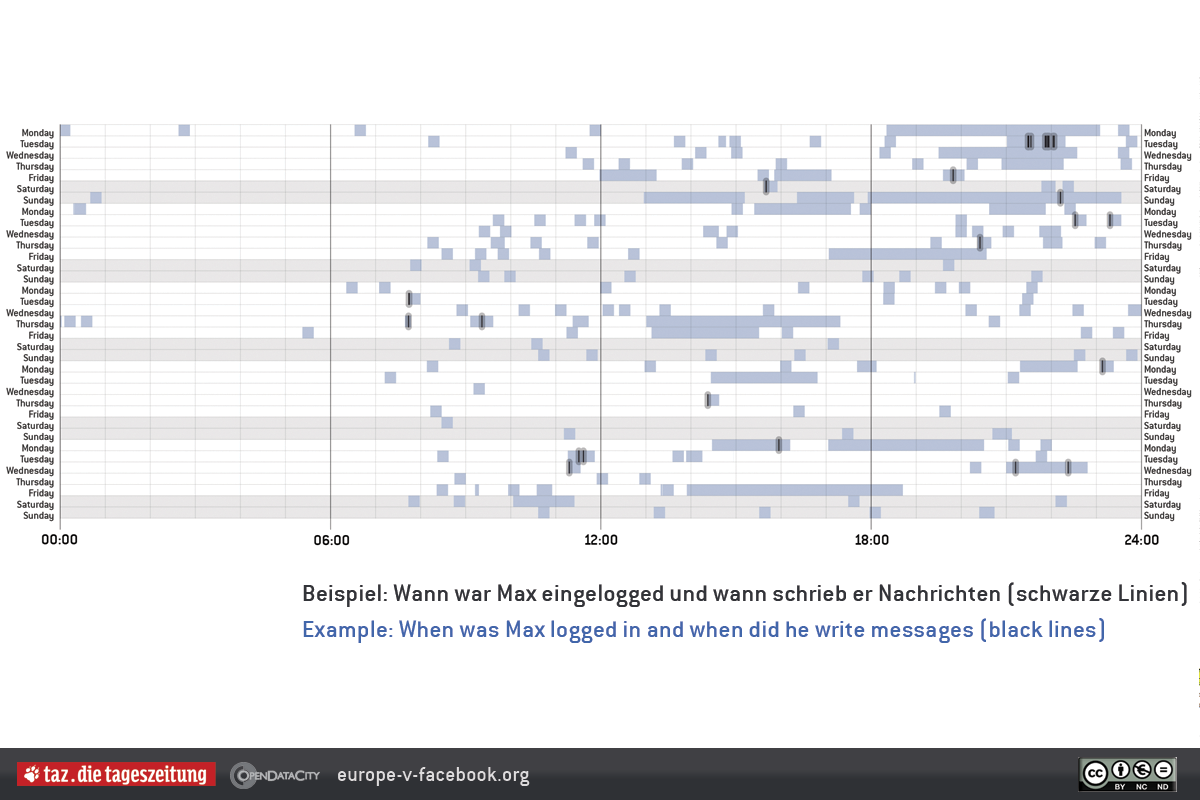
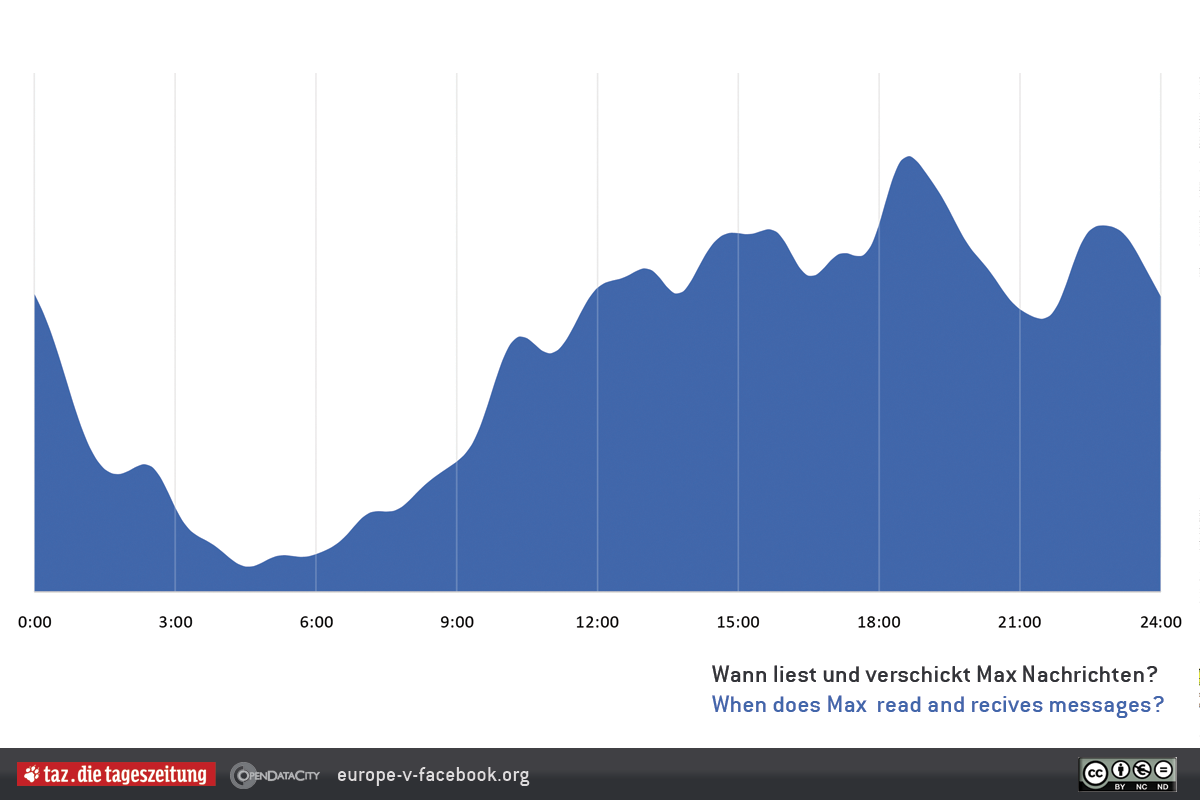
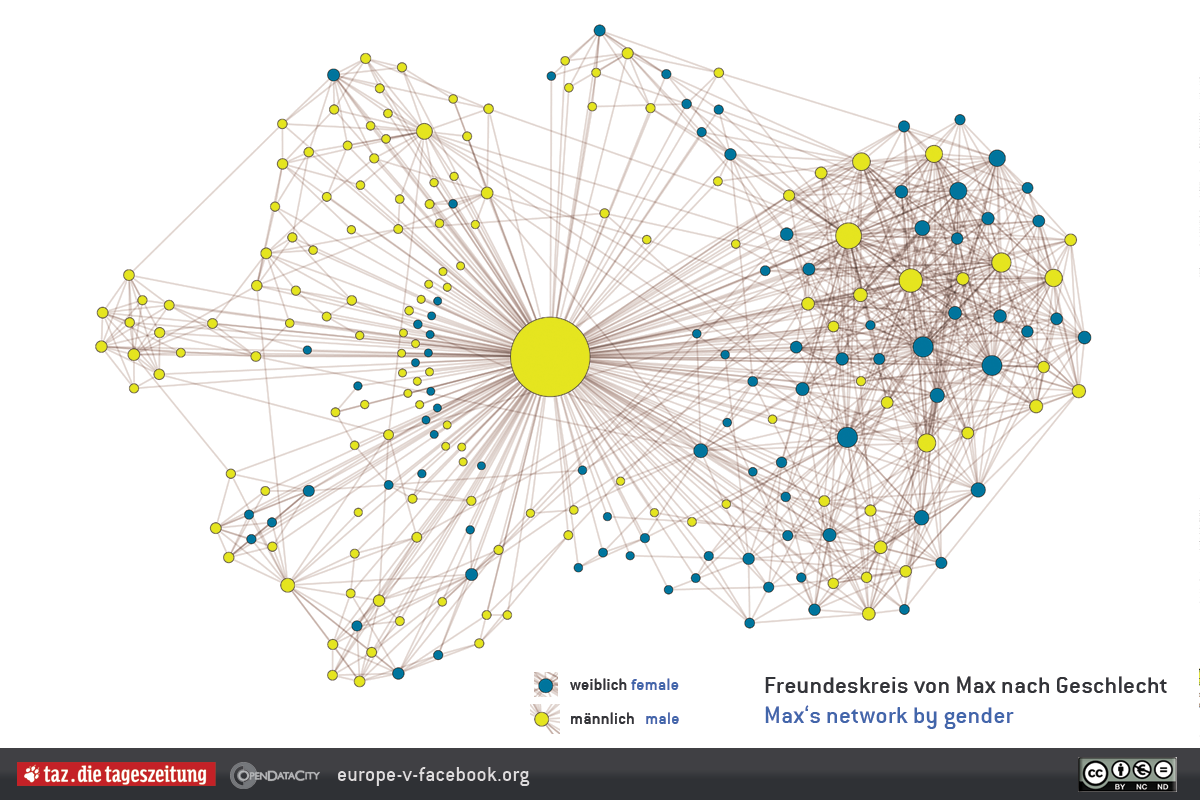
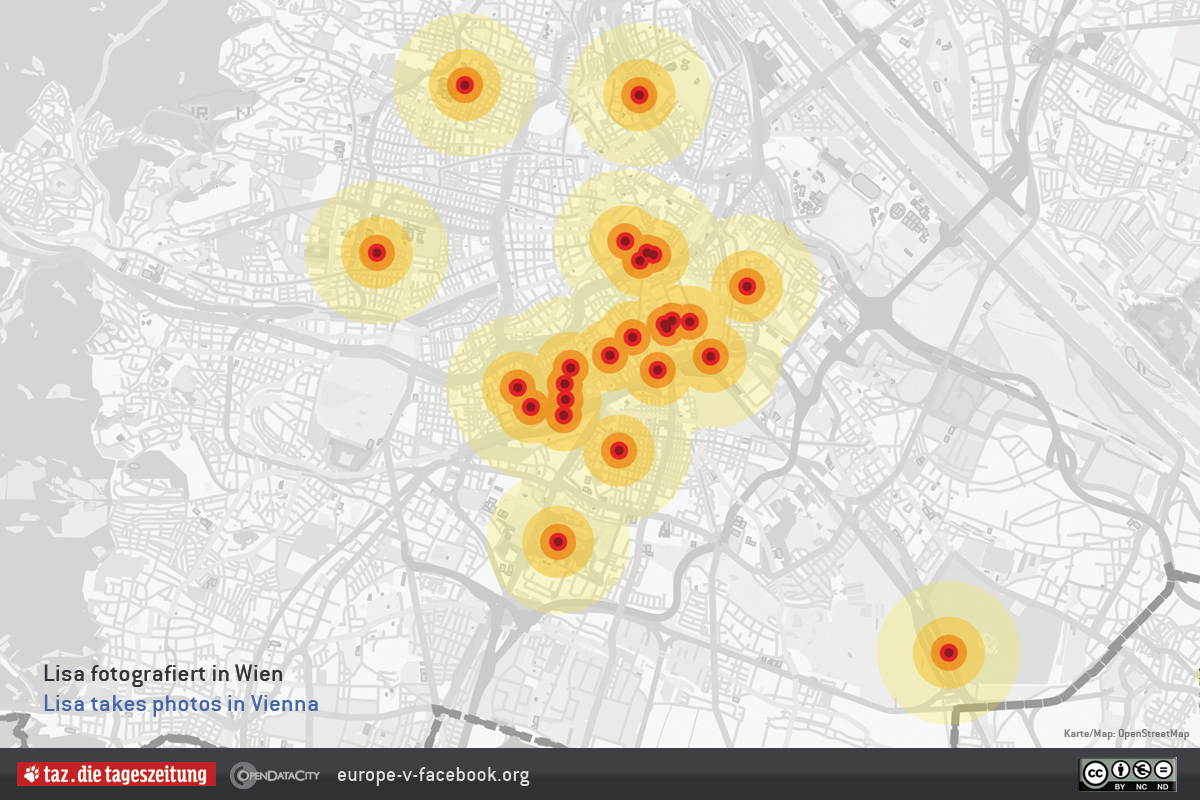

"You're cutting edge!" ... A student's compliments make my day :)
A student, "K," emails me:
Not only because it is wallet-friendly for students, but also--and more importantly--because using books is so much old-style, and using textbooks is nearly primitive, for the kinds of courses I teach.
But, doing what I do is hard work because I need to be constantly on the lookout for materials that I can use in my courses. After all, it is so much easier to merely use a textbook or two.
In addition to that kind of work, I have to deal with reactionaries--the faculty, in particular.
Five years ago, the then president of the faculty union here led an effort against online course offerings. Yes, against.
In my reply (November 11, 2006!) I wrote in support of offering more and more online courses, and went beyond that issue alone:
I suppose all I need is an email or two from students, and that is enough to make a Don Quixote out of me tilting at the academic windmills :)
Thank you, "K."
ps: the news item that "K" came across, which prompted her to email me? This one:
The news item also adds this:
Or, perhaps those "leaders" serve as classic examples of Kahneman's "illusion of validity"
You're cutting edge! Found an article about a university that gives grants to profs to make their own work available for courses so students don't have to pay an arm and a leg for text books! Interesting concept, just thought I would let you know again how much I (We, if I can speak for the college student in general) appreciate the fact that you let us learn in an economically friendly way!Very, very rarely anymore do I use books for the courses I teach. Instead, I make use of academic journal articles that are accessible electronically through the university's library, and an array of freely available online readings, and audio and video materials.
Not only because it is wallet-friendly for students, but also--and more importantly--because using books is so much old-style, and using textbooks is nearly primitive, for the kinds of courses I teach.
But, doing what I do is hard work because I need to be constantly on the lookout for materials that I can use in my courses. After all, it is so much easier to merely use a textbook or two.
In addition to that kind of work, I have to deal with reactionaries--the faculty, in particular.
Five years ago, the then president of the faculty union here led an effort against online course offerings. Yes, against.
In my reply (November 11, 2006!) I wrote in support of offering more and more online courses, and went beyond that issue alone:
I would argue that course materials belong in the intellectual commons, and not behind walls that prevent access.
Over the past few years, I have been impressed with two important approaches in particular:1. The idea of "Creative Commons" that Lawrence Lessig champions.2. MIT's venture into "opencourseware".I am not sure if it was Lessig who started Creative Commons, but it was from one of his talks a few years ago that I became aware of it. (More info at http://creativecommons.org/)This approach appeals to me because I think the more we make ideas available for everybody, the more humans progress. I don't think that all our progress has come out of material incentives alone, which is what complex intellectual property rights regimens attempt to do.A similar, and in fact related, venture is MIT's OpenCourseWare. (More info at http://ocw.mit.edu/index.html)When it was launched I remember thinking, hey, this is why the Web is fantastic: we can easily makes things available for free and easy access to people wherever they might be. This is all the more the case when it comes to distributing knowledge to people in resource-constrained countries, which are quite a few in this world.MIT's approach has catalyzed the development of the "Opencourseware Consortium". (More info at http://www.ocwconsortium.org/) It has now become a world-wide effort to pool together the academic knowledge....
I also hope that the union would urge the OUS campuses to join the OpenCourseware Consortium, if a campus is already not a member.
In sending that kind of a reply, I was consistent with what I always tell students: provide evidence for your arguments, and don't simply try to dazzle me with rhetoric.
The reply from the faculty union president was nothing but hot rhetoric; a tragic irony, given that he is a philosophy professor :)
Seriously, did he not see a major flaw in his own argument? If the worry is about the university packaging up a course content and having an adjunct teach it ad infinitum, and eliminate the need for full-time faculty, then couldn't the university simply make use of the wide range of course materials, including syllabi, from prestigious universities like MIT, which provide the same materials for free through the OperCourseWare project, instead of commissioning me to develop them?The union isn't against online courses, or intellectual commons, but you are proceeding from a false assumption. The material posted for online courses is not part of some intellectual commons - it is owned by the University. They charge students money for access to it. Under the current system, if they so desired, they could get you to do an online course once, then hire an adjunct to teach your material ad infinitum and never give you the chance to teach it again. They could forgo adding full-time tenure-track positions to your department (in fact, they do that already!), and teach classes on the cheap using your materials and perpetual adjuncts. They could even reduce the number of tenure-track faculty, replacing them with adjuncts. Colleges and Universities all over the country are in fact doing this. We want the University to add full-time tenure-track faculty (with Ph.D.s) to meet student demand, and they don't want to do it because better qualified people cost more per class.This isn't about intellectual commons - it is about universities being able to exploit faculty, especially adjuncts, and about ensuring the highest quality of instruction.
The net result: students, like the one who emailed me, are severely shortchanged by faculty who believe that higher education is only about them, instead of focusing on the only thing that really matters: student learning.
I suppose all I need is an email or two from students, and that is enough to make a Don Quixote out of me tilting at the academic windmills :)
Thank you, "K."
ps: the news item that "K" came across, which prompted her to email me? This one:
the University of Massachusetts at Amherst recently launched the Open Education Initiative, which will award grants to faculty members seeking to develop low- or no-cost course materials as an alternative to traditional textbooks.Hmmm .... I didn't even get a grant to do what I have been doing for years :)
The news item also adds this:
Librarian Marilyn Billings says the project will eventually aim to make open education resources “accessible to anyone, anywhere.”I wonder whether the faculty union leaders read such materials at all!
Or, perhaps those "leaders" serve as classic examples of Kahneman's "illusion of validity"
(Mis)spellings and (embarrassing) humor. The awful English language
One small error, as the finger slipped over one key on to another, and what a difference it makes!
All I wanted to ask a friend was "may I bug you for a sec?"
Now, take a look at the keyboard, if you cannot immediately visualize the layout. Notice the letters adjacent to "c."
If a finger were to miss the "c" and were to end up on one of the keys in that neighborhood, the possible words, in place of "sec," are:
Such situations are nearly cliched jokes in sitcoms and movies, but are terribly embarrassing in real life. The only way out is to recognize the error, LOL, and move on.
Or, blog about it also! A public confession!
Speaking of "public" ... Reminds me of my days in school in India, when we got to learn about human anatomy in the biology class.
True to my nerdy nature, there I was scanning through the biology textbook chapters in order to get a feel for the topics yet to be discussed in class, when I could have been doing so many other things. I was stumped; I simply could not fathom why they had to name the hair around the, ahem, private parts as "public hair."
For days on, I chuckled about what I thought was one hilarious joke concocted by biologists with a sense of humor.
And then, one day, it struck me--there was no "l" in the spelling. It was not "public" after all and the joke was on me!
After that discovery, I became terribly self-conscious when I had to use the word "public" because I became painfully aware of what the word might mean if I were to miss the "l" in spelling it.
Now, I will have to worry about "sec."
Damn the English language, eh!
All I wanted to ask a friend was "may I bug you for a sec?"
Now, take a look at the keyboard, if you cannot immediately visualize the layout. Notice the letters adjacent to "c."
If a finger were to miss the "c" and were to end up on one of the keys in that neighborhood, the possible words, in place of "sec," are:
sedYep, of all the typos, it was "sex" and the chat message became "may I bug you for a sex?"
sef
sev
sex
Such situations are nearly cliched jokes in sitcoms and movies, but are terribly embarrassing in real life. The only way out is to recognize the error, LOL, and move on.
Or, blog about it also! A public confession!
Speaking of "public" ... Reminds me of my days in school in India, when we got to learn about human anatomy in the biology class.
True to my nerdy nature, there I was scanning through the biology textbook chapters in order to get a feel for the topics yet to be discussed in class, when I could have been doing so many other things. I was stumped; I simply could not fathom why they had to name the hair around the, ahem, private parts as "public hair."
For days on, I chuckled about what I thought was one hilarious joke concocted by biologists with a sense of humor.
And then, one day, it struck me--there was no "l" in the spelling. It was not "public" after all and the joke was on me!
After that discovery, I became terribly self-conscious when I had to use the word "public" because I became painfully aware of what the word might mean if I were to miss the "l" in spelling it.
Now, I will have to worry about "sec."
Damn the English language, eh!
Subscribe to:
Posts (Atom)