
Sunday, October 30, 2011

"Green jobs" and Oregon. Intelligent investment, or subpar subsidy?
If only policy-making involved cut and dried kind of binary options, right? But, they are not, and that is only the beginning of the problem!
Here in Oregon, there is always a dream of "green jobs." The latest is SoloPower that is proceeding with its plans to build a solar panel manufacturing plant in Portland, thanks to the federal government guaranteeing the loan. Yes, in the post-Solyndra world, this federal backing is generating a lot of controversy.
But, that controversy is not the reason for this blog post.
The larger question is whether a federal or state government ought to have any such industrial policies to pick winners and invest in them.
If private investment is not available in plenty, might there be a reason or two for that? After all, isn't the market notorious for backing risky investments? Remember Enron, where private investments went down the drain? Or, how about Google, where private investments have delivered a gazillion dollars as returns?
Anyway, the industrial policy to favor "green jobs" gains momentum. Along the lines of what one finds in this op-ed in the Oregonian:
Thus, one might conclude it is a win-win for the economy and the environment.
But, if it is really a win-win-win ... then wouldn't the market forces rush in to realize the profits? Is the absence of a market rush indicative of how much there is no profit to be made, without taxpayer subsidy?
Why might there not be the big profit? Megan McArdle explains:
Where does China come into this? McArdle channels Matt Yglesias:
See, a simple issue of green jobs is not as straightforward as one might wish, which is why policy-making is awfully difficult. I am way suspicious of people--especially politicians and academics--who pretend or, worse, believe, that there is a right way and a wrong way and that is it.

Here in Oregon, there is always a dream of "green jobs." The latest is SoloPower that is proceeding with its plans to build a solar panel manufacturing plant in Portland, thanks to the federal government guaranteeing the loan. Yes, in the post-Solyndra world, this federal backing is generating a lot of controversy.
But, that controversy is not the reason for this blog post.
The larger question is whether a federal or state government ought to have any such industrial policies to pick winners and invest in them.
If private investment is not available in plenty, might there be a reason or two for that? After all, isn't the market notorious for backing risky investments? Remember Enron, where private investments went down the drain? Or, how about Google, where private investments have delivered a gazillion dollars as returns?
Anyway, the industrial policy to favor "green jobs" gains momentum. Along the lines of what one finds in this op-ed in the Oregonian:
The good news is that Oregon is well-positioned to capitalize on the latest trends in sustainable innovation thanks to its wealth of natural resources, close proximity to Pacific Rim markets, and strong history of acting as an environmental pioneer.
The bad news is that you're already behind due to growing global competition along with the politics in Washington, D.C. failing to provide adequate momentum and leadership. The current U.S. mindset remains mired in now passé second industrial revolution thinking based on fossil fuels, coal, natural gas and nuclear power.
In contrast, the green economic revolution -- and its adopters in the EU and Asia -- deploys renewable energy, new smart technology, and incorporates natural resources like water and land through sustainable policies and business practices.
Thus, one might conclude it is a win-win for the economy and the environment.
But, if it is really a win-win-win ... then wouldn't the market forces rush in to realize the profits? Is the absence of a market rush indicative of how much there is no profit to be made, without taxpayer subsidy?
Why might there not be the big profit? Megan McArdle explains:
Even if we succeeded in creating, via subsidy, a vibrant domestic solar panel manufacturing industry, there's no reason to think it would stay here . . . unless you're planning to continue the subsidies forever, which is like trying to get rich by paying yourself to mow the lawn.This is why it's so stupid to focus on "green jobs". The reason to promote green energy is to mitigate global warming, lessen economic dependence on some very volatile and unstable parts of the world, and build enough scale and demand that you maybe someday usher in an era of power that's "too cheap to meter", as they used to promise about nuclear. I understand why it makes sense politically for Democrats, but it's also dangerous, because if you can't produce the jobs, a lot of your support for the "green" evaporates, a long with a lot of green money.
Where does China come into this? McArdle channels Matt Yglesias:
What's at issue here, basically, is that China is trying to give us a bunch of free solar panels. It's quite true that insofar as we've been organizing economic activity around the (reasonable) assumption that China won't give us a bunch of free solar panels, that getting the free panels will cause some dislocations. But it seems implausible that the best possible way of dealing with the situation is to refuse to accept the panels. That (poor) China has chosen to boost domestic employment by subsidizing consumption in (rich) America is slightly bizarre, but we may as well try to enjoy it while it lasts.
See, a simple issue of green jobs is not as straightforward as one might wish, which is why policy-making is awfully difficult. I am way suspicious of people--especially politicians and academics--who pretend or, worse, believe, that there is a right way and a wrong way and that is it.
Poverty in America: Eat our heart out, Bangladesh!

I am not sure, however, what the bottom line is that Trudeau wants to get across to readers. Is he pointing out the fact that we have poverty? Or that our poor are better off than the poor in Bangladesh? Or that ... oh well!
In any case, if you prefer a few words to compare the poor in the US versus the poor elsewhere, then let me quote from a previous post:
The typical person in the top 5 percent of the Indian population, for example, makes the same as or less than the typical person in the bottom 5 percent of the American population. That’s right: America’s poorest are, on average, richer than India’s richest — extravagant Mumbai mansions notwithstanding.
BTW, I thought Bangladesh was no longer the poster child for poverty, and that it was Somalia or Ethiopia :(
Saturday, October 29, 2011
Chart of the day: Farmer suicides in India

The data show clearly that the last eight years were much worse than the preceding eight. As many as 1,35,756 farmers killed themselves in the 2003-10 period. For 1995-2002, the total was 1,21,157. On average, this means the number of farmers killing themselves each year between 2003 and 2010 is 1,825 higher than the numbers that took their lives in the earlier period. Which is alarming since the total number of farmers is declining significantly. Compared to the 1991 Census, the 2001 Census saw a drop of over seven million in the population of cultivators (main workers). The corresponding census data for 2011 are yet to come in, but their population has surely dipped further. In other words, farm suicides are rising through the period of India's agrarian crisis, even as the number of farmers is shrinking.
The literal and financial nuclear news from India
First was the indictment of Rajat Gupta, which is not that much of a surprise given the widely reported links between him and the hedge fund heavyweight, Raj Rajaratnam, who as been sentenced to eleven years in prison for insider trading. After all, Gupta was no ordinary executive from India:
At the same time, apparently the Indian Government is also looking into a few of his dealings in India:
On a slow news day, I might have been captivated with those stories.
But, Condoleezza Rice upped the ante:
It has always been suspected that India and Pakistan were on the verge of a war, and a nuclear war at that, soon after that horrific attack on the Parliament building. But, to get details of that from an insider who was closely monitoring the developments, well, it is awfully shocking how terrible those few days were.
It is also fascinating to read about the kinds of strategies the US and other countries employed in their attempts to calm the Indians:
Talk about dodging a bullet; phew!
Meanwhile, a few countries, including the US, have issued cautionary statements about travel to India, because of terrorism concerns. The Indian government is not happy about this, naturally:
And students wonder why I tell them that the AfPakIndia region is way more dangerous than the Israel/Palestine issue!
Few Indian executives have achieved the stature that Rajat Gupta held in global business, a position that made him an icon for many in India seeking to rise in the U.S. and elsewhere.
So Mr. Gupta's indictment Wednesday was greeted with a mix of surprise, sadness and even some anger in India's tightly knit business community. It also prompted some concern that his arrest might reflect poorly on Indian executives in general, though Mr. Gupta, the former chief executive of consulting firm McKinsey & Co., has lived for many decades in the U.S.
At the same time, apparently the Indian Government is also looking into a few of his dealings in India:
will probe the possibility of Gupta having contravened the Prevention of Money Laundering Act, involving, inter alia, his purchase of shares in Tamilnad Mercantile Bank (TMB).
The newspaper quotes unnamed ED officials as saying: “We suspect that control of shares in Tamilnad Mercantile Bank was in violation (of regulations) and had no approval from the Reserve Bank of India (RBI). Besides, some of his other financial transactions are also under the scanner.”
On a slow news day, I might have been captivated with those stories.
But, Condoleezza Rice upped the ante:
India had deployed nuclear-capable missiles on its western border and refused to budge under US pressure to hold any talks with Pakistan after the 2001 attack on its Parliament by terrorists from across the border, says former top American diplomat Condoleezza Rice.
It has always been suspected that India and Pakistan were on the verge of a war, and a nuclear war at that, soon after that horrific attack on the Parliament building. But, to get details of that from an insider who was closely monitoring the developments, well, it is awfully shocking how terrible those few days were.
It is also fascinating to read about the kinds of strategies the US and other countries employed in their attempts to calm the Indians:
As there was no let-up in the tension between the two neighbours, Rice said the US and Britain joined hands and organised a series of high-profile visits to the two countries with the view that there would be no war as long as some important dignitary was in the region.
"Colin (Powell, the then Secretary of State) and Jack Straw, the British Foreign Minister, organised a brilliant diplomatic campaign that could be summed up as dispatching as many foreign visitors to Pakistan and India as possible.
"We reasoned that the two wouldn't go to war with high-ranking foreigners in the region. Every time they accepted a visit, we breathed a sigh of relief. We needed to buy time," Rice writes, recollecting the events of those days.
But the situation continued to deteriorate, she said, adding that by December 23 there were reports of troop movements as well as a disturbing one that India was preparing to move short-range ballistic missiles capable of carrying nuclear warheads to the Indian-Pakistani border.
"We reviewed the list of dignitaries who had been deployed to the region, searching for possible intermediaries through whom we could send messages to the adversaries, and agreed to reconvene the next day," Rice said.
Given the volatility of the situation in South Asia, Rice said she cancelled her Christmas vacation at her aunt's house in Norfolk Virginia and rushed to Washington the next day.
"By December 27 the reports were confirmed: India had, indeed moved nuclear-capable missiles to the border. Colin called Jaswant Singh, the Indian Minister of External Affairs, and asked that the two countries sit down and talk. The suggestion was flatly rejected," Rice writes.
Talk about dodging a bullet; phew!
Meanwhile, a few countries, including the US, have issued cautionary statements about travel to India, because of terrorism concerns. The Indian government is not happy about this, naturally:
The Government has decided to protest after five countries - The US, UK, Canada, Australia and New Zealand - have issued advisories against travel to India during the festive season for security reasons.
The Government has protested saying such advisories are done to defame India. Minister of State for Tourism Subodh Kant Sahay said the matter will be taken up with appropriate authorities.
And students wonder why I tell them that the AfPakIndia region is way more dangerous than the Israel/Palestine issue!
Friday, October 28, 2011
The depressing economic reality for college graduates
The small-sized university where I teach recently introduced a major in gerontology. Introducing a new major (and a minor too) has also been accompanied by long-term investments in terms of tenure-track faculty.
Yes, society will have to increasingly deal with various issues related to the elderly. The question that we could ask from a public policy perspective is this: could we have prepared students for gerontology-related careers without this degree program/minor? For an entry-level job in this field, will it really matter if the undergraduate major is in psychology or sociology or biology or English literature?
We never had these kind of discussions on campus. I suspect it is a similar story at other universities too. It is unfortunate that these discussions do not happen because of what these decisions mean:
In any case, students majoring in gerontology are going to face a future that will be no different from the future that awaits students majoring in geography or English literature or business: a bleak one.
Over to Mike Mandel on what the trends have been:


Imagine showing every college freshman these charts. Wouldn't that be full disclosure? In fact, shouldn't we demand such full disclosure? At least from taxpayer supported colleges and universities?
The typical explanation is that college graduates fare better than those without degrees. There are huge problems with such statements. Instead of me pointing them out from my own posts, here is from a recent Cato report:
Tyler Cowen offers another take:
All these mean that President Obama dusting off the student loan problems through an executive order will not do a damn thing for students because they are looking at very low returns, assuming they will find jobs, on their huge undergraduate investment dollars.
Increasingly, I feel terribly guilty that I am being a part of the problem by taking money from the unsuspecting students. But then, if ever they make the mistake of coming to me for advice, I take the time to present them the larger picture and, therefore, how they need to systematically plan for their academic and employment lives. Some of them never come back to my office though!
But then some read my blog, which means I am reaching an audience and being a part of the solution too.

Yes, society will have to increasingly deal with various issues related to the elderly. The question that we could ask from a public policy perspective is this: could we have prepared students for gerontology-related careers without this degree program/minor? For an entry-level job in this field, will it really matter if the undergraduate major is in psychology or sociology or biology or English literature?
We never had these kind of discussions on campus. I suspect it is a similar story at other universities too. It is unfortunate that these discussions do not happen because of what these decisions mean:
- long-term investments and commitments are being made, for which benefits seem to be way to low
- the costs are being borne by taxpayers and students, who are already being sucked dry
- students are misled into believing that pursuing one liberal arts major versus another is better for jobs in that major
- a further dilution of higher liberal education
In any case, students majoring in gerontology are going to face a future that will be no different from the future that awaits students majoring in geography or English literature or business: a bleak one.
Over to Mike Mandel on what the trends have been:


Imagine showing every college freshman these charts. Wouldn't that be full disclosure? In fact, shouldn't we demand such full disclosure? At least from taxpayer supported colleges and universities?
The typical explanation is that college graduates fare better than those without degrees. There are huge problems with such statements. Instead of me pointing them out from my own posts, here is from a recent Cato report:
There are numerous problems, however, with simply concluding that because enrollment, degree attainment, and the college wage premium all rose along with spending, spending increases were good investments. The first is that in looking at averages one can miss a lot of data, and many people with college degrees might not get much economic value from them. The second is that we might be fueling credential inflation, in which the difference between earnings for people with a bachelor’s degree and those with only a high school education are large not because one attains valuable skills pursuing a degree, but because degrees are so commonplace—and perhaps signal some basic threshold level of intelligence and work habits—that employers reflexively screen out job seekers without degrees. Finally, there are very large percentages of people who enroll in college, perhaps lured by the promise of government aid to pay for it, who do not end up getting degrees. Their payoff is often small or negative.
Tyler Cowen offers another take:
Non-college grads also have seen declining wages, and so one can look at the “finish college vs. finish high school only” margin and conclude that the return to higher education is robust. Another approach is to look at the “finish college and get on a real career track” vs. “finish college and hang out” margin and conclude the sector is in trouble, which indeed is the case. Don’t get stuck looking at the old margins only, the new and powerful margin, I am sorry to say, is relative to unemployment or extreme underemployment. The status and avoid-shame returns are high enough to keep a lot of people going to college, at current prices, but the falling real wages for graduates aren’t going to sustain an enormous amount of extra sectoral growth, including on the price side. Nor do I expect the preceding orgy of student debt to repeated, at that level, anytime soon.
All these mean that President Obama dusting off the student loan problems through an executive order will not do a damn thing for students because they are looking at very low returns, assuming they will find jobs, on their huge undergraduate investment dollars.
Increasingly, I feel terribly guilty that I am being a part of the problem by taking money from the unsuspecting students. But then, if ever they make the mistake of coming to me for advice, I take the time to present them the larger picture and, therefore, how they need to systematically plan for their academic and employment lives. Some of them never come back to my office though!
But then some read my blog, which means I am reaching an audience and being a part of the solution too.
The apple doesn't fall far from ... Kazakhstan?
A high school friend was on a business trip in, yes, Kazakhstan. The women there are pretty, he adds. Where are the women not pretty, right? Another high school classmate puns (in Tamil) that the country should then be called Azhaghastan (Azhagu = beauty)
I wrote to them that he guy's alibi in going there is that he is checking out the apples :)
Why apples, you ask, to which I reply: it is the geographic home for all the apples of the world.
Well, until yesterday, as Johnny Carson often said, "I did not know that!"
Even in blogging, the only note I have had on Kazakhstan was on a completely different topic!
I was diving back home and listening to The World, when the show's host, Lisa Mullins, posed the geoquiz about the origin of apples.
I would never have thought that apples originated from the mountains of Central Asia.
Even more hilariously educational was the hypothesis on how perhaps the fruit spread: animals ate the best of the fruits, and then the seeds passed through their guts, which then led to new plants in new places.
And, of course, the roles of the Silk Road, the Roman Empire, the wanderers ... and then eventually to the US, and now we associate Washington with apples. Who woulda thunk it was a story out of Central Asia!
I will add this to my repertoire of fun stories for my classes.
This blog entry by itself will be a convincing answer to the student, "J," who asked me yesterday what I do for fun :)
I wrote to them that he guy's alibi in going there is that he is checking out the apples :)
Why apples, you ask, to which I reply: it is the geographic home for all the apples of the world.
Well, until yesterday, as Johnny Carson often said, "I did not know that!"
Even in blogging, the only note I have had on Kazakhstan was on a completely different topic!
I was diving back home and listening to The World, when the show's host, Lisa Mullins, posed the geoquiz about the origin of apples.
I would never have thought that apples originated from the mountains of Central Asia.
Even more hilariously educational was the hypothesis on how perhaps the fruit spread: animals ate the best of the fruits, and then the seeds passed through their guts, which then led to new plants in new places.
And, of course, the roles of the Silk Road, the Roman Empire, the wanderers ... and then eventually to the US, and now we associate Washington with apples. Who woulda thunk it was a story out of Central Asia!
I will add this to my repertoire of fun stories for my classes.
This blog entry by itself will be a convincing answer to the student, "J," who asked me yesterday what I do for fun :)
Thursday, October 27, 2011
99 Percent: The evil corporations be damned!
Worth a gazillion words :)
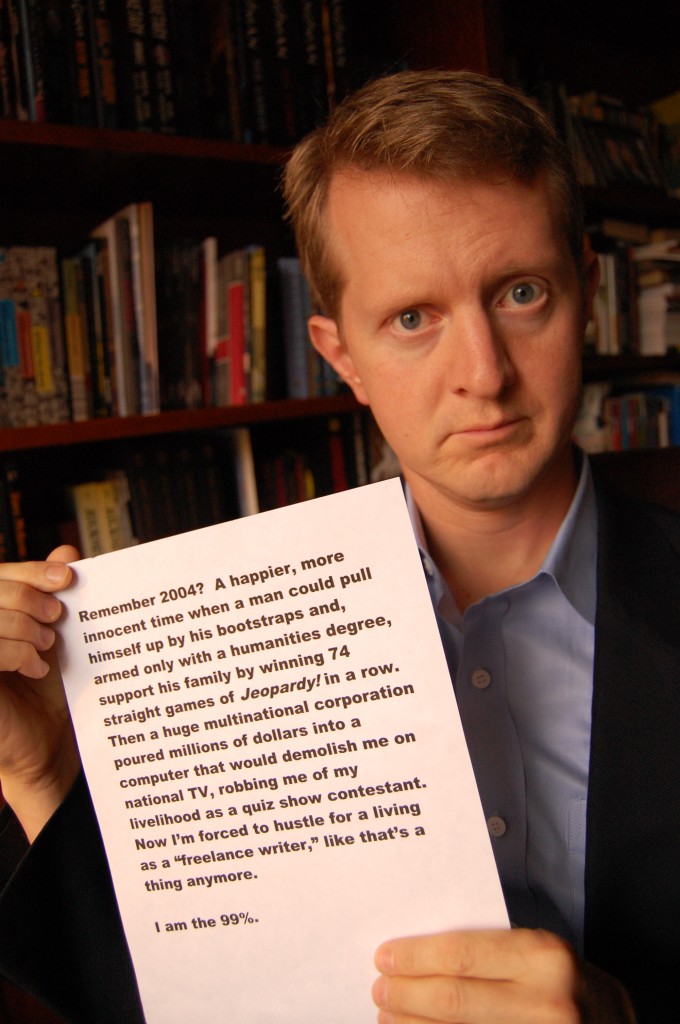 Yes, Solidarity! hahaha
And from the world of science comes this grumble from the dark matter:

And from the world of science comes this grumble from the dark matter:
Wednesday, October 26, 2011
Yet another odd response to a blog post :)
So, a couple of days ago, I had blogged about a Gopal Krishna voicing his religious right rhetoric in Iowa.
Turns out that the blog post was read by him; I had no idea that my blog has that kind of reach!
In an email, Gopal Krishna writes:
Sounds like he was not happy with my post, eh!
It is strange how my rather trivial observations from a small town end up being read by people in strange places. No, I don't mean Iowa being strange :)
Even the very light traffic my website generates, while catering mostly to an American audience, gets visitors from every continent--except Africa. Rarely does the blog have African visitors. Perhaps nothing here interests them? But then I have blogged a lot about Africa, too ...
Turns out that the blog post was read by him; I had no idea that my blog has that kind of reach!
In an email, Gopal Krishna writes:
Thank you for writing a blog about me. I hope it gave you a good night sleep.
Sounds like he was not happy with my post, eh!
It is strange how my rather trivial observations from a small town end up being read by people in strange places. No, I don't mean Iowa being strange :)
Even the very light traffic my website generates, while catering mostly to an American audience, gets visitors from every continent--except Africa. Rarely does the blog have African visitors. Perhaps nothing here interests them? But then I have blogged a lot about Africa, too ...
An atrocious ten year anniversary :(
It was ten years ago that President Bush signed the Patriot legislation into law. If you wanted to find a textbook example of how not to make law, review the history of this law. First, toss dozens of legal proposals together into a giant “package” and resist any effort to unpack it and hold separate votes. Second, unveil the package at the last minute so members of Congress will not have an opportunity to study it. Third, call it the “Patriot Act” so that any person voting against it will have to consider television ads declaring his/her opposition to the Patriot law. Fourth, have the Attorney General declare over and over that if the law is not enacted right away, the terrorists may well launch more 9-11 attacks. When members of Congress proposed attaching sunset provisions so that the law could go into effect, but would need reauthorization a few years later, the Bush administration fought the idea.
That is the lead paragraph here (ht)
The op-ed link from there:
During the recent debate to reauthorize sections of the Patriot Act, two members of the Senate Intelligence Committee — Mark Udall (D-Colo.) and Ron Wyden (D-Ore.) — warned that the government is interpreting the law to conduct surveillance that does not follow from a plain reading of the text. “When the American people find out how their government has secretly interpreted the Patriot Act, they will be stunned and they will be angry,” Wyden said. As someone who had to keep silent and live a lie for the better part of a decade, in the false name of “national security,” I know he’s right.
The Patriot Act lives on under a president who promised hope and change!
 ACLU
ACLUMore on screw the students, and taxpayers too :(
A few days ago, I blogged about the fiscal mismanagement at my own university, and further worried that we are not any exception but that similar stories abound at many, many public colleges and universities.
The good news is that the agenda for a university-wide meeting lists similar issues:
That is the good news--that these issues will be discussed.
The bad news: how come the financial picture was overlooked when those higher salaries and benefits were re-negotiated? And it should have been obvious even then that the state allocation would decrease, and that the economy was nowhere near any rebound, right?
"Clearly, now is the time" ... nope, clearly the time was back in early 2009. At least in late 2009. Or at least any time in 2010. Why not even in mid-2011? "Now is the time" is ... oh well :(
PS: there is no point going to the meeting. The believers will recite the same narratives, and a subset of those believers will ask me to please shut up :)
The good news is that the agenda for a university-wide meeting lists similar issues:
Last year’s strong ending financial position will be significantly deteriorated by deficits in both years of the current biennium. The principal reasons are a 25% decrease in state appropriations compared to the last two biennia, significantly higher salary and benefit costs due to negotiated salary increases and PERS rate increases, and a flattening of enrollment increases. Future risks include further declines and reductions in the state’s revenue forecast and uncertainty of future enrollment numbers. Clearly, now is the time to continue our efforts for being in a much weaker fiscal position for the beginning of the 2013-2015 biennium.
That is the good news--that these issues will be discussed.
The bad news: how come the financial picture was overlooked when those higher salaries and benefits were re-negotiated? And it should have been obvious even then that the state allocation would decrease, and that the economy was nowhere near any rebound, right?
"Clearly, now is the time" ... nope, clearly the time was back in early 2009. At least in late 2009. Or at least any time in 2010. Why not even in mid-2011? "Now is the time" is ... oh well :(
PS: there is no point going to the meeting. The believers will recite the same narratives, and a subset of those believers will ask me to please shut up :)
Tuesday, October 25, 2011
Gaddafi is dead. As are the West's secret and horrible deals with him
As much as I was a supporter of the protests in Libya, almost right away I started worrying about the lack of any well-articulated game plan from Obama. Verbal jujitsus like "kinetic military action" made me worry even more.
A critical question was always about the day after.
It is now the day after, and boy has Libya gotten off to a messy start!
The video below shows in quite some graphic detail how the "mad dog" was handled after his capture. Andrew Sullivan writes about this lynching of Gaddafi, while linking to this video:
Gaddafi's torturous end perhaps was even better than what he and his regime did to many others. But, in a civil society, even the cruel maniac is given a proper trial before sentenced to death--a proper one, unlike the show trial after Romanians threw out the Caeusescus.
Now, Obama and Sarkozy will have to wait and watch from the sidelines the consequences of their hasty involvement in a civil war in a country where two generations had experienced only a life under a dictator.
If only Obama had come out strongly against Gaddafi from the first days of the protests--there was a chance that Gaddafi might have fled the country. But, his dilly-dallying emboldened the delusional dictator.
David Riff writes that Western governments are perhaps relieved that Gaddafi is not alive; here is why:
Oh what a tangled web we weave!

A critical question was always about the day after.
It is now the day after, and boy has Libya gotten off to a messy start!
The video below shows in quite some graphic detail how the "mad dog" was handled after his capture. Andrew Sullivan writes about this lynching of Gaddafi, while linking to this video:
We now have solid video evidence that some resistance fighter tried to sodomize him with a stick or a knife in the moments after his capture. One recalls what was done to Mussolini and, indeed, how the execution of Saddam Hussein turned, at the last minute, into a Shiite revenge fantasy. It's an ugly, ugly thing - when dictators lose power. And not a great omen for a genuinely new start for Libya.

Gaddafi's torturous end perhaps was even better than what he and his regime did to many others. But, in a civil society, even the cruel maniac is given a proper trial before sentenced to death--a proper one, unlike the show trial after Romanians threw out the Caeusescus.
Now, Obama and Sarkozy will have to wait and watch from the sidelines the consequences of their hasty involvement in a civil war in a country where two generations had experienced only a life under a dictator.
If only Obama had come out strongly against Gaddafi from the first days of the protests--there was a chance that Gaddafi might have fled the country. But, his dilly-dallying emboldened the delusional dictator.
David Riff writes that Western governments are perhaps relieved that Gaddafi is not alive; here is why:
Qaddafi was, quite simply, a man who knew too much. Taken alive, he would have almost certainly have been handed over to the International Criminal Court (ICC), which had indicted him -- along with his son, Saif al-Islam, and brother-in-law and military intelligence chief Abdullah Senussi (whereabouts unknown) -- for crimes against humanity in late June. Imagine the stir he would have made in The Hague. There, along with any number of fantasies and false accusations, he would almost certainly have revealed the extent of his intimate relations with French President Nicolas Sarkozy and British Prime Minister Tony Blair, the details of his government's collaboration with Western intelligence services in counterterrorism, with the European Union in limiting migration from Libyan shores, and in the granting of major contracts to big Western oil and construction firms.
He would have had much to tell, for this cooperation was extensive. In the war against the jihadis -- a war to which Qaddafi regularly claimed to be as committed to prosecuting as Washington, Paris, or London -- links between Libyan intelligence and the CIA were particularly strong, as an archive of secret documents unearthed by Human Rights Watch researchers has revealed. If anything, the CIA's British counterpart, MI6, was even more involved with the Qaddafi family.
Oh what a tangled web we weave!
even if Qaddafi was not targeted and, as Omran al-Oweib, the electrical engineer-turned-rebel leader who commanded the forces that finally caught up with Qaddafi in a tunnel just outside Sirte, continues to insist, really was killed in a crossfire, leaders like Sarkozy, Blair, Brown, and the Bush State Department must surely be sleeping better these last few nights. Whether they deserve to is another question entirely.
I drool, you drool, we all drool, for ... vella cheedai :)
It is Diwali time in India.
Mothers all over make a gazillion type of sweets, including this one, which is from a food blog whose feed (no pun intended) is one of the few in my RSS reader

Americans might think these are "doughnut holes" .... nope. These are "vella cheedai"
And now perhaps the Indians reading this are wondering how one can make and sell "holes" :)
Mothers all over make a gazillion type of sweets, including this one, which is from a food blog whose feed (no pun intended) is one of the few in my RSS reader
Americans might think these are "doughnut holes" .... nope. These are "vella cheedai"
And now perhaps the Indians reading this are wondering how one can make and sell "holes" :)
Monday, October 24, 2011
What? I get paid too?
It really is fall
I forget now what the context was in class earlier this morning, but I digressed for a couple of minutes to describe the early morning experience that resulted in this photo.

A cool and crispy 39 degrees it was as the sun was slowly poking its head out and through the patchy fog in the valley.
I kept looking over at my right to enjoy the scenery when it occurred to me that I can easily pull over to the side and enjoy it for a while. So, blinkers on, I was off on the shoulder space.
I told my students that living in this paradise, and enjoying it, is the real compensation that comes with the job. The salary is a bonus :)
I forget now what the context was in class earlier this morning, but I digressed for a couple of minutes to describe the early morning experience that resulted in this photo.

A cool and crispy 39 degrees it was as the sun was slowly poking its head out and through the patchy fog in the valley.
I kept looking over at my right to enjoy the scenery when it occurred to me that I can easily pull over to the side and enjoy it for a while. So, blinkers on, I was off on the shoulder space.
I told my students that living in this paradise, and enjoying it, is the real compensation that comes with the job. The salary is a bonus :)
"Yes, it is all real"
Every once in a while, I intentionally go to a grocery store other than the one that I normally go to--it is all a part of the synapse strengthening/creating strategy to postpone as much as possible the near-inevitable mental decline. I am then forced to look for familiar items in completely unfamiliar settings, and in the process I sometimes spot products whose existence I might not have known otherwise.
Anyway, with my couple of items, I was at the checkout counter thinking about what I should cook, when I noticed that the young clerk was a real redhead. Perhaps a high school senior or a college freshman kind of an age, and the redhead grabbed my focus.
I suppose she either sensed my looks fixated on her hair, or perhaps she actually saw me. In any case, when she was done totaling up the grocery items, I looked at her and she was already smiling away. I said, "wow, a real redhead!"
She smiled even wider a smile and happily replied, "yes, it is all real."
I wished her well and proceeded to my car on to my cooking and cleaning routines.
Back in India, as a kid I was always intrigued by Charlie Brown's strange fascination for the red-haired girl, especially at Valentine's Day time.

Good ol' Charlie Brown often drove himself crazy over the redhead:

But, that was in a fictional world that Charles Schulz created. Did it reflect the real world, right?
In graduate school, it was in a trivial conversation that I got to know that the Charlie Brown experience can be quite real as well.
A professor, "JM," and I were talking about Stanford, where he had earned his degrees, when he started reminiscing and said, "but, don't ever get involved with a redhead. They cause heartache."
Charlie Brown and redhead troubles of the heart!
Another graduate student, Karl, told me about an apartment for rent in the building where he lived, and I eventually moved in to that building. Karl was a redhead himself, and he often joked, semi-seriously, about how redheads were becoming very rare and that perhaps he ought to marry a redhead and have children with red hair so that the genes don't get wiped out. I wonder if he ever did that ...
Of course, with easy coloring techniques, anybody can become redheads, blue-heads, and any color of their choice. But, hey, it is all the more the reason why I was so impressed with that real redhead. The way she responded, I think I made her day with my comment.
And I am very happy with my gray hair--it is really gray, and rumors that I dye them gray are just that--rumors :)

Anyway, with my couple of items, I was at the checkout counter thinking about what I should cook, when I noticed that the young clerk was a real redhead. Perhaps a high school senior or a college freshman kind of an age, and the redhead grabbed my focus.
I suppose she either sensed my looks fixated on her hair, or perhaps she actually saw me. In any case, when she was done totaling up the grocery items, I looked at her and she was already smiling away. I said, "wow, a real redhead!"
She smiled even wider a smile and happily replied, "yes, it is all real."
I wished her well and proceeded to my car on to my cooking and cleaning routines.
Back in India, as a kid I was always intrigued by Charlie Brown's strange fascination for the red-haired girl, especially at Valentine's Day time.
Good ol' Charlie Brown often drove himself crazy over the redhead:
But, that was in a fictional world that Charles Schulz created. Did it reflect the real world, right?
In graduate school, it was in a trivial conversation that I got to know that the Charlie Brown experience can be quite real as well.
A professor, "JM," and I were talking about Stanford, where he had earned his degrees, when he started reminiscing and said, "but, don't ever get involved with a redhead. They cause heartache."
Charlie Brown and redhead troubles of the heart!
Another graduate student, Karl, told me about an apartment for rent in the building where he lived, and I eventually moved in to that building. Karl was a redhead himself, and he often joked, semi-seriously, about how redheads were becoming very rare and that perhaps he ought to marry a redhead and have children with red hair so that the genes don't get wiped out. I wonder if he ever did that ...
Of course, with easy coloring techniques, anybody can become redheads, blue-heads, and any color of their choice. But, hey, it is all the more the reason why I was so impressed with that real redhead. The way she responded, I think I made her day with my comment.
And I am very happy with my gray hair--it is really gray, and rumors that I dye them gray are just that--rumors :)
On why scholars need to be independent of the government
Good thing that most of us faculty are not scholars and are, at best, pretentious and wannabes eh! :)
The following "Subhashitani" articulates so succinctly the idea of independent thinking:
Though, in all fairness, I should note here that the Subhashitani is couched in the contexts of allegiance to the divine, and that message does not appeal to this atheist. But, the idea of independence in intellectual inquiry is valid though. And vital.
The following "Subhashitani" articulates so succinctly the idea of independent thinking:
शिलं किमनलं भवेदनलमौदरं बाधितुं
पयः प्रसृतिपूरकं किमुन धारकं सारसं ।
अयत्न मलवल्लिकं पथिपटच्चरं कच्चरं
भजन्ति विबुधा मुधा ह्यहह कुक्षितः कुक्षितः ॥- वेदान्तदेशिकAre the grains collected not enough to douse the fire of hunger in the stomach?
Can the water in the lakes not quench the thirst?
Are the rags found on the streets not enough to make clothes to cover us?
Even when all the life necessities are taken care of by nature, why do these scholars serve the King?
- Vedantadeshika
Though, in all fairness, I should note here that the Subhashitani is couched in the contexts of allegiance to the divine, and that message does not appeal to this atheist. But, the idea of independence in intellectual inquiry is valid though. And vital.
Sunday, October 23, 2011
How wonderful is the Chinese model to development?
As a teenager, when I started worrying-yes, worrying--about the ills that seemingly were all around in India, the communist parties looked quite attractive an option to me. They promised to take care of the disadvantaged, and it resonated with me.
It didn't take me long, however, to understand that in politics, the color of the stripe didn't matter at all and that every party was out to screw the people. It then boiled down to who was the least worst because there wasn't any "good" option.
Over the years, as much as I have accepted a liberal democratic capitalism as the least screwy of all the options humans have tried out thus far, there remains a nagging feeling all the time: are we doing anything for the horribly disadvantaged?
This is the question that then makes me obsess over the India versus China comparisons.
Thus, reading a book review essay in the NYRB made my Sunday :)
The book is about China's development and Deng Xiaoping's role in the country's "transformation." wonderful essay where the reviewer brings in a personal dimension too, and opens the piece by highlighting how much the China model appeals to many other developing countries for all the wrong reasons:
China came down hard on "Occupy Tiananmen" and the country continues to be a notorious poster for the lack of human rights.
Even as most of the world has been awed by its economic success and countries like Rwanda want to emulate this model of a strong pro-capitalist state that tightly constrains individual freedoms, the reviewer writes about how much the economic growth has benefited whom:
While in graduate school, which was when I got to watch on television the tanks in Tiananmen Square, I always hesitated discussing such topics with graduate students from China. It was almost an unwritten rule that this topic was off limits. Once, I accidentally crossed that line and asked a classmate, "R," about Tibet. He sensed where I was going and immediately made it clear that Tibet is, and always has been, a part of China and that the government would, therefore, take every possible to step to keep the country whole.
The simplistic bottom-line seems to be that the China model provides economic growth and keeps the country unified, whereas the India model struggles with both.
After all these years of formal and casual approaches to understanding these issues, I find that I haven't resolved anything in my mind.
Should I consider such a lack of resolution as a sign of intellectual and moral weakness on my part, or as a sign of continued and healthy engagement on such topics of vital importance?
It didn't take me long, however, to understand that in politics, the color of the stripe didn't matter at all and that every party was out to screw the people. It then boiled down to who was the least worst because there wasn't any "good" option.
Over the years, as much as I have accepted a liberal democratic capitalism as the least screwy of all the options humans have tried out thus far, there remains a nagging feeling all the time: are we doing anything for the horribly disadvantaged?
This is the question that then makes me obsess over the India versus China comparisons.
Thus, reading a book review essay in the NYRB made my Sunday :)
The book is about China's development and Deng Xiaoping's role in the country's "transformation." wonderful essay where the reviewer brings in a personal dimension too, and opens the piece by highlighting how much the China model appeals to many other developing countries for all the wrong reasons:
Mao Zedong died in September 1976. From 1979 until the years just before Deng Xiaoping’s own death in 1997, Deng was, in fact if not always in title, the top leader of the Communist Party of China, of the People’s Liberation Army, and of the Chinese government. He is known outside China, especially in the West, mainly for his decision in 1989 to send field armies with tanks into the heart of Beijing to carry out what came to be known as the “Tiananmen Massacre”: a bloody suppression of unarmed students and other citizens who were demonstrating peacefully in and around Tiananmen Square. Not everyone in the world has looked unfavorably on Deng’s decision. On February 22, 2011, at the height of the “Arab Spring,” Libya’s dictator Muammar Qaddafi had this to say about it:
People in front of tanks were crushed. The unity of China was more important than those people on Tiananmen Square…. When Tiananmen Square happened, tanks were sent in to deal with them. It’s not a joke. I will do whatever it takes to make sure part of the country isn’t taken away.Deng’s example of the utility of massacre had not been lost on Qaddafi.
China came down hard on "Occupy Tiananmen" and the country continues to be a notorious poster for the lack of human rights.
Even as most of the world has been awed by its economic success and countries like Rwanda want to emulate this model of a strong pro-capitalist state that tightly constrains individual freedoms, the reviewer writes about how much the economic growth has benefited whom:
the claim that Deng “lifted” millions from poverty confuses the doer and the receiver of action. To the extent that economic “lifting” has happened in post-Mao times, it has been the menial labor of hundreds of millions of people—working without labor unions, or a free press, or a neutral judiciary, or protections like OSHA rules—that has done the heavy lifting. This workforce has improved not just the lives of the millions themselves but, even more, of the Communist elite, who in many cases have soared to stratospheric heights of opulence. World Bank figures show that in China the Gini coefficient, which measures income inequality in populations, has skyrocketed from 0.16 before Deng’s reforms to a current 0.47, near the high end of the scale. This dramatic change has much less to say about “hundreds of millions” than it does about one of the maxims that Deng delivered at the outset of reform: “Let a part of the population get rich first.”
While in graduate school, which was when I got to watch on television the tanks in Tiananmen Square, I always hesitated discussing such topics with graduate students from China. It was almost an unwritten rule that this topic was off limits. Once, I accidentally crossed that line and asked a classmate, "R," about Tibet. He sensed where I was going and immediately made it clear that Tibet is, and always has been, a part of China and that the government would, therefore, take every possible to step to keep the country whole.
The simplistic bottom-line seems to be that the China model provides economic growth and keeps the country unified, whereas the India model struggles with both.
After all these years of formal and casual approaches to understanding these issues, I find that I haven't resolved anything in my mind.
Should I consider such a lack of resolution as a sign of intellectual and moral weakness on my part, or as a sign of continued and healthy engagement on such topics of vital importance?
Saturday, October 22, 2011
So, "Gopal Krishna" is a Christian name, too? :)
So, there I was wondering if C-Span might have anything interesting (yes, "I heart C-Span"!!!) and two women were getting ready to sing the national anthem. I lingered a little longer, at the live coverage of the Iowa Faith and Freedom Coalition.
Good thing I stayed there because otherwise I would have never have been shocked as I was when I saw an Indian-looking and Indian-accented guy move to the mic and recognize the guests. C-Span identified him as Gopal Krishna.
If it were a regular GOP meeting, I would not have been surprised at all; I have known quite a few people from India who are committed Republicans.
But, this was at the "Iowa Faith and Freedom Coalition"--a religious right organization.
And an Indian-looking and Indian-accented guy at the mic, and his name is Gopal Krishna.
You see why I was so stunned at this spectacle?
It doesn't end there.
This Gopal Krishna lets out a crazy rhetoric that no local government, or state, or Congress, or court, or president has anything to say about life. As the camera panned out, I saw quite a few standing and applauding that statement.
A google search tells me that this Gopal Krishna was with the Christian Alliance. So, even more surreal that a "Gopal Krishna" is a Christian. I mean, this is like a BJP member being named Mohammed :)
The google search also came up with the following that Gopal Krishna apparently said at an earlier event:
Let me see ... an immigrant from India complaining about the US being a multicultural haven? Can't get more bizarre, eh! At least, the Dave Chapelle skit on the blind black guy being a white supremacist was fictional!
Only in America, eh!
Turns out that Jon Stewart had commented about it :)
Good thing I stayed there because otherwise I would have never have been shocked as I was when I saw an Indian-looking and Indian-accented guy move to the mic and recognize the guests. C-Span identified him as Gopal Krishna.
If it were a regular GOP meeting, I would not have been surprised at all; I have known quite a few people from India who are committed Republicans.
But, this was at the "Iowa Faith and Freedom Coalition"--a religious right organization.
And an Indian-looking and Indian-accented guy at the mic, and his name is Gopal Krishna.
You see why I was so stunned at this spectacle?
It doesn't end there.
This Gopal Krishna lets out a crazy rhetoric that no local government, or state, or Congress, or court, or president has anything to say about life. As the camera panned out, I saw quite a few standing and applauding that statement.
A google search tells me that this Gopal Krishna was with the Christian Alliance. So, even more surreal that a "Gopal Krishna" is a Christian. I mean, this is like a BJP member being named Mohammed :)
The google search also came up with the following that Gopal Krishna apparently said at an earlier event:
America is “doing a slow dance with socialism,” “abandoning friends and apologizing to enemies” abroad, and even becoming “a multicultural haven for every weird and kinky lifestyle.” The activists in attendance thrilled to each assertion.
Let me see ... an immigrant from India complaining about the US being a multicultural haven? Can't get more bizarre, eh! At least, the Dave Chapelle skit on the blind black guy being a white supremacist was fictional!
Only in America, eh!
Turns out that Jon Stewart had commented about it :)
Why is my teaching an "alternative" style? It is all about thinking!
For a couple of years now, I have made sure to emphasize to students my view that this is a world that is vastly different from even a decade ago. From even five years ago. I mean this in the context of teaching and learning. What s that difference?
Students can access all the information they could possibly ever want without coming to the classroom. Enrolling in a university or coming to the classroom after registering for classes is not about gaining access to information and facts, but is to make sense of them. To understand their meaning. To be able to then ask questions, many of which, hopefully, will be troubling questions.
If they don't trust me on this ... wait, that too is an advice I give them: don't trust me. Well, don't merely trust me, but verify too.
Anyway, I can now supplement that with observations from George Dyson--yes, the son of Freeman Dyson.
I tell students that this is where the power of Google (or any such tool) comes in--once we are able to craft questions that help us understand an aspect of this highly complex world, then getting information related to that is immensely less complex than ever before in history. Again, Dyson:
Even worse is to simply tell students that the course will require essays on topics of their choice. Why? Because most students have no clue how to ask questions. Writing papers require that ability to formulate a question and then going after the supporting evidence when answering the question. Higher education is then about understanding concepts enough to be able to ask questions. In the format that most of higher education is, students rarely are taught how to ask questions. And if they never figure this out after four years of university education, then all the access that Google provides will be of zero value.
One final comment from Dyson:
But then, it is not the students I am worried about: I am disappointed with faculty--not merely at my university--who think that their role is to be that cliched "sage on the stage." I feel like puking--yes, my favorite phrase!--when I walk by classrooms and see nothing but text-filled PowerPoint slides. And even that "information" is often incorrect. Once, I paused outside a classroom where a full professor of criminal justice was lecturing about the US Supreme Court. It was depressing to see the slide listing the justices because the information was old--no Sotomayor or Alito, but the names of retired justices! The guy hadn't even bothered to update this basic information. When a google search would provide the accurate information.
A bonus for you, dear reader, if you read until here: a while ago, the Atlantic had a fantastic essay about Freeman Dyson's climate change oddities, and in that context also discussed the father/son relationship.
Students can access all the information they could possibly ever want without coming to the classroom. Enrolling in a university or coming to the classroom after registering for classes is not about gaining access to information and facts, but is to make sense of them. To understand their meaning. To be able to then ask questions, many of which, hopefully, will be troubling questions.
If they don't trust me on this ... wait, that too is an advice I give them: don't trust me. Well, don't merely trust me, but verify too.
Anyway, I can now supplement that with observations from George Dyson--yes, the son of Freeman Dyson.
We now live in a world where information is potentially unlimited. Information is cheap, but meaning is expensive. Where is the meaning? Only human beings can tell you where it is.
I tell students that this is where the power of Google (or any such tool) comes in--once we are able to craft questions that help us understand an aspect of this highly complex world, then getting information related to that is immensely less complex than ever before in history. Again, Dyson:
Finding answers is easy. The hard part is creating the map that matches specific answers to the right question. That’s what Google did: They used the power of computing – which is cheap and really does not have any limits – to crawl the entire internet and collected and index all the answers. And then,by letting human beings spend their precious time asking the right questions, they created a map between the two. That is a clever way of approaching a problem that would otherwise be incomprehensibly difficult.The net result is that my teaching and testing comes across as unconventional and as an alternative style. In my classes, I engage students with questions. When it comes to tests, it is not their ability to recall information that I am interested in; I am, instead, far more interested in providing them opportunities where students can demonstrate their thinking skills. Which is why I remark to students that I feel like puking when I see tests in which questions are true/false or multiple-choice. These do nothing to develop in students the ability to make sense of the fuzziness that surrounds us.
Even worse is to simply tell students that the course will require essays on topics of their choice. Why? Because most students have no clue how to ask questions. Writing papers require that ability to formulate a question and then going after the supporting evidence when answering the question. Higher education is then about understanding concepts enough to be able to ask questions. In the format that most of higher education is, students rarely are taught how to ask questions. And if they never figure this out after four years of university education, then all the access that Google provides will be of zero value.
One final comment from Dyson:
The danger is not that machines are advancing. The danger is that we are losing our intelligence if we rely on computers instead of our own minds. On a fundamental level, we have to ask ourselves: Do we need human intelligence? And what happens if we fail to exercise it?
But then, it is not the students I am worried about: I am disappointed with faculty--not merely at my university--who think that their role is to be that cliched "sage on the stage." I feel like puking--yes, my favorite phrase!--when I walk by classrooms and see nothing but text-filled PowerPoint slides. And even that "information" is often incorrect. Once, I paused outside a classroom where a full professor of criminal justice was lecturing about the US Supreme Court. It was depressing to see the slide listing the justices because the information was old--no Sotomayor or Alito, but the names of retired justices! The guy hadn't even bothered to update this basic information. When a google search would provide the accurate information.
A bonus for you, dear reader, if you read until here: a while ago, the Atlantic had a fantastic essay about Freeman Dyson's climate change oddities, and in that context also discussed the father/son relationship.
Friday, October 21, 2011
Burn, burn, burn. Bill O'Reilly's book, that is :)
Photo 1: A box of falafel Bill's book sent to troops in Afghanistan

Photo 2: those books being burnt by the soldiers

Why?
Muahahaha!
(source and ht)
Photo 2: those books being burnt by the soldiers
Why?
Some jerk sent us two boxes of this awful book (SPOILER ALERT: George Washington - Patriot; George Soros - Pinhead) instead of anything soldiers at a remote outpost in Afghanistan might need, like, say, food or soap. Just burned the whole lot of them on my Commander’s orders.
Muahahaha!
(source and ht)
Pakistan+Afghanistan+US+Kashmir+India = Aaaaaahhh!
Hillary Clinton is blunt with Pakistan:
So far, it does seem like Obama and his team are doing well with the AfPak situation. Their next moves will be crucial.
Where do we go from here then? Obviously, the same-old same-old cannot continue. What might be a different approach?
Well, it won't be easy to execute. That much is for sure. I cannot imagine that converting the Line of Control in Kashmir into permanent borders going well in India, even if such ideas were in the back-channels negotiations. The current government is already on shaky grounds, and the fanatical BJP is already smelling blood. In this grand bargain, the authors suggest that the US would:
Yeah, right! The BJP will win the voters way too easily by campaigning that the Congress is a nothing but a CIA stooge.
We are now into the eleventh year of the war in Afghanistan :(

you cannot keep snakes in your backyard and expect they will only bite the neighbours
So far, it does seem like Obama and his team are doing well with the AfPak situation. Their next moves will be crucial.
Pointing out that the coalition forces and the Afghans had increased pressure on the Taliban on the Afghan side of the Pak-Afghan border, she said: “Across the border, we look to Pakistan to take strong steps to deny Afghan insurgents safe havens and to encourage the Taliban to enter negotiations in good faith.''
Where do we go from here then? Obviously, the same-old same-old cannot continue. What might be a different approach?
With U.S. relations in Pakistan at a low point and the two countries' strategic disagreement over priorities in Afghanistan on full display, it is time to review U.S. strategic options. One that deserves a close look is a grand bargain: give Pakistan what it wants in Afghanistan - but on two conditions: Pakistan assumes responsibility for preventing terrorism out of Afghanistan, and Pakistan agrees to settle Kashmir along the present geographic lines. This is not a panacea, nor would it be easy to execute.
Well, it won't be easy to execute. That much is for sure. I cannot imagine that converting the Line of Control in Kashmir into permanent borders going well in India, even if such ideas were in the back-channels negotiations. The current government is already on shaky grounds, and the fanatical BJP is already smelling blood. In this grand bargain, the authors suggest that the US would:
give India advance notice of this announcement. U.S. support for a settlement along the Line of Control would in all likelihood pull additional international support in that direction
Yeah, right! The BJP will win the voters way too easily by campaigning that the Congress is a nothing but a CIA stooge.
We are now into the eleventh year of the war in Afghanistan :(
Caption at the source:
A soldier prays near a tank on Dec. 10, 2001, on the hills overlooking Tora Bora, Afghanistan.
A soldier prays near a tank on Dec. 10, 2001, on the hills overlooking Tora Bora, Afghanistan.
"Thanks for your alternative teaching"
When a student has a positive comment about my teaching, that is often enough to carry me through the term.
We are barely at the halfway mark this term. Class ended and students were rapidly exiting the room, when one student, while slowly packing up her backpack, said "thanks for your alternative teaching. I really like this."
It caught me off guard for a simple reason that while in the past I have heard comments that my approaches are not quite conventional, nobody had ever complimented me on my teaching as an "alternative" style. I suppose I am "alternative" even when many of my colleagues mistakenly think that I am a rabid Republican!
I wanted to make sure I hadn't misheard the student. "Say that again" I told her as we both stepped out of the room.
"I just wanted to say that I like your alternative teaching style."
"Oh, thanks, if you think this is an alternative style, then you will like all my classes--they are all the same way" I said.
"I feel like puking when I see scantron sheets" I added.
"Me too. I thought I was the only one who felt that way" the student responded.
Such compliments, from those who truly matter, more than compensate for the "please shut up" that I hear from my faculty peers who simply couldn't fathom why I wouldn't shut up and sign the f*ing form :)
We are barely at the halfway mark this term. Class ended and students were rapidly exiting the room, when one student, while slowly packing up her backpack, said "thanks for your alternative teaching. I really like this."
It caught me off guard for a simple reason that while in the past I have heard comments that my approaches are not quite conventional, nobody had ever complimented me on my teaching as an "alternative" style. I suppose I am "alternative" even when many of my colleagues mistakenly think that I am a rabid Republican!
I wanted to make sure I hadn't misheard the student. "Say that again" I told her as we both stepped out of the room.
"I just wanted to say that I like your alternative teaching style."
"Oh, thanks, if you think this is an alternative style, then you will like all my classes--they are all the same way" I said.
"I feel like puking when I see scantron sheets" I added.
"Me too. I thought I was the only one who felt that way" the student responded.
Such compliments, from those who truly matter, more than compensate for the "please shut up" that I hear from my faculty peers who simply couldn't fathom why I wouldn't shut up and sign the f*ing form :)
Global warming is for real. Any which way you measure it.
The Economist reports about the latest study (Berkeley Earth):
Perhaps the deniers don't read The Economist too? :)
Out in the Republic of Texas, Rick Perry and his dashing cowboys wouldn't care:
A researcher from the group writes in the Wall Street Journal:
Perhaps the deniers self-censor this WSJ piece too?
Greg Mankiw, who was in Bush's economic team and is now advising Romney, yet again endorses the idea of a carbon tax when he approvingly cites this:
I am sure the deniers think that Mankiw is a liberal hippie :)
as described in four papers currently undergoing peer review, but which were nonetheless released on October 20th, offer strong support to the existing temperature compilations. The group estimates that over the past 50 years the land surface warmed by 0.911°C: a mere 2% less than NOAA’s estimate.

Perhaps the deniers don't read The Economist too? :)
Out in the Republic of Texas, Rick Perry and his dashing cowboys wouldn't care:
Two Texas lawmakers have accused the state's environmental agency of censoring information about global warming in a state-commissioned report about Galveston Bay.
The Texas Commission on Environmental Quality is appointed by Gov. Rick Perry, who has questioned the validity of man-made global warming during recent presidential debates and appearances. Officials defended their actions, saying they did not censor mentions of global warming and that the information was not relevant to the focus of the report.
A researcher from the group writes in the Wall Street Journal:
When we began our study, we felt that skeptics had raised legitimate issues, and we didn't know what we'd find. Our results turned out to be close to those published by prior groups. We think that means that those groups had truly been very careful in their work, despite their inability to convince some skeptics of that. They managed to avoid bias in their data selection, homogenization and other corrections.
Global warming is real. Perhaps our results will help cool this portion of the climate debate. How much of the warming is due to humans and what will be the likely effects? We made no independent assessment of that.
Perhaps the deniers self-censor this WSJ piece too?
Greg Mankiw, who was in Bush's economic team and is now advising Romney, yet again endorses the idea of a carbon tax when he approvingly cites this:
The need for taxes on energy externalities such as carbon emissions is central to our ability to reduce the harmful side effects of economic growth. It is striking how the political dialogue in the US has ignored a policy that has so many desirable features. Perhaps, in the near future, faced with the deadline of a dire economic situation, negotiators will formulate such a policy. It would generate substantial revenues while bringing so many long-run economic and environmental benefits. Simply put, externality taxes are the best fiscal instrument to employ at this time, in this country, and given the fiscal constraints faced by the US.
I am sure the deniers think that Mankiw is a liberal hippie :)
Thursday, October 20, 2011
Too many kids go to college
That was the motion at the Intelligence Squared (US) and the audience response:
Even if by only one percentage point, the results are an indicator that there is way more than merely a few people, including me, who are worried that we waste resources and burden our students with debt by pushing college for all.
I am willing to bet that this is a question that will dog us, whether we like it or not, definitely for the rest of this decade. And that will determine the state of higher education in years after 2020.
Before the debate, 39 percent supported the motion, 40 percent were against, and 21 percent undecided. After the debate, 47 percent are for the motion for the side for the motion. That's up eight percent. Against is 46 percent. That's up six percent. Undecided seven percent. The side arguing for the motion, just barely wins this debate.
Even if by only one percentage point, the results are an indicator that there is way more than merely a few people, including me, who are worried that we waste resources and burden our students with debt by pushing college for all.
I am willing to bet that this is a question that will dog us, whether we like it or not, definitely for the rest of this decade. And that will determine the state of higher education in years after 2020.
Wednesday, October 19, 2011
India v. China: Yet another take
I have blogged often about the Chinese approach to development, Gandhi, and Narendra Modi (question, like, and hate in that order.) Which is all the more the reason for me to quote this from Martha Nussbaum's essay:
Back to Nussbaum's observation on democracy and human dignity in India. Yes, of course, I cannot imagine a life other than in a free society. But, to the poorest of the poor, who number in the millions in India, and who have been poor for generations, will they be willing to give up a little bit of that freedom and dignity if they can get access to water supply and sanitation and living space and ... Where is the dignity in living life on a sidewalk, or defecating by the railroad tracks?

When Nussbaum and Hitchens, to name a few, write, it is such a pleasure to read even if there are observations that I don't agree with. I have watched them both on different occasions on C-Span's three-hour in-depth conversations series. These writers are gifted talkers and debaters too. I would, therefore, think that Nussbaum's classes and seminars would be wonderfully rich experiences.India has bypassed Narendra Modi by energetically reasserting its commitment to free speech and a free press, in the refusal to ban Great Soul at the national level and in a general commitment to freedom of expression. Gandhi, Nehru and Ambedkar disagreed on some things, but on one point they were of the same mind: uplift for the poorest would be worthy of the dignity of the human spirit only if pursued within the context of constitutional rights for all and the zealous protection of civil and political liberties. The political vision of the Hindu right mars the insight that has made India, sixty-four years after its founding, a thriving democracy that honors human dignity in a way that its rival China has not.
Back to Nussbaum's observation on democracy and human dignity in India. Yes, of course, I cannot imagine a life other than in a free society. But, to the poorest of the poor, who number in the millions in India, and who have been poor for generations, will they be willing to give up a little bit of that freedom and dignity if they can get access to water supply and sanitation and living space and ... Where is the dignity in living life on a sidewalk, or defecating by the railroad tracks?
Tuesday, October 18, 2011
No money. Yet, new academic programs and hires? Screw the students, eh :(
I used to be a contributor to the university's Foundation. Yes, “used to be.”
Over the recent years, I have come to understand that the university has sharply deviated from a focus on the education and success of students and has, instead, pursued, and continues to pursue, a calculated strategy of treating the university as a business enterprise and is failing at that as well.
The clincher for me was in the summer of 2010 when I read in the Statesman Journal the following statement by the previous president:
Since moving from NAIA to NCAA Division II in 2000, Western Oregon University has been adjusting to the economic realities of competing at a higher level. More money was needed for scholarships, travel and increased investment in facilities, such as the new Health and Wellness Center opening this year, that will relocate the football team from the Old PE Building on campus.
Occam’s Razor principle offers a different adjustment to the economic realities: put an end to the financial disaster that the NCAA Division II requirements cause, and return athletics to the ranks of the NAIA. Such a practical response would have then precluded the multiple millions of taxpayer and student dollars that went into an expensive facility that is far more luxurious than most local gyms, and for which students are now mandated to pay a fee every term, whether or not they patronize it.
So, that summer, I decided to cancel my small monthly contribution to the university's advancement and, thereby, stop enabling such wasteful and unnecessary expenditures.
Since then the economic conditions have not significantly improved in the state and the country. Against such a background, was a near simultaneous reporting in the local media about:
- The possible end to the tuition promise—because of the need to balance the university’s budget;
- The renegotiation of staff compensation, which included belt-tightening measures and furlough days; and
- A six percent salary increase over two years for faculty (including me)
Here again, I am struck by the contradictions. When economic conditions are unfavorable, and are expected to be so for a couple of more years at least, triggering the university to abandon the idea of holding tuition constant , I would think that there will not be money for faculty pay raises. In an email to the campus, the president noted that "WOU will realize deficits this biennium in excess of $5 million. This is after removing $2 million of costs from the budget" and yet the investments in faculty and facilities for newly initiated undergraduate and graduate programs.
At the end of it all, it seems highly likely then that all these wasteful expenditures in athletics and academics alike will result in students facing significant increases in tuition and fees, yet again, in the coming years.
It is not that economic conditions worsened only a few months ago and that we have been caught unprepared—it is now four years of doldrums as a result of the Great Recession, on top of the trend of decreasing allocation from the state over the years. I worry that the university is not being prudent, especially in its social contract with taxpayers, and students and their families. Even more worrisome is the distinct possibility that all these are being played out at other universities too!
But, who cares for what I think, right?
But, who cares for what I think, right?
When an unemployed PhD meets with his employed PhD friend ...
I heard the following joke yesterday on public radio, in the context of the crisis in Greece.
Yes, this is a re-working of an often repeated joke about liberal arts degrees here in the US. But, yet another tragic-comedic reminder of the academic credential inflation all over the world.
I liked the other joke also in the same news segment: (at least, this is what I recall)
We can only laugh at all the insanity that surrounds us. Else, the option is to jump off the nearest cliff and that ain't attractive :(
Two guys completed grad school together as they worked on their PhDs. One found a job and the other is unemployed.
The jobless PhD decides to meet with the employed PhD at his work place.
After a few minutes of chit-chat, the employed PhD has to return to work, and asks the jobless one, "would you like fries with your order?"
Yes, this is a re-working of an often repeated joke about liberal arts degrees here in the US. But, yet another tragic-comedic reminder of the academic credential inflation all over the world.
I liked the other joke also in the same news segment: (at least, this is what I recall)
Did you know that the Greek finance minister was awarded the Nobel Prize in chemistry? It was for turning the Euro into shit :)
We can only laugh at all the insanity that surrounds us. Else, the option is to jump off the nearest cliff and that ain't attractive :(
Monday, October 17, 2011
Steve Jobs goes to heaven. Correction: is reincarnated as ...
The New Yorker cover was far from the original thinking that I expect from the cartoonists there. Oh well, they can't deliver every time, I suppose.

Many cartoonists had played around with similar "i" themes ... except the following one that I came across:
Now, that is some creative thinking.
Jobs, as many commentators duly noted, was a ruthless business guy as much as he was innovative.
Last term, I think, I had my students watch a couple of video segments that were interviews with Mike Daisey, who in a serious and funny way makes us think about the ethical issues that we conveniently forget when we use an iPhone, or any smartphone, or any latest electronic gizmo for that matter. Made students think, it seemed like.
We are all complicated mixed bags, but we seem to prefer clean and simple narratives like the nonexistent saintliness of Jobs.
Many cartoonists had played around with similar "i" themes ... except the following one that I came across:
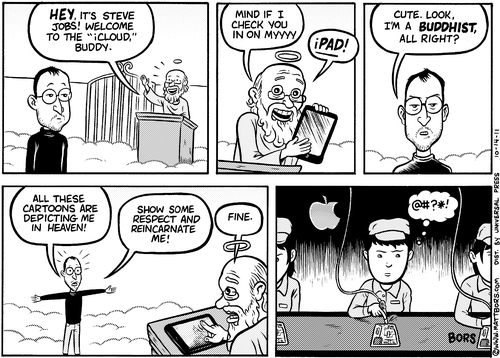 |
| Source |
Now, that is some creative thinking.
Jobs, as many commentators duly noted, was a ruthless business guy as much as he was innovative.
Last term, I think, I had my students watch a couple of video segments that were interviews with Mike Daisey, who in a serious and funny way makes us think about the ethical issues that we conveniently forget when we use an iPhone, or any smartphone, or any latest electronic gizmo for that matter. Made students think, it seemed like.
We are all complicated mixed bags, but we seem to prefer clean and simple narratives like the nonexistent saintliness of Jobs.
Occupy Wall Street explained ... in a venn diagram

Pretty good, right? Kudos to the person who created this.
BTW, if you like Venn Diagrams, then here and here are two posts from the past
More on college degrees and employment
Adding this to a long running series in this blog:
I told my department colleagues that I don't know what to advice/suggest to students anymore regarding jobs and careers. Especially when with every passing day I am more and more convinced that higher education and job-credentialing ought not to be thought of in the same vein, and that it is a disservice to explicitly or implicitly suggest that jobs and prosperous middle class lives are guaranteed upon graduation--particularly at public universities catering to low-income students.
The current generation of college graduates will only see a higher standard of living if "they get graduate degrees and are willing to give up a lot of free time," says Diane Swonk of Mesirow Financial. She says that while falling incomes may make up lost ground, the issue will be the distribution of those gains.
Incomes are being held down by persistently high unemployment and tepid economic growth, and the situation isn't expected to improve much in the foreseeable future.
I told my department colleagues that I don't know what to advice/suggest to students anymore regarding jobs and careers. Especially when with every passing day I am more and more convinced that higher education and job-credentialing ought not to be thought of in the same vein, and that it is a disservice to explicitly or implicitly suggest that jobs and prosperous middle class lives are guaranteed upon graduation--particularly at public universities catering to low-income students.
Either the Al-Koran or the sword
Read the title of this post, again.
Now, think about who said that. Yes, the name of the person who said "Either the Al-Koran or the sword."
If you are like me, well, you will attempt to guess. So, come on, go ahead and give it a try.
You are probably thinking that it was one of the crazy militant Islamic fundamentalists, like bin Laden, for instance.
Prepare yourself for the correct answer. Ready?
Every day I learn plenty of new stuff from Christopher Hitchens. I would never have guessed that the LDS founder said it was the Al-Koran or the sword!
In his latest column at Slate, Hitchens writes that whether or not Mormonism is a cult is not as important as::

Now, think about who said that. Yes, the name of the person who said "Either the Al-Koran or the sword."
If you are like me, well, you will attempt to guess. So, come on, go ahead and give it a try.
You are probably thinking that it was one of the crazy militant Islamic fundamentalists, like bin Laden, for instance.
Prepare yourself for the correct answer. Ready?
The Church of Jesus Christ of Latter-day Saints—hereafter known as the Mormons—was founded by a gifted opportunist who, despite couching his text in openly plagiarized Christian terms, announced that "I shall be to this generation a new Muhammad" and adopted as his fighting slogan the words, which he thought he had learned from Islam, "Either the Al-Koran or the sword."
Every day I learn plenty of new stuff from Christopher Hitchens. I would never have guessed that the LDS founder said it was the Al-Koran or the sword!
In his latest column at Slate, Hitchens writes that whether or not Mormonism is a cult is not as important as::
the weird and sinister belief system of the LDS, discussion of which it is currently hoping to inhibit by crying that criticism of Mormonism amounts to bigotry.
Sunday, October 16, 2011
Pitchforks, the "Occupy" movement, and insecurities
Over to Nouriel "Dr. Doom" Roubini about Occupy Wall Street:
And, Roubini seems convinced that we are in for another recession--the only question being "whether it's going to be a plain-vanilla recession or one as severe as the last."
I can't see anything to disagree with the following that Roubini says:
Well, maybe it is not "we'll have a fiscal problem or a social problem" ... we could have a third scenario, which is both fiscal and social problems.
About the Republicans:
Paints quite a picture--Republicans taking a Leninist approach.
So, why the pitchforks in the title of this post? Roubini reminded me of that:
Well, hey, prepare for an eventful Guy Fawkes Night!

is a symptom of the economic malaise that we're facing not just in the United States, but all over the world. It started with the Arab Spring, and of course, poverty, unemployment, corruption, inequality eventually leads to people becoming restless. But now, you have middle-class people in Israel saying we cannot afford homes; you have middle-class students in Chile saying we don't have education; you have riots in London; people smashing Mercedes and BMWs of fat cats in Berlin and Frankfurt; you have an anti-corruption movement in India. It takes a lot of different manifestations, but we live in a world with a lot of economic insecurity, of worries about the future, of inequality, poverty, of concerns about jobs. And [Occupy Wall Street] is the manifestation in the U.S.
And, Roubini seems convinced that we are in for another recession--the only question being "whether it's going to be a plain-vanilla recession or one as severe as the last."
I can't see anything to disagree with the following that Roubini says:
The U.S. might not be Europe, but the U.S. is not used to having an unemployment rate so high -- and staying so high. Usually, when you get a recession the monetary and fiscal stimulus leads to a recovery of jobs in short order. But this is becoming chronic and longer term. Either the United States becomes like Europe -- and we've already extended unemployment benefits three or four times over -- or otherwise you have a much bigger social welfare state and safety net. Or you'll have people rioting in the streets. We have to do something either way. Either we'll have a fiscal problem or a social problem.
Well, maybe it is not "we'll have a fiscal problem or a social problem" ... we could have a third scenario, which is both fiscal and social problems.
About the Republicans:
They've taken a Leninist approach, you know, of the worse is the better. This is an election year. If the economy gets worse and they don't pass, this plan then the chance that Obama gets reelected is smaller. They think he'll be a one-term president. If so, they'll inherit not just a nasty recession, but something probably worse. But I think it's a political calculus they're playing -- even if it's going to hurt the economy.
Paints quite a picture--Republicans taking a Leninist approach.
So, why the pitchforks in the title of this post? Roubini reminded me of that:
In 2009, [President Barack] Obama told the bankers, "I'm the only one who's standing between you and the pitchforks." The bankers got the bailouts; they were supposed to extend credit, extend mortgages. They did pretty much nothing, and they went back to the same actions as before: making money through trading. At this point, I think people are fed up with it. Rightly or wrongly, there's a huge amount of anger.
Well, hey, prepare for an eventful Guy Fawkes Night!
Occupy Wall Street heading towards ... Guy Fawkes Night ...
Looks like we are slowly moving towards what could become an eventful Guy Fawkes Night, three weeks from now on November 5th. People are protesting (causes for dissatisfaction is all across the spectrum) and politicians and governments seem to be quite helpless at figuring out hot to get to address the dissatisfied Americans.
In such grave economic contexts, one would imagine reconsidering all the major expenditure items, especially at the federal level, which means talking about the massive military spending that we do. But then how do you counter a propaganda campaign-by the government and the military industry--that it will be doom and gloom if we cut our defense budget even a tiny bit!
In such grave economic contexts, one would imagine reconsidering all the major expenditure items, especially at the federal level, which means talking about the massive military spending that we do. But then how do you counter a propaganda campaign-by the government and the military industry--that it will be doom and gloom if we cut our defense budget even a tiny bit!
Energy politics worsen--in India, and South China Sea
Consider this: in a rapidly growing economy, to go along with a huge population that is hungry for electricity, a power generation facility is ready for commissioning after years of construction. While one might hypothesize that this will be a welcome relief from the blackouts and energy rationing, it has become controversial. Because, it is a nuclear power station--the Kudankulam project in the southern Indian state of Tamil Nadu.
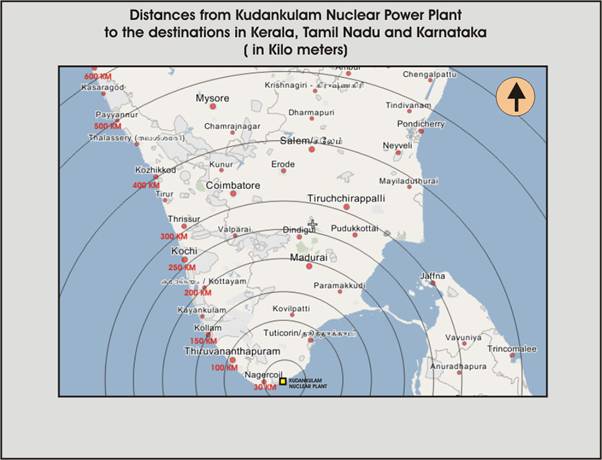
Looking at the map, one might be reminded of the Indonesian earthquake that triggered the tsunami, which reached the coastlines of India and wiped out people and communities.

The battle is far from over because the energy demand simply cannot be met through renewable "green" sources of energy.
Further, carbon-based sources are already being contested, as I noted even recently, when I worried about the growing tensions, primarily between India and China, over valuable oil and natural gas in the South China Sea, off Vietnam.
The South China Sea war of words is escalating as well:
I can only imagine that these resource issues will worsen this decade before they can get any better.

People's activists want the Kudankulam nuclear power plant shut down completely; Tamil Nadu's politicians have the less ambitious aim of halting work on the project until the fears of local people are allayed. The plant was originally scheduled to begin operations later this month.
A combination of the Fukushima aftermath and the nature of politics in India have brought this about. The Fukushima angle is not only because Kudankulam is a nuclear power generation facility, but also because of its location by the sea, and the populated peninsular India.
Looking at the map, one might be reminded of the Indonesian earthquake that triggered the tsunami, which reached the coastlines of India and wiped out people and communities.
In a tropical country like India, where it is the sea that guarantees limitless water supply, well, nuclear power plants tend to be located very near the coast: as the Union of Concerned Scientists explains:
So, ... One can easily imagine the complex politics in this context. A country with severe electricity shortage while demand rapidly increases; a facility constructed at quite an expense in a country that has nearly half a billion poor; the location dynamics affected by the consequences of earthquakes and tsunamis; politicians and activists who are only too eager to seek short-term victories; cavalier statements by officials; and endless commentaries (including this one!)
Nuclear power plants are usually built next to lakes, rivers, and oceans.1 Not for the scenic views that such locales provide, but because water can absorb the waste heat produced by the plants. Nuclear power plants consume vast amounts of water during normal operation to absorb the waste heat left over after making electricity and also to cool the equipment and buildings used in generating that electricity. In event of an accident, nuclear power plants need water to remove the decay heat produced by the reactor core and also to cool the equipment and buildings used to provide the core’s heat removal.
So, ... One can easily imagine the complex politics in this context. A country with severe electricity shortage while demand rapidly increases; a facility constructed at quite an expense in a country that has nearly half a billion poor; the location dynamics affected by the consequences of earthquakes and tsunamis; politicians and activists who are only too eager to seek short-term victories; cavalier statements by officials; and endless commentaries (including this one!)
This will, however, not be the final battle over nuclear power.
as for China, India, and South Korea -- countries with a growing appetite for nuclear power that account for the bulk of active plant construction -- only the first has put any of its nuclear plans on pause, and that's just pending a safety review. India and South Korea have vowed to tighten safety standards, but have otherwise forged ahead with plans for nuclear expansion.
There are three reasons why hydrocarbons will continue to dominate the global energy mix for decades to come: cost, the slow pace of energy transitions, and scale.
Further, carbon-based sources are already being contested, as I noted even recently, when I worried about the growing tensions, primarily between India and China, over valuable oil and natural gas in the South China Sea, off Vietnam.
The South China Sea war of words is escalating as well:
India is playing with fire by agreeing to explore for oil with Vietnam in the disputed South China Sea, a major Chinese newspaper said on Sunday, advising the Indian company to reconsider and pull out. ...
The China Energy News, published by Communist Party mouthpiece the People's Daily, said cooperation between India and Vietnam in these seas was a bad idea.
"India's energy strategy is slipping into an extremely dangerous whirlpool," it said in a front page commentary. ...
"Challenging the core interests of a large, rising country for unknown oil at the bottom of the sea will not only lead to a crushing defeat for the Indian oil company, but will most likely seriously harm India's whole energy security and interrupt its economic development.
"Indian oil company policy makers should consider the interests of their own country, and turn around at the soonest opportunity and leave the South China Sea," it said.
I can only imagine that these resource issues will worsen this decade before they can get any better.
Saturday, October 15, 2011


Friday, October 14, 2011
Stop (taxpayer) funding of college sports
Perhaps the editor has decided against publishing an opinion piece I had emailed him two weeks ago (that and more is in this piece) in which I wrote:
So, that was two weeks ago.
Three days ago, the Oregonian's editorial noted "Intel's thundering footfall"
Yet, it is not the creation of the next Intel or a new industry leader that our universities focus on.
Instead, universities, including the one where I work, have come to believe, it would seem so, that it is in their best interests to collect monies from students and taxpayers in order to keep students and taxpayers entertained.
As we begin to experience tighter and tighter budget situations, one would think that we would then begin to cut the college-athletic-entertainment-industry's expenses. Not so!
Using the problems in Virginia as the point of departure, this column in Reason argues:
Well, hey, I wrote in my opinion piece that has not made it to print:
As much as various college sports provide entertainment throughout the academic year, they do not generate employment and incomes with the kind of economic multipliers that, for instance, an Intel has had, and will continue to have, in the Portland metropolitan area and throughout Oregon as well.
So, that was two weeks ago.
Three days ago, the Oregonian's editorial noted "Intel's thundering footfall"
A report this week shows more than 5 percent of all economic activity in Oregon derives from Intel's work here.
The company in 2009 employed more than 15,150 people at average gross salaries of more than $117,000 each, dwarfing the average Washington County private-sector salary of $52,200 and Oregon salary of about $40,000. That $1.8 billion payroll then filtered into retail consumption and home-buying – and yet even it was dwarfed by $5.4 billion the company spent in the same year on utilities and goods and services furnished in good measure by Oregon businesses. The ripple effect runs deep as well as statewide.
Yet, it is not the creation of the next Intel or a new industry leader that our universities focus on.
Instead, universities, including the one where I work, have come to believe, it would seem so, that it is in their best interests to collect monies from students and taxpayers in order to keep students and taxpayers entertained.
As we begin to experience tighter and tighter budget situations, one would think that we would then begin to cut the college-athletic-entertainment-industry's expenses. Not so!
Using the problems in Virginia as the point of departure, this column in Reason argues:
perhaps now is the point at which Virginia leaders should give college athletics a long, hard look. Why? Two reasons: (1) They cost a gawdawful lot of money, and (2) they have nothing to do with the purpose of a university.
Well, hey, I wrote in my opinion piece that has not made it to print:
Successful sports teams could certainly help us forget, at least for a few hours, our individual and collective economic insecurities, but they are not going to help us build a secure and prosperous future in a rapidly changing world.
My doctor treats me with ... flattery! :)
I am not unlike most people in delaying going to the doctor as much as possible. But, eventually, I do.
It is not that I don't like my doctor--in fact, if it were not for him, I would have delayed the visit even more. "Dr. H." is an older guy, knows his craft and, more importantly, engages me in conversations like how family medicine doctors of the old days did.
So, there I was in the tiny office and the nurse finished taking my vitals. (All healthy, thank you very much!) Dr. H. came in and, like always, extended his hand and asked how I was.
"You are the doctor. You tell me" I replied. I described to him the annoying reason for the visit.
Even as he was examining me, he asked "what do you think about that guy Fareed Zakaria?"
This is what I mean as he always engages me in conversations. Not some inane stuff about the weather or, heaven forbid, about the local sports team.
"He is very sharp" I replied. And then asked him "you ask me this because ....?"
"I watch his program. He had Tom Friedman as his guest and they were talking about his latest book."
I didn't want to tell him that it has been a while since I gave Friedman any serious thought. "I don't get cable at home" I replied.
While getting up to leave, he added "the entire discussion about the state of the country and the world was so depressing that I was ready to commit suicide."
He paused and said "I will be right back."
When he returned after about three minutes, a much younger physician came along. Even before I could begin to worry on the need for a second opinion, Dr. H. said, "this is a medical student and she will be observing."
We introduced ourselves and Dr. H. told the student, "he is a university professor." He then asked me "do you give pre-med students a hard time?"
We laughed.
Dr. H. wanted the student also to examine the problem that was the reason for all this. I was so thankful that the problem was not anywhere below the waist!
Meanwhile, Dr. H. was back to Zakaria.
"Yes, he has a Ph.D. from one of those Ivy League schools" I added. And then for a good measure "he is a good looking fellow as well, which helps with the TV aspect."
Dr. H. explained to me how we were going to address my medical issue. And the conversation continued. "There was that doctor who was in town--Vargas or something. He is also Indian."
"You mean Abraham Verghese? Really? He was in town?" I didn't know.
Dr. H. nodded, and asked the student if she has read Cutting for Stone. She gave a non-committal answer.
Dr. H. said, "Verghese is a very smart guy."
"Hey, all of us from India are smart" I replied.
"Smart. And good looking" responded Dr. H.looking at me.
I looked at the medical student and said "see, this is why I come to get checked by Dr. H."
She completed the idea: "Yes, he treats you and flatters you."
I will take such a treatment protocol any day.
Of course, I have to take those tablets as well. But, first, I need to pick them up from the pharmacy. I wonder if the pharmacist too will flatter me!
It is not that I don't like my doctor--in fact, if it were not for him, I would have delayed the visit even more. "Dr. H." is an older guy, knows his craft and, more importantly, engages me in conversations like how family medicine doctors of the old days did.
So, there I was in the tiny office and the nurse finished taking my vitals. (All healthy, thank you very much!) Dr. H. came in and, like always, extended his hand and asked how I was.
"You are the doctor. You tell me" I replied. I described to him the annoying reason for the visit.
Even as he was examining me, he asked "what do you think about that guy Fareed Zakaria?"
This is what I mean as he always engages me in conversations. Not some inane stuff about the weather or, heaven forbid, about the local sports team.
"He is very sharp" I replied. And then asked him "you ask me this because ....?"
"I watch his program. He had Tom Friedman as his guest and they were talking about his latest book."
I didn't want to tell him that it has been a while since I gave Friedman any serious thought. "I don't get cable at home" I replied.
While getting up to leave, he added "the entire discussion about the state of the country and the world was so depressing that I was ready to commit suicide."
He paused and said "I will be right back."
When he returned after about three minutes, a much younger physician came along. Even before I could begin to worry on the need for a second opinion, Dr. H. said, "this is a medical student and she will be observing."
We introduced ourselves and Dr. H. told the student, "he is a university professor." He then asked me "do you give pre-med students a hard time?"
We laughed.
Dr. H. wanted the student also to examine the problem that was the reason for all this. I was so thankful that the problem was not anywhere below the waist!
Meanwhile, Dr. H. was back to Zakaria.
"Yes, he has a Ph.D. from one of those Ivy League schools" I added. And then for a good measure "he is a good looking fellow as well, which helps with the TV aspect."
Dr. H. explained to me how we were going to address my medical issue. And the conversation continued. "There was that doctor who was in town--Vargas or something. He is also Indian."
"You mean Abraham Verghese? Really? He was in town?" I didn't know.
Dr. H. nodded, and asked the student if she has read Cutting for Stone. She gave a non-committal answer.
Dr. H. said, "Verghese is a very smart guy."
"Hey, all of us from India are smart" I replied.
"Smart. And good looking" responded Dr. H.looking at me.
I looked at the medical student and said "see, this is why I come to get checked by Dr. H."
She completed the idea: "Yes, he treats you and flatters you."
I will take such a treatment protocol any day.
Of course, I have to take those tablets as well. But, first, I need to pick them up from the pharmacy. I wonder if the pharmacist too will flatter me!
Subscribe to:
Posts (Atom)