Saturday, August 06, 2011

Now the credit agencies are on to the other debt: student loans

Unless students limit their debt burdens, choose fields of study that are in demand, and successfully complete their degrees on time, they will find themselves in worse financial positions and unable to earn the projected income that justified taking out their loans in the first place.

 That is the analysis from the credit rating agency, Moody's, and Reason adds:
In August 2010 financial aid guru Mark Kantrowitz announced that student loan debt had, for the first time, surpassed credit card debt. A month later, the Department of Education announced that default rates for student loans had jumped from 4.6 percent in 2005 to 7 percent in 2008, the most recent year for which data is available. While the two announcements went largely unnoticed, some took the data points as evidence that America's next big bubble—higher education—was becoming dangerously inflated.
My reaction? a big yawn! 
I have been writing about the higher education bubble for more than a couple of years now!  (Search for "higher education ponzi")

More from Reason:
the college industry had more in common with Detroit than the housing crisis.
“These subsidies are kind of like propping up the auto industry with cash for clunkers, or the housing industry with cash for first-time buyers,” he told me last year. “We have this financial aid system that is keeping the system alive.”
Seriously, tell me something new!  

When will the policymakers and the public wake up to the fact that we are overselling higher education, which benefits neither the students nor the idea of "education," and the only beneficiaries are those in the higher education business? 

I am doing my part--like this recent opinion piece in the Oregonian, and this one that I hope that the Statesman Journal will publish.  How about you, dear reader? (editor: what makes you think there are readers?)

I, a stranger and afraid ... In a world I never made

I wasn't even reading an essay or a poem when I came across these profound words.

I, a stranger and afraid
In a world I never made

Instead, it was in an animation (ht) that I have embedded here:


A World I Never Made from Rachel Kwak on Vimeo.

Curiosity being my metaphorical middle name, I searched for more info about this animation, and came across this in practically no time all:
Animator Rachel Kwak painstakingly created the elaborate part flip-book short film,  A World I Never Made, for her final project at Pratt Institute in Brooklyn, New York.  The inventive piece combines an animated story based on English poet A.E. Housman‘s book of the same name and an actual copy of the book that houses the poem. Silhouettes of rabbits  jump right off the page in seeming synchronicity to the song Eon Blue Apocalypse by Tool.
Her former Experimental Animation professor at Pratt Institute, Robert Lyons, explains:
…this film is a beautiful example of visual poetry. A variety of techniques are employed including; cut-outs, hand-drawn, stop motion and replacement animation.
 Yes, I like the descriptor "visual poetry" ...

So, back to the quote; another search reveals the rest of the lines from the poem by Housman

The Laws of God
THE laws of God, the laws of man,
He may keep that will and can;
Not I: let God and man decree
Laws for themselves and not for me;
And if my ways are not as theirs
Let them mind their own affairs.
Their deeds I judge and much condemn,
Yet when did I make laws for them?
Please yourselves, say I , and they
Need only look the other way.
But no, they will not; they must still
Wrest their neighbour to their will,
And make me dance as they desire
With jail and gallows and hell-fire.
And how am I to face the odds
Of man's bedevilment and God's?
I, a stranger and afraid
In a world I never made.
They will be master, right or wrong;
Though both are foolish, both are strong.
And since, my soul, we cannot fly
To Saturn nor to Mercury,
Keep we must, if keep we can,
These foreign laws of God and man.
Ignorant about pretty much everything, I am not surprised that I have never heard of Housman.  So, another search .... I liked this YouTube clip; it is so wonderful to hear the poem being read, as opposed to the eyes scanning the printed words

Photo of the day: remembering Hiroshima and the A-Bomb

Caption at the source:
Doves fly by the gutted Atomic Bomb Dome, (seen in the background), preserved as a landmark for the tribute to the A-Bomb attack, following a speech delivered by Prime Minister Naoto Kan, marking the 66th anniversary of the world's first atomic bombing in Hiroshima on Saturday.
 The photo below shows the remnants of the building (Industrial Promotion Hall) which was capped by this dome:


More photos of the post-bomb Hiroshima here.

So many wars over the thousands of years humans have been on this planet  The Japanese included. So unfortunate.  Even more tragic is the reality that we haven't gotten rid of our instinct to bomb the shit out of life anywhere on earth :(

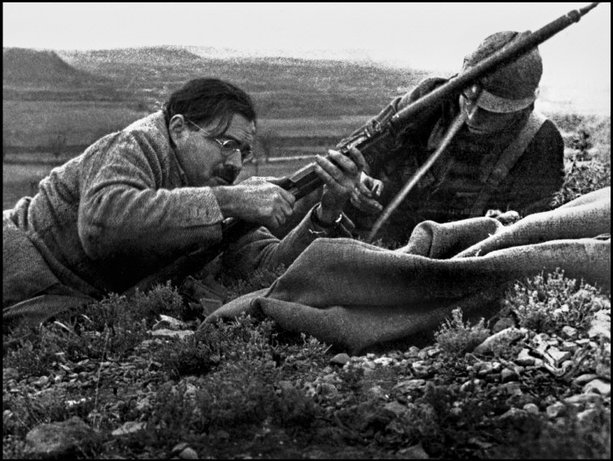
As Hemingway wrote:
There is nothing as bad as war. ... When people realize how bad it is they cannot do anything to stop it because they go crazy. 

Friday, August 05, 2011

Make up your own damn mind. About religion too!

The noble idea of liberal education is that students will not only have a broad understanding of the universe in which we are a tiny piece of cosmic dust, but also that they will be able to independently think--and think critically.

But, more and more it seems like that the rapid development and diffusion of information technology does a tragic run about this liberal education: it is now a lot more possible than ever before not to have a broad understanding and, yet, comment and critique without any independent, critical thinking:
The Internet-begotten abundance of absolutely everything has given rise to a parallel universe of stars, rankings, most-recommended lists, and other valuations designed to help us sort the wheat from all the chaff we’re drowning in. 

Even more is this:
“We exalt in being able to know as much as possible. And that’s great on many levels. But we’re forgetting the pleasures of not knowing. I’m no Luddite, but we’ve started replacing actual experience with someone else’s already digested knowledge.”

Wait a sec' if I am citing from somebody else critiquing this aspect of predigested knowledge, then am I not providing a classic example of what the author has set out to convince me about?  So, if the author is correct, then no reader will ever cite this essay?  Muahahaha, a paradox indeed!

Ok, seriously, I am sick and tired of uninformed people rating articles and news reports that I frequently bypass the listings that most media sites have--the "most emailed" or the "most viewed" ... I have come to seriously worry about the wisdom of crowds. Hey, wasn't it the crowd that elected Bush/Cheney for a second term?
we have to watch how much outside assessment we let in. There’s something heartbreaking about surrendering to strangers the delicate moment of giving order to the world. In those instances when we bring our cognitive reasoning to bear on our surroundings, when we aim our singularly human powers of evaluation at a piece of art or a fellow person, it’s a fundamental expression of the self. 

Well said.

One could make a similar argument about the role of religion, too, no?  After all, the overwhelming majority of believers follow that religion only because they were born into it.  And they accept the wisdom of the crowd to which they belong.

We look for articles and news reports that support our beliefs and then click on that "like" or "dislike" buttons.  For all purposes, the IT explosion has merely created a zillion different monstrous versions of Faux Noose, er, Fox News.

For the most part, whether it is religion or reading and thinking about the secular world, it turns out that:
Beliefs come first; reasons second.

So, beliefs first.  As one of the sleaziest characters, Karl Rove, put it, we then invent our own reality to support that belief!  Oh well, back to the point:
That's the insightful message of The Believing Brain, by Michael Shermer, the founder of Skeptic magazine. In the book, he brilliantly lays out what modern cognitive research has to tell us about his subject—namely, that our brains are "belief engines" that naturally "look for and find patterns" and then infuse them with meaning. These meaningful patterns form beliefs that shape our understanding of reality. Our brains tend to seek out information that confirms our beliefs, ignoring information that contradicts them. Mr. Shermer calls this "belief-dependent reality." The well-worn phrase "seeing is believing" has it backward: Our believing dictates what we're seeing.

But then, is to read Shermer also a confirmation bias?
A human ancestor hears a rustle in the grass. Is it the wind or a lion? If he assumes it's the wind and the rustling turns out to be a lion, then he's not an ancestor anymore. Since early man had only a split second to make such decisions, Mr. Shermer says, we are descendants of ancestors whose "default position is to assume that all patterns are real; that is, assume that all rustles in the grass are dangerous predators and not the wind."


So, those of us who use reason can blame the beliefs first on those apes in the savanna, the evolution from whom retained this "believing is seeing."  Creationists of various stripes, on the other hand, can blame their respective gods :)

Can somebody in the crowd tell me what to think and do?  Muahahaha :)


BTW, thanks to my favorite go-to-site for the links to both these essays.

The second dip cometh? A Republican Recession?

So, the stock market sank faster than I can in water (yes, despite numerous attempts to learn, I can't even float, leave alone swim!)
The stock market plunged by more than 4 percent yesterday in its worst day in more than two years and investors flooded safe-haven investment alternatives, driven by escalating fears the wobbly global economy may stumble into a new recession.
While one swallow doesn't make a summer, the high probability of an economic catastrophe has always been talked and written about, even in this blog. And I am not even an economist or a banker!  So, it is not as if we are merely looking at this one day stock market event.

First, a recap of the nightmarish situation:

A Month of Awful News
June was a very weak month for the U.S. economy, and our data from July so far isn't looking good. Some quick highlights:
These would all be very bad signs in a healthy economy. In a weak recovery -- a time when business activity should be above average -- they're even worse. Although we appeared to climbing out of the abyss in early 2011, it no longer looks like we're even treading water. In fact, we may be drowning again.
Robert Reich is furious, and he is darn right:

Republicans repeatedly assured the nation that once the debt-limit deal was done – capping spending, cutting the budget deficit, and getting “90 percent” of what they wanted — the economy would bounce back.
 Just the opposite seems to be happening.
Call it the Republican’s double-dip recession.
Wall Street investors aren’t ideologues. They don’t obsess about budget deficits ten years from now, or the size of the government. One day doesn’t make a trend, but a giant sell-off like this is motivated by hard, cold realities.
Dr. Doom is on a spree of what essentially is "I told you so" ... like this one:
QE3 started in Japan & Switzerland via fx action &/or monetary easing. Fed will eventually get to QE3 but it will be too little too late
Oh, how I wish I had no interest in public policy issues at all; life will be so much without worries!

Thursday, August 04, 2011

Feces throwing monkeys will do better in Congress? :)

So, hey pundits, what are your thoughts on the recently concluded debt ceiling debates, negotiations, and deal?

Why I stay away from faculty meetings :)

I have yet another explanation (ht) if and when I am asked why I don't ever fraternize with the faculty:

I've made an odd discovery. Every time I talk to a savant I feel quite sure that happiness is no longer a possibility. Yet when I talk with my gardener, I'm convinced of the opposite.

That is what Bertrand Russell said :)


Why all this competition, asks Rumi. Yes, why so?

I suppose it can look contradictory for this atheist to post about religion but without critiquing it.

It is easy--I am not that different from most atheists in that we reach the conclusion not with ignorance about religions, particularly the religion with which we were raised.  Thus, it is also no surprise at all when surveys point out that atheists often know more about religions than the believers themselves.

This being Ramadan time, I have been thinking more about Islam.  It is a tragic farce that the hysterical suspicions about every single follower of that religion prevents us from appreciating the arts and literature that grew out of that faith.

Thus, Rumi and his mystical works are among the many that get sidelined.  A former colleague in California, who was from Iran, was one hell of a Rumi nutcase and could recite poems from memory.  I am not sure how much that is representative of the average Iranian; but, a friend who was also from Iran was a Rumi fan too.

So, here for Ramadan is a wonderful verse by Rumi that I came across today:
Inside the Great Mystery that is,
we don't really own anything.
What is this competition we feel then,
before we go, one at a time, through the same gate?

Caption at the source:
Indian Muslims offer prayers before breaking their fast at Mecca Masjid in Hyderabad, on Aug. 2

Wednesday, August 03, 2011

Wind turbines kill ducks. So, ban 'em. Cuz, we want to hunt 'em :)

In pretty much every course I teach, I devote a week to environmental aspects.  The bottom line that I hope students get from that one week, and from elsewhere too, is that most environmental issues require tradeoffs.  And, therefore, it often comes down to political power. Examples abound--including this satirical piece on the ecologically sensitive Florida Everglades and wind turbines.


This is, of course, not the first time that the Daily Show has pointed out the craziness with which those at either ends of issues launch their arguments.

In the following classic, the same Mandvi pokes fun of asbestos exports from Canada, which seems to otherwise walk around with some kind of a environmental smug attitude


Equally hilarious, and tragic, is the following one by Wyatt Cenac about residents in Turkey Creek fighting to protect their land.  In this case, only the environmentalists could help them--and that too by fighting to protect the birds!

If only we had bold, responsible, and no-nonsense leaders like Gov. Christie

What an awesome statement from Chris Christie, the governor of New Jersey. (ht)  And in time for Ramadan ...
Makes me damn proud to be an American :)


What a crazy anti-Muslim hysteria we have in this country. 

I wonder how this anti-Muslim mania compares with the anti-Catholic and anti-Semite viruses of the past. It is awful that we haven't learnt from those and many other ugly aspects of our history.

Even more pathetic: there are very few politicians like Governor Christie who bluntly dismiss such hysteria with the kind of an attitude and words he uses.  Yes, "crazies" and "crap" are the best way to deal with them.

And, by the way, what ever happened to the Islamic Center project across from NJ, in the Empire State?  Remember that one?

Photo of the day: Ramadan begins

Caption at the source:
Indonesian Muslim women pray on the first night of Ramadan on July 31 in Jakarta.

A remarkable coincidence with the Ramadan this year: I re-connected with an old classmate, "Y," from my childhood years, the poignant memory of whom I have is from the second grade--doing watercolors and art work together. The coincidence because that "Y" notes in the email about observing Ramadan.

The call to prayer in the early minutes of daybreak--even on regular and not any special days--from the loudspeakers at the local mosque, is one of the best ways to start a day.

At my parents' old place, I always headed out to the local park for a brisk walk.
Picture this:
early dawn, dark enough that some of the street lights are still on
no traffic on the roads
only a couple of stray dogs stretching themselves
a few squatters on the sidewalks getting ready for the day

Overlay on this the lovely call to prayer from afar.

One of the best reasons to be an early bird!

BTW, the park has a tower, which was built for an exposition in the early 1970s.  The photo here is a view from that tower from quite a few years ago.

Tuesday, August 02, 2011

Regrets? None?

Today, I felt my shadow lengthening in the twilight of a mediocre career.

Perhaps that is why my walk along the river was extremely slow.  It was a two-hour walk punctuated with stops, in contrast to the brisk non-stop 75-minute rush through those five miles.

Which song would resonate with me then to wrap up this mediocrity, I wondered.

Would it be Frank Sinatra's "My Way" where he sings that the regrets are too few to mention:


Or, would it be Edith Piaf's "Non je ne regrette rien" where she says "I regret nothing" ...


Or, would I want to seek consolation in Chandrababu's song (the first line, in translation, means "the smart ones are not necessarily successful, and the successful ones are not necessarily smart")


Those were the thoughts as I walked with ...

I reached home.

As I unlocked the door, I heard Louis Armstrong's "What a wonderful world" ... (the radio is almost always on, even when I am out of the house)

It was a serendipitous moment.

Wisdom dawned, even if only temporarily, that I can afford to postpone worrying about the lengthening shadows ... for now ...

The rise of the planet of the apes


Here is that final scene of the original Charlton Heston movie that Jon Stewart refers to. I think it is one of the best movie endings ever. (My all time favorite movie ending? Click here)

Monday, August 01, 2011

Obama's "leading from behind" in a cartoon :)

One of those occasions when the usefulness of Facebook shows up to make sure that I don't quit it!

The comic cartoon here is thanks to a friend of a friend ... see how easy it becomes to exchange information, which is where Facebook is so convenient.
(BTW, I am now playing with Google+; but, of course, it will take some time to reach the critical mass there for it can take off and become a real competitor to Facebook. Thanks to an "invite" from a friend)


More here on "leading from behind"


We don't need no education!

Enrollment growth in Oregon’s community colleges and universities is not necessarily a healthy sign as the Statesman Journal’s report on July 31st implies.

Economic recessions are always correlated with increases in the number of students in higher education.  During recessionary times, there is not much of a job creation and, therefore, unemployed and underemployed labor tends to fall back on college education as a way to keep themselves busy and to improve their chances of meaningful employment as the economy recovers.

Economists tell us that the Great Recession ended in June 2009 with growth in the economy over consecutive quarters after an eighteen month downturn.  However, a significant number of Americans are yet to see that growth translated into jobs, which is the only way their own “personal recessions” will come to an end.

Thus, the lingering 9 percent-plus unemployment means that some of them take up college courses.  Graduating high school seniors, on the other hand, realize the stiff competition even for the minimum wage jobs and, they too, are more likely to try to beat the odds by signing up for college.

Therefore, the record enrollment level is far from any celebratory milestone per se.

Instead, we ought to be acutely worried that joblessness might be driving quite a few Oregonians to college.

This unemployment scenario turns even gloomier when I hear from students who completed their undergraduate degrees within the last few years but are yet to find any productive employment.  This morning’s email included one from a former student who wants my advice on certificate programs that she could do in order to get an entry-level job.

Further, studies show that students who graduate during recessions almost always are never able to catch up with the earnings lost because of unemployment and underemployment.

Merely increasing the numbers of people going to college is not going to solve the short-term economic crisis, nor necessarily provide society with a robust economic future.

To make things worse, public colleges and universities are also keen on maximizing enrollment, and even aggressively sell themselves not only within Oregon, but also in the other 49 states and the rest of the world.  As the Pulitzer-winning David Leonhardt observed, a big problem with higher education is “the focus on enrollment rather than completion, the fact that colleges are not held to account for their failures.”

Imagine if we ran hospitals based on the number of patients admitted, and not on the more important metrics of survival and health of those admitted.  We would be aghast, and rightfully so, at the failures in the medical system, more so when it is so darned expensive.  Higher education is, unfortunately, not that different from an expensive health care industry where the patients are not being well served. 

It is past the critical hour that we asked ourselves whether society ought to blindly promote 16 years of education without understanding the marginal costs and benefits of a population supersaturated with undergraduates and doctorates.

Sunday, July 31, 2011

Worrisome and scary photo of the day: India's RSS

The source notes that this was at an RSS Convention in 2009 at Bangalore, where one the participants (and in this photo as well) was Yeddyurappa, who has resigned from his position as the chief minister of Karnataka.

Why is this worrisome and scary? 

Definitely not because of the funny shorts, or the odd salute. 

It is all because of the RSS--a paramilitary force dedicated to fanatical Hindu nationalism, and ever ready to harm the lives and property of non-Hindus, and Muslims in particular.  The RSS is one of the many Hindu nationalistic groups that are collectively referred to as the Sangh Parivar.

It is one thing when the RSS existed as an organization in the political background, but an entirely different matter when many of the RSS loyalists started getting elected to power through the political party--the BJP.

Noting the rise of these groups, and a corresponding failure of political institutions to pay attention to the minorities, the US Commission on International Religious Freedom has placed India on its watch-list, for the third year in a row: 
India‘s democratic institutions, most notably state and central judiciaries and police, fall short in their capacity to uphold the rule of law. In some regions of India, these entities have proven unwilling or unable to seek redress consistently for victims of religiously-motivated violence or to challenge cultures of impunity in areas with a history of communal tensions, which in some cases has helped foster a climate of impunity.
Of course, Yeddyurappa is not even a gnat compared to the notorious Narendra Modi in Gujarat. (More here, and here, for starters)

A far cry from the secular India envisioned by the likes of Gandhi and Nehru.

It is not merely an Indian or an Indo-Pak issue.  The global implications took on an entirely different dimension with the Norwegian terrorist:

Norwegian mass killer Anders Behring Breivik hailed India's Hindu nationalist movement as a key ally in a global struggle to bring down democratic regimes across the world.
‘2080: A European declaration of independence' lays out a road map for a future organisation, the Justiciar Knights, to wage a campaign that will graduate from acts of terrorism to a global war involving weapons of mass destruction — aimed at bringing down what Breivik calls the “cultural Marxist” order.
India figures in a remarkable 102 pages of the sprawling 1,518-page manifesto. Breivik's manifesto says his Justiciar Knights “support the Sanatana Dharma movements and Indian nationalists in general.” In section 3.158 of the manifesto, he explains that Hindu nationalists “are suffering from the same persecution by the Indian cultural Marxists as their European cousins.”

When colleges boast of enrollment growth, be scared. Be really, really, scared!

Suppose hospitals boasted about the massive increases in the number of patients who had to be taken care over weeks within their facilities.  The public and the government would be alarmed that either there is something seriously wrong with the hospitals.  More so when heath care costs are soaring.

The increases in in-patient numbers would also make us worry about possible public health epidemics--the possibility that there was something significant that was making people really, really sick.

Fortunately, hospitals don't work that way.  Their goal is not to go into an overdrive and increase the hospitalization rates.  If at all, the complaint often is that hospitals are always too keen on sending patients packing quite early in the rehab stage.

Now, compare that behavior with the trend in another service industry where too costs have risen dramatically: higher education.

As the following chart from Carpe Diem shows, costs of college have outpaced even the much talked about health care costs.

Is all that college tuition worth the investments though?  Not at all. I have blogged enough about this (including this op-ed in the Oregonian.)

Isn't it an unfortunate irony then that the only goal of public colleges and universities seems to be to maximize enrollment!  To use that hospital analogy, more patients, with patients taking longer and longer to get better even while paying high costs, and when they leave the hospital many of them are worse off than when they entered it :(

Yet, again, I find that public universities, like here in Oregon, are only too thrilled about the unheard of and historic growth in the numbers of students.  Only one university seems less concerned about enrollment itself:
It also might be tougher to get in to Portland State University in the future but for different reasons. School officials there have shifted the emphasis from enrollment to retention and graduation, said PSU spokesman David Santen.
Which is how it ought to be--focus on quality patient care, so to say.

Back in 2009, David Leonhardt, who later won a Pulitzer for his succinct analytical writings in the NY Times, observed that a big problem with higher education was:
the focus on enrollment rather than completion, the fact that colleges are not held to account for their failures.
As far as colleges are concerned, it seems to be a variation of the old sarcastic comment, "the operation was successful, but the patient died."

The leaders of educational institutions don't seem to care; in fact, their worry is that there is not enough money coming from the federal government in order to subsidize students:
Current proposals in Congress to cut funding for Pell grants — the federal government’s primary program to help economically disadvantaged students go to college — are shortsighted and could have a devastating effect on students’ access to higher education and work force training, especially in today’s weak economy.
As noble as it might sound, cheap money handed out by the feds ends up benefiting the colleges and not the intended beneficiares--students.  Here is an explanation of how that happens:

[The] U.S. federal government is directly behind the bubble we observe to exist in the cost of U.S. higher education, with federal spending during years of recession effectively insulating U.S. colleges and universities from the nation's economic circumstances by subsidizing their operations.
Nominal Average Annual Tuition and Required Fees vs Median Household Income in the United States, 1976 through 2008 These subsidies, delivered at times of recession, free U.S. higher education institutions to set the price of their tuition independently of their students' ability to pay based upon their or their family's current household income.
The only limiting factor for U.S. higher education institutions then would be the actual growth of U.S. federal spending. This would be why the average cost of college tuition in the United States would appear to have come to track the total level of federal government spending so closely.
As a result, the cost of college tuition has skyrocketed with respect to the typical family's household income. Consequently, when a student attends college today, they must increasingly rely upon subsidies from the federal government that fill the gap between what their institutions charge and what they must pay for out of their own pockets.
So, yes, the college tuition and fees keep increasing, and quite rapidly--an example, also about Oregon, in this news report:

Oregon's seven universities have proposed an average 7.5 percent tuition increase for full-time, resident undergraduate students next year, pushing the average annual cost of tuition and fees to $7,634. ...
The proposed increases, which the State Board of Higher Education is expected to approve Friday, range from 5.1 percent at Western Oregon University to 9 percent at PSU, the University of Oregon and the Oregon Institute of Technology. Proposed increases are 8.1 percent at Oregon State University and 6.8 percent at Southern Oregon and Eastern Oregon universities.
Where does all the additional money go?  I suppose we need all that extra money for rock-climbing walls, re-branding, ... who cares if students are screwed in the process, right?