An anti-monarchy statement:

My favorite Queen? Really? You have to ask?
Or, how about the Dancing Queen?

I was commissioned in the Indian Navy as a lieutenant after completing my bachelor's degree in mechanical engineering with honors. I was in the top three of the graduating class. After my initial training of about 14 months, I was put in the warship-building program. I was in uniform, not a civilian, and was in charge of building warships for several years. I also served on warships at sea and participated in all kinds of exercises, including a war during the 1970s.Kind of ironic, isn't it--a navy man now in a landlocked country, and even the Caspian Sea is far, far, away from Almaty! Amazing how far and wide people of Indian origin are scattered around the world.
Astana has been the capital of Kazakhstan only since 1997, three years after the country’s leader, Nursultan Nazarbayev, told a stunned parliament that a prosperous, independent country like Kazakhstan ought to have its capital “in the center” of the country, rather than on the border. Almaty, the old capital, was pleasantly situated in the foothills of the Tian Shan Mountain range, and was famous for its apple orchards. And Astana? It was six hundred miles to the north—that is to say, toward Russia—and bitterly cold.And, hey, not any ordinary buildings in this brand new capital city. But, expensive structures like this--"The Khan Shatyr Entertainment Center at night":


Libyan fighters stray across Tunisian border: me worry?and, the most worrisome of all ...
Syria target hit by Israel was 'nuclear site': confirmation of that 2007 mystery
Death toll mounts on Syria's 'day of rage': 62 dead on Friday alone
Morocco steps up security after cafe blast: 14 dead in a cafe blast
Thai-Cambodia ceasefire breaks down: day eight of border fighting
UK's Prince William weds Kate Middleton: ...
ok, it is just me annoyed at all the brouhaha over the public excitement over a prince marrying. A global celebration of royal fornication to produce heirs, preferably male, in order to continue with the screwed-up monarchy.

On May 3 at 1 p.m. at the Werner University Center Plaza, Western Oregon University (WOU) will release the new athletic and academic logo marks for the university, designed by Rickabaugh Graphics.Yes, of course. If we didn't do all these, students and taxpayers might not be able to figure out where their monies are being wasted!
Developing an identity and brand is crucial because it tells the world how you see yourself now and in the future.Really? Don't we already have that? Uh, hello, as a public higher education institution governed by a board appointed by the governor, we have a clear mission, don''t we? (This blank webpage is a statement by itself on the mission of the university!) We are not like a BP, which has an identity, PR, and branding problem. Heck, Exxon shows that even if there are problems, the money just keeps rolling in ...
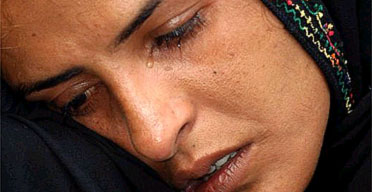
Since the day in 2002 when she decided to seek punishment for the men who had gang-raped her, Mukhtaran Mai has been a symbol of Pakistani women's struggle against a feudal and patriarchal society in which brutal crimes against women are condoned in the name of honour and custom. In Mukhtaran's case, a panchayat in her village abetted the rape as “punishment” for her 12-year-old brother's alleged illicit relations with a girl of a higher caste. It was expected that, after the treatment meted out to her, Mukhtaran, in keeping with tradition, would conveniently commit suicide, and no liability would fall on any man. But this extraordinarily brave woman, unlettered at the time of the monstrous crime, decided to defy societal taboos to take her attackers to court.Yes, she was expected to commit suicide after having been gang-raped :(
And this takes us to Meerwala Jatoi, a village in Muzaffargarh district in southern Punjab, where the influential men of the Mastoi tribe, Mai’s tormentors, rule the roost. They are otherwise small fry on the political landscape of southern Punjab, which is home to landlords with large holdings and all the trappings of a mediaeval feudal system in action. It is no secret that the abuse of landless, working men and women, and their children, is rampant here; some landowners even have their own private prisons.Not only does Mukhtaran Mai have to deal with this awful verdict, she now has to worry about the increased threat to her life:
Here, village councils, or panchayats comprising mostly uneducated men whose minds are steeped deep in the dark recesses of tribal, feudal rules and laws of their own making, run a parallel justice system aimed at further victimising the already marginalised in the land, especially those who dare to defy unjust social norms.
Amidst all this operate the rural police whose unwritten rules of duty stipulate that they assist the local landlords in their jurisdiction to maintain peace and order in their respective fiefdoms. This in turn makes the task of policing a cakewalk. They see no evil, they hear of none committed or alleged, and are hand in glove with the influential clans. For the underprivileged, it is literally a dog-eat-dog world.
This cruel social system continues to prevail because of a certain mindset that too is rampant, not only in rural areas but across the board. That’s why an entire neighbourhood can be roused to punish an alleged blasphemer, but there is little social outrage seen when girl children are ‘sold’ in marriages to older men; when women are traded off in forced marriages to settle tribal feuds; and yet others are killed, even buried or burnt alive in the name of so-called honour.
'I'm disappointed. Why was I made to wait for five years if this decision was to be given?' said a sobbing Mai in a telephone interview from her village in the eastern province of Punjab shortly after the court announced the decision.'The accused can kill me and my family when they return home,' she added.Terrible!
'I have lost faith in the courts, and now I am leaving my case to the court of God. I am sure God will punish those who molested me.'
Four of the largest U.S. foreign-aid recipients today -- Egypt, Israel, Pakistan, and Afghanistan -- all take contrary positions on issues of critical importance to the White House. South Vietnam once got gobs -- gobs upon gobs -- of U.S. foreign aid. That didn't help much. Likewise with Egypt, Iran, Pakistan, Zaire (now the "Democratic" Republic of the Congo), and other "friendly" (read: graciously willing to take U.S. money) countries.Most of what Adelman writes is not new, of course. His is a response to this piece by Joseph Nye. Adelman has lots of examples, of which I liked this the best:
The conclusion seems clear: The relationship between "the United States' ability to positively influence events abroad," as Nye puts it, and the amount of U.S. foreign aid a country receives is unclear at best. For decades now, the United States has been the No. 1 foreign-aid donor -- it has given the most money to poor countries -- so it can't move up any on that scale. But this hasn't translated in making America the most popular or most influential country around the world. Quite the contrary.
Even the all-time No. 1 recipient of U.S. aid, Israel, rebuffs Washington constantly, on momentous issues of peace. Moreover, Israeli polls show the lowest approval for the U.S. president of nearly anywhere in the world.
Let's recall: The State Department agreed to the Mubarak government's request for its approval before any U.S. democracy programs for Egypt got launched. To put it simply, the soft-power agency consented that anti-dictator programs appropriated by the U.S. Congress first get approved by that dictator.Awful how we were all cuddly with dictators and showered them with gifts. That certainly didn't buy us popularity with the people, did it? Adelman concludes:
I've come to believe that liberals focus primarily on intentions, while conservatives focus more on results. No doubt the soft-power goals of the State Department and USAID on diplomacy, foreign aid, exchange programs, and the like seem wonderful. They're peaceful, caring, intercultural, and so on. They signal the right intentions.
The hard-power association with Pentagon budgets, weapons, and soldiers seems quite contrary. They signal the wrong intentions. But looking at the actual results of soft power versus hard power may yield results that make today's fashionable thinking seem soft, if not altogether squishy.


Just a quick reminder that Monday (4/25) is Higher Ed. Rally Day at the state capitol steps. Please join students and faculty for a rally which will convey our needs and goals to the Governor and the Legislature. It startsat 12:30 on the steps and will last approximately an hour. See you there.So, where will the additional money come from? Hmmmm ....
First, Lord: No tattoos. May neither Chinese symbol for truth nor Winnie-the-Pooh holding the FSU logo stain her tender haunches.I think of this as a wonderful tribute to mothers, who deal with crap--the literal and the metaphorical. A couple of weeks ahead of Mother's Day, I suppose.
May she be Beautiful but not Damaged, for it’s the Damage that draws the creepy soccer coach’s eye, not the Beauty.
When the Crystal Meth is offered, May she remember the parents who cut her grapes in half And stick with Beer.
Guide her, protect her
When crossing the street, stepping onto boats, swimming in the ocean, swimming in pools, walking near pools, standing on the subway platform, crossing 86th Street, stepping off of boats, using mall restrooms, getting on and off escalators, driving on country roads while arguing, leaning on large windows, walking in parking lots, riding Ferris wheels, roller-coasters, log flumes, or anything called “Hell Drop,” “Tower of Torture,” or “The Death Spiral Rock ‘N Zero G Roll featuring Aerosmith,” and standing on any kind of balcony ever, anywhere, at any age.
Lead her away from Acting but not all the way to Finance. Something where she can make her own hours but still feel intellectually fulfilled and get outside sometimes And not have to wear high heels.
What would that be, Lord? Architecture? Midwifery? Golf course design? I’m asking You, because if I knew, I’d be doing it, Youdammit.
May she play the Drums to the fiery rhythm of her Own Heart with the sinewy strength of her Own Arms, so she need Not Lie With Drummers.
Grant her a Rough Patch from twelve to seventeen. Let her draw horses and be interested in Barbies for much too long, For childhood is short – a Tiger Flower blooming Magenta for one day – And adulthood is long and dry-humping in cars will wait.
O Lord, break the Internet forever, That she may be spared the misspelled invective of her peers And the online marketing campaign for Rape Hostel V: Girls Just Wanna Get Stabbed.
And when she one day turns on me and calls me a Bitch in front of Hollister, Give me the strength, Lord, to yank her directly into a cab in front of her friends, For I will not have that Shit. I will not have it.
And should she choose to be a Mother one day, be my eyes, Lord, that I may see her, lying on a blanket on the floor at 4:50 A.M., all-at-once exhausted, bored, and in love with the little creature whose poop is leaking up its back.
“My mother did this for me once,” she will realize as she cleans feces off her baby’s neck. “My mother did this for me.” And the delayed gratitude will wash over her as it does each generation and she will make a Mental Note to call me. And she will forget. But I’ll know, because I peeped it with Your God eyes.
Amen.
After the Storm

The air is full of after-thunder freshness,
And everything rejoices and revives.
With the whole outburst of its purple clusters
The lilac drinks the air of paradise.

The gutters overflow; the change of weather
Makes all you see appear alive and new.
Meanwhile the shades of sky are growing lighter,
Beyond the blackest cloud the height is blue.

An artist's hand, with mastery still greater
Wipes dirt and dust off objects in his path.
Reality and life, the past and present,
Emerge transformed out of his colour-bath.

The memory of over half a lifetime
Like swiftly passing thunder dies away.
The century is no more under wardship:
High time to let the future have its say.

It is not revolutions and upheavals
That clear the road to new and better days,
But revelations, lavishness and torments
Of someone's soul, inspired and ablaze.

1958
                 Translated by Lydia Pasternak Slater
Pasternak is, of course, known to most of us as the creator of Dr. Zhivago. Play that the lovely music from the movie version, in the video below, and read the poem all over again. Chances are quite good that you will feel the storms clearing ...

There were no Charles de Gaulles or Fidel Castros to inspire us. Independent India’s most important statesman, Jawaharlal Nehru, suffered from an air of masculine inadequacy, stemming from his failure to forestall the Chinese invasion of India in 1962. Liberal, tolerant Indian politicians almost always looked like pathetic specimens of masculinity; the charismatic men were either those who had advocated military action against the British—or the even more macho Hindu nationalists.I am all the more convinced that Adiga should restrict himself to fiction, where he excels.
he eventually dumped me for this German-Jewish bodybuilder, and I warned him, I said, “Hello, been there, and I know that at first it sounds hot, but pretty soon it’s all ‘Nein, I can’t stay out late, because I have to get up early for the gym,’ and ‘Nein, we can’t do your rally for South Africa, because we’ve got my cousin’s Seder, remember?’ And his mother will be all ‘So, Mr. Gandhi, I’m told you like to lie down in front of railroad cars, to demonstrate a political point. Can you make a living from this?’ ”

‘I think we should be honest about our priorities’, he said. ‘At the end of the day, the point of the university has changed. If you look at when only five per cent of the population went, that was about knowledge, discovery, pushing boundaries, people talked about the crème de la crème. [Now], it is about social mobility and people changing their lives. The reality is you need that bit of paper [a degree] to get into better jobs with greater earning potential and influence. So we want as many people to get one as possible, at the expense of quality if necessary.’Wait, don't nod in agreement. Re-read this. Did you catch what he said? "we want as many people to get [a degree] as possible, at the expense of quality if necessary.’" There, if ever we needed a clear articulation on how much education is all about numbers and not about quality, well, hey, thank this brilliant student leader for making it clear.
It is a remarkably naked assertion of the denigration of education from being about quality (knowledge, reflection, truth) to being about quantity (getting as many young people through as possible in order to improve their ‘earning potential’).
 is a good metaphor :(
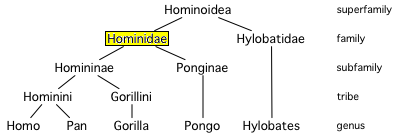
FLATOW: You know, a lot of people who are creationists and do not believe in human evolution, they like to say that no human has descended from a monkey or an ape or a chimpanzee. And that's exactly correct, isn't it? It's not that we were descendants from them, but there's a common ancestry somewhere.I am not sure which one will be a tougher sell with the anti-evolution crowd: that we descended from an ape, or that we are also apes!
Dr. LEAKEY: Well, indeed. And I think if we were very fair, which humans aren't, and one did - had the classification of primates done by a non-primate, there would be six great apes, not five, because we are just an ape. We just happened to have been a more intelligent one who did the classification ourselves.
I wasn't sure if Leakey meant it in all seriousness, or was making a political point of sorts that we--the surviving homo sapiens--ought to be recognized as a separate ape. I am ok with knowing that I am on the planet of the apes :)I'm quite sure had Charles Darwin not suggested that we, too, had evolved, evolution would have been perfectly acceptable to everybody. But it wasn't thus and all the evidence today, and there's abundant evidence and very clear evidence, is that we have evolved. And if you go back far enough, our ancestors don't look anything like we do today.
people didn't like the idea that the world wasn't the center of the universe. People didn't like the idea that the world wasn't flat. Given time and evidence, people learn to accept these things if they're true. And I think there's no question of the truth of human evolution. None at all.But, it is quite a challenge:
Dr. LEAKEY: I personally believe that if we could accept human evolution and evolution, science would be much more acceptable. And I think the only way out of the mess this species that's in today is for science to get greater currency value in the world. And I think a lot of biological natural science has been discounted because of the fear of evolution.
Evolution is nothing to be afraid of. And if we could get a lot of money and a lot of attention and look at the last 100,000 years - which I think we can do now - I think we can clear this up once and for all. And it's late, but there is still time.
FLATOW: Are you saying it's a worldwide fear of evolution, or is it mostly in the United States?
Dr. LEAKEY: I think it's growing. I think it's - it is worldwide. I think it's much more of a case in areas where Christianity is - and Islam have a lot of influence. And I think the fundamentalist approach to religion that you're seeing both in those two great religions is making this worse. But you find it in Europe. You find it in England. You find it in Africa. In fact, there are very few African leaders who believe in human evolution and science.
FLATOW: Is that right?
Dr. LEAKEY: And it's very, very worrying, because Africa's problems will only be resolved by African scientists working on those problems. And if we don't teach science from early on, we're not going to get out of this hole, because nobody is going to pull us out of the hole, because they're in one themselves.
FLATOW: Does it make it hard to excavate in these African countries if they don't believe?
Dr. LEAKEY: Funny enough, it doesn't. Because if they don't believe we're looking for human ancestors, they don't care what you're doing.


A 2007 study estimated that 2.1 percent of all current expenditures can be attributed to teacher compensation related to master’s degrees. Seen another way, the master’s bump costs the average school district $174 per pupil.Here in Oregon, according to this study, the extra cost as a result of this master's bump is $109,520,560.
... A Nebraska lawmaker, for example, should probably be aware that, on a yearly basis, roughly $81 million dollars—$279 per pupil—are tied up in master’s degrees and thus unavailable for other purposes. During this time of fiscal stringency, it should raise eyebrows when a state automatically allocates over 3 percent of the average per pupil expenditure in a manner that is not even suspected of promoting higher levels of student achievement.
On average, master’s degrees in education bear no relation to student achievement. Master’s degrees in math and science have been linked to improved student achievement in those subjects, but 90 percent of teachers’ master’s degrees are in education programs—a notoriously unfocused and process-dominated course of study.And, hey, if you want it from the proverbial horse's mouth, well, I blogged about that too a few months ago:
In a speech at an American Enterprise Institute forum on Wednesday, the secretary of education, Arne Duncan, said state and local governments should rethink their policies of giving pay raises to teachers who have master’s degrees because evidence suggests that the degree alone does not improve student achievement.Coming soon to the third grade classroom in your neighborhood school: teachers with doctorates!


Brazilian fingers wife in venomous vagina murder plotSource
A Brazilian man has claimed his wife attempted to kill him by putting poison into her vagina and inviting him to drink from the furry cup.
The unnamed husband, from São José do Rio Preto, in the state of São Paulo, told cops he and his missus had an argument. She then allegedly doused her privates with a "toxic substance" before suggesting her other half eat at the Y.
Luckily for the intended victim, he smelt something fishy before diving in, and thwarted the cunning cunnilingual plan.
Given the "unusual" nature of the case, officer Walter Colacino Júnior, of Rio Preto's 4th Police District, has decided to probe deeper into the matter before taking any action.

The Arab world desperately needs its versions of South Africa’s Nelson Mandela and F.W. de Klerk — giants from opposing communities who rise above tribal or Sunni-Shiite hatreds to forge a new social compact. The Arab publics have surprised us in a heroic way. Now we need some Arab leaders to surprise us with bravery and vision. That has been so lacking for so long.WTF! What a horrible "liberal" warmonger Friedman has been and continues to be! Hey, here is an idea--even if those countries slip into civil war, which is their problem to begin with, why not employ your own Friedman Unit to advocate for patience? You know, tell the American public that in six months those civil wars will turn a corner and, therefore, the US should simply stay out? And then say the same thing again when the six months end. And again. And again.
Another option is that an outside power comes in, as America did in Iraq, and as the European Union did in Eastern Europe, to referee or coach a democratic transition between the distrustful communities in these fractured states. But I don’t see anyone signing up for that job.
President of Czech Republic Václav Klaus "steals" pen during his official visit in Chile. President's spokesman Radim Ochvata said it was a gift.
Our military spending is absurd in comparison to the rest of the world’s, not particularly popular here at home and widely acknowledged to be full of waste. And yet it has emerged pretty much unscathed from the 2011 spending cuts and the 2012 budgets of both the House GOP and the White House. It’s really quite odd. Real deficit hawks would be spending some serious time with the report (pdf) of the Sustainable Defense Task Force. Guess we’ll see Wednesday whether President Obama is willing to take this fight on.Dream on, if you think that Obama will take on the defense budget. Yes, I am thinking of Paul Krugman here on "Obama is missing."
Free speech is a great idea, but we're in a war. During World War II, you had limits on what you could do if it inspired the enemy.Can you imagine ever going after the defense budget when such politicians govern? ever, ever , ever? As Reason pointed out in that context:
You know what? We're always going to be in a war, thanks in no small part to the Lindsey Grahams of the world. Which means if we truly value our free speech, we're gonna have to bounce out every politician who subjects American expression to a wartime litmus test. Better yet, maybe start electing some who at least occasionally refrain from supporting new wars against majority-Muslim countries that have yet to make it through a Reformation.Yes, war forever. If not with Eurasia, then with East Asia. There is no place for Winston Smith, unless he truly believes that 2 + 2 = 5.

the liberties taken away by wartime are permanently taken away.Going after the massive defense budget is, therefore, not merely about deficits, it is also to regain the liberties that the government has taken away from us. But, ain't gonna happen :(
Tennessee House Bill 368, the creationist friendly legislation that we have previously covered on FrumForum, has passed through of the Tennessee House on a vote of 70-23. The Senate is expected to take up the bill for a vote on April 20th.I suppose the vote will be in time for Earth Day celebrations in Tennessee, when the politicians will describe how god created the earth that is the center of this universe.
One Republican did vote against the bill however, Representative Bob Ramsey. According to his website, Ramsey also holds a B.S. in Biology.Anyway, that is not the end of the sitcom--read the following quotes from the honorable members of Tennessee's legislature:
Williamson County Representative Glen Casada says science proponents are intolerant of dissent.Who knew it would all come down to deeply-buried teenage angst over banning aerosol in hairspray!
“But there’s now the new religion of evolution. And they in turn are now trying to suppress questioning and free thought.”Representative Richard Floyd, R-Chattanooga, called the bill a return to common sense.
“And ever since the late ’50s and early ’60s, when we let the intellectual bullies hijack our education system, we’ve been on a slippery slope.”Dr. Joey Hensley, a Republican from Hohenwald, says a scientific theory is…well, more theory than science.
“Every theory is… just that, it’s a theory. And many scientific theories that we’ve heard from, that people claim, every scientist believes a certain theory, that’s certainly not true.”
Representative Tony Shipley, R-Kingsport, says that as a teacher he worried that he would be criticized for some of the things he taught.
“One of the things that really bothered me, I was told I couldn’t pray with my football players. So I did it anyway. Not only did I do it, I did it in the middle of the football field, on the 50 yard line. So sometimes, it’s important to just do it.”Representative Sheila Butt, Republican from Columbia, says things she was taught in high school turned out to be untrue.“I remember so many of us, when we were seniors in high school, we gave up Aquanet hairspray. Do you remember why we did that? Because it was causing global warming. That that aerosol in those cans was causing global warming.
Since then scientists have said that maybe we shouldn’t have given up that aerosol can, because that aerosol was actually absorbing the earth’s rays, and was keeping us from global warming.”
Virtually all U.S. senators, and most of the representatives in the House, are members of the top 1 percent when they arrive, are kept in office by money from the top 1 percent, and know that if they serve the top 1 percent well they will be rewarded by the top 1 percent when they leave office.Says a lot about American politics now, doesn't it!
Of all the costs imposed on our society by the top 1 percent, perhaps the greatest is this: the erosion of our sense of identity, in which fair play, equality of opportunity, and a sense of community are so important.The unemployment and the depressing economic situation that the youth face worries me a lot, perhaps because I see them everyday in the ready to graduate students. I can't imagine them remotely thinking it is fair play when they are screwed ...
The top 1 percent have the best houses, the best educations, the best doctors, and the best lifestyles, but there is one thing that money doesn’t seem to have bought: an understanding that their fate is bound up with how the other 99 percent live. Throughout history, this is something that the top 1 percent eventually do learn. Too late.
It is a big mistake to separate analyses of growth and income distribution. A rising tide is still critical to lifting all boats. The implication of our analysis is that helping to raise the lowest boats may actually help to keep the tide rising!
The immediate role for policy, however, is less clear. More inequality may shorten growth duration, but poorly designed efforts to reduce inequality could be counterproductive. If these distort incentives and thereby undermine growth, they can do more harm than good to the poor.
Still, there may be some “win-win” policies, such as better-targeted subsidies, better access to education for the poor that improves equality of economic opportunity, and active labor market measures that promote employment.
When there are short-run trade-offs between the effects of policies on growth and income distribution, the evidence in our paper doesn’t in itself say what to do. But our analysis should tilt the balance towards the long-run benefits—including for growth—of reducing inequality. Over longer horizons, reduced inequality and sustained growth may be two sides of the same coin.

The World Bank is planning to restrict the money it gives to coal-fired power stations, bowing to pressure from green campaigners to radically revise its funding rules.WTF, right?
where does this new policy leave China and India? Based on International Monetary Fund GDP figures, adjusted to allow for the lower costs of many items in poorer countries, China is the second-largest economy in the world and India is the fourth-largest. Yet both countries have massive, and overwhelmingly poor, populations. China is only in 90th place in terms of GDP per head, and India is 137th. So are these amongst the ‘poorest’ countries that will still get World Bank aid or not? Even these rising economic powerhouses are in desperate need of development.All those greenies who talk a boatload of crap about the simpler and "fuller" lives that the poor lead, well, I think they ought to relocate to places like the Tanzanian village I visited and live there for the rest of their lives. Yes, I am bloody pissed!
But far from fretting about this shocking poverty, Western greens don’t seem very keen on the developed world having reliable electricity at all.
Union Minister of State for Environment and Forests Jairam Ramesh on Saturday asserted that India would not succumb to international pressure on any legally binding commitments to reduce carbon emission.Not only that:
Speaking at the National Conference and Annual Session of the Confederation of Indian Industry (CII) here, Mr. Ramesh said the government would act only in the national interest on the issue.
“I can assure you we are not taking on any legally binding commitments under international duress."
Yielding to intense pressure from the coal ministry and end user ministries of power and steel, the environment ministry has agreed to consider approval of all proposed mining projects that obtained stage I forest clearance before 2010, and also offered to free up more forest land from no go areas for mining.I am sure those whose blood runs green will be outraged. But then they are aghast that even the screwed up World Bank plan doesn't go far enough because it spends too much on these conventional energy sources. Hey, the Bank spends that because of the severe shortfall"
The World Bank's record on funding fossil fuels has long been a target of green campaigners. Last year, for instance, the World Bank was attacked for its controversial decision to grant nearly $4bn (£2.5bn) to the South African company Eskom to build what would be one of the world's largest coal-fired power stations.The Bank knows all too well the reality on the ground:
The bank spent £3.4bn – one-quarter of all its spending on energy projects – on coal-fired power in developing countries in the year to June 2010. That was 40 times more than the sum spent five years previously.
In 2009, a World Bank blog post by Justin Lin, the organisation’s chief economist, explained why support for coal was essential. ‘The answer is that there is an urgent need for energy in the poor countries that we serve and indeed in my home country, China… Because coal is often cheap and abundant, and the need for electricity is so great, coal plants are going to be built with or without our support. Without our support, it is the cheaper, dirtier type of coal plants that will proliferate.’But, when it comes to poor people, it is awful that the directly or indirectly their ideological opposition translates to the same Republican Party bottom-line of "screw the poor!" And they oppose it even if the electricity generation will not be from fossil fuels:
when the Ethiopian government announced plans for a major new hydro-electric scheme - in a country where 70 per cent of people have no access to electricity - greens have demanded that international organisations like the World Bank and the European Investment Bank should refuse to support it (see They don’t give a dam about development, by Nathalie Rothschild).I can forever keep punctuating my comments here with WTF!