Saturday, February 26, 2011

Music video of the day: Awesome four year old at the drums!

So, what happens when the drummer is a four-year old kid? (ht) you start smiling :)


And, oh, here is that 'original" song, the video for which becomes boring after watching a four-year old kid :)  80's hairstyles at their peak, eh!!!

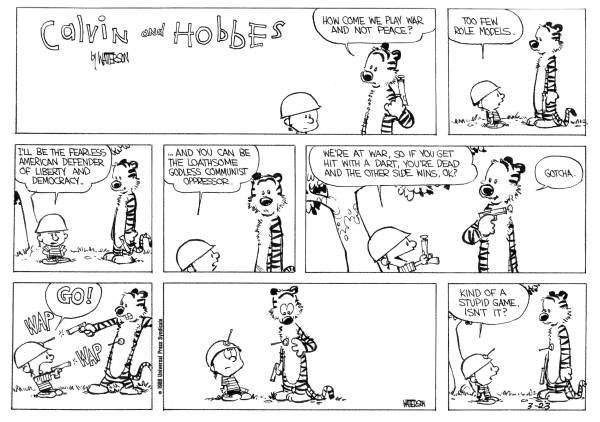
Cartoons of the day: Calvin's anti-war questions

No, not John Calvin, but the one who walks around with Hobbes.  No, not that Hobbes either :)


If only Watterson hadn't retired!  Oh well ....
So, why war all the time?

Well,  there is more to it:
Yep, stupid!

CIA orders Facebook shut down Feb 29th to 31st

Made you think twice, eh :)

Pundits are all over the map on how much the Arab revolutions were facilitated by Facebook and Twitter and ....   I like the cartoon here the best
ps: in case you are still wondering about the title of this post, ahem, check the calendar!

Higher Education Gone Wild. Not, it ain't the costs!

David Leonhardt of the NY Times summarizes the issues:
  • The complexity of the financial-aid process is one, because it scares away many poor students; in the ideal system, up-front tuition costs would remain low, and students would pay back colleges with a percentage of their income.
  • The patchy — and often shoddy — quality of education at many high schools and colleges is a major problem.
  • It’s also a problem that we don’t know which colleges are doing a good job and which are not.
  • Finally, it’s a problem that Washington and the states spend billions of dollars subsidizing higher education but do not demand accountability. See this Daniel de Vise article in The Washington Post for more.
It is not clear though whether all these have equal weight, according to Leonhartd, or whether the listing reflects his understanding of the relative importance.  The way I understand the problems of higher education, I would list the same in the following order--with the most important first:
  1. Washington and the states spend billions of dollars subsidizing higher education but do not demand accountability.
  2. We don’t know which colleges are doing a good job and which are not.
  3. The patchy — and often shoddy — quality of education at many high schools and colleges
  4. The complexity of the financial-aid process is one, because it scares away many poor students
Even in this re-ordered listing, it is clear thatpoints 1, 2, and 3 are referring to same issue of accountability.  For all purposes then we can summarize the problem into a simple phrase: Higher Education Gone Wild!

Costs are, to a large extent, the symptoms of the disease, and with our preoccupation with costs we seem to be confusing symptoms and causes.  Even there, at the end of everything, do we have any confidence that the costs, which are spiralling out of control, are worth it?


But, if course, most faculty and administrators will come together very quickly on the one issue of accountability--they will fight it because they like the current system where they can keep asking for as much money as possible without being held responsible for constructive outcomes.

Comedians are becoming better newsmen these days

David Letterman could have been a little less pushy and a tad funnier ... but, way better than the "news" programs where they "interview" politicians.

Friday, February 25, 2011

Quote of the day, on California's higher education system

A phenomenon without a doubt, and without a peer:
California is arguably the heaviest-hitting state in any league of higher education. To find something comparable, you would have to aggregate the combined performance of the entire Northeastern United States. Massachusetts, Connecticut, Pennsylvania, New Jersey and New York together have produced precisely as many Shanghai top 50 institutions as California. And they have done so with the head start of an extra century or more of development, with the resources of a combined population base close to twice California's and, of course, with vast amounts of private-pocket financing.

The combined endowments of the 10 top-50 institutions on the East Coast top $80 billion. The West Coast's 10 top-ranked universities have a combined endowment of just over $21 billion, or about one-fourth of what their East Coast counterparts have amassed. Moreover, Stanford alone accounts for more than half of the endowment money held by the West Coast's top universities.

In other words, in terms of bang for the buck, the efficiency of California's university performance is staggering. Only a few state institutions in the Northeastern United States make it into the Shanghai top 50. All the others are plushly upholstered private institutions.
So, whatever happened to California, which finds itself in such a mess today?  

People taking the high ground in Libya, while Obama wusses out

The mad "our man in North Africa" Gaddafi continues to make things worse for his own people.  Firing on people, even children, hiring thugs from other countries in order to shoot and kill Libyans .... how much more insane can this guy get?

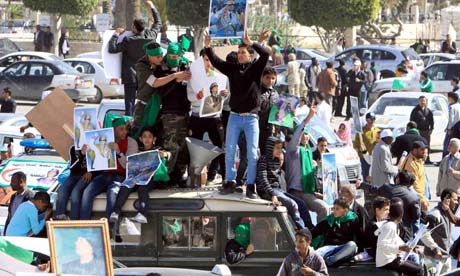
Yet, ordinary Libyans haven't lost it all (ht)


Christopher Hitchens is unhappy with President Obama's responses, or the lack of any, to the revolutions on the "Arab Street"
For weeks, the administration dithered over Egypt and calibrated its actions to the lowest and slowest common denominators, on the grounds that it was difficult to deal with a rancid old friend and ally who had outlived his usefulness. But then it became the turn of Muammar Qaddafi—an all-round stinking nuisance and moreover a long-term enemy—and the dithering began all over again. Until Wednesday Feb. 23, when the president made a few anodyne remarks that condemned "violence" in general but failed to cite Qaddafi in particular—every important statesman and stateswoman in the world had been heard from, with the exception of Obama. And his silence was hardly worth breaking. Echoing Secretary of State Hillary Clinton, who had managed a few words of her own, he stressed only that the need was for a unanimous international opinion, as if in the absence of complete unity nothing could be done, or even attempted. This would hand an automatic veto to any of Qaddafi's remaining allies. It also underscored the impression that the opinion of the United States was no more worth hearing than that of, say, Switzerland.
Perhaps the line about testicular fortitude was not off the mark, after all!  Hitchens concludes thus:
Libya is—in point of population and geography—mainly a coastline. The United States, with or without allies, has unchallengeable power in the air and on the adjacent waters. It can produce great air lifts and sea lifts of humanitarian and medical aid, which will soon be needed anyway along the Egyptian and Tunisian borders, and which would purchase undreamed-of goodwill. It has the chance to make up for its pointless, discredited tardiness with respect to events in Cairo and Tunis. It also has a president who has shown at least the capacity to deliver great speeches on grand themes. Instead, and in the crucial and formative days in which revolutions are decided, we have had to endure the futile squawkings of a cuckoo clock.
Or, as we put in bluntly at casual conversations, "all talk and no shit."

Wait, is Obama slowly backing away from all this for the reason that Jon Stewart has figured out?

Thursday, February 24, 2011

The 20th anniversary of the Iraq (Gulf) War. Yes, that first war, remember?

Have you already forgotten "Stormin' Norman" who led the war on the ground? The "Scud Stud" who reported on the war?

Yes, that was twenty years ago--On February 28th, 1991 cease fire took effect.

Who were the coalition partners at that time?
Argentina, Australia, Bahrain, Bangladesh, Belgium, Canada, Denmark, Egypt, France, Greece, Italy, Kuwait, Morocco, Netherlands, New Zealand, Niger, Norway, Oman, Pakistan, Portugal, Qatar, South Korea, Saudi Arabia, Senegal, Sierra Leone, Singapore, Spain, Syria, the United Arab Emirates, and the United Kingdom
So, let us go through this list, with respect to the countries in the neighborhood:
  • Bahrain: protests going on
  • Egypt: Mubarak, who was the president then, was a key ally, and has been thrown out
  • Kuwait: in a holding pattern
  • Morocco: protests going on, though not large enough, yet, to topple the government
  • Niger: came back to haunt Bush, Jr., with the yellocake controversy
  • Oman: relatively peaceful, for now
  • Qatar: the home of Al-Jazeera, which came into existence in 1996, way after the war ended
  • Saudi Arabia: now, a land of shaking sheikhs, worried about their long-term prospects
  • Syria: protests, though not big time, yet
  • UAE: peaceful, for now, though one emirate, Dubai, is bankrupt for all purposes
Jordan was one of the many countries that sat out for all kinds of geopolitical reasons.  Stability through dictators was the aim of that war, which only delayed the inevitable:

The illusion of strength and permanence created around these essentially decrepit regimes means that the successful Arab uprisings came as a shock to all of us – and to them. Yet perhaps the bigger surprise should be that it took so long. The kings and tyrants of the Arab world have survived for years with only guns and oil to sustain them, lacking any real political authority or roots in their societies. Other props of the stable post-Second World War order, notably the Soviet bloc in eastern Europe, have long since collapsed. Now the Arab world is finally being dragged into the twenty-first century’s era of uncertainty.
And there seems little that the old imperialist powers such as the USA, Britain and France, who designed and long controlled the modern Middle East, can do to halt it. If the Gulf War of 1990-91 could not reassert Western authority in the long term, the attempt to repeat the trick in the second Gulf War of 2003 turned into a tragic farce.
But, don't jump into any hasty celebrations:
But there is also a common underestimation of what has really been taking place. The focus on the personal fate of a Mubarak or a Gaddafi tends to miss the powerful undercurrents of change that are shaking the Arab world and will have wider repercussions across the unravelling world order. There are no longer any certainties, and nothing that is on the political table today is in any way permanent. The one thing for sure is that the future is up for grabs.
It worries me that the "developed counties" will rush to ensure stability in the short-term and in the process create newer monsters.

Which is why I prefer all the comparisons being made to Europe in 1848--the revolutions didn't usher in any immediate stability and transformation but were merely the beginning of a much longer and drawn out process, which was awfully bloody as well.  I do hope that we would avoid large scale bloodshed ...

Wednesday, February 23, 2011

Multimillion dollar boondoggles in higher education. Even at my campus :(

The ponzi scheme of higher education is so awfully evident everywhere.

Consider for example the brand new structure that is almost ready for use: The Health and Wellness Center.
The recreation center is a 45,000 square feet addition to the Old P.E. building, comprising of a two-court gymnasium with an elevated track, two racquetball courts, three multipurpose rooms, a 2,400 square foot strength and weight training area, a 3,600 square feet cardiovascular area, a 40 foot high by 40 feet wide rock climbing wall, new locker rooms for the recreation facility and the existing pool and gymnasium, an equipment check-out area, and office space for campus recreation.
Yes, including the uber-fad: rock climbing wall!  Cool, we have arrived!  The mission of the university is accomplished.  I am sure the authors who listed my university as one of the best returns on investment will be really happy.

I refer to this building as our Taj Mahal!

Over the summer, the university president offered reasons for why such an investment is needed:
Since moving from NAIA to NCAA Division II in 2000, Western Oregon University has been adjusting to the economic realities of competing at a higher level.More money was needed for scholarships, travel and increased investment in facilities, such as the new Health and Wellness Center opening this year, that will relocate the football team from the Old PE Building on campus.
Well, wouldn't it have made economic sense then to have stayed in NAIA and, therefore, not have incurred all these additional expenses?  Taxpayer and tuition monies could have been put to better use if we had stayed back in NAIA, right?

But, of course, the mark of a real university is a football team, and a good chunk of real estate in this new multimillion dollar "Taj Mahal" will be for that reason:
The football program will have approximately 8,000 square feet of new space. The new space will provide the program the ability to house all of the coaches centrally, a more comprehensive training room, improved locker room, laundry and equipment storage space.
Awesome.  I could not have imagined a better scenario.

Now, here is the awful thing--we are not alone.  It is pretty much the same story, a tragic one, in higher education.  Here is an excerpt from an article in the Chronicle of Higher Education:
Last fall, Winona State University opened a 90,000-square-foot Integrated Wellness Complex on the east side of the campus, just across the street from the university's performing-arts center. The complex houses classroom and administrative space along with aerobics facilities, weight rooms, a glass atrium, and a 200-meter indoor track. Massage therapy is available on Tuesdays, Wednesdays, and Thursdays. It cost $19.5-million to build.
The eerie similarity is not simply with the construction of a wellness center.  There is more:
The institution was founded in 1858 as a "normal school," the 19th-century term for colleges that trained public-school teachers. In 1921 it began offering bachelor's degrees and was renamed Winona State Teachers College. As the population of college-going students exploded after World War II, Minnesota converted Winona into a bigger, broader institution, dubbing it Winona State College in 1957. The final upgrade came in 1975, in a trade of "College" for "University."
There are more than 150 former normal schools like Winona, educating hundreds of thousands of students nationwide. Nearly all followed an identical progression: They became teachers colleges, then dropped the "teachers," then dropped the "college."
Yes, pretty much the same story here too.

The author has a note of warning:
a higher-education system in which teachers colleges are building $20-million gymnasiums is a system that is dangerously vulnerable to forces gathering outside the city walls.
Yes, they will come for us with torch and pitchforks.

Analysis of the day, of the Wisconsin situation

From Clive Crook:
The main problem with Scott Walker's assault on public-sector unions in Wisconsin is not that it's unwarranted, but that it's disingenuous. 
Crook then zooms into the larger issues:
as FDR insisted, the public sector is a special case. It is one thing for unions to check the bargaining power of capitalists, another for them to check the bargaining power of taxpayers and their elected representatives.
The question for states and cities is not whether "collective bargaining" is a basic undeniable right, but how much union power in the public sector is too much.
Stephen Colbert says that it is time for Wisconsin to invade Iraq :)
Over to Jon Stewart then:

Ben Bernanke caused the Arab "cereal" revolutions?

Yes, our Federal Reserve's Bernanke.  No, he doesn't command over a military, and no he doesn't really print money.  So, what is the link you ask?

Step back for a second.  Back in October, I blogged about the aggressive approach that Uncle Ben was taking, and quoted Martin Wolf of the Financial Times, who explained how the global "economic" war was being fought:
To put it crudely, the US wants to inflate the rest of the world, while the latter is trying to deflate the US. The US must win, since it has infinite ammunition: there is no limit to the dollars the Federal Reserve can create. What needs to be discussed is the terms of the world’s surrender: the needed changes in nominal exchange rates and domestic policies around the world.

I liked his phrasing of "no limit to the dollars the Federal Reserve can create" for the powerful simplicity.  Inflation in the rest of the world--particularly in all those countries like India and China and the rest where economies were growing.  Inflation then would show up in various commodity prices, and food in particular.

And, boy, did food price inflation happen!  For instance, India's coalition government was all shook up when onion prices zoomed faster and higher than the rockets its space agency launched. More from Derek Thompson:
Dramatic inflation in corn, wheat and other agricultural products is feeding discontent throughout the Middle East, where families spend up to 40% of their income on food. When you glance at how the average Egyptian spends his money, you understand why food inflation can traumatize a country.

Foodegypt

But what the heck does U.S. monetary policy have do with the price of wheat in Egypt? Remember that Bernanke's policy of "quantitative easing" aimed to stimulate the U.S. economy by printing trillions of dollars to encourage lending and spending. Easy money seems to have driven up equity prices (look at the stock market), but it might also have encouraged banks to plow their liquid cash into commodities -- like petroleum, copper, and wheat.
Of course, Bernanke doesn't think so.  He has been making the rounds defending his policies and offering  counterarguments to his critics.  I am thinking, hey, take a bow--you have done the world a huge favor by ridding a few dictators already, and it appears that quite a few more will follow suit.

Bravo, Ben Bernanke!  You did with paper what the mighty American military could not have ever achieved ...

Tuesday, February 22, 2011

Jon Stewart and Stephen Colbert explain the Wisconsin situation :)

These guys have carved out quite a niche for themselves, and the world never stops feeding them materials for satire.
So ...
Should I then thank all the nutcases of the world, or should I be depressed with the seemingly increasing magnitude of insanity? :)

Colbert?  I suppose his report on the Badger brouhaha will be a day later ...  Here is a preview :)

BTW, a student referred to Jon Stewart as an old guy (are you reading this, "S"?)  "An old guy?" I asked her.  She says, "well, he has gray hair."  I suppose I am ancient then to college freshmen :)

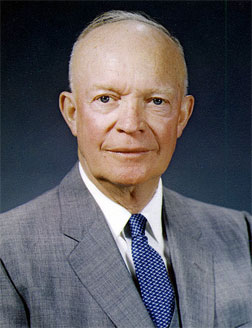
Embarrassed Republicans Admit Confusing Reagan with Eisenhower

In time for Presidents Day is this report from America's Finest News Source:
The GOP's humiliating blunder was discovered last weekend by RNC chairman Reince Priebus, who realized his party had been extolling "completely the wrong guy" after he watched the History Channel special Eisenhower: An American Portrait.
"When I heard about Eisenhower's presidential accomplishments—holding down the national debt, keeping inflation in check, and fighting for balanced budgets—it hit me that we'd clearly gotten their names mixed up at some point," Priebus told reporters. "I couldn't believe we'd been associating terms like 'visionary,' 'principled,' and 'bold' with President Reagan. That wasn't him at all—that was Ike." ...
Following his discovery, Priebus directed RNC staffers to inform top Republicans of the error and explain that it was Eisenhower, not Reagan, who carefully managed the nation's prosperity, warned citizens of the military-industrial complex's growing influence, and led the country with a mix of firm resolve and humble compassion.
As always, of course, The Onion does a satire that is well founded on critical thinking.  It is amazing that the Onion staffers turn out such fantastic stuff without fail.

Thanking Egypt for diverting our attention away from Reagan's 100th birthday, I blogged earlier about the Reagan myths, which the Onion recaps here:
many were "horrified" to learn that the former president illegally sold weapons to Iran, declared amnesty for 2.9 million illegal immigrants, costarred in a movie with a chimpanzee, funneled aid to Islamic militants in Afghanistan, and suffered from severe mental problems.
2011 is also the 50th anniversary of Ike's farewell address when he referred to the military industrial complex.  Marking that occasion, Slate ran a great column that reminded us:
Eisenhower's fears about standing military power never outweighed his conviction that it was necessary. As Ledbetter writes, Ike was, "by any definition, a leading figure in that complex." He loved the army and devoted his life to it. Within the Republican Party, his great accomplishment was to drag the rank and file into the age of internationalism with his triumph over Robert Taft for the 1952 presidential nomination, which isolated the isolationists in the GOP.
The GOP could certainly benefit from one observation that Eisenhower apparently made (ht):
"This is what I mean by my constant insistence on 'moderation' in government. Should any political party attempt to abolish social security, unemployment insurance, and eliminate labor laws and farm programs, you would not hear of that party again in our political history. There is a tiny splinter group, of course, that believes that you can do these things. Among them are a few Texas oil millionaires, and an occasional politician or businessman from other areas. Their number is negligible and they are stupid," - president Eisenhower
Yes, Ike called them "stupid" :)

Crisis in economy, environment, health? Nah! Just watch TV and enjoy!

Not that different from politicians creating their own reality--we get the government we deserve!  Hey, Ray Bradbury, you were so right with your predictions of wall-to-wall television screens making people happy while ...


Monday, February 21, 2011

The emperor has no ... keffiyeh!

I can't wait for Col. Gadawful Gaddafi to flee the country ... like many other dictators, to Saudi Arabia.  And then when the revolution comes to Riyadh, I want these dictators to become nomads in the desert, and left to die without water!

I am simply amazed that the loony maniac was in power this long!  In India, Indira Gandhi suspended the constitution for almost two years as a way not to comply with the court's ruling that invalidated her electoral victory.  But, the pressure from within never really went away, and she was promptly booted out of office when she lifted the emergency rule.  It would have been one hell of a chaos if the anti-democratic government had lasted longer.

Gaddafi was no Fidel Castro to the young me.  At least Castro symbolized something--he consistently out-maneuvered the imperial America.  Of course, growing up resulted in a gradual disillusionment with Castro and now to a complete anti-Castro stance.  But, I could never understand Gaddafi's long tenure, and why the world tolerated him.  Oil is a pretty simplistic explanation.  After all, in the grand scheme of things, Libya's oil reserves and production, as Bogart's Rick said in Casablanca, "don't amount to a hill of beans in this crazy world" ... Libya is no Saudi Arabia or Iraq or Kuwait.

One hell of a crazy person Gaddafi was/is:
Qaddafi spent much of his career as one of the world's least discriminating sponsors of political unrest in Africa and worldwide. He is believed to have helped underwrite terrorists from the Black September group that conducted the 1972 attacks on the Munich Olympics to the IRA to Colombia's FARC to Carlos the Jackal. While he periodically seemed lucid and was charismatic enough to once inspire Nelson Mandela to name one of his off-spring after him, he has enough blood on his hands to earn him a place in the 20th Century madman hall of fame, admittedly not in the main wing with the really big time murderers like Hitler, Stalin, and Mao, but in the wannabe annex. 
Of course, even were Qaddafi to fall tomorrow -- which wouldn't be too soon -- he will already have served longer than any Libyan leader in almost half a millennium and his tenure, which began with a  coup in 1969, will rank among the longest worldwide of the post-World War II era. In other words, his departure, when it comes will be long overdue.
BTW, in case you wonder about the two spellings of the name: Gaddafi and Qaddafi:
"Muammar Gaddafi" is the spelling used by TIME magazine, BBC News, the majority of the British press and by the English service of Al-Jazeera.[99] The Associated Press, CNN, and Fox News use "Moammar Gadhafi". The Edinburgh Middle East Report uses "Mu'ammar Qaddafi" and the U.S. Department of State uses "Mu'ammar Al-Qadhafi". The Xinhua News Agency uses "Muammar Khaddafi" in its English reports.[100]
In 1986, Gaddafi reportedly responded to a Minnesota school's letter in English using the spelling "Moammar El-Gadhafi".[101] The title of the homepage of algathafi.org reads "Welcome to the official site of Muammar Al Gathafi"

Yes, it is all worth it.

Here is the latest reason, which is an excerpt from an email from an alum:
Thank you for teaching classes that make people aware of the world around them, I truly believe that your classes were the most important classes that I took at Western Oregon.
Isn't such an email a wonderful way to start a Monday?
I'm Going to Start Living Like a Mystic
By Edward Hirsch

Today I am pulling on a green wool sweater 
and walking across the park in a dusky snowfall. 

The trees stand like twenty-seven prophets in a field, 
each a station in a pilgrimage—silent, pondering. 

Blue flakes of light falling across their bodies 
are the ciphers of a secret, an occultation. 

I will examine their leaves as pages in a text 
and consider the bookish pigeons, students of winter. 

I will kneel on the track of a vanquished squirrel 
and stare into a blank pond for the figure of Sophia. 

I shall begin scouring the sky for signs 
as if my whole future were constellated upon it. 

I will walk home alone with the deep alone, 
a disciple of shadows, in praise of the mysteries.

2011 is the game-changing year that I have been waiting for?

With every passing day my blog entry from November 2009 seems to be even more profound than I had thought--noting the regularity of game-changers, I wrote then that "it is then tempting to worry that the next event is round the corner."

Turns out it is the authoritarian and dictatorial regimes all over that have do to the worrying in this fantastic year that 2011 is turning out to be!
Al Jazeera + Twitter + Facebook = Revolutions.  Who would've thunk it!!!

The enchanting smells of the Jasmine Revolution are waking up the Chinese too:
Skittish domestic security officials responded with a mass show of force across China on Sunday after anonymous calls for protesters to stage a Chinese “Jasmine Revolution” went out over social media and microblogging outlets. 
I wonder if it has spread all the way to Xinjiang?  The Economist's correspondent doesn't think the Chinese need to worry, right now, about the Uighurs launching a democratic revolution:
In Xinjiang  however the authorities might worry that Muslim Uighurs can identify more readily with their democracy-seeking co-religionists in the Middle East and Africa. Many of Kashgar's Uighurs do have much to complain about, from discrimination to unemployment to a makeover of their old city which has forced thousands of them from their homes into soulless new apartment buildings. Soon after my arrival on February 18th I noticed I was being followed by a black Volkswagen. It remained on my tail until I left the city 48 hours later. When I proceeded on foot, one of its occupants would get out of his car to lurk behind me. Kashgar's police have a reputation for intimidating foreign correspondents in this way.
They probably have little to fear, however, from any popular uprising in support of democracy. Xinjiang's troubles tend to be related to ethnic tensions rather than democratic yearnings (though some activists might hope that ending rule by the Han-dominated Communist Party might pave the way for democracy).
Here is to hoping that they would rise up, "Nur" (you know who you are!)

More on the Uighur issues

The attributes of an intellectual scholar? Really?

Am not so sure about this old saying:

अत्यंतमतिमेधावी त्रयाणां एकमश्नुते ।
अल्पायुर्वा दरिद्रो वा ह्यनपत्यो न संशयः ॥

A very highly intellectual scholar will have at least one of the below three misfortunes - short life, or poverty, or childless.
Fate some how ensures that his wisdom is not carried forward to future generations.

I suppose we could posit that wisdom is not something that is necessarily genetically carried forward. After all, if that were to be the case, then the world would have been flooded by Da Vincis and Einsteins, instead of blokes like me!

Without wisdom being passed down genetically, well, Hollywood has already covered that scenario--Idiocracy :)

Sunday, February 20, 2011

Remembrance of things past ...

Recalling the "old country" is so easy and painless now, compared to decades ago.  I don't have to be anything like the millions of immigrants of the past, from all over the world, who forced themselves to forget the old country as soon as possible as a way to inoculate themselves from haunting memories ...
One of my earliest memories of Tamil movie songs is the one in this video here.  I suppose as a three- or four-year old I was surrounded by this melody all the time ...  The older I get, the more I appreciate the artistry of Padmini.  And, yes, wonderful choreography and editing ...

On life and death in India. Now "Congo Fever" :(

The Economist has one of the best opening lines ever in some of the recent journalism stories I have read recently:
YOU can be killed by an exotic variety of diseases in India.
Isn't that the case!

About four or five years ago, I was shocked when I first read about a Dengue Fever epidemic in India, and then even more shocked when I met one who was down with that fever.  And then the last time when I was there, I find out that an aunt had Chikungunya and took months to recover.  A couple of days before I left the country I called my friend's parents to say hi to them, and his mother said that she still has pain--months after a Chikungunya infection.  The good thing is that these women (all women? really?) recovered well enough.

Up until all these, I thought Dengue and Chikungunya were infections that we had to watch out for while in Africa.  I suppose there is phenomenal globalization in infectious diseases too. 

Anyway, what is the latest exotic killer in India, you ask? "Congo Fever:"
A tick-borne virus, endemic to parts of Africa, the Middle East and elsewhere, it passes easily from livestock to man, and then between humans. Horrible symptoms include fever, internal bleeding and liver failure. Some 30% of infected humans die, usually within a couple of weeks.
The authorities in Gujarat, western India, were therefore alarmed when in January a medical intern died of the disease, formally known as Crimean-Congo haemorrhagic fever. Earlier in the month it killed three others: a patient, plus a doctor and nurse who had cared for her. These appear to be the first recorded deaths in India from the illness. On February 5th doctors reported two more cases in Gujarat. The fever’s arrival is a mystery.
It is crazy!

It is unfortunate that rural development and health do not attract enough attention in India.  Politicians and governments are far more interested in urban-oriented investments with whatever money is left after they have swindled. 
Indian officials acknowledge that the country needs to increase investment in irrigation, encourage competition in wholesale and retail markets, and provide targeted food subsidies to the poor. And they also have to provide more education and jobs to villagers, so fewer people are forced to live off the land.
Experts say India needs to make changes like some of the ones China made, beginning in the late 1970s, when it started investing heavily in agriculture and eased regulations on farming.
As recently as 1977, Chinese and Indian farmers harvested roughly the same amount of wheat for each acre that they planted. But by 2009, United Nations data shows that wheat yields were 1.7 times higher in China than in India.
Kaushik Basu, a Cornell University professor who is also the chief economic adviser to India’s finance minister, says he now sees more willingness by Indian officials to reform agriculture policies.
But outside experts like Mr. Gulati are skeptical that real change will come from the government. The ruling coalition has been hobbled by corruption scandals, and an energized opposition last year effectively blocked proceedings in Parliament.
The country is rapidly devolving into a bizarre version of "democratic oligarchy" ... the phenomenal amounts being spent on cricket is evidence enough.
I hope a few more people will follow the example that Wipro's Azim Premji is setting with his philanthropy:

On Sonnets and Shakespeare. Ready for this? Be silent!

I say this is a pretty clever and funny poster (ht).  The language not that much out of place, in a contemporary way, for the master of double entendre

While not for the "b---s" ... the following sonnet appeals to hermits like me:
Silence
By Thomas Hood

There is a silence where hath been no sound, 
There is a silence where no sound may be, 
In the cold grave—under the deep deep sea, 
Or in wide desert where no life is found, 
Which hath been mute, and still must sleep profound; 
No voice is hush'd—no life treads silently, 
But clouds and cloudy shadows wander free. 
That never spoke, over the idle ground: 
But in green ruins, in the desolate walls 
Of antique palaces, where Man hath been, 
Though the dun fox, or wild hyæna, calls, 
And owls, that flit continually between, 
Shriek to the echo, and the low winds moan,— 
There the true Silence is, self-conscious and alone.