A wonderfully gifted scientist. As the old saying goes, they don't make too many of 'em anymore :(
Sriram Khé, blogging since 2001 ........... ............ And back again since June 2008
Saturday, October 16, 2010
Remembering Mandelbrot ...
Benoit Mandelbrot and Buckminster Fuller were impressive thinkers in their own ways and in their fields, and even if I didn't always understand their works, I was blown away by their innovative approaches. Mandelbrot died.
What would a Libertarian-Democrat platform look like?
I suppose I run into problems with unprofessional obnoxious arrogant ideological loud faculty leaders on campus not because I am from the conservative right, but because I am a libertarian-Democrat. The flavor of libertarianism that runs counter to many of the issues that are near and dear to the social-Democrats and self-professed Socialists ....
What might be in brief the guiding principles of a libertarian-Democrat approach to social organization and governance? Here is Terry Michael:
My favorite libertarian-Democrat public intellectual? Camille Paglia, of course ... too bad for people like me that she has taken time off from public discourses ...
What might be in brief the guiding principles of a libertarian-Democrat approach to social organization and governance? Here is Terry Michael:
The government should assure liberty by staying as far away as possible from our bank accounts, our bedrooms, and our bodies. Spread pluralistic democracy and free markets by example, understanding that neither can be planted by force on political real estate lacking indigenous cultivators for their growth. Restore the moral authority of mid-20th century civil rights, fashioning public policy around individuals, not tribal identity groups.More here on Michael's manifesto
My favorite libertarian-Democrat public intellectual? Camille Paglia, of course ... too bad for people like me that she has taken time off from public discourses ...
Middle East immigrants, milk, and European growth
Spiegel's report, from where I got this map as well (ht), notes:
New excavations in Turkey, as well as genetic analyses of domestic animals and Stone Age skeletons, paint a completely different picture:
Mutated for Milk
- At around 7000 BC, a mass migration of farmers began from the Middle East to Europe.
- These ancient farmers brought along domesticated cattle and pigs.
- There was no interbreeding between the intruders and the original population.
The new settlers also had something of a miracle food at their disposal. They produced fresh milk, which, as a result of a genetic mutation, they were soon able to drink in large quantities. The result was that the population of farmers grew and grew.
Why is there something instead of nothing?
How did the universe come about? Why is there something instead of nothing? While offering ten testable explanations, Michael Shermer articulates the argument that I have offered in my own less sophisticated ways for a number of years:
My only problem with some of the science-based explainers is that their preference to mask this uncertainty of science and, instead, project that as the absolute truth. Now, I understand that a great majority of the non-science population might not appreciate the nuance when we talk about science's uncertainty. But, then neither am I happy with beating the life out of them by telling them that the scientific knowledge we have is definitive.
A few years ago, my parents were describing to me how my dead grandmother spoke through my cousin. In a respectful tone I told them that this was not possible, and perhaps it was nothing but some psychological aspect of my cousin's that needed to be understood. My mother asked me a few questions and at the end of it all I told her something like this: a long time ago, the Hindu religious narrative explained the eclipse as a war between the good and evil forces. Scientific thinking--even in the old India--explained that there were no gods and demons involved here, and that one could even predict when eclipses would occur. Slowly, in many aspects of life, we have been able to drive out the old incorrect explanations, and offer rational ones that withstand scrutiny. We have a long way to go, but it does not mean that we will have to fill the gaps with "faith."
Come to think of it, that might have been the last time we discussed our respective approaches to understanding this universe.
in answer to the question Why is there something instead of nothing?, it is okay to say “I don’t know” and keep searching. There is no need to turn to supernatural answers just to fulfill an emotional need for certainty and comfort. Science’s uncertainty is its greatest strength. We should embrace it.I have always felt people have been drawn to religions because of the sense of security those narratives offer. Which is also why most of the people who feel "secure" within their religious explanations of how all these came about and where we will end either make fun at the obvious holes in other religious narratives, or even feel threatened by them.
My only problem with some of the science-based explainers is that their preference to mask this uncertainty of science and, instead, project that as the absolute truth. Now, I understand that a great majority of the non-science population might not appreciate the nuance when we talk about science's uncertainty. But, then neither am I happy with beating the life out of them by telling them that the scientific knowledge we have is definitive.
A few years ago, my parents were describing to me how my dead grandmother spoke through my cousin. In a respectful tone I told them that this was not possible, and perhaps it was nothing but some psychological aspect of my cousin's that needed to be understood. My mother asked me a few questions and at the end of it all I told her something like this: a long time ago, the Hindu religious narrative explained the eclipse as a war between the good and evil forces. Scientific thinking--even in the old India--explained that there were no gods and demons involved here, and that one could even predict when eclipses would occur. Slowly, in many aspects of life, we have been able to drive out the old incorrect explanations, and offer rational ones that withstand scrutiny. We have a long way to go, but it does not mean that we will have to fill the gaps with "faith."
Come to think of it, that might have been the last time we discussed our respective approaches to understanding this universe.
Friday, October 15, 2010
Photo(s) of the day: Chennai
Forbes says Chennai will be one of the happening cities in the next decade. The power of idli and sambar! But, this is the best picture of the city the magazine could offer?
The Hindu refers to the Forbes report, but has photo that looks betterbut one which says nothing about a happening city!
What is wrong with these publications? :)
The Hindu refers to the Forbes report, but has photo that looks betterbut one which says nothing about a happening city!
What is wrong with these publications? :)
Quote of the day on Christine O'Donnell
Bill Maher thinks he has been laughing at Christine O'Donnell with his old clips of her appearances on his shows. If she wins, Bill Maher will have created her.James Fallows has nothing but sharp observations about this
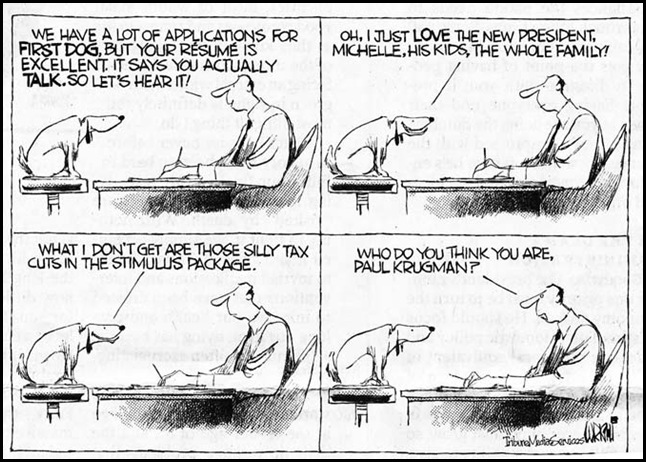
O'Donnell has not seemed uncomfortable for one second** -- even in her most obvious dodge, about whether she really thinks evolution is a "myth." The difference is, she is a talk show regular. Among the many things wrong with talking-head gab shows, which have proliferated/ metastasized in the past generation -- they're cheap to produce, they fill air time, they make journalists into celebrities, they suit the increasing political niche-ization of cable networks -- is that they reward an affect of breezy confidence on all topics and penalize admissions of complexity, of ignorance on a specific topic, or of the need for time to think.Oh well ... how about laughing all these off with two cartoons? I suppose at the end of it all, the jokes are really on us folks :(
O'Donnell comes across as a perfect, unflappable product of the talk-show culture. Sarah Palin knows that she is bad under open questioning -- so she avoids it, speaks only to selected audiences, is interviewed only by Fox. If she were to run for president, which I've always doubted, this would make her brittle for the unavoidable main campaign. Christine O'Donnell shows that the other path can create a better, unshakably on-message product for this era.
The unholy Farmville McDonald's alliance
The video takes on a sarcastic and humorous tone, but McDonald's and Farmville hooking up for a day is true. The monetization of Facebook to the next level, I suppose.
A few days ago, during a conversation with a student, I told her about the millions of dollars Farmville and its parent company, Zynga, earned last year. Initially surprised, she later thought it was possible because of her familiarity with friends who spend hours playing Farmville. I didn't tell her that according to Zynga all the Farmville players in Facebook are considered as beta testers of the game :)
Underestimating Africa
If only I had seen this map of Africa even a week earlier ... in a quick overview of Africa, I showed students in one of my classes a comparison of the physical areas of the Democratic Republic of Congo and those of Germany, France, Slovakia and Oregon. I know for sure I saw quite a few eyes waking up to the realization that if Congo itself is that big, then the continent is HUGE.
I will show them this map even if it is the case that next week's discussions have nothing to do with Africa.
It is unfortunate that the university where I teach is like most colleges and universities that continue to remain Euro-centric in what we teach. Everything from literature to the social sciences is mostly about Europe and North America, with a little bit about South and Central America. It is pathetic, for instance, that the history department at my university offers more courses about Slovakia and the Balkans than about Africa and its countries.
This term, for instance, there is not a single class about Africa in History. Perhaps all the African history is finished by the time a freshman completes HST 104: World History? Plenty of Europe. Same story in Political Science. Sociology is still dealing with the dead and cremated Communism, while the alive Africa is neglected.
Nothing in my own department either.
The result is that Anthropology is the only place where students might encounter Africa. I would not be surprised if the courses there then end up reinforcing the stereotypes of Africa.
Awful!
We are committing some serious crimes in higher education. I, too, stand accused :(
I will show them this map even if it is the case that next week's discussions have nothing to do with Africa.
It is unfortunate that the university where I teach is like most colleges and universities that continue to remain Euro-centric in what we teach. Everything from literature to the social sciences is mostly about Europe and North America, with a little bit about South and Central America. It is pathetic, for instance, that the history department at my university offers more courses about Slovakia and the Balkans than about Africa and its countries.
This term, for instance, there is not a single class about Africa in History. Perhaps all the African history is finished by the time a freshman completes HST 104: World History? Plenty of Europe. Same story in Political Science. Sociology is still dealing with the dead and cremated Communism, while the alive Africa is neglected.
Nothing in my own department either.
The result is that Anthropology is the only place where students might encounter Africa. I would not be surprised if the courses there then end up reinforcing the stereotypes of Africa.
Awful!
We are committing some serious crimes in higher education. I, too, stand accused :(
Dr. Condi Rice's Jim Crow childhood
This past summer I read Invisible Man and To Kill a Mocking Bird ... it is shocking to realize at every instance that the atrocious treatment of blacks was not that long ago. It is the same way I feel about the caste-contexts in India. The whole idea of "untouchables" being so less than human that an accidental brushing against the skin of one would send a brahmin to bathe ... while we are thankfully far removed from those bad days, we still have a long way to go.
Conoleeza Rice speaks of that atrocious past. I watched her on The Daily Show the other day, and appreciated Jon Stewart for not (mis)using the opportunity to question Rice about her involvement in the decision-making on the wars that are dragging on and on. Rice's factual and relaxed recollections of her childhood and her parents in the most segregated city were inspiring. It is incredible that Rice--a global personality now--didn't have a white classmate until she was twelve, and after they moved to Denver ... All political differences aside, her life story is simply marvelous.
In the review of her book
by Professor Stephen Carter, over at the Daily Beast, I came across this comment about the usage "African-American":
Will be neat to have Dr. Rice over for dinner with just about four or five people and listen to stories about her childhood, parents, grandparents, the obstacles that she faced as a young black woman ... ask her about her take on Invisible Man--what her reactions were when she first read it ... I wonder if she likes Indian food :)
Conoleeza Rice speaks of that atrocious past. I watched her on The Daily Show the other day, and appreciated Jon Stewart for not (mis)using the opportunity to question Rice about her involvement in the decision-making on the wars that are dragging on and on. Rice's factual and relaxed recollections of her childhood and her parents in the most segregated city were inspiring. It is incredible that Rice--a global personality now--didn't have a white classmate until she was twelve, and after they moved to Denver ... All political differences aside, her life story is simply marvelous.
In the review of her book
Rice, by the way, rejects this term, which she thinks too easily lets white Americans off the hook for slavery and Jim Crow, by making the black community seem like any other group of immigrants.I am with Rice on this one, too.
Will be neat to have Dr. Rice over for dinner with just about four or five people and listen to stories about her childhood, parents, grandparents, the obstacles that she faced as a young black woman ... ask her about her take on Invisible Man--what her reactions were when she first read it ... I wonder if she likes Indian food :)
| The Daily Show With Jon Stewart | Mon - Thurs 11p / 10c | |||
| Condoleezza Rice Pt. 1 | ||||
| www.thedailyshow.com | ||||
| ||||
Thursday, October 14, 2010
Cartoon of the day: Afghanistan
The latest news?
More US/NATO fatalities, including one from Oregon:
Lance Cpl. Joseph Rodewald wanted to enlist for as long as anyone can remember, even asking his father if he could attend a military school as a boy, family and friends said Thursday.
Rodewald's family couldn't afford to send him to the expensive school, so the energetic young man waited until after his graduation from South Albany High School in 2007 to sign up with the U.S. Marine Corps.
The former high school football player and wrestler, who would have turned 22 next Tuesday, was killed Wednesday by a roadside bomb in southern Afghanistan.
Photo of the day: homeless and "wired"
Yet another reminder that there is more than what meets the eye when we see a homeless person. (ht)
Wednesday, October 13, 2010
This comic was not published?
Over to Matt Welch:
As Radley Balko noted in yesterday's Morning Links, the Washington Post and other newspapers pulled Wiley Miller's syndicated "Non Sequitur" cartoon from their comics pages two Sundays back, because Miller pulled a familiar-to-Reason-readers "where's Waldo?" gag with the Prophet Muhammad, satirizing the new 21st century taboo on the depiction of even jokes about the fear of depicting a historical figure who really existed.
As is typical of the genre, Washington Post editors tried to play their own "where's Waldo" with the censorship process:
Style editor Ned Martel said he decided to yank it, after conferring with others, including Executive Editor Marcus W. Brauchli, because "it seemed a deliberate provocation without a clear message." He added that "the point of the joke was not immediately clear" and that readers might think that Muhammad was somewhere in the drawing.If the Post's new standard for comics is to make jokes "immediately clear," then it might be time to kill the comics page altogether. No, Martel/Brauchli, you pulled the cartoon because your fear of Muslims outweighs your commitment to free expression, period.
Now comes L.A. Times media critic James Rainey, who, even while concluding that the cartoon should have run (the L.A. Times, to no one's surprise, suppressed it), makes sure we understand that fear was not a factor, nosiree:
That's not to agree with some commentators who have called the refusal to run the comic a cowardly retreat from radicals. I'd say the ax that fell on "Non Sequitur" had more to do expediency. Moving in a hurry, with many other decisions that seemed more pressing at the time, editors probably killed the item rather than face the possibility of a furor for a piece they honestly felt was not of high quality.Uh-huh.
Protectionism and currency battles
Somehow, I cannot imagine Christine "I am not a witch" O'Donnell casting a meaningful Senate vote on bills that address anything remotely related to the following discussions :)
(editor: why pick on O'Donnell? You think Al Franken can? Awshutup!)
My increasingly favorite economist Raghuram Rajan is interviewed by Der Spiegel:
(editor: why pick on O'Donnell? You think Al Franken can? Awshutup!)
My increasingly favorite economist Raghuram Rajan is interviewed by Der Spiegel:
SPIEGEL: China and India are advancing to become the engines of the world economy, whereas the economies in the old industrialized world have become sluggish. What is the future role of economies like those of the US, France or Germany?Over at Financial Times, Martin Wolf explains how the global economic wars are being fought:
Rajan: The traditional industrial countries have to be prepared for the fact that they will lose their natural advantages. Let me give you an example: When you're working for a fashion company in Milan, you just have to look outside your window to be inspired. But the new customers live far away -- in Shanghai, for example. That's where the demand is and where the designs will soon have to be created. Things will not be as easy in Milan as they once were.
SPIEGEL: So you're saying that Western companies will not only be moving parts of their production abroad, but also services?
Rajan: The central question is this: How can industrial companies serve the demand that is developed thousands of miles away? This is the great challenge for the coming years. I suspect that in such an environment protectionist impulses will get stronger.
To put it crudely, the US wants to inflate the rest of the world, while the latter is trying to deflate the US. The US must win, since it has infinite ammunition: there is no limit to the dollars the Federal Reserve can create. What needs to be discussed is the terms of the world’s surrender: the needed changes in nominal exchange rates and domestic policies around the world.Hey, Professor Bernanke, rev up those dollar bill machines :) But, wait, wouldn't this lead to a sharp dilution (devaluation) of the dollar though? Damn, I wish I had taken such courses in grad school :) Anyway, Wolf adds:
The global consequences are evident: the policy will raise prices of long-term assets and encourage capital to flow into countries with less expansionary monetary policies (such as Switzerland) or higher returns (such as emerging economies). This is what is happening. The Washington-based Institute for International Finance forecasts net inflows of capital from abroad into emerging economies of more than $800bn in 2010 and 2011. It also forecasts massive intervention by recipients of this capital, albeit at a falling rate (see chart).WTF is all I can think now!
Recipients of the capital inflow, be they advanced or emerging countries, face uncomfortable choices: let the exchange rate appreciate, so impairing external competitiveness; intervene in currency markets, so accumulating unwanted dollars, threatening domestic monetary stability and impairing external competitiveness; or curb the capital inflow, via taxes and controls. Historically, governments have chosen combinations of all three. That will be the case this time, too.
Taking a sabbath from academe ...
I have never taken a sabbatical before ... but, will soon apply for one. Over the years I have read many essays in the Chronicle, among others, that addressed many aspects of sabbaticals. The latest one, in the AAUP's Academe, is a beaut. The author, Max Page, is professor of architecture and history at the University of Massachusetts Amherst. Page questions who took the sabbath out of sabbatical; a wonderful title, right? His argument is made clear in the subtitle: "Worshipping real academic productivity means giving it a rest now and then." He writes:
What “sabbatical” meant was that the land—your productive capacity, your brain, your heart—should not be used or exercised in exactly the same way it had been for the previous six years. It needs to be refertilized. It will be more productive and life giving (and refereed journal article producing) if it is allowed a rest from its usual activities. I found it particularly remarkable, and disturbing, that in the sabbatical seminar I attended no one spoke about improving the quality of the work of their sabbatical, only that they produce more, and faster.Yep. to produce that 30,000th essay on left handed textile industry workers in Timbuktu :)
My plea to my striving colleagues is to be true to the origins of the word. Don’t do nothing—but don’t focus on your usual activities either. Do not till the same soil; dare to do things differently for a year. You will be doing exactly what you are supposed to be doing— honoring your profession and the confidence placed in you— when you explore new areas, pursue projects that might fail, expand your mind with art or music or great literature, and generally upset your routine.I shall try. Thanks for the reminder.
You will be doing what you were hired to do, renewing your capacity for thinking, teaching, researching, serving the public good. You will be doing yourself, and the very idea of the university, a favor.
Tuesday, October 12, 2010
Humanity wins: the first Chilean miner comes up
I am guessing we will all be anxiously waiting until the last one comes up.
It was a battle for me to watch the video--I could sense my claustrophobia, though not acute ... I cannot even begin to imagine how the miners endured it all these days. And the the family sitting through all these. These are some incredibly brave and disciplined folks.
The technological challenge to get them out. I bet everyone involved in the rescue effort is on the metaphorical pins and needles.
Makes all my problems seem so trivial!
It was a battle for me to watch the video--I could sense my claustrophobia, though not acute ... I cannot even begin to imagine how the miners endured it all these days. And the the family sitting through all these. These are some incredibly brave and disciplined folks.
The technological challenge to get them out. I bet everyone involved in the rescue effort is on the metaphorical pins and needles.
Makes all my problems seem so trivial!
Image and story of the day: elderly women and rape in Africa
What is special about this photo of two elderly African women? They are at a martial arts class. for defending themselves, as this photo essay at Foreign Policy explains:
Two elderly women wait for their martial arts class to begin in a slum in Nairobi, Kenya, in January. By some counts, one in five adult rape victims in Kenya is older than 60 -- one survivor is 105. Intercourse with the elderly is believed by many would-be attackers to bring good luck, purify one's sins, and even cure AIDS. Starting in 2007, a program called I'm Worth Defending has empowered women to fight back by teaching self-defense classes in Nairobi slums.
I followed up on one of those hyperlinks where it reads:
Two elderly women wait for their martial arts class to begin in a slum in Nairobi, Kenya, in January. By some counts, one in five adult rape victims in Kenya is older than 60 -- one survivor is 105. Intercourse with the elderly is believed by many would-be attackers to bring good luck, purify one's sins, and even cure AIDS. Starting in 2007, a program called I'm Worth Defending has empowered women to fight back by teaching self-defense classes in Nairobi slums.
I followed up on one of those hyperlinks where it reads:
The Nairobi Women's Hospital, home to the country's largest gender violence recovery centre, treats about 230 cases of sexual violence every month - the oldest survivor was 105 years old.Yet another piece of evidence that we live in one screwed up world. Though, I suppose it was not any better in the past--perhaps even worse!
"When it comes to rape, I am my only defender," said Veronica Njeri, 65, another member of the class. "Here in the slums, people act like there is no law."
Stephen Colbert explains the Muslim threat
Will having halal soup make you Muslim? :)
| The Colbert Report | Mon - Thurs 11:30pm / 10:30c | |||
| ThreatDown - Muslim Edition | ||||
| www.colbertnation.com | ||||
| ||||
President Barack O'Bush and civil liberties
ACLU's Executive Director Anthony Romero's blunt talk on why he is disillusioned with Obama's presidency to the point of being "disgusted":
Well, renew your ACLU membership, or become a member. (ht)
Update: I just read this wonderful piece by Greenwald, in which towards the end he writes:
"It’s 18 months and, if not now, when? ... Guantanamo is still not closed. Military commissions are still a mess. The administration still uses state secrets to shield themselves from litigation. There's no prosecution for criminal acts of the Bush administration. Surveillance powers put in place under the Patriot Act have been renewed. If there has been change in the civil liberties context, I frankly don't see it."Yep. I have blogged many times, quoting the ACLU and Greenwald on how the Obama administration continues with Bush's policies and practices--most, if not all, of which were severely criticized by Obama as the candidate. Simply atrocious.
Well, renew your ACLU membership, or become a member. (ht)
Update: I just read this wonderful piece by Greenwald, in which towards the end he writes:
Civil liberties and a belief in the need to check government power is something many people care about only when the other party is in control. They seem to believe that there are two kinds of leaders -- Good ones (their party) and Bad ones (the other party) -- and it's only when the latter wield power that safeguards and checks are necessary. Good leaders, by definition, are entitled to trust and faith that they will wield power appropriately and for Good ends, thus rendering unnecessary things like accountability, transparency, oversight and even due process. Of course, the core premise of our government from the start was that political power will be inevitably abused if it is exercised without constraints, that nothing is more irrational or destructive than placing blind faith in political leaders to exercise unchecked power magnanimously. But the temptation to want to follow Leaders blindly -- to believe in their core Goodness and to thus vest them with unverified trust -- is almost as compelling a part of human nature as the abuse of power when exercised without checks and in the dark.
That's why self-anointed defenders of the Constitution are instantly transformed into authoritarians and back again every time there is a change of party control: many people don't believe in these principles generally, but only when political leaders they dislike are in power. The problem, though, is that endorsing civil liberties abuses because one's own Party is in power virtually ensures that those abuses will become permanent, available to future leaders from the other Party as well. That was the argument which fell on deaf ears when made to cheering Bush supporters, and it's barely more effective now.
Monday, October 11, 2010
Elections are round the corner. What might George Carlin say? :)
I wish I could speak the brutal truth to students. I reminded them about elections, and that tomorrow is the deadline to register. I even highlighted how the Nobel Peace Prize recipient is in jail simply because he made political comments ... and that he would love to have the freedom we take for granted ...
I wish I could have added more ... but, my sense of professional responsibilities prevents me from such blunt talk ... I hope a student or two would wander here to this blog and get the rest of the story :)
First from a contemporary contrarian, Christopher Hitchens, who writes that we get the politicians we deserve:
I wish I could have added more ... but, my sense of professional responsibilities prevents me from such blunt talk ... I hope a student or two would wander here to this blog and get the rest of the story :)
First from a contemporary contrarian, Christopher Hitchens, who writes that we get the politicians we deserve:
What normal person would consider risking their career and their family life in order to undergo the incessant barrage of intrusive questioning about every aspect of their lives since well before college? To face the constant pettifogging and chatter of Facebook and Twitter and have to boast of how many false friends they had made in a weird cyberland? And if only that was the least of it. Then comes the treadmill of fundraising and the unending tyranny of the opinion polls, which many media systems now use as a substitute for news and as a means of creating stories rather than reporting them. And, even if it "works," most of your time in Washington would be spent raising the dough to hang on to your job. No wonder that the best lack all conviction.And now over to the crankiest and funniest contrarian ever :)
The free (freely?) falling American dollar
It was a gathering that was fascinating in one way: it was international. Two American citizens, two Canadian citizens, two non-citizens but (legal, of course) immigrants from India, and one visiting Indian Indian citizen. Well, international as it was, it was also a gathering of people of Indian stock :)
During the casual conversation that included a whole lot of laughing and general merriment, we noted that the American dollar is not all that mighty when we travel in India. "A plate of idli costs fifty rupees" said one--about a dollar. As poor as India is, it appears that the US dollar has become considerably poorer over the years. In the middle of all this, my brother called from Australia and is excited about news from down under that by 2012 the Australian dollar might fetch up to 1.2 US dollars.
What the heck is going on, eh! I thought that the official US policy has always been in favor of a strong dollar, but it has been far from that. Nothing seems to be working!
The debate over currency valuation is pivotal. World leaders broadly agree that for the global economy to be more stable, imbalances between creditor countries like China and Germany and debtor countries like the United States and Britain have to be fixed.Hey, tell us something new that we haven't experienced!
the United States has lost some of the standing it needs to shape global policy. Not only is Wall Street viewed by many as having initiated the world financial crisis, but also, a number of countries fear that policies by the Federal Reserve are pushing down the dollar’s value — the same kind of currency weakening for which the Obama administration has criticized China.
“Other countries are no longer willing to buy into the idea that the U.S. knows best on economic policy, while at the same time the emerging markets have become increasingly influential and independent,” said Kenneth S. Rogoff of Harvard, a former chief economist at the I.M.F.Great. Thanks! If we trace back the currency issues from the Breton Woods agreements,
Back in 1944, the Americans did not envisage that they would one day be the world's biggest debtor nation. For years they have been able to stave off the consequences of running a large trade deficit by printing more dollars. That's something you can get away with if you are the world's premier reserve currency, but at a price. The imbalances grew bigger and bigger until they threatened the stability of the world economy.
The Americans are now able to see the downside of the system they themselves created: what do you do when a creditor nation tells you to push off, as the Chinese have done in the past week after pressure from Washington to revalue the yuan? The answer, as Tim Geithner, the US treasury secretary, has discovered, is that you plead and you cajole and you threaten, but you have little traction unless you are prepared to "go nuclear" and impose trade barriers.
So? What might happen then?
the Americans are probably closer to pushing the nuclear button than they were before the weekend. The jobs figures highlighted the fragility of the economy, while the IMF meeting highlighted the impotence of the multilateral system. If, as seems apparent, the world can only pull together in a crisis, America and China between them may be about to provide one.That means that after all the distractions of 9/11, Afghanistan, Iraq, etc., the US and China once again become serious adversaries, like how they were in April 2001?
Subscribe to:
Posts (Atom)